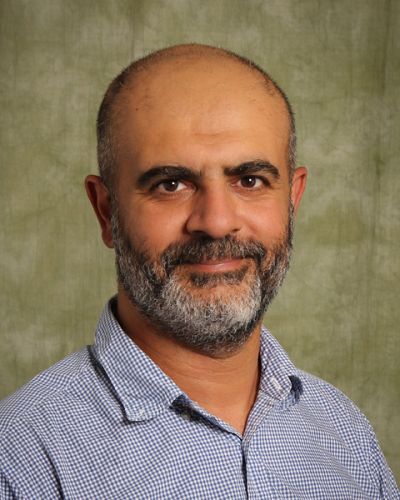
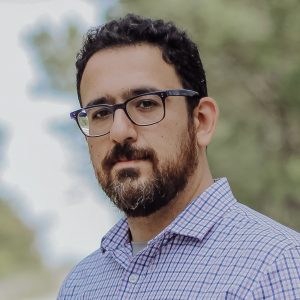
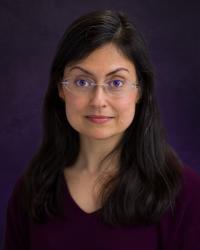
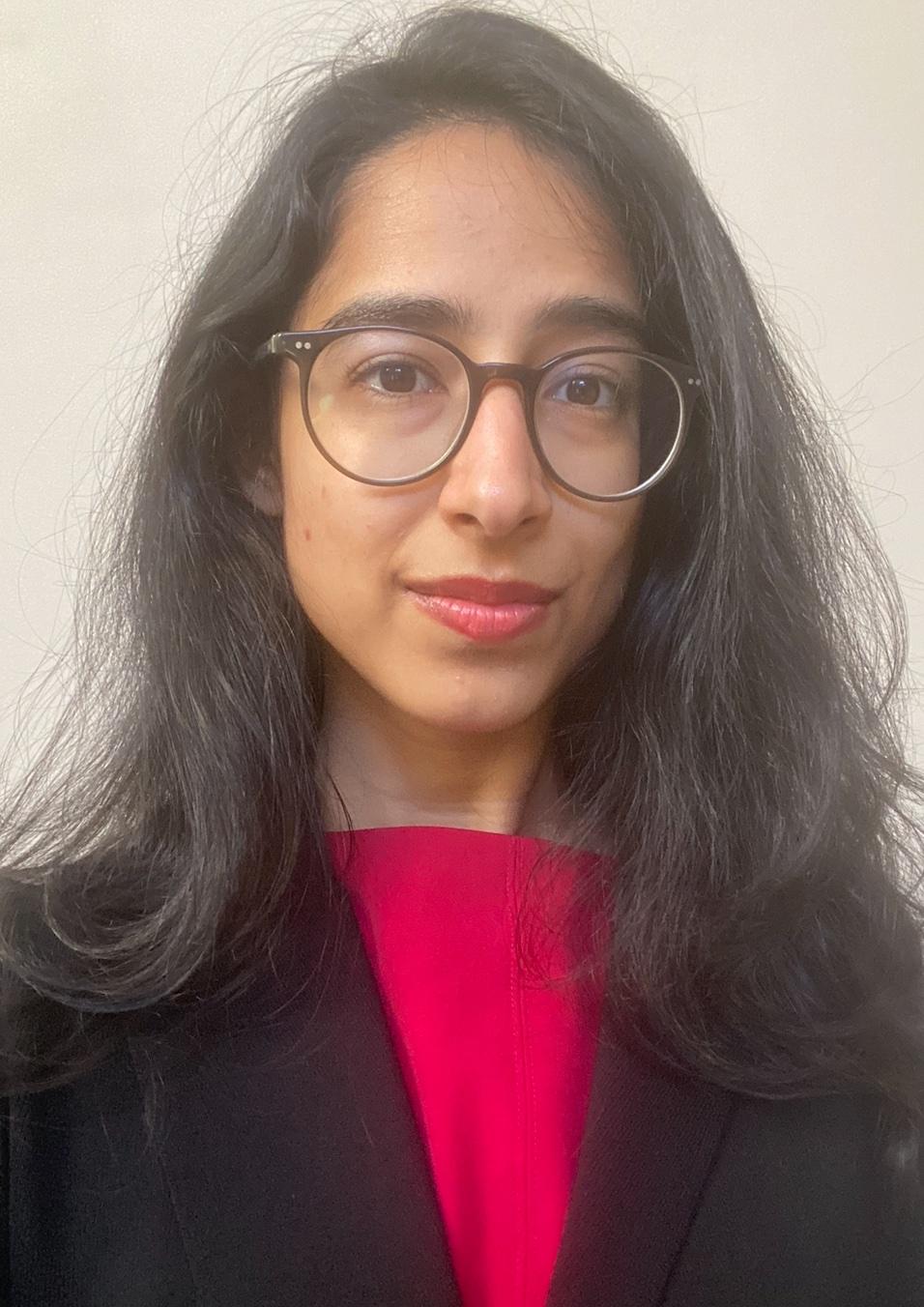
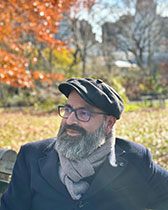
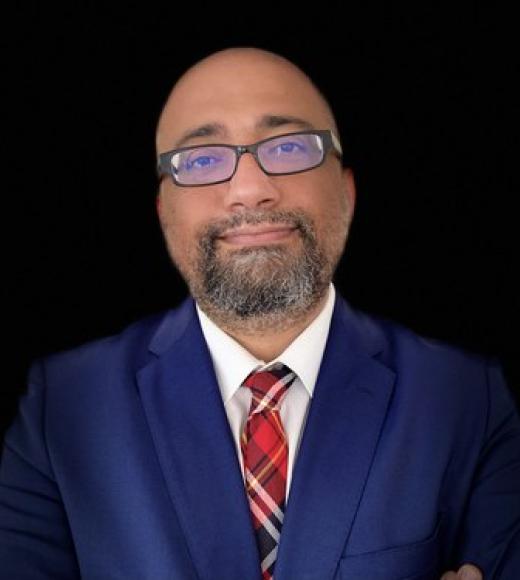
Amir Ahmadi Arian is an Iranian-American writer and Assistant Professor in the Department of English, General Literature and Rhetoric at Binghamton University (College of Arts and Sciences). He holds a PhD in Comparative Literature from the University of Queensland, Australia, an MFA in Creative Writing from New York University, and a BSc in Metallurgy Engineering from the University of Tehran, Iran. His research and teaching focus on creative writing, world literature, postcolonial novels, and Persian poetry. He has published two novels, a story collection, and a nonfiction book in Persian, and translated works by E.L. Doctorow, Paul Auster, P.D. James, and Cormac McCarthy into Persian. His English-language publications include fiction in Harper’s , The Paris Review , The New York Times , and other prestigious venues. His debut English novel Then the Fish Swallowed Him (HarperVia/HarperCollins, 2020) received critical acclaim from The New Yorker , Publishers Weekly , and Kirkus Reviews for its political themes and interior portrayal of oppression.
Ali Karjoo-Ravary is the Richard W. Bulliet Assistant Professor of Islamic History at Columbia University, specializing in the intellectual, social, and visual histories of premodern Islam through Arabic, Persian, and Turkic sources. His research intersects historical writing, cosmology, Sufism, and multilingual poetry in the Islamic East (Mashriq). Education: Ph.D., University of Pennsylvania (2018) M.A., University of Pennsylvania (2016) B.A., SUNY Stony Brook (2011) His current book project, Muhammad’s Song: Politics, Performance, and Cosmology in the Fourteenth Century , examines post-Mongol Islamic monarchy through Kadi Burhaneddin's life and rule. He also explores Sufi visual iconography, science fiction's relationship to religion, and architecture's role in evolving Islamic discourses. Scientific Awards and Fellowships: Bard Graduate Center Visiting Fellow (Fall 2020) Wolf Humanities Center Graduate Research Fellow (2016-2017)
Purnima Dhavan is an Associate Professor of History at the University of Washington's College of Arts & Sciences, holding the Giovanni and Amne Costigan Endowed Professorship. She specializes in early modern South Asia (1500-1800), focusing on religious and cultural identity, Mughal institutions, and literary networks. Her research integrates interdisciplinary methods, with adjunct affiliations in Near Eastern Languages and the Jackson School's South Asia Center. Education: PhD in South Asian History from the University of Virginia (2003), MA (1998), and BA (1996) from the University of Michigan. She has taught at multiple institutions, including the College of St. Benedict/St. John’s University and Bowdoin College. Research Interests: Mughal literary culture, Sikh warrior traditions, gender in pre-colonial societies, and environmental history. Notable works include her book *When Sparrows Became Hawks* (2011) on Sikh militarization and a forthcoming project on literary associations in Mughal urban centers. Publications span peer-reviewed journals and edited volumes, emphasizing pre-colonial South Asia’s intellectual and socio-political dynamics. Awards include the Howard Keller Chair and NEH fellowships. Service: Extensive contributions to academic governance at UW, including roles in the Faculty Senate, departmental leadership, and national professional organizations like the American Historical Association and Association of Asian Studies. Languages: Native Hindi speaker, advanced Urdu/Persian/Punjabi, and proficient in Spanish.
Reyhan Durmaz is an Associate Professor of Religious Studies at the University of Pennsylvania, affiliated with the School of Arts & Sciences and multiple interdisciplinary programs. Her research focuses on Syriac Christianity, medieval religious dynamics, and the intersection of Christianity and Islam in late antiquity. She holds a Ph.D. from Brown University (2019) and has received prestigious fellowships such as the Dumbarton Oaks Junior Fellowship and the Charlotte Newcombe Dissertation Fellowship. Her seminal book Stories between Christianity and Islam (2022) examines the transmission of saints' stories between religious traditions, earning Honorable Mention from the Middle East Medievalists. Current projects include a study of rural Christianity in the medieval Middle East through soldier-monk narratives and an analysis of the 19th-century Arabic newspaper Kawkab America . She co-leads the Digital Photograph Archive project Visualizing Countryside , documenting medieval religious sites. Dr. Durmaz teaches courses on global Christianity, material culture, and late antiquity, and serves as co-chair of the Philadelphia Seminar on Christian Origins. Her work bridges historical analysis, textual scholarship, and digital humanities, addressing themes of religious identity, cultural exchange, and marginalized communities.
Tiraana Bains is an Assistant Professor of History at Brown University, specializing in modern Britain and the global British Empire. Her research investigates the contested formation of the British imperial state in South Asia between the 18th and 20th centuries, emphasizing participatory and revolutionary dimensions of imperial governance. PhD, Yale University, 2021 MA, Yale University, 2015 BA, Yale University, 2015 Postdoctoral Fellowship, Modern Intellectual History, Dartmouth College, 2021–2023 Her research interests lie at the intersection of imperial history, political authority, and intellectual frameworks of empire. She examines how both elite and non-elite actors across Britain and South Asia contested and shaped imperial rule, taxation, and labor systems. Her work positions British imperial formation not merely as coercion but as a dynamic, ideologically charged process comparable to revolutionary state-building in America and France. The recent publications reflect a deep engagement with sovereignty, imperial connectivity, and the intellectual history of empire. Her articles explore the collapse and reconstitution of imperial presidencies, dual sovereignty between Mughal and British powers, and broader conceptual attempts to 'think the empire whole.' These works span journals in British, global, and South Asian history, indicating a transregional and interdisciplinary approach. While no formal scientific awards are listed, her publications in leading historical journals and her active research program suggest strong scholarly recognition. Tiraana Bains teaches undergraduate courses at Brown, including HIST 1267: The Global British Empire, 1600–The Present and HIST 1974E: The Intellectual History of Imperialism . She is currently completing a book titled Instituting Empire: The Contested Makings of a British Imperial State in South Asia, 1750–1800 , which promises to make a significant contribution to the field. Her postdoctoral training at Dartmouth further underscores her expertise in intellectual history. Though no lab or research team is mentioned, her collaborative publications suggest engagement with a broader scholarly network at Brown and beyond.
University of California, Los AngelesUnited States
M. Rahim Shayegan is a prominent scholar in Iranian and Near Eastern studies, specializing in Old and Middle Iranian philology, Achaemenid-Sasanian history, and Greco-Roman-Iranian cultural interactions. He holds a PhD from Harvard University and has conducted postdoctoral research at the University of Göttingen and Sorbonne. His work bridges philology, epigraphy, and historical analysis to explore ancient political ideologies, religious traditions, and cross-cultural exchanges. Education: PhD, Iranian Philology & Ancient History, Harvard University MA, Iranian Philology, Sorbonne University BA, Philosophy & Comparative Philology, University of Cologne Research Interests: Iranian epigraphy and royal inscriptions Political dynamics of pre-Islamic Iranian empires Greco-Roman and Iranian cultural dialogues Zoroastrianism and ancient Near Eastern religions His publications include seminal works like Arsacids and Sasanians: Political Ideology in Post-Hellenistic Persia (2011) and Cyrus the Great: Life and Lore (2019). He has held prestigious fellowships at the Guggenheim Foundation and is a member of the Austrian Academy of Sciences. Awards: Ehsan Yarshater Book Award (2012) Academia Europaea Membership (2019–) Courses Taught: Achaemenid Civilization Sasanian History Old Persian Cuneiform Zoroastrianism and Ancient Religions
Alexander Key is an Associate Professor of Comparative Literature at Stanford University, specializing in Classical Arabic literature and the intellectual history of Arabic and Persian-speaking worlds from the 7th century onwards. His scholarship focuses on the philosophy of language, literary theory, and cross-cultural translation. Ph.D. in Arabic and Islamic Studies from Harvard University (2012) Current research: Arabo-Persian linguistic intersections, poetics in translation, and pre-modern theories of syntax and affect His articles span diverse eras and topics, including: Medieval Arabic language philosophy (5th–11th century) Modern Arabic political poetry analysis (20th–21st century) Comparative methodologies bridging Islamic and Western traditions A key editorial role includes: Board Member of Stanford University Press Advisory roles at Habib University and Stanford’s Markaz Resource Center His work bridges academic publication with public discourse through: Contributions to Arcade Colloquy Interviews on poetics, religion, and contemporary politics Podcasts and literary salon discussions
Nicholas Boylston is an Assistant Professor of Near Eastern Languages and Civilizations at Harvard University's Faculty of Arts and Sciences (FAS). His research focuses on classical Persian literature and Persianate Islam, exploring themes of diversity and unity in Sufi, philosophical, and literary works. He holds a BA from Harvard College, MA from the University of Tehran, and PhD from Georgetown University (2017). Previously, he served as a College Fellow/Lecturer at Harvard (2018-21) and Assistant Professor at Seattle University (2021-23). His scholarship examines interactions between Twelver Shiʿism and Sufism in Quranic commentaries, as well as perspectivist thought in classical Persian literature. Current projects include a book on pluralistic modes of thought in Persian literature's formative phase. Education: B.A., Harvard College M.A., University of Tehran Ph.D., Georgetown University (2017) Publications emphasize Quranic exegesis, Sufi philosophy, and medieval Persian intellectual history. His work bridges theological debates, literary analysis, and historical contextualization.
Professor Ahmet T. Karamustafa serves as Professor and Department Chair of History at the University of Maryland, College Park, and holds affiliations with the Roshan Institute for Persian Studies and the School of Languages, Literatures, and Cultures. He also serves as Senior Advisor to PersDig@UMD. His research focuses on medieval and early modern Islamic intellectual history, Sufism, and Ottoman Turkish religious texts. Key works include Sufism: The Formative Period (2007) and God’s Unruly Friends (1994), exploring ascetic movements and mystical literature. Current projects include The Flowering of Sufism and Vernacular Islam . His academic contributions span editorial roles in major publications like Cartography in the Traditional Islamic and South Asian Societies (1992). Research expertise bridges religious studies theory, Ottoman manuscript analysis, and medieval Anatolian religious dynamics. Administrative experience includes directing Washington University's Religious Studies Program and co-chairing the American Academy of Religion’s Study of Islam Section (2008–2011). Research interests emphasize comparative religious frameworks, Sufi textual traditions, and the interplay between Islamic intellectual history and regional cultural contexts. His work critically engages Western models of religion through Islamic conceptual frameworks like 'din,' offering new methodologies for studying premodern Muslim thought.
Daniel J. Sheffield is an Associate Professor in the Department of Near Eastern Studies at Princeton University, serving as Director of Undergraduate Studies. He holds a Ph.D. in Iranian and Persian Studies from Harvard University (2012). Previously, he held positions at the University of Washington and as a Link-Cotsen Postdoctoral Fellow at Princeton's Society of Fellows. His research focuses on the religious, intellectual, and social history of the medieval and early modern Persian-speaking world, with specialties in exchanges between Safavid Iran and Mughal India, Zoroastrian communities, and the transmission of ideas from Late Antiquity to Early Modernity. His current work explores language, translation, and religious thought, exemplified by his manuscript Cosmopolitan Zarathustras and an upcoming project on translation and toleration in Safavid and Mughal contexts. Teaching includes undergraduate courses on Iranian history, graduate seminars on Persian historiography, and ancient Iranian language instruction. He organizes a Classical Persian reading group for students. His recent publications appear in major edited volumes on Zoroastrianism and philology. Award-winning educator and researcher, he is affiliated with the Behrman Faculty Fellows program. Beyond academia, he enjoys cooking, accordion playing, and family life with his young child.
Rutgers, The State University of New JerseyUnited States
Audrey Truschke is Professor of South Asian History and Director of Asian Studies at Rutgers University–Newark, within the Department of History, Faculty of Arts and Sciences. She holds a Ph.D. from Columbia University and specializes in the cultural, imperial, and intellectual history of early modern and modern India (c. 1500–present). Her scholarship bridges deep historical inquiry with urgent contemporary debates, particularly around religious identity, nationalism, and decolonization. Truschke earned her B.A. in Religious Studies from the University of Chicago (2004) and her Ph.D. in Middle Eastern, South Asian, and African Studies from Columbia University (2012). Her academic journey includes prestigious fellowships at Stanford University, the University of Cambridge, and the University of Sorbonne Nouvelle Paris III. Her research centers on South Asian history, with a focus on the Mughal Empire, Indo-Muslim rule, Sanskrit-Persian cultural exchanges, and the historical construction of Hindu identity. She critically examines how premodern histories are mobilized in modern political projects, especially Hindu nationalism (Hindutva). Her work spans cultural, intellectual, and religious history, emphasizing philology, translation, and the politics of historical memory. Truschke’s recent publications reveal a consistent trajectory: analyzing the evolution of religious and ethnic identities, particularly 'Hindu' and 'Han', through longue durée historical lenses. Her articles explore how empires, religions, and languages interacted in South Asia, and how these pasts are weaponized in the present. She frequently engages with themes of hegemony, identity formation, and the dangers of historical falsification, especially in the context of Hindutva ideology and its global manifestations. Scientific Awards and Honors: Karwaan Book Award (2022) National Endowment for the Humanities Public Scholars Fellowship (2021) Rutgers Board of Trustees Research Fellowship for Scholarly Excellence (2020) John F. Richards Prize in South Asian History, American Historical Association (2017) Andrew W. Mellon Postdoctoral Fellowship (2013–2016) Fulbright-Hays Doctoral Dissertation Research Abroad Fellowship (2009–2010) Truschke is an active advisor and mentor, though specific student names are not listed in the provided texts. She has secured significant research funding, including grants from the NEH and Princeton University Press. Her public scholarship includes contributions to the South Asia Scholar Activist Collective , the Hindutva Harassment Field Manual , and the Reporting Guide on Hindu Nationalism . She is currently writing a single-volume history of India for Princeton University Press, forthcoming in 2025. She is affiliated with several research initiatives, including the South Asia Scholar Activist Collective (SASAC), and maintains an active public presence through her personal website, media appearances, and public writings. Her work bridges the academy and public discourse, challenging dominant narratives and promoting historical accuracy in understanding South Asia.
Muzaffar Alam is the George V. Bobrinsky Professor at the University of Chicago's South Asian Languages and Civilizations (SALC) , within the Division of the Arts & Humanities. He has taught at UChicago since 2001, following a three-decade tenure at Jawaharlal Nehru University (JNU). His expertise spans Mughal political history, Indo-Islamic culture, and pre-colonial South Asian religious and literary traditions. He is fluent in Persian, Arabic, Urdu, and Hindi, and actively supervises students in medieval South Asian studies. Education: Ph.D. in History, Jawaharlal Nehru University (1976) Studies at Jamia Millia Islamia and Aligarh Muslim University Research focuses on Mughal governance, Indo-Persian cultural exchange, and textual studies. He has held visiting positions at the Collège de France, Leiden University, and the EHESS (Paris). Courses taught include Mughal India, South Asian Islam, and advanced Urdu/Persian seminars. Publications include seminal works like The Mughal State 1526-1750 and Indo-Persian Travels in the Age of Discovery . His scholarship bridges history, philology, and comparative Islamic studies from an Indian perspective. Labs/Teams: Actively involved with SALC's research initiatives and textual analysis projects. Supervises advanced language studies and historical manuscript work.
Joel Westerdale is an Associate Professor of German Studies at Smith College, where he also serves as Chair of German and Italian. He is affiliated with the Film and Media Studies and Comparative Literature programs, with courses cross-listed in Jewish Studies and the History of Science. Ph.D. and A.M. from Harvard University B.A. from University of Michigan His research focuses on 19th-21st century German literature, intellectual history, and early cinema. He examines intersections between language, technology, and cultural expression, particularly in works like Nietzsche’s Human, All Too Human and early German films such as The Cabinet of Dr. Caligari . Recent scholarly contributions include analyses of Nazi-era film historiography and Nietzschean philosophical themes in literature. He has conducted extensive research at institutions in Germany, including University of Freiburg and Center for Literary and Cultural Research (ZfL) in Berlin. Grants from the Alexander von Humboldt Foundation, U.S. Fulbright Commission, and Whiting Foundation have supported his work. He co-directed Smith’s Kahn Liberal Arts Institute Evil project (2011–12) and led the study abroad program at University of Hamburg (2015–16).
Rajeev Kinra is an Associate Professor of History at Northwestern University, specializing in early modern South Asian cultural history with a focus on Mughal and early British Empires. He holds a Ph.D. from the University of Chicago (2008). His research integrates Persian, Hindi-Urdu, and Sanskrit sources to explore themes of civility, cosmopolitanism, and cultural modernity. He directs Northwestern’s Asian Studies Program (2015-18) and co-directs the Global Humanities Initiative. Notable publications include Writing Self, Writing Empire (2015), analyzing the Mughal state secretary Chandar Bhan Brahman. Education: Ph.D., University of Chicago, 2008. Research interests emphasize South Asian and global history, particularly Indo-Persian literary and intellectual cultures, Mughal governance, and comparative philology. Awards include an NEH fellowship and a Buffett Institute grant for global humanities projects. Teaching focuses on early modern India and modern South Asia, with courses on global history and the Indian Ocean world. Affiliations include the Buffett Institute, Asian Languages and Cultures, and the South Asian American Digital Archive (SAADA).
Ali Anooshahr is a Professor in the History Department at the University of California, Davis, specializing in early modern Persianate and Mughal Indian history. He holds a Ph.D. from UCLA (2005) and has held academic positions at Saint Xavier University (2007-2008) before joining UC Davis. His research focuses on empires, Indo-Persian culture, historiography, slavery, and economic history, supported by fellowships from the Guggenheim, Mellon, and Hellman Foundations. Education: Ph.D., History, UCLA, 2005 M.A., History, UCLA, 2002 B.A., Humanities, University of Texas at Austin, 1998 Research interests include the political, cultural, and economic dynamics of early modern empires, particularly Mughal India and the Persianate world. He has authored influential works such as Slavery in the Early Mughal World (2025) and Turkestan and the Rise of Eurasian Empires (2018). His articles explore topics like the Arghun state in Qandahar, Safavid campaigns, and the role of elephants in imperial symbolism. Awards and recognitions include the Guggenheim Fellowship (2021), UC Davis Hellman Fellowship (2009-10), and CLIR/Mellon Postdoctoral Fellowship (2005-6). He serves on the editorial board of the Journal of the Economic and Social History of the Orient . Teaching focuses on medieval and Mughal India, Safavid Iran, and Islamic history. His interdisciplinary work bridges economic, social, and cultural approaches to early modern empires, with a particular emphasis on Persianate manuscripts and historiography.