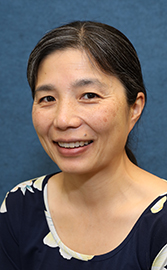
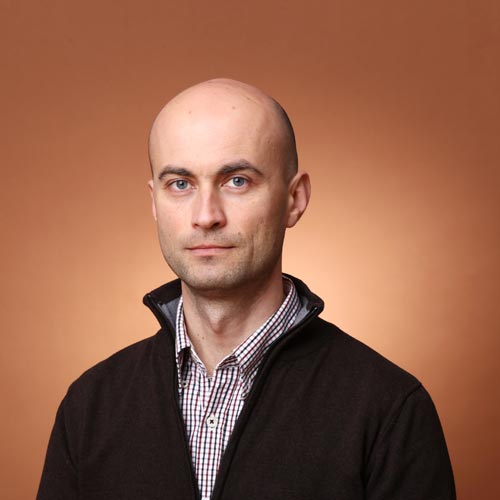
Sakiko Okumoto is an Associate Professor in Plant Science at Texas A&M University's College of Agriculture & Life Sciences. Her laboratory investigates plant nutrient transport mechanisms, biological nitrification inhibition, and root exudate biochemistry, with emphasis on sustainable agriculture solutions. Her research program focuses on understanding nitrogen cycling in agroecosystems, particularly the role of root-secreted compounds like sorgoleone in sorghum. Recent work develops advanced phenotyping techniques including Raman microspectroscopy for in vivo nutrient tracking. Analysis of her publication history shows core research areas: biological nitrification inhibition (40%), nutrient transport mechanisms (30%), molecular breeding (20%), and analytical phenotyping (10%). Recent articles demonstrate increasing focus on field validation of laboratory discoveries. Research Facilities: Maintains laboratory facilities in HPCT 337B and 528 at Texas A&M for biochemical analyses and plant cultivation.
Sonja Philipp is Professor of Structural Geology and Geodynamics at the University of Göttingen, researching brittle deformation processes and geothermal reservoir characterization. Her work combines field studies with numerical modeling to analyze fracture propagation and fluid transport in sedimentary rocks. Projects include AuGE (geothermal exploration analogues) and fracture analyses in limestone-marl alternations. Research highlights permeability structures in fault zones and mechanical heterogeneity effects on reservoir performance. Philipp teaches Fractured Reservoirs and leads rock mechanics investigations for safe geothermal drilling.
Dr. Ivor Morrow is a Senior Lecturer at Cranfield University, affiliated with the Centre for Defence Engineering and Physical Science. He serves as the Academic and Technical Lead for the Centre for Antenna, Communications and Technology Innovation (CACTI) Hub, a collaborative initiative between Cranfield University and Milton Keynes University. His expertise lies in sensor technologies, space systems, and systems engineering, with a focus on advanced antenna design and electromagnetic systems. His research spans a wide range of topics including 5G and terahertz space-based antennas, aerospace antenna systems, microwave imaging for ground penetrating radar, electromagnetic bandgap structures, frequency selective surfaces, and additive manufacturing of electromagnetic devices. He has led multiple funded projects such as CORREO (Conformal Retro Reflectors for Earth Observation) supported by the UK Space Agency, METAPOL (Metamaterial Surfaces for Antenna Polarisation Control) funded by MoD, and Pulpatronics – a startup grant for biodegradable RFIDs in 2024. The analysis of his recent publications reveals a consistent focus on antenna miniaturization, polarization control, metamaterial integration, and near-field microwave imaging. His work increasingly incorporates 3D printing and smart materials, reflecting a trend toward cost-effective, reconfigurable, and environmentally responsive RF systems. Applications span defense, humanitarian demining, smart cities, and Earth observation. LAPC Life Fellow award 2018 Ivor Morrow has served as a member of the EPSRC Peer Review Associate College since 2015 and held leadership roles in the IET Antennas and Propagation Professional Network, including Chairman from 2009–2013. He has advised numerous research students and supervised projects in areas such as retrodirective surfaces, reconfigurable antennas, and microwave imaging. His work is supported by grants from Find A Better Way Charity, EPSRC, UK Space Agency, MoD, Dstl, Roke Manor, and QinetiQ. He is actively involved in technology transfer and startup development, exemplified by the 2024 Pulpatronics grant. He leads the CACTI Hub, which fosters collaboration in antenna innovation and communications technology. The hub supports research in smart infrastructure, space systems, and defense applications, integrating academic research with industrial and governmental partners.
Dr. Nathan Kotlarewski is a Research Fellow in Timber Design and Production at the University of Tasmania's School of Architecture and Design. His career spans academia and industry, with prior roles including Postdoctoral Research Fellow at the University of Tasmania (2016-2019), Production Manager at CLTP Tasmania (2020-2021), and Visiting Lecturer at the University of Primorska. PhD in Industrial Design from Swinburne University of Technology (2016) Bachelor of Design (First Class Honours, 2012) Bachelor of Design in Industrial Design (2011) His research focuses on timber product innovation, material characterization, and sustainable transitions from native forests to plantation resources. Key areas include digital fabrication, mass timber production, and engineered wood product development. His work addresses industry challenges through advanced manufacturing and design thinking. Recent publications (2023-2025) analyze mechanical properties of plantation eucalyptus, moisture management in timber supply chains, and engineered flooring solutions. These reflect his expertise in CLT performance, glulam strength, and sustainable timber utilization. As a supervisor, he has guided doctorate candidates in projects such as "Optimal log selection for wood products" and "Developing Engineered Wood Products from Tasmanian Hardwood." His administrative expertise includes workshop management, project coordination, and industry engagement. Current roles involve the Centre for Sustainable Architecture with Wood, where he leads research on standards reform for lightweight timber framing and resource transition projects for Australian Forest and Wood Innovations grants.
Gudmund Reidar Eiksund is a Professor at the Department of Civil and Environmental Engineering, Faculty of Engineering, NTNU. He holds a Dr. degree in Geotechnics from NTNU (1994) and has extensive experience in offshore geotechnics, having worked at SINTEF Geotechnics (1994–2005) and as a consultant at GeoPartner Marin AS (2005–2011). His research focuses on offshore geotechnical engineering, particularly foundation design for offshore wind turbines, submarine landslide dynamics, and soil-structure interaction. He leads studies on clay-rich submarine landslides using advanced numerical methods like the Material Point Method (MPM) coupled with computational fluid dynamics (CFD). Recent work includes analyzing seismic-induced landslide mechanisms and erosion effects on clays under rapid flows. Key research areas include geotechnical risk analysis for offshore structures, cyclic loading effects on monopiles, and probabilistic modeling of soil behavior. His work integrates geotechnical and structural analyses for offshore wind turbines, emphasizing cost reduction through optimized designs. Collaborations involve institutions like SINTEF, CRC Press, and international partners such as the Japan Society of Civil Engineers. Eiksund has contributed to over 50 peer-reviewed articles and conference papers since 2017, focusing on offshore wind foundations, submarine landslide modeling, and soil mechanics. His research bridges experimental testing (e.g., centrifuge tests, physical model tests) with computational methods (CFD-MPM, finite element models). He advises on geohazard mitigation strategies and participates in projects like REDWIN, aiming to reduce offshore wind energy costs through integrated geotechnical-structural design. Notable contributions include developing macro-element models for monopile foundations, evaluating pile driving effects on slope stability, and assessing frost-induced soil behavior through x-ray tomography. His work addresses challenges in heterogeneous soil conditions, installation effects, and long-term reliability of offshore infrastructure under cyclic loading and seismic events.
Professor Gil Garnier is a Professor in the Department of Chemical Engineering at Monash University and Director of the Australian Pulp and Paper Institute (APPI). His research focuses on colloid science, polymer applications, surface engineering, and bioprinting, with a strong emphasis on sustainable materials and biomedical innovations. He leads a multidisciplinary team developing nanotechnology-based solutions for health diagnostics, environmental applications, and advanced materials. Key collaborations include work with experts in materials engineering, biomaterials, and biochemistry. Notable projects include the ARC Research Hub for Processing Lignocellulosics into High-Value Products and sustainable bio-product initiatives. Garnier's work contributes to UN SDGs, particularly in affordable and clean energy, and responsible consumption and production. Research highlights include bioprinting for diabetes testing, eco-friendly toxin detection, and functional fluid printing for solar panels. His team also explores catalytic paper for CO₂ adsorption and medical diagnostics using paper-based assays. Over 300 publications and 4 major projects underscore his impact in materials science and sustainable technology. Key Collaborations: Dr. Wei Shen (Monash Chemical Engineering) Dr. George Thouas (Biological Engineering) Prof. Paul Webley (Chemical Engineering) His patents include innovations in blood testing reagents and diagnostic devices, demonstrating translational research bridging academia and industry.
Rajeev Roychand is a Researcher in the School of Engineering at RMIT University, specializing in materials science and sustainable construction. He focuses on transforming waste materials into high-value resources, such as strengthening concrete using coffee biochar and developing eco-friendly cement alternatives. His work addresses global challenges in waste management, climate action, and infrastructure sustainability. Education: PhD in Materials Science (2017). Research Interests: Waste-to-resource innovations (e.g., coffee grounds, plastic conversion) CO2 mineralization in concrete Microplastic fragmentation and management Sustainable cement composites Scientific Awards: Malcolm Moore Industry Research Award (2024) RMIT STEM Media Star Award (2023) RMIT Award for Impact and Collaboration (2022) Advising & Grants: Supervises 7 PhD students and has secured $1.17M in research funding. Completed 15 industry projects with collaborators like Bondor Industries. Labs/Teams: Leads research on ultra-low carbon cement and pyrolysis processes for plastic waste recovery. Active in interdisciplinary teams addressing circular economy challenges.
Irene Palomar Herrero is an Associate Professor at the University of Alcalá's Department of Architecture. Her research focuses on advanced building materials, particularly cement-based composites with enhanced thermal, acoustic, and structural properties. She leads the Promarq research group, exploring bio-based materials, phase change materials (PCM), and nanotechnology applications in construction. Dr. Palomar Herrero holds a PhD from the University of Alcalá (2017), where her thesis addressed acoustical and thermal improvements in architectural mortars. She has published extensively on topics like self-healing mortars, 3D-printed architectural enclosures, and structural health monitoring systems integrated into smart materials. Her work bridges material science and sustainable architecture, with a focus on energy-efficient solutions for building envelopes and heritage conservation. Recent studies emphasize bioinspired materials and self-sensing composites for real-time structural monitoring. Key research areas include: material rheology for digital fabrication, PCM-enhanced mortars, and nanoclay-modified concretes. She collaborates on international projects addressing climate-responsive building materials and historical structure preservation.
Prof. Dr. Yupeng Jiang is a faculty member at Leibniz University Hannover, holding the position of Professor in the Department of Structural Mechanics and Computational Mechanics within the Faculty of Civil Engineering and Geodesy. His research focuses on computational mechanics, geotechnical engineering, granular dynamics, and fracture mechanics, with notable contributions to numerical simulation techniques and their applications in soil mechanics, particle fragmentation, and environmental engineering. He is affiliated with the Institute of Structural Mechanics and Computational Mechanics and can be contacted at yupeng.jiang@ibnm.uni-hannover.de . His recent work emphasizes hybrid numerical methods (e.g., MP-DEM, coupled material-point approaches) for simulating granular flows, soil-structure interactions, and fracture mechanisms. Key investigations include erosion dynamics in geophysical flows, the role of forests in mitigating flow mobility, and microseismic signal processing for subsurface fracture analysis. His studies often bridge experimental and numerical approaches to address challenges in geotechnical and environmental systems. No scientific awards or notable grants are explicitly mentioned in the provided texts. His advising record is currently unspecified. Prof. Jiang’s laboratory and team are part of the Institute of Structural Mechanics and Computational Mechanics, focusing on advancing computational tools for complex material behavior and geotechnical applications.
Peter Searson is the Joseph R. and Lynn C. Reynolds Professor of Engineering and Professor of Materials Science and Engineering at Johns Hopkins University, with joint appointments in Chemical and Biomolecular Engineering, Oncology, Physical Medicine and Rehabilitation, and Physics and Astronomy. He directs the Measurement Corps under inHealth, focusing on precision health technologies. His research spans tissue-engineered vascular models, blood-brain barrier mechanisms, drug delivery systems, and tumor microenvironment studies. Searson earned a Ph.D. in Chemical Engineering from the University of Manchester (1982) and conducted postdoctoral work at MIT before joining JHU in 1990. Key roles include former Department Chair (Materials Science, 1997–2003), co-founder/director of the Johns Hopkins Institute for NanoBioTechnology (2006–2016), and director of the Cancer Nanotechnology Excellence Center (2009–2016). His lab develops in vitro models for neurodegenerative diseases, stroke, and drug delivery. Notable awards include Fellowships from the American Physical Society, AAAS, and Electrochemical Society, along with IBM Distinguished Faculty Awards and National Academy of Inventors membership. Research emphasizes reverse-engineering vascular systems using stem cells and biomaterials. Over 150 peer-reviewed articles highlight topics like Lyme disease pathogenesis, BBB dysfunction, and wearable health sensors. Current projects include postdoctoral research on blood-retina barrier models and collaborations on precision rehabilitation. Professional leadership includes Sidney Kimmel Cancer Center’s Research Council and roles in major scientific societies. His lab’s innovations bridge engineering and medicine, advancing personalized healthcare through wearable technologies and in vitro disease models.
Dr. Vjekoslav Živković is an Assistant Professor at the University of Zagreb's Faculty of Forestry and Wood Technology, Department of Wood Technology. His research focuses on wood surface modification, adhesive bonding mechanisms, and the structural properties of constructional timber. He has held academic positions since 2004, including roles as an assistant and senior assistant研究员 before becoming an assistant professor in 2015. Dr. Živković's expertise spans thermal modification of wood, UV-induced surface changes, and the application of advanced materials like carbon/glass fiber composites for structural reinforcement. He actively contributes to the development of quality standards for wood products used in construction and interior design, with a particular emphasis on sustainability and durability. His recent work includes studies on deep learning for defect detection in wood, non-destructive testing of mechanical properties, and user perception of natural wood finishes. He collaborates with institutes like the Institute of Wood Science and Materials Technology, addressing both theoretical and applied challenges in wood technology. Dr. Živković teaches courses on wood building product quality and is fluent in Croatian, English, and German. His research has led to over 50 publications, focusing on improving wood material performance through innovative treatments and testing methodologies.
Guido Musso is a Full Professor in the Department of Structural, Building and Geotechnical Engineering (DISEG) at the Polytechnic University of Turin, where he conducts research and teaches in the fields of geotechnical and environmental engineering. He is actively involved in doctoral programs, particularly in Civil and Environmental Engineering, and contributes to academic governance as a member of several course colleges. His research is centered on advanced geomechanical modeling and experimental analysis of soils under complex environmental and energy-related conditions. University: Polytechnic University of Turin Department: Department of Structural, Building and Geotechnical Engineering (DISEG) Contact: guido.musso@polito.it | +39 0110904837 His primary research interests include CO2 and hydrogen storage, constitutive modeling of soils, chemo-mechanical processes in clays, unsaturated soil mechanics, slope stability, and waste disposal systems. His work integrates theoretical, numerical, and experimental approaches to address challenges in energy geotechnics and sustainable infrastructure. His recent publications focus on the long-term behavior of engineered barriers, caprock integrity for energy storage, and hydro-mechanical responses of soils under environmental stresses. These works reflect a strong trend toward sustainable energy solutions, environmental protection, and advanced computational modeling in geotechnics. Scientific Service and Recognition: Member of the Editorial Board, Géotechnique (2014–2016) Program Committee, CPEG 2013 Organizing Committee, IARG 2011 He has supervised multiple PhD students on topics related to energy geostructures and caprock behavior, and has led numerous research projects funded by national and commercial sources. He also coordinates external teaching initiatives, including lectures at the Polytechnic University of Milan. His laboratory work is conducted within the Geotechnical Laboratory (DISEG), supporting both academic and applied research.
Alessia Bacchi is a Professor of Chemistry at the University of Parma, specializing in crystal engineering and responsive hybrid materials. She served as President of the European Crystallographic Association (2015-2018) and currently acts as Trustee of the Cambridge Crystallographic Data Center (since 2018). Her research focuses on crystal form design, molecular recognition in solid/gas exchanges, and stabilization of volatile compounds within MOFs and cocrystals. Bacchi actively contributes to science outreach, founding Parma's Museum of Crystallography (2015) and organizing events like the 2014 CRISTALLI! exhibition, which attracted 12,500 visitors. She has published over 170 journal articles, 5 book chapters, and presented 150+ conference communications. Research Trends: Her recent 2025 publications emphasize mechanochemical synthesis, solvent uptake/release mechanisms in MOFs, and structural stabilization strategies for pharmaceutical/environmental applications. National award for young scientists in crystallography (2000) Chair of international microsymposia and scientific committees
Prof. Dr. Chahan Yeretzian is a leading researcher at the Coffee Competence Centre of the ZHAW School of Life Sciences and Facility Management in Switzerland. With a focus on coffee chemistry and analytical technologies, he investigates aroma formation, freshness preservation, and process control methods. His work spans industrial applications, consumer behavior studies, and sustainable value chains.
Anna Massaguer Vall-llovera is an Associate Professor in the Department of Biology at the University of Girona, where she is also an active researcher in the Group of Research in Targeted Antitumor Therapies and a member of the consolidated research group CIMiT (Cancer, Inflammation, Microbiome and Therapies), recognized by the Generalitat de Catalunya. Her educational background includes a PhD in Pharmacy from the University of Barcelona (2003), with predoctoral research at Harvard Medical School and postdoctoral training at IDIBAPS-Hospital Clínic in Barcelona (2003–2007). Her research focuses on interdisciplinary approaches in biomedicine, particularly: Targeted cancer therapies using carrier proteins and nanoparticles Development of selective chemotherapy and phototherapy Mechanisms of inflammation and adhesion molecules in disease Genetic variability of hepatitis C virus and treatment response The overarching goal of her work is to develop more efficient cancer treatments with reduced side effects through precise drug delivery systems. Her recent publications reflect strong trends in nanomedicine, molecular targeting, and translational research, with a clear emphasis on bridging laboratory discoveries with clinical applications in oncology and inflammatory diseases. She has participated in 10 externally funded research projects and three collaboration agreements with biotech companies, demonstrating active engagement in both academic and applied research. She has supervised four doctoral theses and continues to contribute to the training of future scientists. Her research is conducted within the Targeted Antitumor Therapies Research Group and the broader CIMiT network, involving national and international collaborations.