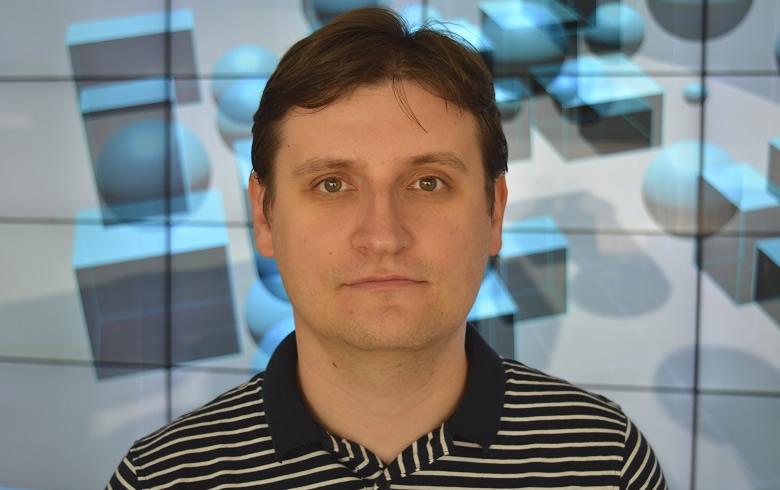
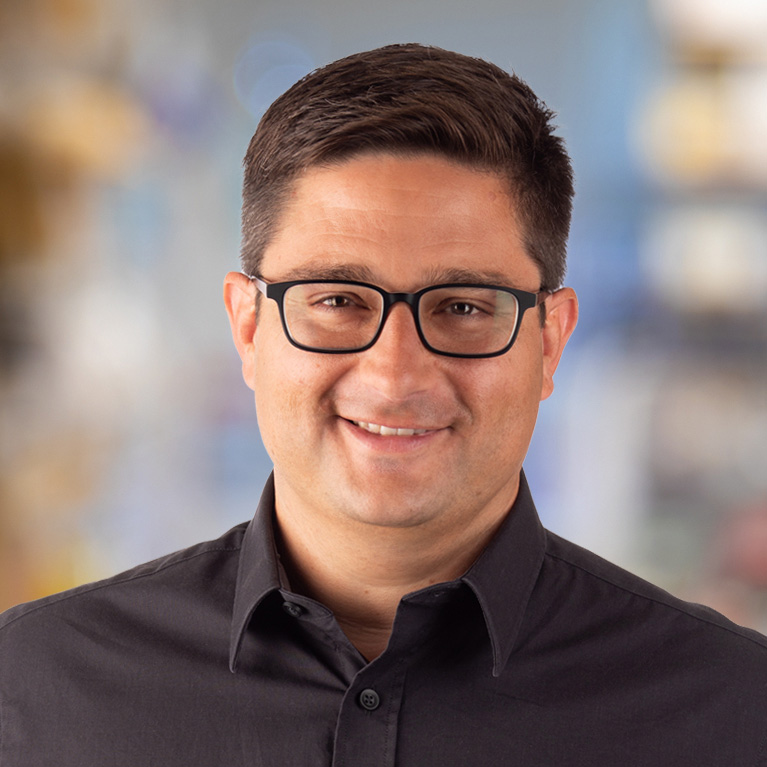
Radu-Daniel Vatavu is Professor of Computer Science at Ștefan cel Mare University of Suceava, Romania, where he directs the Machine Intelligence and Information Visualization Lab (MintViz). His research focuses on human-computer interaction, gesture recognition, ambient intelligence, and accessible computing. Education includes PhD in Computer Science. He develops gesture recognition algorithms including $P and $Q recognizers used widely in HCI research. Awards include Mihai Draganescu Award of the Romanian Academy (2019), Ten-Year Technical Impact Award from ACM ICMI (2022), and multiple ACM CHI Best Paper Awards (2023, 2016, 2015). Research develops new interaction techniques for touchscreens, wearables, and smart environments. Creates open-source tools like Agreement Analysis Toolkit (AGATe) and Gesture Heatmaps Toolkit (GHoST).
Christian Metallo, PhD, is a Professor at the Salk Institute for Biological Studies, where he leads the Molecular and Cell Biology Laboratory. His research focuses on understanding how metabolic pathways drive diseases such as cancer, diabetes, and neurodegenerative disorders. Metallo employs cutting-edge techniques like stable isotope tracing and mass spectrometry to map metabolic networks and identify therapeutic targets. Education: Bachelor of Science in Chemical Engineering, University of Pennsylvania Master of Science and PhD in Chemical and Biological Engineering, University of Wisconsin-Madison Postdoctoral Fellowship in Biological Sciences, Massachusetts Institute of Technology Research Interests: Metallo’s work investigates how cellular metabolism influences disease progression. Key areas include the role of serine/glycine metabolism in tumors, the metabolic defects linked to macular telangiectasia type 2, and lipid metabolism in obesity and fatty liver disease. His lab also develops tools like Escher-Trace to visualize metabolic flux. Publications: Over 100 peer-reviewed articles, including high-impact studies on metabolic reprogramming in cancer, drug development targeting metabolic vulnerabilities, and the interplay between immunity and metabolism. Recent work highlights metabolic dependencies in pancreatic cancer and the role of itaconate in immune responses. Awards: Recipient of prestigious awards including the Mark Foundation Endeavor Award (2022), AIMBE Fellowship (2021), and Camille & Henry Dreyfus Teacher-Scholar Award (2018). His research is funded by grants from the NIH, NSF, and industry partners. Labs & Teams: The Metallo Lab includes postdoctoral fellows, graduate students, and research scientists from diverse backgrounds in engineering, biochemistry, and immunology. Collaborations span academia and industry, focusing on translational applications of metabolic insights. The lab’s Escher-Trace software is widely used for metabolic pathway visualization.
Aly A. Farag is a Professor of Electrical and Computer Engineering at the University of Louisville, where he founded the Computer Vision and Image Processing (CVIP) Laboratory. His research focuses on imaging science, computer vision, and biomedical imaging, with applications in cancer detection and medical visualization. He has authored over 350 technical papers and two upcoming textbooks. Dr. Farag holds patents in imaging technologies and has led projects funded by NSF, DoD, NIH, and industry. Educations: B.S. in Electrical Engineering, Cairo University, 1976 M.S. in Bioengineering, University of Michigan, 1984 M.S. in Biomedical Engineering, Ohio State University, 1981 Ph.D. in Electrical Engineering, Purdue University, 1990 Research Interests: Scene analysis, multimodal imaging reconstruction, statistical segmentation, and biomedical visualization. His work has advanced tubular topology visualization, colon segmentation, and lung nodule analysis. Collaborations span medical institutions and federal agencies. Awards: 2002 University Scholar designation for technical achievements. Served as associate editor for IEEE Transactions on Image Processing and general co-chair of IEEE ICIP-09. Grants & Advising: Principal investigator on NSF/NIH-funded projects. Advised 15 PhD and 26 MS students, trained 10 postdocs, and introduced new ECE curriculum topics. Labs/Teams: CVIP Lab pioneers innovations in medical imaging and AI-driven diagnostics. Active in interdisciplinary teams for STEM education engagement metrics.
Alejandro Lleras is a Professor at the University of Illinois at Urbana-Champaign, affiliated with the College of Liberal Arts and Sciences and the Beckman Institute for Advanced Science and Technology . He serves as the Associate Dean for Inclusive Excellence and is a member of the U.S. National Committee for Psychological Science . Ph.D. from Pennsylvania State University (2002) Current co-director of the Vision Lab with Simona Buetti His research focuses on visual attention, perception, and feature-based processing , with recent work exploring emotional memory modulation, color-shape interactions in search tasks, and peripheral vision limitations. Key themes include: Temporal attention and sustained concentration failures Feature guidance in complex visual environments Role of perceptual similarity in search efficiency Impact of emotional arousal on relational memory His publications (2012–2025) demonstrate expertise in visual cognition, attentional theories, and cognitive modeling , with a strong emphasis on experimental validation of computational models. Awards include the NSF CAREER award and Psychonomic Society Mid-Career award . As co-founder of the Spark Society , he actively promotes diversity in cognitive sciences. His lab investigates topics like contextual cueing , feature boosting theories , and online eye-tracking methodology , supported by NSF grants including the Louis Stokes Alliance for Minority Participation program.
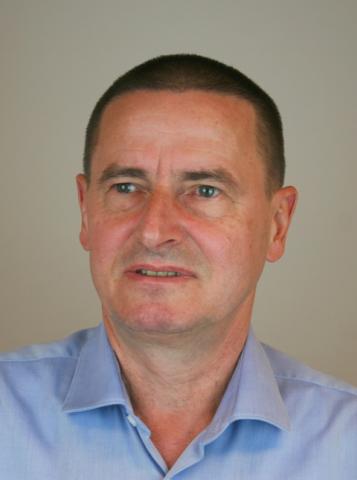
Eduard Gröller is a Full Professor of Visualization at the Vienna University of Technology (TU Wien), leading the Research Unit of Computer Graphics and the Visualization Group within the Institute of Visual Computing & Human-Centered Technology (VC&HCT). He holds adjunct professorships at the University of Bergen, Norway, and chairs several academic committees. His academic journey began with a PhD in 1993 from TU Wien, followed by extensive contributions to visualization research. His research focuses on visual computing, scientific visualization, and medical imaging, with applications in energy modeling, climate analysis, and molecular biology. Gröller has pioneered methods like BEMTrace for BIM-based energy models and HORA 3D for flood risk visualization. He co-authored over 300 publications, including foundational work in IEEE Transactions on Visualization and Computer Graphics and Computer Graphics Forum . Gröller's awards include the IEEE VGTC Technical Achievement Award (2019), Eurographics 2015 Outstanding Technical Contributions Award, and Fellow of the Eurographics Association (2009). He actively contributes to conferences like EuroVis and IEEE Visualization as program chair and reviewer. His educational efforts span courses in visual computing, graphics, and data analysis, with a focus on immersive tools like ImNDT for material data exploration. Current projects include Climate-Sensitive Adaptive Planning for Resilient Cities, Visual Analytics in Radiation Therapy, and scalable web-based visualization techniques. He leads teams in VRVis, a research center for applied visualization, and collaborates internationally on medical imaging and environmental data challenges.
Dr. Maria A. Martin has been affiliated with the Potsdam Institute for Climate Impact Research (PIK) since 2008, initially as a doctoral student and later transitioning to a post-doctoral researcher. Since 2014, she has served as a Research Analyst within the Scientific Directors' Staff department. Her academic background includes a physics degree from the University of Potsdam and Université Pierre-et-Marie-Curie in Paris, where her doctoral thesis focused on synchronization in quantum-optical resonators. At PIK, she co-developed the Parallel Ice Sheet Model and conducted pioneering research on Antarctic ice-flow dynamics using numerical modeling techniques. Dr. Martin's research interests span climate modeling, glaciology, and environmental science, with a particular emphasis on understanding the mechanisms driving ice-sheet dynamics and their implications for sea-level rise. Her work integrates advanced computational models with observational data to address critical questions in climate science. Beyond technical contributions, she has engaged in science communication through initiatives like the children's podcast Pinselohr . Her professional network and collaborations are reflected in her participation in interdisciplinary projects at PIK, including contributions to policy advice and software development related to climate impact research. She holds an ORCID identifier (0000-0002-1443-0891) and maintains active involvement in academic discourse through peer-reviewed publications and institutional outreach activities.
Kristina Rand is an Associate Professor in the Department of Psychology at the University of Utah, specializing in spatial cognition and visual perception. She directs the Visual Perception and Spatial Cognition Lab , focusing on how perceptual limitations affect navigation and spatial learning. Education: Ph.D. in Psychology (2014), University of Utah; M.S. in Psychology (2009), Montana State University; B.S. in Psychology (2006), University of Oregon. Her research examines spatial memory, environmental complexity, and cognitive adaptations for individuals with visual impairments. Key themes include the interplay between attention, mobility monitoring, and perceptual cues in navigation tasks. Her publications since 2009 highlight applications in accessibility design, human-computer interaction, and aging cognition. Articles analyze spatial learning impairments, distance perception biases, and assistive technologies like physical guidance and low-vision simulations. Contact details include office 630 BEHS and phone 801-581-8081 .
Linda Lundström is a Professor at KTH Royal Institute of Technology, leading the Bio-Opto-Nano Physics (BON) division. Her research focuses on visual and physiological optics, including myopia control mechanisms, peripheral vision optimization, and optical instrumentation. She holds academic roles in the Department of Molecular Biosciences, contributing to interdisciplinary research at the intersection of physics, biology, and health sciences. Teaching responsibilities include courses such as Waves (SK1120), Photography for Media (SK1140), and supervision of degree projects in applied physics and technology education. Her work emphasizes practical applications of optics in healthcare, particularly in improving vision correction technologies. Research highlights include the Stockholm Myopia Study, investigating peripheral refraction dynamics in children, and developing novel methods for evaluating intraocular lens (IOL) designs and peripheral optical quality. She has pioneered instruments like the dual-angle open-field wavefront sensor for simultaneous central and peripheral eye measurements. Her contributions span over 100 peer-reviewed articles, emphasizing advancements in optical correction techniques, contrast sensitivity analysis, and the role of peripheral vision in clinical settings. Lundström’s work bridges fundamental optics research with practical medical applications, aiming to enhance vision quality and reduce myopia progression.
Arturo Deza is an Assistant Professor of Computer Science at Universidad de Ingeniería y Tecnología (UTEC) in Lima, Peru, and CEO of Artificio, a research-driven company advancing autonomous driving technology. His academic work bridges neuroscience, machine learning, and computer vision, focusing on adversarial robustness, foveated systems, and human-machine perception. He holds a PhD in Dynamical Neuroscience from UCSB and a B.S. in Mechatronics Engineering from Universidad Nacional de Ingenieria. His research has been recognized with awards like the EB-1A Green Card for Extraordinary Ability and the Harvard Brain Initiative Travel Award. Deza's interdisciplinary approach includes contributions to image virality analysis, peripheral representation modeling, and bio-inspired AI. His recent talks and publications address topics ranging from autonomous driving challenges to neuro-symbolic AI integration. Education : PhD in Dynamical Neuroscience, UCSB (Vision and Image Understanding Lab) B.S. in Mechatronics Engineering, Universidad Nacional de Ingenieria Research Interests : Adversarial Robustness in Deep Learning Foveated Vision Systems Human-Machine Perception Autonomous Driving Technology Bio-inspired AI Models Awards : EB-1A Green Card for Extraordinary Ability in the Sciences Harvard Brain Initiative Young Scientist Travel Award NVIDIA Best Poster Award (2015) Professional Roles : Assistant Professor, UTEC (since Aug 2023) CEO & Co-Founder, Artificio (Lima-based autonomous driving tech) His recent work emphasizes practical AI applications, including the Robusto-1 dataset for autonomous driving evaluation and studies on adversarial robustness in perception systems. Deza also actively contributes to academic reviewing (ICLR, NeurIPS, CVPR) and organizes workshops like the Shared Visual Representations in Human and Machine Intelligence (SVRHM) at NeurIPS.
Professor Emma Hodson-Tole is a leading researcher in neuromuscular biomechanics at Manchester Metropolitan University , where she investigates the interplay between skeletal muscle anatomy, physiology, and neurodegenerative diseases like Motor Neurone Disease (MND). Her work integrates ultrasound imaging and electromyography to develop innovative tools for measuring muscle health and disease progression. PhD from University of London (Structure & Motion Laboratory, Royal Veterinary College, 2007) Postdoctoral Fellow, School of Applied Physiology, Georgia Institute of Technology Current Professor of Neuromuscular Biomechanics at Manchester Metropolitan University Her research focuses on: Diagnosis and monitoring of neurodegenerative diseases Mechanisms of motor unit recruitment and variability in neuro-motor control Biomedical imaging techniques for skeletal muscle Applications of signal processing and computer vision in neuromuscular studies Recent publications highlight her work on: Evaluating digital monitoring tools for MND progression Age-related muscle changes and mobility limitations Ultrasound-based fasciculation detection Muscle architecture during dynamic movements Scientific awards include the Sir Henry Wellcome Postdoctoral Fellowship . Her projects, funded by the MRC MND Accelerator and The MND Association , aim to improve early MND diagnosis and personalized care through remote monitoring and advanced imaging. She collaborates with institutions like Kings College London , University College London , and healthcare providers in Salford and Sheffield. Teaching emphasizes skeletal muscle function and peripheral nervous system behaviors in courses such as BSc Human Physiology and MSc Human Physiology . She supervises undergraduate and postgraduate students and is involved in public engagement via projects like Star Cells , a neurophysiology-inspired dance collaboration with The Physiological Society .
Anirvan Nandy is an **Assistant Professor of Neuroscience and Psychology** at **Yale University School of Medicine**, with joint appointments in the **Department of Neuroscience** and **Department of Psychology**. His research focuses on the neural mechanisms underlying attention, visual perception, and social cognition, particularly the role of cortical layer dynamics in information processing. **Education**: PhD in Psychology (University of Southern California, 2010), MS in Electrical Engineering (National Technological University, 2002), BTech in Electrical Engineering (Indian Institute of Technology, 1994). Postdoctoral training at the Salk Institute for Biological Studies. **Research Interests**: Investigates how sensory cortical systems select relevant stimuli while ignoring distractors, with a focus on layered cortical circuits in primates. Uses electrophysiology, optogenetics, and computational modeling to study attention, visual crowding, and social behavior. **Awards**: Recipient of the **Yale Orthwein Scholar Award for Visual Science (2017)** and **NARSAD Young Investigator Award (2017)**. Notable recognition includes the **Kavli Postdoctoral Fellowship (2023)**. **Lab**: Directs the **Nandy Lab**, collaborating with researchers like Dr. Monika Jadi and Dr. Steve Chang. Current projects include studying cooperative behavior in marmosets and laminar organization of visual attention. **Grants & Funding**: Supported by awards from the Orthwein Foundation and Brain & Behavior Research Foundation. Active in interdisciplinary initiatives at the Wu Tsai Institute and Swartz Program in Theoretical Neurobiology.
Markus Löchtefeld is an Associate Professor at the Department of Architecture, Design and Media Technology within the Technical Faculty of IT and Design at Aalborg University. He holds leadership roles as Head of Studies and Deputy Head of Department. His research focuses on Human Computer Interaction, Sustainable Design, Wearable Technology, and Electrochromic Displays. Löchtefeld has contributed to over 113 publications and 6 research projects, including initiatives like 'Design Vocabularies' and 'Digital Empowerment Tools for Green Citizen-Driven Initiatives.' His work emphasizes sustainability through projects such as 'Design for Long-life Smart Products' and 'EcoPlotter,' a toolkit for electrochromic displays. Key collaborations include the ERASMUS+ funded 'ABRA: Artificial Biology, Robotics, and Art.' He has received the Best Paper Award at ACM MobileHCI 2017. Research Interests: Interaction Design, Wearable Devices, Sustainable ICT, Electrochromic Materials Notable Projects: Design Vocabulary Book Series Longevity Strategies for Smart Products Virtual Reality for Sustainability Education Löchtefeld's articles explore topics like peripheral vision training in VR, tangible tokens for product longevity, and ethical UX design's environmental impact. His work bridges technology and sustainability, addressing both technical innovation and societal challenges.
Professor Pablo Muñoz is a leading academic in entrepreneurship at Durham University's Business School, specializing in the intersection of social science, enterprise, and environmental challenges. He founded the Social Science Enterprise Lab and co-founded Mind Your Business, a university spin-out prioritizing ethical business practices. His roles include Co-Director of the Durham Enterprise Centre and the Centre for Social Justice and Community Action, alongside editorial and visiting positions at IE Business School and EGADE Business School. His research focuses on prospective inquiry, social science commercialization, and impact measurement, emphasizing practical solutions for societal and environmental issues. Recent work explores restorative entrepreneuring for at-risk groups, hybrid venture tensions, and regenerative practices integrating human-animal relationships. Over 70 publications span journals like Entrepreneurship Theory and Practice and Business & Society . Professor Muñoz advises seven doctoral students across entrepreneurship and related fields. His labs and initiatives promote innovative approaches to social justice, sustainability, and community development through interdisciplinary collaboration.
Sara Lindsay is a Professor of Marine Sciences at the School of Marine Sciences, University of Maine, specializing in sensory biology and ecology of marine invertebrates including polychaetes, bivalves, echinoderms, and tardigrades in benthic environments. Her academic background includes: Ph.D., University of South Carolina, 1994 As an integrative biologist, Dr. Lindsay's research spans marine invertebrate community ecology , behavior , physiology , sensory biology , and cell & molecular biology . She investigates how chemoreception and vision coordinate behaviors, how predation and disturbance structure communities, and the physiological costs of tissue regeneration in sediment-dwelling organisms. Analysis of her 2004-2015 publications reveals consistent focus on polychaete sensory mechanisms, regeneration processes, and bioturbation ecology. Her work integrates molecular, physiological, and ecological approaches to examine injury responses, sediment reworking, and chemosensory organ function across diverse benthic taxa. Dr. Lindsay leads the Lindsay Lab , which employs advanced microscopy and molecular techniques to study how marine invertebrates adapt to life in soft-sediment habitats through sensory and regenerative adaptations.
Alexander Goettker is a postdoctoral researcher at Justus Liebig University Giessen, focusing on oculomotor control, perceptual judgment, and sensorimotor integration. His work bridges basic research on eye movements with applied studies in VR/AR display optimization. Current role: Postdoctoral Researcher at Justus Liebig University Giessen Key collaborations: Professor Karl Gegenfurtner's lab Research interests include predictive eye movements in naturalistic scenes, serial dependence effects in motor tasks, and the influence of contextual cues on oculomotor behavior. He explores how retinal signals and internal models interact to enable stable perception during eye movements. Recent trends in publications emphasize individual differences in sensorimotor processing, the role of naturalistic stimuli in vision science, and the trade-offs between perceptual and oculomotor artifacts in head-mounted displays. His work also investigates eye-hand coordination and the impact of display duty cycles on visual tracking accuracy. Labs and teams include collaborations with Professor Karl Gegenfurtner's lab, leveraging interdisciplinary approaches to study eye movements in ecological contexts and their implications for VR/AR technology.