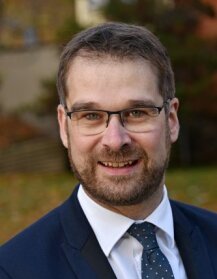
Silvestro Micera is a Full Professor at the Swiss Federal Institute of Technology Lausanne (EPFL) and holds the Bertarelli Foundation Chair in Translational Neuroengineering. He directs the Translational Neural Engineering Laboratory and teaches courses including Neural signals and signal processing and Translational neuroengineering . His research bridges neural interfaces, robotics, and neuroprosthetics to restore motor functions in spinal cord injuries, stroke, and amputations. Micera's research integrates implantable neural interfaces, robotic rehabilitation, and hybrid neuro-prosthetic systems. Key focus areas include: Robotic neurorehabilitation for mobility restoration Neural control mechanisms in movement CNS/PNS neural interface development Bioelectronic modulation for sensory feedback His recent publications emphasize machine learning-driven motor recovery prediction, closed-loop sensory feedback systems, and minimally invasive neuroprosthetics. Trends include AI-optimized stimulation protocols, multimodal data fusion for rehabilitation, and clinical translation of neural bypass technologies. Awards: IEEE EMBS Early Career Achievement Award (2009) IEEE EMBS Technical Achievement Award (2021) Micera leads EU-funded projects such as TIME, CLONS, and NeuWalk, focusing on neural prostheses. He advises 8 current and 18 former PhD students in neuroengineering. His lab collaborates with MIT, Harvard, and industry partners (e.g., Plexon) to advance translational neurotechnologies.
Angelika Sjöstedt serves as Professor and Chair of Gender Studies within the Department of Humanities and Social Sciences at Mid Sweden University. Her academic leadership spans teaching across Bachelor's, Master's, and PhD programs in Gender Studies and Sociology, while actively contributing to institutional discourse through roles such as delivering the 2024 academic celebration lecture. She maintains significant engagement with contemporary academic freedom debates, notably co-organizing the 2024 seminar series addressing responsible internationalization amid the Gaza conflict. Her research profile reveals deep expertise in intersectional analysis of gender, settler colonialism, and labor precarity, particularly examining how chronic crises manifest in peripheralized regions. Recent work demonstrates acute responsiveness to geopolitical emergencies, with 2024 publications directly confronting academic complicity in genocide. Her methodological approach bridges ethnographic rigor with activist scholarship, evident in long-term collaborations like the Båskoes Sámi research network and Forum for Gender Research. Sjöstedt's scholarly trajectory shows consistent thematic development from early work on flexible knowledge-work subjectivity (2012) through nuanced examinations of rural resilience (2017-2020) to current urgent interventions in academic freedom. Her publications reveal distinctive geographic focus on Norrland's inland regions while maintaining transnational theoretical relevance, particularly regarding mining resistance movements and crisis management frameworks. The 2021-2024 output demonstrates accelerated engagement with acute political emergencies, signaling scholarly adaptation to escalating global crises. Professional networks constitute a critical dimension of her work, with sustained involvement in the Forum for Gender Research since at least 2015 and leadership in the Båskoes network advancing Indigenous research methodologies. Her editorial work on critical anthologies like Aktivism: En antologi om arbete för social och politisk förändring (2022) demonstrates commitment to bridging academic and activist knowledge production.
Marcela Echeverri Muñoz is an Associate Professor in the Department of History at Yale University, affiliated with the Faculty of Arts and Sciences. Her scholarship bridges history, anthropology, and political theory, with a focus on Latin America, the Atlantic World, and the Spanish Empire. She is recognized for her interdisciplinary approach to understanding political subjectivities, state formation, and social transformation during the Age of Revolutions. PhD in Latin American and Caribbean History, New York University, 2008 MA in History of the Hispanic World, Fundación MAPFRE-Tavera and CSIC, Madrid, 2006 MA in Social and Political Theory, The New School for Social Research, 2001 BA in Anthropology, Universidad de los Andes, Bogotá, 1997 Her research centers on the interplay of race, gender, law, and political theory in colonial and 19th-century Latin America. She investigates how enslaved and Indigenous peoples navigated imperial and republican transitions, particularly through royalist affiliations. Her work challenges peripheral narratives of Spanish America in Atlantic slavery studies, positioning the region as a central site of abolitionist and constitutional experimentation. The trends in her recent publications reveal a sustained focus on slavery, abolition, and political transformation in the Spanish American mainland. She analyzes how anti-slavery movements were intertwined with republicanism, citizenship, and state formation, especially in Gran Colombia. Her scholarship spans legal history, Atlantic processes, and transimperial dynamics, often highlighting marginalized voices in revolutionary contexts. She frequently contributes to major reference works and edited volumes on Atlantic revolutions and Latin American independence. Her scientific awards and fellowships reflect her standing in the field: James Alexander Robertson Prize Michael Jiménez Prize Bolton-Johnson Prize Honorable Mention Yale Heyman Prize for Outstanding Scholarly Publication Alexander von Humboldt Research Fellowship MacMillan Research Fellow, Yale Mellon Residential Fellow, CUNY NEH Summer Institute Participant, Johns Hopkins Fellowships from John Carter Brown Library, CSIC, Fundación Mapfre, and Instituto Colombiano de Antropología e Historia Echeverri has secured significant research grants from Harvard’s Atlantic History Seminar, CUNY Research Foundation, and Yale. She has co-edited special issues on Gran Colombian history and Spanish American abolition, and led key academic initiatives including the Race and Slavery in the Atlantic World Working Group and the Early Modern Empires Workshop at Yale. Though student advising is not explicitly detailed, her role as a senior scholar implies mentorship of graduate students. She is affiliated with several research networks and has been a visiting scholar at institutions such as Freie Universität Berlin. Her ongoing book project on Gran Colombian slavery underscores her commitment to redefining the hemispheric significance of Latin American abolition. She remains an active contributor to both scholarly and pedagogical conversations in Atlantic and Latin American history.
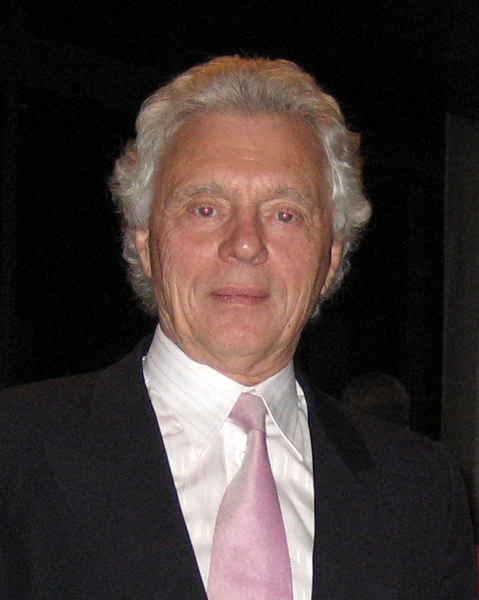
Allen J. Scott is a Distinguished Research Professor at the University of California, Los Angeles, with a joint appointment in the Department of Public Policy (School of Public Affairs) and Department of Geography. He has held prestigious positions at UCLA since 1994 and previously at the University of Toronto (1969–1994). His career spans over five decades, focusing on urban geography, regional development, and cultural economy. Education : BA (1961) from Oxford University; MA and PhD (1962, 1965) from Northwestern University. Research Interests include: Creative cities and cognitive-cultural capitalism Political economy of urbanization and globalization Industrial clusters and labor-intensive economies Human capital distribution in metropolitan areas Cultural landscapes and peripheral development Publication Trends (2005–2014) emphasize: Globalization's impact on low-technology industries Cognitive-cultural capitalism in urban contexts Human capital dynamics in metropolitan hierarchies Celebrity culture and urban glamour Creative field theories and urban policy implications Scientific Awards : 1986 Guggenheim Fellow 2003 Vautrin Lud Prize 2005 Meridian Book Prize 1999–2013: Chaires d’Excellence, Fellowships, and Doctor Honoris Causa 2008 Carol and Bruce Mallen Lifetime Achievement Award 2003 ISI Highly Cited Author
Professor Amin Abbosh is a faculty member at the School of Electrical Engineering and Computer Science, University of Queensland. His research focuses on Medical Microwave Imaging and Millimeter-wave Engineering, with contributions to advanced imaging systems, antenna design, and communication technologies. He leads projects in electromagnetic medical sensing, including portable brain scanners and wearable diagnostic systems. His work integrates applied electromagnetics with AI-driven algorithms, addressing challenges in stroke detection, liver health monitoring, and deep vein thrombosis diagnosis. With over 16 patents and collaborations across biomedical and engineering domains, his research bridges clinical needs with cutting-edge electromagnetic techniques. Key projects include the development of low-cost healthcare monitoring systems and reconfigurable antennas for satellite communications. Research interests span medical imaging systems, antenna array design, and signal processing for healthcare applications. His team innovates in areas like phased arrays, dielectric property analysis, and non-invasive diagnostics. Recent advancements include synthetic microwave focusing techniques and self-supervised deep learning models for clutter removal in imaging. Publications highlight contributions in IEEE journals and conferences, emphasizing clinical applications and device prototyping. Collaborations with institutions like the University of Queensland’s medical faculty and industry partners ensure practical implementation of his research.
Judit Bodnar is a Professor in the Department of Sociology and Social Anthropology at Central European University (CEU), affiliated with the Doctoral School of History. Her research spans urban theory, political economy of globalization, public space, and the cultural dimensions of capitalism. She actively contributes to academic discourse through publications and editorial roles. Research Interests: Urban theory and history Modernity and capitalism (comparative and historical) Uneven development Public space and public art Political economy and culture of globalization Sharing economy and digital platforms Food and politics Her recent work focuses on the transformation of public and private boundaries in the context of digital platforms like Airbnb and home restaurants, as well as the racial and spatial segregation of Roma communities in urban Europe. She critically examines the legacies of 1968 as a global moment and the gentrification of urban spaces such as Chicago’s Cabrini Green. The publication trends reflect a deep engagement with urban sociology, political economy, and cultural critique, especially in the context of neoliberalism, digital transformation, and global inequality. Her work bridges historical analysis with contemporary urban challenges. Editorial Role: Co-editor, Critical Historical Studies , University of Chicago Press Academic Events: Privacy Goes Public: Airbnb, Home Restaurant and the Reconfiguring of Public and Private in the Sharing Economy (November 24, 2021) Racial Cities: The Segregation of Roma in Urban Europe (October 5, 2017) She advises doctoral students in the Doctoral School of History and supervises research on urban and historical sociology. Her work is supported by interdisciplinary collaborations and engagement with global scholarly networks. She is involved in critical urban research, often linking theory with social justice concerns. Labs and Research Groups: Active participant in urban sociology and globalization research clusters at CEU Contributor to transnational dialogues on the right to the city and urban commons
Claire Mercer is a Professor of Human Geography at the London School of Economics and Political Science (LSE), based in the Department of Geography and Environment. Her research focuses on urbanization in Africa, particularly in Tanzania, examining how middle-class identities are constructed through suburban housing and self-build practices. She explores themes of class reproduction, urban inequality, and the intersection of civil society with development policies. Mercer is a leading scholar in African urban studies, with expertise in diaspora networks, postcolonial geographies, and NGO dynamics. Her current research project, funded by the ESRC, investigates how self-build housing in Ghana and Tanzania drives urban and economic growth. She has authored multiple books and articles, including the upcoming monograph The suburban frontier: middle class construction in Dar es Salaam (University of California Press, 2024). Mercer serves on editorial boards for journals such as the International Journal of Urban and Regional Research and Antipode , contributing to critical debates in development geography. Her work spans interdisciplinary themes including African urbanism, spatial inequality, and the politics of belonging. Key regions of focus include Tanzania, Cameroon, and the UK. Mercer’s research bridges theoretical frameworks from human geography with empirical studies of African urbanization, emphasizing the material and aesthetic dimensions of class formation in peripheral urban areas.
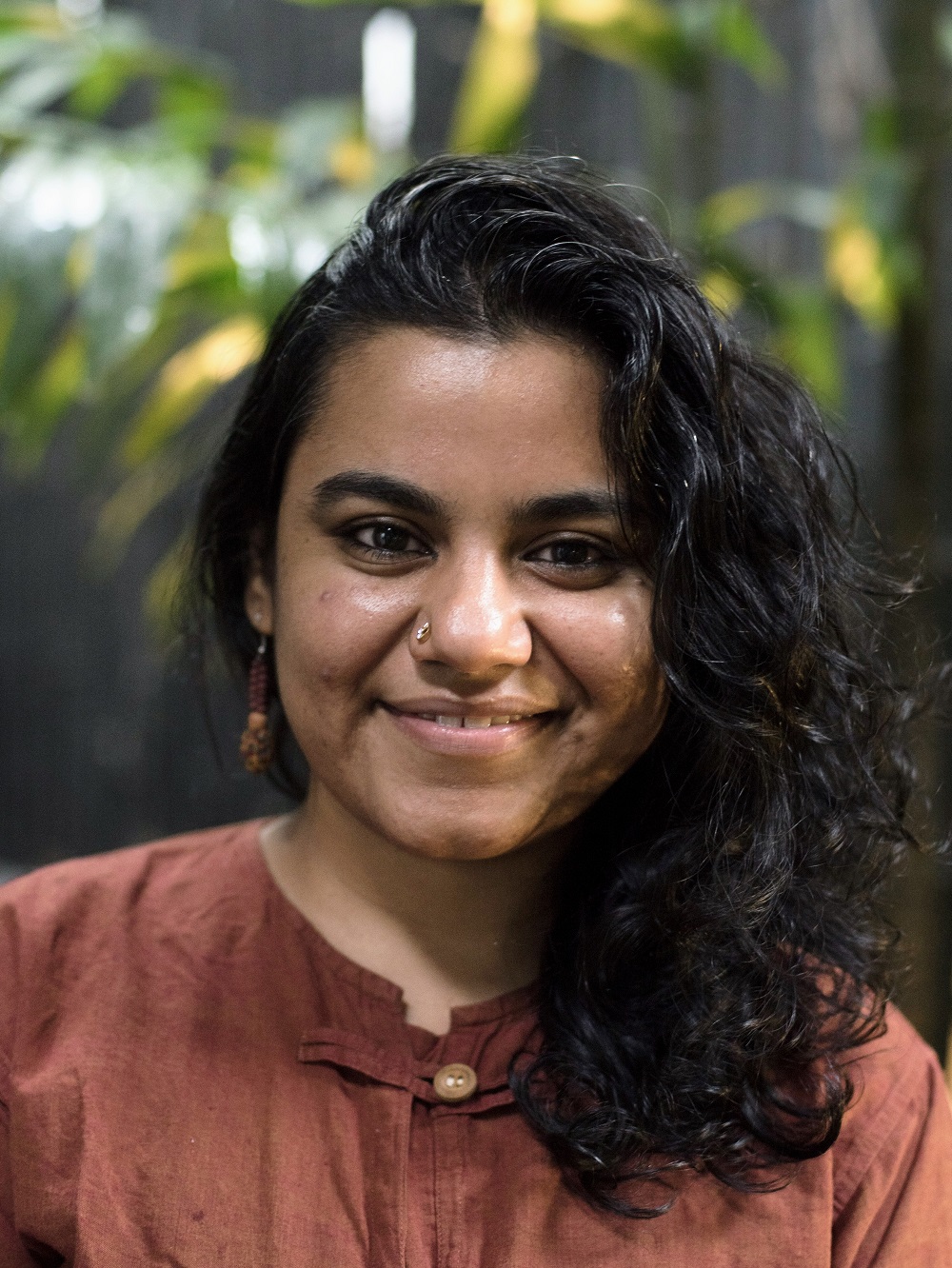
Priti Narayan is an Assistant Professor in the Department of Geography at the University of British Columbia (UBC), Faculty of Arts. Her research and teaching focus on urban processes and politics in India, with an emphasis on state-society relations, feminist methodologies, and public scholarship. Prior to joining UBC, she was a postdoctoral fellow at Princeton University’s Mellon Initiative in Architecture, Urbanism, and the Humanities. PhD in Geography, Rutgers University (2019) Narayan’s research explores how marginalized communities in Chennai, India, negotiate slum evictions through collective action. She collaborates with the Pennurimai Iyakkam (“Women’s Rights Movement”) to document working-class activists’ lived experiences and theorize their contributions to urban studies. Her work bridges academic and activist knowledge, advocating for interdisciplinary approaches to environmental justice and labor rights. Recent projects examine urban development in Tamil Nadu, labor codes, and occupational health for construction workers. Her academic publications span journals like Gender, Place & Culture , Urban Studies , and Environment and Planning D: Society and Space , often co-authored with local activists. She emphasizes ethnography, archival analysis, and collaborative methods. Scientific Awards : SSHRC Insight Development Grant (2023) UBC PRE Fund Award (2023) CIHR Operating Grant (Co-PI, 2021-23) Hampton New Faculty Research Grant Narayan supervises graduate students in Geography and Interdisciplinary Studies, including Varun Panickar and Paroma Wagle (postdoctoral). She currently does not accept new supervisees. Her courses at UBC include topics like urban environmental politics and climate change.
Steinar Aas is a Professor at Nord University since 2012, specializing in modern Norwegian and European history with a particular focus on World War II memory studies. He holds a Dr.artium degree from the University of Tromsø (UiT) obtained in 2007. His academic career spans several institutions including the University of Tromsø where he served as Senior Consultant (1993-1998), Researcher for Narvik municipality (1998-2001), Office Manager of the Department of History (2001-2010), and Researcher at University College Bodø/University of Nordland (2010-2012) before joining Nord University. Professor Aas's educational background includes his doctoral work at UiT completed in 2007. His extensive academic journey reflects deep engagement with Northern Norwegian history and institutions. His research focuses on the interwar period, urbanization and urban life, urban planning, modernization processes, polar history, political history, and the use of history through memory studies. His work particularly emphasizes Second World War experiences in Norway. His expertise spans diverse areas including Urban History/Planning, Bodø during WWII, European History, Fascism/National Socialism, History Didactics, War History, Women/Gender History, Local and Regional History, Memory Studies, Modern and Norwegian History, High North Studies, Polar/Circumpolar History, Social History, and Labor History. Professor Aas's recent publications (2023-2024) demonstrate a strong focus on Northern Norwegian urban development, particularly Bodø, with numerous works examining small town urbanization from historical and contemporary perspectives. He has made significant contributions to understanding polar exploration history, particularly regarding Roald Amundsen and Umberto Nobile's expeditions, as well as the complex history of Narvik during WWII and the interwar period. His work often intersects urban studies with memory studies, examining how historical events shape contemporary urban identity. Professor Aas is actively engaged in public discourse, frequently contributing to local newspapers like Avisa Nordland with historical commentary on contemporary issues, demonstrating his commitment to historical dissemination beyond academic circles. His work bridges academic research and public understanding of history. His academic advising and potential research grants are not explicitly detailed in the available information, though his extensive publication record suggests active mentorship and research leadership. His work on the history of Bodø and Northern Norway represents a significant contribution to regional historical scholarship while connecting to broader European and global historical narratives.
Chen Ran, PhD, is an Assistant Professor in the Department of Neuroscience at Scripps Research in San Diego. His laboratory focuses on understanding how the brain processes internal sensory signals from visceral organs, such as hunger, satiety, nausea, and visceral pain. Using advanced techniques like in vivo two-photon calcium imaging, optogenetics, and circuit tracing, his team maps the functional architecture of brainstem circuits responsible for interoceptive processing. Key contributions include the discovery of a 'visceral homunculus' in the brainstem and the development of novel calcium indicators for high-resolution neuronal activity tracking. Education : PhD in Biology, Stanford University (2017) Bachelor of Science in Biology, Peking University (2011) Research Interests : Dr. Ran’s work integrates experimental and analytical approaches to decode how visceral stimuli are transduced into conscious sensations. Current projects investigate the coding logic of mechanical, chemical, and thermal signals from internal organs, with implications for developing therapies for obesity, diabetes, visceral pain, and eating disorders. The lab employs cutting-edge tools to visualize and manipulate neural circuits in awake behaving mice, linking circuit-level activity to physiological states. Awards & Honors : NARSAD Young Investigator Award (2022) NIH K01 Career Development Award (2023) Simons Collaboration on the Global Brain Award (2022) Harvard Brain Science Initiative Award (2021) Grants & Funding : Supported by NIH, Simons Foundation, and private philanthropy, his research bridges basic science and translational medicine. Current grants focus on brainstem circuit mapping and developing therapeutic targets for interoceptive disorders. Labs & Affiliations : Dr. Ran leads an interdisciplinary team at Scripps Research’s Neuroscience Department, collaborating with engineers, geneticists, and clinicians to advance interoceptive neuroscience.
Shakirah Hudani is an Assistant Professor in the Department of City and Regional Planning at the University of North Carolina, with an affiliation in the Department of African, African American, & Diaspora Studies. She holds a PhD in City and Regional Planning from UC Berkeley. Her work centers on African urbanism, post-conflict urban change, and spatial politics in East Africa. Key research focuses include Rwanda's post-genocide urban reconstruction, Nairobi's peripheral development, and Luanda's oil-driven transformations. Her research examines how urban spaces reflect and reshape social dynamics, particularly around memory, identity, and governance. Recent projects analyze commemoration practices in Rwanda, land disputes in Nairobi, and carceral architectures. She critiques master planning processes and explores grassroots urban agency in marginalized communities. Publications span urban studies, critical geography, and postcolonial theory, with a focus on decolonizing urban narratives. Her work bridges academic analysis with practical urban policy debates, emphasizing equity and participatory planning in transitional societies.
Mikaela Vasstrøm (b.1977) is an Associate Professor at the Department of Global Development and Planning, University of Agder. She holds a PhD from the University of Copenhagen and leads significant research projects including the Norwegian Research Council-funded WINDPLAN initiative, which analyzes social acceptance and governance challenges in onshore wind power development across Norway, Scotland, and Denmark. She co-leads work packages in the WINDREG project focusing on procedural justice and knowledge co-production for energy transitions. Her research examines: Just energy transitions and energy democracy Governance challenges in renewable energy deployment Public participation in environmental conflicts Local/regional development implications of energy policies She co-directs UiA's participation in the Empowered Futures research school, developing PhD-level expertise in energy policy frameworks. Publications focus on wind energy governance, policy legitimacy, and spatial planning conflicts, with consistent themes of: Energy justice in policy design Local government capacity in energy transitions Participatory approaches in sustainability planning Research group affiliations include: Energy and Society Urban and Regional Planning (URPLAN)
Lana Salman is an Assistant Professor in the Department of Political Science at the University of Toronto . A scholar of international development and urban politics, her research focuses on everyday statecraft, social reproduction, and urbanism in the Middle East and North Africa. PhD, University of California, Berkeley (City and Regional Planning, Global Metropolitan Studies) MUPP, American University of Beirut Her research explores how urban populations negotiate citizenship and state formation through: Land access and infrastructure development Microfinance institution operations Post-revolutionary governance practices Transdisciplinary north-south comparative analysis Current projects include: Tunisia State-Making: Ethnographic study of urban poor communities' role in statecraft Brussels-Beirut Comparison: Analysis of social workers' roles in refugee resettlement and urban displacement
Elissa Helms is an Associate Professor and Doctoral Program Director in the Department of Gender Studies at Central European University (CEU), based in Vienna. She is a leading scholar in gender, nationalism, and post-conflict ethnography, with a regional focus on the Balkans, particularly Bosnia-Herzegovina and the former Yugoslavia. Her work critically engages with migration, racialization, borders, and feminist activism in contemporary Europe. Ph.D., Cultural Anthropology, University of Pittsburgh, 2003 MA, Cultural Anthropology, University of Pittsburgh, 1998 BA, International Relations, Bucknell University, 1991 Her research centers on gendered dynamics in post-socialist and post-conflict societies, especially how gender, race, and nationalism intersect in migration and border contexts. She has conducted long-term ethnographic fieldwork in Bosnia-Herzegovina, including in Bihać, focusing on the Balkan Route and local responses to migration. Her work also explores feminist memory, transitional justice, and the politics of victimhood, notably through her influential book Innocence and Victimhood (2013). She co-edited Borders of Desire (2023), examining gender and sexuality at Europe’s eastern edges. Her recent publications reveal a sustained focus on the gendered dimensions of refugee crises, EU border policies, and the racialization of migrants. She critiques dominant narratives that associate victimhood solely with women and children, highlighting how men are also deeply vulnerable in war and displacement. Her scholarship bridges feminist theory, cultural anthropology, and critical migration studies. While no specific scientific awards are mentioned in the provided texts, her work is widely recognized through publications in top journals and participation in major academic projects such as GRACE (Gender and Cultures of Equality). She actively mentors graduate students and welcomes inquiries from prospective MA and PhD candidates in her research areas. Elissa Helms has advised on and contributed to numerous academic events, public lectures, and policy discussions on gender, migration, and human rights. Her current research includes ethnographic work on the Balkan Route and a project on the Women’s Court, a feminist initiative for transitional justice in the post-Yugoslav region. She is deeply engaged in public scholarship, contributing to platforms like Eurozine and FocaalBlog.
Sebastian Henn is a Professor of Economic Geography at the Institute of Geography, Friedrich Schiller University Jena, where he has held the Chair since 2014. He serves as Dean of Studies for the Faculty of Chemistry and Geosciences (since 2020) and Deputy Director of the Leibniz ScienceCampus "Eastern Europe - Global Area". His research spans transnational entrepreneurship, knowledge-based regional development, cluster dynamics, polarization/peripheralization, and migration studies . Education: Dipl.-Geogr. (University of Mannheim, 2001); Dr. rer. nat. (University of Halle, 2006); Habilitation (University of Halle, 2014) Key research areas include spatial perception, mobilities, health geography, and global-local interactions in sectors like pharmaceuticals, medical technology, and the diamond industry. Publications (2013-2024) focus on global production patterns, cluster evolution, regional embitterment, and the role of transnational entrepreneurs in industries from Gujarat to Antwerp. His 2023 work explores populist resentments in rural regions and health infrastructure disparities in Thuringia. Awards include the 2017 Journal of Economic Geography Best Referee Award. He co-edits the Springer series "Perspectives in Human Geography" and holds leadership roles in academic societies like the Schumpeter Centre for Social and Economic Change. Editorial and Review Activities : Active on boards of the Journal of Economic Geography and ZFW journal. Regular reviewer for 20+ journals and funding bodies including DFG and DAAD. Leads research on BRIC investments, Southern multinationals, and spatialization processes under globalization .