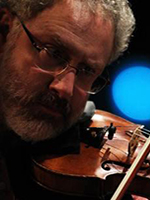
Joseph Lanza is a Lecturer and Director of the Early Music Studio at the Don Wright Faculty of Music, University of Western Ontario. He previously served as Concertmaster of Orchestra London for over 25 years, performing solo works across diverse concert series. A dedicated chamber musician, he has performed extensively in small ensembles in London, Toronto, and internationally. His specialization in 17th- and 18th-century music led to mastery of period instruments, including Baroque violin under mentors like Jeanne Lamon and Jaap Schroder. He balances performance with teaching private lessons and university-level classes. Lanza's family background includes a legacy in orchestral music, having studied violin from age 7 with his father and renowned concertmasters like William de Pasquale and Joseph Silverstein. He is married to Orchestra London oboist Jennifer Short, with whom he shares a daughter, Heather, and a Shetland sheepdog, Fergus. His research interests focus on historical performance practices, particularly in Baroque violin, and he has collaborated with ensembles such as Tafelmusik Baroque Orchestra and Opera Atelier, with notable recordings and international tours.
Dr. Anders Karlsson is a distinguished scholar of Korean history at SOAS University of London, where he has been a faculty member since 2000. He is affiliated with the School of Languages, Cultures and Linguistics and the Centre of Korean Studies. His academic career has established him as a leading Western expert on Choson Korea (1392-1910), with particular expertise in legal history, statecraft, and social institutions of the period. Dr. Karlsson received his PhD in Korean history from Stockholm University in 2000 with a dissertation on the Hong Kyongnae Rebellion, which erupted in the North-western part of the Korean peninsula in 1812. His doctoral research established the foundation for his subsequent scholarship on rural society, famine relief, and local administration in late Choson Korea. Dr. Karlsson's research focuses on the social, institutional and intellectual history of Choson Korea. His work explores Confucian statecraft, famine and disaster relief mechanisms, penal law, rural unrest and rebellion, and writing systems. His scholarship is characterized by meticulous archival research and innovative theoretical approaches that bridge historical, legal, and cultural studies perspectives. He has made significant contributions to understanding how law functioned as an instrument of statecraft in premodern Korea, particularly examining the relationship between legal theory and practice, and how social status influenced legal outcomes. His publication record demonstrates a clear evolution from early work on peasant rebellions to increasingly sophisticated analyses of legal and administrative systems. The most recent fifteen years of his scholarship show a pronounced focus on legal history, with particular attention to how Confucian ideology shaped legal development and implementation. His articles reveal expertise in analyzing primary sources in Korean, Chinese, and Swedish, reflecting his unique position as a European scholar deeply immersed in East Asian historical materials. Dr. Karlsson has supervised numerous doctoral students working on Korean history topics, including: Lee H. - "The effect of the genre-based approach on KFL advanced learners' writing and reading" Jang H.J. - "Exploring the Development of Intercultural Competence of University Students Majoring in Korean" Kilkelly P. - "Mainstream culture and the inculturation of Catholicism in late Chosŏn Korea" Choi Y.-C. - "A History of Protestant theory of liberty in Korea, 1886-1917" Jin S.P. - "Korean neutralisation attempts (1882-1907): retracing the struggle for survival and imperial intrigues" Verdier-Shin M.-L. - "Contextualised mission: the South Korean evangelical response to the humanitarian crisis in North Korea (1995-2012)" Song S.K. - "Intellectuals and the state: the resilience and decline of Neo-Confucianism as state ideology in Joseon Korea" At SOAS, Dr. Karlsson teaches courses on Korean history, contemporary Korean culture and society, and Chinese characters (Hanja) as they are used in Korean. His teaching reflects his deep engagement with both historical and contemporary aspects of Korean studies, providing students with comprehensive perspectives on Korean civilization. He also maintains a significant profile as a literary translator, having translated Korean novels into Swedish for 25 years, including recent works by Han Kang, the 2024 Nobel Prize in Literature laureate.
Professor Irene Schneider is a distinguished scholar of Arabic and Islamic Studies at the University of Göttingen, currently on sabbatical as a Distinguished Fellow at the Max Weber Institute/University of Erfurt since October 2024. She leads the ERC Advanced Grant project '(De)Colonizing Sharia?' focused on tracing transformation, change and continuity in Islamic Law in the Middle East and North Africa during the 19th and 20th centuries. Her research spans Islamic law (particularly family, criminal, and public law), gender studies with emphasis on gender constructions in law, legal history, and contemporary Muslim societies in Morocco, Egypt, Palestine, Iran, and Afghanistan. She has made significant contributions to understanding the relationship between international law and national legislation in Palestine, as detailed in her influential book 'Debating the Law, Creating Gender: Sharia and Lawmaking in Palestine, 2012-2018.' Professor Schneider's scholarly work demonstrates a remarkable historical depth, examining issues from Islam's formative period to contemporary contexts. Her publications span multiple languages including German, English, French, and Farsi, reflecting her interdisciplinary approach that combines historical analysis with contemporary legal and social issues. Her recent research particularly focuses on conceptual history, civil society development, and the translation of global legal concepts into local Islamic contexts. Among her notable achievements is the establishment of the 'Islamic Law' specialization in the Master's program at Göttingen in 2011, which allows students to gain intensive insight into Islamic legal language while simultaneously taking modules from the Faculty of Law. She has also established the research and teaching focus 'Palestine and the Middle East Conflict' in 2014. ERC Advanced Grant recipient (2024) Deputy Chair of the German Working Group on the Middle East (DAVO) since 2022 Director of SAI II since 2021 Former Chair of Gender Studies Working Group at University of Göttingen (2010-2013) Professor Schneider has supervised numerous academic projects and collaborations, including work with Judge Somoud al-Damiri on Palestinian women's legal status, and has been instrumental in fostering academic dialogue between German and Palestinian institutions. Her research methodology uniquely combines socio-legal analysis with detailed linguistic examination of legal terminology evolution, particularly examining how terms like 'moussab' (equality) transform during legal discourse.
Vincenzo Borghetti is an Associate Professor of Music History at the University of Verona, Italy, where he has been employed since 2008, first as a Lecturer ("ricercatore") until 2017, then promoted to his current position. He previously held teaching positions at the University of Vienna (2015-2016) and was a Lila Wallace–Reader's Digest Fellow at Villa I Tatti, Harvard's Center for Italian Renaissance Studies in Florence (2007-2008). He earned his Ph.D. from the University of Pavia-Cremona in 2001. His scholarly work centers on Renaissance polyphony and early twentieth-century opera, with particular expertise in music philology, court culture, and the intersection of music with visual arts and literature. Borghetti has made significant contributions to Rossini scholarship through his critical edition of Elisabetta regina d'Inghilterra (2016) for the Fondazione Rossini's critical edition series. Borghetti's publications appear in leading journals including Early Music History , Acta musicologica , Journal of the Alamire Foundation , and Imago Musicae . His research demonstrates consistent engagement with both historical musicology and interdisciplinary approaches connecting music to broader cultural contexts. Gabriele D'Annunzio Award (1998) for co-authored monograph Il bacio della Sfinge: D'Annunzio, Pizzetti e "Fedra" Grant from Fritz Thyssen Stiftung (2018) for organizing the International Conference "Books, Images, Objects: The Media of Secular Music in the Medieval and Early Modern Period" As an active scholar in musicology, Borghetti contributes to major reference works including the Handbuch der Musik der Renaissance , demonstrating his standing in the international academic community. His work bridges historical musicology with cultural studies, offering nuanced interpretations of musical practices within their broader social and intellectual contexts.
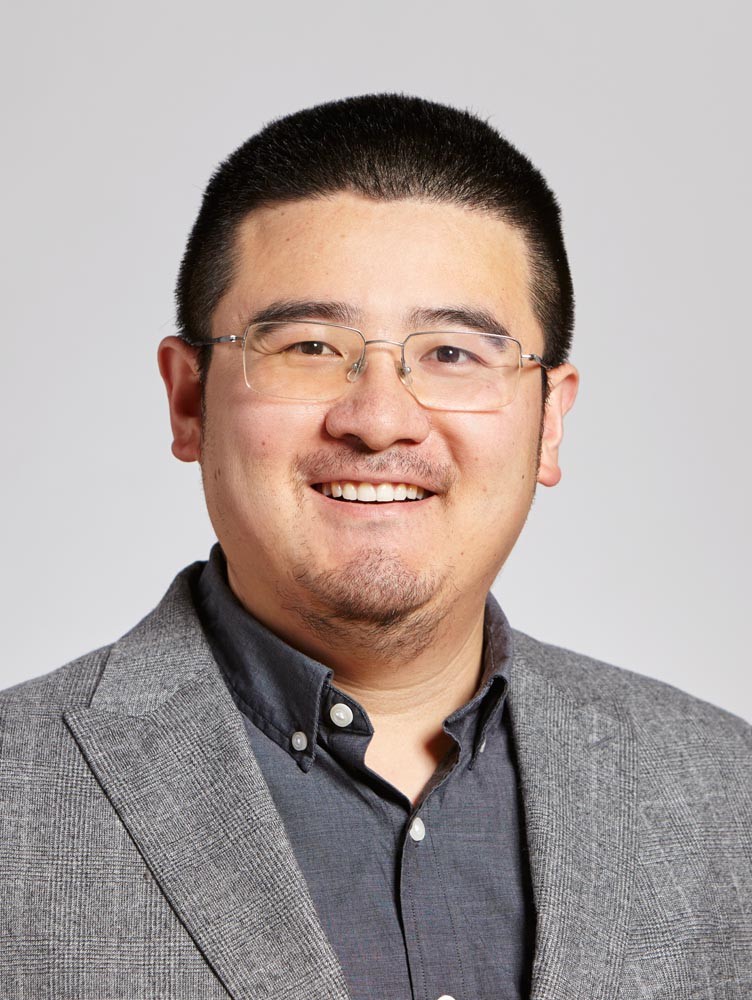
Mutian Niu serves as an Assistant Professor at the Department of Environmental Systems Science, ETH Zurich, where he leads the Professorship for Animal Nutrition. His research addresses critical sustainability challenges in livestock production through innovative approaches to methane mitigation and precision animal nutrition. His primary research domains include Animal Nutrition , Dairy Science , and Methane Mitigation , with specific expertise in feed additives (3-nitrooxypropanol, microalgae), rumen fermentation dynamics, and physiological responses in dairy cattle. He integrates computational methods including machine learning for respiratory monitoring and video-based behavioral analysis, bridging animal science with environmental sustainability. Analysis of his recent publications reveals a strong interdisciplinary trajectory focused on practical methane reduction solutions. Key trends include methodological advancements in methane measurement validation, meta-analyses of feed additive efficacy, and emerging applications of computer vision for non-invasive health monitoring in dairy operations. His work consistently emphasizes environmental impact reduction while maintaining production efficiency in ruminant systems.
Stephen G. Ryan is the Vincent C. Ross Professor of Accounting at the Leonard N. Stern School of Business, New York University. He has been a faculty member at Stern since 1990 and is actively engaged in teaching and research in accounting, financial reporting, and valuation. His work focuses on financial institutions, financial instruments, and regulatory standards. Research Interests: Accounting Measurement Accounting-Based Valuation and Risk Assessment Financial Reporting by Financial Institutions Financial Instruments Disclosure Empirical Studies in Banking and Debt Contracting His recent publications reflect a strong focus on regulatory accounting standards (e.g., CECL, FAS 166/167), transparency in financial reporting, and the economic consequences of accounting policy. These works appear in top-tier journals such as The Accounting Review , Journal of Accounting Research , and Management Science , demonstrating sustained scholarly impact. Awards & Appointments: American Accounting Association Financial Accounting and Reporting Section Best Paper Prize (2011) The Accounting Review Emerald Management Reviews Citation of Excellence (2009) Accounting Horizons Co-winner Best Paper Prize (2006, 2004) Professor Ryan has held significant editorial roles, including Editor of the Review of Accounting Studies (2006–2011) and Guest Editor for the Journal of Accounting Research (2015–2018). He has served on advisory councils for the Financial Accounting Standards Board and the Federal Reserve Bank of New York. He teaches undergraduate, MBA, MS, and PhD courses, including a doctoral seminar on banking and debt contracting, indicating active student mentorship. He is affiliated with major regulatory bodies such as FASB, IASB, PCAOB, SEC, and standards like IFRS and GAAP. His expertise spans accounting, finance, IPOs, and real estate/housing sectors.
Prof. Dr. Bianca Devos is a University Professor at the Department of Iranian Studies within the Center for Near and Middle Eastern Studies (CNMS) at Philipps University of Marburg . Specializing in 20th-century Iranian history, her work examines intersections of religion and state politics, press history, and cultural policies during the Pahlavi era. Professor of Iranian Studies (W3), Philipps University of Marburg (since 2021) Co-Director, Gerda Henkel Foundation project State Islam in Pre-Revolutionary Iran (2018-2021) Key research themes: Modernization processes, cultural heritage, secularism, and societal elites in Iran Her research projects, such as the analysis of Friedrich Werner von der Schulenburg and Ernst E. Herzfeld's correspondence (1923-1939), explore socio-cultural contexts of archaeological practices and state engagement with antiquity. She has presented extensively on topics like the Shah's Mecca pilgrimages, press coverage of Persepolis excavations, and debates on literary modernity in Persian texts. Current leadership roles: Director of CNMS, member of the Senate of Marburg University Academic networks: Association for Iranian Studies, Societas Iranologica Europaea, Deutsche Morgenländische Gesellschaft
Prof. Katharina Thoma is a renowned opera director currently serving as Head of the Opera School at the University of Music Würzburg . She also holds the positions of Deputy Chair of the Music Academy and Dean of Studies . With a career spanning major European opera houses including the Royal Opera House Covent Garden and Glyndebourne Festival, she specializes in blending historical accuracy with modern theatrical innovation. Studied piano at Lübeck University of Music Resident director at Dortmund Opera (2011-2014) Visiting professor at Graz University of Music (2018) Freelance director since 2008 Katharina Thoma's research and practice focus on opera stage direction , scenic training for singers , and historical opera interpretation . Her work spans from Baroque masterpieces to contemporary political operas, emphasizing: Contextual authenticity in period-specific productions Modern reinterpretation of classical works Interdisciplinary approaches to staging Integration of visual and musical elements Training of next-generation opera performers Exploration of war-related themes in opera Notable productions include: 2024: Johann Strauss' The Bat (University of Music Würzburg) 2023: De Falla's El retablo de Maese Pedro 2022: Britten's The Rape of Lucretia 2019: Schönberg's Pierrot lunaire 2007: European Opera Directing Competition Finalist Her artistic contributions have been recognized with: Second Prize at the European Opera Directing Competition 'Camerata Nuova' (2007) Katharina Thoma actively mentors young singers and develops innovative opera productions at the University of Music Würzburg's Opera School. Her recent work includes: Wagner operas debut (2019/20 season) Collaboration with composers like Richard Jones and Christof Loy Participation in renowned festivals (Munich Biennale, Glyndebourne) The Opera School under her leadership focuses on comprehensive training combining: Historical performance practices Contemporary staging techniques Technical vocal training Interdisciplinary collaboration
Ann-Katrin Zimmermann is an apl. Professor (non-tenured professor) at the Musicological Institute within the Faculty of Philosophy at the University of Tübingen. She has held this position since 2018, following her time as a private lecturer from 2012-2018. In addition to her academic work, she serves as a dramaturg at the Gewandhaus Leipzig since 2013 and has teaching assignments at LMU Munich, Felix Mendelssohn Bartholdy University of Music and Theatre, and Leipzig University since 2012. Her educational background includes: Habilitation (2012) on "Forms of slow movements in the classical cycle" Promotion/PhD (2006) on "Studies on medieval three-part harmony" Master's degree in musicology, philosophy and art history from University of Tübingen and University of Oxford (1998-2003) Professor Zimmermann's research spans multiple eras and aspects of music history and theory. Her work focuses particularly on polyphony of the 12th and 13th centuries, keyboard music from the 15th-18th centuries, early German-language music terminology, and the works of Heinrich Schütz, composers of the Viennese classics, and Richard Strauss. She has made significant contributions to the fields of organology, instrumentation, music iconography, and 19th-century symphonies, with particular interest in cross-temporal aspects of genre, form, and composition. Her extensive publication record shows a consistent focus on historical music analysis, particularly examining compositional strategies across different periods. Her recent work has increasingly focused on Richard Strauss and Mozart, while maintaining her longstanding interest in early music traditions and terminology. She has published numerous articles in prestigious journals and contributed to important edited volumes in musicology. Professor Zimmermann is actively involved in the academic community: Member of the Society for Music History in Baden-Württemberg since 2009 Member of the DHV since 2012 Throughout her career, Zimmermann has balanced academic research with practical musical experience. She has been a bassoonist and leader of various vocal and instrumental ensembles since 1998, and served as a church musician from 1997-2014. Her work as a dramaturg at the Gewandhaus Leipzig since 2013 demonstrates her commitment to connecting scholarly research with contemporary musical practice.
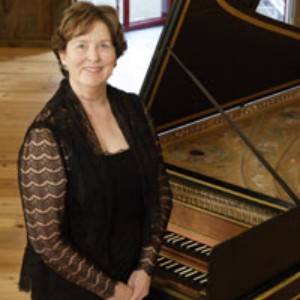
Karen Flint serves as an Adjunct Professor of Harpsichord at the University of Delaware’s School of Music, part of the College of Arts & Sciences. She is the founder and artistic director of Brandywine Baroque, Delaware’s leading early music ensemble, and established the Dumont Concerts—a festival showcasing harpsichord performances on antique instruments. Flint also created the recording label Plectra Music, which focuses on Baroque repertoire performed on period instruments. Her work includes acclaimed series like Le Clavecin Français and notable albums such as Les Pièces de Clavessin and Corelli Violin Sonatas . Her professional engagements include performances with the Delaware Symphony Orchestra, Baltimore Chamber Orchestra, and UD Chamber Orchestra. Brandywine Baroque’s annual concert series spans locations in Pennsylvania and Delaware, with guest appearances at major venues like the Boston Early Music Festival and Winterthur Museum. Flint’s recordings frequently highlight French Baroque composers and explore underappreciated works, demonstrating her commitment to historical performance practices. Flint’s contributions extend beyond performance to include educational outreach through the University of Delaware and community programs such as the Delaware Youth Wind Ensemble. Her discography reflects a dedication to preserving and revitalizing early music traditions, with projects ranging from Handel’s duets to Telemann’s lesser-known works. She remains an influential figure in the revival of 17th- and 18th-century music through both performance and scholarship.
Mark Koepke is the Robert C. Byrd Professor of Physics at West Virginia University, affiliated with the College of Arts & Sciences. He specializes in plasma physics, with a focus on space plasma processes, nonlinear dynamics, and dusty plasma phenomena. His research bridges laboratory experiments and space/astrophysical systems, addressing plasma wave instabilities, fusion energy, and plasma-material interactions. Research Interests: His work investigates plasma instabilities in space and laboratory settings, including velocity-shear-driven instabilities, stationary inertial Alfven waves, and nonlinear dynamics. He explores applications in fusion energy, atmospheric pressure plasmas, and granular charging in industrial systems. His experiments utilize devices like the WVU Q-machine and collaborate with facilities such as the DIII-D National Fusion Facility and SLAC. Key Contributions: His studies validate theoretical models of space plasma dynamics, with applications to auroral ionospheres and magnetic confinement fusion. He has pioneered techniques like the magnetically insulated baffled probe for plasma diagnostics and contributed to understanding ion-cyclotron waves and periodic pulling phenomena in driven oscillators. Awards and Honors: Recipient of prestigious fellowships from the Institute of Physics (UK), American Physical Society, and Japanese Society for the Promotion of Science. He has held visiting positions at institutions like Oxford and Imperial College London, and chaired committees for organizations like the American Physical Society and the DOE. Advising and Collaborations: Collaborates globally on projects involving plasma diagnostics, fusion energy, and astrophysical plasma analogues. His work integrates experimental, computational, and theoretical approaches, with contributions to both fundamental plasma physics and applied technologies like plasma-based material processing. Labs/Teams: Leads experimental plasma physics research at WVU, using the Q-machine and other devices. Collaborates with international teams at facilities like UCLA’s Large Plasma Device, SLAC, and the National Energy Technology Laboratory.
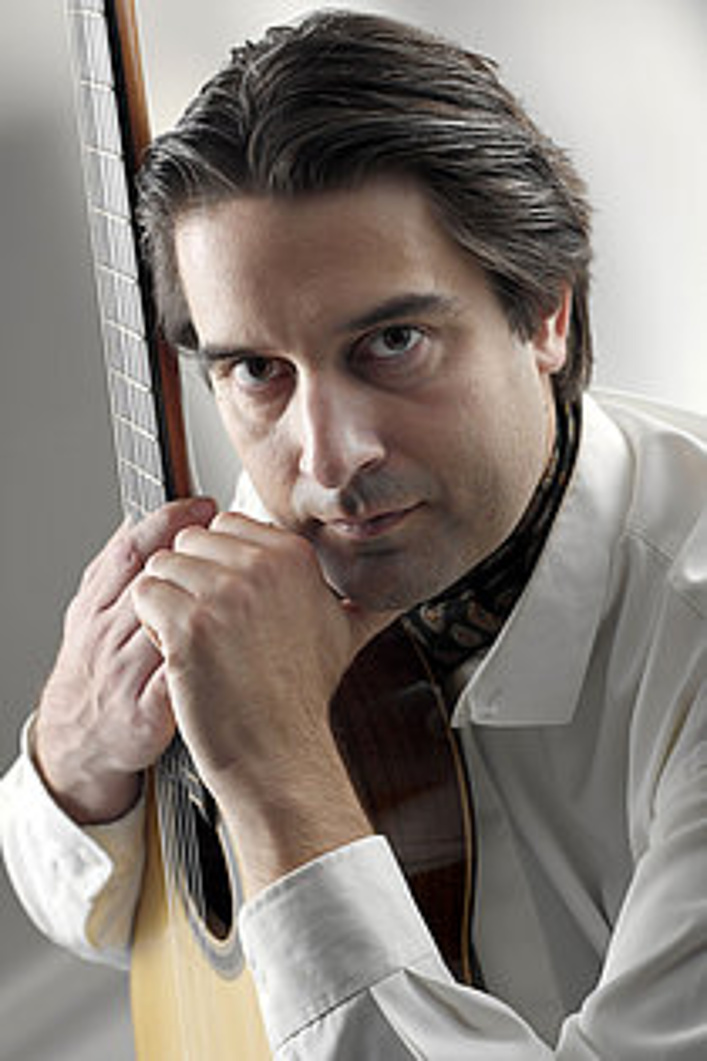
Professor Alexander-Sergei Ramirez is a distinguished classical guitarist serving in the Guitar Department at the Robert Schumann Hochschule Düsseldorf. Born into a family of artists in Lima, Peru, he has established an international career as both performer and educator since joining the faculty in 1997. His research and performance interests center on classical guitar performance with specializations in Latin American guitar repertoire, Spanish guitar music, and historical guitar works. Ramirez has made significant contributions to musicology through his rediscovery and performance of previously unknown works by Peruvian composer Pedro Ximénez de Abrill, bringing important historical compositions to modern audiences. His extensive discography reveals trends across multiple musical traditions, with recent recordings exploring multinational guitar repertoire spanning five continents as featured in his critically acclaimed 'Odyssey' album. Ramirez's work demonstrates exceptional technical mastery combined with deep musical understanding across diverse stylistic periods from Renaissance to contemporary compositions. First prize at the Alhambra International Guitar Competition CD of the month on MusicalWeb CD of the month by Ecos magazine Voted CD of the month by Ecos magazine for 'Odyssey' As an educator, Ramirez mentors the next generation of guitarists while maintaining an active international performing schedule. His recordings with major labels like Deutsche Grammophon and DENON have received enthusiastic reviews, with critics describing his work as 'the most fascinating 75 minutes I have ever heard' and 'Spanish school par excellence.' Ramirez also explores historical performance practices through his work with romantic guitar in a duo with fortepianist Sheila Arnold.
Dr. IMRAN Bashir is a Senior Lecturer in Instrumentation & Control Engineering at Teesside University's SCEDT Engineering Centre for Sustainable Engineering. He holds a PhD in Acoustics Metamaterials from an EU-FP7 funded project and has extensive postdoctoral experience across the University of Bath, Southampton, and Exeter. His research focuses on acoustic metamaterials, aeroengine acoustics, and condition monitoring. Education: PhD in Acoustics Metamaterials (EU-FP7 HOSANNA Project) MSc in Data Communication (University of Sheffield) BEng in Electrical Engineering (COMSATS University, Pakistan) His research interests span acoustic metamaterials, aeroengine acoustics, vibration control, and signal processing. He leads projects like the EU Horizon 2020 AERIALIST initiative for noise reduction in aeronautics. Current work includes smart bearing systems for aeroengines and condition monitoring for wave energy devices. Collaborations include multi-university projects on hydrogen production and sustainable engineering. He has published extensively in peer-reviewed journals and conferences, with a focus on battery diagnostics, acoustic modeling, and smart systems. As a Co-Investigator in the Hydrogen Production Life-Cycle project (2024–2026), he contributes to knowledge transfer for emerging energy markets. His interdisciplinary approach bridges engineering disciplines, emphasizing practical applications in aerospace, energy, and environmental acoustics.
Dr. Ataru Sotomura is a Senior Lecturer in the Chair of East Asian Cultural History at the University of Würzburg's Philosophische Fakultät. His research focuses on East Asian art history, particularly Buddhist iconography, garden design, urban planning, and cultural transfer between India, China, Korea, and Japan. He has held visiting positions at Kyoto University and the International Research Center for Japanese Studies (Nichibunken). Notable awards include the Hamada Seiryo Award (2017). His work bridges historical texts (e.g., Buddhist sūtras, garden treatises) and material culture, emphasizing interdisciplinary approaches. Education: B.A. (Kyoto University, 1983), M.A. (Kyoto University, 1986), Ph.D. (Kyoto University, 1994). He has held scholarships from Rotary International, the Dutch government, and the Japan Society for the Promotion of Science (JSPS). Recent projects include leading the DFG-funded study on 'Transformation of Invisible Entities in East Asian Art and Archaeology' (2021–2022). Research Interests: Buddhist cosmology, East Asian capital city designs, historical musical instruments (e.g., biwa lutes), and the cultural symbolism of gardens. His publications span monographs, peer-reviewed articles, and collaborative edited volumes, often exploring how visible/invisible entities shape religious and artistic expression. Grants & Leadership: 2019–2022: Team Leader of 'Interdisciplinary Study on Visible/Invisible Entities in East Asian Arts'; 2021–2022: DFG Project Leader on 'Invisible Entities in East Asian Traditions'. Active in international workshops and bilateral German-Japanese collaborations. Labs/Teams: Affiliated with Kyoto University's Institute for Research in Humanities and Würzburg's East Asian Sinology program, contributing to interdisciplinary research networks in cultural history.
James McLaughlin is a Professor of Physics at Northumbria University, specializing in solar physics and magnetohydrodynamics. He holds a PhD from the University of St Andrews and previously worked at NASA Goddard Space Flight Center and the University of St Andrews as a Research Fellow. His research focuses on magnetic reconnection, solar coronal dynamics, and MHD wave behavior. He leads the Solar and Space Physics Group and secured a £1.29M STFC grant (2023–2026). McLaughlin supervises PhD students exploring oscillatory reconnection dynamics and has authored over 50 peer-reviewed papers. He is a Fellow of the Royal Astronomical Society and a Member of the Institute of Physics. Education: MSci (Mathematics & Physics), Durham University, 2002 PhD (Applied Mathematics & Solar Physics), University of St Andrews, 2002–2006 Research Interests: Magnetic reconnection mechanisms, solar flare dynamics, coronal heating, MHD wave propagation, and plasma diagnostics in extreme astrophysical environments. His work bridges theoretical modeling, numerical simulations, and observational data from instruments like SDO/AIA and DKIST. Recent Projects: STFC Consolidated Grant: Solar and Space Physics Group (£1.29M, 2023–2026) Awards: Fellow of the Royal Astronomical Society (2002) Member of the Institute of Physics (1998) Advising & Grants: Supervises PhD students Ryan Smith and Jordan Talbot. His research explores oscillatory reconnection’s role in generating solar waves and energy release. He collaborates internationally on space physics missions and heliophysics studies.