Associate Professor Antony Moulis is a faculty member at the University of Queensland's School of Architecture, Design and Planning, where he also serves as Deputy Head of School. He holds a Bachelor of Design Studies and a Bachelor degree from UQ. His research focuses on productive cities, urban retrofit, and global architectural knowledge transfer, with notable contributions to books like House, Precinct, Territory (2023) and Le Corbusier in the Antipodes (2021). He collaborates with industry on projects addressing micro-urban resilience, energy transitions, and cross-cultural architectural exchanges. Research interests include urban infill housing strategies, architectural techniques from the 20th to 21st century, and the global influence of figures like Le Corbusier. He led UQ's participation in the Water Sensitive Cities CRC, focusing on green infrastructure and urban intensification. Awards include the 2025 Architecture Australia Prize for Unbuilt Work and multiple Queensland Architecture Awards for collaborative designs like the Blue Bower and One Room Tower. His work spans academic and professional journals, with over 50 articles and 4 books. He has supervised numerous research projects and contributed to exhibitions at venues like the Seoul Biennale. Moulis is a past President of the Society of Architectural Historians, Australia and New Zealand (SAHANZ), and actively engages in architectural historiography and design pedagogy.
Javier Villa-Flores is an Associate Professor and Associate Director of the Graduate Division of Religion at Emory University. He holds a PhD in Latin American History from UC San Diego (2001), an MA (1998) from the same institution, and a BA in Sociology from the University of Guadalajara (1990). His research focuses on religion, colonialism, and social history in colonial Mexico, particularly examining the intersections of power, language, and legal systems. His major works include *Dangerous Speech: A Social History of Blasphemy in Colonial Mexico* (2006) and his current project on trust and risk in Bourbon New Spain through analysis of 'crimes of falsity.' He has contributed to journals like *Colonial Latin American Review* and co-edited volumes on archives, emotions, and colonial libraries. Teaching specialties include millenarian movements and religious martyrdom in Latin America. Villa-Flores has held fellowships from institutions including the NEH, Huntington Library, and Max Planck Institute. His work explores how colonial authorities used legal frameworks to enforce social control through concepts like blasphemy, forgery, and perjury, revealing how marginalized groups navigated these systems. Recent publications highlight the role of trust and its betrayal in shaping colonial governance and identity formation. Collaborative projects include special journal issues on archives and edited volumes on emotional history and library destruction. His research bridges historiography with interdisciplinary methods, emphasizing archival material and performative aspects of colonial power.
Dr. Gavin McArdle is an Associate Professor at the University College Dublin (UCD) School of Computer Science, specializing in spatial data analysis and smart cities. He holds academic affiliations with the National Centre for Geocomputation (Maynooth University) and CeADAR (Data Analytics Centre). His research focuses on urban dynamics, geovisual analytics, smart transportation, and remote sensing applications. He has received a College of Science Teaching Excellence Award for his contributions to education. McArdle earned his BSc, PhD, and a Prof Dip in University Teaching & Learning from UCD. His work bridges academia and industry through collaborative grants, including those from Science Foundation Ireland and EU funding. Notable projects include the Dublin Dashboard (urban analytics platform) and DubSim (traffic simulation using digital footprints). His research outputs span over 147 publications, with recent work addressing Airbnb's impact on urban gentrification, sustainable mobility, and environmental monitoring via satellite data. He actively contributes to professional committees, including roles in the UCD Data Protection Impact Assessment Committee and international conferences like Web and Wireless GIS. McArdle coordinates courses such as Research Practicum and Computer Programming II, emphasizing practical research and technical skills. His interdisciplinary approach integrates machine learning, spatial statistics, and urban informatics to address real-world challenges in smart cities and environmental sustainability.
Lynne Joyrich is a Professor of Modern Culture and Media at Brown University, with affiliations in American Studies, Gender and Sexuality Studies, and Theater and Performance Studies. She co-edits the journal Camera Obscura and has authored influential works on television, gender, and queer theory. Her research spans film, television, cultural theory, and feminist studies, with a focus on media's role in constructing gender, sexuality, and identity. Education: PhD (1990), MA (1984), and BA (1981) from Brown University and University of Michigan Research interests include television’s epistemologies of gender and sexuality, queer theory, feminist media studies, and Holocaust representation. Recent work examines U.S. TV’s role in shaping gender/sexuality knowledge. Awards include the Harriet W. Sheridan Award for Teaching (2009) and multiple fellowships. Her 15 most recent articles (2024–1996) explore topics like pandemic media, superhero TV, queer representation, and race in media. Key themes include cultural critique, identity politics, and media historiography. Awards: Over 15 honors, including fellowships at Pembroke Center and Cogut Humanities Teaching includes courses on television studies, queer theory, and media representation of race. Current projects involve a book on U.S. TV’s gender/sexuality epistemologies and Holocaust media studies.
Clay Dibrell is a Professor of Management and Chair of Entrepreneurial Excellence at the University of Mississippi’s School of Business Administration. He also serves as Co-Director of the Center for Innovation and Entrepreneurship and is a U.S. Fulbright Scholar. His expertise spans entrepreneurship, family businesses, innovation, strategic management, and international business. Education includes a B.S. from Lambuth College (1990), an M.B.A. from the University of Memphis (1992), and a Ph.D. in Business Administration from the University of Memphis (2000). He teaches courses such as Family Business Management, Strategic Planning, and Entrepreneurship at undergraduate, MBA, doctoral, and EMBA levels globally, including in the U.S., Europe, and Australia. Research focuses on family firm innovativeness, governance, and socioemotional wealth. His work explores strategic change, exit strategies, and the interplay between family commitment and innovation. He has published in leading journals like Entrepreneurship Theory & Practice and Family Business Review. Awarded the U.S. Fulbright Scholarship, he contributes to editorial boards and special issue curation. His advisory work includes innovation strategies for high-tech and natural resource industries. He emphasizes integrating family dynamics with business strategy, balancing institutional environments and firm performance.
Weiwen Jiang is a tenure-track Assistant Professor in the Department of Electrical and Computer Engineering at George Mason University (GMU), affiliated with the College of Engineering and Computing (CEC). He leads the JQub lab, focusing on hardware/software co-design for computing systems, spanning classical (FPGAs, ASICs) and quantum computing applications in AI-driven fields like medical imaging and geophysics. Prior to GMU, he held a postdoctoral position at the University of Notre Dame and earned his PhD in Computer Science from Chongqing University with a joint PhD in Electrical and Computer Engineering from the University of Pittsburgh. His research emphasizes quantum computing, AI accelerators, and domain-specific computing. Notable achievements include the 2025 NSF CAREER Award, ACM Sigda Meritorious Service Award (2024), and IEEE QuantumWeek Best Paper Award (2023). His work is funded by NSF, DoE, ARO, Meta, and Leidos. He co-chaired IEEE QuantumWeek (2023–2025) and created workshops like StableQ at ESWEEK 2023. Key contributions include developing frameworks like QuPAD for quantum learning and JQub's AI-driven geophysical and medical imaging tools. His lab graduated Dr. Yi Sheng (now at University of South Florida) and Dr. Zhepeng Wang (Amazon Applied Scientist). Current research explores quantum machine learning, noise mitigation, and fairness in AI for edge devices.
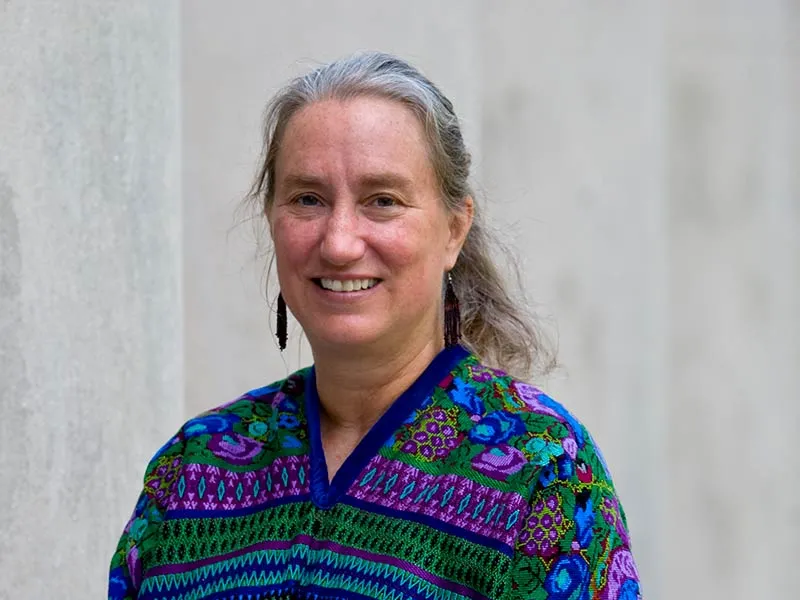
Judith Maxwell is Professor of Anthropology at Tulane University, specializing in linguistic anthropology with primary focus on Mayan languages (Kaqchikel, Chuj, Nahuatl) and discourse analysis. Her work bridges theoretical linguistics and applied language revitalization, particularly through the Tunica-Biloxi language project since 2010. Education PhD in Anthropology, University of Chicago (1982) Research Focus : Maxwell investigates discourse structures in Mayan languages regarding artistry canon, cultural constructs, coherence mechanisms, and societal relationships. Her colonial manuscript analysis explores language change in Kaqchikel/Nahuatl, while contemporary work examines bilingual education, language shift, and gender performance across English and Indigenous varieties. She pioneered the revival of Tunica language through community-academic collaboration. Publication Trends : Recent works (2014-2024) demonstrate consistent focus on Mayan language documentation ( Kaqchikel chronicles , Chuj Narratives ), revitalization pedagogy ( Maja'il Kaqchikel ), and sociopolitical dimensions of language ( Mayan Languages and Guatemala Law ). Key themes include decolonizing methodologies, Indigenous knowledge systems, and practical applications for endangered language communities. Advising & Grants : Maxwell leads the Tunica-Biloxi Language Revitalization Project training Tulane students in documentation techniques. Her collaborative model integrates tribal knowledge with academic research, securing sustained community engagement despite specific grant details being unreported. Research Teams : Directs the Tunica-Biloxi collaborative team comprising Tulane students, tribal scholars, and native speakers, developing e-learning tools like the Q'anil Kaqchikel lessons filmed in Guatemala with native instructors.
Shafaq Khan is an Assistant Professor in the School of Computer Science at the University of Windsor. She holds a PhD in Computer Science from the University of Salford (2017). Her research spans machine learning, deep learning, data analytics, and database systems with applications in healthcare informatics, agricultural technology, educational systems, and blockchain. Recent work focuses on AI-driven healthcare transformation, privacy-preserving data methods, federated learning for disease prediction, and computer vision applications in agriculture. Additional interests include educational technology for addressing disparities, blockchain implementations in government services, and open-source search engine development. Her work demonstrates consistent integration of cutting-edge computing techniques with practical domain applications.
Shiva Jahangiri is an Assistant Professor in the Department of Computer Science and Engineering at Santa Clara University's School of Engineering. His research focuses on Big Data Management Systems, Databases for AI/ML, and Query Optimization. He leads the DBIS Lab, which explores database internals, vectorized data processing, and open-source projects like Apache AsterixDB. Education: Ph.D. in Computer Science from the University of California, Irvine; M.S. in Computer Science (Data Science) from the University of Southern California. Current courses taught include Advanced Programming, Advanced Database Systems, and Introduction to Database Systems. He advises Ph.D. and Master’s students on topics like Vector Databases, Query Scheduling, and Resource Management. Recent research trends involve optimizing group-by/aggregation operators, schema inference for semi-structured data, and memory management in complex join queries. His work bridges theoretical advancements with practical implementations in open-source systems. DBIS Lab activities include student participation in senior design projects, directed research, and volunteer roles. The lab emphasizes industry collaboration for hands-on experience in database systems development.
Danielle Li is the David Sarnoff Professor of Management of Technology and a Professor at the MIT Sloan School of Management, specializing in the Technological Innovation, Entrepreneurship, and Strategic Management academic group. She is also a Faculty Research Fellow at the National Bureau of Economic Research (NBER). Her academic journey includes an AB in mathematics and the history of science from Harvard College and a PhD in economics from MIT. Prior to joining MIT, she taught at Harvard Business School and the Kellogg School of Management. AB in Mathematics and History of Science, Harvard College PhD in Economics, MIT Professor Li's research focuses on the economics of innovation and labor economics, with particular emphasis on how organizations evaluate ideas, projects, and people. She investigates the intersection of technology and workplace dynamics, especially how AI impacts worker productivity, the nature of work, and career trajectories in AI-intensive environments. Her work examines how businesses implement AI tools and the resulting effects on workforce composition and skill requirements. Her publication portfolio reveals a consistent focus on innovation economics, labor market dynamics, and the organizational implications of technology. Recent work increasingly centers on AI's workplace impact, with her 2025 Quarterly Journal of Economics paper 'Generative AI at Work' demonstrating how AI assistance increases worker productivity by 15% on average, with differential effects across experience levels. Her research combines rigorous economic analysis with practical business implications, spanning pharmaceutical innovation, hiring practices, promotion decisions, and gender gaps in the workplace. Best Paper Prize: 2017 FIRCG Conference Best Paper Prize: 2018 CEPR Management, Organizations, and Entrepreneurship Conference Best Paper Prize: 2017 Red Rock Conference Best Paper Prize: 2018 LBS Summer Finance Symposium Best Paper Prize: 2019 American Economic Journal: Applied Economics Professor Li's research has been supported by significant grants and has influenced both academic discourse and business practice. Her work on AI in the workplace has informed executive education programs at MIT Sloan, including 'Making AI Work: Machine Intelligence for Business and Society' and 'Artificial Intelligence' courses. She actively engages with media and business leaders to translate research findings into practical insights, frequently appearing in the New York Times, Wall Street Journal, and Economist. Her research on gender promotion gaps and hiring practices has particular relevance for organizational human resource policies. Professor Li is deeply embedded in MIT's AI research ecosystem, collaborating with colleagues across Sloan and CSAIL. She contributes to MIT's AI Expert Spotlight series, focusing on how businesses should implement AI responsibly and effectively. Her work bridges economic theory with practical business applications, particularly in understanding how AI transforms work processes and organizational structures.
Dr. Sara Ababneh is a Lecturer in International Relations at the University of Sheffield's School of Sociological Studies, Politics and International Relations. Previously an Associate Professor at the University of Jordan's Center for Strategic Studies, her research bridges political theory and gender studies with a regional focus on the Middle East. Her core research examines intersections of class, gender, resistance movements, liberation struggles, and economic sovereignty. She employs feminist and postcolonial frameworks to analyze Islamic political parties, labor movements, and women's rights advocacy across Jordan and Palestine. Current projects investigate decolonial pedagogies and geopolitical dimensions of feminist praxis. Her publications demonstrate strong thematic coherence, predominantly exploring: feminist critiques of Western epistemological hegemony; re-politicization of economic rights in Arab uprisings; and Islamic paradigms of gender justice. Methodologically, she combines discourse analysis with ethnographic approaches to capture lived experiences of resistance. Research grants include principal investigator roles for the Arab Barometer, Gender Barometer, and International Men and Gender Equality Survey (IMAGES Jordan). She coordinates international research networks addressing feminist ethics during geopolitical crises.
Michael Wright is a Senior Lecturer in the Department of Computer Science at the University of Bath. His research focuses on haptic feedback systems, educational technology, and user interaction design. He is affiliated with the Institute of Coding and has collaborated on projects involving mid-air haptics, wearable technology, and inquiry-based learning environments. His work spans interdisciplinary areas such as thermal technology for social interaction (e.g., WarmConnect), perceptual studies in haptics, and educational platforms like nQuire. Recent projects emphasize the integration of visual and tactile feedback systems to enhance user experiences. Wright's publications highlight trends in mid-air haptics research, exploring thresholds of tactile perception and multimodal feedback systems. His educational research addresses challenges in professional development through degree apprenticeships and online learning. He has supervised a doctoral thesis on gesture recognition and contributed to projects like 'Day of the Figurines,' a narrative-driven mobile game. His work bridges computational methods with human-centered design principles.
Prof. Dan Olteanu is a full professor at the Department of Informatics, University of Zurich, leading the Data Systems and Theory (DaST) group. He holds visiting professorships at the University of Oxford and is an emeritus fellow of St Cross College. His academic journey includes a PhD from Ludwig Maximilian University (2005), postdoctoral roles at Saarland University and Cornell University, and prior faculty positions at Oxford (2007–2020). He has also worked in industry with companies like LogicBlox and RelationalAI, focusing on database systems and AI. Education: Bachelor’s in Computer Science, Politehnica University of Bucharest (2000) PhD in Computer Science, Ludwig Maximilian University (2005) Professional Roles: Full Professor, University of Zurich (since 2020) Visiting Professor, University of Oxford Emeritus Fellow, St Cross College Editorial Roles: ACM TODS, VLDBJ, SIGMOD Conference Chair: ICDT Council (since 2022) His research focuses on data systems theory, including query optimization, probabilistic databases, factorized databases, and in-database machine learning. He co-authored the seminal book Probabilistic Databases (2011) and has pioneered algorithms for efficient machine learning over relational data and incremental maintenance of analytical workloads. His work emphasizes scalable, theoretically grounded solutions for real-world data challenges. Awards: ICDT 2019 Best Paper Award ACM SIGMOD 2018 Distinguished PC Member Award ERC Consolidator Grant (2016) Oxford Outstanding Teaching Award (2009) Grants & Funding: Supported by Google, Microsoft Azure, Amazon AWS, EPSRC, and the European Commission. His research bridges academia and industry, with contributions to commercial systems like LogicBlox and RelationalAI. Labs & Teams: Heads the DaST group at Zurich, focusing on data systems theory and applications. Collaborates widely in the database and AI communities.
Catherine Eschle is a Senior Lecturer in Politics at the University of Strathclyde’s Department of Government and Public Policy, serving as Undergraduate Director and co-Director of Teaching. Her work bridges feminist International Relations (IR), social movement studies, and nuclear politics. She co-founded the FemNukes research network in 2020 to integrate feminist and post-colonial critiques of the global nuclear order. Her research focuses on feminist antinuclear activism, protest camps, and transnational solidarity, with key publications including Feminism and Protest Camps (2023) and Making Feminist Sense of the Global Justice Movement (2010). Education: PhD in Feminism from University of Sussex (1999), MSc from LSE (1995), BSc from University of Bristol (1993) Teaching: Honours/Masters courses on Feminism and Politics, Global Nuclear Politics, and Applied Gender Studies Her research interests emphasize feminist critiques of nuclear militarism, post-colonial reimaginings of security, and the entanglement of academic and activist work. Recent projects include Weaving Webs Across Oceans (2023–) exploring Indigenous and Greenham Women solidarity, and The Contested Afterlives of Nuclear Bases (2025–2026). She has received the Britta Baumgarten Memorial Prize (2019) and a 2024 award for activism in disarmament. Her work highlights how protest camps act as sites of collective memory and everyday resistance, while advancing decolonized understandings of nuclear politics. Grants include British Academy funding and initiatives fostering transnational antinuclear collaboration.
Stefan Haefliger is Professor of Strategic Management & Innovation at Bayes Business School, City, University of London. His research focuses on business model innovation, open strategy, and organization theory in technology-driven environments. Key research streams: Business model portfolios and corporate strategy diversification Organization theory and technology-mediated regulation Open strategy and innovation ecosystems His work examines how technology transforms organizational practices, with empirical studies on compliance systems in investment banks and digital infrastructure governance. Recent projects explore modularity in R&D teams, digital resilience, and human-AI interaction in organizations.