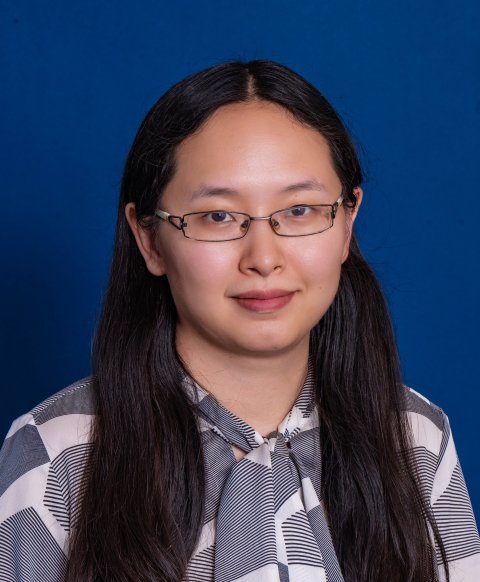
Dr. Lisa Wang is a tenure-track Assistant Professor in the Department of Civil & Environmental Engineering at Old Dominion University (ODU). She holds a Ph.D. and Postdoctoral Fellowship in Structural Engineering from Colorado State University (CSU), with additional research at NIST’s Center for Risk-Based Community Resilience Planning. She is a licensed California Professional Engineer (PE) and has expertise in multidisciplinary community resilience assessment, mitigation strategies, and policy analysis. Her research focuses on integrating physical, socio-economic, and infrastructural systems to enhance disaster resilience in coastal and hazard-prone communities. Education: Ph.D. and Postdoc (CSU, 2022-2024), M.S. in Structural Engineering (University of Colorado Denver & Jilin University, 2015), B.S. in Civil Engineering (Jilin University, 2012). Professional licenses include CA PE #94251 and CO EIT #007558. Research Interests: Community resilience under multi-hazards (tornadoes, floods, climate change), resilience-based design of structural systems, data fusion across disciplines, and equitable decision-making for disaster resilience. Recent grants include $31k for AI-driven coastal resilience strategies and $10k for minimum building portfolio development. Grants & Awards: Principal Investigator (PI): Trustworthy AI in Coastal Resilience (ICAR, $31k), AI-Driven Building Portfolios (ODU PURS, $10k) Awards: O. H. Ammann Fellowship (ASCE), ICAR Travel Grant, AGU NSF Travel Grant, Jack E. Cermak Fellowship Labs & Teams: Wang Research Group and Structural Engineering Research Laboratory at ODU.
Kuanshi Zhong is an Assistant Professor in the Department of Civil and Architectural Engineering and Construction Management at the University of Cincinnati. He holds a PhD from Stanford University (2021) in Civil and Environmental Engineering, with prior degrees from Stanford (Master, 2017) and Tongji University (Bachelor, 2015). His research focuses on earthquake engineering, structural resilience, and advanced computational methods for infrastructure safety. Key research interests include seismic design of tall buildings, probabilistic modeling of structural response (e.g., using Probabilistic Learning on Manifolds), and material failure mechanisms in reinforced concrete. He also explores multi-hazard resilience, regional risk assessment, and software tools for disaster simulation (e.g., R2DTool and EE-UQ). Dr. Zhong has secured grant funding as PI/Co-PI, including a National Science Foundation grant (2023-2026) for equitable building decarbonization strategies and a Concrete Reinforcing Steel Institute grant (2024-2025) for bar performance improvements. He teaches graduate/undergraduate courses on concrete design and structural mechanics. His work spans collaborations with institutions like Stanford University and the SimCenter, contributing to open-source tools for regional loss assessments and hurricane impact modeling. Current projects address cascading hazards, steel reinforcement durability, and high-resolution seismic risk evaluation.
Lars O. Nord is a Professor in the Department of Energy and Process Engineering at NTNU, specializing in thermal energy systems, CO2 capture technologies, and dynamic process modeling. He holds a PhD from NTNU (2010) and a Master's from Virginia Tech (2001). His research focuses on power cycles, turbomachinery optimization, and decarbonization strategies for energy systems. Nord has led projects such as DEXPAND and InnCapPlant, addressing CO2 capture under variable loads and expander efficiency in renewable systems. Current roles: Head of the Thermal Energy research group and teaches courses like Engineering Thermodynamics. Research highlights include thermal energy storage integration, moving bed adsorption processes, and offshore hybrid energy systems. His work spans over 80 publications, emphasizing CO2 capture dynamics, turbine design, and control strategies for flexible power plants. Notable collaborations include SINTEF and Aker Solutions. Nord advises multiple PhD candidates and has mentored alumni now leading roles in industry and academia.
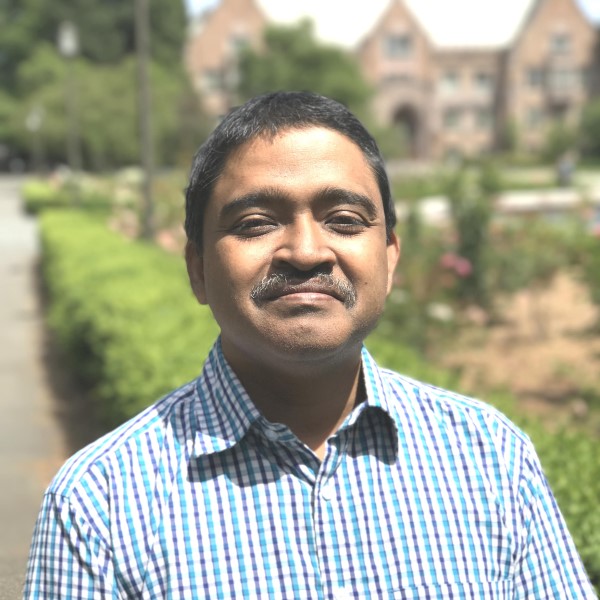
Kishalay Mitra is a Professor at the Indian Institute of Technology Hyderabad , with affiliations to the Department of Chemical Engineering , Department of Climate Change , and Department of Artificial Intelligence . He also holds visiting professorships at Washington University in St. Louis and University of Washington, Seattle . His work in the Global Optimization & Knowledge Unearthing Laboratory (GOKUL) spans interdisciplinary optimization, machine learning, and their applications in industrial-scale engineering problems. Education : Ph.D. from IIT Bombay. Research Interests : Mitra's research focuses on optimization under uncertainty , surrogate modeling , multi-objective optimization , and integrating machine learning with physics-based models . His work addresses real-world challenges in wind energy , bioenergy supply chains , chemical process control , nanoscience , and environmental modeling (e.g., PM10 spatiotemporal analysis, forest fire prediction, and carbon capture). Article Trends : His recent publications emphasize wind energy systems (layout optimization, yaw control, forecasting), materials science (precipitate growth prediction, polymerization), and industrial processes (crystallization, grinding circuits). Techniques include neural operators , Bayesian optimization , generative adversarial networks (GANs) , and explainable AI .
Stefan Vandewalle is a full professor at the Department of Computer Science, Faculty of Engineering Sciences, KU Leuven. His research focuses on numerical analysis, applied mathematics, and computational methods for stochastic differential equations, wind energy modeling, and uncertainty quantification. Department Chair, KU Leuven Member, Subdivision Numerical Analysis and Applied Mathematics Member, iSi Health Institute Observer, Faculty Council of Sciences Chair, Department Council for Computer Science His recent work explores multiscale modeling, Monte Carlo methods, and data assimilation techniques. Projects include micro-macro Parareal algorithms, wind turbine aeroelasticity, and turbulent flow reconstruction for wind farms. He supervises PhD candidates and collaborates on interdisciplinary studies involving structural mechanics and renewable energy systems. Publications highlight advancements in parallel-in-time methods, stochastic optimization for tokamak reactors, and DNS-based control of turbulent flows. Key keywords: Multiscale numerical methods Uncertainty quantification Wind energy simulation Monte Carlo algorithms PDE-constrained optimization Stochastic differential equations He contributes to academic governance as a member of extended faculty boards and evaluation committees.
Gianfranco Chicco is a Full Professor at the Politecnico di Torino , Italy, within the Department of Energy (DENERG). He serves as Scientific Director of the Electrical Power Systems research group and the Turin unit of the ENSIEL Consortium. A Fellow of IEEE (since 2018), he has held editorial leadership roles as Editor-in-Chief of Sustainable Energy, Grids and Networks and Subject Editor of Energy , while chairing major conferences like IEEE ISGT Europe 2017 and UPEC 2020. Education : Laurea (cum laude) in Electrical Engineering (1987), Ph.D. in Electrical Engineering (1992), Doctor Honoris Causa (2017, Polytechnic University of Bucharest; 2018, Technical University 'Gheorghe Asachi' of Iasi). Research Interests : Focus on power transmission and distribution systems , distributed energy resources , and multi-energy smart grids , with applications in artificial intelligence , load management , and power quality . His work addresses technical, economic, and environmental aspects of distributed generation and smart grid sustainability . Publications Trends : Recent articles emphasize photovoltaic power optimization , dynamic grid modeling , and multi-energy system coordination , reflecting expertise in renewable integration , clustering algorithms , and adaptive control . Key subfields include voltage stability , load forecasting , and blockchain for energy trading . Awards : IEEE Fellow (2018-) Best Paper Awards at SEST (2018, 2020) Doctor Honoris Causa (2017, 2018) 'Giancarlo Vallauri' Degree Prize (1988) Advising and Grants : Supervises PhD students in power converters , renewable integration , and high-voltage measurement methodologies . Leads European projects like H2020 MIGRATE and OSMOSE, focusing on grid resilience , clustering-based network planning , and multi-energy sustainability .
Brian Vermeire is an Associate Professor in the Department of Mechanical, Industrial and Aerospace Engineering at Concordia University. His research focuses on computational fluid dynamics, aerodynamics, high-performance computing, turbulence modeling, numerical methods, and optimization. He leads the Computational Aerodynamics Laboratory, emphasizing scale-resolving simulations and high-order numerical techniques. Key interests include large eddy simulation (LES), direct numerical simulation (DNS), and gradient-free optimization. His work often involves developing advanced algorithms for unstructured grids and high-performance computing platforms. Research Interests: High-order numerical methods Implicit/explicit time integration schemes Polynomial adaptation for adaptive meshing Aeroacoustic shape optimization Large eddy simulation (LES) and direct numerical simulation (DNS) Software development for CFD (e.g., PyFR) Recent work trends show strong focus on hybridized flux reconstruction methods, energy-conservative algorithms, and industrial adoption of high-fidelity simulations. Major contributions include scalable implementations for petascale computing and open-source tools like PyFR. His group collaborates on applications such as wind turbine aerodynamics and low-pressure turbine design. Labs/Teams: Computational Aerodynamics Laboratory (website: link )
Hans Bihs is a Professor in the Department of Civil and Environmental Engineering, Faculty of Engineering. His research focuses on computational fluid dynamics (CFD), wave hydrodynamics, and wave-structure interaction using the open-source framework REEF3D. Key Research Areas: CFD simulations, wave modeling, floating body dynamics, ocean wave energy, aquaculture hydrodynamics, sediment transport, and high-performance computing. Projects: ERC Consolidator Grant PARTRES (2023-2028), EEA Grants Portugal SurfWave (2023), NFR KPN IPIRIS (2021-2025), EEA Baltic SolidShore (2021-2024), NTNU's MAPLE (2022-2025), and DigiCoast (2021-2024). Email: hans.bihs@ntnu.no His recent publications (2025-2020) analyze fluid-structure interaction, ship-induced waves, floating offshore wind turbines, submerged vegetation, and coastal structures using advanced CFD techniques. Topics include wave hydrodynamics, turbulence, and numerical modeling for marine and aquaculture systems.
Dr. Zhibao Mian is a Lecturer in the School of Computer Science at the University of Hull, UK, and previously held an Associate Professor position at Northwest Normal University. He specializes in trustworthy AI, machine learning, and intelligent maintenance systems. His research integrates AI with IoT, blockchain, and digital twins in Industry 4.0/5.0 contexts. He leads projects on predictive maintenance for offshore wind turbines and AI-driven sustainable energy solutions. Dr. Mian holds a PhD from the University of Hull and an MSc from the University of Nottingham. Research interests include AI ethics, model-based safety analysis, and RCM. He has secured grants such as the CPHC-funded study on AI in software education and oversees multiple PhD scholarships. Notable roles include Editorial Board member of the American Journal of Artificial Intelligence and Reviewer for high-impact journals/conferences like JSS and IEEE. He is a Senior Fellow of the Higher Education Academy and received the Royal Academy of Engineering's 2024 Exceptional Talent designation. Recent publications (2023-2025) focus on ordinal networks, outlier detection, Belt and Road trade analysis, and carbon emissions modeling. He actively advises PhD students on topics like UAV-based anomaly detection and predictive maintenance frameworks.
Professor Antonio Griffo holds the position of Professor of Power Electronics and Electric Drives at the University of Sheffield's School of Electrical and Electronic Engineering. He leads the Electrical Machines and Drives Research Group and is involved in the High Reliability Drives Group. His academic journey includes a MSc (2003) and PhD (2007) in Electrical Engineering from the University of Naples, followed by research roles at Bristol and Sheffield Universities before becoming a Lecturer in 2013 and later a Professor. His research focuses on advanced control of electric drives, SiC-based power electronics for aerospace/renewables, fault detection in machines, and thermal management. Key projects include modeling hybrid AC/DC power systems for 'More Electric Aircraft', sensorless control techniques, and real-time simulation methodologies. He has pioneered work on SiC converter reliability, insulation monitoring, and condition-based maintenance systems. Publications (15+ in top journals like IEEE Transactions) emphasize innovative solutions for power electronics challenges, including voltage stress mitigation, thermal modeling, and fault tolerance. His work bridges theory and application, addressing critical issues in aerospace, renewable energy, and electric vehicle systems. Griffo also contributes to educational advancements through modular training platforms for power electronics education. Labs/Teams: Active in the Electrical Machines and Drives Research Group, focusing on high-reliability drive systems and sustainable energy technologies. Collaborates with industry on projects like the EPSRC Offshore Wind Prosperity Partnership.
Florian Muijres is an Associate Professor and Chairholder at the Experimental Zoology Group, Wageningen University & Research, where he leads the Animal Flight Lab. His research focuses on the biomechanics, aerodynamics, and flight control of natural flyers such as insects, birds, and bats, with applications in bio-inspired robotics and ecological solutions like mosquito traps and flapping-wing drones. He holds a PhD from Lund University (Sweden) and conducted postdoctoral research at the Dickinson Lab, University of Washington (USA). Research Interests: Merging experimental and computational methods, his work explores primary research on flight mechanics (e.g., mosquito evasion, butterfly gliding) and applied studies (e.g., drone design, pollinator behavior in greenhouses). His lab uses advanced videography and robotic models to study flight dynamics under real-world conditions. Labs & Teams: The Animal Flight Lab collaborates with biologists, physicists, and engineers to investigate flight adaptations in mosquitoes, bumblebees, and pied flycatchers. Projects include developing high-efficiency traps and analyzing flight performance in complex environments.
Alexandra Collins is an Associate Professor in Environmental Sustainability at the Centre for Environmental Policy, part of the Faculty of Natural Sciences at Imperial College London. Her work focuses on integrating environmental decision-making with societal benefits through ecosystem services and natural capital frameworks. She is affiliated with the Grantham Institute, Human Behaviour and Experience Network, and Ocean Plastic Solutions Network, among others. Education: BSc Biological Sciences (University of Bristol), MSc Environmental Technology (Imperial College London), PhD Environmental Research (Imperial College London). She has held roles including a NERC Policy Fellowship and a Knowledge Exchange Fellowship with Defra. Research interests include holistic approaches to environmental challenges, societal benefits from green/blue spaces, participatory methods in decision-making, and co-production of knowledge. Current projects include the NERC-funded CAMELLIA project (urban water management) and the EU-funded HEART project (blue-green technologies for urban health). Her work emphasizes interdisciplinary systems thinking and stakeholder engagement. Publications span evidence-based policy, ecosystem service valuation, and climate-resilient infrastructure. She has collaborated with governments (UK, EU), NGOs, and international organizations to translate research into actionable strategies. Her recent work addresses barriers to flood adaptation, Indigenous inclusion in water governance, and multi-use offshore systems. Advising & Grants: Supervises PhD research on cultural ecosystem services and participatory catchment management. Co-investigator on major grants including £4.2M NERC CAMELLIA project. Active in developing decision-support tools for green infrastructure investments through the Nature Smart Cities initiative. Labs/Teams: Core member of the Centre for Environmental Policy, leading interdisciplinary teams on urban sustainability and environmental governance. Engages with cross-sectoral partnerships to bridge science-policy-practice gaps.
Yolanda Vidal Segui is an Associate Professor in the Department of Mathematics at the Universitat Politècnica de Catalunya (UPC), affiliated with the Escola d'Enginyeria de Barcelona Est (EEBE). Her research focuses on wind energy systems, predictive maintenance, and structural health monitoring of wind turbines. She leads projects in the CoDAlab and WinTurCoM research groups, specializing in data-driven models, condition monitoring, and failure prognosis. Her work integrates machine learning, mathematical modeling, and sensor technology to enhance turbine reliability and energy efficiency. Dr. Vidal holds a PhD in Applied Mathematics and has authored over 350 publications. Her contributions include advancements in SCADA data analysis, vibration-based diagnostics, and AI-driven condition monitoring systems. She has received several accolades, including the WindEurope Technology Workshop recognition and the IFIT Distinction in Mechanism and Machine Science. Her research bridges academia and industry, addressing challenges in offshore wind turbine integrity and maintenance strategies. Active in professional service, she serves on conference committees and editorial boards (e.g., Mechanical Systems and Signal Processing, Wind Energy). Her work emphasizes sustainable energy solutions and has been applied in real-world scenarios like the Alpha Ventus wind farm. She also contributes to educational initiatives, developing innovative teaching materials for engineering students.
Daniel C. Ludois is a Professor of Electrical and Computer Engineering at the University of Wisconsin–Madison, College of Engineering, where he also serves as the Research & Innovation Director for the Wisconsin Electric Machines and Power Electronics Consortium (WEMPEC). He holds the distinguished title of Jim and Anne Sorden Professor and is an H.I. Romnes Faculty Fellow, reflecting his leadership in research and education. Dr. Ludois earned his Ph.D. in Electrical Engineering from UW–Madison in 2012 and a B.S. in Physics from Bradley University in 2006. His research focuses on advancing power conversion technologies, particularly through electrostatic machines, capacitive wireless power transfer, wound field synchronous machines, and integrated power electronics. He teaches core courses such as ECE 411 (Introduction to Electric Drives), ECE 711 (Dynamics and Control of AC Drives), and ECE 713 (Electromagnetic Design of AC Machines). Power Electronics Wireless Power Transfer (Capacitive Coupling) Electrostatic Machines (Copper-Free, Steel-Free Motors) Sustainable Electric Machine Design High-Frequency and High-Voltage Power Conversion Brushless Excitation Systems Integration of Inductors and Capacitors His recent publications emphasize high-torque electrostatic machines using dielectric liquids, capacitive power transfer for aerial platforms and rotating machinery, and innovative inverter topologies. These works reflect a strong trend toward sustainable, high-performance electric machines that reduce reliance on rare-earth materials and traditional conductive components. Dr. Ludois has received numerous honors, including: NSF CAREER Award (2015) Moore Inventor Fellowship (2017) DOE InDEEP Competition Phase I & II Awards (2024) H.I. Romnes Faculty Fellow (2023) Vilas Faculty Early Career Investigator Award (2022) Wisconsin Alumni Research Foundation (WARF) Innovation Award (2012) He has mentored a highly entrepreneurial group of students, several of whom have founded startups such as H3X (Forbes 30 Under 30) and C-Motive Technologies, which he co-founded to commercialize electrostatic power conversion devices. His team has secured significant recognition, including multiple Grainger Power Engineering Fellowships and IEEE best paper awards. Dr. Ludois leads a vibrant research lab focused on next-generation power systems, with funding from federal agencies and industry partners, driving innovation in electric transportation, renewable energy, and industrial automation.
Professor Atilla Ansal is a distinguished academic in Civil Engineering at Özyeğin University's School of Engineering, where he has served as a full-time professor since March 2012 and previously as the Founding Chair of the Civil Engineering Department from 2012-2019. With an extensive career spanning over five decades, Professor Ansal has held prominent positions at Istanbul Technical University, Bogaziçi University's Kandilli Observatory and Earthquake Research Institute, and has served as a visiting professor at numerous international institutions including Northwestern University, University of California, and Tokyo University. Northwestern University, 1978 (Doctorate) Civil Engineering, Istanbul Technical University, 1969 (Master's) Civil Engineering, Istanbul Technical University, 1969 (Bachelor's) Professor Ansal's research focuses on Earthquake Geotechnical Engineering, Soil Dynamics, Seismic Hazard Analysis, Landslide hazard analysis, Seismic Microzonation, and Laboratory and In-Situ Testing of Soil Properties. His work has significantly advanced our understanding of soil behavior under seismic loading, site response analysis, and seismic microzonation methodologies. His research has direct applications in urban planning, earthquake risk mitigation, and performance-based seismic design. Professor Ansal has pioneered approaches to site-specific earthquake characterization and developed methodologies for seismic microzonation that have been implemented in numerous Turkish cities and adopted internationally. His extensive publication record demonstrates consistent contributions to earthquake engineering, with recent work focusing on probabilistic seismic microzonation, 2D basin effects, site-specific response analysis, and performance-based design approaches. His research shows a clear evolution from fundamental soil behavior studies to practical applications in urban risk assessment and mitigation. 7th Prof.N.Ambraseys Lecturer (2024), European Association for Earthquake Engineering 15th Nonveiller Lecturer (2017), Croatian Geotechnical Society Third Prof.Dr. Rıfat Yarar Lecturer (2015), Turkish Civil Engineers Association Third Ord.Prof.Dr. Hamdi Peynircioglu Lecturer (1988) Professor Ansal has advised 15 PhD students and 27 Master's students, shaping the next generation of earthquake engineers. His leadership extends to editorial roles as Editor-in-Chief of the Springer journal 'Bulletin of Earthquake Engineering' since 2002 and Editor-in-Chief for the Springer book series on 'Geotechnical, Geological and Earthquake Engineering'. He served as Secretary General (1994-2014), President (2014-2018), and Vice President (2018-2022) of the European Association for Earthquake Engineering, significantly influencing the field internationally. His work has been supported by numerous grants from Turkish government agencies, international organizations including UNESCO, and collaborative research projects across Europe. Professor Ansal has been instrumental in establishing geotechnical monitoring systems in Istanbul, including vertical arrays for site response analysis. His leadership in the 'Earthquake Master Plan for Istanbul' and 'Seismic Microzonation for Municipalities' projects has created critical infrastructure for earthquake risk management in Turkey's most populous city. His work with GeoIst, Geotechnical Earthquake Engineering and Consultancy Inc. has translated academic research into practical engineering solutions for seismic risk mitigation.