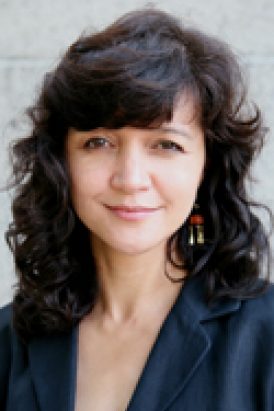
Kelly Askew is a Professor of Anthropology and Afroamerican & African Studies at the University of Michigan’s College of Literature, Science, and the Arts. She holds a PhD in Anthropology (Harvard, 1997) and a BA in Music and Anthropology (Yale, 1997), with over three decades of fieldwork in Tanzania and Kenya. Education PhD in Anthropology, Harvard University (1997) BA in Music and Anthropology, Yale University Key Roles Chair of the Department of Anthropology Niara Sudarkasa Collegiate Professor Her research bridges three primary domains: Postsocialist transitions (e.g., property rights formalization and land conflicts), art and political aesthetics (e.g., Swahili music, African visual arts, ethnographic filmmaking), and indigenous political movements (e.g., Maasai and Parakuyo pastoralists). She has produced award-winning documentaries like The Chairman and the Lions (2013) and Maasai Remix (2019), which examine cultural resilience and land rights. Scientific awards include being a finalist for the African Studies Association Herskovits Award (2002). Recent publications analyze land dispossession mechanisms, postsocialist cultural production, and media’s role in political identity. She has secured grants from the National Science Foundation, National Endowment for the Humanities, and Ford Foundation.
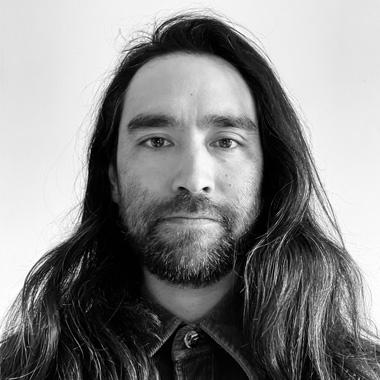
Nicholas Mortimer is a Senior Lecturer in Design at Goldsmiths, University of London. He holds an MA in Design Interactions (Royal College of Art, 2013) and a BA in Fine Art Sculpture (University of Brighton, 2005). His work focuses on socially engaged design practices, reimagining historical performance traditions to address contemporary labor and societal issues. As co-founder of Post Workers Theatre (PWT), he explores workers’ theatre and creative resistance through collective writing, performance, and design. His research spans topics like gig economy critiques, housing privatization, and community activism, often blending performance, sound, and participatory methods. Education: MA Design Interactions, Royal College of Art, 2013 BA Fine Art Sculpture, University of Brighton, 2005 Research Interests: Performance as social critique Historical folk traditions and modern labor struggles Community-driven design practices Radical pedagogy and participatory methods Key Projects: Post Workers Theatre : Investigates politically engaged performance, addressing labor inequality through updated workers’ theatre forms. Autohoodening : Critiques Amazon labor practices via a reimagined midwinter ritual. Rave of the Ritualesque : Examines rave culture’s potential for collective resistance. Affiliations: Department of Design, Goldsmiths, University of London IASPIS (Swedish Arts Grants Committee) residency collaborations Labs/Teams: Post Workers Theatre collective Collaborations with institutions like Tate Liverpool, Luleå Arts and Crafts Biennale, and the Maidstone Museum
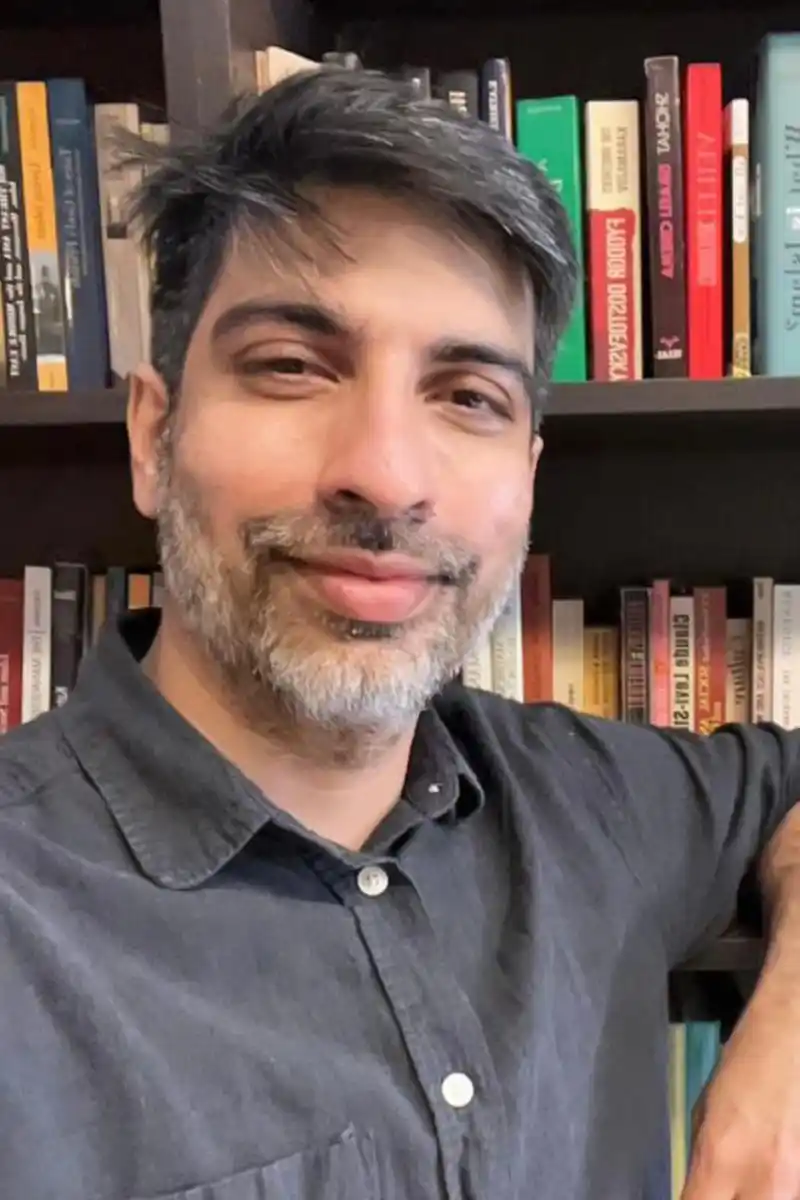
Arsalan Khan is Associate Professor in the Department of Anthropology at the University of Tennessee, Knoxville, where he joined in 2023. Previously, he taught at Union College in Schenectady, NY. He holds an M.A. and Ph.D. in Anthropology from the University of Virginia. His research specializes in the anthropology of Islam, examining intersections of ritual, gender, and ethics in Pakistan and South Asia. Current projects analyze: (1) Islamic piety movements like Tablighi Jamaat and their visions of moral order (explored in his 2024 Cornell University Press book The Promise of Piety ), and (2) climate justice politics in Karachi, focusing on Islamic conceptions of citizenship and moral responsibility during environmental crises. His scholarly publications demonstrate consistent focus on Islamic ethics, political anthropology, and Pakistani society, with recurring theoretical engagement with sovereignty, hierarchy, and religious modernity.
Suvi Saarikallio is a Professor of Music Education at the University of Jyväskylä, Finland , affiliated with the Faculty of Humanities and Social Sciences and the Department of Music, Art and Culture Studies . She leads interdisciplinary research bridging music psychology, education, and therapy, with a focus on youth development, emotion regulation, and well-being. Research Groups: Centre of Excellence in Music, Mind, Body and Brain (2022-2029), Musiconnect (2022-2027) Key Projects: Music and You, Stress & music listening, MPACT (Music and Sports), Music and Cross-modal Associations, SOSUS (Social Sustainability for Children) Research Trends: Her recent publications explore music's role in emotional regulation, cross-modal perception, health outcomes, and educational applications. Themes include AI's impact on music evaluation, rhythm's connection to cognitive skills, and music's influence on stress and social-emotional development. Contact: suvi.saarikallio@jyu.fi
Webb Keane is the George Herbert Mead Collegiate Professor of Anthropology at the University of Michigan. He is affiliated with the Center for Southeast Asian Studies, Global Islamic Studies Center, and the Interdisciplinary Program in Anthropology and History. His research focuses on ethics, semiotics, material culture, and religion in Southeast Asia and beyond. He holds a PhD and AM from the University of Chicago and a BA from Yale College. His major publications include Signs of Recognition , Christian Moderns , and Ethical Life , with his latest book Animals, Robots, Gods (2025) exploring non-human ethics. Keane has held fellowships from the Guggenheim Foundation and the National Endowment for the Humanities, and has lectured globally, including at Cambridge and the London School of Economics. Research Interests: Moral philosophy, semiotics, materiality, religion, media, and historical consciousness. Awards: Guggenheim Fellowship, Annette B. Weiner Memorial Lecturer, Edward Westermarck Memorial Lecturer. Teaching: Courses on language and culture, anthropology of religion, and Southeast Asian studies. Affiliations: Center for Southeast Asian Studies, Global Islamic Studies Center, Interdisciplinary Program in Anthropology and History.
Professor David Sarpong is a leading academic in Strategy and Organisation at Aston Business School, part of Aston University's College of Business and Social Sciences. He currently serves as Head of the Marketing and Entrepreneurship Department and Director of Research for the Marketing and Strategy Subject Group. His research focuses on strategy-as-practice, relationalism, innovation management, and temporality in organizational processes. He holds adjunct roles at KNUST Business School and Bristol Business School, and is actively involved in professional organizations like EURAM and CABS. His work employs qualitative methods including ethnographic interviews and microstoria approaches. Professional Activities: He serves as Editor-in-Chief of the Journal of Strategy and Leadership, and on editorial boards for Technology Analysis & Strategic Management and European Management Journal. His external roles include UK Country Representative for EURAM and Board Membership at The Milestones Trust. He has held prior academic leadership positions at Brunel University London and visiting roles at HSE Moscow and University of KwaZulu-Natal. Research Interests: Prioritizes cross-level management problems using Heideggerian-Wittgensteinian frameworks. Key themes include second-order technology management, business tournament rituals, strategic foresight, and discursive practices in European cosmopolitan marketplaces. Methodologically innovative in combining narratives, digital datasets, and performative routines analysis. Collaborations: Active in global research networks with scholars across Africa, Europe, and Asia. Recent work addresses mining-industry partnerships, gender dynamics in extractive economies, and ethical dimensions of corporate governance. His research outputs number over 110 publications in top journals like Technovation and Journal of Business Research. Awards/Affiliations: Recognized through editorial leadership roles and visiting professorships. His research has policy implications for sustainable development, innovation ecosystems, and organizational resilience in global contexts.
Pauline Lemaigre-Gaffier is a Lecturer in Modern History at the University of Versailles Saint-Quentin-en-Yvelines (UVSQ), affiliated with the Institute of Cultural and International Studies (IECI) and the Department of History. She co-leads the VoCriPat project (2023–present) and participates in the DIM PAMIR committee (2022–present) and ANR ACADEC project (2022–present). Her research focuses on European court societies (festivals, ceremonies, urban interactions) Cultural history (material culture, documentary writings) Political history (public finance, administrative practices) Economic history (privileges and businesses) Heritage sciences Her 15 most recent publications explore topics like archival practices in early modern Europe French court administration of the arts economic networks of privileged enterprises royal household logistics spanning 2015–2024, with upcoming works on economic history and heritage sciences in 2025. She has received the Benabou Prize (2012) and was a Thiers Foundation scholarship holder (2009–2010) . Her career includes editorial roles at Entre-Temps (2021–2023) and educational management for the 'Music, Performance, and Heritage' degree (2014–2016). She collaborates with institutions like the Centre de recherche du Château de Versailles and the Heritage Sciences Foundation.
Dr. Hester Lees-Jeffries is a University Associate Professor at the University of Cambridge and Fellow of St Catharine's College, where she serves as Director of Studies in English. She earned her BA and MA (Hons.) from the University of Canterbury, New Zealand, before completing her PhD at Cambridge as a Commonwealth Scholar. Her academic career includes a Research Fellowship at Magdalene College (2003-2006) and ongoing fellowship at St Catharine's since 2006. Her research focuses on Shakespeare and early modern literature, with particular expertise in performance studies, visual culture, and material textuality. She investigates topics including Renaissance textiles, costume semiotics, garden symbolism, and material objects in literature. Her interdisciplinary approach connects literary analysis with cultural history and performance theory. Lees-Jeffries maintains an active publication record with scholarly works spanning Shakespearean criticism, material culture studies, and Renaissance literature. Her research demonstrates consistent focus on textual materiality, performance interpretation, and interdisciplinary methodologies bridging literary analysis with visual and material culture. Her forthcoming publications include monographs on textile symbolism in Shakespeare and an introduction to Shakespeare's histories. Honors and Awards: Commonwealth Scholarship Research Fellowship, Magdalene College (2003-2006) Fellowship, St Catharine's College (since 2006) She coordinates exhibitions for the Centre for Material Texts and regularly contributes to Shakespeare Survey as London theater reviewer. Her innovative #SlowShakespeare projects provide daily literary analysis of Shakespeare's plays through social media platforms.
Dr. Jennifer Evans is a Senior Lecturer in History within the School of Creative Arts at the University of Hertfordshire. Her academic career spans over a decade since completing her PhD at the University of Exeter in 2011, followed by two years of teaching there before joining Hertfordshire. She serves as the founding editor of the Early Modern Medicine blog and co-directs the Perceptions of Pregnancy research network with colleagues Leanne Calvert, Sarah Fox, and Chelsea Phillips. Her research focuses on the history of the body, medicine, and gender during 1550-1750, with particular emphasis on reproductive health, infertility, and miscarriage. Her scholarly work demonstrates deep engagement with both male and female experiences of health and sexuality in early modern England. Current projects include 'Wounded Wombs and Empty Cradles: Miscarriage and Pregnancy Loss in Early Modern England c.1600-1780' (Folger Shakespeare Library, 2025-2026) and 'Foraging for Early Modern Medicines 1600-1750' (AHRC-funded). Analysis of her recent publications reveals consistent thematic concentration on bodily experiences, particularly reproductive health across genders. Her work bridges medical history with gender studies, examining how bodily functions and dysfunctions intersected with social structures. The scholarship shows increasing attention to male experiences of reproductive health alongside traditional focus on women's histories, reflecting broader historiographical shifts toward more inclusive medical history. Dr. Evans actively supervises postgraduate students including Kiran Seera (PhD: 'Domestic Disorder: Crime, Kinship, and Space in Bedfordshire, c. 1650-1790') and has completed supervision of three PhD and two MA students. Her research has received substantial external funding including AHRC Early Stage Impact Accelerator Award funding for her foraging project that explores historical medicinal plant knowledge. She directs the Perceptions of Pregnancy researchers' network which has published two major collections and hosted multiple conferences. The network brings together scholars examining all aspects of fertility, pregnancy, childbirth and early parenthood from the seventeenth to twentieth century. Her public engagement includes numerous media appearances including BBC Radio 4's 'The Food Programme' (February 2024), BBC World Service's 'The Food Chain', and multiple television appearances.
Matina Terzidou is a Senior Lecturer in the Faculty of Business and Law at Middlesex University, where she belongs to the Department of Marketing, Enterprise & Tourism. Her research focuses on religious tourism, with particular emphasis on tourist experiences, motivations, and the intersection of tourism with wellbeing and sustainability. She investigates how visual media influences destination image formation and examines socio-economic impacts of tourism in cultural contexts. As a module leader for Research Project and MSc Dissertations, she coordinates postgraduate research and teaches Hospitality and Events Practicum. She has previously taught Heritage Tourism, International Tourism Industry, and Tourism & Society. She serves on scientific committees for international tourism conferences and reviews for academic journals.
Susan Ashbrook Harvey is the Willard Prescott and Annie McClelland Smith Professor of History and Religion at Brown University. Her research focuses on late antique and Byzantine Christianity, particularly Syriac studies, with expertise in asceticism, hagiography, women's roles, hymnography, and liturgical practices. She holds affiliations with the American Academy of Religion, Society of Biblical Literature, and the North American Patristic Society. Her research interests include the intersection of religion and the senses, women in ancient Christianity, and liturgical lament. Notable publications include Scenting Salvation (2006) and Knowing Bodies, Passionate Souls (2017). She has received prestigious awards such as the Guggenheim Fellowship and honorary doctorates from Lund University, the University of Bern, and Grinnell College. Harvey teaches courses like 'Sacred Stories' and 'Women and Gender in Ancient Religions.' Her work bridges historical scholarship with contemporary theological discourse, emphasizing marginalized voices in early Christian traditions.
Irene Albers is a full Professor at Free University of Berlin's Department of Philosophy and Humanities, holding dual appointments at the Peter Szondi Institute for General and Comparative Literature and Institute for Romance Philology since 2004. She chairs both the Examination Board and Doctoral Committee for General and Comparative Literature, serves as Trustee of Studienstiftung des deutschen Volkes since 2004/05, and has been Principal Investigator for the Friedrich-Schlegel Graduate School for Literary Studies and Cluster Languages of Emotion since 2007. Her research bridges comparative literature, anthropology, and visual culture with institutional leadership spanning editorial projects and international conferences. Her educational background includes: Born in Bremen (1967) Romance Studies, Philosophy, and German Studies at Universities of Tübingen, Tours, and Konstanz M.A. from University of Konstanz (1993) Ph.D. from University of Konstanz (1999) on literature and photography in Émile Zola, Proust, and Claude Simon Albers' core research examines literary anthropology through colonial/postcolonial lenses, focusing on French literary engagement with Africa, surrealism, and literature-photography intersections. She pioneered studies on Michel Leiris' ethnological poetics and Claude Simon's photographic techniques, extending to historical emotion research (anatomy of affects, body language) and romance novella traditions. Her work consistently challenges Eurocentric literary canons through primitivism critique and heteronomy aesthetics, emphasizing textual restitution and cultural reclamation. Recent publications (2018-2025) reveal a sharp turn toward colonial restitution ethics, particularly in oral literature provenance. Articles increasingly analyze literature as colonial loot, connecting French modernism with African/Caribbean contexts through collaborative projects with anthropologists like Eléonore Devevey. This trajectory builds from earlier surrealist studies to concrete frameworks for decolonizing literary scholarship, spotlighting institutional complicity in cultural appropriation while advancing symmetrized modernity revisions. Scientific awards include: Senior Fellow and Prize Winner of the Zukunftskolleg, University of Konstanz (2009) Albers supervises master's and doctoral students through dedicated AVL colloquia while securing major research funding as Principal Investigator for Friedrich-Schlegel Graduate School (2007-present) and Cluster Languages of Emotion (2007-2012). Her current DFG-funded project 'Literature as Colonial Loot?' with Andreas Schmid pioneers philological provenance research. Earlier, she contributed to Collaborative Research Center 511 'Literature and Anthropology' (Konstanz, 1999-2002) and DFG-funded conferences on Claude Simon. She leads the DramaNet research project and co-edits the 'machina' series at transcript Verlag since 2010. As board member (2007-2009) and deputy (2008-2012) of Cluster Languages of Emotion, she coordinates Area D 'Cultural Codings of Emotions'. Her Zukunftskolleg fellowship (2012-2013) and Marcel Proust Society collaborations underscore sustained engagement with literary anthropology networks.
Professor Catherine Richardson serves as Professor of Early Modern Studies and Director of the Institute of Cultural and Creative Industries at the University of Kent. She joined the university in 2007 from The Shakespeare Institute and has held significant leadership positions including Associate Dean for Research and Innovation (Humanities) (2017-20), Deputy Head of School of English (2014-7), and Director of Research for the School of English (2012-7). Her research centers on the relationship between texts and material circumstances of production and consumption in early modern England, with particular focus on how material culture shaped social and cultural practices. Richardson examines the birth of creative industries in drama and performance cultures, skilled craft practices influenced by international migration patterns, and the evolution of cultural practices from the sixteenth century to present. She currently leads the AHRC-funded project 'The Cultural Lives of the Middling Sort, writing and material culture 1560-1660' in collaboration with The Shakespeare Birthplace Trust and Weald and Downland Living Museum. Richardson's extensive publication record reveals consistent scholarly engagement with material culture studies, with recent works increasingly incorporating digital humanities approaches. Her scholarship spans monographs, edited collections, and numerous journal articles examining domestic life, object biographies, and the intersection of physical artifacts with cultural narratives in early modern England. Her notable recognitions include: Fellow of the Royal Historical Society (2018) AHRC Peer Review and Strategic Review College Member (2017-22) The Malone Society council member (2002-) and Orders Secretary (2002-22) Pasold Research Fund Governor (Expert Member since 2019, 2021-present) As a dedicated supervisor, Richardson welcomes graduate students working on interdisciplinary projects related to early modern dramatic, social and cultural history. Her current AHRC project represents significant grant activity, developing digital resources that explore inclusion/exclusion dynamics in early modern English writing practices. She also serves as General Editor for the Oxford Complete Works of Christopher Marlowe and Series Editor for Arden Studies in Early Modern Material Culture. Through her directorship of the Institute of Cultural and Creative Industries, Richardson fosters research that bridges historical material culture studies with contemporary creative industry practices, creating innovative pathways for engaging with historical materials through modern technological approaches.
Mark Freeman is Professor of Social History and Education in the Department of Education, Practice and Society at the UCL Institute of Education, University College London, where he has worked since 2014. He also holds a Visiting Professorship at King's College London's Department of History. His academic focus centers on modern British history with specialized expertise in educational history and cultural studies. Freeman's research examines British adult education, youth organizations, and historical pageants through interdisciplinary lenses. His AHRC-funded project 'The Redress of the Past: Historical Pageants in Britain 1905-2016' produced the book Restaging the Past (UCL Press, 2020) and a documentary film. He co-led the 'Reading Aloud in Britain Today' project and chairs the advisory board for the 'Partitions of Identity' research on Bengali communities in Pakistan. His recent publications (2018-2023) reveal consistent thematic focus on historical pageants as cultural phenomena, St Albans' local history, and adult education evolution. These works demonstrate methodological innovation blending archival research with performance studies, highlighting pageants' role in shaping national identity and community memory across twentieth-century Britain. Scientific recognition includes: Fellow of the Royal Historical Society Major research grants demonstrate sustained funding success: Co-investigator on AHRC-funded 'The Redress of the Past' project (£750k) Co-leader of AHRC-funded 'Reading Aloud in Britain Today' initiative Advisory board chair for AHRC-funded 'Partitions of Identity' study He serves as co-editor of History of Education journal and supervises BA Education Studies dissertations at UCL. Freeman actively contributes to the International Centre for Historical Research in Education and maintains editorial roles with ECNU Review of Education and Spanish journals Tempora and Easpacio, Tempora y Educacion .
Edward Muir is the Clarence L. Ver Steeg Professor in the Arts and Sciences and Charles Deering McCormick Professor of Teaching Excellence at Northwestern University, with joint appointments in the Department of History and Italian Studies at Weinberg College of Arts and Sciences. His academic journey includes a B.A. from the University of Utah (1969), an M.A. (1970), and Ph.D. (1975) in Modern European History from Rutgers University, including a Semester in Italy Program at Syracuse University (1967). Muir's research explores the intersection of ritual, violence, and power in Renaissance Europe, with emphases on Italian history, microhistory, and cultural anthropology. His work examines civic ceremonies, gender exclusion, and the sociopolitical underpinnings of early opera. Key themes include the anthropology of Venice, religious processions, and community formation in pre-modern societies. His scholarly publications reveal a consistent focus on Renaissance cultural practices, Venetian society, and methodological innovations in microhistory. Recent works analyze opera's emergence in 17th-century Venice, anti-war movements, and gendered public spaces, blending archival rigor with interdisciplinary theory. Awards and Honors: Herbert Baxter Adams Prize (1982) Two-time Howard R. Marraro Prize winner (1982, 1993) Andrew W. Mellon Foundation Distinguished Achievement Award (2010, $1.5 million) Fellow, American Academy of Arts and Sciences (2014) Charles Deering McCormick Professorship for Teaching Excellence (2006) Muir has held major administrative roles including Department Chair at Northwestern and LSU, co-directed the Graduate Program in Italian Studies, and served on editorial boards for journals like the American Historical Review . He mentors through graduate programs but no specific student advisees are listed.