Supreet Kaur is an Associate Professor in the Department of Economics at the University of California, Berkeley. Her research focuses on labor markets in developing countries, behavioral economics, and labor economics. She earned her PhD from Harvard University and is particularly known for her work on the psychology of poverty, cognitive endurance, and the impact of financial stress on labor productivity. Her research explores how behavioral factors influence labor supply, wage dynamics, and productivity in low-income settings. Notable themes include habit formation in labor decisions, the role of social norms in aggregate labor participation, and the effects of redistributive policies on worker morale. She has conducted field experiments analyzing seasonal poverty and consumption smoothing mechanisms in developing economies. While no formal awards are listed, her work has been supported by grants such as the National Science Foundation CAREER award for studying labor productivity in poor countries. Her research bridges theoretical models with empirical evidence from real-world labor markets, often emphasizing policy-relevant insights for poverty reduction strategies. Her research portfolio includes collaborations on labor rationing, wage rigidity in village economies, and the morale impacts of pay inequality. She has advised no listed students but has contributed to shaping academic discourse through publications on behavioral labor economics and development policy.
Associate Professor Bambang Trigunarsyah holds a position at RMIT University since 2018, affiliated with the School of Property, Construction and Project Management (PCPM). He earned his BSc in Civil Engineering from Colorado School of Mines, a Master's in Civil Engineering (Construction Management) from the University of Indonesia, and a PhD in Engineering Project Management from the University of Melbourne. His career spans industry roles, including project engineering in Indonesia's oil and gas sector, academic leadership at the University of Indonesia, and international teaching/research appointments at Queensland University of Technology (QUT) and King Fahd University of Petroleum and Minerals in Saudi Arabia. Research interests focus on post-disaster reconstruction, infrastructure project governance, constructability of infrastructure, and project management in developing countries. Notable projects include risk management frameworks using blockchain, circular economy in Saudi construction, and BIPV energy solutions. He actively supervises HDR students in areas like public-sector project success determinants and thermal environment studies. Bambang serves as Higher Degree Research Delegate Authority (HDR DA) for the School of PCPM and teaches postgraduate project management programs. Professional memberships include AIPM, PMI, and ASCE. His industry advisory roles include Indonesia's National Construction Service Development Board (2002-2007) and Australia-Indonesia Centre's Infrastructure Cluster (2016-2018). Recent research emphasizes BIM applications in infrastructure preservation, risk assessment methodologies, and climate-resilient construction. His work bridges theory and practice, addressing challenges in emerging economies and complex project environments.
Scientia Professor Nasser Khalili is the Head of the School of Civil and Environmental Engineering at the University of New South Wales (UNSW). He also serves as the Director of the ARC Research Hub for Resilient and Intelligent Infrastructure Systems (RIIS), President of the Australian Association for Computational Mechanics (AACM), and a core member of the International Technical Committee on Unsaturated Soil (TC106). His research focuses on geotechnical engineering, computational mechanics, porous media behavior, and sustainable infrastructure systems. Key areas of expertise include unsaturated soils, hydraulic fracturing modeling, and advanced material characterization for asphalt mixtures. Professor Khalili's work integrates computational methods with experimental analysis to address challenges in infrastructure resilience and environmental sustainability. He has pioneered studies on pore pressure dynamics, fracture mechanics in porous media, and the application of waste materials in construction. His leadership roles in national and international committees reflect his influence in advancing geotechnical and computational engineering practices. His scientific contributions include over 150 peer-reviewed articles, with recent work emphasizing machine learning applications in civil engineering and innovative solutions for sustainable asphalt mixes. Awards include Fellowship of the Academy, recognizing his significant impact on the field.
Christina Chung is an Assistant Professor in the Department of Computational Media at the University of California, Santa Cruz (UCSC). Her research focuses on personal informatics, health & wellbeing in interpersonal contexts, and human-computer interaction (HCI). She has previously been affiliated with the University of Washington (UW) and Indiana University, evidenced by her emails at those institutions. Her work explores topics such as goal-setting behaviors in technology-mediated environments, dining-out challenges for individuals with food hypersensitivities, and collaborative health practices between patients and healthcare providers. Key research interests include behavioral design, user experience (UX) in healthcare systems, and the intersection of technology with social behavior. She has published in journals like the International Journal of Human-Computer Studies and the ACM CHI Conference proceedings. Her studies often involve participatory design approaches to address real-world challenges, such as improving restaurant safety protocols for allergy sufferers or enhancing patient-doctor data-sharing practices. Chung collaborates with interdisciplinary teams, including the Design Use Build group at UW and the Proactive Health Lab at Indiana University. Her research bridges academic and applied contexts, aiming to create technologies that support long-term health behaviors and interpersonal well-being.
Thomas Bäck is a Professor at the Leiden Institute of Advanced Computer Science (LIACS) , Leiden University , Netherlands, and a member of the interdisciplinary programme Society, Artificial Intelligence and Life Sciences (SAILS) . His academic career spans roles at Leiden University (1996–present) and leadership positions at the Center for Applied Systems Analysis in Dortmund (1994–2000). Education : Diplom-Informatiker (Computer Science), Technische Universität Dortmund (1990) Dr. rer. nat. (Computer Science), Technische Universität Dortmund (1994) Research Interests : Dr. Bäck specializes in evolutionary computation , machine learning , and their applications in sustainable smart industry and healthcare . Recent work focuses on integrating large language models (LLMs) and quantum computing into optimization frameworks, with projects like CIMPLO (predictive maintenance), ECOLE (experience-based optimization), and SAPPAO (airline operations optimization). Scientific Contributions : His 526+ publications cover evolutionary algorithms, quantum optimization, and LLM-driven design, with recent trends including: Quantum computing (e.g., quantum approximate optimization, quantum advantage challenges) LLM integration (e.g., hyperparameter tuning, mutation control, code evolution graphs) Healthcare and industry (e.g., predictive maintenance, anomaly detection, melt quality prediction) Algorithm benchmarking (e.g., IOHprofiler, MA-BBOB, explainable benchmarking) Scientific Awards : IEEE Fellow (2022) Royal Netherlands Academy of Arts and Sciences (KNAW) member (2021) Academia Europaea member (2022) IEEE Computational Intelligence Society Evolutionary Computation Pioneer Award (2015) Fellow, International Society of Genetic and Evolutionary Computation (2003) Best Ph.D. thesis award, German Society of Computer Science (GI) (1995) Advising and Grants : He supervises Ph.D. candidates in evolutionary computation and machine learning and has secured 7 major grants from organizations like the Dutch Research Council , European Commission , and The Research Council of Norway . His editorial roles include Editor-in-Chief of the Evolutionary Computation Journal and associate editorships in leading AI journals.
Nedim Pervan is a Full Professor at the Faculty of Mechanical Engineering, University of Sarajevo, Bosnia and Herzegovina. His academic position focuses on mechanical engineering with emphasis on product design, structural analysis, and biomechanical applications. He maintains an active research profile with numerous publications and collaborations across various engineering disciplines, with office hours every workday from 09:00 to 10:00 in room 314. Professor Pervan's research interests span multiple domains of mechanical engineering. He has made significant contributions to additive manufacturing, particularly in polymer gear production and analysis. His work explores mechanical properties, failure mechanisms, and service life of polymer gears manufactured through additive processes. Additionally, he has conducted extensive research on external fixation devices used in orthopedic treatments, analyzing their biomechanical characteristics and structural stability under various loading conditions. His expertise extends to finite element analysis, structural optimization, and the application of 3D scanning technologies within Industry 4.0 contexts. His research demonstrates a strong connection between theoretical engineering principles and practical applications across automotive, medical devices, and manufacturing industries. His recent publication record reveals a strong trend toward interdisciplinary research bridging mechanical engineering with biomedical applications and advanced manufacturing technologies. A significant portion of his work focuses on polymer gears and additive manufacturing, examining material properties and performance characteristics. Another substantial research stream involves biomechanical engineering, particularly the analysis of external fixation devices. His publications demonstrate a methodological approach combining experimental testing with finite element analysis. More recently, his research has expanded into 3D scanning applications in manufacturing and the electrification of transportation systems in Bosnia and Herzegovina. Professor Pervan has been involved in numerous research projects that have advanced the capabilities of the Faculty of Mechanical Engineering. These include the "Integrated Intelligent CAD System for Interactive Design, Analysis and Prototyping of Compression and Torsion Springs" (2022), "Opremanje Laboratorije za razvoj i dizajn proizvoda" (2020), and "Modernizacija Laboratorije za ispitivanje mašinskih konstrukcija" (2019-2020). These projects have focused on developing advanced laboratory facilities, intelligent CAD systems, and equipment for mechanical design and analysis, with several specifically targeting 3D scanning technology implementation. His collaborative work extends across multiple research teams within the Department of Mechanical Constructions at the University of Sarajevo. He frequently collaborates with researchers including Adis Muminović, Elmedin Mešić, and Muamer Delić on projects related to additive manufacturing, biomechanical engineering, and structural analysis. His research group appears actively involved in both theoretical and applied engineering research with practical industrial and medical applications, contributing significantly to Bosnia and Herzegovina's engineering research landscape.
Rogério de Lemos is a Senior Lecturer in Computing Science and Director of Postgraduate Research (PGR) at the School of Computing, University of Kent. He previously served as an invited assistant professor at the University of Coimbra, Portugal, and as a Senior Research Associate at the Centre for Software Reliability (CSR) at the University of Newcastle upon Tyne, UK. Dr. de Lemos' research focuses on architecting resilient systems, particularly in resilient AI, self-adaptive software systems, and authorization infrastructures. He belongs to both the Programming Languages and Systems Group and the Cyber Security Group at the University of Kent. His specific research interests include: Software engineering for self-adaptive systems assurances and resilience evaluation Dynamic generation of processes Handling insider threats using self-adaptive authorization Architectural abstractions for fault tolerance Verification and validation of dependable software architectures Software development for safety-critical systems Dependability and bioinspired computing His publication trends show increasing emphasis on practical applications of self-adaptive systems in cyber security contexts, with recent work spanning network traffic analysis, cryptographic function detection, and cloud-edge security architectures. His research bridges theoretical foundations with practical implementations, particularly in cyber security and resilient systems architecture. Dr. de Lemos currently leads the "Collaborative and Confidential Information Sharing and Analysis for Cyber Protection" project funded by the European Union's Horizon 2020 Programme. His past projects include "ADAAS: Assuring Dependability in Architecture-based Adaptive Systems" and multiple collaborations with NCR on sensor fusion and fault tolerance. As Director of Postgraduate Research, he oversees the School of Computing's research degree programs and likely supervises PhD students in resilient systems and cyber security, though specific student names are not listed in the available information.
Matthew Garver is a Professor and Chair of the Department of Nutrition, Kinesiology, and Health at the University of Central Missouri (UCM). He joined UCM in Fall 2016 after completing his Ph.D. in Exercise Science at The Ohio State University and teaching for five years in Abilene, Texas. Education: Ph.D. in Exercise Science (The Ohio State University) Garver’s research focuses on applied human performance, with emphasis on resistance training, interlimb asymmetry in athletes, and the intersection of exercise science with diversity, equity, and inclusion (DEI). His work spans collegiate sports, track and field, and health interventions for special populations. Recent publications highlight his exploration of artificial intelligence in sport science ethics, DEI initiatives in exercise research, and position-specific training in collegiate female soccer. His studies also address exercise-induced bronchoconstriction, biomechanical asymmetry in American football players, and affective responses to resistance training. Garver has contributed to understanding physical activity’s role in older adults, particularly patients with knee osteoarthritis, through the IMPACT-P trial. His interdisciplinary approach bridges kinesiology, physiology, and social science in promoting health and athletic performance. At UCM, he teaches courses in Kinesiology and leads research initiatives aimed at optimizing human performance and health outcomes through evidence-based strategies.
Risto Miikkulainen is a Professor of Computer Science and Neuroscience at the University of Texas at Austin and VP of AI Research at Cognizant AI Lab. He directs the UTCS Neural Networks Research Group and is currently on leave from UT, working on Evolutionary Computation and Deep Learning at Sentient Technologies, Inc. Education: Ph.D. in Computer Science, UCLA, 1990 M.S. in Applied Mathematics, Helsinki University of Technology (now Aalto University), 1986 Risto Miikkulainen's research focuses on biologically-inspired computation such as neural networks and evolutionary computation. His work spans three main areas: (1) Neuroevolution, evolving complex deep learning architectures and recurrent neural networks for sequential decision tasks in robotics, games, and artificial life; (2) Cognitive Science, developing models of natural language processing, memory, and learning that shed light on disorders such as schizophrenia and aphasia; and (3) Computational Neuroscience, studying the development, structure, and function of the visual cortex, episodic memory, and language processing. His research combines theoretical understanding of biological information processing with practical applications for developing intelligent artificial systems. His recent publications (2025) show a strong focus on evolutionary approaches to AI development, particularly in neural architecture search, loss function optimization, and explainable AI. Many papers explore the intersection of evolutionary computation with deep learning, creating more efficient and transparent AI systems. His work spans theoretical foundations and practical applications in areas ranging from environmental control systems to cognitive modeling. Scientific Awards: College of Fellows, International Neural Network Society, 2024 Best Pathway to Impact Award, NeurIPS Climate Change workshop, 2024 AAAI Fellow, 2023 IEEE CIS Evolutionary Computation Pioneer Award, 2020 Gabor Award, International Neural Network Society, 2017 Outstanding Paper of the Decade Award, International Society for Artificial Life, 2017 IEEE Fellow, 2016 Multiple Best Paper Awards at GECCO, CIG, and CEC conferences Deployed Application Award, AAAI/IAAI-2013, AAAI/IAAI-2018 Miikkulainen has extensive experience mentoring students through undergraduate research courses like CS378 Computational Intelligence in Game Design I and II, where students develop independent research projects on the OpenNERO research platform. He has received multiple awards for deployed applications, demonstrating the practical impact of his research. His work has led to the development of the NERO game platform, which serves as both an educational tool and research platform for AI. He directs the UTCS Neural Networks Research Group, which focuses on neuroevolution, cognitive science models, and computational neuroscience. The group has developed the NERO (Neuro-Evolving Robotic Operatives) platform, a machine learning game that allows users to train intelligent agents through evolutionary computation. The group's work spans theoretical research and practical applications in AI, with connections to both academic and industry partners.
Dr Nga Wun (Doris) Li is a Senior Lecturer at the University of Technology Sydney (UTS) within the Faculty of Design, Architecture and Building, Department of Fashion and Textiles. She leads research in seamless knitting technology, smart textiles, and sustainable fashion innovation. PhD in Fashion & Textile Design (HK PolyU, 2021) BA (Hons) in Fashion & Textiles (HK PolyU, 2012) Certifications in Wholegarment Machine (Shima Seiki, Japan) and Higher Education Pedagogy (UTS) Her research focuses on functional garments, knitting technology, and bio-informed textile design. Key projects include smart socks for DVT prevention , one-size sports bras , and buoyant swimwear for children . She combines knitting with machine learning and 3D printing for material innovation. Recent publications highlight her work on compression textiles (2025), wearable glucose sensors (2025), and knitted metasurfaces for acoustic comfort (2024). She has secured AU$52,000+ in grants across 5 funded projects. Fashion Design Award (Jeanswest, China) Outstanding Presentation & Research Paper Awards (2024) Dr Li supervises PhD and MPhil students in smart textiles and sustainable design while coordinating machine knitting courses. She collaborates with AiDLab (Hong Kong) and Powerhouse Museum (Australia).
Cecilia O. Alm is a Professor in the Department of Psychology within the College of Liberal Arts at Rochester Institute of Technology (RIT), where she serves as the Artificial Intelligence Program Director. She holds multiple leadership roles including Director of the Center for Human-aware AI and Director of the Computational Linguistics and Speech Processing Lab (CLaSP). Her institutional affiliations span the School of Information, Ph.D. Programs in Cognitive Science and Computing and Information Sciences, Department of Computer Science, and MS in Data Science program. Dr. Alm earned her Ph.D. from the University of Illinois at Urbana-Champaign. Her research focuses on human-centered artificial intelligence with particular emphasis on linguistic and multimodal sensing, affective computing, and natural language processing. She investigates how AI systems can better understand and respond to human communication through multimodal dialogue processing, with applications in accessibility, education, and healthcare. Her recent publications demonstrate a strong trend toward developing inclusive AI systems, particularly through projects addressing Deaf community needs (MULTICOLLAB-ASL), subtle emotion recognition (FUSE corpus), and bias mitigation in NLP. The work consistently integrates multimodal data streams (speech, gaze, gesture) to create more responsive human-AI interaction frameworks. Current research directions emphasize diversity in AI education, visual prosody in sign languages, and human-in-the-loop AI development. Dr. Alm leads several significant NSF-funded initiatives including the AWARE-AI program, IRES AI-PROWIL international research experience, and collaborative projects with Gallaudet University focused on Deaf scientist-centered AI research. She has secured over $2.5 million in external funding for her work on human-aware AI systems. She directs the CLaSP lab which provides research opportunities for PhD, MS, and undergraduate students, with graduates employed at major technology companies including Amazon, Apple, Microsoft, and Facebook. The lab focuses on real-world AI applications in accessibility, human-robot interaction, and multimodal communication systems.
Professor Lee Wallace is a distinguished academic at the University of Sydney, serving as Director of the Sydney Social Sciences and Humanities Advanced Research Centre (SSSHARC) and Professor in the Discipline of Film Studies within the Faculty of Arts and Social Sciences. She joined the university in 2011 from the University of Auckland, where she earned her PhD in postcolonial literary studies in 1997. Her research focuses on queer theory, lesbian/gay studies, feminist theory, colonial/postcolonial discourse, and cinema studies. Wallace’s work explores intersections of sexuality, space, and cultural representation, with notable projects analyzing queer architectures and cinematic narratives. Education: PhD in Postcolonial Literary Studies from the University of Auckland (1997). Roles: Director of Research Development (Humanities), Research Coordinator, and member of the Sydney Centre for Healthy Societies and Sydney Policy Lab. Research interests include queer theory’s engagement with cultural space, colonial discourse analysis, and interdisciplinary studies of film and literature. Her recent articles analyze topics like midlife lesbian identity, queer science communication, and cinematic representations of commitment. Notable publications include Lesbianism, Cinema, Space (2009) and Reattachment Theory: Queer Cinema of Remarriage (2020). Awards: 2024 Eureka Prize finalist, Marsden Fund Grants (2007 and 1997). Her work has been featured in The Conversation and media outlets. Current grants include projects on queer community-building and sexual violence prevention in schools. Supervision: Guides PhD/Master’s students in queer theory, feminist theory, and interdisciplinary cultural studies. Her research team collaborates across disciplines to address societal challenges through humanities research.
Professor George Britovsek (FRSC) is a leading figure in catalysis and sustainable carbon management at Imperial College London . As Director of the MRes in Catalysis & Engineering and Head of Teaching in Inorganic Chemistry, he bridges academic leadership with cutting-edge research. His work focuses on transition metal complexes for converting ethylene , alkanes , biomass , and CO₂ into valuable chemicals and fuels through industrial collaborations. Education : M.Sc. (Technical University of Aachen, 1990), Ph.D. (Aachen, 1993) under Prof. W. Keim Postdoctoral Training : University of Tasmania (1994-1996), Imperial College London (1996-2000) His research interests span: Selective oxidation of alkanes using bio-inspired iron complexes Alkene conversions to functional polymers via novel catalysts CO₂ valorization into polymers and cyclic carbonates Biomass-derived feedstocks for chemical synthesis Recent catalysis trends highlight his work on: Designing Fe-N/C catalysts for epoxidation Developing PN3P pincer ligands for H₂ activation Creating degradable polyethylene via iron-catalyzed chain growth Modeling alternating α-olefin distributions in chromium systems Awards : Fellow of the Royal Society of Chemistry (FRSC) Students & Collaborators actively engage in: Photocatalytic polymer degradation Electrocatalytic CO₂ conversion Functionalized polymeric materials 3D-printed catalytic scaffolds His Britovsek Research Group operates at the Molecular Sciences Research Hub, White City Campus, advancing both homogeneous and heterogeneous catalysis through experimental and computational approaches.
Eric J. Gangloff is an Assistant Professor in the Department of Biological Sciences at Ohio Wesleyan University (OWU). His research focuses on understanding how organisms adapt to environmental changes, particularly in reptiles and amphibians, using integrative approaches combining field studies, lab experiments, and molecular techniques. He holds a B.A. from Cornell University, an M.A. from the University of Denver, and a Ph.D. from Iowa State University. Dr. Gangloff leads a lab investigating physiological and ecological adaptations in species such as the common wall lizard, garter snakes, and red-backed salamanders. Notably, his work on Ohio’s invasive wall lizards has been funded by the NSF, exploring their evolutionary success in urban environments. Collaborations span institutions worldwide, including France, Canada, and Australia. His recent studies examine how temperature, oxygen availability, and urbanization influence lizard physiology, behavior, and survival. Key themes include thermal biology, ecological traps, and resilience to pollutants like lead. The lab actively involves undergraduate students in field and lab research, emphasizing hands-on learning. Gangloff’s lab website (https://glare-owu.wixsite.com/glare) showcases ongoing projects and publications. His work bridges basic science and applied conservation, addressing global challenges in biodiversity and climate change.
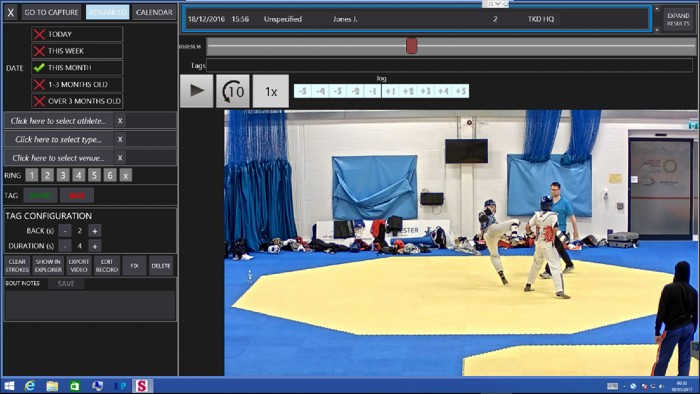
Dr. Simon Goodwill is the Head of Research in Sport and Physical Activity and Head of the Sports Engineering Research Group (SERG) at Sheffield Hallam University's Academy of Sport and Physical Activity. He holds a PhD focused on tennis ball-racket impact modeling and has collaborated with the International Tennis Federation. His expertise includes novel photogrammetry techniques, software development for athlete performance analysis, and camera calibration systems like check2d/check3d. He led projects supporting Team GB athletes in multiple Olympics, contributing to 42 medals at Rio 2016. Currently, he oversees the Advanced Wellbeing Research Centre (AWRC), applying sports performance methodologies to health research. His work integrates machine vision, data acquisition hardware, and elite athlete monitoring systems, with notable contributions to the EIS Innovation Partnership and sports tech exhibits like Le Tour Yorkshire's bike simulator. Education & Research: Simon’s PhD (modeling tennis impacts) and extensive software engineering background underpin his research. His projects span biomechanics, sports engineering, and health tech, with collaborations involving UK Sport, FIFA, and Adidas. He has developed systems used by athletes in London 2012, Rio 2016, and Glasgow 2014 Commonwealth Games. Research Themes: His work emphasizes performance analysis through photogrammetry, real-time athlete tracking, and health-related applications of sports tech. Key projects include court pace rating for the ITF, iBoxer2 boxing data tools, and the AWRC’s health innovations. Grants & Impact: The AWRC, funded by UK DoH and ESIF (£15.7M), reflects his role in translating elite athlete tech to public health. His work is cited in UK government reports on Olympic legacy and has received media attention, including BBC features on GB Boxing’s iBoxer software. Advising & Leadership: Supervised 17 PhD students on topics like machine learning in taekwondo, swimming analysis, and tennis racket dynamics. Served as External/External advisor and led 10+ Olympic cycle projects. Active in the International Sports Engineering Association as Director.