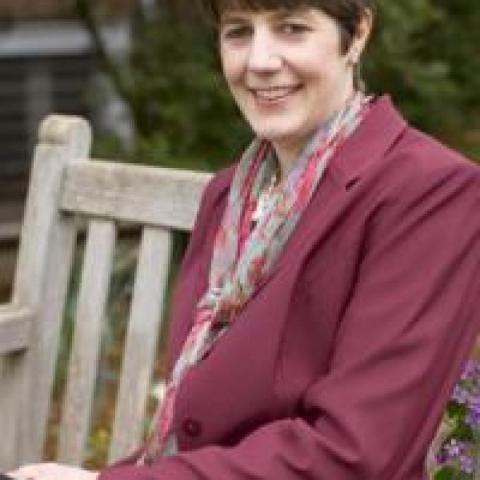
Dr. TCHUENTE Dieudonné is an Associate Professor in the Department of Information, Operations and Decision Sciences at TBS Education. His research bridges artificial intelligence, sustainability, and operations management through practical applications in energy efficiency, supply chain resilience, and social media analysis. Department: Information, Operations and Decision Sciences University: TBS Education Email: d.tchuente@tbs-education.fr Research Focus : Dr. Tchuente's work explores AI-driven solutions for sustainable development, including building energy retrofits , real estate valuation , and vaccine supply chains . His studies on explainable AI provide actionable insights for corporate emissions reduction and aeronautics optimization. Publications Trends : His recent work (2022-2024) emphasizes AI ethics , climate accountability , and industry transformation across domains like real estate, aviation, and public health. Key methodologies include SHAP analysis , meta-learning , and crowdsourcing frameworks . Scientific Awards : FNEGE Grant - for research on connected vehicle infrastructure
Prof. Eleftherios H. Drosinos is a Professor at the Agricultural University of Athens , specializing in Food Safety and Quality Management Systems . He teaches undergraduate and postgraduate courses in these areas and leads research initiatives focused on microbial quality control, HACCP systems, and ISO 9000 series standards. Education: Graduated from the Agricultural University of Athens; Ph.D. from Bath University (UK). His research explores microbial interactions in food systems, particularly pathogenic and spoilage microorganisms, with a strong emphasis on Lactiplantibacillus plantarum and Listeria monocytogenes dynamics across various substrates. He has published extensively on topics like sourdough microbiota, cheese safety, and antimicrobial strategies under the One Health framework. Recent publications (2024) highlight advancements in food spoilage detection, GMO monitoring, and microbial ecology. His work spans both experimental studies and reviews, addressing food safety in retail, fermented products, and fresh-cut vegetables. He directs the Laboratory of Food Quality Control and Hygiene , contributing to standardization and regulatory compliance in the food sector.
Frank Eijkenaar is an Associate Professor of Health Economics at the Erasmus School of Health Policy & Management (ESHPM), Erasmus University Rotterdam, within the Health Systems and Insurance (HSI) department. He teaches in the bachelor's program in Health Sciences and the master's program in Health Economics, Policy, and Law. His educational background includes: Bachelor's degree in Health Sciences (cum laude) Master's degree in Health Economics, Policy, and Law (cum laude) PhD in Health Economics (thesis on pay-for-performance for healthcare providers) Dr. Eijkenaar's research focuses on: Design and effects of alternative payment models (e.g., bundled payments, population-based financing) Risk adjustment and case mix methodologies for provider payment Performance measurement and benchmarking in healthcare systems Systematic reviews on healthcare innovation and payment reforms His work frequently addresses Dutch healthcare contexts while incorporating international comparisons, particularly with OECD frameworks. Analysis of his 2025 publications reveals consistent emphasis on evaluating payment model impacts across diverse settings—from cancer surgery outcomes to stroke treatment quality. His studies employ systematic reviews, mixed-methods evaluations, and cluster randomized trials, demonstrating methodological versatility in advancing value-based payment systems. No scientific awards are documented in the available profile. Dr. Eijkenaar has supervised 4 students, as indicated by 'Supervised Work' metrics. His research output (64 items including 49 articles) and datasets reflect active grant-supported work, with collaborations in initiatives like the Dutch Upper Gastrointestinal Cancer Audit (DUCA) and PERFEQTOS Investigators for stroke research.
Sinead O'Keeffe is a Research Fellow at the University of Limerick in the Faculty of Science and Engineering , specifically within the Department of Electronic and Computer Engineering . Her research bridges the technical domain of optical fiber sensor development with critical applications in radiation therapy and sports medicine. Primary Research Themes Medical radiation dosimetry using optical fiber sensors Brachytherapy dose monitoring systems Sports injury prevention in Gaelic football and running Mental health literacy in rural farming communities Key Technical Contributions Development of scintillation-based dosimeters Characterization of perfluorinated polymer fibers 3D printed sensor systems for clinical and rehabilitation applications Interdisciplinary Applications Prostate cancer radiotherapy dose measurement Mental health intervention programs for athletes Work-family conflict analysis in Irish farming Email: sinead.okeeffe@ul.ie
Max Reinwald is an Assistant Professor in the Department of Management at the University of Mannheim Business School . His research focuses on Responsible Leadership , Diversity in Organizations , Teamwork and Collaboration , and Change Management . Research Trends Reinwald’s recent publications examine: Political and societal influences on workplace diversity and absenteeism Dynamics of female leadership appointments during crises (glass cliff phenomenon) Employee responses to organizational change initiatives Impact of team faultlines and leadership signaling on inclusion Decentralization’s effects on organizational performance His work combines quantitative analysis, multilevel modeling, and theoretical frameworks from organizational behavior and social psychology.
Wen Huang is an Associate Professor at the Michigan State University , affiliated with the BioMolecular Science Gateway Faculty and the Genetics & Genome Sciences Program . His research integrates genetics, genomics, and bioinformatics to study complex traits in Drosophila melanogaster and livestock species. Research Interests : Elucidating genetic architectures of quantitative traits Transposon dynamics and alternative splicing regulation Livestock genomics for agricultural improvement Publication Trends : Recent work focuses on genome-wide association studies (GWAS), telomere-to-telomere assemblies, and multi-omic analyses of gene regulation in pigs and Drosophila . Collaborative Initiatives : Co-leads large-scale projects like FarmGTEx and RT2T Consortium, aiming to improve functional annotation of animal genomes.
Morteza Zihayat is an Associate Professor and Canada Research Chair (Tier 2) in Human-Centered Artificial Intelligence at Toronto Metropolitan University. He holds dual appointments in the Faculty of Engineering and Architectural Science (Department of Electrical, Computer, and Biomedical Engineering) and the Ted Rogers School of Management. Additionally, he serves as an Adjunct Professor at the University of Waterloo in Management Sciences and is a Faculty Fellow at IBM's Centre for Advanced Studies. Dr. Zihayat's educational background includes: PhD in Computer Science from York University (2016) MSc in Computer Engineering from University of Tehran (2011) Postdoctoral Research Fellowship at University of Toronto's Faculty of Information (2017) His research lies at the intersection of AI, security, and society with a focus on building fair and transparent AI systems. Dr. Zihayat's expertise spans human-centered AI, fair information retrieval systems, and blockchain-enabled AI infrastructures. His work emphasizes creating AI systems that are accountable and designed to serve the public good, with applications in healthcare, digital media, and social networks. Dr. Zihayat has received numerous accolades including the Canada Research Chair (Tier 2) in Human-Centered AI (2024), Dean's Outstanding Scholarly, Research, and Creative Activity Award (2023), Best Short Paper Award at ECIR (2023), and IBM CAS Faculty Fellowship (2021). His research has attracted over $1.7 million in external funding from agencies such as NSERC, Mitacs, and multiple industry partners including Toronto Transit Commission, The Globe and Mail, AT&T, and IBM. Dr. Zihayat serves as Associate Editor of the Computational Intelligence Journal and is an active reviewer for top-tier venues. He is also Co-director and Co-founder of the Digital Enterprise Analytics and Leadership (DEAL) Research Center.
Niclas Jansson is a researcher at the PDC Center for High Performance Computing at KTH Royal Institute of Technology. He holds an M.S. in Computer Science (2008) and a Ph.D. in Numerical Analysis (2013) from KTH. His career spans roles such as postdoctoral researcher at RIKEN Advanced Institute for Computational Science (2013-2016) and visiting scientist at RIKEN (2018-2021), where he contributed to the Japanese exascale program Flagship 2020. A core focus of his research involves extreme-scale computing and numerical method development. He is a key developer of RIKEN's multiphysics framework CUBE , the HPC branch of FEniCS , and the spectral element flow solver Neko . His work is currently supported by a Swedish Research Council Starting Grant aimed at enhancing high-order spectral element methods for exascale fluid simulations. Niclas has published extensively on topics such as GPU acceleration , adaptive finite element methods , in situ visualization , and extreme-scale turbulence modeling . He also teaches Computational Fluid Dynamics (SG2212) at KTH.
Petra Lindfors is a Professor of Psychology, specializing in work and organizational psychology, at the Department of Psychology, Stockholm University. She has held this position since December 2013 and is actively involved in multiple research projects focusing on stress, health, and well-being across various contexts including workplaces, educational settings, and home environments. Her academic journey began with her thesis defense in 2002, which focused on stress, health, and well-being among teleworking women and men as part of the Boundless Work project. She was accepted as an associate professor in psychology at the Faculty of Social Sciences, Stockholm University, in September 2006, and was hired as a lecturer at the Department of Psychology in July 2007. Throughout her career, she has maintained active research collaborations at both the Department of Psychology and the Centre for Health Equity Studies (CHESS) at Stockholm University/Karolinska Institutet. Lindfors' research interests span multiple dimensions of work and organizational psychology. Her primary focus is on self-reported and objective aspects of stress, health, and well-being among adults and young people across various contexts. She has developed significant expertise in workplace interventions related to harmful substance use, work-life balance, gender differences in work environments, and mental health promotion. Her work often examines how organizational structures and policies affect individual health outcomes, with particular attention to vulnerable populations and gender differences. Analysis of her recent publications reveals strong thematic consistency centered on occupational health psychology. Her research employs both variable-oriented and person-oriented approaches to examine job insecurity, work-home interference, stress responses, and health outcomes. A notable trend is her increasing focus on methodological innovation, particularly in studying workplace interventions and mental health among young adults. Her work bridges theoretical organizational psychology with practical workplace applications, often resulting in concrete recommendations for employers and policymakers. Two-year post-doc scholarship from the Anna Ahlström and Ellen Terserus Foundation (2005) Associate editor for the Nordic Journal of Working Life Studies (since 2021) Member of the Quality Council for the Swedish Work Environment Authority (2019-2022) As an academic supervisor, Lindfors has mentored an impressive number of doctoral students, with completions spanning from 2008 to the projected 2025 graduation of Anna S Tanimoto. She has served as main supervisor for numerous successful academics who have gone on to professorial positions, including Ulrica von Thiele Schwarz at Mälardalen University College. Her supervisory approach appears comprehensive, extending beyond thesis completion to postdoctoral mentorship and career development. Regarding research funding, she has secured significant grants from AFA Försäkring for projects examining organizational interventions for health-promoting work, and has been involved with Stockholm Stress Center, a FORTE-financed interdisciplinary research center. Her work demonstrates sustained success in attracting competitive research funding across multiple domains of occupational health. Lindfors leads the research group 'Harmful use in the workplace – prevention and intervention,' which addresses critical issues related to alcohol, drug, and gambling problems in professional settings. She has also been instrumental in shaping the Department of Psychology's strategic direction, serving as chairman of the board of the Stockholm University Department of Psychology (SUPK) from 2016-2024 and currently as a regular member of the Department's board for 2024-2026. Her collaborative approach is evident in her involvement with multiple interdisciplinary projects, including those examining natural environments, cognitive abilities in military contexts, and school environments' impact on youth mental health.
Channing Mathews serves as Assistant Professor in the Department of Psychology at the University of Virginia, specializing in Community Psychology. Her research examines how ethnic-racial identity and critical consciousness drive STEM engagement and activism among youth of color during adolescence and emerging adulthood. Her scholarship integrates theoretical frameworks from psychology, education, and African American studies with three central foci: (1) ethnic-racial identity and critical consciousness as dual promoters of positive development for Black and Latinx youth; (2) their influence on STEM orientation; and (3) the complexity of identity and critical action behaviors including STEM-based activism. This work employs mixed-methods approaches across diverse educational contexts. Dr. Mathews demonstrates significant publication impact in developmental psychology and STEM equity research, with recent articles examining identity-science intersections through latent class analyses, longitudinal designs, and intervention studies. Her work consistently addresses racialized barriers in STEM while highlighting youth agency and resistance strategies. She actively mentors future scholars, accepting postdoctoral fellows through the University of Virginia Rising Scholars Program and graduate students for the 2023-2024 cycle. Her research extends to collaborations with informal STEM learning sites and examination of digital activism among immigrant youth of color.
Morna E. O'Neill is a Professor in the Department of Art at Wake Forest University, specializing in Eighteenth and Nineteenth Century European Art. Her academic profile indicates she is actively engaged in teaching courses such as ART 103 (A History of Western Art), ART 273 (Eighteenth-Century European Art), ART 281 (Nineteenth-Century European Art), and several specialized courses on photography, gender in art, and art museum histories. Professor O'Neill's research focuses on the intersection of art, design, and politics in Britain during the long nineteenth century. She has established herself as a leading scholar on Walter Crane and the Arts and Crafts Movement, as well as Hugh Lane and the development of the modern art market. Her work explores how domestic interiors functioned as significant spaces for art display, challenging the traditional narrative that British art developed primarily through public institutions. Her research spans British art history, museum studies, decorative arts, and the political dimensions of artistic production. O'Neill's scholarly output reveals consistent thematic development across her career, with early work focusing on Walter Crane's political dimensions within the Arts and Crafts Movement, evolving toward broader investigations of the art market, museum formation, and the global circulation of art. Her more recent work examines illustrated print culture, the intersection of monarchy and empire in visual representation, and the relationship between industrialization and artistic production. A throughline in her scholarship is the examination of how art objects function within social and political contexts. Historians of British Art Book Prize for Best Book before 1900 (for Walter Crane: The Arts and Crafts, Painting, and Politics ) Professor O'Neill co-founded and co-edits 'Home Subjects,' a digital humanities working group dedicated to studying the display of art in private interiors in Britain from approximately 1715-1914. This initiative, supported by the Wake Forest University Humanities Institute with funding from the National Endowment for the Humanities, has organized conference sessions including at the College Art Association. 'Home Subjects' represents a significant scholarly collaboration that challenges conventional art historical narratives by emphasizing the importance of domestic spaces for art display and experience. The project maintains an active blog and has fostered international scholarly dialogue about the relationship between domesticity, display, and modernity.
Prof. Dr. Malte Schwinger is a full Professor of Educational Psychology at the Philipps University of Marburg , Germany, since 2018 (W3 rank). His research focuses on learning and performance motivation , goal orientations , motivational and self-esteem regulation , self-handicapping , and school inclusion . He leads the Schwinger Group within the Department of Psychology (Fb04), contributing to third-party funded projects such as the DFG-Projekt on parental influence on adolescent motivation (2018–2021) and the HMWK-Projekt on digital teaching evaluation (2019–2020). His editorial roles include Associate Editor of the Journal of Educational Psychology and Consulting Editor for Educational Psychology . He has supervised students like Lisa Schetter , Henrike Kärchner , and Dora Eleonore Burbank , with research spanning ADHD education, digital learning, and person-centered analyses. Recent work examines the psychological impact of the 2020–2021 pandemic lockdown in Germany, linking need satisfaction to anxiety and well-being. Research Highlights Meta-analysis of academic self-handicapping (2021) Self-esteem stability and contingency effects on academic performance (2021) ADHD teachers’ attitudes and classroom management (2020) Corona lockdown well-being study (2020) Longitudinal inclusion research in BiLieF project (2006–2009) Scientific Roles Associate Editor: Journal of Educational Psychology (2017–) Consulting Editor: Educational Psychology (2016–) Editorial Board: Journal of Educational Psychology (2016–2016)
Dr. Silvia Fiore is a Full Professor at Politecnico di Torino, Department of Environment, Land and Infrastructure Engineering (DIATI). She is an active member of the Interdepartmental Center CWC - CleanWaterCenter@PoliTo and serves on multiple PhD teaching committees for Civil and Environmental Engineering programs (2020-2025). Her academic profile spans research, teaching, and international collaborations including a Visiting Researcher position at McGill University (2016). Her research interests focus on environmental sustainability, circular economy, waste management, and water treatment. Key areas include treatment and recovery of municipal and industrial waste (e-waste, agro-industrial waste, end-of-life batteries), water potabilization, wastewater reuse, and environmental assessment of urban water systems. She employs methodologies such as Life Cycle Analysis, Carbon Footprinting, and technical-economic assessments of full-scale applications. Professor Fiore's recent publications (2024-2025) demonstrate a strong focus on circular economy applications, particularly in lithium-ion battery recycling, agricultural waste valorization, and sustainable materials management. Her work bridges theoretical research with practical applications, addressing critical environmental challenges through innovative engineering solutions. Scientific Recognition: Effective member of International Waste Working Group (IWWG), Germany (since 2010) Effective member of GEAM (Associazione Georisorse e Ambiente), Italy (since 2010) Learning to Teach (L2T) Open Badge from Politecnico di Torino (2023) Evaluator for national research programs (PRIN, FIRB, SIR, Rita Levi Montalcini) since 2012 Professor Fiore supervises multiple PhD students working on circular economy applications, battery recycling, and sustainable waste management. She teaches courses including 'Circular economy and environmental sustainability' and 'Battery systems for automotive and stationary applications' across multiple degree programs. Her research portfolio includes numerous competitive and commercial projects, including the EU-funded LEAD project (2025-2029) on anaerobic digestion and BEST4Hy on hydrogen technology recycling.
Alison Joan Murray Levine serves as Professor and Associate Dean for Faculty Affairs in the Department of French at the University of Virginia. A Charlottesville native, she earned her PhD in French studies from UVA after completing undergraduate and graduate work at Haverford and Bryn Mawr Colleges. With over two decades of academic experience including prior appointments at UNC Wilmington and Colby College, she has established herself as a leading scholar in French documentary film and cultural history. Her educational background includes: Bachelor of Arts (BA) from Haverford College (1989) Master of Arts (MA) from Bryn Mawr College (1991) Doctor of Philosophy (PhD) in French Studies from University of Virginia (1998) Levine's research focuses on twentieth and twenty-first century French cultural history through the lens of documentary film. She examines how cinematic representations engage with French national identity, particularly regarding rural spaces, colonial legacies, and postcolonial realities. Her work reveals the complex interplay between spatial representation and political discourse in French society, with recent scholarship emphasizing viewer experience in contemporary documentaries about wilderness, farms, and urban margins. Analysis of her publications shows an evolving trajectory from interwar French documentary ( Framing the Nation , 2010) to contemporary explorations of ecological citizenship and food politics. Her scholarship consistently connects documentary form with sociopolitical contexts, demonstrating how films negotiate France's relationship with its colonial past and rural present. Recent work increasingly engages with environmental concerns and sustainable food systems through cinematic representation. Her scholarly contributions have been recognized through: All-University Teaching Award (2012) NEH Distinguished Teaching Professorship (2012-2015) UVA College Fellowship (2018-2021) As Associate Dean for Faculty Affairs, Levine oversees significant academic operations while maintaining an active teaching schedule spanning graduate seminars on documentary theory and undergraduate courses like Contemporary France in Film and Media . Her pedagogical innovations include developing digital storytelling workshops and second-language film pedagogy approaches, reflecting her commitment to integrating visual literacy across French curriculum. Though not explicitly documented in her profile, her research likely involves collaboration with French film archives and cultural institutions, particularly regarding her work on colonial expeditions and contemporary rural documentaries. Her extracurricular interests in farming and photography directly inform her scholarly focus on agricultural landscapes and visual representation.
Wei Li is a Professor in the Department of Computing at Nova Southeastern University's College of Computing & Engineering. He joined NSU in 2005 after earning his Ph.D. from Mississippi State University. His research focuses on enhancing computer system security through interdisciplinary approaches, including network security, artificial intelligence applications, and software engineering practices. Dr. Li’s research areas encompass computer security, network security, software engineering, artificial intelligence, and database systems. His work bridges theoretical advancements and practical cybersecurity solutions, such as improving intrusion detection systems, analyzing social engineering attack vulnerabilities, and developing machine learning models for IoT security. His recent publications (2020–2025) address topics like password policy effectiveness, remote worker cybersecurity risks, and adaptive deep learning models for anomaly detection. These contributions highlight his focus on mitigating organizational cybersecurity risks through empirical studies and innovative technical solutions. No scientific awards or grants are explicitly listed in the provided information. His advising record remains unspecified, and no active labs or teams are mentioned.