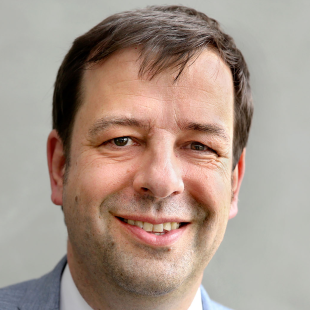
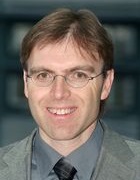
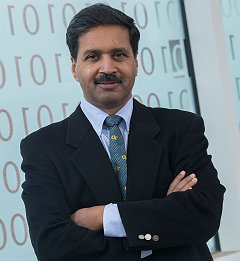
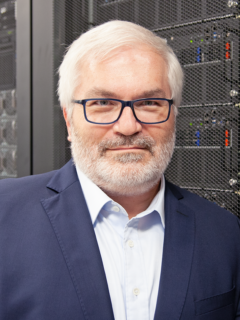
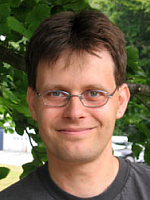
Thomas Berger is a Professor at the University of Hohenheim , affiliated with the Faculty of Agricultural Sciences and leading the Department of Economics of Land Use . He also contributes to the Computational Science Hub and Hohenheim Tropics initiatives. Focus Areas: Climate change adaptation, land-use modeling, biodiversity-productivity trade-offs, agent-based simulation, and machine learning in agricultural systems. Key Projects: Simulation frameworks for smallholder resilience in Ethiopia, bioeconomic modeling in the Amazon, and hybrid intelligence applications in European agricultural policy. Recent Publications: 2025 study on climate change effects on insecticide reduction in Germany, 2024 work on reconciling biodiversity with productivity via hybrid models, and 2023 methodological contributions to surrogate modeling and seasonal forecast integration. Research Trends: Interdisciplinary integration of climate science, agricultural economics, and computational modeling, with increasing emphasis on AI-assisted decision support systems and sustainability policy validation. Teaching & Outreach: Offers Agricultural Economics seminars and Hohenheim Tropics discussions, requiring advance email registration for office hours.
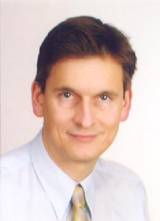
Prof. Dr. Christian Plessl is a W3 Professor of High-Performance Computing at the Institute of Computer Science, University of Paderborn. He leads the Paderborn Center for Parallel Computing (PC²), a national HPC center within the NHR alliance. His roles include Director of PC², Board Member of the NHR association, and member of the Sonderforschungsbereich 901. Education: PhD (Dr. sc. ETH) in Computer Engineering, ETH Zürich (2006) MSc in Electrical Engineering, ETH Zürich (2001) Postdoc at ETH Zürich (2007–2011) Research Interests: Architecture and tools for high-performance parallel and reconfigurable computing, FPGA acceleration, quantum chemistry, scientific computing, adaptive systems, and energy-efficient HPC solutions. Key projects include EKI-App (FPGA-based neural networks), FPGA4XPCS (X-ray spectroscopy), and HighPerMeshes (unstructured grid frameworks). Publications: Over 100 peer-reviewed works, focusing on FPGA acceleration, HPC frameworks, and quantum computing. Recent trends emphasize energy-efficient neural networks, FPGA-based quantum computing, and scalable HPC algorithms. Awards: Best Paper Awards at HEART 2023, ReConFig 2012/2014 Paderborn University Research Awards (2018, 2009) SEW-EURODRIVE Student Award (2001) Grants & Projects: Principal investigator in DFG, BMBF, and EU-funded projects. Collaborates with AMD/Xilinx, Intel/Altera, and Fujitsu. Leads initiatives like PerficienCC (custom computing) and HighPerMeshes. Labs/Teams: Directs the High-Performance Computing group at PC², focusing on FPGA supercomputing and HPC infrastructure. Active in the NHR alliance for national HPC coordination.
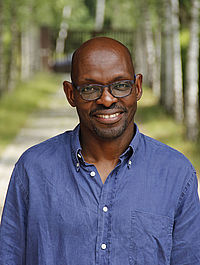
Prof. Dr. Thomas Ludwig is the Director of the German Climate Computing Center (DKRZ) and a Professor at the Universität Hamburg. He holds a doctoral degree and habilitation from the Technische Universität München, with expertise in High-Performance Computing (HPC), energy efficiency, and data storage systems. His research focuses on optimizing parallel systems, storage technologies, and computational efficiency for climate science applications. He leads projects like AIMES and PeCoH, advancing HPC storage and energy-aware computing. Education: Doctoral degree and habilitation from TU München (1988–2001). Chair in Parallel Computing at Universität Heidelberg (2001–2009). Research Interests: HPC, data reduction techniques, energy-efficient systems, parallel I/O optimization, and climate modeling infrastructure. Recent Research Trends: His work emphasizes storage system efficiency, machine learning in HPC, and convergence between HPC and Big Data. Key contributions include frameworks for portability (Vecpar), automated performance tools, and energy-aware storage solutions. Awards: Some publications received recognition, e.g., a Best Paper award in 2014 for work on energy efficiency. However, no personal awards are explicitly listed. Advising & Grants: Supervised numerous theses in HPC, I/O optimization, and energy efficiency. Leads major projects funded by national and international initiatives. Labs/Teams: Heads the DKRZ team providing supercomputing and data management for climate research, collaborating with global institutions like the University of Hamburg and European research networks.
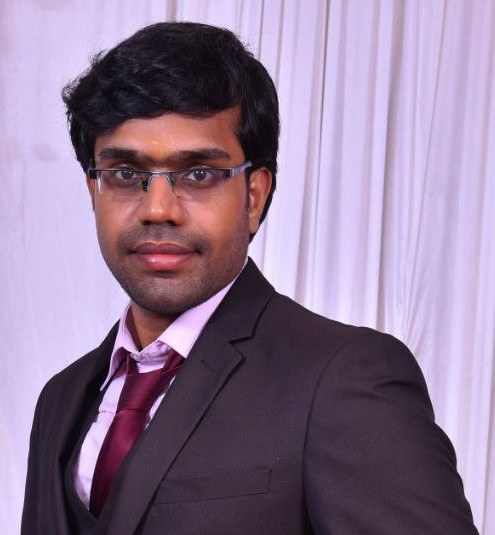
Prof. Dr.-Ing. Richard Membarth is a Research Professor for System-on-a-Chip and AI at the Edge Computing at Technische Hochschule Ingolstadt (THI). He is affiliated with the Hardware-Software Co-Design group and holds a secondary position at the German Research Center for Artificial Intelligence (DFKI) Saarbrücken. Co-creator of DSL frameworks like AnyDSL and Hipacc Key contributor to MetaDL (AI metaprogramming) and PRIME (predictive rendering) His research bridges GPU computing , domain-specific languages , and compiler technology , with recent work on Vulkan SPIR-V compilation and device-driven SpMV algorithms . Notable awards include the HiPEAC Paper Award (2018) and multiple Best Paper Awards for his compiler frameworks.
Prof. Dr.-Ing. Stefan Schulte is a Full Professor at Hamburg University of Technology, leading the Institute for Data Engineering and the Christian Doppler Laboratory Blockchain Technologies for the Internet of Things (CDL-BOT). He holds a diploma in Economics and a Bachelor's in Computer Science from the University of Oldenburg, followed by a Master's in Information Technology (with Merit) from the University of Newcastle. After completing his PhD at TU Darmstadt in 2010, he held roles as Postdoctoral Researcher at TU Wien, Assistant Professor (tenure-track), and eventually Associate Professor before joining TU Hamburg in 2021. His research focuses on data engineering, blockchain technologies applied to IoT, elastic computing, and quality-of-service (QoS) aspects in smart systems. Notable contributions include work on fog computing, federated learning, and cross-blockchain interoperability. He has published over 140 papers in top-tier venues like IEEE Transactions on Services Computing and ACM Computing Surveys. Key awards include Best Paper Awards at the IEEE International Conference on Blockchain (2020) and the European Conference on Service-Oriented and Cloud Computing (2023). Prof. Schulte chairs major conferences such as the IEEE International Conference on Fog and Edge Computing (ICFEC 2025) and serves on editorial boards for journals like IEEE Transactions on Services Computing. He leads CDL-BOT, a lab exploring blockchain applications in IoT and manufacturing. His industrial collaborations include projects like SIMPLI-CITY (smart mobility) and CREMA (cloud-based manufacturing). Current research emphasizes blockchain interoperability, federated learning frameworks, and edge-AI systems. He actively reviews proposals for the German Research Foundation, EU programs, and industry initiatives.
Abdoulaye Sounaye is a Research Professor at the Leibniz Center for Modern Oriental Studies (ZMO) in Berlin, Germany, and an Associate Professor at Abdou Moumouni University in Niamey, Niger. His career spans over two decades, with roles including research fellowships, editorial contributions, and academic leadership in Islamic studies, African societies, and religiosity. Habilitation in African Studies (2021, University of Vienna) PhD in Religious Studies/Anthropology (2012, Northwestern University) MA in Religious Studies (2005, Arizona State University) Research Interests Dr. Sounaye's work critically engages with Islamic reform in West Africa, focusing on Salafism, state-society relations, and the role of media in reshaping religious practices. His scholarship interrogates how Islamic authority is constructed through audiovisual tools like CDs/DVDs, and how youth movements on university campuses negotiate religious identities within political frameworks. He has extensively analyzed transnational Islamic networks between Niger and Nigeria, particularly the influence of Hausa-language preachers (wa’azi) and their role in spreading Salafi ideologies. Recent Publications His 2023 edited volume Religiosity on University Campuses in Africa synthesizes interdisciplinary perspectives on campus religious dynamics. Earlier works like Salafi Aesthetics (2017) and Islam et Modernité (2016) explore the interplay between Islamic ethics, modernity, and reislamization processes in Niger. His articles in Journal of Religion in Africa and edited collections address topics such as ritual spaces in Berlin's West African diaspora and gendered dimensions of Islamic authority. Scientific Awards Dr. Sounaye has received prestigious fellowships including the Thyssen Foundation (2023), Volkswagen Foundation's Knowledge for Tomorrow (2018-2019), and Fulbright (2003-2005). He was a Presidential Fellow at Northwestern University and a Gwendolen M. Carter fellow, underscoring his expertise in Islamic studies and African societies. Advising and Grants He has led the ZMO research unit 'Contested Religion' since 2020, examining religiosity, morality, and intellectual culture. His projects often bridge academic research with policy analysis, as seen in his work on state-led Islamic deradicalization in the Sahel. Collaborations include Lasdel, the Nordic African Institute, and the West African Research Association. Labs and Collaborations Dr. Sounaye collaborates with institutions like Abdou Moumouni University, Northwestern University, and Arizona State University. His fieldwork in Niamey and cross-border studies in West Africa reflect his commitment to ethnographic approaches in studying Islamic media, youth activism, and transnational religious networks.
Sriramkrishnan Muralikrishnan is a Research Staff member at the Department of Mathematics and Education within the Jülich Supercomputing Center (JSC) at Forschungszentrum Jülich, Germany. His work focuses on developing advanced computational methods for high-performance scientific computing, particularly in plasma physics and related multi-physics applications. Dr. Muralikrishnan's research spans several key computational domains: Numerical Analysis and High-Order Methods High Performance Scientific Computing for Exascale Architectures Plasma Physics Simulations Fast Solvers and Preconditioners Parallel-in-Time Integration Techniques Performance Portable Programming His recent publications demonstrate a strong focus on particle-based computational methods, particularly Particle-in-Cell and Particle-in-Fourier techniques. His work consistently addresses challenges in energy conservation, scalability across architectures, and noise reduction in plasma simulations. A significant portion of his research involves developing performance-portable frameworks that can efficiently leverage modern supercomputing hardware from different vendors without code rewrites. Dr. Muralikrishnan is actively involved in open-source scientific software development: Lead developer of IPPL (a performance portable library for grids and particles) Developer of OPAL (an open-source particle accelerator library) His research has direct applications in plasma physics, fusion energy research, and advanced accelerator design, with a strong emphasis on making computational methods accessible through open-source development and advocating for diversity in scientific computing.
Brian Viard is an Associate Professor of Strategy and Economics and Executive Academic Director for the MBA Program at Cheung Kong Graduate School of Business (CKGSB), where he has served since 2007 after previously teaching at Stanford Graduate School of Business. Education: PhD in Business Economics from the University of Chicago His research spans industrial organization, environmental economics, and competitive strategy. Early work examined switching costs, network effects, and technology adoption in digital markets, while recent research focuses intensely on China's environmental challenges—analyzing air pollution's economic impacts, trans-boundary spillovers, and policy effectiveness through rigorous empirical studies of manufacturing productivity and urban regulations. Publication trends reveal a strategic pivot from traditional industrial organization topics toward environmental economics after 2015, with 80% of recent work addressing China-specific pollution dynamics. This shift demonstrates applied scholarship tackling urgent policy questions using granular Chinese firm and city-level data. Scientific Awards: CKGSB’s inaugural M.B.A. Best Teaching Award Professor Viard teaches competitive strategy and managerial economics across CKGSB's MBA programs, developing influential teaching cases on Chinese tech battles (Baidu, instant messaging), carbonated beverages, and environmental markets. His grant-funded research on air pollution regulation—particularly trans-boundary spillovers and manufacturing productivity impacts—highlights deep engagement with China's policy landscape, though specific grant details aren't disclosed in source materials. No dedicated labs or research teams are mentioned, though his trans-boundary pollution work implies collaboration with environmental economists and policy institutions.
Stefano Markidis is a leading researcher in High-Performance Computing (HPC) and quantum computing. His work focuses on developing advanced simulation frameworks, such as the Neko framework for computational fluid dynamics, and optimizing algorithms for heterogeneous architectures. He collaborates extensively with institutions and researchers globally, contributing to fields like plasma physics, quantum systems, and machine learning applications. His research emphasizes scalability, performance optimization, and the integration of cutting-edge technologies like GPU acceleration and quantum computing. Key research interests include extreme-scale simulations, quantum algorithms, and in-situ data analysis techniques. He has published over 200 articles, with recent work addressing challenges in NISQ systems, tensor network simulations, and CUDA-based performance enhancements. His contributions span theoretical and applied domains, bridging computational methods with real-world applications in fusion energy, materials science, and space exploration. Notable collaborations include projects with Philipp Schlatter, Niclas Jansson, and the NISQ application development community. Markidis also explores hybrid frameworks combining classical and quantum computing, aiming to leverage emerging hardware for scientific breakthroughs.
Prof. Dr. rer. nat. Matthias S. Müller is a Universitätsprofessor and Director of the IT Center at RWTH Aachen University. His research focuses on High-Performance Computing (HPC), parallel programming models, correctness verification, energy-aware computing, and tools for distributed systems. He leads the High-Performance Computing group, contributing to advancements in HPC resource management, runtime systems, and sustainable computing practices. Key areas of expertise include MPI and OpenMP correctness checking, static and dynamic analysis techniques, performance optimization for heterogeneous architectures, and energy footprint modeling. Müller has extensively collaborated on projects like MUST (MPI correctness tool), OMPT tools, and frameworks for analyzing hybrid parallel applications. His work bridges theoretical computer science with practical implementation challenges in large-scale computing environments. Notable contributions include developing methods for data race detection in Remote Memory Access (RMA) programs, latency-aware power management models, and educational frameworks for HPC lab courses. His research often emphasizes tool development, runtime systems, and interdisciplinary applications of HPC across engineering domains. Müller's lab is part of RWTH Aachen's IT Center, which provides infrastructure and expertise for computational research. He actively publishes in top-tier conferences and journals, addressing challenges in parallel programming, energy efficiency, and distributed computing systems.
Prof. Georg Carle is a full Professor in Network Architectures and Network Services at the Technical University of Munich (TUM), affiliated with the TUM School of Computation, Information and Technology. He leads research in Internet technology, focusing on future network architectures, security, and real-time communication. Prior roles include positions at the University of Tübingen and Fraunhofer Institute for Open Communication Systems (FOKUS). Education: Electrical Engineering diploma from University of Stuttgart (1992), Master of Science in Digital Systems (Brunel University, London), and PhD in Telematics from University of Karlsruhe (1996). He held scholarships in complex systems and European Union-funded research at Institut Eurécom. Research Interests: Prof. Carle's work spans network security, sensor networks, autonomous systems, and future Internet protocols. His group develops tools like MoonGen (packet generator) and pos (experiment workflow system). Recent focus includes QUIC protocol analysis, network slicing, and reproducible experimentation frameworks. Key Contributions: Award-winning research includes Applied Networking Research Prizes (2017-2018), Best Paper Awards in IMC/PAM, and innovations in network measurement, security, and programmable data planes. His lab explores cutting-edge topics like post-quantum cryptography, low-latency networking, and 6G automation. Recognition: Honors include ACM SIGCOMM Community Contribution Award, IRTF ANRP, and multiple conference best paper accolades. He advises on network infrastructure for industrial IoT, automotive systems, and secure multiparty computation.
Nane Kratzke is a Professor at Lübeck University of Applied Sciences, specializing in cloud computing and cloud-native applications. His research addresses practical challenges in container orchestration, cloud security, and vendor lock-in for small and medium enterprises. He holds a Diplom in Computer Science and a Doctorate in Natural Sciences, though specific institutions are not documented in available sources. Research interests include cloud-native architecture design, Kubernetes orchestration, moving target defenses for cloud security, and cost modeling of cloud services. His work bridges academic research and industry needs, particularly for SMEs seeking cloud portability through multi-cloud strategies and runtime transferability. Analysis of recent publications (2022-2024) reveals a strategic shift toward AI-driven cloud management techniques like prompt engineering, building on foundational contributions in cloud observability, security mechanisms, and transferability frameworks established between 2016-2021. Key recurring themes include mitigating vendor lock-in and enabling seamless application migration across cloud environments. No scientific awards are documented in the provided information sources. Details regarding graduate student advising, research grants, and laboratory facilities are not specified in current datasets, though his publications on programming assessment tools indicate engagement with computer science education.
Vivek Sarkar is currently the Chair of the School of Computer Science and the Stephen Fleming Chair for Telecommunications in the College of Computing at Georgia Institute of Technology. His career spans both industry and academia, with significant contributions to parallel computing, including programming models, compilers, and runtime systems. Ph.D. from Stanford University (1995-2007: IBM Academy of Technology member) 2007-2017: Chair of Computer Science Department at Rice University 2017-present: Georgia Institute of Technology Research Interests focus on programmability and productivity in parallel, heterogeneous, and high-performance computing systems. His work encompasses: Programming language design (e.g., X10, Habanero-C/C++) Compiler optimization and runtime systems Formal verification for parallel programs Education initiatives (Coursera specialization on parallel programming) Recent Publications highlight verification techniques in compilers, machine learning integration for code optimization, and Rust-based interfaces for distributed C++ systems. Scientific recognitions include: ACM Fellow IEEE Fellow 2020 ACM-IEEE CS Ken Kennedy Award He has mentored over 30 Ph.D. students/postdocs and leads the Habanero Extreme Scale Software Research Laboratory , which develops scalable parallel programming frameworks. Current advisory roles include: US Department of Energy’s ASCAC (2009-present) Computing Research Association (CRA) Board (2015-2022) Founding co-chair of CRA-Industry committee (2021)
Dr. Georg Hager is Head of Research at the Erlangen National High Performance Computing Center (NHR@FAU), Friedrich-Alexander-Universität Erlangen-Nürnberg, and an associate lecturer at the Institute of Physics, University of Greifswald. His work focuses on performance engineering, node-level optimization, and analytic modeling in high performance computing. Research Interests: High Performance Computing (HPC) Performance Engineering and Modeling Architecture-Specific Optimization Energy Efficiency in Computing Scientific Code Optimization Execution-Cache-Memory (ECM) Model Development Computer Architecture for HPC His recent publications and tutorials emphasize performance modeling, node-level engineering, hybrid programming (MPI+OpenMP), and benchmarking on modern architectures such as Ice Lake, Sapphire Rapids, and A64FX. He has contributed to the development of the LIKWID tool suite and promotes best practices in HPC education. Scientific Awards: ISC Gauss Award (2018) Informatics Europe Curriculum Best Practices Award (2011) Georg Hager has been instrumental in developing and teaching international tutorials on performance engineering and hybrid programming, often in collaboration with HLRS Stuttgart and TU Wien. He is the co-author of the widely used textbook Introduction to High Performance Computing for Scientists and Engineers . His work bridges theoretical modeling and practical application, aiming to improve time-to-solution and resource efficiency in large-scale scientific computing.
Dr. Jan Meinke is a Researcher at the Jülich Supercomputing Centre (JSC) within Forschungszentrum Jülich, Germany. His work focuses on high-performance computing, GPU programming, and performance portability across different hardware platforms. He contributes to the development of exascale computing applications and benchmarks, particularly through the JUPITER benchmark suite. Based in Building 14.14, Room 4012 at the Jülich research campus, he maintains active research collaborations across computational science domains. Dr. Meinke's research spans two major domains: high-performance computing and computational epidemiology. In HPC, he investigates GPU programming models, performance portability across vendors, and scalable computational fluid dynamics. His work on the JUPITER benchmark suite aims to address challenges in application-driven exascale computing. In computational epidemiology, he has developed forecasting models for COVID-19 spread across European nations, focusing on ensemble approaches and short-term prediction. His earlier work includes protein folding simulations and Monte Carlo methods, demonstrating a long-standing interest in computational methods across scientific domains. Analysis of Dr. Meinke's publication history reveals a strategic evolution from computational biophysics to high-performance computing infrastructure. His recent work (2023-2025) shows a strong emphasis on performance portability across GPU architectures, particularly for scientific computing applications like the N-body problem and computational fluid dynamics. The JUPITER benchmark suite represents a significant contribution to exascale computing evaluation, bridging theoretical computer science with practical applications. His dual focus on HPC infrastructure and epidemiological modeling demonstrates versatility in applying computational methods to diverse scientific challenges. Dr. Meinke has been actively involved in both teaching and research aspects of high-performance computing, authoring educational materials on GPU programming with CUDA and advanced GPU techniques. His work demonstrates a commitment to advancing both the theoretical foundations and practical applications of high-performance computing, with implications for scientific discovery across multiple domains including physics, engineering, and public health.