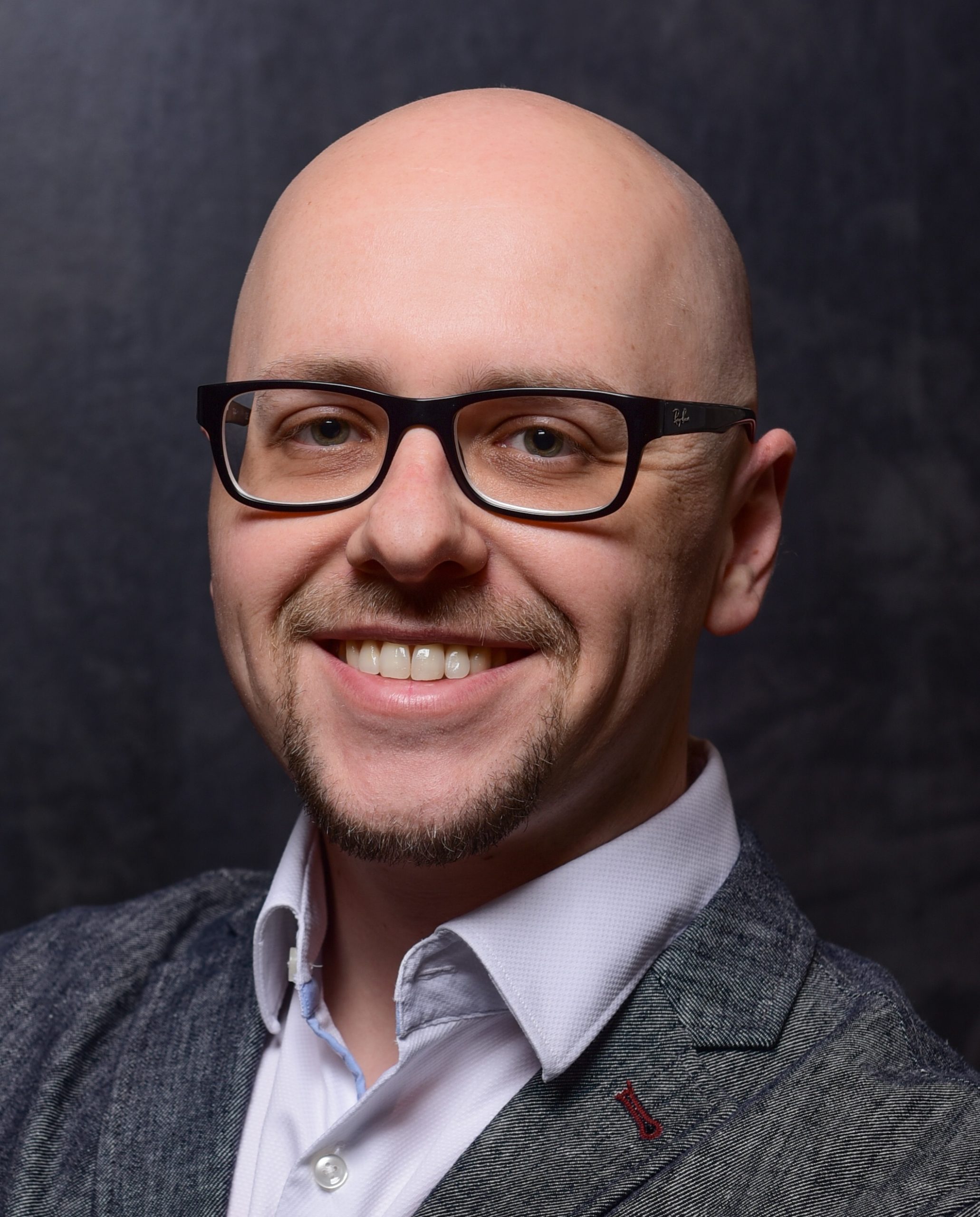
Prof. Dr. Heinz-Josef Eikerling is a full professor at the Faculty of Engineering and Computer Science, Osnabrück University of Applied Sciences, specializing in distributed systems, cloud computing, and mobile applications. His research bridges machine learning and interactive sensor systems with practical education methods. Teaching: Offers courses on distributed systems, algorithms, operating systems, and mobile application development at both bachelor's and master's levels. Research Trends: Focuses on scalable sensor networks, contactless gait analysis, and gaming technology applications in education, with recent work on kinematic estimation and rehabilitation monitoring . Scientific Collaborations: Has co-authored publications with Michael Uelschen, Jaap Buurke, and others, presented at conferences like ICAMPAM , EMBEC , and HEALTHINF . Projects: Led initiatives such as KI Nordwest for industrial posture analysis and Listroots for root damage detection via sensor data. Contact: h.eikerling@hs-osnabrueck.de
PD Dr. Josef Weidendorfer is a qualified private lecturer at Technische Universität München (TUM) and leads the Future Computing Group at the Leibniz Computing Centre (LRZ). He holds a dual affiliation with TUM's Department of Informatics, Chair of Computer Architecture and Parallel Systems (Prof. Schulz), and the Leibniz Rechenzentrum der Bayerischen Akademie der Wissenschaften. His work focuses on developing smooth migration strategies for future HPC systems and evaluating novel technologies to improve system-level and workload analysis tools. Weidendorfer's research interests encompass Parallel Computer Architectures, High Performance Computing, Multi-/Manycore architectures, GPGPU, Performance analysis and optimization, Cache Simulation, Virtual Machines, and dynamic code generation. He is particularly interested in strategies for improving computational efficiency across various hardware structures, including specialized accelerator hardware for HPC codes. He regularly organizes the UCHPC workshop (since 2010 with Euro-Par) about unconventional hardware for HPC computing and is co-organizer of the PSTI workshop series. His recent publications reveal a strong focus on HPC system optimization, with particular emphasis on load balancing techniques, cache partitioning, application malleability, and performance monitoring. The research trajectory shows increasing attention to practical implementation challenges in modern heterogeneous computing environments, especially regarding GPU utilization, resource partitioning under power constraints, and phase-aware system monitoring. Weidendorfer maintains the open-source tools Callgrind/KCachegrind for cache simulation and has supervised numerous student projects across bachelor's, master's, and guided research programs. He teaches courses including Virtualization Techniques, Parallel Programming Systems, and Advanced Computer Architecture, demonstrating strong commitment to both research and education in computer architecture and parallel systems. As principal investigator for multiple large-scale projects including EU Project SEANERGYS (2025-2028) and BMBF Project ScalNext (2022-2025), he leads significant research initiatives focused on future computing technologies and HPC system development.
Dr. Sebastian Kuckuk is a researcher and head of training at the Erlangen National High Performance Computing Center (NHR@FAU), Friedrich-Alexander-Universität Erlangen-Nürnberg. He is affiliated with the Department of Computer Science and contributes to the Chair of System Simulation. His work bridges research, training, and software development in high-performance computing. Education: PhD in Computer Science, Friedrich-Alexander-Universität Erlangen-Nürnberg (2019) His research focuses on enhancing performance portability and programmer productivity using domain-specific languages, code generation, automatic parallelization, and GPU programming. These techniques are applied to develop massively parallel numerical solvers for computational fluid dynamics, particularly for the shallow water equations. He is a core developer of the ExaStencils framework, which enables automated generation of efficient multigrid solvers for structured and patch-structured grids. Analysis of his recent publications (2020–2025) reveals a consistent focus on code generation, GPU acceleration, and solver optimization for fluid dynamics problems. Key themes include heterogeneous computing, block-structured grids, and adaptive methods. His work integrates advanced compiler techniques with numerical mathematics to improve scalability and performance on modern HPC architectures. Scientific Recognition: NVIDIA Deep Learning Institute (DLI) University Ambassador Certified Instructor for DLI courses in GPU programming and CUDA He actively contributes to teaching and training through courses such as Programming Techniques for Supercomputers and High-End Simulation in Practice . He conducts workshops and tutorials on GPU programming and performance optimization. While no formal students are listed, his mentoring role is evident through collaborative research and training activities. He has no recorded grants in the provided text, but his involvement in NHR and KONWIHR projects indicates active participation in funded HPC initiatives. Laboratories and Projects: Lead developer of ExaStencils , a code generation framework for multigrid solvers Contributor to GHODDESS , a module for higher-order discretizations in shallow water modeling Active in NHR@FAU and KONWIHR projects focused on GPU computing and performance optimization
Arya Mazaheri is a Research Leader at PanocularAI, affiliated with the Technische Universität Darmstadt. His work bridges high-performance computing (HPC) and machine learning, focusing on optimizing large-scale computational systems. Based at Hochschulstr. 10, Darmstadt, Germany, he contributes to GPU acceleration, neural network pruning, and parallel processing. PhD in Performance Engineering of Data-Intensive Applications (2022) Key areas: HPC, Machine Learning, GPU Computing, Neural Network Pruning Research Trends: Mazaheri's publications from 2015-2024 reveal expertise in: Accelerating LLM inference through pipelined speculation Topology-aware network pruning with reinforcement learning GPU-based spacecraft trajectory simulations Performance portability in tensor operations Hardware-independent communication metrics for parallel systems
Prof. Dr.-Ing. Richard Membarth is a faculty member at Technische Hochschule Ingolstadt , where he holds the professorship for System-on-a-Chip and AI for Edge Computing. He is also affiliated with the German Research Center for Artificial Intelligence (DFKI) as a Senior Researcher and Team Leader for Compiler Technologies and High-Performance Computing, and with the Saarland University Computer Graphics Lab . His research spans GPU computing, domain-specific languages, and compilers. PhD from Friedrich-Alexander University Erlangen-Nürnberg (2013) Postgraduate diploma from Auckland University of Technology His research focuses on: Parallel computer architectures and programming models Automatic code generation for embedded to HPC systems Image processing, computer graphics, and deep learning applications Domain-specific languages for performance-portable code Recent publications highlight compiler design, GPU acceleration, and parallel algorithms. Scientific awards include the HiPEAC Paper Award (2018) and GPCE Best Paper Award (2015) . Professional roles include organizing High-Performance Graphics conferences as Treasurer (2024-2025) and Papers Chair (2020).
Jonas Schuhmacher is a Doctoral Candidate at the Technical University of Munich (TUM) and a Research Associate (Wissenschaftlicher Mitarbeiter) at TUM SCCS since July 2024. He holds an M.Sc. in Informatics from TUM (2024) and a B.Sc. in Informatics from TUM (2021). His research focuses on modeling and simulation, particularly in aerospace-related domains such as gravity models, space debris simulation, and reentry prediction, with an emphasis on performance portability and scientific software engineering. Education: M.Sc. in Informatics, Technical University of Munich (2024) B.Sc. in Informatics, Technical University of Munich (2021) Research Interests: Jonas specializes in particle simulations for molecular dynamics and astrodynamics, aerospace gravity models, space debris simulation, reentry prediction, and performance portability. He advocates for software quality through design patterns and best practices, with expertise in C++ and Python. Scientific Contributions: His recent work includes publications on efficient polyhedral gravity modeling and atmospheric reentry simulations, highlighting his contributions to computational physics and aerospace software frameworks. Advising: Jonas has supervised theses on parallelization paradigms and KD-tree construction for spatial partitioning, reflecting his engagement with student research projects.
Prof. Dr.-Ing. Markus Weinhardt is a Professor at the Faculty of Engineering and Computer Science at Osnabrück University of Applied Sciences. His research focuses on reconfigurable computing, compiler development, and image processing. He earned his Ph.D. from Karlsruhe Institute of Technology (2000) and held postdoctoral positions at Imperial College London (2000) and PACT XPP Technologies AG (2009). He leads the DFG-funded HiPReP project and organizes workshops like FSP 2016. Education: Ph.D. in Computer Science (Karlsruhe Institute of Technology), postdoctoral research at Imperial College London, and industry experience at PACT XPP Technologies AG. Research Interests: Reconfigurable architectures, FPGA-based acceleration, compiler optimization, and high-performance computing. Projects include HiPReP (high-performance reconfigurable processor) and HPVis (software optimization via FPGA coprocessors). Teaching: Courses on Hardware/Software Codesign, Programming, and Master’s projects in compiler design and hardware optimization. Key Contributions: Over 30 publications, including works on CHiPReP compilers, dynamic scheduling in reconfigurable arrays, and FPGA-accelerated algorithms.
Stephen L. Olivier is a prominent researcher in high-performance computing at Sandia National Laboratories, with a distinguished publication record spanning nearly two decades. His work focuses on parallel programming models, performance optimization, and energy-efficient computing across diverse architectures including CPUs, GPUs, and FPGAs. Olivier has made significant contributions to OpenMP standards and Kokkos programming model development, collaborating extensively with Department of Energy national laboratories and international research teams. Olivier's research interests center on task parallelism, memory management in distributed systems, and performance portability across heterogeneous architectures. His work addresses critical challenges in exascale computing, including efficient task scheduling for unbalanced workloads, power management in large-scale systems, and optimization of communication patterns. More recently, he has expanded his research into medical imaging applications, applying high-performance computing techniques to tuberculosis detection in rural healthcare settings. Analysis of Olivier's recent publications (2021-2024) reveals a strong focus on practical performance engineering for next-generation computing platforms. His work spans traditional HPC domains while increasingly incorporating data science applications and medical imaging analysis. The research demonstrates consistent innovation in parallel programming models, particularly around OpenMP tasking and Kokkos abstractions, with growing emphasis on energy efficiency and hardware-specific optimizations for emerging architectures. Olivier has maintained a prolific research output with numerous publications in top-tier conferences including SC, IPDPS, and IWOMP. His collaborative work extends across multiple Department of Energy laboratories and international institutions, reflecting the interdisciplinary nature of modern high-performance computing research. While specific grant information isn't detailed in the publication record, his work on DOE systems suggests significant involvement in national supercomputing initiatives.
Akito Monden is a prolific Japanese software-engineering scholar with 171 publications recorded in dblp during 1995-2025. His recent work centres on defect prediction, online learning, bandit-based tool selection, and empirical studies of software quality and human factors. Research interests span software defect prediction, mining software repositories, effort estimation, clone detection, code generation, and the application of machine-learning techniques (notably bandit algorithms and ensemble methods) to practical software-engineering tasks. He also investigates requirements ambiguity, security-bug identification with large language models, and gaze-based human-computer interaction in programming education. Across 2022-25 articles Monden explores online learning to cope with concept drift in defect datasets, multi-armed bandit algorithms for dynamic selection of clone detectors, fault-localisation techniques and code generators, and LLM-based security-bug detection. These themes reflect a sustained focus on data-driven, adaptive approaches that improve software quality assurance processes.
Johannes Lenfers is a Researcher at the University of Münster since 2019. His research focuses on Auto-Tuning, Auto-Scheduling, and Compilation techniques, emphasizing high-performance computing and functional programming approaches. He holds a research position in the Department of Computer Science, contributing to projects like SkelCL and PACXX. Professional Background: 07.2022–09.2022: Research Visit at the University of Edinburgh 02.2020–04.2020: Research Stay at the University of Glasgow Since 2019: Research Associate at the University of Münster Research Interests: Development of compiler optimization frameworks Functional programming paradigms for high-performance systems Auto-tuning and Bayesian methods in compiler design Publications Highlight: His work on the BaCO framework (ASPLOS '23) demonstrates portable Bayesian compiler optimizations, while his 2023 Communications of the ACM article explores rewrite strategies for performance optimization. Contact: Located at Einsteinstr. 62, Room 707, Münster. Email: j.lenfers@uni-muenster.de . Active on LinkedIn and ORCID.
Torsten Hoefler is a Professor affiliated with ETH Zurich, leading research in parallel computing, distributed systems, and high-performance computing (HPC). His work bridges theoretical foundations and practical implementations, focusing on optimizing algorithms, network topologies, and hardware-software co-design. Research Interests: His primary areas include parallel algorithms, distributed systems, machine learning infrastructure, and network architectures. He emphasizes scalable solutions for large-scale applications, particularly in data-centric computing and serverless environments. Publications: Recent work highlights include innovations in network topologies (e.g., HammingMesh), serverless benchmarking frameworks (SeBS), and optimizations for large language models (LLMs). His publications often address performance bottlenecks and energy efficiency in HPC and cloud systems. Awards & Grants: While no specific awards are listed here, his prolific publication record and leadership in HPC indicates significant recognition in the field. Active in grant-funded projects related to exascale computing and AI infrastructure. Labs & Teams: Leads the Communication Systems Lab at ETH Zurich, collaborating with industry partners like NVIDIA and IBM on hardware-accelerated computing and cloud-native systems.
Thomas P. Kersten is a Professor at HafenCity University Hamburg within the School of Geodesy and Geoinformatics , leading the Photogrammetry & Laser Scanning laboratory. His work bridges geomatics , 3D imaging , and cultural heritage preservation through cutting-edge UAV photogrammetry , terrestrial laser scanning , and virtual reality applications. Research interests focus on: Accuracy validation of photogrammetric and LiDAR systems Low-cost 3D sensor development (e.g., Raspberry Pi-based systems) Virtual Reality for cultural heritage sites (e.g., Al Zubarah Fortress, Michaelsen House) Historical building documentation using 4D modeling Mobile mapping for archaeological and urban contexts Article trends reveal expertise in UAV-based cadastral surveying , smartphone photogrammetry validation, and multi-sensor 3D reconstruction of archaeological and architectural sites. He leads fieldwork in Portugal, Qatar, and Germany while fostering academic collaboration through conference editorship (DGPF, ISPRS workshops).
Ursel Fantz is an apl. Professor (Associate Professor) in the Institute of Physics at the University of Augsburg, Germany, within the Faculty of Mathematics, Natural Sciences, and Materials Engineering. She leads research in experimental plasma physics, focusing on negative hydrogen ion sources for fusion applications, particularly for the ITER and DEMO neutral beam injection (NBI) systems. Her work spans fundamental plasma diagnostics, spectroscopy, surface physics, and engineering development. Her research interests include experimental plasma physics , fusion energy , negative ion sources , plasma diagnostics , spectroscopy , neutral beam injection , and plasma-surface interactions . She investigates cesium dynamics, work function behavior, RF coupling, and VUV radiation in low-temperature plasmas. Her work is central to advancing the performance and reliability of large-scale ion sources for fusion reactors. The most recent publications highlight her focus on negative ion beam photoneutralization , ultra-low work function surfaces , plasma diagnostics in the ELISE test facility , CO2 dissociation via microwave plasma , and VUV flux quantification . These reflect a strong trend toward both fundamental plasma science and applied fusion engineering, with increasing interdisciplinary work in energy and environmental applications. She has no listed scientific awards in the provided text. Ursel Fantz has supervised or collaborated with numerous researchers and students, as evidenced by her extensive publication record with co-authors such as Roland Friedl, Dirk Wünderlich, Stefan Briefi, and others. Her research is supported by major fusion programs and involves significant grant-funded projects related to ITER and DEMO. She is a key contributor to international collaborations in fusion research. She is actively involved with major experimental facilities such as ELISE (Extraction from a Large Ion Source Experiment), BATMAN Upgrade , and the ITER NBI test facility . These labs focus on developing and testing large-scale negative ion sources under conditions relevant to future fusion reactors.
Dirk Pflüger is a Professor at the University of Stuttgart's Institute of Parallel and Distributed Systems, within the Faculty of Computer Science, Electrical Engineering and Information Technology. His research focuses on high-performance computing (HPC), parallel and distributed systems, and sparse grids. He has led projects in astrophysical simulations, machine learning applications, and uncertainty quantification. Notable contributions include developing scalable algorithms for exascale computing using HPX, Kokkos, and SYCL frameworks. His expertise spans distributed computing architectures, task-based parallel programming, and interdisciplinary applications in astrophysics and medical AI. Recent work includes optimizing hyperparameter tuning, simulating stellar mergers, and enhancing blood glucose prediction models using deep reinforcement learning. Pflüger's research emphasizes performance portability, fault tolerance, and cross-platform collaboration. He has contributed to open-source tools like PLSSVM and hws, which address hardware monitoring and GPU acceleration challenges. His work bridges theoretical advancements with practical implementations for real-world computational problems.
Richard Membarth is an academic researcher at the Friedrich-Alexander-Universität Erlangen-Nürnberg, Department of Computer Science. His work focuses on high-performance computing, domain-specific compilers, and GPU acceleration. He has contributed to projects like FLOWER (dataflow compiler), Hipacc (image processing DSL), and XEngine (neural network optimization). Membarth's research bridges compiler design, parallel algorithms, and heterogeneous hardware, with applications in medical imaging, bioinformatics, and autonomous systems. Co-developer of AnyDSL framework for partial evaluation Lead in GPU acceleration for molecular dynamics (tinyMD) Specialized in compiler techniques for FPGAs and GPUs Key areas include: - Domain-specific languages (DSLs) - Parallel algorithm optimization - Medical computing pipelines - Real-time graphics rendering