Moncef Krarti is a Professor in the Department of Architectural Engineering at the University of Colorado Boulder, within the College of Engineering and Applied Science. His professional affiliations include roles as a Professional Engineer (PE) and LEED-AP. Krarti holds a Ph.D. (1987), M.Sc. (1985), and two Diplôme d'Ingénieur degrees (France, 1984/1982). His research focuses on evaluating energy efficiency technologies, optimizing building designs, and analyzing renewable energy systems. Key interests include HVAC controls, building retrofit strategies, and multi-benefit energy programs. Krarti has authored influential textbooks like Energy Audit for Building Systems and Energy Efficient Building Electrical Systems . Recent articles emphasize smart glazing systems, dynamic insulation, and geothermal heat pumps. His work addresses global challenges like urban heat islands and net-zero communities. Krarti has received prestigious awards including ASME Fellow (2015) and a 2023 Fulbright U.S. Scholarship. His research spans residential and commercial sectors, with case studies in Saudi Arabia, France, and the U.S.
Gene Cooperman is a Professor at the Khoury College of Computer Sciences at Northeastern University, with an affiliation in the College of Engineering. His research focuses on high-performance computing (HPC), transparent checkpoint-restart systems, and model checking. He leads the High Performance Computing Laboratory, where he explores checkpointing technologies like DMTCP, MANA for MPI, and CRAC for CUDA, aiming to enhance HPC workflows on supercomputers such as NERSC's Perlmutter. His work bridges distributed computing, parallel algorithms, and system software to address challenges in fault tolerance, scalability, and resource management. Cooperman has advised 10 PhD students and co-authored over 125 refereed publications, contributing to projects like Geant4-MultiThreaded and Roomy for disk-based computation. His teaching includes courses on computer systems and HPC seminars. Education: Background in computational algebra and parallel computing, transitioning to HPC systems and checkpointing. Research Themes: Transparent checkpointing, MPI agnostic solutions, CUDA integration, and HPC resource optimization. Recent articles emphasize MPI checkpointing, reversible debugging (FReD), and CUDA support, reflecting trends in distributed and GPU-accelerated systems. His grants include NSF, NERSC/DOE, and MemVerge funding. Cooperman collaborates with institutions like CERN and NERSC, advancing applications in particle physics simulations and supercomputing. Current students include Aayushi Gautam, Jiajun Cao, Rohan Garg, and Twinkle Jain.
Zaiqiao Meng is a Lecturer (Assistant Professor) at the University of Glasgow's School of Computing Science, affiliated with the Information Retrieval Group and IDA section. He also holds an Affiliated Lecturer position at the University of Cambridge's Language Technology Lab. His research focuses on the intersection of machine learning, knowledge graphs, and NLP, particularly in biomedical applications. Key areas include AI agents, large language models, and healthcare informatics. Current roles include co-leading the Glasgow AI4BioMed Lab, which develops AI solutions for biomedical knowledge extraction. He has extensive postdoctoral and visiting research experience, including at KAUST's MINE lab. Meng has published widely in top conferences like ACL and EMNLP, with over 40 publications since 2019. His work spans topics such as drug-target interaction prediction, clinical summarization, and knowledge graph construction. Teaching includes courses on Recommender Systems and Data Science at both undergraduate and graduate levels. He advises multiple PhD students on projects involving LLMs, biomedical entity representation, and conversational agents.
Inga Berre is a Professor at the Department of Mathematics, University of Bergen, and serves as Director of the Center for Modeling of Coupled Subsurface Dynamics (CSD). She leads the Porous Media Research Group and was appointed Argyris Visiting Professor at the University of Stuttgart's SimTech Cluster of Excellence in 2023. Research Interests: Mathematical modeling, partial differential equations, numerical methods for coupled thermo-hydro-mechanical-chemical processes in subsurface systems, and fault reactivation induced by injection/production. Scientific Leadership: Member of SIAM Council (2022-2027), Chair of SIAM GS activity group (2021-2022), Co-Chair of SET-Plan Deep Geothermal Implementation Working Group (2019-2021), and Chair of the Joint Program Geothermal, European Energy Research Alliance (2018-2021). Awards: 2011 Meltzer Award for Young Researchers. Advisory Roles: Member of Scientific Advisory Boards for GFZ (2024-2027) and SFB1313 (2018-), among others. Teaching: Developed courses on calculus, functional analysis, mathematical modeling, and numerical methods at the Bergen Summer Research School.
Pelin Bolat is an Associate Professor in the Department of Fundamental Sciences at Istanbul Technical University (ITU), College of Maritime Studies. She is actively engaged in maritime cybersecurity, risk assessment, and maritime safety research. Her work is supported by multiple BAP and EU-funded projects, with ongoing research extending into 2025. Her research interests include cybersecurity in maritime navigation systems, dynamic positioning, port state control, and GHG emissions in the maritime sector. She applies advanced methodologies such as fuzzy FUCOM, CORAS framework, and association rule mining to analyze cyber and operational risks. Her recent publications (2023–2025) reflect a strong trend in maritime cybersecurity, focusing on ECDIS, RADAR, ransomware, and cyber hygiene. These works span high-impact journals in maritime engineering and technology, demonstrating interdisciplinary engagement with computer science, safety engineering, and policy analysis. She serves as a principal investigator on several key projects, including cyber risk assessment of bridge navigation equipment and system dynamic modeling of maritime GHG emission measures. She also mentors 15 theses in progress, indicating her active role in student supervision. Her collaborative network includes researchers like Gökhan Kayişoğlu and international partners. While no formal awards are listed, her leadership in EU and BAP projects underscores her academic prominence.
Dr. Benjamin Scott Flavel is a Research Group Leader at the Institute of Nanotechnology, Karlsruhe Institute of Technology (KIT), Germany. His research focuses on carbon nanotubes and their applications in photovoltaics and sensing technologies. He leads a dynamic research team conducting cutting-edge work on the separation, purification, and application of single- and double-walled carbon nanotubes. Education: Doctor of Philosophy (Chemistry), Flinders University, Australia, 2010 Bachelor of Science in Nanotechnology (Honors), Flinders University, Australia, 2005 Habilitation in Materials Science, Technische Universität Darmstadt, 2018 His research interests lie at the intersection of nanotechnology and energy materials, particularly in carbon nanotube-based solar cells , chirality-specific separation techniques , and nano-sensing devices . His group has pioneered methods such as ATPE for enantiomer sorting and developed innovative solar cell architectures with industrial relevance. The research spans fundamental charge transport mechanisms to applied device engineering. The publication record shows a strong trend in advancing carbon nanotube photovoltaics, with key contributions in interface engineering, scalable fabrication, and high-efficiency CNT:Si solar cells. Work also extends to spectroscopic characterization, alignment techniques, and software tools for data analysis. Scientific Awards: Heisenberg Program, DFG (2018) Emmy Noether Program, DFG (2013) Alexander von Humboldt Research Fellowship (2011) Australian Government Endeavor Research Fellowship (2009) Bloom-Gutmann Prize, Royal Australian Chemical Institute (2008) Hope Meeting, Japanese Society for the Promotion of Science (2008) Research Fellowship, Flinders University (2007) Dr. Flavel has successfully advised multiple PhD students, including Dr. Moritz Pfohl, Dr. Katherine Moore, and Dr. Daniel Tune. His research has been supported by significant grants from the German Research Foundation (DFG), including funding for a double-walled carbon nanotube project and an organic evaporation system (~320,000 EUR). Collaborations span institutions such as NIST, Freie Universität Berlin, University of Antwerp, McMaster University, and University of Sydney. The research group operates within the Institute of Nanotechnology at KIT, utilizing advanced infrastructure for nanomaterials synthesis, characterization, and device fabrication. The team is recognized internationally, with work featured in Open Access Government , Research Features , and Europhotonics , and covered by Nanotechweb.
Dr. Jia Zhang is the Inaugural Robert H. Dedman Jr. Endowed Department Chair and Professor of Computer Science at Southern Methodist University (SMU Lyle School of Engineering). She holds the Cruse C. and Marjorie F. Calahan Centennial Chair in Engineering and has a courtesy appointment in the Department of Operations Research and Engineering Management. Her research focuses on applying machine learning, natural language processing, and information retrieval to data science infrastructure, particularly scientific workflows, provenance mining, software discovery, knowledge graphs, cloud computing, immune AI, and applications in earth science and healthcare. Education: Ph.D. in Computer Science, University of Illinois at Chicago M.S. in Computer Science, Nanjing University B.S. in Computer Science, Nanjing University Dr. Zhang's work emphasizes data science infrastructure and machine learning for scientific workflows and knowledge graphs. Her recent publications highlight deep learning , graph neural networks , and optimization algorithms in cloud computing, cybersecurity, and environmental applications. Key trends include spatiotemporal modeling , hybrid neural architectures , and AI-driven service ecosystems . Scientific Awards: Best Paper Awards IEEE SCC (2011, 2017) Best Student Paper Awards IEEE ICWS (2014, 2018), IEEE ICCC (2018) Distinguished Paper Award ICSOC (2023) First Outstanding Service Award IEEE Technical Committee on Services Computing (2016) She has secured over $5 million in federal grants (as PI) and $11 million as PI/Co-PI from NSF, NASA, NIH, UTSW, Ericsson, SAP, and Google. Her lab (Caruth Hall 308) actively recruits research assistants. She previously served as a faculty member at Carnegie Mellon University, Northern Illinois University, and Nanjing University, and worked in industry as a software architect.
Dr. Saqib Khursheed is an Assistant Professor in the Department of Electrical Engineering and Electronics at the University of Liverpool, UK. He holds a PhD in Electronics and Electrical Engineering from the University of Southampton (2010), where he later worked as a Senior Research Fellow on EPSRC-funded projects. His research focuses on reliability, testability, and hardware security of low-power/high-performance systems and 3D integrated circuits. He has served in leadership roles at major conferences such as IEEE DFT (General Co-Chair 2018) and ETS (Program Co-Chair 2017). Dr. Khursheed is a Senior Member of IEEE and Fellow of the Higher Education Academy. His professional activities include roles as Guest Editor for IEEE Design & Test (2016) and IET Computers & Digital Techniques (2018). He currently chairs the Examinations Officer committee in his department and serves on multiple university-level committees (Senate Progress, Quality Assurance). He has organized workshops like the Friday Workshop on 3D Integration (2012-2015) and reviews for top-tier journals/conferences in his field. Dr. Khursheed’s funded projects include the eFutures Sandpit Award (2018) for secure microelectronics design. His teaching responsibilities include coordinating modules like Advanced Low Power Computer Architecture (ELEC470) and Digital Electronics & Microprocessor Systems (ELEC211). His research has led to innovations in hardware security (e.g., PCB Trojan detection via machine learning), age estimation of ICs, and fault tolerance in 3D ICs.
Aybars Tuncdogan is a Reader in Digital Innovation and Information Security at King’s Business School, King’s College London. He holds affiliations with the King’s AI Institute, King’s Cybersecurity Centre (Informatics), and King’s Cybersecurity Group (War Studies). A Fellow of the Higher Education Academy, he also serves on the editorial review board of Industrial Marketing Management . Education : PhD in Management, Rotterdam School of Management, Erasmus University MPhil in Business Research (Distinction), Erasmus University Bachelor’s in Business Management & Computer Science (Honors), Earlham College Research Interests : His work focuses on three pillars of digital innovation: generation (crowdsourcing, AI), marketing (digital brand personality, sales ambidexterity), and protection (information security, corporate espionage). He integrates psychology (individual differences, social identity) and computer science (machine learning/AI) frameworks. Publications Trends : Recent work addresses cybersecurity challenges in retail, AI ethics in healthcare, and interdisciplinary innovation. He frequently publishes in top-tier journals like Journal of Management and Scientific American , blending academic rigor with practitioner impact. Awards & Contributions : 2015 Best Paper Award (shared) Edited books including Oxford Handbook of Individual Differences and Strategic Renewal Teaching & Pedagogy : Develops innovative teaching methods like inquiry-based learning to foster student creativity. Taught modules on digital marketing, consumer behavior, and research methods. Labs/Teams : Contributes to cybersecurity initiatives at King’s, focusing on AI-driven defense mechanisms and organizational cyber resilience strategies.
Dr. Nemanja Stanišić is a Full Professor at Singidunum University's Faculty of Business, with a distinguished academic career spanning over 15 years. He holds a Ph.D. in Corporate Finance from Singidunum University (2010), an MBA in Finance from Lincoln University (2007), and a Bachelor's in Accounting from the University of Belgrade (2005). His expertise focuses on Corporate Finance, Banking, Audit, and Applied Statistical Analysis. His research integrates quantitative methods with economic theory, addressing topics such as audit opinion prediction using AI, tourism destination competitiveness, financial distress dynamics, and air pollution health impacts. He co-authored textbooks including Contemporary Exchange and E-business (2010) and Financial Statement Analysis (2024), and served as Editor-in-Chief of The European Journal of Applied Economics . He teaches courses from Financial Accounting to Advanced Financial Engineering at undergraduate, master's, and Ph.D. levels. The 15 most recent publications highlight his interdisciplinary approach: 7 in Finance/Audit, 5 in Tourism/Hospitality, and 3 in Environmental Health. Key trends include applying machine learning to audit quality (2023), multilevel modeling for hospitality satisfaction (2015-2019), and air pollution mortality analysis (2016). His work appears in high-impact journals like Tourism Management (IF 10.125) and Environmental Health (IF 4.986). He held administrative roles including Rector (2020-2021) and Vice President of Singidunum University. He served as Vice Dean for Student Affairs (2010-2011) and participated in TEMPUS projects for educational reform. He mentors graduate students extensively, advising 100+ bachelor's, 57 master's, and 4 doctoral theses, including international candidates. His visiting professorship at Bangkok's ICO NIDA and teaching in Austria-Singidunum joint programs reflect global engagement. Professional development includes advanced training at Utrecht University (Bayesian Modeling, 2019), Stanford (Mentoring, 2010), and NYU (Valuation, 2012). He reviews for top journals like Annals of Tourism Research and Cornell Hospitality Quarterly , with 1017 Google Scholar citations and 349 Scopus citations. Current research involves the Science Fund of Serbia's TOURCOMSERBIA project evaluating tourism competitiveness models.
Yongjoo Park is an Assistant Professor in the Department of Computer Science at the University of Illinois at Urbana-Champaign (UIUC), affiliated with the Grainger College of Engineering. He leads research in data-intensive AI systems as a member of the Data and Information Systems (DAIS) lab, focusing on novel data systems that bridge database theory and practical AI applications. His work emphasizes open-source contributions through GitHub and direct societal impact. Research interests center on systems for data-intensive AI , particularly efficient Retrieval-Augmented Generation (RAG) systems for exploratory AI, data science versioning, and in-storage computing. Key projects include Kishu (the world's first undoable Jupyter notebook with time-travel capabilities), CARE (a causal-relational system for structured/unstructured data), and AirDB/AirIndex (serverless transactions and automatic index optimization). His group develops tools enabling scalable, optimized AI workflows from storage layers to LLM inference. Recent publications reveal a strong focus on interactive data systems (85% of recent work), with significant contributions to notebook environments (Kishu), vector databases (ISCA'25), and RAG optimization. Awards highlight technical innovation, including SIGMOD 2025 Best Demo Award and NSF CAREER funding. His open-source philosophy drives GitHub releases of all major systems. SIGMOD 2025 Best Demo Award (Kishu) NSF CAREER Award (Novel data science systems) SIGMOD'23 Best Artifact Award Honorable Mention (DeepOLA) IBM-Illinois Project Selection (VectorDB/RAG) Mentorship spans 12 current PhD/MS students and 6 graduated advisees, including Supawit Chockchowwat (now Postdoc at Google, future Assistant Professor at CMKL University). He teaches advanced courses like CS511 (Advanced Data Management) and recruits 1-2 new PhD students annually, prioritizing data systems research. His lab emphasizes diversity, individual respect, and concrete outcomes in a collaborative workspace.
Professor Paul Goulart is a full Professor of Engineering Science at the University of Oxford and Tutorial Fellow at St Edmund Hall, positions he has held since 2014. He leads research and teaching in robust optimization, control systems, and high-speed numerical methods, with applications spanning fluid flows, traffic networks, and economics. Education SB & MSc, Aeronautics and Astronautics – Massachusetts Institute of Technology (MIT) PhD, Control Engineering – University of Cambridge (Gates Scholar, 2007) Research Interests Professor Goulart’s work lies at the intersection of control engineering and optimization . His core expertise includes: Robust and high-speed convex optimization Model predictive control (MPC) and control barrier functions Neural-network-based control and system identification Optimization over traffic and economic networks Real-time and embedded optimization solvers These interests are reflected in prolific publication output and active supervision of doctoral researchers. Publications & Trends From 2020 to 2025 Professor Goulart has co-authored more than thirty papers. A dominant theme is the development of fast, reliable algorithms for conic optimization and robust control , often leveraging machine-learning techniques to enhance scalability and real-time performance. Recent works emphasize safety certificates, GPU-accelerated solvers, and neural-network controllers for uncertain systems. Awards & Honors Gates Cambridge Scholar (2003) Advising & Grants Professor Goulart actively seeks DPhil students in control engineering and optimization . He leads the Control Group within the Department of Engineering Science and has been involved in multiple industrially funded projects, although specific grant identifiers are not provided in the supplied text. Laboratory & Teams He is a member of the Control Group , Department of Engineering Science, University of Oxford, and serves as Secretary to the Governing Body of St Edmund Hall (Michaelmas Term 2024).
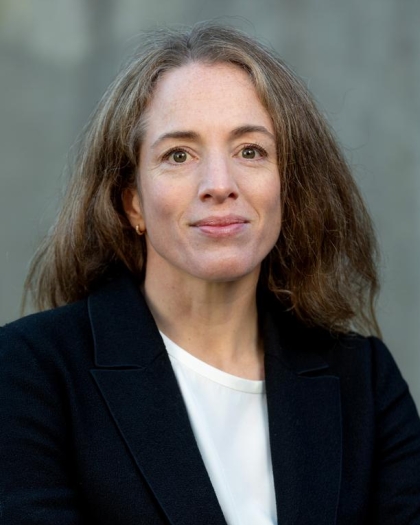
Jaline L Gerardin is an Associate Professor in Preventive Medicine (Epidemiology) and McCormick School of Engineering at Northwestern University. She is affiliated with the Center for Global Health, Institute for Public Health and Medicine (IPHAM), Northwestern Institute on Complex Systems, and Robert J. Havey, MD Institute for Global Health. Her career focuses on malaria modeling and public health interventions. Current affiliations: Northwestern University, IPHAM, NICO, Center for Global Health Prior role: Malaria lead at Institute for Disease Modeling Research Focus: Gerardin specializes in malaria transmission modeling and public health intervention optimization . Her work addresses subnational tailoring of malaria strategies, intervention mix analysis for elimination, and ethical modeling practices. She integrates multidisciplinary data (entomology, immunology, demography) into agent-based models to guide policy in resource-limited settings. Article Trends: Recent publications emphasize subnational malaria intervention prioritization (Guinea, Nigeria), diagnostic performance evaluation, human mobility impacts on transmission, and wastewater surveillance applications for disease modeling. Leadership Roles: Co-chair: American Society of Tropical Medicine and Hygiene symposia Member: WHO working groups, Malaria Modeling Consortium Advisor: WHO Malaria Multi-Model Comparison initiatives Education: PhD from University of California, San Francisco (2013)
Kenneth Ross is a Professor in the Computer Science Department at Columbia University in New York City. His primary appointment is within the Department of Computer Science, with affiliations including the Foundations of Data Science Committee. His work bridges theoretical database research and practical system implementation. His research focuses on database systems with particular expertise in query processing, query language design, data warehousing, and architecture-sensitive database system design. Additional research spans computational biology, especially analysis of large genomic data sets. Current projects include Linear Algebra Operators in Databases for machine learning workloads and Repeats and Somatic Mutation analysis in genomics. His work consistently addresses the intersection of hardware capabilities and database system design. Ross leads the Database Research Lab at Columbia, which has produced significant work on query optimization, GPU database processing, and hardware-conscious database systems. His recent publications demonstrate strong focus on adapting database systems to modern hardware including GPUs, SIMD processors, and persistent memory. His scientific recognition includes: Packard Foundation Fellowship Sloan Foundation Fellowship NSF Young Investigator Award Distinguished Faculty Teaching Award (2008) Ross actively advises undergraduate engineering students (juniors with last names P-Z) and has taught foundational courses including Introduction to Databases and Programming and Problem Solving for over two decades. His teaching portfolio shows consistent engagement with both theoretical concepts and practical implementation challenges in computer science education.
Dr. Muhammad Rashed is an Assistant Professor in the Department of Computer Science and Engineering at the University of Texas at Arlington, within the College of Engineering. He holds a Ph.D. in Computer Engineering from the University of Central Florida (2024) and a B.S. in Electrical and Electronics Engineering from Bangladesh University of Engineering and Technology (2015). Ph.D. : Computer Engineering, University of Central Florida, 2024 B.S. : Electrical and Electronics Engineering, Bangladesh University of Engineering and Technology, 2015 His research focuses on electronic design automation (EDA), in-memory computing, AI acceleration, and sustainable computing. He explores novel computing paradigms to overcome the limitations of traditional architectures, particularly in data-intensive applications such as AI and scientific computing. His work emphasizes hardware-software co-design and leveraging emerging non-volatile memories for energy-efficient processing. The 15 most recent publications highlight a consistent focus on in-memory computing, particularly in path-based and flow-based architectures, logic synthesis, and AI acceleration. Key themes include optimization, fault tolerance, verification, and the use of advanced data structures like sentential decision diagrams. His work is published in top-tier venues such as DAC, ICCAD, ASP-DAC, and IEEE/ACM journals. Scientific Awards: UTA CARES Grant for OER Creation Research Experiences for Undergraduates (REU) Grant Alireza Seyedi Doctoral Research Innovation Endowed Scholarship David T. & Jane M. Donaldson Memorial Scholarship IEEE/ACM William J. McCalla ICCAD Best Paper Award Nomination Best Research Video Award, Design Automation Conference (DAC) Dr. Rashed advises several graduate and undergraduate students in the NextGen Computing Lab and is involved in research grants including the UTA CARES Grant and REU funding. He actively contributes to academic service through roles such as conference TPC member, journal reviewer (e.g., IEEE TCAD, ACM TODAES), and committee participation in the department and college. His lab, the NextGen Computing Lab, is dedicated to building scalable, energy-efficient computing systems for next-generation AI and scientific workloads, aligning with national initiatives in advanced computing.

_rdax_230x341s.jpg)