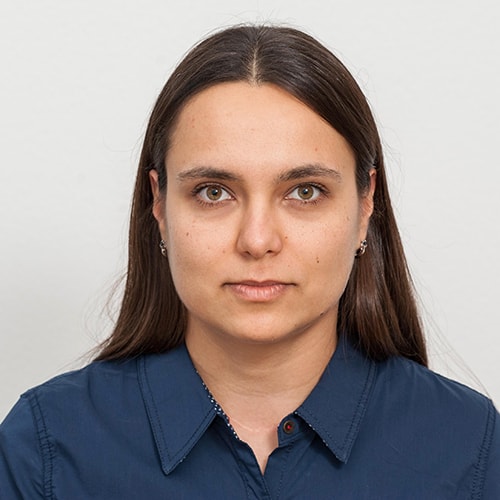
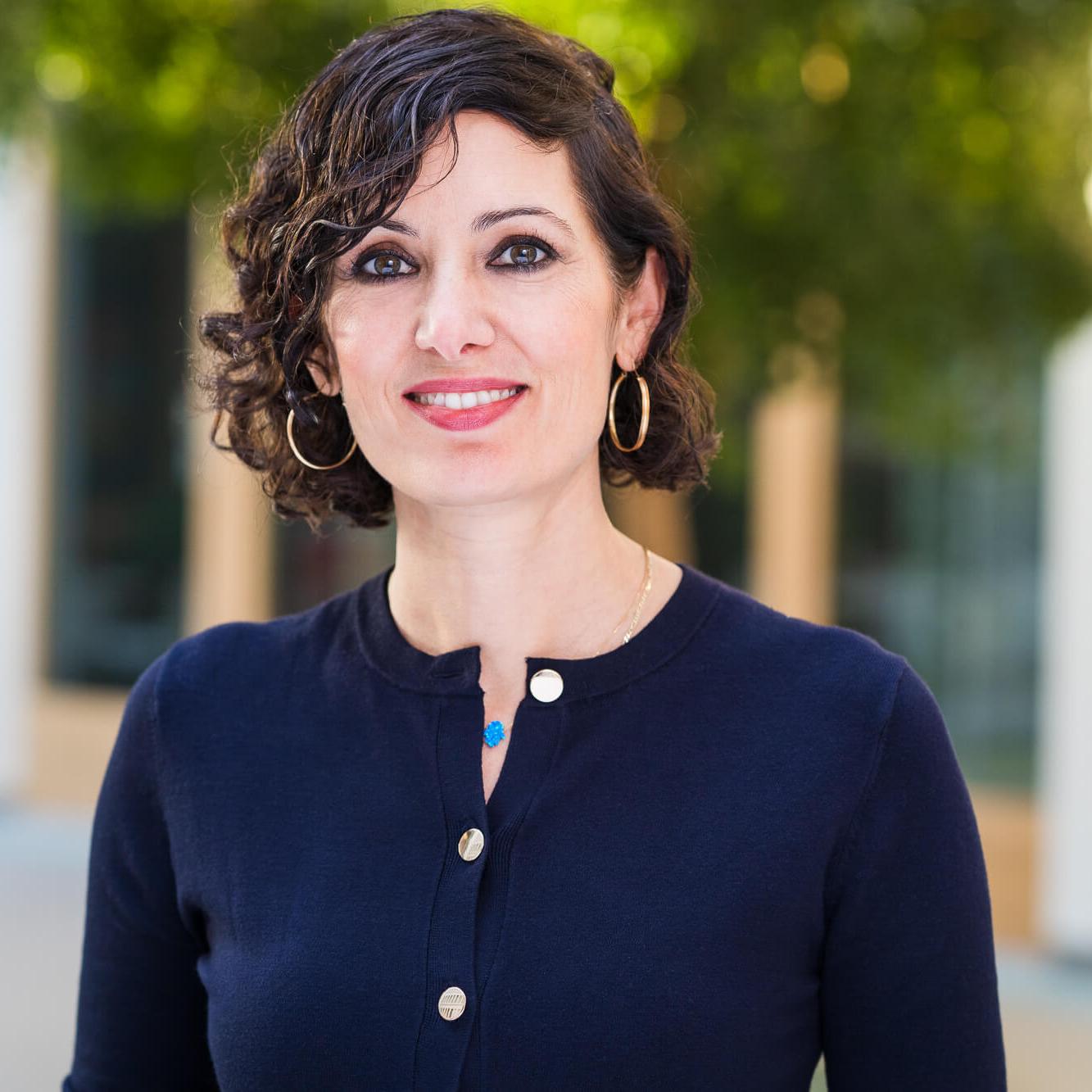
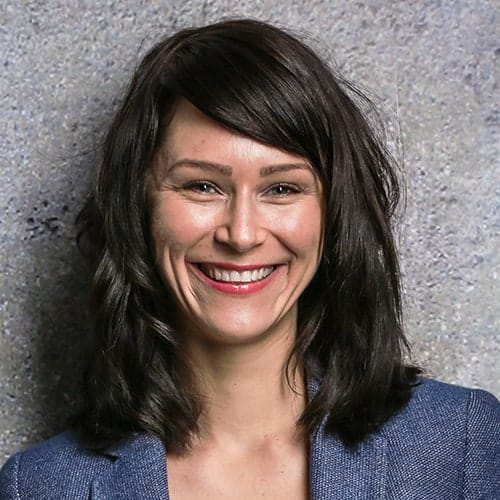
Arthur Merkel is a Research Fellow in the Department of Food Science at the University of Copenhagen, specializing in membrane and electromembrane processes for the dairy industry. His research focuses on electro-chemical membrane systems, including electrodialysis and bipolar membrane electrodialysis, for applications in dairy processing and sustainable food production. His primary research interests include membrane technology for dairy science, particularly in the areas of whey processing, electro-acidification, and demineralization. He investigates fouling and scaling of ion-exchange membranes and promotes green and sustainable science in food engineering. His work bridges fundamental electrochemical processes with industrial dairy applications. Recent publications (2021-2025) demonstrate a strong trend in applying electrodialysis and bipolar membrane electrodialysis to dairy streams such as skim milk and whey, with a focus on improving process efficiency, valorizing byproducts, and addressing challenges like fouling and scaling. His research integrates experimental and modeling approaches to optimize membrane processes for sustainable dairy production. Merkel actively contributes to the scientific community through peer review for several journals: Desalination Separation and Purification Technology Future Foods He is a member of the European Membrane Society and the Czech Membrane Platform, and has participated in conferences including EuroMembrane 2022 and the European Membrane Summer School (2024).
Olga Saukh is an Associate Professor at the Institute of Technical Informatics, Graz University of Technology (TU Graz), and a Faculty member at the Complexity Science Hub Vienna (CSH). She leads the Embedded Learning and Sensing Systems research group, which operates across both institutions, focusing on the design and deployment of efficient AI-based systems on edge and mobile platforms. Her work bridges deep learning and embedded systems, with applications in environmental monitoring, precision agriculture, and digital health. Ph.D. in Computer Science, University of Bonn (2009) Habilitation in Embedded Systems, TU Graz (2020) Postdoctoral Training, ETH Zurich (2010–2016) B.Sc. in Applied Mathematics, Taras Shevchenko National University of Kyiv (2002) M.Sc. in Applied Computer Science, University of Freiburg (2004) Her research centers on efficient machine learning, particularly model optimization, neural network pruning, and contrastive learning for resource-constrained devices. She is deeply engaged in solving real-world challenges in IoT, sensor networks, and cyber-physical systems. Her work emphasizes data privacy, sustainability, and practical deployment of AI at the edge. The 15 most recent publications highlight a strong trend in efficient deep learning, including model compression, pruning, and transfer learning, applied to diverse domains such as environmental sensing (air quality, pollution tracking), digital agriculture (cattle farming), and embedded AI (sensor calibration, on-demand sensing). Her work frequently appears in top-tier venues like NeurIPS, ICLR, and IEEE/ACM IPSN, reflecting her leadership at the intersection of machine learning and embedded systems. Scientific awards include: CONET Ph.D. Academic Award (2010) Multiple Best Paper Awards at IEEE PerCom, ACM/IEEE IPSN, IEEE ICPADS, IEEE SECON, and UrbCom Spotlight and Oral presentations at ICML and CoLLAs workshops Ph.D. scholarship from IPVS, University of Stuttgart (2004–2005) Prizes in Ukrainian national mathematics competitions (1996–1998) Olga Saukh actively serves on program committees of leading international conferences in machine learning and embedded systems. She has advised multiple students and leads a collaborative research group spanning TU Graz and CSH Vienna. Her group develops practical AI systems for real-world deployment, with a focus on sustainability and privacy. She co-organizes the public EfficientML reading group and has secured recognition through numerous grants and awards. Her future work continues to explore the theoretical and practical challenges of deploying efficient, trustworthy AI in mobile and embedded environments. Her research group, Embedded Learning and Sensing Systems, operates jointly between TU Graz and CSH Vienna, fostering interdisciplinary collaboration across institutions. The team develops AI solutions for edge computing, sensor networks, and cyber-physical systems, with a strong emphasis on environmental sustainability and data privacy. Members work on joint challenges using advanced collaboration tools, reflecting the distributed nature of modern academic research.
Alessandra Meddis serves as an Assistant Professor in the Section of Biostatistics within the Department of Public Health at the University of Copenhagen's Faculty of Health and Medical Sciences. Her academic work centers on developing and applying advanced statistical methodologies for longitudinal and time-to-event data analysis, with significant contributions to public health research in Denmark and internationally. Her institutional affiliation is clearly established through university contact details and departmental listings. Her primary research interests include correlated survival data analysis, competing risk modeling, informative cluster size methodology, causal inference techniques for observational studies, and environmental epidemiology applications. Dr. Meddis has developed specialized expertise in handling complex survival data structures while maintaining focus on real-world public health problems, particularly in HIV comorbidity patterns, environmental exposure effects, and pandemic-related mortality analyses. Her methodological innovations directly address challenges in clustered and censored data common across medical research domains. Analysis of Dr. Meddis's recent publication record reveals a consistent trajectory of high-impact interdisciplinary research spanning clinical medicine, epidemiology, and statistical methodology. Her work appears in leading journals across biostatistics, infectious diseases, and public health, demonstrating strong collaborative networks with clinical researchers and epidemiologists. Key thematic areas include HIV treatment outcomes, environmental health exposures, and critical care applications during the pandemic, with recent methodological papers advancing survival analysis techniques for complex data structures. Scientific Awards: No scientific awards were specified in the available institutional profile. Advising and Grants: The institutional profile does not provide details regarding graduate student supervision or specific research grant funding. Her collaborative publications suggest involvement in multi-investigator projects including the COCOMO HIV cohort study and pandemic-related research initiatives. Labs and Teams: Dr. Meddis is affiliated with the Section of Biostatistics within the Department of Public Health, though specific laboratory facilities or dedicated research teams are not described in the source material. Her extensive co-authorship patterns indicate active participation in multiple research consortia across medical specialties.
Roberto Mora Cortez serves as an Associate Professor in the Department of Business and Sustainability at the University of Southern Denmark (SDU), Kolding campus, with a primary focus on Business-to-Business (B2B) marketing research and instruction. His academic contributions span teaching, publication, and industry engagement within the global B2B domain. His research expertise centers on B2B Marketing , Market Segmentation , and Quantitative Methods , with significant extensions into Sales , Trade Shows , Customer Journey mapping, and DEI in B2B contexts. His methodological approach combines systematic reviews, survey research, and empirical analysis, emphasizing practical applications for businesses across diverse economic environments including Chile and Peru. Key investigations address segmentation efficacy, digital transformation of trade shows, and the integration of diversity principles into B2B selling frameworks. Analysis of his 15 most recent publications (2022-2025) reveals dominant trends toward digitalization, sustainability, and inclusivity in B2B practices. His work consistently bridges theoretical frameworks with actionable implementation strategies, particularly in global and emerging markets. Notable thematic clusters include AI-driven business processes, relationship marketing resilience during economic fluctuations, and social media's role in B2B engagement. No scientific awards, prizes, or fellowships are documented in the available records. Mora Cortez has supervised at least one bachelor thesis student (Catherine Scheck) and teaches courses including Business-to-Business Marketing, Advanced Quantitative Analyses, and Scientific Research Processes. His academic service includes peer reviewing for the Journal of Business & Industrial Marketing and participation in conferences such as the AMA Winter Academic Conference. International collaborations with Georgia State University and the University of Chile indicate active research networking. His departmental work within SDU's sustainability-focused business unit involves media engagement on mining industry marketing in Latin America, including contributions to Peruvian business media on value propositions and trade show ROI. Current research trajectories emphasize digital transformation, sustainable innovation, and DEI integration within evolving B2B landscapes.
Jens O. Brunner is a Professor of Decision Science in Healthcare at the Technical University of Denmark (DTU), affiliated with the Department of Technology, Management and Economics. Previously, he held a professorship at the University of Augsburg until March 2023 and served as co-director of the University Center for Health Care (UNIKA-T) from 2013 to 2020. He earned his PhD from the TUM School of Management (2009) and a diploma in Business Administration from the University of Mannheim (2006). Roles: Professor, Department Editor for Health Care Management Science , and Associate Editor for multiple journals. Education: PhD in Management, TUM School of Management (2009) Diploma in Business Administration, University of Mannheim (2006) His research focuses on healthcare operations management and the application of quantitative methods to optimize service systems. Key areas include triage policies, staff scheduling, and AI-driven healthcare solutions. His work has contributed to improving resource allocation in hospitals and pandemic response strategies. Notable awards include the Harold W. Kuhn Award (2015) and the IISE/SSE Outstanding Innovation Award (2022). His research has been published in journals like IIE Transactions and European Journal of Operational Research . He supervises PhD students in projects such as AI-integrated pooling strategies and resource optimization in healthcare. His involvement in interdisciplinary collaborations and editorial roles highlights his leadership in advancing healthcare operations research.
Jacob Østergaard is a Professor and Head of the Division for Power and Energy Systems at DTU Wind and Energy Systems, Technical University of Denmark. His research focuses on renewable energy systems, offshore wind power hubs, and quantum computing applications in energy systems. He leads initiatives like EnergyLab Nordhavn and PowerLabDK, emphasizing collaboration between academia and industry. Education: MSc in Electrical Engineering from DTU (1989–1995). External positions include roles at Research Institute of the Danish Electric Utilities and Ørsted (now SK Energy). Research Interests: Power system stability, flexibility markets, offshore wind energy, quantum computing in energy systems, Power-to-X, and energy storage. He advocates for integrated, market-based energy systems to achieve the green transition. Publications highlight quantum computing for grid optimization, offshore energy hubs, and Denmark’s energy island strategy. Recent work emphasizes scientific advice for energy policy and green hydrogen production. Awards: A. Angelo’s Prize (1996), AEG Electron Prize (2007), Danish Design Award (2019), and EU RESponsible Island Prize (2020). Advising and Grants: Supervises PhD students in grid integration and control. Active in projects like OEH (Offshore Energy Hubs) and BOSS (Battery Energy Storage System). His work drives Denmark’s energy policy through roles on Energinet’s board and the Danish Energy Commission. Labs/Teams: Leads PowerLabDK and EnergyLab Nordhavn, experimental facilities for smart grid and energy system research.
Francesco Rosati is an Associate Professor at the Department of Management Engineering, Technical University of Denmark (DTU), affiliated with the Centre for Technology Entrepreneurship. His work focuses on the intersection of entrepreneurship, innovation, and sustainable development, particularly addressing the UN Sustainable Development Goals (SDGs). He holds academic qualifications in management and engineering and has mentored numerous Danish and international startups. Rosati has been recognized with the Tietgen Award 2020 for early-career contributions to business-oriented social sciences. Research interests include corporate sustainability management, business model innovation for sustainability, and organizational silos analysis. His work spans multiple sectors, including healthcare and construction industries. Rosati teaches courses on strategy, entrepreneurship, and sustainability at both Master’s and executive education levels, and actively participates in global conferences. Key projects include accelerating SDG-aligned entrepreneurship education, circular business model innovation in construction, and building climate resilience for vegetable farmers in Ghana. His research has been published in journals like Business Strategy and the Environment , Journal of Cleaner Production , and Organization and Environment . Rosati has supervised several PhD students exploring topics such as entrepreneurial resilience, SDG reporting, and business model innovation. His work emphasizes bridging management and engineering disciplines to address global sustainability challenges.
Patrick Finglass is the Henry Overton Wills Professor of Greek at the University of Bristol, leading the Department of Classics & Ancient History. He holds academic memberships in the Academia Europaea and Niedersächsische Akademie der Wissenschaften zu Göttingen. His research focuses on ancient Greek literature, particularly lyric poetry and tragedy, with notable expertise in Sophocles, Euripides, Pindar, Sappho, and Alcaeus. Education: MA, DPhil (Oxford). Prior roles include Professor of Greek and Head of Department at the University of Nottingham, and Director of the AHRC South West and Wales Doctoral Training Partnership. He served as a Leverhulme Major Research Fellow (2020–2023) and was a visiting scholar at the Institute for Advanced Study, Princeton. Research highlights include a 2024 monograph on Euripides’ lost plays and ongoing critical editions of Sappho and Alcaeus. He has published over 170 works, including editions of Sophocles’ plays and co-edited volumes on Sappho and Stesichorus. Awards include the Philip Leverhulme Prize (2012) and Rudolf Meimberg Preis (2019). Teaching and supervision: Advised 8 PhD students as principal supervisor. Taught courses on Archaic Greece, Sappho’s poetry, and Greek tragedy. Editorial roles include editorship of Classical Quarterly and advisory boards for major classical publications.
Jørgen Arendt Jensen is a Professor of Biomedical Signal Processing at the Technical University of Denmark (DTU), with dual affiliations in the Department of Health Technology and the Department of Electrical Engineering (DTU Elektro). He leads the Center for Fast Ultrasound Imaging (CFU), a collaborative initiative involving DTU, BK Medical, Rigshospitalet, and DTU Nanotech. His research focuses on advanced medical ultrasound technologies, including synthetic aperture imaging, vector flow imaging, and ultrasound simulation, aiming to improve clinical image acquisition efficiency and accuracy. He teaches medical imaging courses and co-initiated the joint biomedical engineering program between DTU and the University of Copenhagen. Jensen’s work contributes to UN Sustainable Development Goals related to health and innovation. His research interests span algorithm development for fast ultrasound imaging, blood velocity characterization, and simulation of ultrasound systems. He supervises multiple PhD students and collaborates on projects involving transducer design, real-time imaging systems, and microvascular pathology analysis. Recent publications emphasize advancements in super-resolution ultrasound imaging, transducer optimization, and pressure gradient estimation. His lab, CFU, develops cutting-edge imaging solutions for clinical applications. Jensen’s contributions include patents on ultrasound imaging techniques and collaborative ventures to enhance diagnostic capabilities through interdisciplinary engineering.
Prof. Dr. Naika Foroutan is a leading scholar at Humboldt University of Berlin, where she holds the Professorship of Integration Research and Social Policy. She serves as Director of the German Centre for Integration and Migration Research (DeZIM) and Head of Department at the Berlin Institute for Empirical Integration and Migration Research (BIM). Her work bridges empirical migration studies, social policy, and radicalization analysis. Research Interests: Transformation of immigration societies into post-migrant societies, Islam and minority policies, radicalization, racism, Islamism, intergroup relations, and democratic pluralism. Her publications and projects explore intergenerational integration, anti-Muslim sentiment, hybrid identities, and radicalization prevention through bridging narratives. She has received prestigious awards, including the Berlin Integration Prize (2011), Fritz Behrens Science Prize (2012), Höffmann Science Prize (2016), and an honorary doctorate from Lund University (2025). Contact her directly via anfragen@dezim-institut.de for academic or institutional inquiries.
John Bagterp Jørgensen is a Professor at the Department of Applied Mathematics and Computer Science, Technical University of Denmark (DTU). His research focuses on computational methods for Model Predictive Control (MPC), numerical optimization, and dynamic optimization, with applications in industrial processes, biomedical systems, and sustainable energy. He holds leadership roles in 2-control ApS, a company developing advanced control solutions for industries such as cement production and oil recovery. Education: PhD and M.Sc. in Technical Sciences from DTU (1997–2005 and 1991–1997). Professional experience includes roles as an Assistant Professor at DTU and CTO/CEO at 2-control ApS. Research interests span MPC algorithms, numerical methods for differential equations, and system identification. His work bridges academia and industry, addressing challenges in energy efficiency, vaccine manufacturing, diabetes treatment, and cement production processes. His recent articles emphasize industrial applications of control systems, including cement rotary kiln dynamics, vaccine production optimization, and dual-hormone artificial pancreas development. He has received the Nordic Energy Research Award (1994) and contributed to UN Sustainable Development Goals related to affordable energy and industrial innovation. Advising and grants: Supervises multiple PhD projects on topics like electrification of industrial processes and sustainable SCP production. Collaborates with global institutions on energy and biomedical research. Labs/teams: Leads teams in DTU’s Scientific Computing and Center for Energy Resources Engineering, with active partnerships in industry and academia.
Jiri Srba is a Professor at Aalborg University's Department of Computer Science, part of the Technical Faculty of IT and Design. He leads research in the Distributed, Embedded and Intelligent Systems group and contributes to projects like "ControLing wAter In an uRban Environment" and "Collective Adaptive System SynThesIs using Non-zero-sum Games". His office is located at Selma Lagerløfs Vej 300, 9220 Aalborg Øst, Denmark. Contact him at +4599409851 or srba@cs.aau.dk. His core research focuses on formal methods and applied computer science: Model checking and verification of concurrent systems Petri nets and their applications Network protocol verification and synthesis Distributed system correctness Automated reasoning for industrial systems His publication record shows strong emphasis on network verification, model checking optimization, and applying formal methods to environmental systems. Recent work integrates computer science with sustainable engineering, particularly in water management systems and energy control.
Dorte Hammershøi is a Professor in the Department of Electronic Systems at The Technical Faculty of IT and Design, Aalborg University, Denmark. Her research focuses on acoustics, sound engineering, and hearing science with significant contributions to human hearing, ear canal acoustics, and audio technology applications. Her research interests include: Temporary Threshold Shift and frequency resolution in human hearing Ear canal acoustics and sound pressure level measurement Distortion Product Otoacoustic Emission (DPOAE) analysis Impulse response and acoustic impedance studies Hearing aid technology and rehabilitation methodologies Virtual reality audio interfaces and accessibility applications Professor Hammershøi's recent publications demonstrate a strong clinical-engineering interdisciplinary approach, bridging theoretical acoustics with practical hearing rehabilitation applications. Her work on hearing aid fitting methodologies, occupational noise exposure effects, and virtual reality audio interfaces shows consistent innovation in translating engineering principles to clinical practice. The research shows particular attention to individualized hearing solutions and accessibility technologies. Her scientific contributions have been recognized with: Dansk Lydpris 2020 (awarded November 17, 2021) Ambassadør for Aalborg (awarded September 15, 2004) Professor Hammershøi has supervised 5 PhD students and led numerous research projects including the ongoing "Audio Only VR for Blind Gamers" project (2024-2028) funded by the Independent Research Foundation of Denmark, and the completed "BEAR: Better Hearing Rehabilitation" project (2016-2022). Her research has attracted significant media attention with 110 press/media appearances discussing hearing damage prevention, tinnitus, and public health implications of noise exposure. She maintains active professional engagement through committee memberships (46 documented activities), international collaborations, and contributions to clinical practice guidelines. Her work continues to influence both academic research and practical applications in hearing science and audio engineering.
Jesper Fels Birkelund is a Tenure Track Assistant Professor at the Department of Sociology, University of Copenhagen. His research focuses on education systems, ethnic inequalities, and social mobility, leveraging advanced statistical methods on register and survey data. He teaches courses such as Basic Statistics, Sociology in Danish Society, and Advanced Welfare, Inequality, and Mobility. His work has been published in journals like Social Forces and European Sociological Review . His research on education examines how schooling impacts cognitive and social-psychological skills, influencing long-term labor market outcomes. He has shown vocational training enhances conscientiousness, yielding earnings comparable to academic tracks. In ethnic inequality studies, he analyzes high aspirations among immigrant students despite poor academic performance, proposing counterfactual models to assess systemic challenges for minority students. In social mobility research, he explores how parental resources (human, cultural, social, economic capital) shape children’s career trajectories, particularly when parents and children share the same field of study. He uses firm linkage data to study mechanisms like parental networks and inherited family businesses. Awards: 2022 ECSR Prize for Best PhD Thesis Teaching: Basic Statistics (BA), Sociology in Danish Society (BA), Education and Social Inequality (BA/MA), Advanced Welfare, Inequality, and Mobility (MA) His work integrates micro-class approaches with intergenerational transmission theories, contributing to debates on educational policy and labor market equity. Office hours for Spring 2025: Monday 15:00–16:00 in room 16.0.57.
Claudia Wagner is a full professor for Applied Computational Social Sciences at RWTH Aachen University and the Scientific Director of the Computational Social Science department at GESIS—Leibniz Institute for the Social Sciences. She is also an External Faculty member at the Complexity Science Hub Vienna. Her work bridges computer science and the social sciences to study algorithmic systems and their societal impacts. Her research focuses on socio-technical phenomena such as inequality, sexism, and perception bias in algorithmically infused societies. She investigates methodological challenges in using digital behavioral data to study human behavior, attitudes, and group dynamics. Her interests span computational social science, algorithmic fairness, network science, and AI ethics. The analysis of her recent publications reveals a strong emphasis on bias, fairness, and methodological rigor in digital data analysis. Her work spans AI psychometrics, gender inequality in online platforms, and validation frameworks for digital traces. She frequently publishes in top-tier venues such as Nature , Science , and AAAI conferences. DOC-fFORTE fellowship from the Austrian Academy of Sciences Four best paper awards at international conferences (ICWSM, CSCW, WWW, AAAI) Associate Editor, EPJ Data Science Steering Committee Member, International AAAI Conference on Web and Social Media Board Member, International Society for Computational Social Science Claudia Wagner has led and co-led substantial research projects funded by national and international agencies. She mentors a diverse group of PhD students working on topics like algorithmic bias, data quality, and dehumanization. She has organized training events such as the CSS Methods Summer School and delivered keynotes globally on inequality and computational social science. She leads the Computational Social Science department at GESIS and collaborates with interdisciplinary teams at RWTH Aachen and the Complexity Science Hub. Her group develops tools for measuring algorithmic impacts and visualizing disparities in socio-technical systems, such as the 'Planets of Disparity' dashboard.