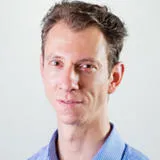
Professor Igor Wigman is a Professor of Number Theory at King's College London, affiliated with the Department of Mathematics within the Faculty of Natural, Mathematical & Engineering Sciences. He completed his PhD in Number Theory at Tel-Aviv University under Zeev Rudnick, followed by postdoctoral roles at CRM Montreal and KTH Stockholm. He joined King's in 2012 as a Lecturer, becoming a Reader in 2014 and Professor in 2018. His research focuses on analytic number theory, probability, and mathematical physics, with emphasis on nodal lines, random fields, and quantum chaos. Notable contributions include studies on the Gauss circle problem, eigenvalue clusters, and nodal volume distributions of random functions. Wigman co-organized the 2016 'Random Waves in London' workshop and delivered an inaugural lecture in 2023 on the interplay of number theory, random functions, and music geometry. His work bridges pure mathematics with applications in spectral geometry and stochastic processes.
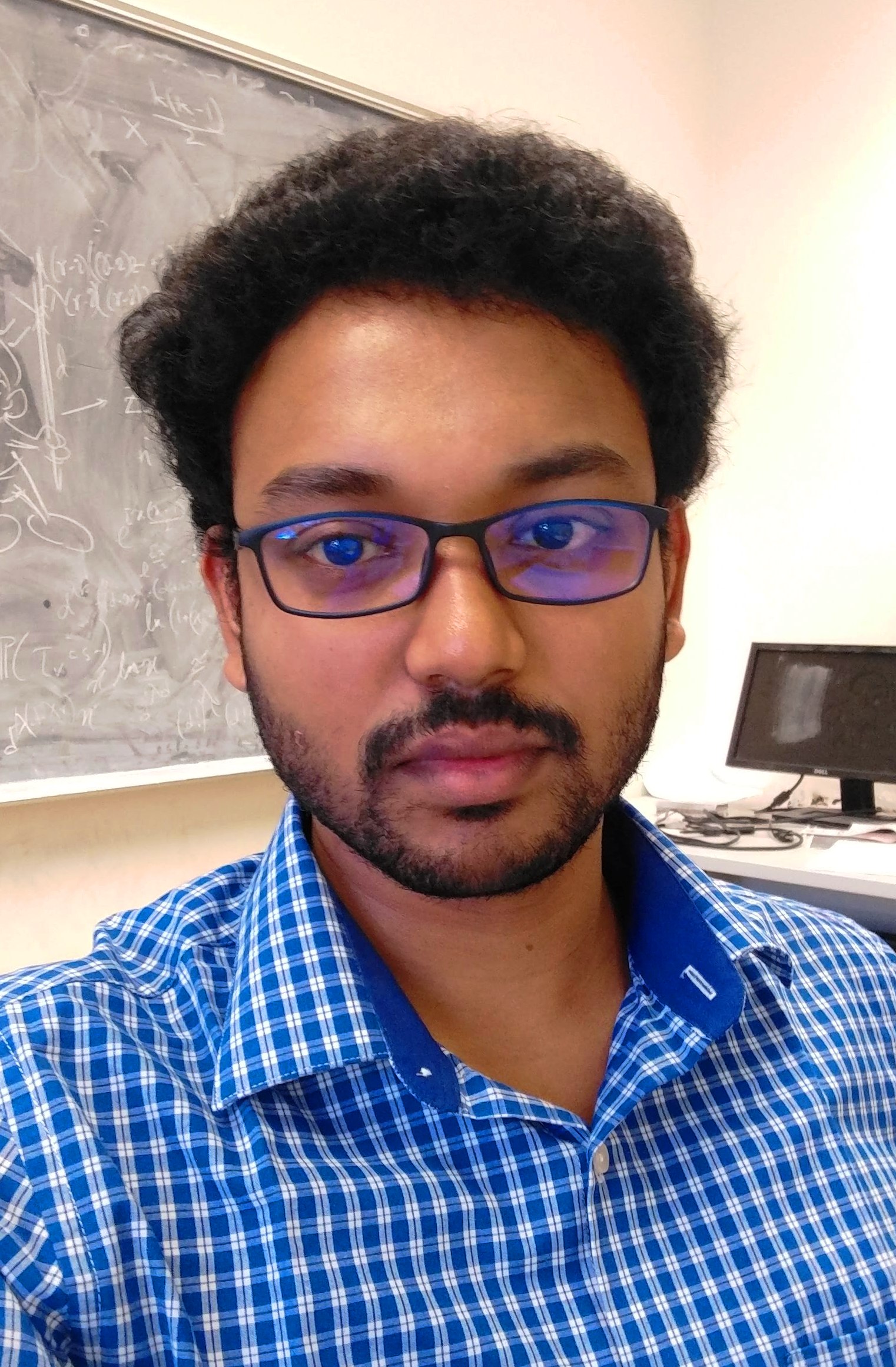
Sourav Sarkar is a University Associate Professor in Probability at the Department of Pure Mathematics and Mathematical Statistics (DPMMS), University of Cambridge (since July 2024) and a Fellow of Trinity Hall. Previously, he held positions as an Assistant Professor at DPMMS (2021–2024), Postdoctoral Fellow at the University of Toronto (2019–2021), and completed his Ph.D. in Statistics at UC Berkeley (2019) under Prof. Alan Hammond. His education includes a BSc (2013) and MSc (2015) in Statistics from the Indian Statistical Institute, Kolkata, advised by Prof. Parthanil Roy. Research Interests : Probability theory with a focus on KPZ universality class, random growth models (e.g., last passage percolation, exclusion processes), Coulomb gas, and percolation theory. His work bridges stochastic processes, mathematical physics, and statistical mechanics. Teaching : Teaches advanced courses in Probability and Stochastic Calculus at the University of Cambridge, including Part II courses on Applied Probability and Probability & Measure. Previously taught at UC Berkeley, where he received the Outstanding Graduate Student Instructor Award (2019). Publications : Focuses on KPZ fixed point, geodesic properties, and phase transitions in interacting particle systems. Recent work includes studies on the directed landscape, stable random fields, and competitive erosion dynamics. Awards : Recognized for exceptional teaching at Berkeley and sustained contributions to probability theory research.
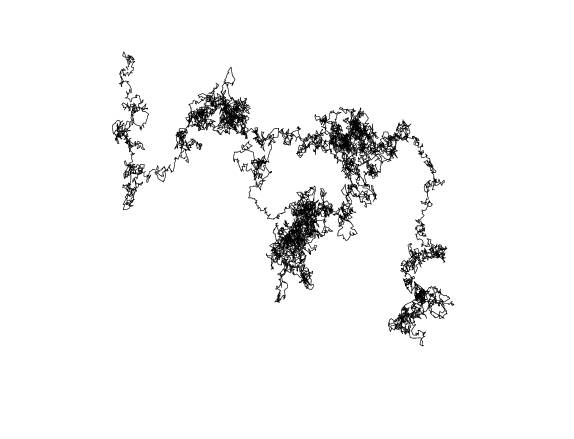
Perla Sousi is a Professor of Probability at the University of Cambridge's Statistics Laboratory, part of the Department of Pure Mathematics and Mathematical Statistics (DPMMS). She is also a Fellow of Emmanuel College. Her research focuses on Probability Theory, Stochastic Processes, and their applications, including Random Walks, Brownian Motion, Mixing Times of Markov Chains, Percolation Theory, and Dynamical Systems. Notably, she explores phase transitions in stochastic models, cutoff phenomena in Markov chains, and the interplay between geometry and probability. Her work often involves collaboration with leading researchers in the field, addressing questions in both theoretical and applied stochastic processes. She has taught courses such as Probability IA, Percolation and Random Walks on Graphs, Advanced Probability, and Applied Probability. Her research has been published in top-tier journals like Annals of Probability , Probability Theory and Related Fields , and Communications in Mathematical Physics . Key contributions include studies on mixing times in dynamic environments, phase transitions in random walks, and capacity analysis in high-dimensional settings. Her articles highlight advancements in understanding stochastic systems' behavior, with a focus on cutting-edge topics like dynamical percolation, branching processes, and cutoff phenomena in complex networks. She actively contributes to both foundational theory and applications in stochastic modeling.
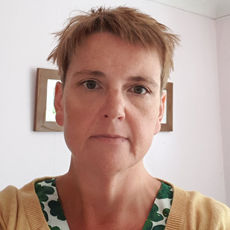
Dr. Lesley Batty is a Reader in Ecological Education at the School of Geography, Earth and Environmental Sciences, University of Birmingham. She plays key leadership roles as Head of Wellbeing and Head of Employability and Placements within the School, reflecting her strong commitment to student development and inclusive education. Her educational background includes a PhD from the University of Sheffield, an MRes and BSc from the University of Reading, and a Postgraduate Certificate in Learning and Teaching from the University of Birmingham. She is a Senior Fellow of the Higher Education Academy and a HEFi Scholar, underscoring her excellence in teaching. Dr. Batty's research centers on the ecology of industrial pollution, particularly in post-mining landscapes. She investigates phytoremediation techniques for contaminated soils, focusing on heavy metals and polycyclic aromatic hydrocarbons (PAHs). Her work extends to ecological education, where she explores inclusive teaching practices, barriers in STEM laboratories, and the integration of employability skills into the curriculum. She is actively involved in national educational policy through her role as Lead Secretary of the British Ecological Society Special Interest Group in Teaching and Learning and as an Associate Editor for the Journal of Geochemical Exploration. Her recent publications reveal a dual focus: one stream on environmental contamination and remediation (e.g., metal and PAH pollution in brownfield sites, phytoremediation with bacteria and chelates), and another on innovative pedagogy in geography and ecology (e.g., virtual field trips, inclusive lab practices, and the future of fieldwork education). This reflects her unique position at the intersection of environmental science and educational leadership. Senior Fellow of the Higher Education Academy (HEA) HEFi Scholar Lead Secretary, British Ecological Society Special Interest Group in Teaching and Learning Dr. Batty is a dedicated educator and researcher who bridges the gap between environmental science and pedagogical innovation. She has made significant contributions to both her field of research and the national discourse on ecological education. Her leadership in student wellbeing and employability, combined with her research on pollution and inclusive learning, demonstrates a holistic approach to academic life. She actively supervises research, as evidenced by her co-authorship with doctoral researchers, and welcomes PhD applications in her areas of expertise. She is a key member of several research groups, including those focused on Physical Geography, Global Biogeochemistry, and Environmental Health Sciences at the University of Birmingham. Her collaborative work, especially in large consortia on conservation education, highlights her strong network and impact in the academic community.
Daniel Kious is a Reader at the University of Bath, where he serves as Head of the Statistics and Probability Group and is affiliated with the Prob-L@B research center. His work focuses on advanced probability theory, including random walks, branching processes, and reinforcement models. Research Interests: Random walks with self-interaction Random walks in dynamic random environments Branching processes and tree structures Reinforcement learning applications in probability Article Trends: His recent publications emphasize trapping phenomena, reinforcement mechanisms, and phase transitions in random processes. Key themes include spatial non-local branching, once-reinforced walks, and connections to statistical physics. Advising: Co-supervised PhD students: Wilfred Armfield, Pawel Rudnicki, Carlo Scali Postdoc supervision: Guillaume Conchon-Kerjan (EPSRC-funded), Umberto De Ambroggio (co-supervised with Matt Roberts) Organizational Contributions: Co-organized conferences like CUWB IV: Frontiers in Statistics and Probability, CUWB II: Probability-on-sea, and the Random Walks in Bath conference. Active in the Prob-L@B research center. Personal Interests: Brazilian Jiu Jitsu practitioner (blue belt at Gracie Barra Frome); contributed to mathematics popularization through a 2016 article for the French Committee for the Popularization of Mathematics (CIJM).
Dr Jon Warren is a Reader in Statistics at the University of Warwick, specializing in probability theory. His research spans stochastic flows, random matrices, and properties of Brownian motion, with significant contributions to understanding complex stochastic systems. Research Interests: Dr Warren's work is centered on probability theory, particularly in the areas of stochastic flows, random matrices, and Brownian motion. His research delves into the intricate behaviors of these systems, exploring their properties and applications in various mathematical contexts. Publications: His recent publications cover a wide range of topics within probability theory, including stochastic heat equations, Dyson Brownian motion, and random matrix theory. These works highlight his expertise in both theoretical developments and practical applications of stochastic processes. Teaching: He teaches ST910 Introduction to graduate probability, demonstrating his commitment to educating the next generation of statisticians and probabilists. Contact: Dr Warren can be reached at J.Warren@warwick.ac.uk for academic inquiries or collaboration opportunities.
Jason P. Miller is a Professor in the Statistics Laboratory at the Department of Pure Mathematics and Mathematical Statistics (DPMMS), University of Cambridge, and a Fellow of Trinity College, Cambridge. He previously held the Poincaré Chair at IHP in the 2015-2016 academic year and was a post-doctoral researcher at MIT and Microsoft Research. Miller's research focuses on probability theory, particularly stochastic interface models, random surfaces, Schramm-Loewner evolutions (SLE), Liouville quantum gravity, and random planar maps. His work bridges mathematical physics and probability, exploring deep connections between random geometry, conformal field theory, and statistical mechanics. He has made fundamental contributions to understanding the relationship between Liouville quantum gravity and the Brownian map, and has extensively studied the properties of Schramm-Loewner evolutions in various contexts. Miller's publication record shows a consistent focus on the intersection of probability theory and mathematical physics, with a particular emphasis on scaling limits of discrete models to continuum objects. His work often involves collaborations with prominent researchers like Scott Sheffield and Ewain Gwynne, and demonstrates a progression from foundational work on SLE and the Gaussian free field to more recent breakthroughs in Liouville quantum gravity and its connections to random planar maps. Scientific Awards Rollo Davidson Prize, 2015 Poincaré Chair, 2015-2016 academic year Whitehead Prize, 2016 Clay Research Award, 2017 ICM invited speaker (probability and statistics), 2018 Doeblin Prize, 2018 Eisenbud Prize, 2023 Fermat Prize, 2023 Miller has supervised numerous PhD students (though specific names aren't listed in the provided text) and has been involved in significant research grants supporting his work in random geometry and probability theory. His editorial service includes positions on the boards of Probability Theory and Related Fields and Bernoulli journals. While specific laboratory details aren't provided, Miller's research appears to be theoretical in nature, focusing on mathematical analysis of random geometric structures. His work has significant implications for theoretical physics, particularly in understanding quantum gravity and critical phenomena in statistical mechanics.
Ruchika Ojha is a Vice Chancellor's Research Fellow at RMIT University's School of Science, Australia. Her research focuses on the intersection of inorganic chemistry, electrochemistry, and biomedical/nanoenergy applications. Affiliation: RMIT University, School of Science Academic Rank: Research Fellow Email: ruchika.ojha@rmit.edu.au Her research interests include: Gold-based anticancer drugs and their delivery mechanisms Electrochemical hydrogen storage in carbon materials Metal-organic frameworks for energy conversion Proton battery technology development Nanozymes for biomedical applications Recent publications highlight her work on: Gold-sulfur complexes for ovarian cancer treatment Redox flow battery materials Platinum-based anticancer agents Morphology-controlled nanocatalysts Carbon dots for live cell imaging
Michele Salvi is an Associate Professor in Mathematics at Università degli Studi di Tor Vergata in Rome. He previously held a Marie Skłodowska-Curie fellowship, conducting research in Berlin, Munich, and Paris. His work focuses on Probability Theory, with emphasis on random processes in random media, random graphs, and statistical mechanics, bridging applications in Physics, Computer Science, and Biology. Random processes in random media Random graphs Mathematics of Neural Networks Stochastic homogenization Mixing times for Markov chains Statistical mechanics Salvi’s recent publications highlight interdisciplinary trends, particularly in the spectral analysis of deep neural networks, scale-free percolation dynamics, and spanning tree geometry in random environments. His collaborations span Europe, with projects involving probabilistic models in epidemiology, reinforcement learning, and stochastic homogenization. He has received the Marie Skłodowska-Curie fellowship, reflecting his international research experience. His work is aligned with the Department of Mathematics at Tor Vergata, which holds the "Department of Excellence" MatMod@TOV 2023-2027 grant.
Elsa Arcaute is a Professor of Complexity Science at the Centre for Advanced Spatial Analysis (CASA) at University College London. She is a physicist with expertise spanning mathematical physics, urban systems, and complexity science. Her work bridges theoretical physics with practical applications in urban planning and policy. Her educational background includes a PhD in Theoretical Physics from the University of Cambridge (2006) and a Masters in Mathematics (part III of the Mathematical Tripos). She began her career in theoretical physics with research on Clifford algebras applied to Penrose's twistors before transitioning to complex systems during a visit to Prof. Henrik Jensen at Imperial College London. Arcaute's research focuses on modeling urban systems through the lens of complexity science, with particular emphasis on urban scaling laws, hierarchical structures in cities, and the definition of city boundaries. She applies network theory, percolation theory, and multifractal methodologies to analyze urban infrastructure, socio-economic patterns, and spatial inequality. Her work often involves interdisciplinary collaboration with economists, geographers, and data scientists. Analysis of her recent publications reveals a strong focus on urban complexity, with significant contributions to understanding city hierarchies, commuting networks, knowledge spillovers, and the impact of digital platforms on urban systems. Her research demonstrates how complex systems theory can provide novel insights into urban dynamics, scaling phenomena, and spatial organization. Arcaute has been involved in several major research projects, including an EPSRC grant on Digital Economies, an ERC-funded project MECHANICITY (led by Prof. Michael Batty) focusing on morphology, energy, and climate change in cities, and a MacArthur-funded project on smart cities and policy. She serves as a Review Editor for Frontiers in Energy Systems and Policy and has contributed to numerous publications that have garnered significant attention across academic and policy circles. Her work has been referenced in policy sources, news outlets, and social media, demonstrating the real-world impact of her research.
Hesham ElSawy is an Assistant Professor in the Department of Systems and Networks at the School of Computing, Faculty of Arts and Science, Queen's University. His work focuses on advancing next-generation wireless systems, with particular emphasis on federated learning, IoT networks, and edge computing. He is affiliated with Ingenuity Labs Research Institute, Queen's University, and contributes to interdisciplinary research at the intersection of communication theory and network optimization. His research interests span stochastic geometry modeling, energy-efficient protocols for massive IoT deployments, and resilient federated learning frameworks. ElSawy explores novel paradigms in aerial wireless networks, UAV-assisted communication, and network security through percolation theory applications. Recent publications highlight his contributions to system-level analysis of parallel computing at extreme edges, UAV-enabled federated learning architectures, and energy-as-a-service models for RF-powered networks. His work emphasizes practical implementations and large-scale network validation. ElSawy holds no listed awards or grants in the provided text but maintains active collaborations through Ingenuity Labs. His research addresses critical challenges in 5G/6G networks, including latency optimization, resource allocation, and heterogeneous network integration.
Professor Paul Neville Balister is a faculty member and Fellow in the Mathematical Institute at the University of Oxford, where he serves as a University Lecturer and Professor of Mathematics. His research is centered in combinatorics and discrete mathematics, with strong ties to probabilistic methods and theoretical computer science. His research interests include combinatorics, graph theory, random graphs, probabilistic combinatorics, cellular automata, and discrete probability. These areas are evident from his extensive publication record in top-tier mathematical journals such as the Journal of the European Mathematical Society and Random Structures and Algorithms . The recent publications demonstrate a consistent focus on structural and probabilistic aspects of discrete systems, particularly in monotone cellular automata, graph saturation games, and random graph orderings. His work often explores threshold phenomena, extremal configurations, and asymptotic behavior in combinatorial models. While no formal awards are listed in the provided text, his active collaboration with leading mathematicians and publication in premier venues indicate significant recognition in the field. Professor Balister advises students and contributes to research grants, though specific names and projects are not detailed. He is part of the Combinatorics research group at Oxford, which fosters collaborative work in discrete mathematics and its applications.
Elena Asparouhova is a Professor of Finance at the David Eccles School of Business , University of Utah. She holds a doctorate in Social Sciences from the California Institute of Technology and a Masters in Statistics from Sofia University , Bulgaria. Her research focuses on theoretical and experimental financial economics , including asset pricing theory , experimental finance , general equilibrium theory , and econometrics . Recent work examines financial market competition under delegation , information percolation in dark markets , and human-robot interaction in trading . Best Paper Award, Journal of Financial Markets (2025) Best Paper Award, Review of Finance (2024) Best Paper, Behavioral Finance and Capital Markets Conference, Australia (2025) Continuous National Science Foundation funding for 10+ years Contact: e.asparouhova@utah.edu , University of Utah, Salt Lake City, Utah 84112.
Cristopher Moore is a Professor at the Santa Fe Institute, where he conducts interdisciplinary research at the intersection of physics, computer science, and mathematics. His work focuses on understanding phase transitions in computational problems, statistical inference, and network analysis. Moore has made significant contributions to the fields of complex systems, quantum computing, and algorithmic justice. Moore's primary research areas include phase transitions in computational problems and statistical inference, where he investigates how problems suddenly become hard or impossible to solve when certain thresholds are crossed. His work spans social networks, big data analysis, quantum computing, algorithmic transparency, and decarbonization efforts. He is particularly known for applying physics-inspired approaches to computational problems, using techniques from spin glass theory, network theory, and computational complexity. His recent publications reveal a strong focus on community detection in networks, phase transitions in data science problems, algorithmic fairness in criminal justice systems, and quantum computing applications. Moore's work demonstrates consistent patterns across multiple disciplines, with recurring themes of phase transitions, computational limits, and the application of physics concepts to computational problems. Moore actively mentors students and has advised numerous PhD and Master's students who have gone on to successful careers in academia and industry. His work on algorithmic justice has influenced policy discussions in New Mexico and beyond, particularly regarding risk assessment in the criminal justice system.
Dr. Quirin Thomas Simon Vogel is a Senior Lecturer at the Department of Statistics, University of Klagenfurt. He previously held postdoctoral positions at the Technical University of Munich, New York University Shanghai, and served as an Interim Professor at Ludwig-Maximilians University of Munich. His research bridges probability theory with statistical mechanics and algorithmic applications. Current role: Senior Lecturer (2025) Previous roles: Postdoc (TUM, NYU Shanghai), Interim Professor (LMU Munich) His research focuses on: Random walks and their geometric/stochastic properties Randomized algorithms with applications in statistical models Quantum-inspired probabilistic systems (e.g. interacting bosonic loop soups) Large deviation theory for complex systems Percolation and phase transitions in particle models The articles reflect trends in probability theory, mathematical physics, and algorithmic applications. Key topics include high-dimensional percolation, Bose gas models, neural network theory, and stochastic geometry. The work combines rigorous mathematical analysis with interdisciplinary applications in physics and computer science. Scientific awards and functions cannot be determined from the provided data, as they describe other researchers. The department's research activities include projects on statistical learning, quantum models, and algorithmic probability, though Vogel's direct involvement in these specific funded projects isn't explicitly stated.