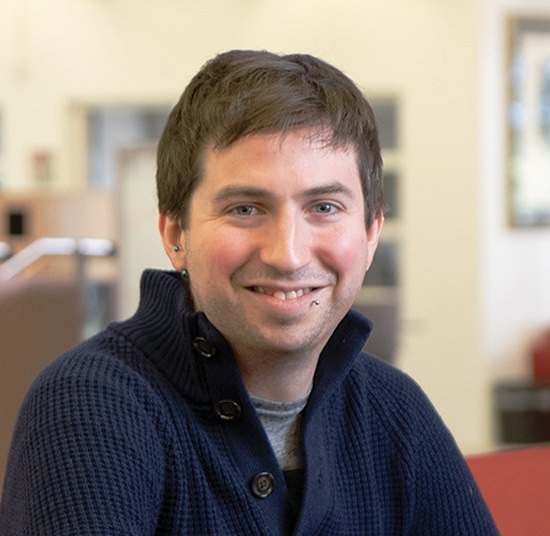
Professor Carlo Harvey is a creative technologist at the School of Digital Arts (SODA), Manchester Metropolitan University. His interdisciplinary research merges games , machine learning , virtual production , and cultural heritage reinterpretation . He leads industry collaborations with entities like Jaguar Land Rover and Epic Games, focusing on AI-driven interactive audio, real-time visualization, and accessibility solutions. Award-winning projects : TIGA, Innovate UK, and Epic Games MegaGrant for Accession Industry partnerships : Automotive sector, cultural institutions His research spans human-computer interaction , multisensory virtual environments , and acoustic-visual cross-modal perception . Recent publications address robotic simulations, motion alignment, and haptic feedback systems. Scientific recognition : TIGA Award, Innovate UK Funding, Epic Games MegaGrant Advocacy : Digital inclusion, creative collaboration, social impact of technology
Jo Wood is Professor of Visual Analytics in the Department of Computer Science at City, University of London, where she has been employed since January 14, 2000. Her work bridges computer science, geographic information science, and human-computer interaction, focusing on innovative methods for visualizing complex spatial and behavioral data. Her research interests center on visual analytics , information visualization , and geovisualization , with applications in transportation, public health, crisis response, and citizen science. She investigates how interactive visual interfaces can support exploratory data analysis, decision-making, and storytelling, particularly through small multiples, faceted views, and sketch-based rendering techniques. The trends in her recent publications reflect a consistent focus on user-centered design , spatial data abstraction , and interactive exploration of multivariate datasets. Her work often integrates real-world behavioral data such as GPS tracks, cycling patterns, and crowd-sourced information to build meaningful visual narratives and support analytical reasoning. Throughout her career, Jo Wood has contributed significantly to the advancement of visual analytics through high-impact publications in top-tier venues such as IEEE Transactions on Visualization and Computer Graphics and Computer Graphics Forum. Her collaborations with researchers like Jason Dykes and Aidan Slingsby highlight her role in a vibrant research community. She has supervised numerous research projects and mentored students in visualization and geospatial analytics, though specific names are not listed in the provided text. Her work has been supported by various research grants, particularly in domains involving urban mobility, energy modeling, and crisis informatics, though grant details are not specified here. Jo Wood has also contributed to the design of visual analytics systems for applications including disease spread modeling, bicycle-hire scheme monitoring, and persuasive technology for health and leisure, demonstrating a strong commitment to impactful, interdisciplinary research.
Dr. George Cantwell is an Assistant Professor in the Department of Engineering at the University of Cambridge, affiliated with Cambridge Infectious Diseases. He specializes in computational methods for inference problems, particularly in disease spreading across networks. Education: PhD in Physics from the University of Michigan; postdoctoral fellowship at the Santa Fe Institute His research focuses on network science , complex systems , and statistical inference , with an emphasis on computational approaches. His work spans theoretical and applied domains, including: Message passing algorithms for heterogeneous networks Bias correction in social network analysis (friendship paradox) Statistical inference of network structure from noisy data Modeling judicial voting behavior through network interactions Computational cognitive neuroscience of category learning Recent publications highlight interdisciplinary applications in epidemiology, physics, and cognitive science. He actively mentors students in networks, complex systems, and statistical inference.
Anthony Steed is a Professor in the Department of Computer Science at University College London, where he leads the Virtual Environments and Computer Graphics group and serves as deputy head of department. His work focuses on real-time interactive virtual environments and related technologies. His research interests include: Virtual Reality and Augmented Reality Real-time Graphics and Interactive Virtual Environments Networking for Tightly Synchronous Telecollaboration 3D User Interfaces and Novel Forms of Interaction Perceptual and Cognitive Issues in Mixed Reality Haptics and Telepresence Professor Steed has made significant contributions to the field through his co-authored books "Networked Graphics" (2010) and "Computer Graphics and Virtual Environments: From Realism to Real-Time". He has also contributed to puzzle design, co-authoring "The Gentle Art of Filling Space" with Michael Dowle. His notable recognition includes the IEEE VGTC Technical Achievement Award (2016). Professor Steed supervises several doctoral students and post-doctoral fellows, and teaches courses including Research Methods, Virtual Environments, and Perception and Interfaces at both undergraduate and MSc levels.
Professor Jason Dykes is a leading figure in the field of information and geovisualization at City, University of London, where he holds the position of Professor in the Department of Computer Science and co-directs the giCentre , a renowned research centre in visualization. He is affiliated with the School of Mathematics, Computer Science and Engineering and maintains an active research and teaching profile. His academic journey includes a PhD in Geography from the University of Leicester and extensive leadership in both research and education. Education: PhD in Geography, University of Leicester, 2000 MSc in Geographic Information Systems, University of Leicester, 1991 BA/MA in Geography, University of Oxford, 1989 Jason Dykes' research is centered on designing visual methods and tools for exploring, analyzing, and presenting information, with a strong emphasis on geographic data. His work integrates cartography, information visualization, GIScience, and human-computer interaction , leading to the development of innovative techniques such as geowigs, ODmaps, BallotMaps, and AttributeSignatures. He has published extensively in top-tier journals like IEEE Transactions on Visualization & Computer Graphics, with over 20 papers in the last decade, and co-authored the seminal book Exploring Geovisualization (2005). His research is supported by major funders including EPSRC and the EU, with projects like RAMP VIS (Covid-19 response) and VALCRI (criminal intelligence). The most recent articles highlight a consistent trend in applied and human-centered visualization , focusing on responsive design, education, pandemic modeling, and novel visual metaphors for complex data. His work increasingly emphasizes methodological rigor, design exposition, and the role of visualization in interdisciplinary and emergency contexts. Scientific Awards and Recognition: National Teaching Fellow, Higher Education Academy (2005) Best Paper Awards at GIS Research UK (consecutive years) Honorable Mentions, IEEE InfoVis (2009, 2010, 2016, 2018) Security Innovation Commercialisation Award (EU, 2022) Research Supervisor of the Year, City Student Union (2020) Innovations in Teaching Award and multiple teaching grants at City Jason Dykes has supervised eight PhD students to completion and advised many others, including notable researchers like Roger Beecham, Sarah Goodwin, and Susanne Bleisch. His teaching includes modules such as Visualizing Society and Data Presentation. He has received significant grant funding from UK research councils and the EU for projects like DIVA, VALCRI, and RAMP VIS. His service to the community includes leadership roles in IEEE VIS, ICA Commission on GeoVisualization, and editorial positions at IEEE TVCG and the Journal of Visualization and Interaction. He leads the giCentre , a dynamic research group that fosters innovation in visualization, and has been instrumental in establishing the field’s educational and methodological foundations through participation in Dagstuhl seminars and publications on visualization pedagogy.
Charles Spence is Professor of Experimental Psychology at the University of Oxford and Fellow of Somerville College, where he heads the Crossmodal Research Laboratory. His work bridges cognitive neuroscience with real-world applications in multisensory design, spanning food science, human-computer interaction, and environmental psychology. Spence's research centers on how the brain integrates sensory inputs (sight, sound, touch, taste, smell) to form unified perceptual experiences. This foundational work drives innovations in sensory marketing, product design, and human factors engineering, with significant implications for optimizing everyday interactions with technology and environments. His approach combines rigorous laboratory experimentation with industry collaborations to translate theoretical insights into practical solutions. Recent publications demonstrate a clear trajectory toward applied crossmodal research, particularly in consumer contexts. His 2025 output reveals growing emphasis on digital commerce environments, nature-food perception interactions, and multisensory flavor enhancement—showcasing how sensory cues can be strategically deployed to influence behavior in retail, dining, and digital platforms. His major recognitions include: 10th Experimental Psychology Society Prize British Psychology Society Cognitive Section Award Paul Bertelson Award (Young European Cognitive Psychologist of the Year) Friedrich Wilhelm Bessel Research Award 2008 IG Nobel Prize for Nutrition (for 'sonic crisp' research) Spence maintains extensive industry partnerships, having consulted for Toyota on multisensory warning systems, ICI on environmental psychology, and Heston Blumenthal's Fat Duck restaurant on culinary innovation. His research attracts significant commercial funding through these collaborations, though specific grant details aren't publicly itemized. The Crossmodal Research Laboratory operates as an interdisciplinary hub where psychologists, neuroscientists, and industry partners investigate sensory integration mechanisms. Current projects focus on optimizing driver alert systems, designing immersive food experiences, and understanding how built environments affect cognitive performance—maintaining Spence's legacy of translating basic science into tangible human benefits.
Professor Adrian Hilton is a distinguished faculty member at the University of Surrey, serving as Director of the Centre for Vision, Speech and Signal Processing (CVSSP) and Director of the Surrey Institute for People-Centred AI. He is affiliated with the School of Computer Science and Electronic Engineering and leads the Visual Media Research Lab (V-Lab). His research focuses on pioneering next-generation 4D computer vision technologies that enable machines to understand and model dynamic real-world scenes. Key areas include 3D/4D shape capture, computer vision, machine learning, graphics, and animation for applications in sports analysis, film/TV production, virtual reality, and medical imaging. His work bridges the gap between real and computer-generated imagery, with notable contributions in volumetric capture, motion capture, and free-viewpoint video. Hilton's recent publications demonstrate a strong trend toward multimodal integration, particularly combining audio and visual processing for spatial audio applications, while advancing 4D reconstruction techniques for human performance capture. His work increasingly incorporates transformer architectures and neural rendering techniques for improved illumination estimation, shadow modeling, and multi-view consistency. Scientific Awards and Recognition Two EU IST Innovation Prizes Manufacturing Industry Achievement Award Royal Society Industry Fellowship (2008-2011) Royal Society Wolfson Research Merit Award in 4D Vision (2013-2018) Fellow of the Royal Academy of Engineering (FREng) Fellow of the International Association for Pattern Recognition (FIAPR) Fellow of the Institution of Engineering and Technology (FIET) Hilton actively mentors PhD and post-doctoral researchers through his leadership of CVSSP, which has a grant portfolio exceeding £31M and comprises 170 researchers. He has successfully commercialized several technologies, including systems used by the BBC for sports commentary visualization. His research collaborations span major industry partners including BBC, BT, Sony, Framestore, and The Foundry. He co-founded the G3 Games forum and the CVMP Conference on Visual Media Production, demonstrating strong engagement with the creative industries. Current research projects include the S3A Programme Grant in Future Spatial Audio and InnovateUK's ALIVE project for 360 video reconstruction.
Dr. Daniel Berio is a researcher at Goldsmiths, University of London, specializing in computational models for human-like movement in digital art and robotics. His work bridges computer graphics, cognitive psychology, and robotic manipulation, focusing on stylized stroke generation, graffiti analysis, and kinematic modeling. He collaborates with Frederic Fol Leymarie and Rejean Plamondon, utilizing the Sigma Lognormal model to simulate human handwriting dynamics. Education : Doctoral thesis on AutoGraff (2021), exploring computational understanding of graffiti and calligraphy. Research Themes : Human-like motion in digital art, kinematic reconstruction from static traces, robotic graffiti generation, and perceptual fluency in aesthetic evaluation. Publications : 15+ works since 2015, spanning ACM Transactions on Graphics, British Journal of Psychology, and conferences like MOCO and IROS. Applications : Font stylization tools, synthetic graffiti generation, compliant robot control, and semantic typography systems.
Dr Steve Maddock is a Senior Lecturer in Computer Graphics and Acting Head of the Visual Computing research group at the University of Sheffield's School of Computer Science. He holds a Class I Degree in Computer Science (University of Sheffield), a PGCE in Mathematics (11-18), and a PhD in computer graphics modeling and animation, all from the University of Sheffield. With over 30 years of experience in computer graphics software development, he has contributed to the computer games industry through a six-month secondment at Gremlin/Infogrames. His research focuses on facial modeling and animation, augmented/virtual/mixed reality applications, and sketch-based interfaces. Key areas include 3D computer graphics, real-time rendering, and human-robot collaboration systems. Maddock has led and co-led several grants, including projects on game software engineering, rail network surveillance, and heritage visualization using immersive technologies. He is a member of INSIGNEO, Sheffield Robotics, and the Cultural Industries Research Network. Publications highlight contributions to facial analysis for medical diagnostics, style transfer techniques for games, and safety zone visualization in robotics. His work integrates interdisciplinary approaches, combining computer science with fields like biology and robotics. Maddock's Visual Computing research group explores cutting-edge solutions in graphics, virtual environments, and computational tools for real-world applications.
Tobias Ritschel is a Professor of Computer Graphics at University College London . His research spans advanced rendering techniques, perceptual modeling, and data-driven graphics, with a focus on bridging physical accuracy and artistic flexibility in visual computing. Key research themes include: Interactive Global Illumination : Real-time simulation of complex lighting effects on GPUs Perceptual Graphics : Human vision-driven rendering and display optimization Non-physical Graphics : Beyond-photorealistic techniques for artistic expression Data-driven Graphics : Leveraging large datasets for novel rendering and modeling approaches His recent work emphasizes neural rendering , differentiable graphics , and X-ray tomography , with applications in 3D reconstruction , NeRF manipulation , and holographic imaging . Notable scientific achievements include the Eurographics Young Researcher Award 2014 and Eurographics Thesis Award 2011 . He has advised multiple PhD students including Philipp Henzler (EG PhD Award 2024) and Thomas Leimkühler (Otto Hahn Medal 2019), while actively contributing to conference leadership as co-chair for EGSR 2024 and Pacific Graphics 2024 . His team collaborates on X-ray reconstruction with Pablo Villanueva-Perez and works on 3D perception with Anthony Steed.
Paul Siebert is a Reader in Computing Science at the University of Glasgow, specializing in computer vision and robotics. He leads the Computer Vision and Graphics research group and teaches Digital Image Processing and Computer Systems. His research focuses on 3D vision systems, biologically inspired vision, and cognitive robot vision, with applications in clinical and media domains. He has pioneered commercial 3D surface scanning technology and collaborated with clinical groups such as Glasgow Dental School. Affiliations: University of Glasgow (Computing Science Department) Roles: Reader, Group Leader (Computer Vision and Graphics) Research interests include active binocular robot vision, 2D/3D sensing, and visual perception for robotics. Notable projects include work on driver attention monitoring, virtual character creation, and clinical anatomical imaging. Siebert previously directed the 3D-MATIC Faraday Partnership and served as Chief Executive of the Turing Institute, developing commercial vision systems. Publications span over 140 works, emphasizing applications like rain removal algorithms, continual learning in robotics, and foveated imaging. His work integrates deep learning, biological vision models, and real-world robotics challenges. Awards and recognitions are not explicitly listed, but his contributions to 3D vision commercialization and robotics research highlight significant impact in the field.
Safa Tharib is affiliated with Bournemouth University's Media School, focusing on research at the intersection of character design, behavioral studies, and contextual analysis. Their work explores the psychological and perceptual dimensions of the "uncanny" in media production. Research Focus: Uncanny valley phenomena, character design in animation, human-computer interaction, and media psychology. Key Contribution: 2013 PhD thesis analyzing how realism in character design interacts with behavioral cues and environmental context to evoke uncanny responses. Their publications suggest interdisciplinary engagement with fields like cognitive science, computer graphics, and perceptual theory, though no formal awards or advising roles are documented in available records.
Dr. Wenbin Li is a Senior Lecturer (Associate Professor) in Robotics at the University of Bath's Department of Computer Science. He leads the Pering Laboratory (Perceptual Intelligence Laboratory), affiliated with the AI & Machine Learning and Visual Computing groups. Previously, he held postdoctoral positions at Imperial College London (2016-2018) and UCL (2014-2016), and earned his PhD from the University of Bath in 2013, with earlier degrees from Imperial College London (MSc, 2009) and Xidian University (B.Eng, 2008). His research focuses on unified autonomous systems, including multi-sensory localization/mapping, dynamic motion capture, and uncontrolled scene understanding with applications in manufacturing and professional capture. Key areas include Robotics, Computer Vision, Graphics, and Machine Learning. He actively supervises doctoral students in these fields and has funded PhD openings. Dr. Li has been involved in major initiatives such as the My World - Strength in Places Fund (2021–2027), SLAM with Reinforcement Learning (2022–2023), and the CAMERA MC2 Award (2019–2023). His work aligns with UN Sustainable Development Goals, particularly in advancing technology for societal benefit. Recent publications emphasize aerial robotics, autonomous systems, and computer vision applications, including UAV package delivery reviews, Bayesian optimization for balloon station-keeping, and generative models for intrinsic image decomposition.
Dr. Miles Hansard is a Senior Lecturer at Queen Mary University of London's School of Electronic Engineering and Computer Science. His research focuses on 3D scene reconstruction, multi-view imaging, depth cameras, radar localization, and human vision. He specializes in geometric aspects of vision, image processing, and robotics applications. His teaching includes modules on Computer Graphics (for both postgraduate and undergraduate students) and Introduction to Multimedia Systems. These courses cover topics like 3D graphics algorithms, human perception of color, and multimedia system fundamentals. Dr. Hansard's work integrates sensor technologies such as time-of-flight cameras and millimeter-wave radar to improve 3D reconstruction and robotic systems. He contributes to projects like the GRIP software framework for robotic grasping and has published extensively in journals like IEEE Transactions on Image Processing and the International Journal of Neural Systems. He is affiliated with the Centre for Multimodal AI, where he collaborates on research involving sensor fusion, autonomous systems, and visual perception. His expertise bridges computer vision, robotics, and multimedia engineering.
Dr. Jeanne-Louise Moys is an Associate Professor of Graphic & Communication Design at the University of Leeds' School of Design, part of the Faculty of Arts, Humanities and Cultures. She holds a PhD from the University of Reading and advanced degrees from Rhodes University (MA and BJourn). Her work bridges academia and practice, with expertise in inclusive design, typography, and design pedagogy. Moys has held roles at the University of Reading, University of Hertfordshire, and Rhodes University. Notably, she received a prestigious University Teaching Fellow lifetime award and contributed to the award-winning Breaking down Barriers inclusive design team at Reading. She has served as an external examiner for multiple institutions and guest-edited the Visible Language journal on inclusive design. Her research focuses on how visual design shapes identity, inclusion, and communication efficacy. Current projects include 'Talking about things' with Dr. Catherine Stones. Funded work spans EU Horizon 2020, NHS, and the Simplification Centre. She advises on PhD topics ranging from Arabic typography to Mhealth adoption. Moys' creative practice includes expressive paintings and art cards sold via her website , reflecting her dual identity as academic and artist.