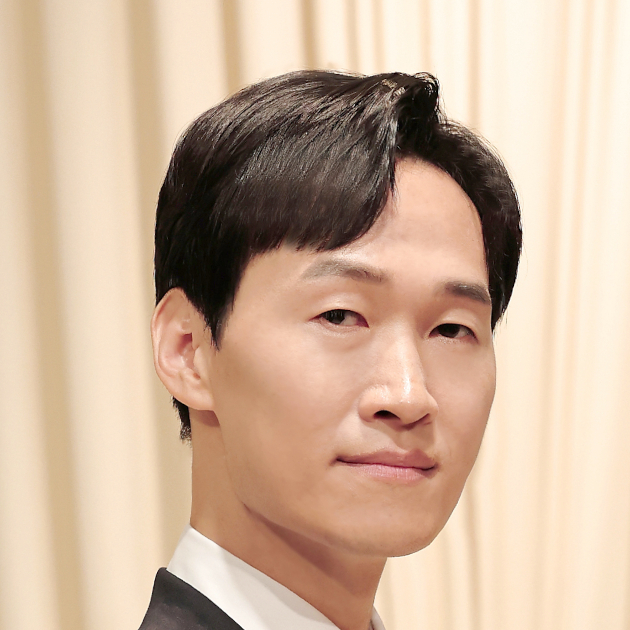
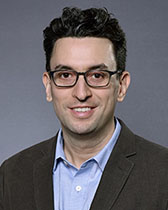
Kiwon Um is a tenured Assistant Professor in the Computer Graphics group at Télécom Paris, France, since October 2019. He focuses on physics-based simulations and data-driven approaches using deep learning, with an emphasis on human visual perception in computer graphics and engineering applications. Education: Ph.D. in Computer Science and Engineering from Korea University His research explores effective simulation of natural phenomena through refined data utilization and develops reliable data acquisition methods for machine learning. He also investigates perceptual evaluation of simulations to advance numerical method understanding. Recent work trends include: (1) turbulence modeling with machine learning integration, (2) elastic material simulation stability, (3) fluid dynamics optimization, and (4) differentiable physics frameworks. His publications range from 2008 to 2025, covering topics like SPH solvers, porous shell simulations, and numerical method validation.
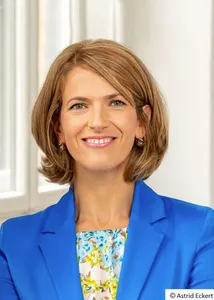
Emily Cooper is an Associate Professor of Optometry & Vision Science at the Herbert Wertheim School of Optometry & Vision Science, University of California, Berkeley. She serves as the Chair of the Vision Science PhD Program and is a co-Director of the Center for Innovation in Vision & Optics. Additionally, she is a member of the Helen Wills Neuroscience Institute and a Visiting Faculty Researcher at Google. Dr. Cooper's research focuses on 3D vision, perceptual graphics, AR/VR, computational neuroscience, visual encoding, and display system design. Her work investigates how the visual system processes information to create our perception of the 3D world, with applications in computer graphics, virtual reality, and assistive technologies for people with low vision. Analysis of Dr. Cooper's recent publications (2023-2025) reveals a strong focus on the intersection of vision science and emerging technologies, particularly in augmented reality and assistive vision systems. Her work spans fundamental research on visual perception mechanisms to applied research developing practical technologies for low vision rehabilitation. A significant portion of her recent work addresses visual discomfort in XR displays, perceptual guidelines for AR/VR systems, and innovative approaches to assistive vision technologies that enhance mobility and independence for visually impaired individuals. Dr. Cooper leads an active research laboratory at UC Berkeley's 391 Minor Hall, where she mentors students and collaborators in vision science research. Her lab investigates both basic questions about how vision works and translational questions about improving visual technologies. She has developed perceptual guidelines for optimizing field of view in stereoscopic augmented reality displays and created assistive technologies such as an augmented reality sign-reading assistant for users with reduced vision. Dr. Cooper is also involved in professional activities including co-organizing the Computational Neuroscience: Vision summer course at Cold Spring Harbor Laboratory and working with Community Resources For Science to promote science education.
Robert S. Allison is a Professor in the Department of Electrical Engineering & Computer Science at York University's Lassonde School of Engineering. His research focuses on human perceptual responses in virtual environments, stereoscopic vision, and eye movement analysis. He is affiliated with the York Centre for Vision Research, Sensorium (Digital Arts & Technology), and the Centre for Innovation in Computing at Lassonde. His research interests include depth perception in natural and virtual environments, human-computer interface design for VR, machine vision applications, and the measurement of human motion. He has supervised multiple graduate students and contributed to over 260 publications. His work spans topics like cybersickness mitigation, display lag effects, and perceptual adaptation in VR. Key grants include NSERC-funded projects on perception in virtual environments and collaborations with institutions like the Australian Research Council. His teaching includes courses on human perception in human-computer interaction and digital logic design. Recent articles highlight advancements in understanding motion perception, VR-induced sickness, and multisensory integration. He collaborates widely, with affiliations including the VISTA program and York's Connected Minds initiative.
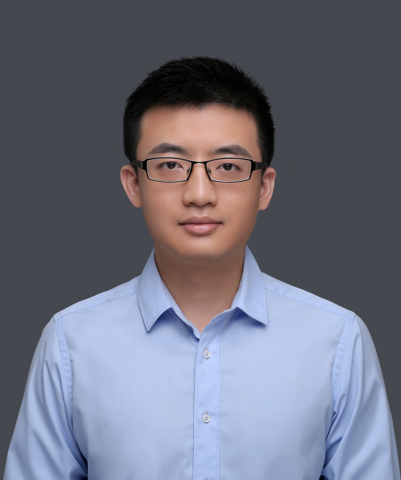
Yingying Wang is an Assistant Professor in the Computing and Software department at McMaster University , where she joined in January 2022. Her research focuses on generating expressive animations for AR/VR applications and games through interdisciplinary approaches combining Computer Graphics , Artificial Intelligence , and Human Behavior Analysis . Education : Bachelor and Master degrees from Nanjing University , Ph.D. from University of California, Davis (2017) Her research explores: Generative models for human motion style transfer Physics-based motion simulation Audio-driven character synthesis Dance choreography for virtual characters Cartoon animation perception Conversational character gesture synthesis Markerless hand motion capture Recent publications focus on 3D hand pose estimation , motion style transfer , gesture-locomotion coordination , and personality perception in virtual agents . Key methodologies include deep learning , multimodal data analysis , and real-time animation systems . Scientific contributions recognized through: $240,000 Labarge Catalyst Grant in Mobility in Aging (interdisciplinary team award) US Patent 10,796,482 (3D hand pose estimation) US Patent 9,811,937 (gesture-locomotion coordination) Teaching includes graduate and undergraduate courses in Computer Animation (CAS 737), Computer Graphics (COMPSCI 3GC3/SFWRENG 3GC3), and Software Development (COMPSCI 2ME3). Research group actively recruits Ph.D. and Master's students in graphics + deep learning domains.
David H Laidlaw is a Professor of Computer Science at Brown University, specializing in virtual reality, scientific visualization, and medical imaging. His work spans interdisciplinary applications in neuroscience, biomedical research, and educational tools. Brown University Affiliation Department of Computer Science His research focuses on: Immersive visualization for complex data analysis Diffusion MRI and neuroimaging techniques Human-computer interaction in virtual environments 3D interaction methods for scientific exploration Collaborative visualization tools for multidisciplinary teams Recent trends in his publications highlight advancements in: Graph neural networks for biomedical data Memory-efficient segmentation algorithms Perceptual studies in VR environments Annotation and analysis of placental vasculature Technological innovations in foot dynamics research He teaches courses in virtual reality design and scientific visualization, including: CSCI 1370 - Virtual Reality Design for Science CSCI 1951S - Virtual Reality Software Review CSCI 1951T - Surveying VR Data Visualization Software CSCI 2370 - Interdisciplinary Scientific Visualization
Charles Spence is Professor of Experimental Psychology at the University of Oxford and Fellow of Somerville College, where he heads the Crossmodal Research Laboratory. His work bridges cognitive neuroscience with real-world applications in multisensory design, spanning food science, human-computer interaction, and environmental psychology. Spence's research centers on how the brain integrates sensory inputs (sight, sound, touch, taste, smell) to form unified perceptual experiences. This foundational work drives innovations in sensory marketing, product design, and human factors engineering, with significant implications for optimizing everyday interactions with technology and environments. His approach combines rigorous laboratory experimentation with industry collaborations to translate theoretical insights into practical solutions. Recent publications demonstrate a clear trajectory toward applied crossmodal research, particularly in consumer contexts. His 2025 output reveals growing emphasis on digital commerce environments, nature-food perception interactions, and multisensory flavor enhancement—showcasing how sensory cues can be strategically deployed to influence behavior in retail, dining, and digital platforms. His major recognitions include: 10th Experimental Psychology Society Prize British Psychology Society Cognitive Section Award Paul Bertelson Award (Young European Cognitive Psychologist of the Year) Friedrich Wilhelm Bessel Research Award 2008 IG Nobel Prize for Nutrition (for 'sonic crisp' research) Spence maintains extensive industry partnerships, having consulted for Toyota on multisensory warning systems, ICI on environmental psychology, and Heston Blumenthal's Fat Duck restaurant on culinary innovation. His research attracts significant commercial funding through these collaborations, though specific grant details aren't publicly itemized. The Crossmodal Research Laboratory operates as an interdisciplinary hub where psychologists, neuroscientists, and industry partners investigate sensory integration mechanisms. Current projects focus on optimizing driver alert systems, designing immersive food experiences, and understanding how built environments affect cognitive performance—maintaining Spence's legacy of translating basic science into tangible human benefits.
Suren Jayasuriya is an Associate Professor at Arizona State University's The GAME School, with joint appointments in the School of Electrical, Computer and Energy Engineering (ECEE) and the Department of Arts, Media and Engineering (AME). He is also an Affiliate Faculty Member at the Mary Lou Fulton College for Teaching and Learning Innovation. His lab, the Imaging Lyceum, focuses on transdisciplinary research bridging computational imaging, computer vision, sensors, and STEAM education. Education Ph.D. Electrical and Computer Engineering, Cornell University (2017) M.S. Electrical and Computer Engineering, Cornell University (2015) B.S. Mathematics, University of Pittsburgh (2012) B.A. Philosophy, University of Pittsburgh (2012) Research Focus Dr. Jayasuriya's work integrates optics, computational photography, and machine learning to develop novel imaging systems. His research spans: Computational cameras and light transport analysis Atmospheric turbulence modeling and video restoration Neural volumetric reconstruction for sonar/radar STEAM education frameworks for K-12 teachers Philosophical aspects of imaging and representation His lab emphasizes interdisciplinary collaboration across engineering, arts, and humanities. Publication Trends Recent publications demonstrate strong focus on computational imaging (45%), AI/ML applications (30%), and educational technology (25%). Dominant themes include turbulence mitigation in videos, neural rendering for sonar/radar, sensor fusion, and AI curriculum development for middle schools. Work frequently appears in top venues like CVPR, SIGGRAPH, and IEEE Transactions. Awards Image Electronics Technology Excellence Award (IIEEJ, 2021) Best Demo Awards: IEEE ICCP 2019, MIRU 2018 Best Paper Award: IEEE ICCP 2014 ASEE Diversity Paper Finalist (2020) Teaching Honors: Fulton Top 5% Award (2019, 2021), ASU Game Changing Faculty (2021) Teaching & Advising Teaches graduate/undergraduate courses including Machine Vision (EEE 515), Minds and Machines (AME 400), and thesis supervision. Leads NSF-funded projects on computational imaging education and AI teacher training. Mentors students through the Imaging Lyceum lab with projects spanning optics, philosophy, and educational technology. Lab & Collaborations Directs the Imaging Lyceum, emphasizing Aristotle-inspired collaborative research. The lab works on: computational cameras, STEAM education, sensor development, and philosophical inquiries into imaging. Collaborates with Carnegie Mellon Robotics Institute and international partners. Funded by NSF, NEH, and industrial partners for projects in sonar imaging, heat resiliency sensing, and educational AI.
Prof. Dr. Enkelejda Kasneci is a Distinguished Professor at the Technical University of Munich (TUM), leading the Chair of Human-Centered Technologies for Learning. She holds dual affiliations within TUM School of Social Sciences and Technology and TUM School of Computation, Information and Technology. Her research integrates AI, eye-tracking, and immersive technologies to advance educational paradigms. She directs the TUM Center for Educational Technologies and chairs the MSc program 'AI in Society.' Education: PhD in Computer Science from University of Tübingen (2013), M.Sc. from University of Stuttgart (2007). Earlier roles include Assistant Professor and Dean of Studies at University of Tübingen. Research Focus: Human-centered AI applications in education, multimodal interaction design, and privacy-preserving eye-tracking. Her work bridges technology and pedagogy through projects like AI tutor PEER, VR Classroom, and Privacy-Preserving Eye-tracking. Key Projects: Leads EU-funded projects VIVA (€1.125M), DigiProMIN (€163K), and SARA Kids (€244.8K). Active in policy initiatives like Europe’s AI Imperative. Awards: TUM Heinz Maier-Leibnitz Medal (2024), Liesel Beckmann Distinguished Professorship (2022), and Südwestmetall Research Prize (2014). Grants & Advising: Over €5M in secured funding across 12+ projects. Supervises 14+ PhD researchers and mentors postdocs in AI education and HCI. Labs & Teams: IT-Stiftung EdTech Lab houses advanced VR/eye-tracking setups. Research group includes 20+ members spanning AI, HCI, and educational technology.
Kede Ma is an Associate Professor in the Department of Computer Science at City University of Hong Kong (CityUHK). He received his B.E. from the University of Science and Technology of China (USTC) in 2012, and MASc and Ph.D. degrees from the University of Waterloo in 2014 and 2017, respectively. From 2018 to 2019, he was a Research Associate with the Howard Hughes Medical Institute and New York University. Prof. Ma has been named to the Highly Cited Researchers list by Clarivate Analytics in 2024 and currently serves on the editorial boards of IEEE Transactions on Image Processing, IEEE Transactions on Information Forensics and Security, and IEEE Signal Processing Letters. Prof. Ma leads the Multimedia Analytics (MA) Laboratory, an interdisciplinary research group focused on computational vision, computational modeling of human visual perception, perceptual multimedia signal processing, quality assessment, and multimedia forensics. His research spans computational photography, high dynamic range imaging and rendering, omnidirectional video analysis, camera processing pipeline design, and artificial intelligence safety in multimedia systems. His work integrates machine learning techniques including reinforcement learning, generative modeling, self-supervised learning, and continual learning for multimedia signal processing applications. His recent publications demonstrate a strong focus on image quality assessment, deep learning for multimedia processing, and multimedia forensics. His work bridges theoretical computer vision principles with practical applications in multimedia systems. The research trends show increasing integration of foundation models with specialized multimedia processing tasks, particularly in quality assessment and security applications. Highly Cited Researchers list by Clarivate Analytics (2024) Best Paper Award at IEEE International Conference on Virtual Reality and Visualization (2021) Best Paper Runner-Up at International Joint Conference on Artificial Intelligence Workshop (2021) Top 10% Award at IEEE International Conference on Image Processing (2015) Finalist for the Governor General's Gold Medal, University of Waterloo (2017) Spotlight presentation at NeurIPS (2022) Highlight paper at ICCV (2025) Oral presentation at ICLR (2025) Prof. Ma advises numerous PhD students and postdoctoral fellows in the MA Laboratory. His research is supported by various grants enabling work in multimedia analytics, image processing, and computer vision. The laboratory maintains active collaborations with researchers at institutions including SUSTech, ZJU, and HIT. Current projects focus on advancing image quality assessment methodologies, developing more robust deep learning techniques for multimedia forensics, and exploring new approaches to HDR imaging and omnidirectional video processing. The Multimedia Analytics Laboratory maintains a strong focus on both theoretical foundations and practical applications of multimedia processing. Current research directions include integrating large language models with image quality assessment, developing more robust deepfake detection methods, and advancing techniques for continual learning in multimedia applications. The lab emphasizes rigorous evaluation methodologies and maintains multiple datasets for multimedia quality assessment research.
Dr. Mike Seymour is a Senior Lecturer at the University of Sydney Business School, specializing in Human-Computer Interaction (HCI), Digital Humans, and AI ethics. He holds a BSc, MBA, and PhD from the University of Sydney. His research focuses on photorealistic digital faces for immersive interfaces, blockchain socio-technical systems, and agile project management in creative industries. Dr. Seymour is a member of the Sydney Nano Institute and leads the Motus Lab. He has published in top journals like *Harvard Business Review*, *Communications of the ACM*, and *Information Systems Research*. His current projects include ARC-funded research on digital humans for anti-racism initiatives and adaptive AI for brain injury patients. He has received awards such as the SOAR Prize and ECR Researcher of the Year. His teaching spans CX, UX, and project management courses (e.g., INFS2040, INFS3080). Media engagements include ABC News, Sky News, and *The Australian Financial Review* for commentary on AI ethics and film industry trends. Education: BSc (University of Sydney) MBA (University of Sydney) PhD (University of Sydney) Research Themes: Real-time photorealistic avatars Deepfake ethics Agile methodologies in VFX Grants: A$450K ARC DP25 grant for anti-racism digital humans Earned $200K in industry partnerships (e.g., Epic Games) Labs/Teams: Leads the Motus Lab and collaborates with the Digital Human Research Group.
Jessica Hullman is the Ginni Rometty Professor of Computer Science at Northwestern University's McCormick School of Engineering and a Faculty Fellow at the Institute for Policy Research. Her research develops theoretical frameworks and interfaces for human-AI collaboration, focusing on uncertainty quantification, statistical modeling, and decision-making in domains like scientific research and AI-assisted analysis. Education: PhD in Information (Visualization), University of Michigan (2013) MS in Information Analysis, University of Michigan (2008) BA in Comparative Studies, Ohio State University (2003) Tableau Postdoctoral Fellowship, UC Berkeley (2015) Research Focus: Hullman's work bridges formal models of rational inference (e.g., Bayesian decision theory) with real-world applications. Key areas include: human-AI complementarity in decision-making, visualization of uncertainty, statistical reform, and LLM applications in behavioral science. Her research consistently addresses the alignment of data-driven interfaces with human cognitive capabilities. Publication Trends: Recent work demonstrates a strong emphasis on human-AI collaboration frameworks, decision-theoretic evaluation of visualizations, and methodological rigor in machine learning and social science. Key themes include uncertainty quantification (conformal prediction, privacy tradeoffs), behavioral experiments in AI-assisted tasks, and critical analyses of scientific practices. Awards & Honors: Microsoft Faculty Fellow (2019) Google Faculty Award NSF CAREER, Medium, and Small Awards Multiple best paper/honorable mention awards at top HCI/visualization venues (CHI, VIS) Funding & Labs: Principal Investigator for NSF-funded projects including HCC: Medium on visualization tools. Previously affiliated with University of Washington's Interactive Data Lab and DataLab. Current research includes NSF-supported work on improving data visualization for reasoning about analytical assumptions.
Jia-Bin Huang is an Associate Professor in the Department of Computer Science at University of Maryland, College Park , with a secondary appointment at the University of Maryland Institute for Advanced Computer Studies . His work bridges computer vision , computer graphics , and machine learning . His research focuses on 3D scene reconstruction , neural radiance fields , generative models , and multimodal foundation models . He has made significant contributions to video super-resolution , text-driven 3D modeling , and inverse rendering techniques. 15 recent publications (2024-2025) at top venues: CVPR , NeurIPS , SIGGRAPH Asia , 3DV , and ECCV Pioneering work in Urban Scene Inverse Rendering , Generative Video Editing , and 3D Human Digitization He has received multiple awards including the 3M Non-Tenured Faculty Award , ETRA Best Paper , and NSF Grants . His lab trains 12 PhD students and has graduated 18 Masters/PhD students now at institutions like Stanford , Meta , and Google .
Steven Franconeri is a Professor in the Department of Psychology at Northwestern University, leading the Visual Thinking Laboratory . His research focuses on visual thinking and communication, investigating how leveraging the human visual system can improve data understanding, memory, and decision-making in fields like science, education, and industry. Recent publications highlight his work on perceptual biases in data visualization (e.g., average estimation in line graphs , aspect ratio effects ), design principles for mitigating cognitive errors (e.g., V-FRAMER framework ), and the interplay between attention, memory, and visual communication. Key themes include visual working memory limits , grouping cues in bar charts , and dynamic visualization challenges .
Valeria Bruschi is a Researcher at the Department of Information Engineering (DII) within the Faculty of Engineering at Università Politecnica delle Marche (UNIVPM) in Ancona, Italy. Her academic profile was last updated on April 13, 2024, and she maintains her office at the Engineering Faculty on via Brecce Bianche, with contact information including phone +39 071-220-4486 and email v.bruschi@staff.univpm.it. Dr. Bruschi's research spans multiple domains within audio and signal processing, with particular expertise in spatial audio systems, automotive human-computer interaction, and biomedical signal applications. Her work bridges theoretical signal processing techniques with practical implementations across diverse fields including automotive safety systems, hearing aid technology, sleep medicine, and agricultural monitoring. She has made significant contributions to head-related transfer function (HRTF) processing, real-time audio enhancement algorithms, and innovative monitoring systems that utilize acoustic signals for various applications. Analysis of Dr. Bruschi's recent publications reveals a strong trajectory in developing practical audio processing solutions with real-world applications. Her work shows increasing integration of machine learning techniques with traditional signal processing approaches, particularly in areas like driver monitoring systems, snoring detection and cancellation, and spatial audio rendering. A notable trend is her focus on creating lightweight, real-time implementations suitable for embedded systems and practical deployment scenarios, while maintaining high performance standards. Her research consistently demonstrates interdisciplinary collaboration, connecting audio engineering with fields as diverse as automotive safety, sleep medicine, and agricultural technology. Dr. Bruschi actively contributes to advancing audio engineering through her research on equalization techniques, noise reduction systems, and immersive audio technologies. Her work on pulse compression techniques for hearing aid distortion measurement represents an important contribution to audiological assessment methodologies. Her publication record demonstrates consistent scholarly output with increasing impact across multiple application domains, reflecting her ability to translate theoretical signal processing concepts into practical engineering solutions.
Alex Kale is an Assistant Professor of Computer Science at the University of Chicago and a core member of the Data Science Institute. His research focuses on data visualization and human-computer interaction, emphasizing tools that explicitly represent users' cognitive processes during data analysis. He leads the Data Cognition Lab, exploring software for uncertainty visualization, causal inference, and decision-making support. Kale holds a PhD in Information Science from the University of Washington (2022), an MSc from UW (2020), and a BSc in Psychology with minors in Music and Philosophy (2015). Affiliations: University of Chicago, Data Science Institute, Data Cognition Lab Education: PhD, UW (2022); MSc, UW (2020); BSc, UW (2015) Research interests include human-computer interaction, statistical reasoning interfaces, and systems for managing large-scale data. He has developed tools like MetaExplorer for meta-analysis and EVM for exploratory visual modeling. Key awards include the Best Paper Honorable Mention at CHI 2023 and VIS 2021, and the Best Paper Award at VIS 2020. His work bridges visualization design, decision theory, and cognitive science, with applications in participatory budgeting, causal inference, and reproducible research. Courses taught include Visualization for Data Science and Statistical Rethinking.