Gioacchino Garofalo holds roles as Adjunct Professor in the Department of the Arts and Research Fellow/Teaching Tutor in the Department of Philosophy at the University of Bologna. His research focuses on sensorimotor integration, neurorehabilitation, and embodied cognition. Key interests include the neural mechanisms underlying language processing, motor control in developmental disorders, and the intersection of perception and action. Garofalo employs methods like MEG neuroimaging and behavioral studies to explore topics such as action verb semantics, affordance perception, and color influence on motor representation. Recent work (2022-2025) highlights studies on autism spectrum disorder, cerebral palsy, and the role of color in motor representation. He collaborates on neurorehabilitation interventions involving hand-mouth motor synergies for facial palsy patients. Garofalo's publications reflect a multidisciplinary approach blending linguistics, neuroscience, and clinical applications. His academic contributions span 15+ peer-reviewed articles since 2017, emphasizing experimental paradigms like action observation and virtual perspective-taking. No specific grants or awards are mentioned in the provided materials.
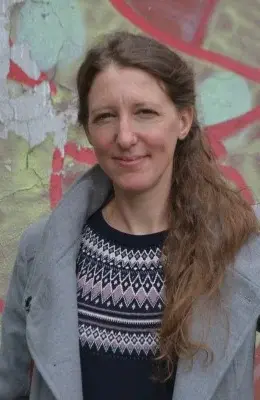
Grete Rusten is a Professor of Economic Geography at the University of Bergen's Department of Geography, specializing in industrial and regional development, circular economy, and sustainable development. Her research focuses on corporate geography, location strategies, and green economic transitions, with emphasis on Norway and Western economies. She supervises master’s theses on topics like industrial symbiosis, coworking spaces, and plastics in the circular economy. Her work integrates interdisciplinary approaches, addressing challenges such as industrial symbiosis in Årdal, greenwashing strategies, and the role of municipalities in eco-innovation. She collaborates with organizations like Årdal Utvikling and the Plastics Network at UiB. Her teaching includes supervision of over 30 master’s theses, emphasizing practical industry partnerships and policy analysis. She has published extensively on green taxation, regional development, and service economies, with contributions to books like *Design Economies and the Changing World Economy* (2011) and *Services and the Green Economy* (2016). Rusten’s research bridges theory and practice, addressing contemporary issues such as energy policy dissonance at Mongstad and the socio-economic impacts of green transitions. Her projects often involve cross-sector collaboration and regional innovation strategies, reflecting her commitment to applied sustainability research.
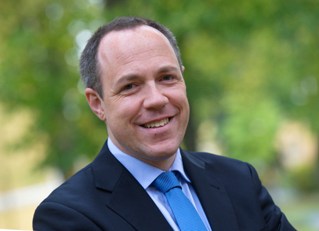
Francis de Véricourt is Professor of Management Science and the founding Academic Director of the Institute for Deep Tech Innovation (DEEP) at ESMT Berlin, where he also holds the Joachim Faber Chair in Business and Technology. He has held faculty positions at Duke University and INSEAD and was a post-doctoral researcher at MIT, reflecting a global academic footprint across France, the USA, Germany, and Singapore. His educational background includes a PhD from Université Paris VI and an engineering degree from ENSIMAG (Grenoble Institute of Technology), establishing a strong foundation in applied mathematics and computer science. Francis's research focuses on decision science, analytics, and operations, with impactful applications in healthcare, sustainability, and human-AI interaction. He investigates how mental models—'framing'—enable individuals and organizations to transcend data and generate better alternatives for decision-making. His work emphasizes cognitive agility, translational innovation, and the role of human intuition in the age of artificial intelligence. The analysis of his recent publications reveals a consistent trajectory in understanding cognitive frameworks in decision-making, the integration of AI in human contexts, and the ethical and strategic dimensions of deep-tech innovation. His writings bridge academic rigor with practical insight, targeting both scholarly and industry audiences. ENRE Best Publication Award, INFORMS MSOM Best Publication Award, INFORMS He has been a Department Editor for Operations Research and MSOM , and his academic leadership includes establishing the Center for Decisions, Models, and Data at ESMT. He has received multiple teaching awards for his work with MBA and Executive MBA students and is deeply engaged in executive education and corporate learning solutions. His book Framers , published by Penguin Random House and listed among the Financial Times' Best Books, has amplified his influence in both academic and public spheres. Francis leads DEEP—the Institute for Deep Tech Innovation—which fosters research, education, and entrepreneurial action in areas like AI, quantum computing, and biotechnology. The DMD Center, now integrated into DEEP, explores how modeling and representation enhance decision-making beyond data. These initiatives reflect his commitment to cultivating cognitive and entrepreneurial capabilities within scientific and business communities.
Lendel Narine serves as an Extension Associate Professor within the Youth Programs Department at Utah State University Extension, based at the Logan Campus. His role centers on evaluation and reporting for statewide extension initiatives, focusing on evidence-based program development and impact assessment across Utah's diverse communities through rigorous methodological frameworks. Dr. Narine's educational foundation includes: PhD in Agricultural Education and Communication, University of Florida (2018) MS (M.Phil.) in Agricultural Economics, The University of the West Indies (2013) BS in Agribusiness Management, The University of the West Indies (2010) His research specializes in quantitative evaluation methodologies including competency modeling, outcome metrics, and cost-benefit analysis, with growing emphasis on behavior change mechanisms and diversity-integration frameworks. He applies the Ranked Discrepancy Model extensively for needs assessment in agricultural and youth programming contexts. Analysis of his 2024-2025 publications reveals three dominant research trajectories: food/financial security programming in Utah communities, innovative evaluation frameworks for extension services, and workforce development through emerging technologies like AI. These works consistently employ advanced statistical methods to address critical issues including climate adaptation and health disparities. His award portfolio features 13 major honors including: Distinguished Team Award (2023) Susan Barkman Award for Research and Evaluation (2023) Outstanding Article of the Year (2020) Visionary Leader Award (2020) Best Research Poster (2019) Early Career Service (2021) New Specialist Award (2022) Excellence in 4-H Citizenship Programming (2023) Communication Award: Educational Publication (2022) Florence Hall Award (2022) Innovative Program (2022) Don Dean Felker Financial Management Award (2023) Excellence in Workforce Development Programming (2023) Dr. Narine advises graduate students through ongoing mentorship since 2019 and has evaluated USU Extension's internal funding mechanisms including the mini-grant program. His grant leadership spans civil rights compliance initiatives and Western regional evaluation capacity building projects addressing organizational advancement and diversity metrics. He actively directs multiple extension teams including the Climate Adaptation Intern Program, CORE Professional Development, and Civil Rights Compliance initiatives, while contributing to multi-state collaborations on leadership development and generative AI applications in extension education through the Western Extension region.
Tuğba KANMAZ is an Assistant Professor at Kırşehir Ahi Evran University, Faculty of Education, Department of Basic Education since 2024. Previously, she held academic positions at Kütahya Dumlupınar University from 2018-2024, including roles as Department Head and Vice Dean . PhD in Preschool Education (Gazi University, 2023) Master's in Preschool Education (Gazi University, 2017) Bachelor's in Primary Education (Muğla Sıtkı Koçman University, 2014) Her research focuses on Preschool Education and Early Childhood Education , with emphasis on Computational Thinking , Creative Drama , and Technology Integration . Her work explores: Robotics and coding education for preschoolers Peer relationships and bullying prevention Movement programs for children with disabilities Parental involvement in digital education 21st-century skills in early childhood Recent publications analyze trends in drama-based pedagogy, coding tools like ScratchJr, and pandemic-induced learning losses. Awards include the 2023 Academic Incentive Award and 2022 Best Oral Presentation at international conferences. Collaborations span institutions including Gazi University and Kafkas University.
Dr. Bayram Bozkurt currently serves as an Assistant Professor at the Department of Educational Sciences, Faculty of Education at University of Gaziantep. His academic journey includes a PhD in Educational Administration (2016-2018), an MA in Educational Sciences (2012-2014), and a BA in Science Education (2003-2007) from Çukurova University. His research focuses on educational leadership, social justice in education, teacher motivation, and organizational behavior in schools. He has supervised 8 theses and published 9 book chapters, with recent work exploring topics like Social justice in migrant education Instructional supervision practices Communication competencies of administrators Multi-dimensional value perceptions Scientific contributions include 33 peer-reviewed articles and 26 conference papers, with 15 most recent articles spanning 2023-2025. His work has been recognized with two Public Success Certificates (2020, 2021). Professional experience includes 12 years in the Turkish Ministry of National Education (2008-2020) as a science teacher and vice principal, alongside TÜBİTAK project instructor roles.
Mieke Cardol serves as an applied research professor in 'Disability Studies; Diversity in Participation' at the Research Centre Innovations in Care, Rotterdam University of Applied Sciences. Her work bridges academic research with practical healthcare applications, focusing on systemic barriers to inclusion and innovative solutions for marginalized populations. Dr. Cardol earned her PhD from the University of Amsterdam in 2001 with a dissertation titled 'Autonomy and participation in medical rehabilitation,' building on her foundational career as an occupational therapist in rehabilitation medicine. This clinical background informs her participatory research methodology. Her research program critically examines societal structures through the lens of Disability Studies, with core emphases on social participation, relational autonomy, and inclusive design across healthcare, education, and community settings. She challenges deficit-based models by centering lived experiences of people with disabilities, particularly in aging, youth transitions, and creative expression contexts. Analysis of her 14 most recent publications reveals a methodological commitment to participatory approaches like photovoice and narrative inquiry, with recurring themes of citizenship, ethical care practices, and co-creation of tools such as the 'My Path' instrument. Her work spans neurodiversity, cerebral palsy, mental health, and inclusive arts, consistently advocating for policy shifts toward genuine societal belonging. Dr. Cardol actively supervises master's students, honours candidates, interns, and PhD researchers while leading multiple collaborative projects including 'ST-RAW Academic Collaborative Centre' for youth care access, 'Diversity in Career Trajectories' for disability-inclusive employment, and 'Citizenship and aging with CP.' Her grant portfolio demonstrates strong partnerships with disability organizations and government bodies. She leads the 'Disability Studies; Diversity in Participation' research group, which operates as a nexus for transdisciplinary collaboration with Disability Studies in the Netherlands, BOSK/VGR disability associations, Platform EMG parent networks, Horizon/Cardea child welfare organizations, Rotterdam municipality, Yulius/Pameijer care providers, Rijndam rehabilitation centers, UWV Rotterdam, and Ghent University. This ecosystem enables real-world testing of inclusive frameworks while training future healthcare professionals.
Professor Dr. Peter Tillmann is a Research Professor at the Halle Institute for Economic Research (IWH) since June 2012 and Professor of Monetary Economics at Justus-Liebig-University Giessen. His work focuses on monetary policy , empirical macroeconomics , and financial markets , with a particular emphasis on policy communication, geopolitical impacts, and supply chain dynamics. Current affiliations: Halle Institute for Economic Research (IWH), University Giessen Research themes: Monetary policy transmission, fiscal-political discourse, geopolitical risk, supply chain economics Key collaborations: Albina Latifi, Viktoriia Naboka-Krell, David Finck, Sinem Kandemir Media coverage: Financial Times, Reuters, FAZ, Süddeutsche Zeitung Recent publications examine the emotional dimensions of monetary policy , geopolitical tensions in corporate boardrooms , and asymmetric inflation responses to global shocks . His work bridges theoretical insights with empirical analysis across diverse economic contexts. Contact: peter.tillmann@wirtschaft.uni-giessen.de | Affiliations: Justus-Liebig-University Giessen , IMFS Frankfurt , IWH Halle
Johannes Schöning is a Professor of Human-Computer Interaction at the University of St. Gallen, where he leads a research group focused on developing novel user interfaces that empower individuals and communities with data-driven decision capabilities. His work bridges rapidly advancing technologies with human needs across diverse contexts including geographic information science, public health, medical applications, and extreme environments such as space missions. He publishes extensively at premier HCI venues including ACM CHI, MobileHCI, and DIS, as well as in interdisciplinary journals like NATURE and PLOS ONE. Professor Schöning's research interests center on understanding the interplay between technology and human activities through rigorous methods from AI, computer graphics, and cognitive psychology. His work emphasizes user-centered design methodologies and mixed methods approaches to create interfaces that fit both technological possibilities and human requirements. Key focus areas include virtual and augmented reality applications, accessibility solutions, navigation technologies, and the social implications of digital interfaces in everyday life. His research mission prioritizes theoretical and practice-based inquiry to develop disruptive solutions for real-world problems. Analysis of his recent publications reveals strong trends in virtual reality applications for emotional regulation and accessibility, with increasing emphasis on generative AI integration, environmental awareness, and space-related HCI challenges. His work consistently demonstrates interdisciplinary collaboration across computer science, psychology, geography, and medical fields, with publications showing growing interest in social implications of technology, particularly regarding navigation systems and their externalities. His scientific contributions have been recognized with numerous awards including: Best Presentation Award at IEEE VR 2023 Best Paper Award & Accessibility Award at Interact 2019 10 Year Impact Award 2021 Multiple Honorable Mention Awards at top conferences Professor Schöning actively mentors students across bachelor, master, and PhD levels, with his lab seeking candidates interested in the intersection of HCI, geoinformatics, and ubiquitous computing technologies. He emphasizes creating a 'detox-free academic environment' that focuses on meaningful teaching and research outcomes rather than academic pressures. His group frequently collaborates with international researchers and institutions on projects spanning medical applications, space exploration interfaces, and public health technologies. The research laboratory led by Professor Schöning maintains strong interdisciplinary connections across multiple domains. Current projects include developing AI-powered wearables for blind and low vision users, exploring VR applications for emotional regulation, investigating navigation technologies' social impacts, and creating interfaces for space mission contexts. The lab's work on CubeSat control software and plant visualization for space greenhouses demonstrates their unique focus on extreme environment applications, while their research on citizen participation through generative AI shows engagement with contemporary societal challenges.
Thorsten Hens is a Swiss Finance Institute Professor of Financial Economics at the University of Zurich and Adjunct Professor at the University of Lucerne and Norwegian School of Economics (NHH). He studied at Bonn and Paris, and previously held academic positions at Bielefeld and Stanford University. His research focuses on Behavioral Finance , Evolutionary Finance , Fintech , and Sustainable Finance . Co-founder of Behavioral Finance Solutions (a UZH-HSG spin-off) and the Swiss Fintech Innovations Association Founder of the UZH Blockchain Center Holds mandates in pension funds, insurance companies, and banks Regular speaker at practitioner conferences His recent publications explore topics such as ESG-CAPM, personality-driven investment styles, evolutionary portfolio dynamics, and experimental retirement decision-making. He has co-authored over ten books and published more than eighty peer-reviewed articles. Thorsten Hens' work bridges academic rigor with practical applications in wealth management , asset management , and financial technology .
Marc H. Schieber, M.D., Ph.D. is a Part-Time Professor in the Department of Neurology at the University of Rochester School of Medicine and Dentistry. He leads the Schieber Lab, which focuses on neural control of hand and finger movements and brain-machine interface technology development. His research has significant implications for restoration and repair of damaged neurological function. Dr. Schieber's educational background includes both an MD and PhD from Washington University School of Medicine (1982), followed by a Neurology residency at Massachusetts General Hospital (1983-1986) and an Internal Medicine internship at Barnes-Jewish Hospital South (1982-1983). His academic journey was supported by prestigious fellowships including the Medical Scientist Training Program Fellowship (1974-1982). His research primarily investigates how the brain controls fine finger movements used in activities like typing, playing musical instruments, or performing delicate surgery. More recent work explores the combination of reaching, grasping, and manipulating. His lab studies how the brain controls complex muscle movements to achieve required actions, with applications to brain-machine interface technology. His publications reveal consistent focus on neural coding, motor cortex function, and the development of neuroprosthetics for restoring lost function. Dr. Schieber's work shows strong trends in understanding neural representations of movement, cortical organization for motor control, and translating these findings to practical brain-computer interfaces. His recent publications (2023-2025) increasingly focus on intracortical microstimulation for injecting information into cortical networks, neural synchrony in sensorimotor systems, and computational approaches to motor control. Javits Investigator Merit Award (2003-2010) Clinical Investigator Development Award (1986-1989) Phi Beta Kappa (1974) A.B. summa cum laude (1974) Medical Scientist Training Program Fellowship (1974-1982) Dr. Schieber has mentored numerous graduate students and postdoctoral fellows who have gone on to successful careers in academia and industry. His lab has received substantial research funding supporting investigations into neural control mechanisms and brain-machine interface development. The Schieber Lab has been an important contributor to understanding distributed motor control in the cortex and translating these findings to potential clinical applications for neurological rehabilitation. His laboratory work has consistently examined the distributed nature of motor control in the cortex, challenging traditional views of somatotopic organization and demonstrating how multiple cortical areas work together to produce coordinated movements. Current research directions include investigating how to effectively inject information into cortical networks using microstimulation and understanding the computational principles underlying motor control.
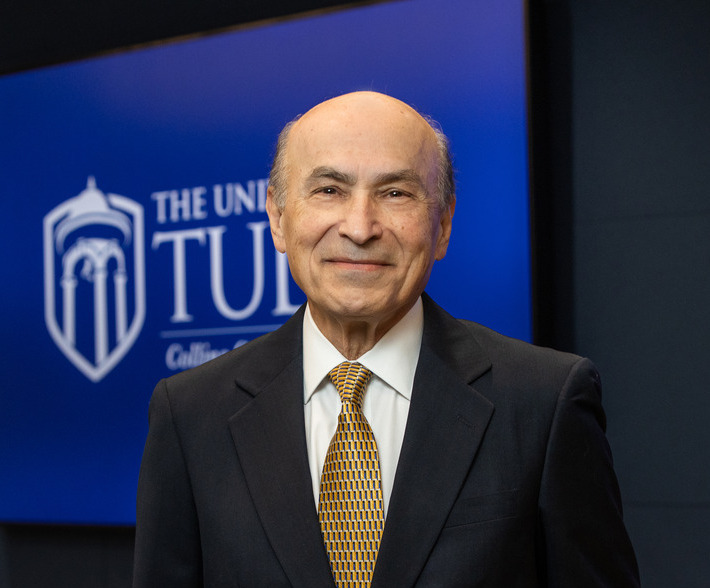
Saeed Samiee serves as the Collins Professor of Marketing and Chair of the Management & Marketing department at the Collins College of Business, The University of Tulsa. He teaches graduate, undergraduate, and professional development courses focused on marketing strategy and international business, while maintaining active international engagement through visiting scholar positions and executive education programs. His academic credentials include a Ph.D. from The Ohio State University, an MBA from California State University-Long Beach, and a B.S. from Brigham Young University. Professor Samiee's research centers on international business, international marketing, and marketing strategy. His work critically examines country-of-origin effects, global branding dynamics, and strategic responses to international market complexities. He investigates how consumer perceptions of product origins influence global brand strategies and how firms navigate cultural and operational challenges in international markets. Analysis of his recent publications (2020-2024) reveals a strong emphasis on bibliometric examinations of emerging market MNEs, meta-analyses of country image perceptions, and exploration of disruptive forces in global marketing. His work consistently bridges theoretical frameworks with practical applications, particularly in digital transformation and cross-cultural consumer behavior. His distinguished awards include: Mayo Research Excellence Award (4 times) from Collins College of Business Journal of International Marketing’s Hans Thorelli and Tamer Cavusgil Awards Significant Contributions to Global Marketing Award (Lifetime Achievement) from AMA Global Marketing Division (2017) TU’s Outstanding Researcher Award (2022) Professor Samiee holds significant editorial leadership as Area Editor for Journal of International Business Studies and Associate Editor for Decision Sciences Journal, while serving on 13 editorial boards. His fellowship in the Academy of International Business and distinguished fellowship in the Academy of Marketing Science reflect his scholarly impact. As department chair, he shapes academic direction and mentorship within the Management & Marketing program. His professional network extends through extensive editorial service and society fellowships, though specific research labs or dedicated teams are not documented in available sources.
Dr. Amber Dumford is a Professor at the University of South Florida in the College of Education , specializing in Higher Education and College Student Affairs . She holds a Ph.D. in Higher Education (with a cognate in Sociology) from Pennsylvania State University , a M.P.A. from Indiana University Bloomington , and a B.S. in Mathematics from the same institution. Teaches courses in Student Affairs Assessment, College Teaching, and Globalization in Higher Education Currently serves on doctoral dissertation committees Active in research on student engagement, gender issues, and data quality in higher education Reviews for 20+ peer-reviewed journals and serves on editorial boards of top journals Consultant for National Center for Educational Statistics and institutions in US/Canada Research Interests include: Factors influencing student engagement and learning Gender disparities in higher education Arts and engineering education outcomes Creativity in academic settings Quantitative reasoning and assessment Data quality in educational research Food insecurity among diverse college students Publications reflect trends in student engagement , career readiness , data-driven educational practices , and equity in higher education . Her recent works focus on socioecological factors affecting food pantry usage and validity of survey instruments in measuring student behaviors. Service Contributions : Active member of university committees and councils Board member of Research in Higher Education and Journal of College Student Development Statistical modeling consultant for National Center for Educational Statistics Teaching Experience spans traditional mathematics instruction (2002-2014) to higher education seminars and globalization studies at USF. She plans to develop data analytics and institutional research courses.
Howard Nusbaum is a Professor in the Psychology Department within the Social Sciences Division at the University of Chicago. His research has focused since 1986 on perceptual learning, attention, and working memory, with significant contributions to understanding speech perception, auditory processing, and more recently, the science of wisdom. His laboratory employs a wide range of methods including high-density EEG, fMRI analysis, auditory brainstem recordings, and sophisticated speech analysis tools. Education: BA in Computer Science and Psychology from Brandeis University (1976) PhD in Cognitive Psychology from State University of New York at Buffalo (1981) Postdoctoral training in Speech, Hearing, and Sensory Communication from Indiana University (1984) Nusbaum's research investigates how humans learn and process speech and other auditory information, with particular emphasis on the role of attention, working memory, and sleep in perceptual learning. His laboratory has made groundbreaking contributions, including the first scientific evidence for sleep consolidation of generalized learning, the first behavioral evidence for functional effects of sleep consolidation in songbirds, and the discovery that adults can learn perfect pitch with this learning dependent on working memory capacity. His recent work has expanded to explore the cognitive neuroscience of wisdom, investigating how self-transcendent experiences contribute to wise reasoning. Nusbaum's publication record demonstrates consistent high-impact research across cognitive neuroscience, with recent work spanning from basic mechanisms of speech perception to broader questions about wisdom and decision-making. His research shows an evolving trajectory from foundational work on perceptual learning and speech processing toward more complex questions about higher cognitive functions and their neural underpinnings, with publications extending into 2025. Scientific Awards: 2018 Stella M. Rowley Professor of Psychology 2014 Fellow, The Psychonomic Society 2012 Llewellyn John and Harriet Manchester Quantrell Award for Excellence in Undergraduate Teaching 2009 Fellow, Association for Psychological Science 2007 Future Faculty Mentorship Award Nusbaum has successfully mentored numerous graduate students and postdoctoral trainees who have gone on to become tenured faculty at prestigious institutions worldwide. His NIH-funded research on 'Structure and Process in Speech Perception' has supported his work for many years. His laboratory provides comprehensive training in behavioral research methods, signal processing, statistical analysis, human electrophysiology, and computational modeling. The APEX (Attention, Perception, and Executive-function eXperience) lab at the University of Chicago, which Nusbaum directs, is equipped for high-density EEG measurements, fMRI data analysis, auditory brainstem recordings, and a wide range of speech analysis tools. The lab conducts research with human participants, including nap studies with polysomnography. Nusbaum also contributes to the UChicago Center for Practical Wisdom, reflecting his expanding research interests into the cognitive neuroscience of wisdom.
Dr. Sara Keller is a Postdoctoral Fellow at the Max-Weber-Kolleg (University of Erfurt), specializing in Architectural Theory and South Asian Urban History . Her current habilitation thesis "Water Urbanities..." (submission Feb 2025) explores medieval South Asian water architecture. University of Erfurt: Postdoctoral Fellow (2025) Max-Weber-Kolleg: Researcher in Architectural and Cultural Studies Research Focus : • Water Urbanities – analyzing water spaces as socio-political-religious urban nodes • Architectural Resonance – investigating built environments as 'living organisms' • Inter-cultural Connections – tracking Mediterranean-Indian Ocean knowledge transfers Publication Trends : Her 15 recent works (2016–2024) establish a water-centric urban theory for South Asia, combining archaeological analysis with cultural geography , epigraphic studies , and comparative architectural philosophy (Vāstu śāstra, Islamic traditions).