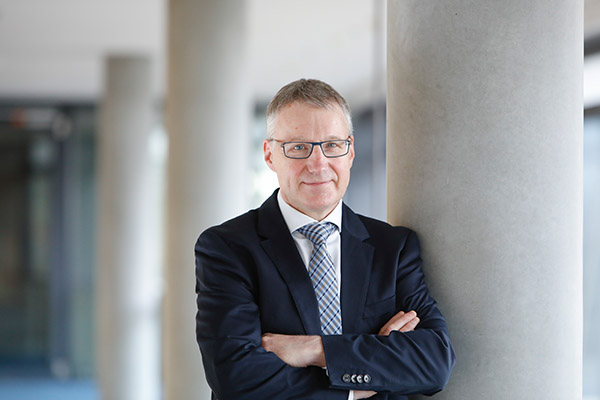
Prof. Dr. Martin Abraham holds the Chair of Sociology and Empirical Social Research at Friedrich-Alexander University Erlangen-Nuremberg (FAU). After earning his doctorate and habilitation in sociology, he served as a research assistant at the University of Leipzig, a visiting professor at the University of Munich, and a full professor at the University of Bern before returning to FAU in 2007. His work spans labor market sociology, organizational research, and social norms, with a focus on reputation dynamics, family-work reconciliation, and digital monitoring systems. Education: University of Erlangen-Nuremberg (doctorate) Academic Journey: University of Leipzig, University of Munich (visiting), University of Bern (2005-2007), FAU (2007-present) Research Collaborations: Institutions in Germany, UK, Netherlands, USA His research explores labor market sociology through lenses like: Occupational structures and mobility Regional labor market dynamics Reputation mechanisms in economic contexts Family-work balance and gender norms Acceptance of digital monitoring systems Experimental analysis of social norms Key publication trends include experimental methods (factorial surveys), social norm analysis in tax/labor contexts, and digital workplace technologies. He frequently collaborates with researchers like Claus Schnabel, Christian Schnabel, and Markus Rudolf. As a leader in FAU's Work in Transition research focus area, he works with strategic partners like the IAB and LASER center, addressing global labor market shifts from sociological and policy perspectives.
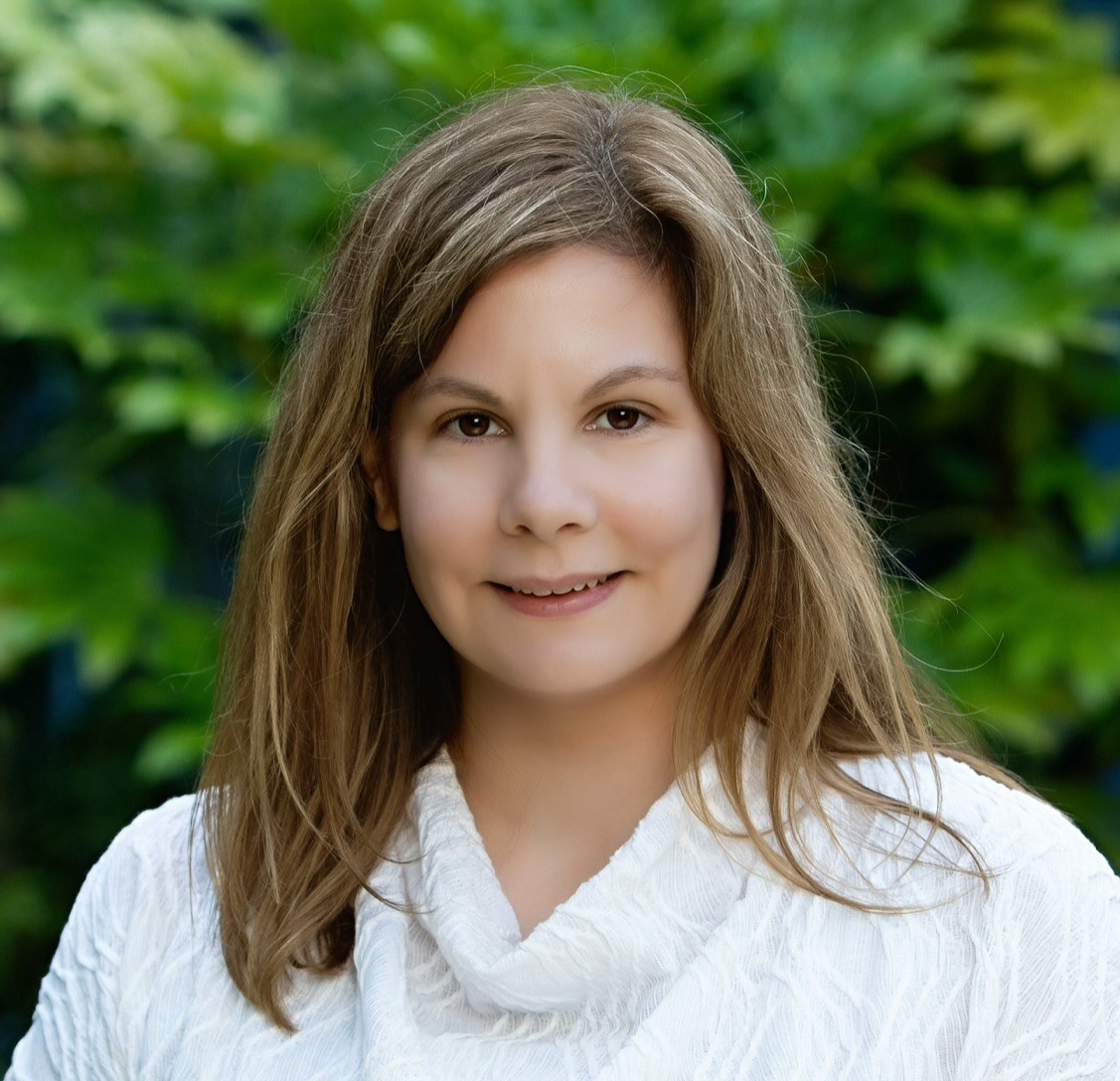
Prof. Dr. Gesine Bär serves as Vice President for Research, Cooperation and Continuing Education at Alice Salomon Hochschule Berlin (ASH Berlin), where she also leads the Competence Center for Integration and Health and holds the professorship for Participatory Approaches in Social and Health Sciences. Her academic work bridges theoretical research with practical community applications in health promotion and participatory methodologies. She earned her Doctorate in Health Sciences/Public Health from Bielefeld University, a Diploma in Sociology from the Free University of Berlin, and participated in the International Graduate School at Stockholm University. As an alumna of both the German Academic Scholarship Foundation and the DAAD/Swedish Institute, her academic foundation spans multiple international contexts. Prof. Bär's research program centers on participatory health research methodologies , health inequality , and community-based health promotion . Her work emphasizes developing and implementing participatory approaches that address social determinants of health, particularly in urban environments. She has pioneered innovative methods for community capacity assessment and participatory quality development, focusing on inclusive approaches that engage diverse community members in health research and planning processes. Her research consistently addresses how to translate academic knowledge into practical health promotion strategies that communities can implement and sustain. Her recent publications reveal a strong thematic focus on methodological development in participatory research and its practical application in community health settings. The articles demonstrate consistent attention to community capacity building, methodological innovation in participatory research, and the translation of research findings into practical health promotion strategies across various settings including urban communities, kindergartens, and health care systems. Her work increasingly addresses sustainability of participatory approaches beyond individual research projects. Dissertation Prize 2015 of the German Society for Social Medicine and Prevention AOK Award for Dissertations at the Faculty of Health Sciences at Bielefeld University Prof. Bär has secured significant external funding for numerous research projects including the KLuG Competence Center for "Living Environments and Health: Participatory Methods," the ElfE series (Parents Ask Parents) focusing on parental participation in kindergarten transitions, and various projects related to participatory health research. She has established strong partnerships with municipal agencies, health organizations, and community groups to implement and evaluate participatory health initiatives, with particular emphasis on translating research findings into sustainable community practices. She leads the Competence Center for Integration and Health at ASH Berlin and has been instrumental in developing the PartNet network for participatory health research. Her work with the PartNet Lernvideos project has created innovative educational resources for participatory research methods. She also serves on several advisory boards including the Social Science Advisory Board of the SenWGPG for increasing vaccination rates, the Advisory Working Group of the Cooperation Network "Health Equity," and as Spokesperson for the network "PartNet - Participatory Health Research" and DGSMP Department 4's Working Group on Participatory Health Research.
Dr. Stephen G. Swisher serves as Division Head of Surgery and Professor in the Department of Thoracic and Cardiovascular Surgery at The University of Texas MD Anderson Cancer Center. He also holds the Charles A. LeMaistre Distinguished Chair in Thoracic Oncology and co-leads the lung cancer initiative within MD Anderson's Moon Shots Program. His primary research interests include: Thoracic Surgical Oncology Lung Cancer Esophageal Cancer Gene Therapy Clinical Trials Cardiothoracic Surgical Techniques With over 350 peer-reviewed publications, Dr. Swisher's research has pioneered gene therapy clinical trials in lung and esophageal cancer. His work has been primarily supported by the Department of Defense and the National Institutes of Health/National Cancer Institute, focusing on translating research findings into improved surgical outcomes for cancer patients. His professional honors include: Charles A. LeMaistre Distinguished Chair in Thoracic Oncology (2014) Robert F. Fly Professorship of Surgical Oncology Consistent recognition among top doctors and surgeons in Texas and nationally Dr. Swisher holds significant leadership positions including: Member, Lung Cancer Working Group of the Southwest Oncology Group ALCHEMIST Core Committee member, NCI's Cancer Therapy Evaluation Program Member, NCI Thoracic Malignancies Steering Committee His career at MD Anderson spans nearly three decades, beginning as an assistant professor in 1996, achieving associate professor in 2001, early promotion to full professor in 2005, department chair in 2007, and Division Head of Surgery in 2014.
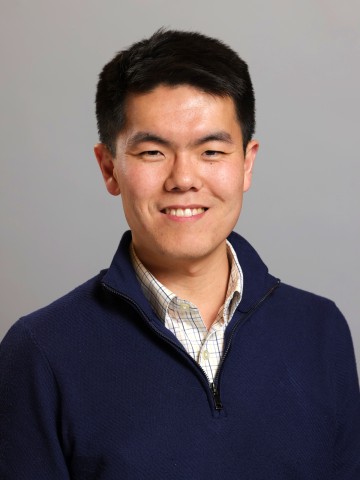
Steven Zhou is an Assistant Professor of Psychological Science at Claremont McKenna College, where he leads the STATS Lab (www.statslabatcmc.com). His academic work bridges quantitative methods with psychological research, focusing on leadership, personality, and vocational psychology. With methodological expertise in psychometrics, machine learning, and data visualization, he actively contributes to both academic and practitioner communities through research, teaching, and consulting. Dr. Zhou's educational background includes: PhD in Organizational Psychology + Certificate in Computational Social Sciences from George Mason University BA in Organizational Psychology + Certificate in Conflict Resolution from Pepperdine University His research program centers on developing and refining psychological assessments while investigating bias in measurement systems. Dr. Zhou specializes in forced-choice personality assessments, leadership evaluation methodologies, and career calling research. His work consistently addresses the gap between academic research and practical application in organizational settings, with recent projects incorporating large language models and agent-based simulations to study complex behavioral phenomena. Dr. Zhou's publication record shows a clear trajectory toward increasingly sophisticated methodological approaches to organizational psychology questions. His recent work demonstrates growing integration of computational techniques (machine learning, NLP) with traditional psychological research, while maintaining strong connections to practical organizational applications. The research consistently addresses measurement challenges in leadership assessment and career development. His notable scientific achievements include: 2025 Jablin Dissertation Award from the International Leadership Association and Jepson School of Leadership Studies 2025 Chapman Dissertation Award from the Network of Leadership Scholars and Academy of Management 2023 Dissertation Research Award from the American Psychological Association 2022 Free Inquiry Grant from the Foundation for Individual Rights and Expression 2022 Graen Grant for Student Research on Leaders and Teams from SIOP 2021 Kenneth E. Clark Student Research Award from ILA and Center for Creative Leadership 2021 Outstanding Graduate Student Instructor from GMU Department of Psychology Dr. Zhou actively mentors both graduate and undergraduate students, with numerous student co-authors across his publication record. He has secured nearly $40,000 in external research funding to support his work on leadership assessment and psychometric methodology. His professional service includes editorial roles for multiple journals and leadership positions within the Society for Industrial and Organizational Psychology. As director of the STATS Lab, Dr. Zhou leads a research team focused on applying quantitative methods to understand leadership, career development, and personality. The lab's five research pillars include Psychometrics & Measurement Science, Bias in Measurement & Analytics, Leadership Assessment & Team Dynamics, Integrating Novel Methods into Research, and Career Development & Vocational Psychology, all emphasizing both methodological rigor and practical application.
Joshua Smith is a Professor at Loyola University Maryland's School of Education, where he served as Dean from 2012-2021. He was a Visiting Professor at National Chengchi University in Taiwan from 2021-2023, teaching international higher education and design thinking. Education: Ph.D. in Educational Psychology and Methodology (University at Albany, 2002) M.S. in Educational Psychology and Statistics (University at Albany) B.A. Cum Laude in U.S. History with a minor in Sociology (University at Albany) His research focuses on educational transitions (middle school to high school, high school to college), student engagement, and organizational effectiveness. He collaborates with schools and community organizations to design and evaluate educational programs. Recent scholarship trends highlight his work in post-pandemic higher education innovation (e.g., student agency, design thinking), trauma-informed care in educational settings, international collaboration in education, and computational methods in interdisciplinary fields like renewable energy and environmental policy. No scientific awards or honors were explicitly mentioned in the text. Joshua Smith has advised academic programs and partnerships but no formal advisees or grants are listed in the provided data. His affiliations include Loyola University Maryland and National Chengchi University (visiting role).
Tuan Nguyen is an Associate Professor of Educational Leadership and Policy Analysis at the University of Missouri, affiliated with both the Truman School of Government and Public Affairs and the College of Arts and Science. His research focuses on teacher leadership, school improvement, teacher labor markets, and the impact of financial aid on postsecondary education outcomes. He maintains an active public engagement presence through policy briefs, media commentary, and a dedicated website analyzing U.S. teacher shortages (teachershortages.com). Nguyen's work examines systemic challenges in educator recruitment and retention, particularly in rural and high-need settings. His research integrates policy analysis with practitioner insights, addressing issues like the distribution of qualified teachers, the effects of federal initiatives (e.g., Race to the Top), and the interplay between teacher working conditions and attrition. He has contributed to national conversations on STEM teacher shortages, special educator workforce diversity, and the role of financial aid in student persistence. His media engagements include appearances on PBS, NBC Today Show, and AAAS SciLine, where he discusses teacher turnover, merit pay, and rural education challenges. Nguyen emphasizes equity-focused research, advocating for evidence-based policies to address disparities in access to high-quality educators. His teaching philosophy emphasizes diverse pedagogical approaches and has been recognized through strong student evaluations across secondary and graduate education contexts.
Dr. Saima Ahmad is a Senior Lecturer at RMIT University's School of Management, focusing on cultivating sustainable work environments and investigating leadership's impact on individual well-being. With a PhD in Management from Monash University, her research spans organizational behavior, workplace dynamics, and leadership ethics, addressing critical issues such as bullying, resilience, and digital disruption. She coordinates courses in the RMIT MBA program and serves on editorial boards for the European Management Journal and PLoS One . Education: PhD in Management from Monash University Her research emphasizes positive leadership styles and their influence on employee engagement and organizational sustainability. Recent work explores servant leadership in the construction industry and the role of green human resource management in fostering environmental citizenship. She has pioneered studies on workplace bullying and its mitigation through ethical leadership frameworks. Her scientific awards include the 2022 RMIT GSBL Dean’s Merit Award for HDR Leadership Excellence for her contributions as HDR Coordinator (2022-2024), where she enhanced PhD completion rates and student support systems. She actively supervises Masters and PhD research candidates, focusing on leadership and organizational behavior.
Professor JaneMaree Maher is a leading academic in gender studies and sociology at Monash University's School of Social Sciences. She holds a Professorship in the Centre for Women's Studies and Gender Research and is a key researcher at the Monash Gender & Family Violence Prevention Centre. Her work focuses on gendered violences (e.g., family violence, hate crime) and family dynamics, particularly how neoliberal discourses shape health advocacy and caregiving roles. She has led over 20 research projects, including studies on migrant women’s safety, adolescent family violence prevention, and policy reforms. Maher is also President of the Australian Women's and Gender Studies Association (2016–2018). Research Interests: Gendered violence and criminal justice responses Family dynamics and neoliberal health discourses Policy evaluation (e.g., Victoria’s Family Violence Royal Commission) Her 141+ publications span criminology, sociology, and policy analysis. Key awards include the Dean’s Award for Excellence in Supervision (2001, 2014) and recognition for her role in shaping Australia’s family violence policies. Maher has supervised over 30 PhD/Master’s students, emphasizing critical gender scholarship. Current projects include addressing obesity in disadvantaged communities and enhancing safety frameworks for migrant women. Labs/Teams: Active in the Monash Gender & Family Violence Prevention Centre and collaborates with government agencies (e.g., Victorian Courts, Uniting Communities).
Chyllis Scott is a Professor in the Department of Teaching and Learning within the College of Education at the University of Nevada, Las Vegas (UNLV). Her research focuses on literacy education, particularly content-area and disciplinary literacy, academic writing, and mentoring practices for preservice and inservice teachers. Holding a Ph.D. in Curriculum and Instruction with an emphasis in Literacy Education from Texas A&M University, she examines how teacher knowledge and practices in literacy instruction can be enhanced to foster equitable educational environments. Educational Background: Ph.D. in Curriculum and Instruction (Literacy Education emphasis), Texas A&M University Dr. Scott's research centers on literacy education with specific expertise in: Adolescent and content-area literacy instruction Teacher education and knowledge development Mentoring practices in higher education Her work investigates how literacy strategies can be integrated across disciplines to promote social justice, emphasizing reflective practice and the transformation of teacher-student relationships through innovative approaches like digital writing and virtual literature circles. Analysis of her recent publications (2019-2024) reveals consistent themes in interdisciplinary literacy instruction, adaptive mentoring during crises like the pandemic, and critical examinations of rigor in teacher education. Her scholarship consistently connects literacy to equity issues, advocating for student-centered pedagogies that address systemic barriers while exploring emerging challenges in digital learning environments. Scientific Awards No awards listed in available information Dr. Scott's mentoring research indicates active engagement in teacher development, though specific grant details are unavailable. Her work on reflection, field experiences, and co-teaching models informs professional development initiatives aimed at improving teacher retention and instructional effectiveness. She contributes to academic discourse through studies on academic writing communities and digital pedagogy. Laboratory and Team Affiliations No specific research laboratories or collaborative teams documented beyond departmental affiliation
Geir Inge Hausvik is an Associate Professor at the Department of Information Systems, University of Agder. His research focuses on digital transformation in healthcare, information quality management, and e-health services. He is affiliated with the CeDiT (Centre for Digital Transformation) and Centre for e-health research groups. Key areas of expertise include healthcare service innovation, socio-technical systems design, and the practical impact of information systems research. Research Interests: His work addresses challenges in healthcare digitalization, including online screening tools, post-COVID service innovation, and smartphone adoption among older adults. He explores theoretical frameworks such as boundary spanning and Bourdieusian analysis to understand practical impacts of research. Recent studies examine AI ethics in academic writing and mediating roles in healthcare quality assurance. Publications: Over 15 peer-reviewed articles since 2015, including studies on EHR affordances (2017), information quality lifecycle (2021), and post-pandemic digital service acceleration (2025). He co-edited conference proceedings for DESRIST 2021 and contributed to influential journals like Information Systems Journal. Affiliations: Leads academic programs in Information Systems, including B.Sc. and M.Sc. courses. Active in international conferences (e.g., Hawaii International Conference on System Sciences, AMCIS). Engaged in collaborative research initiatives like the Centre for Digital Transformation. Key Contributions: Advocates for sociotechnical systems resilience beyond crisis response, investigates smartphone usage disparities among seniors, and evaluates generative AI's implications for academic integrity.
Shawn Landry is a Research Associate Professor and Director of the USF Water Institute at the University of South Florida's School of Geosciences. His research focuses on environmental equity, water resource management, and geospatial technologies, with a strong emphasis on applied projects addressing urban forests, wetlands, and land cover change. He holds a Ph.D. (2013), two M.S. degrees (2005, 1996), and a B.S. (1992) from the University of South Florida and University of New Hampshire. Key projects include the Statewide Ecosystem Assessment of Coastal and Aquatic Resources (SEACAR) and the development of decision-support tools like the Water Atlas and Tampa Tree Map. His work integrates remote sensing, machine learning, and GIS to support policy and community engagement in coastal and urban environments. Landry is a PI on multiple NSF-funded initiatives and collaborates with state agencies and municipalities on flood mitigation, urban forest resilience, and environmental justice. Education: Ph.D., University of South Florida (2013) M.S., University of South Florida (2005) M.S., University of South Florida (1996) B.S., University of New Hampshire (1992) Key Projects: RAPID Collaborative Research on urban forest resilience post-Hurricane Irma SEACAR database for coastal resource assessment Orange/Seminole County Water Atlas initiatives GIS-based tools for urban forestry and floodplain management His research outputs span over 50 peer-reviewed articles and technical reports, focusing on topics like urban tree canopy analysis, groundwater dynamics, and policy-driven environmental decision-making. Landry also teaches GIS 6355 (Water Resources GIS) and serves on committees for organizations including the American Association of Geographers and the Tampa Bay Estuary Program.
Kari Stefansen is a Research Professor in the Youth Research department at OsloMet – Storbyuniversitetet, affiliated with the Centre for Welfare and Labour Research. She holds a PhD in Sociology from the University of Oslo (2011), focusing on parenthood as a classed phenomenon. Her research spans parenthood, sexual violence, domestic violence, and youth culture, with a strong emphasis on institutional mechanisms and policy implementation. Key projects include the KnowMo project on parenting, studies on masculinity and youth inequality, and the Barnahus Model evaluation. She leads the Digital Sexual Violence and Sexual Culture in Youth projects, examining digital risks and sexual health. Ongoing work includes FRAGMEN (masculinity studies) and LIFECHANCES (inequality processes). Her publications explore institutional barriers in Barnahus, sexual assault narratives, and youth sport dynamics. She co-authored Seksuell vold: En samfunnsvitenskapelig innføring (2018) and edited Justice and Recovery for Victimised Children (2024). Projects like UngVold 2023 provide national data on youth violence trends. Stefansen’s work bridges criminology, sociology, and policy, addressing societal challenges through empirical research. She collaborates with CURE Oslo and NOVA’s Domestic Violence Program, contributing to evidence-based interventions and legal reforms.
Colleen Horn is a Lecturer in Education and Coordinator of Education Studies Work Placement at Trinity College Dublin. She holds a Doctorate in Education (D.Ed.) from Trinity College, alongside advanced degrees in Inclusive Education, Literacy, and Finance. Her work focuses on teacher education emphasizing place-based pedagogies, clinical practices, and heritage language preservation. She leads modules on professional studies and work placements for B.Ed., PME, and BScES programs. Doctorate in Education, Trinity College Dublin Masters in Inclusive Education, Roehampton University Diploma in Education Studies (Literacy), UCD Bachelor’s in Elementary Education & Humanities, Lesley University Her research explores professional identity formation in urban teaching, pandemic impacts on educational placements, and multilingualism in Ireland. She has presented at AERA, ECER, and WERA conferences worldwide, co-authoring chapters on teacher residencies and heritage language schools. Professional roles include ELSTA’s National Executive and peer reviewing for leading journals. Grant history includes a Teaching Council of Ireland research grant (2008-2014). She actively contributes to academic communities through AERA, NYSOBE, and the Irish Teaching Council.
Sarah Hansen is an Associate Professor in the Department of Learning Sciences at Georgia State University's College of Education & Human Development (CEHD). Her expertise focuses on early intervention strategies for children with autism spectrum disorders and developmental disabilities, emphasizing parent and teacher training to enhance social communication skills in natural environments. Education: Ph.D. in Special Education (Early Intervention), University of Oregon (2016) M.A. in Early Childhood Education, Mills College (Oakland) B.S. in Psychology, University of California, Davis Research Interests: Hansen’s work centers on early childhood special education, behavioral interventions, and telehealth applications. Key areas include: Assessment and intervention for pivotal social communication skills Parent and teacher training for inclusive classroom environments Technology integration in early childhood instruction Sleep and health issues in neurodivergent children Publications Trends: Her recent work addresses telehealth-delivered interventions, autism-related sleep challenges, and inclusive STEM/social skills curricula. Themes include family-centered care, intervention fidelity, and cross-disciplinary approaches. Grants & Advising: Hansen’s research has been supported by grants focusing on accessibility and intervention effectiveness. She advises projects on topics like telehealth feasibility and parental coaching for behavioral interventions. Her work is often collaborative with institutions like the Center for Research on Atypical Development and Learning (CRADL). Labs/Teams: Affiliated with CEHD’s research centers, including the CRADL, focusing on developmental disabilities and early intervention strategies.
Soumodip Sarkar is a Full Professor at the University of Évora, Portugal, and the Coordinator of the Strategy, Entrepreneurship and Operations research group at CEFAGE. He holds a Ph.D. in Economics (Northeastern University, 1995), an M.Sc. in Economics (Northeastern University, 1991), and a B.A. in Economics (University of Calcutta, 1988). His research focuses on entrepreneurship, innovation, and international management, with a particular emphasis on frugal innovation, healthcare systems, and digital ecosystems. Key research interests include entrepreneurial ecosystems, policy formulation for innovation, and resource-constrained innovation. He has authored over 100 articles and book chapters, including works on bricolage, effectuation, and the impact of digital technologies on crisis response. Notable projects include the Alentejo Global INVEST initiative and collaborations on sustainable development through frugal innovation. He has supervised numerous doctoral and master’s theses, covering topics like microcredit for immigrant entrepreneurs, corporate entrepreneurship in service sectors, and innovation in agriculture. His work has been supported by grants from national and international agencies, including the European Union’s Horizon 2020 program. Sarkar is actively involved in policy-oriented research, such as frameworks for entrepreneurial ecosystems and strategies to enhance regional competitiveness. He also contributes to educational initiatives, including digital leadership and AI integration in management education.