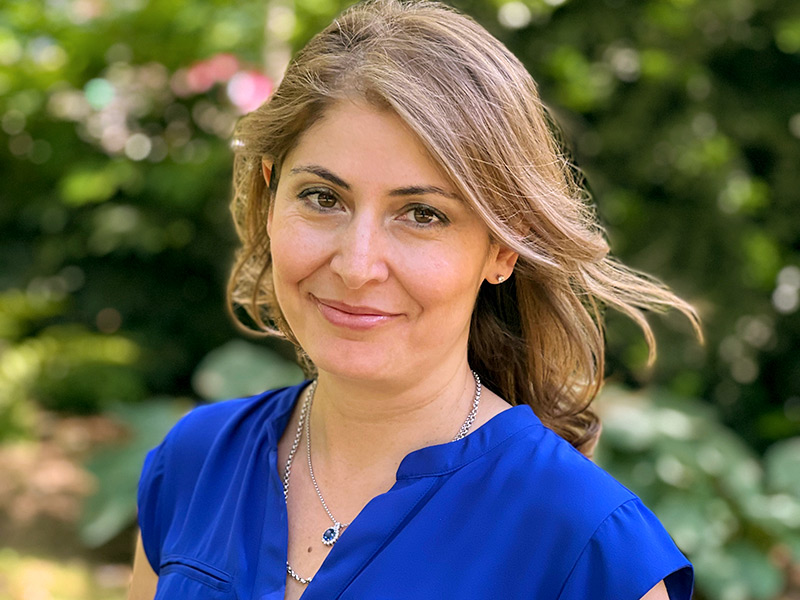
Professor Susannah Quinsee is the Vice President (Digital and Student Experience) and Senior Diversity Ambassador for Race Equality at City, University of London. She leads on digital transformation, student experience, post-pandemic educational strategies, curriculum design, and staff development. Her team oversees Library Services, Learning Enhancement, Digital Education, and collaborations across academic divisions. She is a Lego Serious Play facilitator, integrating creative methods into leadership and change management. Previously, she served as Director of Learning Development and Chair in Learning and Teaching Development. Her expertise spans online learning, student support, and large-scale institutional change. Key roles include National Teaching Fellow (2011), Learning and Teaching Excellence Ambassador (2017), and Visiting Professor at the University of Northampton. She has advised national agencies like AdvanceHE and authored widely on educational leadership, playful pedagogy, and digital strategies. Her research focuses on playful leadership and change management, addressing how institutions adapt to evolving educational landscapes. Awards include the National Teaching Fellowship and HEA Principal Fellowship, reflecting her contributions to teaching excellence and professional development.
Amy Childress is Dean's Professor of Civil and Environmental Engineering at the University of Southern California's Viterbi School of Engineering. She serves as director of the Civil and Environmental Engineering Department's environmental engineering program and leads the Center for Water Reuse (ReWater). Dr. Childress has been with USC since summer 2013 and previously served as professor and chair of the Civil and Environmental Engineering Department at the University of Nevada, Reno. Dr. Childress earned her educational degrees from the following institutions: Bachelor's Degree in Civil Engineering from the University of Maryland College Park Master's Degree in Civil Engineering from the University of California - Los Angeles Doctoral Degree in Civil Engineering from the University of California - Los Angeles For over 20 years, Professor Childress' research has focused on membrane processes for addressing global water scarcity challenges. Her current research interests include membrane contactor processes for innovative solutions to contaminant and energy challenges; pressure-driven membrane processes as industry standards for desalination and water reuse; membrane bioreactor technology; and colloidal and interfacial aspects of membrane processes. She emphasizes process sustainability through reduction of discharge by-products, limiting chemical and material consumption, and minimizing energy, carbon, and infrastructure footprints of treatment systems. Her work explores the water-energy nexus to develop holistic solutions for finite water and energy resources. Professor Childress' recent publications demonstrate a consistent focus on advancing membrane technologies for water treatment and desalination. Her research spans fundamental studies of membrane properties and performance to applied research on system integration and optimization. Key themes include improving membrane wetting resistance, developing mathematical models for water blending, understanding morphological changes in membranes, exploring power density limitations in osmotic processes, and investigating long-term operational effects on membrane performance. Her work consistently addresses the technical challenges of water scarcity while considering sustainability and energy efficiency. Her scientific achievements have been recognized with numerous awards and honors: National Science Foundation CAREER Award (2001) NAE Frontiers of Engineering Invited speaker (2007) AEESP President (2008) Multiple fellowships and scholarships from UCLA, AWRA, ACS, and water districts UNR Student Chapter of AWRA Excellence in Teaching Honorable Mention Award (2001) Clair A. Hill Scholarship (1995) Larson Aquatic Research Support (LARS) Scholarship (1996) Professor Childress has directed research projects funded by numerous prestigious organizations including the U.S. Bureau of Reclamation, NSF, NASA, Office of Naval Research, U.S. Department of Energy, California Energy Commission, California Department of Water Resources, the U.S. EPA, and SERDP, as well as local and private agencies. She leads a productive research group that has generated numerous peer-reviewed publications, proceeding papers, and patents. Her leadership extends to service on the AEESP Foundation Board of Directors and previously as AEESP President. She also serves on the Advisory Board of Desalination journal. Dr. Childress leads the Childress Research Group at USC, which focuses on fundamental and applied aspects of membrane processes for water treatment and desalination. The group maintains laboratory facilities in Biegler Hall (BHE) at USC and conducts both experimental and modeling research to advance water treatment technologies. Their work addresses critical challenges in southern California and around the world related to wastewater reclamation and seawater desalination.
Professor Philip Birch is a distinguished academic in Criminology at the University of Technology Sydney (UTS), Faculty of Design & Society, School of International Studies & Education. With over 15 years of academic experience across British, American, and Australian university systems, he has established himself as a leading expert in policing, community safety, and criminal justice. His extensive practical background in criminology, including roles as a Specialist Crime Team Manager, Community Safety Research Manager, and Through Care Worker in UK correctional facilities, informs his applied research approach. Professor Birch's educational background includes a BSocSci. (Hons) in Social Policy (Crime & Justice) from the University of Manchester, multiple postgraduate qualifications from the Open University (including an MSc. in Social & Criminological Research Methods), a Post Graduate Certificate in Higher Education Practice from the University of Huddersfield, and a PhD in Criminology from the University of New South Wales. He also holds a Fellowship with the Higher Education Academy. His research centers on six key areas: Police & Policing; Community Safety & Crime Prevention; Prisons, Probation & Parole Policy & Practice; Assessment, Treatment & Management of Offenders; Gender & sexuality inclusive Domestic and Family Violence; and Sex Work, Sex Workers and Procurement. His work emphasizes the practical application of criminological research to real-world justice issues, with strong industry engagement across law enforcement and correctional services. Recent publications reveal a clear trend toward police mental health, aging in policing, hate crime identification, trauma-informed policing approaches, and digital community safety initiatives. His research employs diverse methodologies including qualitative case studies, Delphi methods, rapid evidence assessments, and comparative analyses across multiple jurisdictions. Teaching award (2019) from Australian College of Educators for outstanding contribution to education Literati Award (2019) for published work Fellowship of the Higher Education Academy Professor Birch has supervised numerous Honours, Masters by Coursework, Masters by Research and PhD students in Criminology, Criminal Justice and Policing, with several completions to date. He has secured over $1.3 million in research funding, including an ARC Linkage grant, and has acted as an external assessor for domestic and international funding bodies. His research projects address critical issues in criminology and policing, often with direct policy implications. He established the Crime & Security Science (CaSS) Research Group at UTS in 2022, a cross-faculty initiative connecting academia with industry to advance evidence-based criminology, criminal justice, policing, and community safety research. This group serves as a hub for collaborative projects addressing contemporary security challenges through translational research.
Professor Gregor Verbic is a faculty member at the University of Sydney in the School of Electrical and Computer Engineering , where he serves as Director of the Centre for Future Energy Networks . Previously, he held an assistant professor position at the University of Ljubljana and was a NATO-NSERC Postdoctoral Fellow at the University of Waterloo. His career spans academic research, industry leadership as Head of Interenergo's Investment Department, and extensive collaboration with IEEE. PhD in Electrical Engineering (University of Ljubljana) Senior IEEE Member Research Interests focus on transforming power systems to zero-carbon grids through: Aggregation and control of distributed energy resources (DERs) Frequency control with wind generation and electric vehicles Stochastic optimization for multi-energy systems Smart home energy management with phase change materials Notable Contributions include: 2006 IEEE prize paper for voltage instability prediction 2010-2024: 15 recent publications on DER coordination, network tariffs, and low-inertia grid stability Teaching includes courses on: ELEC3203/ELEC9203: Electricity Networks ELEC5213: Engineering Optimisation ELEC5206: Sustainable Energy Systems Labs & Initiatives Centre for Future Energy Networks The Net Zero Institute
Dorothy L. Espelage is the William C. Friday Distinguished Professor of Education at the University of North Carolina at Chapel Hill, affiliated with the School of Education's Applied Developmental Science and Special Education (ADSSE) department. She holds joint appointments in Human Development and Family Science (HDFS) and School Psychology, and leads the Diverse and Resilient Educators Advised through Mentorship (DREAM) initiative. Her research focuses on translating empirical findings into prevention programs targeting bullying, teen dating violence, and school safety. Dr. Espelage advises U.S. Congress on anti-bullying legislation and has secured over $15 million in external funding. Education: Ph.D. in Counseling Psychology (1997), Indiana University M.S. in Clinical Psychology (1993), Radford University B.S. in Psychology (1991), Virginia Commonwealth University Research Interests: Prevention science, social-emotional learning interventions, bullying and cyberbullying prevention, school-based suicide prevention, and addressing violence against educators. Her work emphasizes policy development and community engagement, with a focus on marginalized youth such as LGBTQ+ adolescents and students with disabilities. Key Contributions: Developed evidence-based programs like Sources of Strength and DIAL (Disability Anti-Bullying Training). Authored influential books including Bullying in North American Schools and Handbook of Bullying in Schools . Her recent studies explore racial disparities in bullying-suicidality links and violence against school staff. Awards & Recognition: Lifetime Achievement Award (APA Division 17, 2023) 2023 BRNET-WABF Career Award Invited speaker at White House Bullying Summit (2011) Advising & Grants: Mentor for early-career researchers through the DREAM program. Current grants focus on school climate improvement, anti-bullying teacher training, and mental health equity initiatives. Collaborates with CDC, NIH, and NIJ on dissemination efforts. Labs & Teams: Leads transdisciplinary teams at UNC and previously at University of Illinois Urbana-Champaign (Gutgsell Professorship) and University of Florida. Engaged in global anti-bullying advocacy through organizations like the World Anti-Bullying Forum.
Dr. Gary Nihan serves as a Visiting Associate Professor in the Department of Sport and Movement Science at Salem State University . With a 36-year career in public education, he previously held leadership roles including K-12 Director of Health and Physical Education in Danvers Public Schools and administrative positions in Reading Public Schools. His expertise spans curriculum design , standards-based assessment , and bullying prevention in athletics . Education: Doctorate in Education (Curriculum Leadership) from Northeastern University Current Responsibilities: Supervising teacher candidates and teaching courses like First Responder and Fundamentals of Fitness Grant Work: Provides technical assistance for Carol M. White Pep Grants in Massachusetts and Maine Dr. Nihan's research focuses on evidence-based approaches to bullying prevention , instructional strategies in physical education, and pre-service teacher training . His publications and presentations emphasize sequential K-12 curriculum development and student growth measurement through NASPE PE Metrics. He also explores the integration of physical activity into community education programs. Recent works highlight interdisciplinary connections between physical education, health promotion, and behavioral science. His editorial contributions address systemic gaps in physical education programming and youth driver education policies. Dr. Nihan collaborates with institutions on grant management and sustainability strategies, while maintaining active teaching roles in both academic and community settings. Personal interests include cycling, skiing, golf, and fiction reading.
Sally M. Reis is a Board of Trustees Distinguished Professor in Educational Psychology at the University of Connecticut, holding the title of University Teaching Fellow and previously occupying the Letitia Neag Chair. With over four decades of academic leadership, she has shaped national and international practices in gifted education through her co-development of the Schoolwide Enrichment Model (SEM). Her academic credentials include: Ph.D. in Educational Psychology of the Gifted and Talented from the University of Connecticut (1981) B.A. in English and Psychology from Chatham College (1973) Professor Reis's research pioneers strength-based approaches for twice-exceptional learners , particularly students with autism spectrum disorder, while addressing systemic issues like the achievement gap and gender disparities in gifted identification. Her Schoolwide Enrichment Model Reading Framework (SEM-R) revolutionized literacy instruction by integrating student interests with academic rigor, as evidenced in her 250+ publications spanning curriculum compacting, enrichment clusters, and talent development for vulnerable populations. Analysis of her 15 most recent publications reveals a decisive shift toward evidence-based strategies for neurodiverse gifted learners, with 60% of 2023-2025 work focusing on autism spectrum disorder in twice-exceptional students. Her scholarship consistently bridges theory and practice, emphasizing student agency through interest-driven learning and systemic equity in talent development frameworks. Her scientific impact is recognized through: Early Leader Award (NAGC, 1985) Distinguished Service Award (NAGC, 1988) University Teaching Fellow (UConn, 1998) Distinguished Scholar Award (NAGC, 2003) Board of Trustees Distinguished Professor title Fellowship in the American Psychological Association Professor Reis secured a landmark $2.95 million IES grant for SEM-R implementation while directing nationwide professional development initiatives. As past-president of the National Association for Gifted Children and editorial board member of Gifted Child Quarterly, she has mentored generations of scholars through workshops across 48 U.S. states. Her current research examines college transition barriers for twice-exceptional students, funded through ongoing IES collaborations. Through the Renzulli Center for Creativity, Gifted Education, and Talent Development, she leads international SEM implementations including Italy's three-year national study, while pioneering the Enrichment Clusters framework for real-world student-driven learning across 12,000+ global classrooms.
Dr. Pammla Petrucka is a Professor at the University of Saskatchewan's College of Nursing and affiliated with the School of Public Health. A USask graduate with degrees in Nursing (BScN, MN, PhD), she focuses on marginalized populations' health through innovative methodologies like qualitative and mixed methods. Her research emphasizes Women’s Health, Global Health, Menstrual Hygiene Equity, and One Health initiatives. Current projects include improving healthcare accessibility in developing regions and addressing menstrual hygiene disparities. She teaches courses on leadership in nursing, rural nursing practices, and evidence-based health care. Dr. Petrucka’s work has been nationally and internationally funded, supporting collaborative research teams across disciplines. She has authored numerous peer-reviewed publications addressing global health challenges and cultural barriers to healthcare access. Her honors and fellowships reflect recognition for advancing nursing science and public health equity. Grants & Funding: Successfully secured funding at local, provincial, national, and international levels for research projects. Advising: Mentors a large cohort of graduate and undergraduate students in nursing and public health. Labs/Teams: Leads interdisciplinary groups focused on global health equity and maternal-child health interventions. Her sabbatical (July 2024–June 2025) will likely expand her work on One Health innovations and menstrual hygiene advocacy.
Brett Laursen is a Professor of Psychology at Florida Atlantic University's Charles E. Schmidt College of Science, with additional Docent Professor appointments in Educational Psychology at the University of Helsinki and in Social Developmental Psychology at the University of Jyväskylä in Finland. His research focuses on developmental psychology, particularly adolescent development, peer relationships, and social dynamics. Dr. Laursen earned his Ph.D. and M.A. in Child Psychology from the Institute of Child Development at the University of Minnesota and his B.A. in Psychology from Nebraska Wesleyan University. He also holds an Honorary Ph.D. from Örebro University in Sweden. His research program examines influence within close relationships, with particular focus on peer relationships during childhood and adolescence. Current projects include longitudinal studies of elementary and middle school children in Florida, Lithuanian youth transitioning from middle to secondary school, and child characteristics affecting parent engagement in literacy activities. His work consistently explores how social dynamics shape development, with special attention to friendship formation, dissolution, and influence processes. Analysis of his recent publications reveals a strong focus on peer relationships, social status, and developmental transitions. His research employs sophisticated longitudinal and genetically informed designs to examine how social contexts shape development across childhood and adolescence, with particular emphasis on the mechanisms through which peer influence operates. Fellow, American Psychological Association (Division 7, Developmental; Division 8, Social) Fellow and Charter Member, Association for Psychological Science Fellow, International Society for the Study of Behavioural Development Distinguished Alumnus, College of Education and Human Development, University of Minnesota Florida Atlantic University Scholar of the Year (2023-24 and 2016-17) Dr. Laursen has mentored numerous doctoral and master's students who have gone on to successful careers in academia and research. His research has been supported by major funding sources including the US National Institute of Child Health and Human Development, the US National Institute of Mental Health, the US National Science Foundation, Trygfonden, the Jacobs Foundation, and the European Social Fund. As Editor-in-Chief of Merrill Palmer Quarterly and Founding Editor of Cambridge Elements in Research Methods for Developmental Science, he plays a significant role in shaping the field's scholarly discourse. The Laursen Lab operates as a collaborative research team involving current students, alumni, and international collaborators including Professors Goda Kaniušonytė and Rita Žukauskienė of Mykolas Romeris University in Lithuania. The lab regularly presents research at major conferences including the Society for Research on Child Development.
Cathy Wu is a distinguished academic holding the Unidel Edward G. Jefferson Chair in Engineering and Computer Science at the University of Delaware. She serves as Director of the Center for Bioinformatics & Computational Biology (CBCB), Data Science Institute (DSI), and Protein Information Resource (PIR). Her roles include professorships in the Departments of Computer & Information Sciences and Biological Sciences. Education: BS in Plant Pathology (National Taiwan University, 1978), MS and PhD in Plant Pathology (Purdue University, 1982–1984), and a second MS in Computer Science (University of Texas at Tyler, 1989). She completed postdoctoral training in Molecular Biology at Michigan State University (1985–1986). Research interests focus on computational biology, bioinformatics, and data science with emphasis on protein informatics, biological text mining, ontology development, gene-disease-drug networks, and machine learning applications. She leads initiatives in integrating FAIR principles into biological databases like UniProt and InterPro. Her work bridges computational methods with biomedical challenges, including cancer genomics, epigenetic regulation, and proteomic analyses. She has spearheaded educational programs such as the Online Graduate Certificates in Applied Bioinformatics and Biomedical Informatics and Data Science. Her contributions include over 290 peer-reviewed publications (48,000+ citations, h-index 71) and authored/co-authored four books on bioinformatics. She directs multidisciplinary research teams and collaborates internationally on projects like the HALO study on ovarian cancer genetics. Awards and recognition are implied through her leadership roles and academic appointments, though specific prizes are not listed here. Her grants and funding support large-scale initiatives in bioinformatics infrastructure and translational research.
Helen Quirk is a Research Fellow at the University of Sheffield's School of Health and Related Research (ScHARR), funded by the NIHR School for Public Health Research (SPHR) as a Post-Doctoral Launching Fellow from April 2020 to August 2023. Her work focuses on understanding and promoting physical activity while addressing health inequalities, particularly among vulnerable populations. Her research interests center on physical activity promotion, health inequalities, community-based physical activity initiatives, mental health and physical activity connections, and qualitative research methods. She has developed expertise in understanding the barriers and benefits of physical activity, especially for populations facing significant challenges to maintaining active lifestyles. Analysis of her recent publications reveals a strong focus on community-based physical activity initiatives, particularly parkrun, as a vehicle for addressing health inequalities. Her work examines how these initiatives impact mental wellbeing, social inclusion, and physical health outcomes, with special attention to underrepresented groups including people with mental health conditions and those living in socioeconomically deprived areas. Scientific Awards: NIHR School for Public Health Research (SPHR) Post Doctoral Launching Fellowship (2020-2023) Helen's research is characterized by strong partnerships with community organizations like parkrun, allowing for real-world application of findings. She has been involved in numerous large-scale surveys and qualitative studies that have informed both academic understanding and practical implementation of physical activity initiatives. Her approach emphasizes understanding people's lived experiences through qualitative methods while also engaging with quantitative data to capture broader trends. Her work extends beyond traditional academic outputs, with active engagement in knowledge mobilization through blogs, webinars, and community presentations. She serves as Vice Chair of the parkrun Research Board, demonstrating her commitment to bridging research and practice in community physical activity initiatives.
Minh Hue Nguyen is a Senior Lecturer in EAL/TESOL Teacher Education at Monash University's School of Curriculum, Teaching and Inclusive Education within the Faculty of Education. She holds a PhD in Education (TESOL focused) from Monash University and has taught at Vietnam National University, Deakin University, and the University of Melbourne. Her educational background includes: PhD in Education (TESOL focused), Monash University (2015) MA in Applied Linguistics, Victoria University of Wellington (2008) BA in English Language Teaching, Vietnam National University (2003) Nguyen's research centers on teachers' professional learning, curriculum, and pedagogy in TESOL and EAL contexts, with specific focus on emotional experiences, identity development, mentoring, agency, and collaboration. She explores sociocultural contexts of teacher development through activity theory and sociocultural perspectives, examining how institutions support teachers' learning journeys from preservice to in-service stages. Recent work investigates professional learning for teacher educators and implementation of the Victorian EAL Curriculum. Her 15 most recent publications (2024-2025) reveal a strong thematic focus on language teacher agency, identity negotiation, and multilingual pedagogies. The research increasingly examines emotional dimensions of teaching, cross-cultural identity tensions, and collaborative models between EAL and content teachers, with significant contributions to understanding how teachers navigate complex educational contexts while developing professional identities. Her scientific recognition includes: Penny McKay Award Special Commendation Monash Education Research Community's Publication Award ATEA/Kay Martinez Award for Best Paper Monash Dean of Education’s ECR Project Award Advancing Women's Research Success Grant Vietnamese Government Merit-based Scholarships Nguyen actively supervises PhD research in TESOL teacher professional learning, teacher identity, and curriculum development, though is currently unavailable for new PhD students until 2027. She contributes to editorial boards for Teaching and Teacher Education, Second Language Teacher Education, and System journals, and serves on the Australian Teacher Education Association. Her work supports UN Sustainable Development Goal 4 (Quality Education) through inclusive pedagogical frameworks. She leads research projects including 'Elucidating practices to assist EAL learners to acquire specialised science vocabulary' and 'Establishing an online community-of-practice model for learner agency during work placements,' demonstrating commitment to practical educational innovations.
Libby Gerard is an Associate Adjunct Research Professor at the University of California, Berkeley School of Education and a Research Director for the Technology-Enhanced Learning in Science (TELS) Center. Her work focuses on leveraging innovative technologies to enhance science education through student idea capture, automated assessment, and teacher professional development. Doctorate in Educational Leadership (EdD), Mills College (2008) Bachelor’s in English Literature and Philosophy, Emory University (2000) Her research emphasizes: Automated scoring of student essays using NLP to improve science explanations Real-time instructional customization using embedded assessment data Technology-driven professional development for teachers and principals Social justice integration in science pedagogy Collaborative revision frameworks for inquiry-based learning K-12 education adaptation during the pandemic Recent publications highlight trends in educational technology for science learning, with a focus on NLP applications, interactive inquiry modules, and equitable teaching practices. She has authored studies in journals like Science , Review of Educational Research , and Computers & Education , often exploring how automated systems can enhance teacher-student dynamics. Scientific Awards : Best Paper Award at the AI4EDU Workshop (AAAI Conference, 2020) Libby leads funded projects such as: TIPS (NSF, 2021-2025): NLP for science education ARISE (Hewlett Foundation, 2020-2023): Anti-racism in science education STRIDES (NSF, 2018-2022): Responsive instruction for science teachers PLANS (NSF, 2015-2020): Automated learning support systems She contributes to teacher training through courses like Research Methods for Science Teachers and Apprentice Teaching in Science , emphasizing data-driven pedagogy and inquiry-based instruction.
Gulsah Akar is a Professor and Chair of the School of City & Regional Planning at Georgia Institute of Technology. She specializes in sustainable urban mobility, focusing on built environment-travel connections, equity, and new mobility technologies. Her research has been supported by grants from the Ohio Department of Transportation (ODOT) and the National Science Foundation (NSF). Prior to Georgia Tech, she held a professorship at The Ohio State University (OSU), where she led the PhD Program in City and Regional Planning from 2015–2021 and served as Research Program Lead at OSU’s Sustainability Institute (2019–2021). Her research interests include transportation equity, multimodal travel behavior, and smart city technologies. She co-authored over 35 peer-reviewed articles in top-tier journals, with recent work examining pandemic impacts on urban resilience, autonomous vehicle adoption, and aging populations’ travel patterns. Akar holds editorial roles, including former Editor of the Journal of Planning Literature (2015–2021), and actively contributes to Transportation Research Board committees. Educated at Middle East Technical University (B.Sc. and M.Sc.) and the University of Maryland (Ph.D.), her academic career bridges transportation engineering and urban planning. Key research trends in her publications focus on: 1) built environment interactions with travel behavior, 2) equity in mobility access, and 3) innovation in transportation systems. Her articles consistently analyze data from major U.S. cities like Columbus, Seattle, and New York.
Dr. Adriana Kugler is a Full Professor at Georgetown University’s McCourt School of Public Policy and Economics. She currently serves as Governor of the Federal Reserve Board, on leave from Georgetown since 2023. Previously, she was U.S. Executive Director at the World Bank (2022–2023), Chief Economist at the U.S. Department of Labor (2011–2013), and Vice Provost for Faculty at Georgetown (2013–2016). Her research focuses on labor markets, policy evaluation, and development economics, with notable work on unemployment insurance, immigration, and vocational training. She holds a Ph.D. from UC Berkeley (1997) and a BA from McGill University (1991). Education : Ph.D. in Economics, University of California, Berkeley (1997) B.A. in Economics and Political Science (First Class Honors), McGill University (1991) Research Interests : Dr. Kugler examines the impact of public policies on labor markets, including payroll taxes, employment protections, and unemployment insurance. Her work bridges academia and policy, addressing issues like occupational licensing, immigration, and global development. She has published in top journals such as the American Economic Review and the Journal of Labor Economics. Awards : Chase Award (U.S. Treasury, 2023) 100 Most Influential Women in U.S. Finance (Barrons, 2024–2025) John T. Dunlop Outstanding Scholar Award (2007) Global Development Network First Prize (2010) Grants and Service : She secured NSF grants supporting women in STEM and advised Congress on economic policies. She chairs committees at the National Academies of Science and served on the Bureau of Labor Statistics’ Technical Advisory Committee. Labs/Teams : Founder of the International Summer Institute on Policy Evaluation (2010–2013) and affiliated with multiple research institutes, including NBER and CEPR.