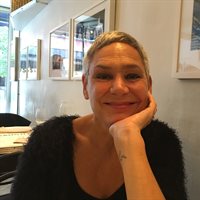
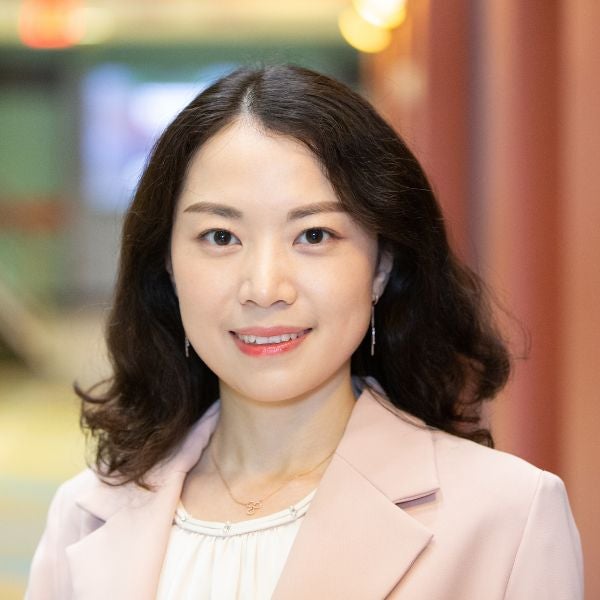
Lillie Padilla is an Assistant Professor of Spanish Linguistics at Sam Houston State University's Department of World Languages and Cultures. Holding a Ph.D. and M.A. in Spanish Linguistics from Arizona State University alongside a Bachelor of Arts from the University of Ghana, her research explores interdisciplinary connections between: Afro-Latinx representation in educational materials Discourse analysis and language ideologies Sociolinguistic studies in Equatorial Guinea Critical race theory applications in language teaching Her work focuses on Spanish subject pronoun expression patterns in multilingual contexts and curriculum development for inclusive pedagogy. Recent publications examine: Representation gaps in Spanish language textbooks Methodological challenges in Equatorial Guinea research Critical discourse analysis of Netflix's Elite series Intersectional representation of Afro-Latinx women Scientific achievements include: Finalist for American Association of Linguistics 2025 award for co-edited volume Representation, Inclusion and Social Justice in World Language Teaching Padilla's research continues to shape conversations about linguistic diversity and marginalized voices in language education through both empirical studies and theoretical frameworks.
Andrew Lynch serves as Professor and Associate Dean for Program Development in the Department of Modern Languages & Literatures within the College of Arts and Sciences at the University of Miami. His academic leadership extends beyond teaching responsibilities to include significant administrative contributions to program development across the institution. Lynch's research interests center on sociolinguistics with particular focus on Spanish language dynamics in Miami, heritage language socialization, bilingualism, and language ideology. His work examines how language functions within specific social contexts, especially in workplace environments where Spanish heritage speakers navigate linguistic demands. He investigates the complex interplay between language, identity, and social structures in postmodern urban settings, with special attention to the Cuban diaspora experience in South Florida. His publication record reveals consistent scholarly engagement with heritage language education, Spanish language variation, and the sociolinguistic landscape of global cities. Lynch's research demonstrates how language practices in Miami reflect broader patterns of linguistic adaptation and resistance within diasporic communities. His work often addresses the tension between linguistic heritage and social integration, examining how language ideologies shape educational practices and community identity. Lynch's scholarly contributions span multiple formats, including single-authored books, co-authored publications, handbook chapters, and journal articles in both English and Spanish. His work frequently appears in high-impact sociolinguistics and language education journals, reflecting his interdisciplinary approach that bridges theoretical linguistics with practical educational implications.
Jonathan Rosa is Associate Professor in the Graduate School of Education, Center for Comparative Studies in Race and Ethnicity, and, by courtesy, Departments of Anthropology, Linguistics, and Comparative Literature at Stanford University. He serves as Director of Stanford's Program in Chicanx-Latinx Studies and has held leadership positions including President of the Association of Latina/o and Latinx Anthropologists of the American Anthropological Association. Dr. Rosa's educational background includes: Ph.D. in Sociocultural and Linguistic Anthropology from the University of Chicago (2010) M.A. in Sociocultural and Linguistic Anthropology from the University of Chicago (2006) B.A. in Linguistics and Educational Studies from Swarthmore College (2003) Dr. Rosa's research examines the co-naturalization of language and race as a key feature of modern governance, tracking colonially structured interrelations among racial marginalization, linguistic stigmatization, and institutional inequity. His scholarship centers on raciolinguistic ideologies, Latinx studies, and educational justice, with a community-based approach that develops tools for challenging systemic vulnerability. He investigates how race and language are jointly defined across historical, geopolitical, and institutional contexts, with particular focus on Latinx communities and educational settings. His recent publications demonstrate a consistent thematic focus on decolonizing linguistic and educational frameworks, challenging standard language ideologies, and examining the intersections of race, language, and power. The work spans multiple disciplines including sociolinguistics, anthropology, education, and critical race studies, increasingly emphasizing undoing raciolinguistics and addressing coloniality in language education and assessment practices. Dr. Rosa has received numerous prestigious awards for his scholarship: Distinguished Summer Scholar, Banks Center for Educational Justice, University of Washington College of Education (2024) Outstanding Book of the Year Award for "Looking like a Language, Sounding like a Race," American Association of Teaching and Curriculum (2022) First Book Award for "Looking like a Language, Sounding like a Race," American Association for Applied Linguistics (2021) Prose Award for Excellence in Language & Linguistics for "Looking like a Language, Sounding like a Race," Association of American Publishers (2020) Charles A. Ferguson Award for Outstanding Scholarship, Center for Applied Linguistics (2018) Dr. Rosa actively mentors doctoral students across multiple programs, serving as primary advisor for students researching race, ethnicity, language, and education. His research has been supported by major grants from the National Science Foundation, Andrew W. Mellon Foundation, Woodrow Wilson National Fellowship Foundation, and Ford Foundation. He collaborates extensively with community organizations, particularly in Chicago, to develop educational approaches grounded in decolonial praxis, focusing on how scholarship can serve as a platform for social transformation. Dr. Rosa co-directed Stanford's Center for Global Ethnography (2021-2023) and directed Stanford's Program in Chicana/o-Latina/o Studies (2020-2023). He serves on multiple editorial boards including Current Anthropology and Equity & Excellence in Education, and has held leadership positions in professional organizations including President of the Association of Latina/o and Latinx Anthropologists (2020-2022).
Abhijit Banerjee is a Professor in the Department of Economics at the Massachusetts Institute of Technology (MIT). His research focuses on development economics, public health policy, and social protection programs, particularly addressing poverty and inequality in low- and middle-income countries. He has conducted large-scale experiments evaluating interventions such as conditional cash transfers, universal basic income, and healthcare policies. Key areas of interest include the design and implementation of anti-poverty programs, behavioral economics, and the long-term health impacts of infectious diseases like COVID-19. His work often integrates experimental methods to assess policy effectiveness, with contributions to global health studies and economic development strategies. Notably, his research on the RECOVERY trial evaluates treatments for hospitalized COVID-19 patients, while other studies explore financial spillover effects of electronic government transfers in Indonesia and savings behavior interventions in Chile. Banerjee has collaborated on projects analyzing post-COVID-19 health outcomes, labor market dynamics in India, and the role of trusted messengers in public health communication during crises. Despite the breadth of his contributions, specific details about his educational background, grants, or lab affiliations are not explicitly provided in the source text.
Claire Bowern is Professor of Linguistics at Yale University specializing in historical linguistics, language documentation, and Australian Indigenous languages. Her research employs computational phylogenetics to study language evolution and supports language revitalization through digital archives and fieldwork methodologies. Recent publications address: Phylogenetic signal in lexical evolution across language families Digital infrastructure for endangered language documentation (FLEx software analysis) Decolonizing linguistics pedagogy and research practices Her work consistently integrates linguistic, anthropological, and computational approaches to analyze language diversity and change. She contributes to global databases including Grambank and D-PLACE, examining links between linguistic, cultural, and environmental patterns.
Marlyse Baptista is the President's Distinguished Professor of Linguistics at the University of Pennsylvania, Department of Linguistics. She is affiliated with the School of Arts & Sciences and MindCore initiative. Her research focuses on language contact, creolization processes, bilingualism, and experimental methods in creole studies. Baptista leads the Language Contact and Cognition Lab, previously known as the Cognition, Convergence and Language Emergence (CCLE) group at the University of Michigan. Education includes a PhD in Linguistics (Harvard, 1997), MA degrees from Harvard and the Université de Bordeaux III, and extensive training in multilingual education. Her work bridges generative syntax with experimental approaches, including artificial language learning to study language convergence. Key themes include the cognitive underpinnings of creole formation, bidirectional influences in Cape Verdean Creole, and the role of congruence in language acquisition. Research highlights include studies on Cape Verdean Creole's grammatical properties, genetic-linguistic admixture correlations, and pedagogical resources for creole language education. Recent projects explore experimental validation of creole genesis theories through multilingual acquisition studies. Scientific Awards: President's Distinguished Professorship (University of Pennsylvania) Labs/Teams: Language Contact and Cognition Lab, MindCore Grants/Projects: MULTI Project (creole language educational resources), NSF-funded studies on creole genesis mechanisms Baptista's work emphasizes interdisciplinary approaches, integrating syntax theory, psycholinguistics, and sociolinguistics to address foundational questions in contact linguistics and creolistics.
Jessica Straley is an Associate Professor in the Department of English at the University of Utah, where she has served since 2005 (Visiting Assistant Professor 2005-2007, Assistant Professor 2007-2016, Associate Professor 2016-present). She holds a PhD in English from Stanford University, an MA in Literature, Culture, and Modernity from Queen Mary and Westfield College, University of London, and a BA in English from Cornell University. Education: PhD, English - Stanford University MA, Literature, Culture, and Modernity - Queen Mary and Westfield College BA, English - Cornell University Her research focuses on intersections between Victorian literature, children's literature, animal studies, disability studies, and ecocriticism. She explores how literary imagination interacts with scientific and moral discourses, particularly in 19th-century contexts. Recent publications analyze feral child narratives, zoo representations, and evolutionary theory in children's texts. Her work bridges historical literary analysis with contemporary critical frameworks like disability rights and environmental ethics. Scientific Awards: Faculty Fellowship Award (University Research Council, 2017) Ramona W. Cannon Award for Teaching Excellence (2016) Tanner Humanities Center Fellowship (2016) University Research Committee Faculty Fellowship (2011) Newberry Library Short-Term Library Research Fellowship (2008) She teaches courses in 19th-Century British Literature, Intellectual Movements, and Honors Thesis/Project supervision. Her external grant (Animal Testing URC, 2017-2018) demonstrates institutional support for her interdisciplinary work.
Jennifer Olsen, PhD, is an Assistant Professor of Computer Science at the University of San Diego since 2020. She holds a PhD, MS, and BS in Human-Computer Interaction and Cognitive Science from Carnegie Mellon University, followed by postdoctoral research at the Swiss Federal Institute of Technology (EPFL), Lausanne, Switzerland. Her research focuses on the intersection of human-computer interaction, cognition, and education, emphasizing collaborative learning and educational technology design from both learner and instructor perspectives. Education: PhD in Human-Computer Interaction, Carnegie Mellon University MS in Human-Computer Interaction, Carnegie Mellon University BS in Cognitive Science, Carnegie Mellon University Research Interests: Dr. Olsen explores how collaboration supports learning, designs technologies to enhance educational practices, and investigates gaze-based metrics for understanding collaborative problem-solving. Her work spans gamified robotics, AI-driven orchestration systems, and virtual reality applications in vocational training. She emphasizes learner-centered design and the integration of social robots and virtual agents in pedagogical settings. Grants/Advising: While no specific grants or advisees are listed, her prolific publication record indicates active involvement in educational technology research and development. Her work addresses challenges in classroom orchestration, multimodal data analysis, and accessibility in educational robotics. Labs/Teams: Collaborates with interdisciplinary teams focused on educational technology, human-robot interaction, and adaptive learning systems. Her research leverages tools like FROG orchestration graphs and eye-tracking technologies to develop practical classroom solutions.
Sara Ng is a Visiting Assistant Professor in the Department of Linguistics at Western Washington University. She holds a PhD in Linguistics from the University of Washington (2024) and an MS in Computational Linguistics (2023), alongside a B.A. in Linguistics and B.S. in Applied Mathematics from the University of Utah (2017). Her research focuses on computational models of prosody, speech perception, and their integration with speech technologies like automatic speech recognition (ASR). She investigates how prosody conveys pragmatic meaning, influences conversational dynamics, and impacts listeners with hearing impairments. Her work bridges computational methods and linguistic theory, addressing challenges in clinical and technological applications. Education PhD in Linguistics, University of Washington, 2024 MS in Computational Linguistics, University of Washington, 2023 B.A. in Linguistics (Honors), B.S. in Applied Mathematics, University of Utah, 2017 Research Interests Ng’s research explores computational linguistics, prosody modeling, speech technology, and hearing impairment studies. She develops methods to leverage prosodic cues for tasks like punctuation prediction and investigates the impact of hearing loss on speech perception. Grants & Awards 2024: Nominated for UW Excellence in Teaching Award 2023: Excellence in Linguistic Research Graduate Fellowship 2017: University of Utah Top Scholar Award Teaching Ng teaches courses in phonetics, computational linguistics, and linguistics for honors students. She emphasizes pedagogical innovation and inclusivity, with experience as an instructor of record and teaching assistant at both Western Washington University and the University of Washington. Labs & Collaborations She collaborates with the TIAL Lab (University of Washington), Phonetics Lab, Hearing Aid Laboratory (Northwestern University), and CLILLAC-ARP (Université Paris Cité). Her work intersects with clinical and engineering domains, addressing real-world applications of speech technology.
David Williamson Shaffer is the Sears Bascom Professor of Learning Analytics and Vilas Distinguished Achievement Professor of Learning Sciences at the University of Wisconsin-Madison's Department of Educational Psychology. He is also a Data Philosopher at the Wisconsin Center for Education Research. His work focuses on merging statistical and qualitative methods to model complex human collaboration. Shaffer holds an AB in History and East Asian Studies from Harvard University (1987), and MS/PhD in Media Arts and Sciences from MIT (1996/1998). Before academia, he was a teacher, curriculum developer, and game designer. His research emphasizes Quantitative Ethnography —a methodology combining big data analysis with cultural interpretation. Key contributions include Epistemic Network Analysis (ENA) and over 250 publications, including influential books like How Computer Games Help Children Learn (2006) and Quantitative Ethnography (2017). Awardees of the EU Marie Curie Fellowship (2008) and Spencer Foundation Fellowship (2003), Shaffer's work has been presented globally at conferences like Learning Analytics & Knowledge and Computer Supported Collaborative Learning. His interdisciplinary approach bridges education, data science, and humanities, addressing challenges in authentic STEM experiences, collaborative learning analytics, and culturally responsive pedagogy.
Clare Hemmings is a Professor of Feminist Theory at the Department of Gender Studies, London School of Economics and Political Science (LSE), where she has been since 1999. Her work bridges feminist theory, queer studies, and sexuality studies, with a focus on how these fields are institutionalized and narrated. She holds a PhD and has authored seminal works like Why Stories Matter (2011) and Considering Emma Goldman (2018), which explore feminist historiography and political ambivalence. Her research emphasizes interdisciplinary methods, including archival interventions and creative writing to challenge dominant narratives. Hemmings’ research interests include feminist epistemology, queer of color critique, and anarchist thought. She has been active in countering 'anti-gender' movements and is currently developing a project on 'Feminist Knowledge Struggles.' Her work is marked by attention to form, affect, and the intersection of nationalism, feminism, and sexuality. She supervises PhD students Senel Wanniarachchi and Rawda Elaskary and has received the FWSA Book Prize 2012 for Why Stories Matter . Hemmings’ articles span feminist theory, political mobilizations, and affect studies. Her recent work engages with family memory archives and decolonial methodologies. She is a prolific scholar, contributing to journals like Memory Studies , Feminist Studies , and Radical Philosophy . Her interdisciplinary approach integrates literary criticism, sociology, and activism, offering transformative frameworks for feminist praxis.
Hanjie Chen is an Assistant Professor in the Department of Computer Science at Rice University, affiliated with the Ken Kennedy Institute. She holds a Ph.D. from the University of Virginia and a Master's from the University of Science and Technology of China. Her research focuses on Natural Language Processing, Interpretable Machine Learning, and Trustworthy AI, emphasizing model explainability, alignment with human needs, and applications in healthcare, sports, and medicine. She has advised numerous students and led initiatives in AI ethics and education. Education: Ph.D. (Computer Science, UVA 2023), M.Sc. (USTC 2018), B.Sc. (Nanjing University of Aeronautics and Astronautics 2015). Awards include the Outstanding Doctoral Student Award (UVA 2023) and John A. Stankovic Research Award (UVA 2023). She has organized workshops like BlackboxNLP and served on program committees for ACL, NAACL, and EMNLP. Her recent work includes developing benchmarks like SPORTU for multimodal LLMs, evaluating medical question-answering systems, and advancing methods for robust rationale evaluation (RORA). She teaches courses on Natural Language Processing and Trustworthy NLP, emphasizing pedagogical innovation recognized by teaching awards at UVA. Research collaborations include internships at Microsoft Research, IBM, and the Allen Institute for AI. She mentors students in SURF programs and advocates for diversity in tech, serving as a mentor in UVA's CSGSG Council.
Daniel Krutz is an Associate Professor in the Department of Software Engineering at Rochester Institute of Technology (RIT) , with a secondary appointment as Courtesy Associate Professor at the University of Florida's Department of Computer & Information Science & Engineering. He directs the AWARE Lab , focusing on Autonomous Systems, Warfare Applications, and Software Engineering , supported by $6M+ in federal grants from NSF, NSA, DOD, and AFRL. His research spans AI/ML, Self-Adaptive Systems, Decision Support Systems, and Accessibility in Computing Education . He holds a PhD from Nova Southeastern University and has taught courses including Software Engineering Freshman Seminar and Capstone Research Project . He is an NSF CAREER Award recipient (2022) and former AFRL Fellow (2018). Educations: BS, St. John Fisher College MS, Rochester Institute of Technology PhD, Nova Southeastern University Labs: AWARE Lab (Autonomy, Warfare, and Engineering) Awards: NSF CAREER Award (2022) AFRL Research Faculty Fellowship (2018) Teaching: Undergraduate/Graduate courses in software engineering, accessibility, and AI/ML Research Interests: Focus on experiential learning in computing education, neuroevolutionary algorithms, and AI ethics. Recent projects address empathy-building interventions for inclusive software development and context-aware decision support systems . Grants & Funding: Over $6M secured since 2018 from NSF, DOD, and NSA for projects in AI/ML, cybersecurity, and adaptive systems. Current work explores AI-driven stock trading frameworks and accessibility education modules.
Paulami Mitra is an Assistant Professor and Academic Director of the Strategy and Sustainability track at IÉSEG School of Management in Lille, France, with prior academic experience as a Visiting Professor at the University of Southern California (2017-2018) and Teaching and Research Assistant at IÉSEG (2012-2019). Her doctoral training in Economics and Management Sciences from Université Catholique de Louvain-Mons underpins her interdisciplinary approach to business education and research. Her educational qualifications include: 2019: Ph.D. in Economics and Management Sciences, Université Catholique de Louvain-Mons, Belgium 2009: Masters in Management, Lancaster University, United Kingdom 2008: B.Tech in Information Technology (Engineering), Institute of Technology and Marine Engineering, India Dr. Mitra's research centers on entrepreneurship-sustainability intersections, with particular expertise in eco-entrepreneurship, crowdfunding dynamics for social ventures, and hybrid organizational models. Her work examines how prosocial motivations drive crowdfunding participation, the strategic advantages of hybrid structures in social enterprises, and pedagogical innovations for sustainability-focused business education. She investigates critical gaps in climate-responsive entrepreneurial frameworks and sustainable financing mechanisms. Analysis of her publication trajectory reveals a concentrated focus on social entrepreneurship evolution since 2017, with increasing emphasis on sustainability-crowdfunding synergies and educational applications. Her 2022-2024 output demonstrates methodological diversity across case studies, survey research, and conceptual frameworks, consistently targeting high-impact journals in entrepreneurship and sustainability fields. No scientific awards are documented in the provided materials. Professional activities indicate active curriculum development and executive education leadership, though specific student advisement or grant-funded research projects are not referenced in the source text. The available information does not specify laboratory affiliations, research teams, or collaborative infrastructure supporting her scholarly work.
Tijana Gajić is a researcher at Singidunum University in Belgrade, Serbia. She holds a Ph.D. in Philology (2020), an MA in English Language and Literature (2009), and a BA in the same field (2007) from the University of Belgrade. Her work focuses on the intersection of language education, digital tools, and critical pedagogy. Doctoral Studies: Philology , University of Belgrade (2017-2020) Master Studies: English Language and Literature , University of Belgrade (2008-2009) Bachelor Studies: English Language and Literature , University of Belgrade (2003-2007) Dr. Gajić’s research explores the impact of digital technologies on language acquisition, critical thinking development, and the sociopolitical dimensions of English language learning. She has published extensively on mobile applications like Duolingo, HelloTalk, and WordUp, analyzing their efficacy in modern pedagogy. Her recent publications (2024-2025) examine digital tools’ influence on language education, critical pedagogy in Serbian classrooms, and AI-driven language learning innovations. Earlier works (2020-2016) established her expertise in tandem learning, vocabulary enhancement via apps, and affective factors in language acquisition. Notable collaborations include partnerships with researchers like N. Maenza , A. Gagić , and J. Nikolić . While no specific grants or awards are mentioned, her involvement in conferences such as Sinteza and ELTA Serbia underscores her active role in advancing language education. Her 2022 book, Nastava stranih jezika i razvoj kritičkog mišljenja u eri neoliberalizma , synthesizes her critical pedagogy framework. Current projects likely continue her focus on digital transformation in language teaching.