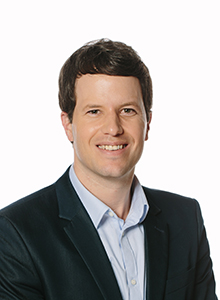
Dr. Gavin Mount is a researcher at UNSW Canberra , specializing in non-traditional security studies , ethnic conflict , and the sociopolitical implications of emerging technologies . His work bridges theoretical analysis with practical applications in conflict transformation and defense studies. Research Focus: Global politics of ethnic conflict, hybrid peace/war frameworks, and socio-political impacts of drone technology. Teaching: Courses like Ethnic Conflict in World Politics and Law, Force and Legitimacy , with a focus on military education and strategic studies. Publications: Recent work includes contributions to Thinking Swarms (2025) and Hybridity on the Ground in Peacebuilding and Development (2018). Grants: Leads the Curricula Integration of Student Wellbeing Resources project under HERDSA. Key Themes across his research include the intersection of technology and conflict, evolving defense paradigms, and pedagogical innovations in security studies.
Dr Juliet Bennett is a Research Fellow at the Sydney Centre for Healthy Societies (SCHS) and Charles Perkins Centre, University of Sydney. Her work bridges process philosophy with systemic interventions for social and ecological wellbeing. She holds a PhD in Peace and Conflict Studies, focusing on paradigm shifts from static to process thinking. Previously, she managed collaborative research at Sydney Policy Lab and directed the Sydney Peace Foundation. Education: PhD (Peace and Conflict Studies), MPhil/MA (Peace and Conflict Studies). Teaching includes units on peace studies, narratology, and structural violence at the University of Sydney and Lenoir Rhyne University. Research interests center on mitigating social/ecological injustice, structural violence, and climate change through critical sociology, contextual economics, and participatory methods. Current projects examine food systems and ultra-processed foods via critical social theory. Awards: 2020 Excellence in Teaching for 'Key Issues in Peace and Conflict Studies'. Memberships include Sydney Policy Lab, New Economic Networks Australia, and the International Peace Research Association. Publications span process philosophy applications, climate policy, and participatory research methods. Her work advocates for systemic transformations toward ecological civilization through interdisciplinary collaboration.
Dr. Mary Ann Hunter is Associate Professor in Education at University of Tasmania, specializing in arts-based enquiry and transformative educational practice. Her work explores creative ecologies and reflective supervision frameworks for educators, examining how curiosity and nomad creativity shape learning across formal and informal contexts. Research examines: Arts-based peacebuilding methodologies Reflective supervision for educational leaders Creative ecologies in learning environments Arts-sustainability education connections Community cultural development She leads international networks including IMPACT (initiative for conflict transformation) and coordinates interdisciplinary research projects evaluating arts-based programs like Terrapin Puppet Theatre's dementia care initiative and APRA AMCOS's Songmakers residency program. Honors include the Australian Philip Parsons Prize for Research and Excellence in Leadership Award from the Australian Council for Educational Leadership.
Hilary Charlesworth is a distinguished academic and legal scholar, currently serving as Harrison Moore Professor and Melbourne Laureate Professor at the University of Melbourne Law School and Honorary Professor at the Australian National University's School of Regulation & Global Governance (RegNet). She has been a Judge of the International Court of Justice since 2021. Her expertise spans international law, human rights, and global governance. Education: BA (Hons) and LLB (Hons) from the University of Melbourne, SJD from Harvard Law School. Research focuses on international law's theoretical and practical dimensions, human rights implementation, conflict resolution, and the role of the UN Security Council. She has led projects like 'Peacebuilding Compared' and 'The Art of International Law.' Her awards include the Goler T Butcher Medal (2006), election to the Institut de Droit International (2011), and an Honorary Doctorate from Université Catholique de Louvain (2016). Contributions include editorial roles at the Australian Yearbook of International Law and the American Journal of International Law. She advised on the ACT Human Rights Act 2004 and has engaged with NGOs to advance human rights standards.
Dr. Anurug Chakma is a Research Fellow at the Migration Hub within the School of Regulation and Global Governance (RegNet) at The Australian National University (ANU). Previously, he served as a casual sessional academic at ANU's School of Politics and International Relations and held teaching positions at the University of Dhaka, including Lecturer and Assistant Professor in Peace and Conflict Studies. He has also contributed to research and consultancy roles at organizations such as the Bangladesh Legal Aid and Services Trust (BLAST), UNDP-CHTDF, University College London (UCL), and the United States Institute of Peace (USIP). Dr. Chakma's educational background includes: PhD in Politics and International Relations (2023), Australian National University Master's in Economics, Political Science, Law, and Criminal Science (2016), University of Antwerp Master's and Bachelor's in Peace and Conflict Studies (2012-2011), University of Dhaka His research interests span terrorism, civil conflict, peace agreements, human rights, diaspora communities, and computational social science. He focuses on topics such as the implementation of peace accords, diaspora roles in humanitarian efforts, and the impact of political ideology on conflict resolution. Dr. Chakma's recent research explores the role of diasporas in humanitarian assistance, climate change policies for health equity, nation-building in Bangladesh, and the influence of social media on violence. His work bridges theoretical frameworks with real-world case studies, emphasizing policy-relevant outcomes. While no formal students are listed, Dr. Chakma's research is supported by two projects: the ongoing "Biannual Perceptions Survey - International Development Policy" and the completed "Exploring multi-stakeholder perspectives on diaspora humanitarianism". These projects reflect his commitment to interdisciplinary research addressing global challenges. He is affiliated with the ANU South Asian Research Institute (SARI) and holds memberships in the Australia Political Science Association (APSA) and the Australian Society for Quantitative Political Science (ASQPS).
Dr. Stuart Murray is an Associate Professor at Bond University's Faculty of Society & Design, specializing in diplomacy and international relations. His research focuses on traditional and modern diplomacies, including sports diplomacy, translational research, and innovations in diplomatic theory. Education: PhD (2006), Cours D'etet (University of Geneva, 2001), MA International Relations (2000), BA Hons (Edinburgh Napier University, 1996). External roles include Adjunct Research Fellow at Griffith University and Fellow of the Academy of Sport at the University of Edinburgh. Key projects include 'eSports Diplomacy' and 'Promoting a Strategic Approach to EU Sports Diplomacy.' His work explores sports as a tool for soft power, geopolitical strategy, and cultural exchange. Recent articles address global diplomatic dynamics in sports, pandemic responses, and future diplomatic strategies. Murray has contributed to media discussions on sport diplomacy, including expert commentaries on the Australian perspective and the role of sports in political movements.
Stefan Bächtold is a Lecturer at the School of Arts and Social Sciences, Monash University Malaysia. His research focuses on the intersection of digital technologies, state authority, and conflict in Southeast Asia, particularly Myanmar and Malaysia. He has held visiting positions at the Technical University of Munich (Germany) and Swisspeace Institute (University of Basel, Switzerland). His work critically examines how digital technologies shape political dynamics and state intervention in contexts of conflict and pandemic response. **Education:** PhD in Political Science (University of Basel, 2016) MA in Sociology and Political Science (University of Fribourg, 2011) **Research Interests:** Bächtold explores technologies' role in peacebuilding, international development, and conflict transformation using methods like ethnography and discourse analysis. His current projects analyze digital tech’s impact on state authority during the pandemic and Southeast Asia’s policy networks for regulating technology. **Grants & Projects:** Lead investigator for 'Building policy networks for regulating digital tech in Southeast Asia' (2024) Co-investigator in 'Digital Technologies as a New Agenda for Korea-Southeast Asia Diplomacy' (2025) **Activities:** Organized workshops on digital governance, including the Southeast Asia Research Center for Digital Technology and Society (SEADS) Roundtables and Monash University Malaysia’s 2024 Graduate Research Week. **Collaborations:** Engages with global institutions like the United Nations, European Union, and local NGOs to evaluate complex interventions in conflict zones.
Laurajane Smith is Professor of Heritage and Museum Studies at the Australian National University's Research School of Humanities and the Arts, where she heads the Centre for Heritage and Museum Studies. A Fellow of the Society for the Academy of the Social Sciences in Australia and CNRS Fellow-ambassador (2023-2025), she holds a PhD from the University of Sydney and a Graduate Diploma in Higher Education from UNSW. Her research critically examines heritage as a cultural performance and meaning-making process, with foci including: The politics of heritage and identity construction Intersections of class, memory, and multiculturalism in heritage Community heritage practices and tourism Affective dimensions of cultural policy Her publications consistently explore themes of emotional heritage, decolonization, and the socio-political dimensions of cultural memory. Recent work emphasizes repatriation ethics, populism, and peacebuilding through heritage. Awards: Doctor Honoris Causa (University of Antwerp, 2018) European Archaeology Association Heritage Prize (2021) CNRS Fellow-ambassador (2023-2025) She leads major projects including 'Heritage and Reconciliation' (2020-2025) and 'Temporalities of Andean Heritage Landscapes' (2022-2024), supervising research through the Centre for Heritage and Museum Studies.
Ramón Spaaij is a Professor in the College of Sport, Health and Engineering at Victoria University and holds a Professorial Chair in Sociology of Sport at the University of Amsterdam. He leads the Sport in Society Research Program at IHES and was previously a Senior Research Fellow at La Trobe University, where he served as Deputy Director of the La Trobe Refugee Research Centre. His educational background includes an MA from Leiden University and a PhD from the University of Amsterdam. Spaaij’s research centers on social cohesion, conflict, and social change through two primary lenses: the sociology of sport and the sociology of terrorism. He investigates how sport influences diversity, inclusion, and community belonging, particularly through initiatives like sport for development and youth engagement. Simultaneously, he conducts internationally recognized research on violent extremism, with a focus on lone wolf terrorism, radicalization pathways, and counterterrorism strategies. His recent publications reveal a strong interdisciplinary focus, bridging sociology, criminology, and sport studies. The articles demonstrate recurring themes in both sport-related social dynamics and terrorism studies, with consistent attention to identity, exclusion, and structural violence. He frequently collaborates with scholars across disciplines and countries, contributing to handbooks, journals, and policy-oriented research. Victorian Department of Health and Human Services (2015): Sport integrity analysis DST Group – VU Industry Postdoctoral Research Fellowship (2015–2018): Online/offline radicalization Australian Research Council Linkage Project (2014–2017): Managing diversity in junior sport Youth & Identity Grant, Utrecht University (2013–2015): Youth violence in football National Institute of Justice, USA (2012–2015): Lone wolf terrorism prevention He has completed supervision of 5 Honours, 11 Masters, and 1 PhD student, and currently mentors 5 PhD, 4 Master’s, 1 Honours student, and 2 postdoctoral fellows. He is affiliated with several professional associations including the International Sociological Association and the Australian Sociological Association. Spaaij is also a frequent contributor to international media on topics related to sport and extremism.
Melissa Johnston is a Lecturer in the School of Political Science and International Studies at the University of Queensland and Deputy Director of the Rotary Peace Centre. She holds a PhD in Politics from Murdoch University and was awarded a prestigious Discovery Early Career Researcher Award (2022-2025) for her project on Brideprice, Conflict and Violence Against Women in Southeast Asia. Her research focuses on two interconnected areas: the role of misogyny and violence against women in violent extremism and populism, and the political economy of post-conflict rebuilding. Her groundbreaking work demonstrates that support for violence against women is the best predictor of support for violent extremism—a finding cited multiple times by the UN Secretary General in 2019 and 2020. Her second research stream examines how gender programming by international development agencies is shaped by power relations between men and women, particularly in Timor-Leste where brideprice practices influence both class formation and gender injustices. Dr. Johnston's recent publications reveal a clear trend toward analyzing the material basis of gender-based violence in conflict settings, with increasing focus on Southeast Asia (particularly Myanmar, Sri Lanka, and Timor-Leste), the intersection of brideprice systems with conflict dynamics, and theoretical development of feminist political economy frameworks. Her work bridges empirical research with policy impact, particularly through her DECRA project and collaborations with international organizations. Winner of the 2019 Australian Political Studies Association thesis prize Winner of the 2024 BISA IPEG book prize for 'Rebuilding Patriarchy' Winner of the 2021 Australian International Political Economy Network best journal article prize Discovery Early Career Researcher Award recipient (2022-2025) Research cited in UN Secretary General Reports and international policy statements Dr. Johnston actively supervises PhD students working on Indonesia, Myanmar, and Timor-Leste, with current projects examining jihadist recruitment of children, matrilineal societies in borderlands, and investment de-risking in Indonesia. She has secured significant funding including a Global Affairs Canada grant for 'Supporting Democratic Action in Myanmar' (2024-2026) and her ARC DECRA project (2022-2025). Her research has direct policy applications, particularly through her role at the Rotary Peace Centre where she oversees the Applied Field Experience and academic mentorship for Rotary Peace Fellows.
Associate Professor Anna Eriksson is an international leader in comparative penology and criminal justice reform at Monash University's Department of Criminology. She holds roles as Convenor of the Criminology program and previously led the Bachelor of Criminology degree. Her work bridges empirical research with interdisciplinary theory, focusing on Nordic penal exceptionalism, neurodisabilities in criminal justice systems, and veterans' transitions between military and correctional environments. Research highlights include a 2012 DECRA Fellowship exploring 'othering' in Australian and Norwegian prisons, and an ARC Discovery Grant (2021–2026) on social infrastructure in prisons. Collaborations span Canada, the UK, and Germany, addressing prison staff dynamics and neurodisability policy. She co-edited Neurodisability and the Criminal Justice System (Edward Elgar, 2021) and advises the Open Door network on veteran integration. Key awards include the 2009 New Scholar Award and a 2013 High Commendation for her book Contrasts in Punishment . Her media engagement includes podcasts and expert commentary on youth detention design and prison reform. Research Themes: Nordic penal systems, restorative justice, veterans in criminal justice, arts-based interventions. Grants: ARC DECRA (2012), SSHRC Insight (2020), ARC Discovery (2021). Publications: Over 50 articles/chapters, including works on prison staff interactions, neurodisability policy, and cross-cultural penology.
Professor Laura J. Shepherd is a leading scholar in International Relations and Gender Studies at the University of Sydney's School of Social and Political Sciences. She holds the rank of Professor and leads the Gender Security research program at the Centre for International Security Studies. Her work focuses on the United Nations Security Council’s Women, Peace and Security (WPS) agenda, examining intersections of gender, violence, and security governance. Shepherd has held prestigious roles including Australian Research Council Future Fellow (2018-2022) and President of the International Studies Association (2023-2024). She is also a Visiting Senior Fellow at the LSE Centre for Women, Peace and Security. Her research integrates feminist, postcolonial, and decolonial theories to analyze global governance structures, particularly UN peacebuilding and CVE policies. Notable contributions include books like *Gender, UN Peacebuilding and the Politics of Space* (2017) and *Narrating the Women, Peace and Security Agenda* (2021). Shepherd has secured major grants, including the UKRI GCRF Gender, Justice, and Security Hub (2019-2024). Awarded for both teaching and research, she has mentored numerous PhD students focusing on topics like gender and extremism, decolonial pedagogy, and hybrid courts. Her recent work critiques white feminism’s role in security governance and advocates for care ethics in academia. Shepherd actively engages in public discourse through media commentary and policy advocacy, emphasizing the importance of gender justice in global security frameworks.
Roles & Affiliations: Distinguished Research Professor in Statistical Science at Queensland University of Technology (QUT), Director of QUT Centre for Data Science, and Associate Member of University of Oxford's Department of Statistics. Served as Deputy Director of ARC Centre of Excellence in Mathematical and Statistical Frontiers (2015–2021) and ARC Laureate Fellow (2015–2021). Education: BA (Hons) and PhD in Mathematical Statistics from University of New England, Australia. Completed post-doctoral roles at multiple Australian universities. Research Interests: Specializes in Bayesian statistical modelling, computational methods, and their applications in environmental science, genetics, healthcare, and industry. Leads projects on coral reef recovery, cancer epidemiology (Australian Cancer Atlas), and virtual citizen science platforms like Virtual Reef Diver. Her work emphasizes interdisciplinary collaboration, integrating complex data sources with advanced statistical techniques to address real-world challenges. Publications & Grants: Over 350 refereed journal publications and attracted >30 major grants. Recent focus areas include influenza epidemiology, spatial health disparities, and AI-driven early warning systems for climate-sensitive diseases. Active in developing methodologies for spatial statistics, small-area estimation, and federated learning. Awards & Recognition: 2024 Ruby Payne-Scott Medal (Australian Academy of Science), Pitman Medal (2016), first female recipient of this award in 35 years. Elected Fellow of Australian Academy of Science (2018), Academy of Social Sciences (2018), and Queensland Academy of Arts and Sciences (2018). Holds international roles including Vice-President of International Statistical Institute (2021–2025) and Scientific Council Member at Centre International de Rencontres Mathématiques (France). Supervision & Leadership: Supervised over 36 PhD students and leads teams in >50 collaborative projects. Current supervision includes 5 PhD and 4 Masters students at QUT. Founded the QUT Centre for Data Science and previously led the Collaborative Centre for Data Analysis, Modelling and Computation. Labs & Initiatives: Core contributor to the Australian Cancer Atlas 2.0, Virtual Reef Diver project, and Queensland's Learning Potential Fund. Active in global initiatives like the World of Statistics campaign and UN Big Data Task Teams.
Courtney J. Fung is an Associate Professor in the Department of Security Studies & Criminology at Macquarie University. She holds concurrent roles as a Non-Resident Fellow at Harvard University’s Fairbank Center, Asia Society Australia, LSE IDEAS, and the Lowy Institute. Her research focuses on rising powers’ engagement with global governance and international security, particularly China’s evolving role in institutions like the UN Security Council and cyber policy frameworks. Education: Courtney earned a PhD in International Relations from The Fletcher School of Law & Diplomacy, Tufts University. She is a Fulbright Scholar at Georgetown University (2024) and serves on The Fletcher School Board of Advisors. Research Interests: Her work examines China’s influence on international norms, cyber sovereignty, UN peacekeeping, and the Responsibility to Protect (R2P). Key contributions include her 2019 Oxford University Press book China and Intervention at the UN Security Council: Reconciling Status , which explores how China navigates intervention and regime change debates at the UN. Awards: Courtney has received the HKU Research Output Prize (2019–2020), Early Career Teaching Award (2016), and Fulbright Award (2023). Her research has been featured in journals like Contemporary Security Policy and International Affairs . Grants & Projects: She led the 2023 project Japan for Strategy: Bringing Japan into Australia’s Defence and Intelligence Strategy . Her work is supported by grants such as the Early Career Scheme Research Grant (2014) and Government Research Fund Award (2020). Media Engagement: Courtney frequently comments on Chinese foreign policy for outlets like The Wire China , analyzing cyber governance, UN diplomacy, and geopolitical rivalry.
Professor Halim Rane is a Professor at the School of Humanities, Languages and Social Science , Griffith University , and a leading scholar in Islamic Studies, Islam-West Relations, and the sociology of religion. He serves as a member of the Griffith Centre for Social and Cultural Research and holds leadership roles including Acting Director (2019–2020) and Deputy Head (Learning and Teaching) (2013–2015). Education : PhD in International Peace and Security (Griffith University, 2005–2008), MA in Communications and Media Studies (Bond University, 1999–2000), BA in Human Sciences (International Islamic University Malaysia, 1994–1998). His research explores the intersection of religion, society, governance, and international affairs, focusing on Islamic covenantal concepts, peaceful coexistence, and Muslim lived experiences. He leads the Islam in Australia project and the Australian Research Council Discovery Project "Voice and Belonging" (2024–2027). Recent publications examine interfaith dialogue, decolonial approaches, and media’s role in migrant integration. Professor Rane has received prestigious awards, including the National Teaching Citation , National Teaching Award , and Australian University Teacher of the Year . His leadership extends to advisory roles for the Australian Human Rights Commission and Australian Association of Islamic and Muslim Studies (AAIMS) (President, 2019–2021). Supervision : He has supervised doctoral and master’s students on topics like radicalization, political Islam, and Muslim integration. Grants : Notable funding includes the ARC Discovery Project "Voice and Belonging" and grants for studies on ethnic media and counter-terrorism.