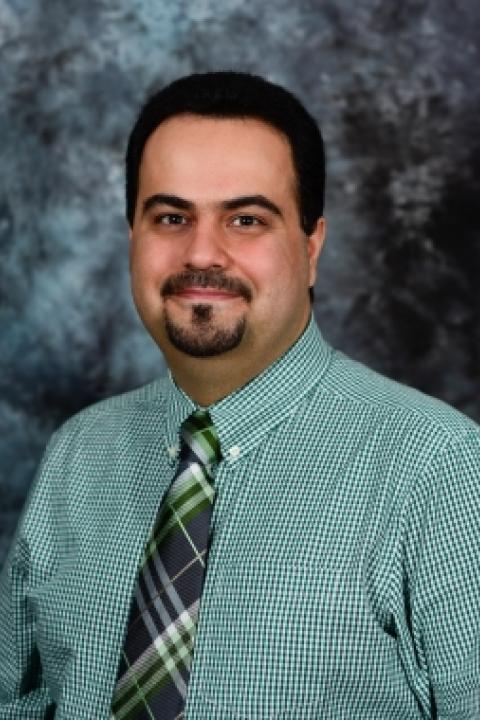
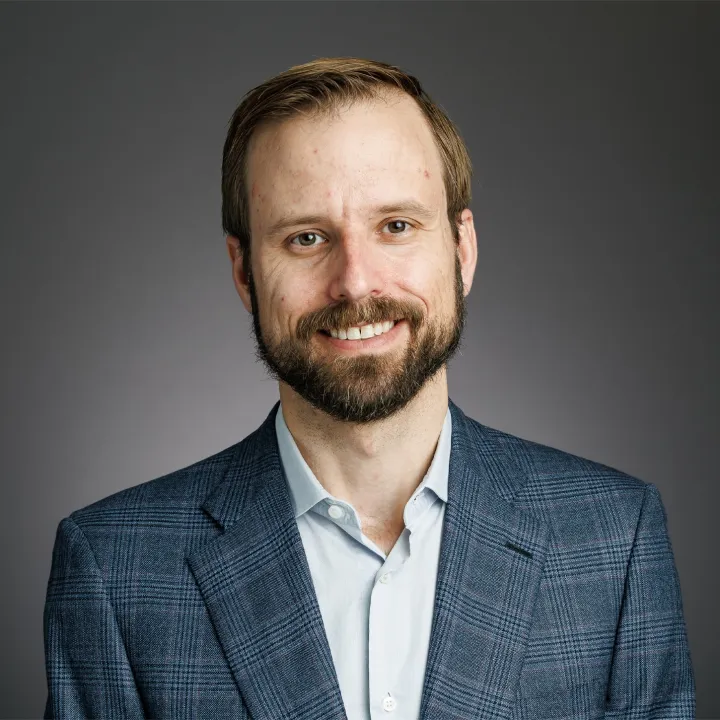
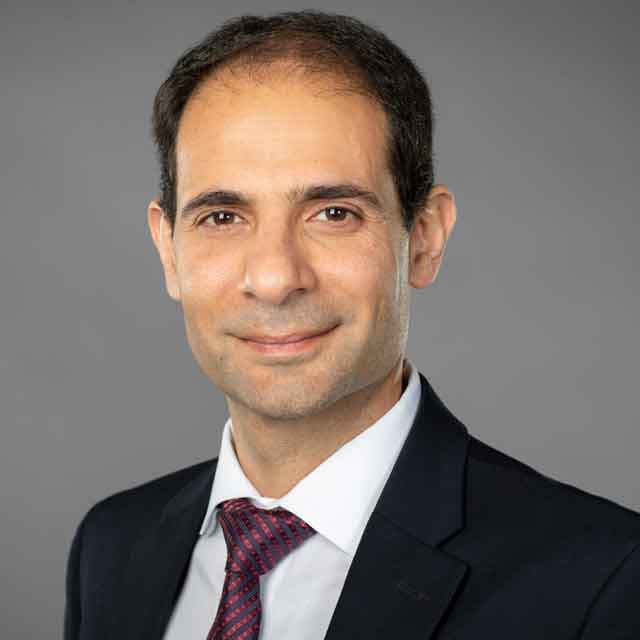
Majid Ghayoomi is a Professor and Civil Engineering Undergraduate Coordinator in the Department of Civil and Environmental Engineering at the University of New Hampshire's College of Engineering and Physical Sciences. His research focuses on geotechnical engineering and geomechanics, particularly unsaturated soil mechanics and geotechnical earthquake engineering. He teaches courses such as Soil Mechanics, Engineering Behavior of Soils, and Geotechnical Modeling. Dr. Ghayoomi holds a Ph.D. from the University of Colorado at Boulder, an M.S. from Sharif University, and a B.S. from the University of Tehran. His research interests include bioremediation, hazards mitigation, soil-structure interaction, and materials testing. He leads the Geotechnical Modeling and Innovation lab, advancing bio-inspired solutions and remote sensing applications in geotechnical systems. His recent work emphasizes climate change impacts on seismic resilience, microbial stabilization of soils, and satellite-based soil moisture monitoring. Key contributions include studies on liquefaction mitigation, seismic site response, and infrastructure vulnerability in dynamic environments. His research spans theoretical, experimental (centrifuge modeling), and computational approaches to address complex geotechnical challenges.
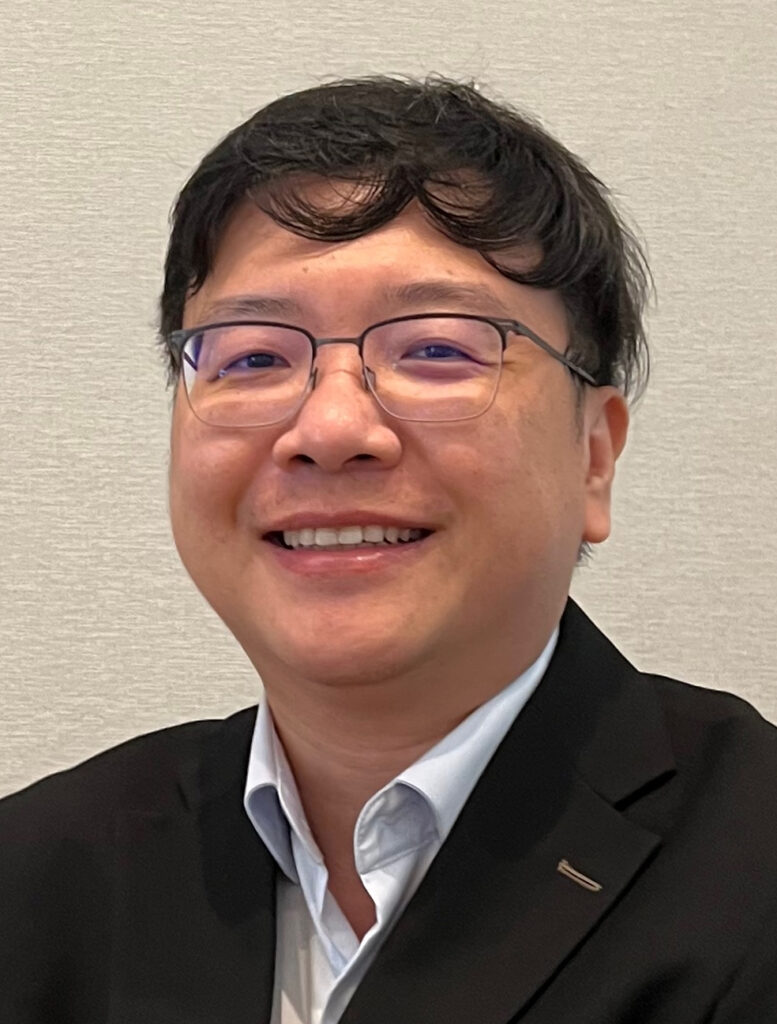
Dr. ONG Ghim Ping Raymond is an Associate Professor and Deputy Head (Research) at the Department of Civil and Environmental Engineering, National University of Singapore (NUS). He concurrently serves as Director (Operations) at the Coastal Protection and Flood Resilience Institute (CFI) Singapore. His expertise spans sustainable pavements, multimodal transport infrastructure, and urban mobility systems. Dr. Ong holds a B.Eng (Civil) with First Class Honours and a PhD from NUS, followed by postdoctoral research at Purdue University. He has authored/co-authored over 85 peer-reviewed journal articles and 120 conference papers. His research focuses on circular economy applications in infrastructure, car-lite urban design, and mega-projects like Tuas Port and Changi Airport expansions. Dr. Ong actively engages in policy advisory roles, serving on international committees for ASCE, ASTM, and EASTS. He has received prestigious awards including the Alfred Noble Prize (ASCE) and Takeuchi Yoshio Award (OCDI). His teaching accolades include multiple NUS Faculty of Engineering commendations. He advises on critical infrastructure projects for agencies like Changi Airport Group and Defence Science and Technology Agency. Dr. Ong frequently contributes to public discourse on transport and urban planning via media interviews and policy consultations.
Dr. Muhammad Gulzari is an Assistant Professor at the School of Civil Engineering, University College Dublin (UCD). Previously, he held positions as Lecturer/Assistant Professor at the University of Galway (2023–2024), Adjunct Assistant Professor at Trinity College Dublin (2022–2023), and a Research Fellow at Trinity College Dublin (2021–2023). He earned his Ph.D. in Civil Structural Engineering from City University of Hong Kong (2021) and a B.Sc. in Civil Engineering from the University of Engineering and Technology Lahore (2017). Education: Bachelor of Engineering, Civil Engineering, University of Engineering and Technology Lahore Ph.D., Civil Structural Engineering, City University of Hong Kong Research Interests: His work focuses on structured materials and dynamics, including finite element modeling, phononic crystals, acoustic and mechanical metamaterials, vibration and noise control, and applications in structural health monitoring. He leads the Structured Materials and Dynamics Lab at UCD, exploring nonlinear and nonreciprocal metamaterials. Teaching and Awards: He has taught courses in Fluid Mechanics, Thermodynamics, and Combustion Engineering. Notable recognitions include the Seal of Excellence Award from the EU-Horizon MSCA Postdoctoral Fellowship (2021) and nominations for teaching excellence awards at Trinity College Dublin and University of Galway. Grants: TimberFlow: Enhancing Efficiency in Mass Timber Construction (Enterprise Ireland, 2025) Indoor Acoustic Quality via Acoustic Metamaterials (Enterprise Ireland, 2025) RUBBERPAVE: ELT Integration in Pavement Construction (Enterprise Ireland, 2024–2026) Deep Learning for Metamaterial Design (Irish Research Council, 2021–2023) Labs and Collaborations: His research group collaborates with industry partners like Amplitude Acoustics and G-frame Structures Ltd. Key projects include developing metamaterials for noise/vibration control and sustainable construction materials.
Benyuan Liu is a Professor at the Miner School of Computer and Information Sciences within the Kennedy College of Sciences at the University of Massachusetts Lowell . He serves as Director and Graduate Coordinator for Ph.D. programs, with expertise in Data and Computer Communication Networks, Mobile and Wireless Networks, and Internet Technologies & Applications. Education: B.S., University of Science and Technology of China M.S., Yale University Ph.D., University of Massachusetts Amherst His research focuses on Artificial Intelligence in Medical Imaging , Deep Learning for Endoscopy , and Edge Computing Systems . Recent work includes automated lesion detection, 3D reconstruction from sensor data, and predictive models for financial and reproductive health domains. The 15 most recent publications highlight applications of deep learning in medical diagnostics (thyroid nodules, gastric lesions, dental caries), computer vision (attention mechanisms, transformers), and financial technology (market psychology analysis). Technical themes include mmwave radar processing, diffusion models for synthetic data, and multi-scale feature extraction. Benyuan Liu leads the Computer Networking Lab and CHORDS initiative at UMass Center for Digital Health. His work bridges network optimization with healthcare AI , emphasizing real-time systems and portable diagnostics.
Nasir Gharaibeh serves as a Professor in the Zachry Department of Civil & Environmental Engineering at Texas A&M University, specializing in infrastructure systems performance, resilience, and management decision-support systems. His academic credentials include: Ph.D. in Civil Engineering from the University of Illinois, Urbana-Champaign (1997) M.S. in Civil Engineering from Jordan University of Science and Technology (1991) B.S. in Civil Engineering from Jordan University of Science and Technology (1990) Dr. Gharaibeh's research program addresses critical infrastructure challenges through computational methodologies for mitigating gradual deterioration and disaster-induced damage. His work spans pavement, bridge, and stormwater systems with pioneering contributions to citizen-science infrastructure monitoring, enabling community-driven data collection and decision-making processes. He develops decision-support tools for resource allocation, maintenance planning, and project selection while advancing sustainable community resilience frameworks through hazard informatics and infrastructure management systems. No information regarding scientific awards was provided in the source material. Details about graduate student supervision and research grants are not specified in the available documentation. Dr. Gharaibeh leads an active research team focused on computational infrastructure modeling and community-engaged monitoring systems, with ongoing projects targeting real-world implementation of resilience strategies.
Kenan Hazirbaba is a Teaching Professor in the Department of Civil Engineering at the University of Texas at Tyler. With extensive teaching experience, he specializes in geotechnical engineering and offers courses in statics, mechanics of materials, soil mechanics, foundation design, and seismic site response. Ph.D. in Civil, Architectural, and Environmental Engineering from The University of Texas at Austin (2005) M.S. in Civil Engineering from Bogazici University (1999) B.S. in Civil Engineering (with distinction) from Istanbul Technical University (1996) Hazirbaba's research focuses on applied and experimental geotechnical engineering, particularly the behavior of saturated soils under cyclic loading and non-traditional soil stabilization techniques. His work addresses critical challenges in cold regions, including freeze-thaw effects on soil mechanics and seismic response in permafrost areas. His publications highlight expertise in geofiber-reinforced sands, synthetic fluid stabilization, and seismic design of earth-retaining structures. Research has secured over $2 million in funding from state and non-governmental agencies, emphasizing practical solutions for civil engineers. Hazirbaba is a Registered Professional Engineer in Alaska and promotes undergraduate research engagement. His certifications and applied research bridge academic theory with real-world engineering applications.
Imad L. Al-Qadi is the Grainger Distinguished Chair in Engineering and Director of the Illinois Center for Transportation (ICT) at the University of Illinois at Urbana-Champaign (UIUC). He holds a Ph.D. in Civil Engineering from Penn State and has held faculty positions at Virginia Tech and Penn State. His research focuses on sustainable transportation infrastructure, pavement mechanics, and advanced materials. Al-Qadi leads initiatives like the Illinois Autonomous and Connected Track (I-ACT), a high-speed test facility for autonomous vehicles and energy harvesting systems. Key roles include: Director of ICT, advancing multimodal transportation infrastructure Pioneer of the Smart Road and full-scale pavement testing Founder of the Academy of Pavement Science and Engineering Research interests span: Highway/airfield sustainability Tire-pavement interaction Energy harvesting Electric vehicles' infrastructure impact Leadership roles include past presidency of ASCE's Transportation and Development Institute and editorship of the International Journal of Pavement Engineering. He has authored over 1,000 publications, including 390 refereed papers, and secured over 180 research grants from federal agencies and industry. Awards include NSF Young Investigator Award (1994), TRB Crum Award (2023), and 2024 Executive Leadership Fellow. His work is internationally recognized, with honorary professorships at institutions in China, Sweden, and the UK.
Drew R. Gentner is an Associate Professor of Chemical & Environmental Engineering at Yale University, with an additional appointment in the School of the Environment. His research focuses on air quality, atmospheric chemistry, and their intersections with climate, energy, and health. He holds a B.S. from Northwestern University and a Ph.D. from UC Berkeley. Affiliations: Yale School of Engineering & Applied Science, Yale School of the Environment Research Interests: Complex organic mixtures, urban air quality, non-traditional emissions (e.g., volatile chemical products), indoor air pollution, climate impacts of energy systems. Dr. Gentner leads the Gentner Research Group, which employs advanced analytical techniques and sensor networks to study atmospheric processes. Recent work highlights the role of asphalt and commercial cooking emissions in urban pollution. His team collaborates on large-scale field campaigns like AEROMMA and ASCENT. Key findings include identifying gaps in emissions reporting and demonstrating the health risks of aged wildfire smoke. His group develops low-cost sensors and calibration methods for high-spatiotemporal air quality monitoring. Grants & Funding: NSF, NOAA, EPA, and private foundations support his work on energy efficiency, sensor networks, and pollution mitigation. Labs/Teams: SEARCH Center at Yale, Atmospheric Science and Chemistry mEasurement NeTwork (ASCENT), and collaborations with Environment and Climate Change Canada.
Dr. XiaoYue Cathy Liu is an Associate Professor in the Department of Civil & Environmental Engineering at the University of Utah. She holds a PhD in Transportation Engineering from the University of Washington and advanced degrees in Transportation Planning and Electronics Engineering. Her research focuses on sustainable transportation systems, shared mobility, public transit optimization, managed lanes, and intelligent transportation systems. She actively serves on committees including the Transportation Research Board's Highway Capacity Quality of Service (HCQS) Committee and chairs its Technology Transfer Subcommittee. She also advises the Utah Model Advisory Committee and previously served on Salt Lake City’s Transportation Advisory Board. Dr. Liu is a licensed professional engineer in Utah. Education: PhD, Transportation Engineering, University of Washington (2013) MA, Transportation Planning & Management, Texas Southern University BS, Electronics & Electrical Engineering, Beijing Jiaotong University Graduate Certificate, Global Trade & Logistics, University of Washington (2011) Research Interests: Electric vehicle infrastructure and charging networks Smart transportation systems and agent-based modeling GIS-based asset management for transportation infrastructure Snowplowing operations optimization and winter maintenance Managed lanes and high-occupancy toll (HOT) lane analysis Public transit equity and accessibility Her recent publications emphasize data-driven approaches to transportation challenges, including EV demand forecasting, drone delivery networks, and resilience in interdependent transit systems. She collaborates on projects addressing Utah’s unique transportation needs, such as optimizing snowplow routes and integrating renewable energy into public transport systems. Professional Contributions: Board member, Utah Model Advisory Committee Former Chair, Salt Lake City Transportation Advisory Board (2013-2016) TRB Managed Lane Committee member TRB Transit Capacity & Quality of Service (TCQS) Committee member (2016-2019) Dr. Liu’s work bridges transportation engineering with computational methods, focusing on equity, sustainability, and operational efficiency. She leads research initiatives involving large-scale modeling, geospatial analytics, and interdisciplinary solutions for modern mobility challenges.
Kunhee (KC) Choi is a Professor in the Department of Construction Science at Texas A&M University, holding the History Maker Homes Endowed Professorship and serving as a Chancellor EDGES Fellow. His research focuses on enhancing transportation systems through cyber-enabled solutions, including digital twinning, artificial intelligence, and data-driven modeling. B.E. in Architectural Engineering, Korea University (1999) M.S. in Construction Science, Texas A&M University (2002) Ph.D. in Civil and Environmental Engineering, University of California, Berkeley (2008) Dr. Choi’s work addresses four key areas: (1) AI-powered mobility and safety solutions for highway projects, (2) cost-time-risk tradeoff analyses under alternative contracting methods, (3) infrastructure sustainability through life-cycle assessment, and (4) stochastic modeling for civil planning and management. His research has been funded by NSF, USDOT, NCHRP, and TxDOT. Recent publications highlight his emphasis on predictive analytics, flood resilience, pavement engineering, and AI-driven disaster recovery frameworks. The i²dEAS Lab, which he directs, has produced 130+ peer-reviewed publications and secured $500k+ in annual research funding. Chancellor EDGES Fellow (2022) NSF Grant Recipient for Road Safety Research Texas Sea Grant Program Award (NOAA Funding) for AI-based evacuation route modeling Dr. Choi’s teaching philosophy emphasizes integrative learning and interdisciplinary critical thinking in construction management. His lab collaborates with academia, government, and industry to optimize transportation infrastructure performance through safer, more efficient management strategies.
Dieu Tien Bui is a Full Professor in the Department of Business and IT at the University of South-Eastern Norway (USN) School of Business. His research focuses on Geospatial Artificial Intelligence Machine Learning GIS and Remote Sensing Natural Hazard Modeling Environmental Problems (landslides, floods, soil salinity, biomass) . He has contributed to over 15 recent publications in journals like Science of the Total Environment , Remote Sensing , and Geomorphology , emphasizing hybrid AI models for landslide and flood susceptibility. His work spans Vietnam, India, China, and Iran with applications in climate change adaptation and disaster management. Scientific Awards: Global Highly Cited Researcher PhD Supervision: He has supervised 8 PhD students at institutions including USN, NTNU, and Vietnamese universities.
Elie Hajj is a Professor in the Department of Civil & Environmental Engineering at the University of Nevada, Reno (UNR), serving as Associate Director of the Western Regional Superpave Center. His research focuses on asphalt pavement engineering, sustainable materials, and infrastructure resilience. He specializes in pavement rehabilitation, numerical modeling of dynamic load impacts, and economic analysis of pavement preservation strategies. Dr. Hajj has received recognition for his 2016 ASTM award for outstanding work on pavement rehabilitation economics. He actively engages in professional service, including TRB webinars and academic seminars on topics like pavement damage assessment and vehicle operating costs. His teaching spans graduate and undergraduate courses in pavement design, materials engineering, and advanced pavement analysis. His research integrates experimental and computational methods to address challenges in pavement performance under superheavy loads, recycled material utilization, and energy-efficient construction practices. Collaborations with industry and government agencies enhance the practical applicability of his findings.
Professor Inge Hoff is affiliated with the Norwegian University of Science and Technology (NTNU) in the Department of Civil and Environmental Engineering, where he has served since 2009. Prior to this, he held roles as senior researcher and research leader at SINTEF. Research Interests : Materials for road construction, frost protection, laboratory testing, pavement dimensioning, road rehabilitation, state development modeling, ground-penetrating radar surveys, and concrete/natural stone coverings. Students : Mentors active PhD fellows Lisa Hannasvik, Arman Hamidi, Clara Weber, and Shoiab Ahmad. Teaching : Coordinates courses like TBA4204/BYGT1102 Transport Infrastructure , BYGT2204 Road and Railway Construction , and BA8600 Pavement Structure Dimensioning . Recent publications highlight his expertise in granular material behavior, asphalt durability under climate stressors, and advanced structural assessment techniques. Collaborations with international researchers and presentations at major conferences (TRB, International Conference on Bituminous Mixtures) demonstrate his ongoing contributions to road engineering.
Andrew F. Braham is a Professor in the Department of Civil Engineering at the University of Arkansas, College of Engineering. He holds a Ph.D. from the University of Illinois at Urbana-Champaign and is a licensed Professional Engineer (P.E.). His research focuses on asphalt emulsion technology, pavement maintenance and rehabilitation, and sustainability in civil engineering. Dr. Braham directs a comprehensive laboratory specializing in flexible pavement materials research and serves as Associate Director of the Southern Plains Transportation Center. Dr. Braham earned his Ph.D. from the University of Illinois at Urbana-Champaign (2008), M.S. (2002) and B.S. (2000) from the University of Wisconsin-Madison. Following his doctoral studies, he completed a Post-Doctoral Research Fellowship at Southeast University in Nanjing, China (2009-2010). His research interests center on asphalt emulsion technology, pavement maintenance and rehabilitation techniques, and sustainability applications in civil engineering. Dr. Braham has developed innovative testing methodologies for asphalt emulsion particle size analysis and has extensively studied cold in-place recycling and full-depth reclamation processes. His work bridges laboratory research with practical field applications, focusing on extending pavement life while reducing costs and environmental impacts. Analysis of Dr. Braham's recent publications reveals a strong focus on asphalt emulsion characterization, pavement preservation techniques, and sustainable infrastructure solutions. His research spans material science, transportation engineering, and environmental considerations, with particular emphasis on practical applications for state transportation agencies. The work demonstrates progression from fundamental material characterization to applied field implementation and economic analysis. Associate Director of Southern Plains Transportation Center (SPTC) (2023-present) Chair of TRB Committee AKN18 'Pavement Maintenance, Preservation, and Rehabilitation' (2025-present) Co-chair of AASHTO TSP-2 Emulsion Task Force Research Subcommittee (2023-present) Member of International Slurry Surfacing Association (ISSA) Sustainability Committee (2025-present) Dr. Braham has advised numerous graduate students through their doctoral and master's research, with many now working in transportation agencies and research institutions. His research has been funded by diverse sources including the Arkansas Department of Transportation, Federal Highway Administration, National Science Foundation, and various industry associations. He has developed and taught multiple courses on transportation infrastructure, sustainability in civil engineering, and pavement design. His laboratory capabilities include comprehensive testing for asphalt binder, asphalt emulsion, and asphalt mixture analysis. He also directs the TREAT Mobile Lab, which provides hands-on training for asphalt emulsion applications and pavement preservation techniques across the country.
Dr. Nicholas Brake is an Associate Professor at Lamar University's Department of Civil and Environmental Engineering, focusing on reclaimed materials, wireless power transfer applications in concrete, and fatigue fracture modeling for pavements. His research spans recycled concrete aggregate, coal ash utilization, and electromagnetic cementitious composites. Education: Ph.D., M.S., B.S. in Civil Engineering from Michigan State University Awards: Anita Riddle Fellowship (2018), Lamar Merit Award (2018), Presidential Faculty Fellowship (2015), and multiple scholarships during his studies. His research emphasizes three key areas: 1) Material reclamation using recycled concrete aggregate, coal combustion residuals, and EAF slag. 2) Electromagnetic transport properties for wireless vehicle charging applications. 3) Fatigue damage modeling in concrete pavements. Through 3D printing integration and design-build-test pedagogy, he enhances student learning outcomes. Recent publications focus on international engineering education (2020), magnetic concrete composites (2019), and advanced testing methodologies for civil infrastructure (2018). His teaching innovation includes developing nine Lamar University courses with active learning strategies that improved student design confidence (p Scientific Awards: Anita Riddle Excellence in Teaching Fellowship (2018) Presidential Faculty Fellowship for Teaching Innovation (2015) Outstanding Teaching Assistant Award at Michigan State (2011) Dr. Brake mentors undergraduate and graduate researchers, including doctoral candidates Mahdi Feizbahr and Hossein Hariri Asli (2023-2024). His lab (LUMS) houses advanced testing systems like Instron 5965/8803, MTS Insight 100SL, and thermal analyzers for material characterization.