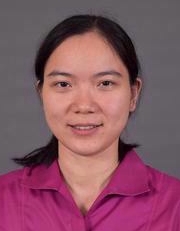
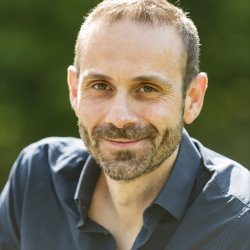
Dr. Rui Dai is an Associate Professor in the Department of Computer Science at the University of Cincinnati's College of Engineering and Applied Science. Her research focuses on wireless sensor networks, multimedia communications, and video analytics for healthcare and surveillance applications. She directs multiple NSF and NIST-funded projects on perceptual-quality-aware video systems. Research interests include quality-of-experience optimization for video analytics, compressed domain feature extraction, and edge computing frameworks for intelligent surveillance. Recent work develops deep feature compression techniques, multi-camera fall detection systems, and quality-aware video distribution strategies for 5G networks. Publications demonstrate consistent innovation in video processing for resource-constrained environments, with applications spanning healthcare monitoring, public safety networks, and embedded vision systems. Current projects investigate metaverse communication challenges for 6G networks and PHP vulnerability detection through hybrid static-fuzzing analysis.
Giorgos Mountrakis is a Professor in the Department of Environmental Resources Engineering at SUNY College of Environmental Science and Forestry (ESF). His research focuses on environmental monitoring using remote sensing, environmental modeling through geographic methods, and decision support systems for ecological and urban challenges. He holds a Dipl. Eng. from the National Technical University of Athens (1998), an M.S. (2000), and Ph.D. (2004) from the University of Maine. His work integrates advanced technologies like satellite imagery, LiDAR, and machine learning to address land cover dynamics, climate impacts, and wildlife conservation. Current advisees include Atef Amriche (PhD candidate in Geospatial Information Science), Babak Haji Seyed asadollah (PhD in Environmental Resources Engineering), Ahmadreza Safaeinia (PhD in Environmental Resources Engineering), and Zhixin Wang (PhD in Geospatial Information Science). Key research themes include: land use/cover classification using deep neural networks, climate change impacts on forests and rangelands, and optimizing spatial-temporal models for large-scale environmental analysis. His projects span global datasets (e.g., Landsat, MODIS) and regional case studies in the US, Mongolia, and Algeria. Publications emphasize methodological advancements in remote sensing, such as fusion of multisensor data, accuracy assessment frameworks, and applications in biodiversity conservation. His work bridges technical innovation with practical environmental decision-making, addressing issues like urban growth prediction and wildlife-vehicle collision mitigation.
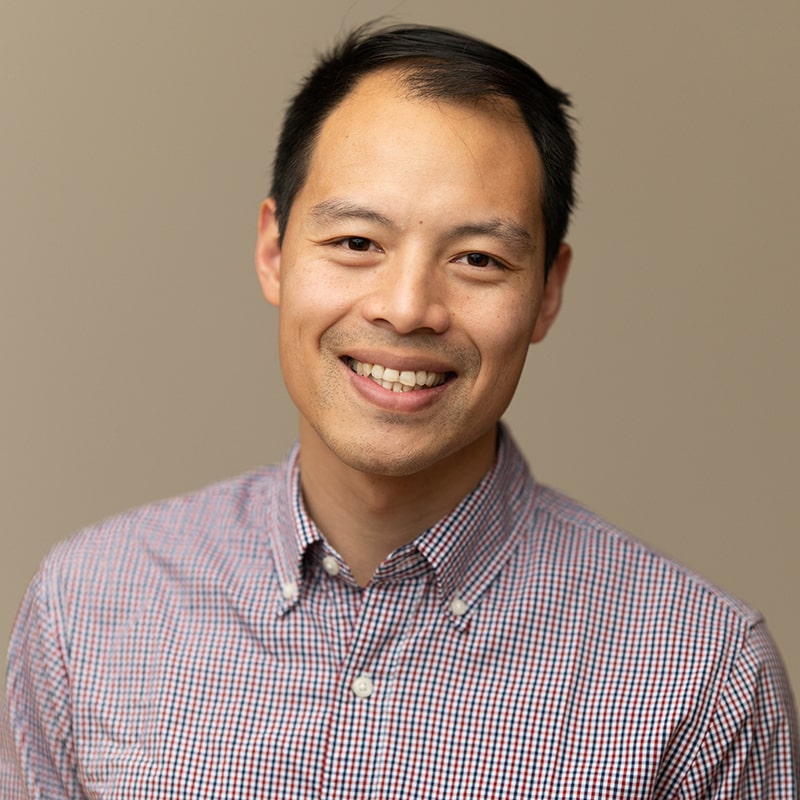
Jonathan Tsay is an Assistant Professor in the Department of Psychology at Carnegie Mellon University, affiliated with the Dietrich College of Humanities and Social Sciences. His research focuses on understanding human motor learning through computational modeling, neuropsychology, and psychophysics, with applications to clinical rehabilitation and brain-computer interfaces. Education: B.A. in Mathematics from Northwestern University; D.P.T. from Northwestern University's Feinberg School of Medicine; Ph.D. in Psychology from UC Berkeley. Research Interests: Investigating how humans master complex movements through cognitive and neural mechanisms. Key areas include sensorimotor adaptation, implicit learning processes, and the interplay between perception and action. His work integrates experimental methods with computational models to explore motor control in health and disease. Labs/Teams: Leads the Physical Intelligence Lab (Pi-Lab), studying movement diversity and optimization through interdisciplinary approaches. The lab emphasizes translational research to improve clinical interventions and human performance technologies.
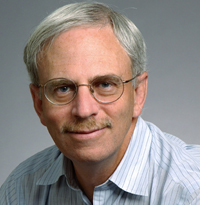
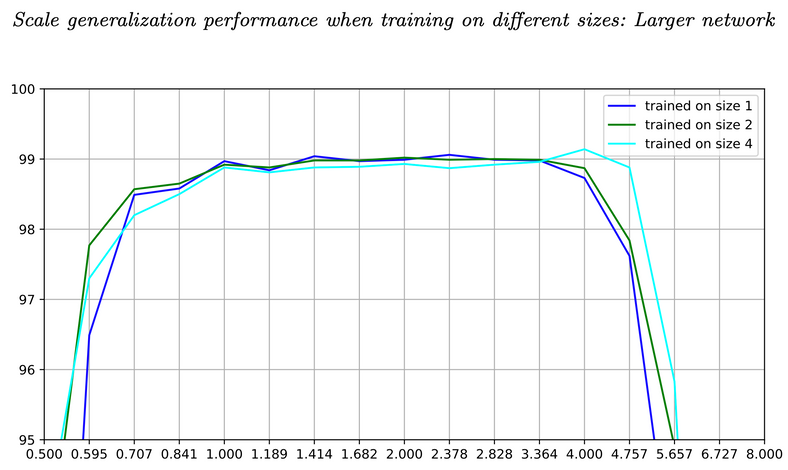
John Guttag is the Dugald C. Jackson Professor in Electrical Engineering and Computer Science at MIT. His work focuses on AI-driven healthcare solutions, biomedical systems, and advanced computer vision applications. He leads research in medical image analysis, machine learning reliability, and healthcare equity. Guttag's contributions include innovative frameworks like MultiMorph and Scale-Space Hypernetworks, addressing challenges in medical imaging and clinical decision-making. Affiliations: MIT Electrical Engineering & Computer Science Department (EECS) Research emphasizes AI for healthcare, particularly in segmentation, predictive analytics, and ethical algorithm design. Notable projects include real-time fraud detection systems and studies on racial disparities in clinical risk scores. His work bridges computer science with clinical practice through tools like Voxelmorph for medical image registration and ScribblePrompt for interactive biomedical segmentation. Recent publications highlight advancements in uncertainty-aware AI, contrastive learning, and scalable medical data processing. Guttag’s methodologies prioritize practical clinical applications, aiming to improve diagnostics and healthcare workflows. His lab develops open-source tools and frameworks that enhance accessibility to advanced medical imaging technologies.
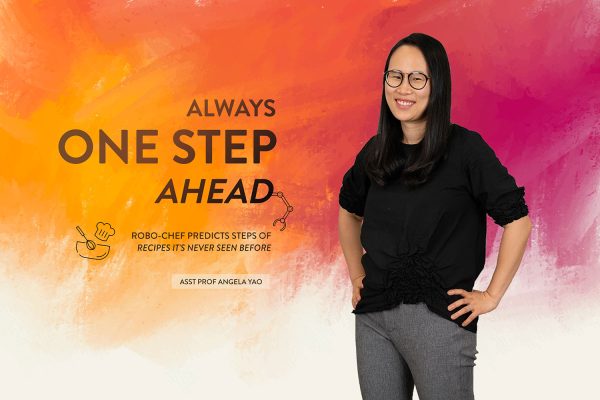
Angela Yao is a Dean's Chair Associate Professor and Assistant Dean of Research at the National University of Singapore's School of Computing, Department of Computer Science. She leads the Computer Vision and Machine Learning Group and specializes in visual perception of people, focusing on both high-level semantics of human actions and lower-level physical modeling. Her research interests span Computer Vision , Machine Learning , and Artificial Intelligence , with specific expertise in human action recognition, 3D human modeling, video understanding, and small data AI. Dr. Yao's work bridges theoretical advances with practical applications, particularly in activity anticipation and human-computer interaction. Dr. Yao's publication trends reveal a strong focus on zero-shot learning for activity anticipation, 3D human modeling, and techniques for working with limited training data. Her research has evolved from foundational work in 3D pose estimation to more recent innovations in diffusion models and cross-modal learning, demonstrating consistent contributions to advancing computer vision capabilities. NRF Fellowship for Artificial Intelligence (2019) German Pattern Recognition (DAGM) Award (2018) Dr. Yao has successfully mentored PhD students including Fadime Sener and secured significant research funding including the NRF Fellowship. Her research group focuses on developing AI systems capable of understanding and anticipating human activities with applications in robotics and human-computer interaction. She teaches CS4243 Computer Vision and Pattern Recognition and leads the Computer Vision and Machine Learning Group at NUS Computing.
Associate Professor Leow Wee Kheng is affiliated with the Department of Computer Science at the School of Computing, National University of Singapore . His career spans over three decades with expertise in medical image analysis , computer vision , and surgical simulation . Ph.D. in Computer Science, University of Texas at Austin (1994) M.Sc. in Computer Science, National University of Singapore (1989) B.Sc. in Computer Science, National University of Singapore (1985) His research focuses on medical image analysis for craniofacial surgery and stroke diagnosis, 3D modeling of anatomical structures, and computer vision techniques like robust PCA and texture analysis . Recent work includes knee joint motion modeling and forearm rotation simulation for clinical applications. Key trends in his 2017-2025 publications involve skull reconstruction algorithms , multi-objective optimization for digital media, subject-specific biomechanical modeling , and low-rank decomposition techniques in visual computing. Collaborations include institutions like Singapore General Hospital and National Taiwan University Hospital . Scientific Awards : CAIP 2017 Best Paper Award 2007 Andrew P. Sage Best Transactions Paper Award Faculty Teaching Excellence Award (AY2015/16) Annual Teaching Excellence Award (AY2015/16) He has mentored numerous students in medical imaging , computer vision , and biomedical modeling . Current and former advisees include Chen Ying , Vineta Lum Lai Fun , and Long Huizhong (Ph.D.).
Katie Marshall is an Assistant Professor in the Department of Zoology at the University of British Columbia’s Faculty of Science. Her research focuses on the physiological and ecological mechanisms underlying species’ survival in cold environments, particularly in intertidal invertebrates and forest pest insects. She explores how low-temperature adaptation affects population growth and geographic range limits, aiming to predict climate change impacts on species distributions. Dr. Marshall is affiliated with the Biodiversity Research Centre and the Comparative Physiology Group, emphasizing interdisciplinary collaboration in ecology and evolutionary biology. Her work integrates biological and environmental disciplines, combining molecular studies with ecological observations. For instance, she investigates ice-binding proteins in marine invertebrates and metabolic adaptations in insects and mussels exposed to freezing conditions. She also utilizes advanced technologies like machine learning and DNA metabarcoding for species classification and ecosystem monitoring. Dr. Marshall’s research addresses key questions about why species have specific geographic ranges and how they might respond to environmental changes. Recent studies highlight themes such as the evolutionary origins of cold tolerance, the effects of temperature fluctuations on insect survival, and the interplay between climate variables and organismal physiology. She emphasizes understanding functional traits and eco-evolutionary dynamics to improve predictive models for species range shifts and ecosystem management. Though no specific scientific awards or grants are listed in the provided texts, her contributions to biodiversity and physiological ecology are evident through her active research and lab leadership. The Marshall Lab collaborates broadly within the Zoology Department and across UBC’s Biodiversity Research Centre to advance knowledge in these critical areas.
Professor Bruno A. Olshausen is affiliated with the Helen Wills Neuroscience Institute and the School of Optometry at the University of California, Berkeley. He also serves as the Director of the Redwood Center for Theoretical Neuroscience , focusing on computational models of sensory coding and visual perception. Ph.D. in Computation and Neural Systems (Caltech, 1994) M.S. and B.S. in Electrical Engineering (Stanford, 1987 and 1986) His research investigates how the brain processes sensory information by developing probabilistic models of natural images and neural circuits. Key contributions include sparse coding models that replicate receptive field properties of the primary visual cortex (V1), and work on extending these models to learn invariances and hierarchical structures. He has also collaborated with electrical engineers to design low-power analog memory systems inspired by brain computation, and developed software tools like SPARSENET and SPARSEPYR for neural signal processing. His work spans computational neuroscience, theoretical modeling, and interdisciplinary applications in vision science. As an educator, he has co-instructed courses such as Vision Science 206D (Neuroanatomy of the visual system) and Vision Science 212B (Visual neurophysiology), and independently taught Vision Science 265: Neural Computation at Berkeley and Psychology 290 at UC Davis. He co-edited the book Probabilistic Models of the Brain: Perception and Neural Function (MIT Press, 2002) and organized workshops at institutions like the Gordon Research Conference and Nature Neuroscience .
Miroslaw Bober is Professor of Video Processing at the University of Surrey, where he joined in 2011. He leads the Visual Media Analysis team within the Centre for Vision, Speech and Signal Processing (CVSSP) in the School of Computer Science and Electronic Engineering. His extensive industry experience includes 15 years as General Manager of the Mitsubishi Electric R&D Centre Europe and Head of Research for its Visual & Sensing Division. BSc and MSc in Electrical Engineering from AGH University of Science and Technology, Krakow, Poland (1990) MSc in Machine Intelligence with distinction from Surrey University (1991) PhD in Computer Vision from Surrey University (1995) Professor Bober's research focuses on novel techniques in signal processing, computer vision and machine learning with applications in industry, healthcare, big-data and security. His expertise particularly lies in image and video analysis and retrieval, including visual search, object recognition, and analysis of motion, shape and texture. His algorithms for shape analysis, image/video fingerprinting, and visual search are considered world-leading and have been selected for ISO International standards within MPEG, with applications used by organizations like the Metropolitan Police. His recent publication trends show a strong focus on hybrid network architectures, scene graph generation, medical imaging applications, and augmented reality publishing systems. His work spans both theoretical advancements in computer vision and practical implementations addressing real-world challenges in media, healthcare, and security domains. The research demonstrates a consistent pattern of bridging academic innovation with industrial applications, particularly in visual search technology and media analysis. Presidential Award for strengthening the TV business in Japan via innovative 'Visual Navigation' content access technology (2010) Mitsubishi Best Invention Award for Image Signature Technology (2008) Professor Bober serves as Programme Director for the MSc in Multimedia Signal Processing and Communications and holds various teaching and mentoring roles. He has secured over 30 research and industrial grants totaling more than £16M, including the BRIDGET FP-7 project (5.28 M€) as coordinator and PI, and the CODAM project (£1.05 M) as PI. His work with the BBC, Huawei, and other industry partners demonstrates strong industry-academia collaboration. As chair of MPEG technical work on Compact Descriptors for Visual Search (CDVS) and Compact Descriptors for Video Analysis (CDVA), Professor Bober leads international standardization efforts. His Visual Media Analysis team develops cutting-edge visual search and media analysis algorithms with applications across broadcast, security, and healthcare domains.
Dr. Christopher Gilliam is an Assistant Professor in Applied Signal Processing at the University of Birmingham's Department of Electronic, Electrical and Systems Engineering. He holds an MEng (1st Class Hons) in Electrical & Electronic Engineering (2008) and a Ph.D. in Signal Processing (2013), both from Imperial College London. Prior to joining Birmingham in 2022, he was a Postdoctoral Fellow at The Chinese University of Hong Kong (2013–2017) and a Research Fellow at RMIT University, Australia (2017–2022). Research Interests: Sensor signal processing, radar imaging, sampling theory, motion estimation, quantum navigation, and medical imaging. Labs: Microwave Integrated Systems Laboratory (MISL). Committees: Member of IEEE Signal Processing Society and APSIPA Technical Committees. His work focuses on advancing signal processing techniques for radar systems, navigation, and medical imaging. Recent research highlights include drone-based SAR imaging, motion correction in MRI, and fusion of classical/quantum sensors for inertial navigation. He is actively supervising PhD students and contributes to projects sponsored by DSTG. Publications span radar SLAM, probabilistic navigation algorithms, and deep learning-driven medical imaging solutions. His research bridges theoretical signal processing with practical applications in autonomous systems and healthcare.
Steve Marron is the Amos Hawley Distinguished Professor of Statistics and Operations Research at the University of North Carolina at Chapel Hill (UNC-CH). He holds a joint appointment in the School of Data Science and Society and is a professor in the Department of Biostatistics at the Gillings School of Global Public Health. Additionally, he serves as an adjunct professor in the Department of Computer Science within the College of Arts & Sciences. His research focuses on statistics, data science, and machine learning, with a particular emphasis on integrating diverse data types such as genomics, imaging, and demographic data. Education: Marron earned an AA from Orange Coast College (1974), BS from University of California, Davis (1977), and PhD from UCLA (1982). He has held faculty positions at UNC-CH since 1982 and Cornell University (2001-2002). His honors include Fellowships from the Institute of Mathematical Statistics and American Statistical Association, and he is a top-cited mathematician (1991-2001). Research interests include object-oriented data analysis, high-dimensional data methods (HDLSS), visualization techniques like SiZer, and statistical methodology for imaging and genomics. Notable contributions include Distance-Weighted Discrimination (DWD), Principal Nested Spheres, and JIVE for data integration. His work has applications in cancer genomics, medical imaging, and bioinformatics. Awards and recognitions include the Amos Hawley Professorship, S. N. Roy Memorial Lectureship, and Saw Swee Hock Visiting Professorship. Marron has advised numerous students and collaborated on NIH-funded grants, including studies on cancer genomics and imaging. His lab focuses on developing statistical tools for complex, multi-source data analysis.
Tony Lindeberg is a Professor of Computer Science—Computational Vision at KTH Royal Institute of Technology, affiliated with the Division of Computational Science and Technology. He teaches the course Image Analysis and Computer Vision (DD2423). His research focuses on scale-space theory, early vision, and computational modeling of biological and auditory vision systems. Key contributions include theories on receptive fields, time-causal spatio-temporal models, and feature detection algorithms. Research interests span computational neuroscience, medical image analysis, and spatio-temporal recognition. Lindeberg has pioneered work on scale-invariant image features, affine transformations, and Galilean diagonalization for motion analysis. He is the author of the foundational book Scale-Space Theory in Computer Vision (1993). His work bridges computer vision and biological vision systems, with applications in gesture recognition, dynamic texture analysis, and neural networks. He leads the Vision Lab and Computational Brain Science Lab at KTH, emphasizing theoretical rigor and practical algorithms for visual perception tasks.
Dr. Michael Shekelyan is a Lecturer (Assistant Professor) in Computer Science at Queen Mary University of London (QMUL), part of the School of Electronic Engineering and Computer Science. He holds a PhD in Computer Science from the Libera Università di Bolzano (2018) and a Diploma in Media Informatics from the University of Munich (2014). His research focuses on developing algorithms and data structures for managing large and sensitive datasets, with a particular emphasis on privacy-preserving techniques like differential privacy and federated learning. He has held postdoctoral roles at the University of Warwick and King's College London before joining QMUL in 2023. Research Interests: Privacy-preserving algorithms, differential privacy, federated learning, data management systems, randomized algorithms, and efficient query processing. His work bridges theoretical foundations with practical applications, aiming to enable secure data sharing while preserving individual privacy. Teaching: Leads undergraduate modules in Database Systems and Operating Systems at QMUL. His teaching emphasizes foundational concepts in computer science through rigorous coursework and practical projects. Grants and Funding: Currently supervises a PhD studentship titled 'Privacy-Preserving Algorithms: Unlocking Data Sharing for Medical Sciences & Machine Learning', funded by QMUL and open to UK home students. The role involves exploring privacy-preserving frameworks for collaborative data analysis. Professional Contributions: Serves as a reviewer for top-tier conferences (NeurIPS, ICML, SIGMOD, ICDE) and journals (IEEE TKDE, Data & Knowledge Engineering). Actively involved in conference organization, including NeurIPS Area Chair (2024) and ICDT Proceedings Chair (2024). Labs and Collaborations: Affiliated with the Centre for Fundamental Computer Science at QMUL, fostering interdisciplinary research in theoretical and applied computing. Engages with industry partners on privacy-enhancing technologies and data management solutions.
Professor Ferrante Neri is a faculty member at the University of Surrey, holding the positions of Professor of Machine Learning and Artificial Intelligence and Associate Dean (International) for the Faculty of Engineering and Physical Sciences (FEPS). He is affiliated with the Nature Inspired Computing and Engineering Research Group, Surrey Institute for People-Centred AI (PAI), and the Computer Science Research Centre within the School of Computer Science and Electronic Engineering. His research focuses on optimization, explainable AI, and machine learning, with contributions to memetic computing and differential evolution. Since 2010, he has chaired the IEEE Task Force on Memetic Computing. He advises PhD students in topics like dynamic multi-objective optimization and AI-driven applications. His teaching expertise includes mathematical foundations for computer science. He has supervised students such as Aisha E S E Saeid and Pengjin Wu. Notable research areas include evolutionary algorithms, neural architecture search, and applications in robotics and environmental monitoring. Labs and teams include the Nature Inspired Computing group, which explores AI-driven solutions for complex problems. His work bridges theoretical advancements and practical applications in fields like autonomous systems and deep learning.
Ulisses Braga-Neto is a Professor in the Department of Electrical and Computer Engineering at Texas A&M University, part of the College of Engineering. He holds a Ph.D. from The Johns Hopkins University (2002), with earlier degrees including an M.S. from the Federal University of Pernambuco (1992). His research focuses on statistical signal processing, pattern recognition, and machine learning, with applications in bioinformatics, materials informatics, and environmental modeling. He leads the TAMIDS Scientific Machine Learning Lab and has authored over 100 publications. Key research areas include physics-informed neural networks for environmental and engineering problems, error estimation in classification systems, and gene regulatory network inference. His recent work emphasizes machine learning applications in agriculture (e.g., cotton detection in corn fields using UAS), CO2 sequestration modeling, and wildfire prediction. He has contributed to foundational texts like Error Estimation for Pattern Recognition (Wiley-IEEE, 2015). Prof. Braga-Neto's interdisciplinary approach bridges computer science, engineering, and biology. His lab develops algorithms for data-poor environments, with applications in genomics, proteomics, and metagenomics. He advises graduate students through Texas A&M's ECE program, emphasizing rigorous statistical methods alongside machine learning innovation.