Adjunct Professor Evgeny Osipov is affiliated with La Trobe University's Business Analytics department. His research spans artificial intelligence, hyperdimensional computing, and neural network architectures. Academic Rank: Adjunct Professor Department: Business Analytics Email: E.Osipov@latrobe.edu.au Research interests include: Hyperdimensional computing and vector symbolic architectures Spiking neural networks and reservoir computing Hardware-efficient AI implementations Causal reasoning in large language models Self-organizing maps and spatiotemporal sequence learning Applications in smart cities and robotic navigation Recent research outputs demonstrate expertise in: Developing unsupervised learning frameworks using hypervectors Optimizing reservoir computing with cellular automata Creating memory-efficient neural network models Advancing hyperdimensional classification techniques Exploring causal graph integration in language models
Geoffrey Hinton is a Professor in the Department of Computer Science at the University of Toronto , where he has been a pivotal figure in advancing artificial intelligence research. His work focuses on neural networks, deep learning, and machine learning, revolutionizing how machines process information and learn from data. With collaborations spanning institutions like NYU and IIT Mumbai, Hinton’s influence extends beyond academia into public discourse through lectures like the Romanes Lecture (2024) . His research explores Deep Belief Networks , Gradient Methods , Neural Network Architectures , and Probabilistic Models , with recent publications addressing novel algorithms like the Forward-Forward Algorithm and frameworks for Panoptic Segmentation . Though he no longer accepts students, current advisees include Jimmy Lei Ba and Cem Anil. Hinton’s contributions to AI are complemented by media engagements, including CBS 60 Minutes (2023) and CNN Amanpour (2023) , reflecting his role as a thought leader. His technical outputs, such as Nature Deep Learning Review (2015) with Y. LeCun and Y. Bengio, remain foundational texts in the field.
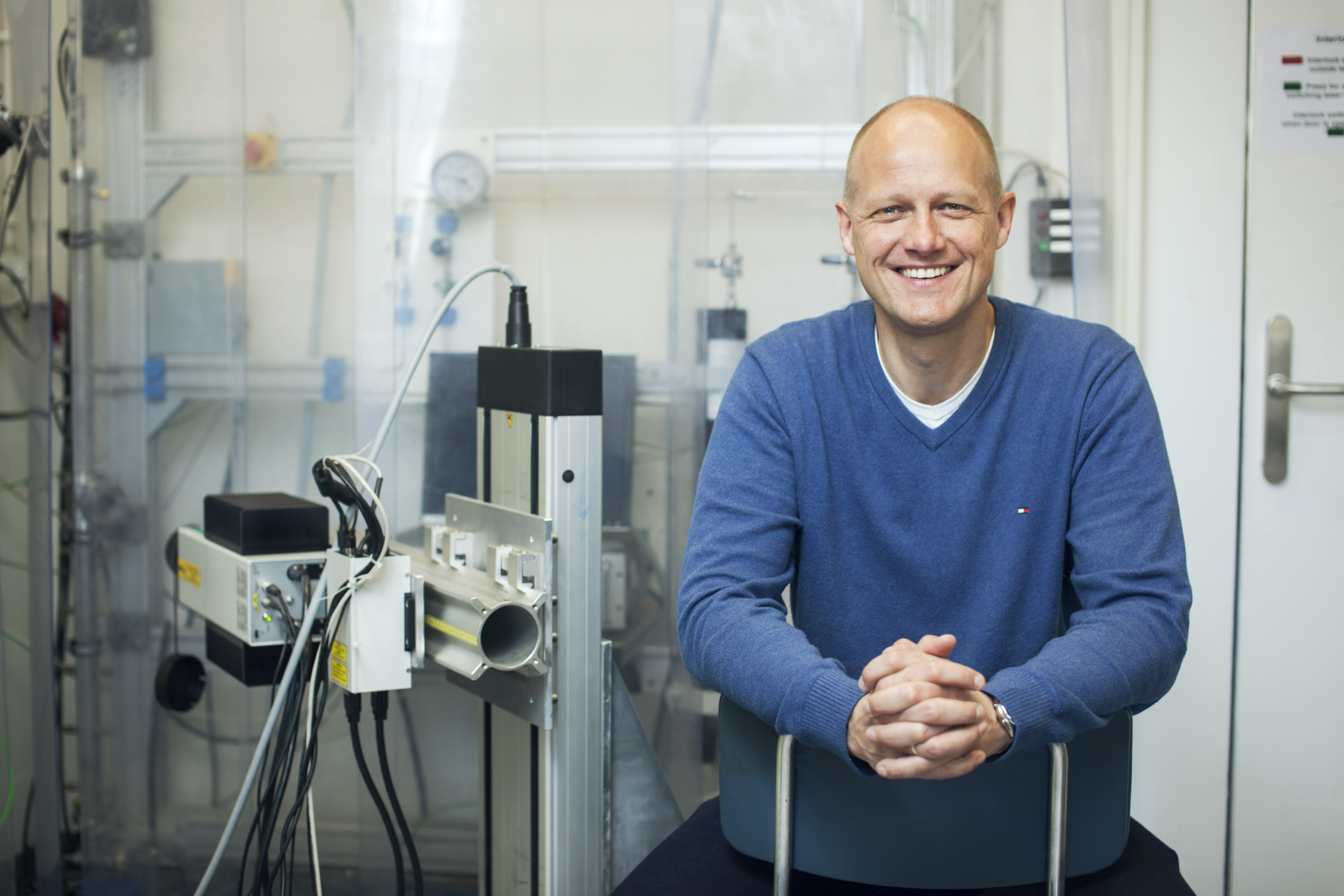
Dr. Martin Rohde is a Professor and Group Leader at the Radiation Science & Technology department within the Faculty of Applied Sciences at Delft University of Technology (TU Delft) in the Netherlands. He leads the Transport Phenomena & Nuclear Applications research group, focusing on advanced nuclear reactor technologies, particularly molten salt reactors, and their associated transport phenomena. Professor Rohde's research interests span across several critical areas in nuclear engineering and fluid dynamics. His work primarily focuses on understanding transport phenomena in nuclear applications, with particular emphasis on molten salt reactors for sustainable and safe nuclear power generation, innovative production techniques of medical isotopes, and advanced energy storage systems like flow batteries. His research group actively investigates complex physical phenomena occurring under extreme conditions such as high pressures, high temperatures, and interactions with radioactive processes. His publication record demonstrates a strong focus on computational methods for nuclear applications, particularly the Lattice Boltzmann Method (LBM), which is used to model fluid flow, heat transfer, and phase change phenomena in nuclear systems. Recent work has concentrated on freezing and melting processes in molten salt reactors, microfluidic separation techniques for medical isotopes, and advanced modeling of flow batteries. His research shows a clear progression toward increasingly sophisticated numerical methods applied to real-world nuclear engineering challenges. Professor Rohde has secured significant funding through multiple European Commission projects including ENDURANCE, MIMOSA, and ReZilient, demonstrating the international recognition of his research. He has supervised numerous PhD and MSc students, many of whom have gone on to complete theses on topics related to molten salt reactors, microfluidics, and flow battery technology. His research group includes several technicians, post-doctoral researchers, and PhD candidates working collaboratively on cutting-edge nuclear technology. The Transport Phenomena & Nuclear Applications laboratory operates several specialized facilities including the ESPRESSO facility for measuring melting and solidification under convective boundaries, and experimental setups for studying molten salt behavior, microfluidic purification, and flow battery technology. The group maintains strong collaborations with international partners including TRIUMF (Canada), NRG, and URENCO (The Netherlands).
Eldan Cohen serves as an Assistant Professor of Industrial Engineering within the Department of Mechanical & Industrial Engineering at the University of Toronto's Faculty of Applied Science and Engineering. His academic journey includes a PhD from the same department followed by a postdoctoral fellowship in Computer Science at the University of Toronto and the Vector Institute for Artificial Intelligence. His educational background is detailed as follows: PhD in Mechanical & Industrial Engineering, University of Toronto Postdoctoral Fellowship in Computer Science, University of Toronto and Vector Institute for Artificial Intelligence Dr. Cohen's research centers on machine learning, deep learning, heuristic search, and optimization with strong emphasis on interpretable and human-compatible AI systems. His work bridges theoretical advancements with practical applications in healthcare (e.g., patient-physician interaction analysis, surgical safety diagnostics), automated planning, natural language processing, and software engineering. Recent projects develop interpretable clustering methods for medical data and optimization techniques for constrained sequence generation. Analysis of his 2023-2025 publications reveals a concentrated focus on healthcare AI applications, particularly using large language models for clinical text analysis and diagnostic support systems. Significant work also addresses interpretable machine learning for medical imaging, diverse plan selection in optimization, and constrained sequence generation in domains like vehicle routing. No major scientific awards or fellowships are documented in the available information. As an academic advisor, Dr. Cohen mentors graduate students in mechanical and industrial engineering, guiding research in optimization and machine learning. His OptiMaL research group fosters collaboration between computer science and industrial engineering to solve real-world decision-making challenges through human-centered AI approaches. The Optimization and Machine Learning (OptiMaL) research group, led by Dr. Cohen, serves as the primary hub for developing scalable, interpretable AI solutions for complex healthcare, planning, and engineering problems, with active projects in medical diagnostics and automated planning systems.
Ankit Kariryaa is a Tenure Track Assistant Professor at the Department of Computer Science and Department of Geosciences and Natural Resource Management , University of Copenhagen. His work bridges Machine Learning and Environmental Informatics , focusing on remote sensing, geospatial analysis, and ecological modeling. University of Copenhagen, Denmark Machine Learning Section, Department of Computer Science Geography, Land, Environment and Society, Department of Geosciences Kariryaa specializes in applying deep learning and computer vision to environmental challenges. His research includes: Automated tree detection and biomass estimation via satellite imagery Multi-modal geospatial representation learning Monitoring farmland tree decline and carbon sequestration potential Agroforestry system mapping using AI Developing AI tools for climate policy and sustainability Recent work trends show a focus on quantum-inspired machine learning , environmental monitoring , and cross-cultural AI applications . His 15 most recent publications span topics in remote sensing , ecological modeling , and AI ethics , with methods ranging from neural networks to tensor-based learning. He collaborates across disciplines, notably with researchers in ecology , climate science , and quantum computing . His outreach includes seminars on AI in agroforestry and ecosystem management , while his team contributes to global tree resource databases like TreeSense.
Steve Tanimoto is a Professor at the Paul G. Allen School of Computer Science & Engineering at the University of Washington, with an adjunct appointment in the Department of Electrical & Computer Engineering. His work focuses on human-centered computing, particularly in educational technology and collaborative problem-solving environments. He has made significant contributions to the understanding of liveness in programming environments and their application to education, including a keynote at the International Conference on Live Coding (2015) that traced historical influences leading to widespread use of liveness in modern software environments. Dr. Tanimoto's research spans several interconnected domains: Novice programming environments and educational technology Collaborative problem-solving environments and tools Technology for educational assessment, particularly using pattern-recognition methods for teaching written language on tablets Liveness in programming environments and its applications Image processing from interdisciplinary perspectives (as detailed in his MIT Press book "An Interdisciplinary Introduction to Image Processing: Pixels, Numbers, and Programs") His recent publications demonstrate a consistent focus on the intersection of computing education, human-computer interaction, and collaborative problem-solving. A notable trend is the exploration of "liveness" in programming environments and how this concept can enhance educational experiences. His work increasingly integrates AI technologies with educational applications, particularly in the areas of writing instruction and collaborative problem-solving, with significant NIH funding support (P50 HD071764 and U54 HD083091). His notable recognition includes: VL/HCC Best Showpiece Award in 2015 for "Solving Problems by Drawing Solution Paths" Dr. Tanimoto has advised several graduate students through to completion, including Robert Thompson (2019), Sandra Fan (2013), and Tyler Robison (2012). He currently advises Emilia Gan (co-advised with B. Mako Hill) and Edward Misback. His research has been supported by NIH grants for work on computerized writing and reading instruction for students with learning disabilities. His CoSolve research group has developed experimental facilities for collaborative problem-solving, exploring tools that support problem formulation, visualization of problem spaces, and team collaboration dynamics, with applications in education, design, and various problem-solving domains.
David Hong is an Assistant Professor in the Department of Electrical and Computer Engineering at the University of Delaware. He holds a PhD from the University of Michigan, where he was an NSF Graduate Research Fellow, and previously served as an NSF Postdoctoral Research Fellow at the University of Pennsylvania. His research focuses on developing robust methods for analyzing heterogeneous and high-dimensional data, particularly through low-rank matrix and tensor techniques. Applications span medical imaging, radar systems, genomics, and astronomy. He emphasizes theoretical guarantees and practical algorithms for signal extraction and inverse problems. Education: PhD in Electrical Engineering and Computer Science (University of Michigan), NSF Postdoctoral Research Fellowship (University of Pennsylvania). Research Interests: Low-rank matrix/tensor methods, heterogeneous data analysis, unsupervised learning, and applications in healthcare, imaging, and sensor systems. His work addresses noise robustness, scalable algorithms, and real-world deployment challenges. Scientific Awards: Recipient of the NSF Postdoctoral Research Fellowship (2020) and NSF Graduate Research Fellowship (2015). Advising & Grants: Advisor to graduate students in machine learning and signal processing (no named advisees listed). Active NSF grant recipient for foundational and applied research in data science. Labs/Teams: Engaged in interdisciplinary collaborations through the University of Delaware's Center for Computational Research and Data Science initiatives.
Bärbel Finkenstädt Rand is a Senior Tutor at the Warwick Medical School , University of Warwick, with extensive research contributions at the intersection of statistics, machine learning, and biomedical sciences. Her work focuses on developing advanced methodologies for analyzing temporal and spatio-temporal data, particularly in circadian rhythms and disease dynamics. Research Themes : Bayesian inference, Hidden Markov Models, circadian rhythm stability, transcriptional bursting, and wearable sensor data analysis. Collaborations : Chronotherapy Group at Warwick, Université Paris-Saclay, and interdisciplinary teams across medicine, genetics, and computational biology. Publications reveal a strong emphasis on circadian health monitoring, gene expression dynamics, and epidemic modeling using stochastic frameworks. Her recent work prioritizes personalized medicine applications through telemonitored biomarkers and IoT platforms . Methodological Innovations include spline-based HMMs, distributed delay systems, and harmonic modeling for nonstationary time series. Applications span oncology, sleep medicine, and population ecology.
David S. Matteson is a Professor and Associate Department Chair in the Department of Statistics and Data Science at Cornell University. He holds affiliations with the Bowers College of Computing and Information Science, the ILR School, the Center for Applied Mathematics, and the Program in Financial Engineering. His research focuses on developing statistical and machine learning methodologies for complex systems, with applications in finance, environmental science, healthcare, and nanotechnology. He received his PhD in Statistics from the University of Chicago and a BSB in Finance, Mathematics, and Statistics from the University of Minnesota. His awards include the NSF CAREER Award (2015), SUNY Chancellor’s Award (2022), and Fellowships from the Institute of Mathematical Statistics and American Statistical Association (2024). Research interests span theoretical methods like changepoint analysis, high-dimensional time series, and functional data, alongside applied domains such as systemic risk, climate change, and medical imaging. He leads major NSF-funded initiatives including the PRISM Institute for Trans-domain Systemic Risk and the TRIPODS Greater Data Science Cooperative Institute (GDSC). Editorial Roles: Founding Editor-in-Chief of Data Science in Science , Associate Editor for Journal of Econometrics , and former editor for multiple statistical journals. Leadership: Chair of the ASA’s Business and Economic Statistics Section (2024), Director of the National Institute of Statistical Sciences (NISS). Grants: PI/Co-PI on NSF and USAID projects addressing systemic risk, energy systems, and poverty estimation.
Harald Van Heerde is a Research Professor of Marketing at the University of New South Wales, Sydney, within the UNSW Business School's Department of Marketing. He holds roles as Editor of the Journal of Marketing and Executive Vice-Chairman/Program Director of the Marketing Science Hub at AiMark. His academic career includes positions at Maastricht University, the University of Waikato, Tilburg University, and Massey University. Education: Ph.D. in Economics (Cum Laude), University of Groningen, the Netherlands (1999) M.Sc. in Econometrics (Cum Laude), University of Groningen, the Netherlands (1995) Research Interests: Harald focuses on applying econometric models and large datasets to address critical marketing challenges. His work explores marketing mix effectiveness , brand equity , digital marketing strategies , consumer behavior in crises , and cross-industry applications such as retailing, healthcare, and entertainment. Methodologically, he emphasizes dynamic models, endogeneity correction, optimization techniques, and text mining. Articles Trends: Recent publications highlight analysis of inflation's impact on consumer spending , mobile app engagement , brand recovery post-crisis , and econometric frameworks in marketing decision-making. His work bridges theoretical advancements with practical business implications, particularly in stochastic cost industries and global market dynamics. Awards & Fellowships: 2024: AMA Fellow & Shelby/Hunt Best Paper Award 2021: Churchill Award (Lifetime Contributions) 2004–2023: 10+ paper awards including MSI/Root, Paul Green, and multiple long-term impact recognitions Advising & Grants: Currently supervising doctoral candidates Ayesha Hossain (Human Branding) and Ada Choi (consumer financial decision-making). Supervised 12 completed theses across branding, retailing, and digital marketing. Secured over AU$2 million in grants including ARC Discovery, MSI, and the Marsden Fund. His grants examine topics like brand crisis management, price war dynamics, and mobile marketing ROI. Labs & Teams: Leads the Marketing Science Hub at AiMark, a nonprofit connecting academics with household panel data. Consults for global firms including Unilever, Edeka, and AZTEC. His work emphasizes collaborative data-driven research with industry partners.
Gerard Pons-Moll is a Professor at the University of Tübingen, endowed by the Carl Zeiss Foundation, and heads the Emmy Noether independent research group 'Real Virtual Humans'. He is a core faculty member at the Tübingen AI Center, a senior researcher at the Max Planck Institute for Informatics (MPII), and faculty at the International Max Planck Research School for Intelligent Systems (IMPRS-IS) and the Saarland Informatics Campus. His research focuses on computer vision, graphics, and machine learning, particularly in creating virtual human models and analyzing human motion from video and sensor data. Education: PhD (with distinction) in 2014 from Leibniz University of Hannover, Master's in Telecommunications Engineering (Northeastern University, 2008), and B.S./M.Sc. in Telecommunications Engineering from the Technical University of Catalonia (2002–2008). Research Interests: 3D human modeling, pose estimation, human-object interaction, and applications in industry and research. His work emphasizes real-world applications like virtual avatars and motion capture systems. Awards: Emmy Noether Grant (2018), German Pattern Recognition Award (2019), Google Faculty Research Award (2019), and multiple best paper awards at top conferences (BMVC’13, Eurographics’17, 3DV'18, CVPR'20). Advising & Grants: Served as program chair of 3DV 2021, area chair for ECCV, CVPR, and IJCAI. Active in reviewing for DFG, ANR, and ISF. Supervises research in areas like neural rendering frameworks (Blendify) and synthetic data generation (STAGE). Labs/Teams: Leads the Emmy Noether group and collaborates with MPII, Tübingen AI Center, and IMPRS-IS on projects like XNect (real-time 3D motion capture) and Human 3Diffusion (avatar creation).
Zakary Dahlheimer is an Adjunct Professor at Florida A&M University's School of Journalism & Graphic Communication (SJGC), where he teaches Reporting & Writing. He is also an evening anchor and investigative reporter at WCTV, the CBS affiliate in Florida's Big Bend region. His career includes coverage of major local and national stories across Florida, California, North Carolina, and Virginia. Dahlheimer holds a B.S. in Telecommunication from the University of Florida and an M.A. in Journalism from the University of Missouri. He is a testicular cancer survivor and advocate for the American Cancer Society. Education: University of Missouri: M.A. in Journalism (2022) University of Florida: B.S. in Telecommunication (2015) Research/Investigative Focus: Dahlheimer specializes in investigative reporting, political journalism, and health journalism. His work often addresses public health trends, fraud, and community issues. Recent investigations include cancer trends in young adults and mail fraud in Leon County. Awards: Regional Emmy Nominations Virginia Association of Broadcasters Award Florida Associated Press Broadcasters Association Recognition Community Engagement: Dahlheimer volunteers with the American Cancer Society and collaborates with local organizations like Midtown Reader for literacy initiatives. He also serves on the UF College of Journalism’s Advisory Council.
Jun.-Prof. Dr. Christian Krupitzer is a Tenure Track Professor in Food Informatics at the University of Hohenheim's Institute of Food Science and Biotechnology, part of the Faculty of Natural Sciences. He leads the Department of Food Informatics and is a member of the Computational Science Hub (CSH). His research focuses on self-adaptive software systems, machine learning (especially edge computing), IoT technologies, and software engineering applied to food processing and agricultural systems. Education: PhD in Business Information Systems (Dr. rer. pol.), University of Mannheim (2018) M.Sc. and B.Sc. in Business Information Systems, University of Mannheim (2010–2012) High School Diploma (Abitur) from Wilhelmi-Gymnasium Sinsheim (2007) Research Interests: Krupitzer’s work integrates computational methods with food science, emphasizing adaptive systems for food quality monitoring, IoT in agriculture, and machine learning for predictive analytics. He explores edge computing’s role in real-time decision-making and secure group communication schemes for IoT networks. Publications: His recent work spans predictive maintenance in Industry 4.0, digital twins in food systems, and blockchain applications in supply chain authentication. The articles highlight trends in interdisciplinary approaches combining AI, IoT, and domain-specific challenges in food production and logistics. Awards: No scientific awards explicitly listed in the provided materials. Grants & Advising: While specific grants are unmentioned, his roles as department head and tenure-track professor suggest involvement in research funding. No formal advisee list provided, though his team includes postgraduate researchers like Dana Jox, Daniel Einsiedel, and others. Labs & Teams: Leads the Food Informatics department and collaborates with the Computational Science Hub. His team focuses on developing innovative solutions for food systems through computational methods.
Professor Sarah Bate is an academic at Bournemouth University, currently serving as Interim Associate Pro Vice-Chancellor (Research and Knowledge Exchange). She leads the Centre for Face Processing Disorders and authored the seminal book *Face Recognition and its Disorders*. Her work focuses on face-processing impairments in developmental and acquired prosopagnosia (face blindness), employing eye-movement technology to explore theoretical and remediation strategies. Education: Completed a BSc (2004), MSc (2005), and PhD (2009) in Psychology at the University of Exeter, followed by postdoctoral research before joining Bournemouth in 2010. Research Interests: Prosopagnosia sub-classification, face recognition disorders, neuropsychological assessment tools, and applications in forensic and clinical settings. Her studies span cognitive mechanisms, rehabilitation techniques, and individual differences in face perception. Recent articles emphasize taxometric analysis of prosopagnosia subtypes, familial transmission patterns, and the role of birthweight in face recognition. Collaborations include work on oxytocin’s effects and the development of diagnostic tools like the Oxford Face Matching Test. Grants and Affiliations: Active in grants such as the *Face Blindness Awareness Campaign* and affiliated with the British Psychological Society and Experimental Psychology Society. Supervises PhD students like Anna Bobak, focusing on neuropsychological and developmental aspects of face recognition.
Joachim Cohen serves as Professor of Public Health and Palliative Care at Vrije Universiteit Brussel (VUB), where he co-chairs the End-of-Life Care Research Group alongside Professor Lieve Van den Block. He holds positions within the Family Medicine and Chronic Care school and leads the specialized End-of-Life Care Research Group department. With an h-index of 53 and over 9,824 citations, Cohen maintains a prominent position in international palliative care research. Dr. Cohen earned his Master's degree in Sociology in 2001 and completed his PhD in Social Health Sciences in 2007. His academic journey reflects a strong foundation in social sciences applied to healthcare contexts, particularly end-of-life decision making. Cohen's research focuses on critical aspects of end-of-life care including euthanasia practices, place of death patterns, public health approaches to palliative care, big data applications in healthcare, family caregiving dynamics, health services research, and quality indicators for healthcare assessment. His work bridges sociological perspectives with clinical practice to improve end-of-life experiences across healthcare systems. Analysis of Cohen's recent publications reveals a growing emphasis on digital health solutions for palliative care, compassionate community development, and cross-national comparative studies. His research increasingly incorporates mixed-methods approaches, combining large-scale population data with qualitative insights from patients, families, and healthcare providers. The trajectory shows expanding focus from individual end-of-life decisions toward systemic public health approaches that address community-level support structures. Kubler Ross Award for Young Researchers Young Investigator Award from the European Association of Palliative Care (2010) Prix Elisabeth Kubler-Ross (2007) Professor Cohen directs numerous research projects including IRP24 studying Compassionate Communities, FWOSBO61 on social connection in serious illness, and ANI387 adapting end-of-life aid skills training. His grant portfolio demonstrates strong funding support from multiple national and international sources. While specific student mentoring isn't detailed in available sources, his leadership of large research teams suggests significant supervisory responsibilities. The End-of-Life Care Research Group under Cohen's co-leadership functions as a multidisciplinary hub connecting sociology, public health, clinical medicine, and policy research. The group maintains strong international collaborations and contributes significantly to evidence-based policymaking in end-of-life care across Europe.