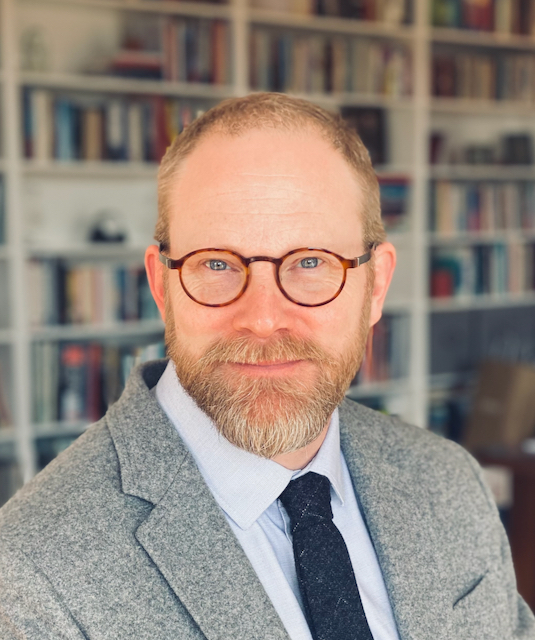
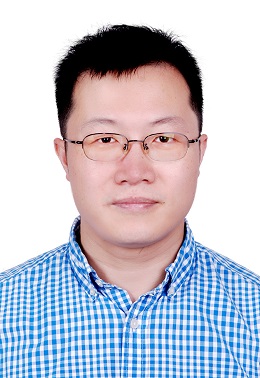
Michael McAlpine is a Professor in the Mechanical Engineering department at the University of Minnesota . He also holds affiliations with the Biomedical Engineering and Electrical and Computer Engineering departments. His research focuses on 3D printing functional materials & devices , Nanoscale inks , Biomedical devices , Bioelectronics , and Flexible Microsystems . Research Interests : 3D Printing, Biomedical Engineering, Nanotechnology, Flexible Electronics, Microfluidics Labs : ME 361/363 Contact : mcalpine@umn.edu , (612) 626-3303, ME 117 Recent Research Trends include 3D Printed Biomedical Devices , Flexible Electronics , and Bioprinting Applications . His work spans from Spinal Organoid Formation to Programmable Drug Release Capsules . Scientific Award : Circulation Research 2020 Best Manuscript Award
James Briscoe is a Senior Group Leader at The Francis Crick Institute in London, where he leads a research group focused on developmental biology and morphogen signaling. He previously held positions at the Medical Research Council's National Institute for Medical Research, which later became part of the Francis Crick Institute. Education: BSc in Microbiology and Virology from the University of Warwick, UK PhD from Imperial Cancer Research Fund/King's College London Postdoctoral training at Columbia University with Thomas Jessell Dr. Briscoe's research focuses on the molecular and cellular mechanisms of graded signaling by morphogens and the role of transcriptional networks in cell fate specification. His laboratory employs a range of experimental and computational techniques using model systems including mouse and chick embryos and embryonic stem cells. His work has significant implications for understanding developmental processes and their relationship to disease. His recent publications demonstrate a continued focus on morphogen gradients, neural tube development, and computational approaches to understanding cell fate decisions. His research increasingly integrates single-cell technologies and computational modeling to unravel the complexities of developmental patterning. Scientific Awards and Honors: EMBO Young Investigator (2001) EMBO Gold Medal (2008) Elected to EMBO (2009) Fellow of the Academy of Medical Sciences (2019) Fellow of the Royal Society (2019) As Editor-in-Chief of the journal Development since 2018, Dr. Briscoe plays a significant role in shaping the field of developmental biology. His leadership extends to mentoring researchers and contributing to scientific policy discussions, as evidenced by his recent publication 'Science under siege: protecting scientific progress in turbulent times.' Dr. Briscoe's laboratory at the Crick Institute is well-equipped with access to advanced facilities including light microscopy, flow cytometry, genomics, and computational resources, enabling a multidisciplinary approach to developmental biology questions.
Maren Toft is a Professor in the Department of Sociology and Human Geography at the University of Oslo's Faculty of Social Sciences. Her academic career has progressed from Research Assistant (2013-2014) to PhD Candidate (2014-2018), Postdoctoral Fellow (2018-2022), Associate Professor (2022), and now Professor. Her research focuses on: Class theory and theory of elites Social mobility and class structuration Segregation and urban inequality Social capital and networks of power Advanced quantitative methods including social sequence analysis and correspondence analysis Toft's publication record shows a consistent focus on elite formation, wealth accumulation, and class reproduction. Her work frequently employs longitudinal approaches to examine how social origins influence life trajectories, particularly among the upper classes. She has made significant contributions to understanding how class structures persist in Scandinavian welfare states, challenging assumptions about equality in these societies. Her major scientific awards include: His Majesty the King's Gold Medal for her 2018 PhD dissertation 'Biographies of privilege' Norwegian sociological association's award for best international publication in 2020/2021 Norwegian sociological association's award for best international publication in 2017 Kunnskap Oslo's award for best Oslo-related Research in 2015 Norwegian sociological association's award for research dissemination in 2018 Toft actively supervises PhD students including Iselin Hewitt (studying urban planning and gentrification), Marte Lund Saga (examining business-politics networks), and Stian Uvaag (researching sibling similarities in mobility). She serves on the board of both the Department of Sociology and Human Geography and the Norwegian Sociological Association. She is involved in several major research projects including HISTCLASS, The Oslo Register Data Classification (ORDC), The Salmon Elite (SALELITE), and Weaving the fabric of Elite Bonds (WEB), which collectively examine various dimensions of elite formation, power structures, and social inequality in Norway and internationally.
Linda Hulin is a Researcher at the School of Archaeology, University of Oxford , serving as Research Assistant to the Director of the Oxford Centre for Maritime Archaeology. She works part-time as a tutor in the Department for Continuing Education.
Ming-Syan Chen is a distinguished academic holding dual roles as a Distinguished Research Fellow and Director of the Research Center for Information Technology Innovation (CITI) at Academia Sinica, Taiwan, and a Distinguished Professor jointly appointed across multiple departments at National Taiwan University (NTU), including Electrical Engineering (EE), Computer Science and Information Engineering (CSIE), and the Graduate Institute of Communication Engineering (GICE). His career spans academia and industry, with prior roles as a research staff member at IBM Watson Research Center and leadership positions in Taiwan's technology sector. Education: He earned a B.S. in Electrical Engineering from National Taiwan University, followed by M.S. and Ph.D. degrees in Computer, Information, and Control Engineering from the University of Michigan, Ann Arbor. Research Interests: Chen's work focuses on databases, data mining, machine learning, multimedia networking, and cloud computing. He has authored over 350 papers and holds numerous patents, contributing to foundational advancements in query processing, data management, and networked systems. Award Highlights: Recipient of ACM and IEEE Fellowships, National Chair Professorship (lifetime honor), Teco Award, Pan Wen Yuan Distinguished Research Award, and IBM's Outstanding Innovation Award. His contributions span research, teaching, and technology commercialization. Leadership & Service: Former Dean of NTU's College of Electrical Engineering and Computer Science, CEO of Taiwan's Networked Communication Program, and Editor-in-Chief of the International Journal of Electrical Engineering. He has chaired international conferences and served on editorial boards of journals like IEEE TKDE and VLDB. Labs & Teams: Leads the Network Database Laboratory and collaborates on national initiatives in information and communication technologies. His research groups focus on data science, distributed systems, and social network analysis.
Monica Trieu is an Associate Professor in the School of Interdisciplinary Studies at Purdue University, where she focuses on the intersection of race, ethnicity, and immigration with particular emphasis on children of immigrants. Her scholarly work bridges sociology and Asian American studies through critical examination of identity formation and systemic inequalities. Education: Ph.D. in Sociology, University of California, Irvine (Asian American Studies emphasis) Master's in Sociology, University of California, Irvine Research Focus: Professor Trieu's expertise spans International Migration, Post-1960s Immigrants and Refugees, 1.5 and Second-Generation Identity, Transnational Ties, and Historical/Contemporary Asian American Experiences. Her scholarship critically analyzes internalized racism, regional identity formation (particularly in the Midwest), and the psychological impacts of anti-Asian violence during the pandemic. She employs intersectional frameworks to explore how refugee experiences, cultural adaptation, and transnational connections shape ethnic identity among Southeast Asian Americans and other immigrant communities. Publication Trends: Her 2013-2024 publications reveal evolving engagement with contemporary crises—from pandemic-induced mental health challenges and anti-Asian violence to structural invisibility of Midwest Asian American communities. While maintaining core focus on identity negotiation among second-generation immigrants, her recent work expands into comparative analyses of Asian American/Latina/o transnational patterns and refugee resettlement experiences, demonstrating methodological versatility across ethnographic, survey, and media analysis approaches. Professional Impact: As author of Identity Construction among Chinese-Vietnamese Americans: Being, Becoming, and Belonging (2009) and publications in Journal of Ethnic and Migration Studies and Journal of Asian American Studies , Trieu has established herself as a key voice in Midwest Asian American scholarship. Her research directly informs institutional responses to rising anti-Asian sentiment and contributes foundational frameworks for understanding regional ethnic identity formation beyond coastal enclaves.
Dr. Louise Alexander is an Associate Professor in Mental Health Nursing at Deakin University's School of Nursing & Midwifery (Faculty of Health). She holds prior academic roles including Senior Lecturer (ACU, 2018–2023) and Lecturer positions (ACU and Holmesglen Institute). Her research focuses on mental health nursing workforce sustainability, stigma reduction, simulation-based education, and curriculum development. Key interests include nurse resilience, pandemic impacts on healthcare workers, and improving student attitudes towards mental illness. Education: PhD from Deakin University; GCHE qualification Certifications: University of Melbourne's Emerging Leaders & Management Program (2021–2022) Teaching: Leads courses in forensic mental health, therapeutic communication, and health promotion Research Highlights: Recent work examines pandemic trauma among nurses, alcohol consumption trends post-COVID, and leadership's role in workforce retention. Her studies emphasize qualitative methods and integrative reviews to address systemic challenges in mental health nursing education and practice. Awards/Grants: No explicit awards listed; research supported by institutional collaborations. Active in developing transition-to-practice programs and evaluating simulation-based training efficacy. Labs/Teams: Collaborates with interdisciplinary teams on mental health workforce resilience and stigma reduction initiatives. Engages in national and international nursing education networks.
Rebecca Schulman is an Associate Professor in the Department of Chemical and Biomolecular Engineering at the Whiting School of Engineering, Johns Hopkins University. She holds secondary appointments in Chemistry and Computer Science and is affiliated with multiple interdisciplinary institutes, including the Institute for NanoBioTechnology, the Hopkins Extreme Materials Institute, the Chemistry-Biology Interface Program, the Center for Cell Dynamics, and the Laboratory for Computational Sensing and Robotics. She currently co-directs the Passport to Future Technology Leadership program for PhD students. Research Interests: Schulman's research lies at the intersection of DNA nanotechnology, synthetic biology, and smart materials. Her group develops intelligent, adaptive biomolecular materials and nanostructures by integrating concepts from materials science, biochemistry, circuit design, and soft matter physics. The team focuses on engineering dynamic self-assembly processes using DNA to create reconfigurable materials, molecular circuits, and autonomous soft micro-robots. Key themes include self-healing nanostructures, feedback-regulated crystallization, programmable hydrogels, and synthetic genetic networks for materials control. Publication Trends: Her recent publications demonstrate a consistent focus on using DNA-based chemical reaction networks to program spatial and temporal behavior in materials. The work spans from fundamental mechanisms like catalytic polymerization and crystal growth regulation to applications in soft robotics, self-wiring circuits, and synthetic pattern formation. The research is highly interdisciplinary, combining synthetic biology with materials engineering to achieve life-like functionalities in non-living systems. Scientific Awards: AIMBE Fellowship Award Vannevar Bush Faculty Fellowship Award Hartwell Individual Biomolecular Research Award President’s Early Career Award in Science and Engineering (PECASE) DARPA Young Faculty Award DARPA Directors Fellowship NSF CAREER Award Turing Scholar Award DOE Early Career Award Advising and Grants: Schulman mentors graduate students and leads a vibrant research group focused on next-generation biomolecular engineering. Her work is supported by major federal grants, including the NSF CAREER, DOE Early Career, DARPA, and the Vannevar Bush Fellowship—a prestigious Department of Defense award for basic research. She is actively involved in training future leaders through programs like the Passport to Future Technology Leadership. Labs and Teams: The Schulman Lab at Johns Hopkins is a multidisciplinary team working on DNA-powered materials and molecular programming. The lab is embedded within several collaborative centers, enabling strong cross-departmental and cross-institutional research. Their work combines experimental biochemistry with theoretical modeling to design and implement complex molecular systems.
Desiderio Kovar is a Professor at the University of Texas at Austin holding the BFGoodrich Professorship in Materials Engineering and the Distinguished Teaching Professor title within the Department of Mechanical Engineering at the Cockrell School of Engineering. He is affiliated with the Texas Materials Institute, the Center for Electromechanics, and is a core member of the Center for Additive Manufacturing and Design Innovation. Dr. Kovar currently serves as the Associate Chair for Academics for the Mechanical Engineering Department. Dr. Kovar's research focuses on the interface between materials science and engineering and additive manufacturing, with particular expertise in ceramic processing. His work encompasses Advanced Design and Manufacturing, Advanced Materials Science and Engineering, and Nano and Micro-scale Engineering. He teaches undergraduate and graduate classes in the Materials Engineering area, having developed the Materials Science and Engineering minor in 2018, the first minor in Engineering at UT Austin. His recent publications (2023-2025) demonstrate a strong focus on ceramic additive manufacturing processes, particularly Selective Laser Flash Sintering and Micro-Cold Spray technologies. These works explore fundamental mechanisms of high-velocity particle impact, sintering kinetics, and process optimization for ceramic film and part production, reflecting his pioneering work in direct ceramic additive manufacturing without polymer binders. Dr. Kovar has received numerous prestigious awards for his teaching and research: Engineering Foundation Young Faculty Excellence Award (2000) Teaching Excellence Award from the Student Engineering Council (2000) Cockrell School of Engineering's Jack and Maxine Zarrow Family K-16 Teaching Innovation Award (2014) Lockheed Martin Aeronautics Company Award for Excellence in Engineering Teaching (2016) Mechanical Engineering Department's Teaching Award (2016) University of Texas' Outstanding Graduate Advisor (2012) Inducted into the University of Texas at Austin's Academy of Distinguished Teachers (2019) Dr. Kovar has supervised 47 undergraduate students, 21 MS theses, and 17 Ph.D. dissertations, and currently supervises 12 graduate students and one undergraduate student. His research has been generously funded by the National Science Foundation, Los Alamos National Laboratory, Sandia National Laboratory, the Army Research Laboratory, the Office of Naval Research, the US Department of Energy, and various corporate sponsors. In 2013, he founded the Cockrell School's Longhorn Maker Studio, which evolved into Texas Inventionworks. Dr. Kovar leads the Kovar Research Group which currently includes multiple graduate students and postdoctoral researchers working across three main research thrusts: Additive Manufacturing of Ceramics by Selective Laser Flash Sintering, Additive Manufacturing of Ceramics by Indirect Selective Laser Sintering, and Direct Writing of Patterned Films and Devices using the Micro-cold Spray Process.
Professor Christopher Carman is the Stevenson Professor of Citizenship at the University of Glasgow, holding a PhD from the University of Houston. He has served in leadership roles including Head of Subject (Politics & International Relations), Head of the School of Social and Political Sciences, and Deputy Head of the School. His research focuses on political representation, electoral processes, public opinion, and Scottish politics, with notable contributions to studies on the Scottish Parliament and rural-urban political divides. Carman has led the Scottish Election Study (SES) since 2011 and co-leads the NORFACE-funded RUDE project on European rural-urban dynamics. He also contributes to the Glasgow-Nankai Joint Graduate School and the Stevenson Trust, fostering citizenship education and democratic research. Education: PhD in Political Science, University of Houston (2000). Previous academic roles include professorships at the Universities of Strathclyde and Pittsburgh. Research Interests: Political representation alternatives (e.g., public petitions systems), electoral behavior, Scottish and UK politics, direct democracy, and comparative legislative politics. Recent work addresses rural-urban divides in Europe and political compromise in democratic systems. Key Projects: Scottish Election Study (SES), Rural and Urban Divide in Europe (RUDE), and studies on political scandals and multilevel governance. His publications span electoral studies, comparative politics, and political behavior, with a focus on institutional trust and democratic engagement. Grants and Funding: ESRC and NORFACE grants support his research. The Stevenson Trust supports his work on citizenship education and public lectures.
J. Anthony Movshon is a Professor at New York University (NYU) in the Department of Psychology and a key member of NYU's Center for Neural Science (CNS). His research focuses on the primate visual system, particularly the encoding and decoding of visual information in cortical areas like V1 and MT, and its role in behavior and perception. Education: Doctorate in Visual Neurophysiology and Psychophysics from Cambridge University Research Interests: Movshon investigates the functional architecture of the visual cortex, emphasizing motion, form, and color processing. His work explores how neural activity relates to perceptual decisions and motor behavior, using electrophysiological recordings, neuroimaging, and computational models. He also studies developmental disorders like amblyopia and their impact on visual system organization. Publications: His recent work spans visual texture selectivity in V2, contextual modulation in neural responses, motion processing in MT, and decoding mechanisms in visual cortex. These studies employ interdisciplinary approaches blending neurophysiology, computational neuroscience, and cognitive modeling. Labs & Collaborations: Movshon leads the Visual Neuroscience Laboratory at NYU, collaborating with researchers such as Michael Hawken, Lynne Kiorpes, and Eero Simoncelli.
Armin Falk is a Professor of Economics at the University of Bonn, leading the BonnEconLab since 2004 and co-founding the briq Institute on Behavior & Inequality. He holds affiliations with the IZA, DIW, CEPR, and Max-Planck-Institut. His research focuses on behavioral economics, exploring how social preferences like fairness and trust influence decision-making, and investigates early childhood development's role in inequality. Falk has received prestigious awards, including the Leibniz Prize and Yrjö Jahnsson Award. His work combines lab experiments, field studies, and representative data analysis. Education includes a PhD in Economics from the University of Zurich after studies in Economics, Philosophy, and History at the University of Cologne. Key research highlights include global climate action support studies (Nature Climate Change, 2024), socioeconomic disparities in child development (JPE, 2021), and global economic preferences surveys (QJE, 2018). He co-authored the book *Warum es so schwer ist, ein guter Mensch zu sein* to popularize behavioral economics. Awards include recognition for contributions to behavioral and development economics. Mentoring programs like *Balu und Du* aim to reduce educational inequality. His work bridges academic research with public discourse through media contributions and policy engagement.
Dr. Zhu Lailai serves as Assistant Professor in the Department of Mechanical Engineering at the National University of Singapore (NUS), appointed in January 2020. His research bridges fundamental fluid mechanics with cutting-edge engineering applications through computational and theoretical approaches. Dr. Zhu holds a PhD from KTH Royal Institute of Technology (Sweden) and completed postdoctoral training at Princeton University. His research program centers on: Low-Reynolds-number fluid-structure interactions and bio-inspired adaptive systems Active matter dynamics (Janus colloids, active droplets, flagella/cilia) Intelligent fluids integrating machine learning for fluid dynamics Microrobotics with reinforcement learning-based chemotactic navigation Non-Newtonian/multiphase flows and microfluidics applications Analysis of his 2017-2025 publications reveals a clear trajectory toward AI-enhanced fluid mechanics, evolving from foundational theoretical models to machine learning integration. Recent work emphasizes foundation models for fluid dynamics prediction and topology-adaptive microrobotic navigation, demonstrating interdisciplinary convergence of physics, AI, and bionics. Scientific Awards: No major scientific awards specified in source materials Advising and Grants: While specific advisees and grants aren't detailed, his active publication record across high-impact journals (Nature Communications, Journal of Fluid Mechanics) indicates ongoing supervised research and likely grant funding through NUS and collaborative projects. Research Group: Dr. Zhu leads a computational/theoretical research team at NUS investigating active and intelligent fluids, with current projects on PCM thermal systems, microrobotic navigation, and active matter phase transitions, collaborating with experimentalists globally.
Jonathan Snow is a Professor and Chair of the Department of Geology and Geophysics at Louisiana State University (LSU), College of Science. Previously, he held faculty positions at the University of Houston, including roles as Assistant Professor (2005–2008), Associate Professor (2008–2014), and Professor (2014–2019), and served as President of the Faculty Senate (2016). His academic journey includes a Bachelor’s in Geology from Indiana University (1983), Master’s from the University of Rochester (1986), PhD in Oceanography from MIT/WHOI (1993), and a Habilitation in Mineralogy from Universitat Mainz, Germany. Research interests focus on the Earth’s lithosphere formation, mantle melting processes, and oceanic crustal accretion. Key areas include mid-ocean ridge basalt petrogenesis, mantle noble metal geochemistry (Os, Re), and tectonics of fracture zones. Notable contributions include studies on the Arctic Ocean’s Gakkel and Lena Troughs, Hess Deep, and Shikoku Basin oceanic core complexes. Professional recognitions include NSF Graduate Fellowship (USA), Alexander von Humboldt Foundation Fellowship (Germany), DFG Heisenberg Program (Germany), and Japan Society for the Promotion of Science Fellowships. His work integrates field expeditions (e.g., ARKTIS cruises), laboratory geochemistry, and computational models to advance understanding of mantle dynamics and crustal evolution.
Katja Hose is a Full Professor of Data Management at TU Wien's DBAI research unit, heading the Data Management and Knowledge-Driven AI Lab. She previously held a Poul Due Jensen Foundation Professorship at Aalborg University. Her research focuses on data and knowledge engineering, including graph databases, knowledge graphs, querying, analytics, and machine learning, with interdisciplinary applications in bioscience, healthcare, and environmental assessment. Education: PhD in Computer Science (Ilmenau University of Technology, 2009), Postdoc at Max Planck Institute for Informatics (2009–2012). Academic roles include Program Co-Chair for ISWC 2024 and EDBT 2023, and editorial board membership at VLDBJ and TGDK. She leads projects like TARGET (health virtual twins) and ARMADA (data management). Research Interests: Knowledge Graphs, Semantic Web, Big Data, Machine Learning, Data Integration, and Provenance Systems. Key contributions include SHACL shape extraction, conversational data analytics, and environmental knowledge graphs. Awards include the 2025 Distinguished Meta-Reviewer Award and 2024 Manfred Paul Award. Advising and Grants: Supervised students including E. Pürmayr (Diploma Thesis 2025). Active in EU projects (TARGET, ARMADA) and grant coordination. Labs/Teams: DMKI Lab at TU Wien, collaborating with interdisciplinary teams in healthcare and environmental science.