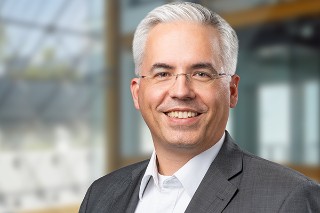
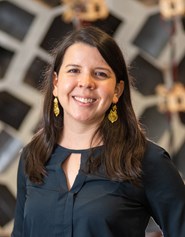
Myles H.M. Menz is a researcher at James Cook University (JCU) with a focus on insect ecology, conservation biology, and technological applications in ecological monitoring. His work spans diverse topics including insect migration patterns, pollination dynamics, and the impacts of environmental stressors like pesticides and light pollution. He collaborates internationally on projects involving radar entomology, animal-borne sensors, and ecological genetics. Key research interests include the migration strategies of insects such as hoverflies, moths, and dragonflies, as well as conservation challenges facing endangered species like the orchid Caladenia xanthochila. His studies often integrate cutting-edge technologies (e.g., radar tracking, genomic analysis) to understand ecological processes at both individual and community levels. Notable contributions include demonstrating how hoverflies use sun compass navigation during autumn migration and revealing how insecticide exposure alters gene expression in honeybees. Menz also emphasizes interdisciplinary approaches, such as developing global databases for metacommunity ecology and advocating for landscape-scale ecosystem restoration frameworks. His work bridges applied and theoretical ecology, addressing critical issues like pollinator decline, urban biodiversity, and the ecological consequences of human activities.
Prof. Dr. Kemal Selcuk Ogut is a Professor at the Civil Engineering Department of Istanbul Technical University (ITU). His academic career spans over three decades, beginning with a Bachelor's degree in Civil Engineering from ITU (1987), followed by a Master's (1992) and PhD (1995) in Transportation Engineering. He has held roles as Research Assistant (1995–2005), Assistant Professor (2005–2007), and Associate Professor (2007–present) before attaining his current rank. Education: Bachelor's: Civil Engineering, ITU (1987) Master's: Transportation Engineering, ITU (1992) PhD: Transportation Engineering, ITU (1995) His research focuses on transportation systems, traffic flow dynamics, urban planning, and public transport optimization. Key areas include modeling traffic capacity under adverse conditions, passenger-oriented rail systems, and car ownership in developing nations. He has led projects like the Istanbul Traffic Planning Project (2015–2017), optimizing public transit networks, and studies on weather impacts on motorway performance. His work contributes to UN Sustainable Development Goals related to sustainable cities and infrastructure resilience. He teaches courses such as Highway Engineering and Transportation Systems at ITU and has advised numerous research projects, including studies on motorcycle usage, bus dwell times, and bicycle commuting patterns in Istanbul.
Dr. Saida Elmi is an Assistant Professor Adjunct at Yale University School of Medicine and an Assistant Professor at the University of New Haven. She holds a Ph.D. in Computer Science from the National School of Mechanics and Aerotechnics (2017), followed by postdoctoral research at Korea University of Technology and Education (2017–2018) and National University of Singapore (2018–2021). Her research focuses on AI applications in healthcare, transportation systems, and spatial data mining. She developed the Automated Test of Embodied Cognition (ATEC), an AI-driven system using motion capture and machine learning for mental disease detection. Key contributions include predicting taxi fares, travel times, and energy consumption in transportation networks using deep learning architectures like RNNs and CNNs, and designing group-oriented recommendation systems for points-of-interest (POIs) using graph convolution networks and attention mechanisms. Education : Ph.D., Computer Science, National School of Mechanics and Aerotechnics (2017) Postdoctoral Research, Korea University of Technology and Education (2017–2018) Postdoctoral Research, National University of Singapore (2018–2021) Her research interests span machine learning, spatial data mining, and AI ethics. She has pioneered frameworks for spatio-temporal data analysis, including a transfer learning approach for travel time prediction in data-scarce regions. Her work on energy consumption modeling and POI prediction has been published in top-tier conferences like WWW, MOBIQUITOUS, and ECIR. Dr. Elmi’s interdisciplinary projects integrate AI with healthcare and urban systems, emphasizing automated cognitive assessment and smart city technologies. Her current efforts focus on refining action recognition algorithms for clinical applications and optimizing recommendation systems for group mobility decisions.
Kaitlin Newhouse is the Associate Director of Research and Evaluation at the Belk Center for Community College Leadership and Research at North Carolina State University. She holds a Ph.D. in Higher Education and Organizational Change from UCLA (2021), an M.A. in Higher Education from UCLA (2017), and a B.A. in Gender Studies from Tulane University (2012). Her work focuses on addressing educational inequalities, particularly for poor and working-class students, through quantitative and mixed-methods research. Education: Ph.D. in Higher Education and Organizational Change, UCLA, 2021 M.A. in Higher Education, UCLA, 2017 B.A. in Gender Studies, Tulane University, 2012 Her research interests span community college access, STEM education, and the experiences of first-generation and low-income students. She leads the PACE Climate Survey and contributes to projects enhancing student outcomes at North Carolina community colleges. Publications highlight her focus on interdisciplinary computing education, diversity in STEM fields, and systemic barriers faced by marginalized student groups. Though no scientific awards are listed, her work emphasizes equity-driven solutions in higher education. Her role at the Belk Center positions her at the intersection of research and practice, aiming to bridge gaps between academic theory and real-world institutional challenges. The Belk Center is a hub for community college leadership and policy research, aligning with her commitment to improving educational equity.
Yike Ma is an active Associate Professor in the Department of Computer Science at the University of Science and Technology of China (USTC), School of Computer Science and Technology. With a prolific publication record spanning from 2011 to 2025, Ma has established expertise in computer vision with specializations in panoramic/spherical image processing, light field imaging, and applications in agricultural robotics and autonomous driving systems. Ma maintains a strong collaborative network, primarily with Feng Dai, Qiang Zhao, Yongdong Zhang, and Yucheng Zhang, producing numerous high-impact publications in top venues including CVPR, IJCAI, IEEE Transactions, and NeurIPS. University: University of Science and Technology of China (USTC) School: School of Computer Science and Technology Department: Department of Computer Science Research Focus: Computer Vision, Panoramic Imaging, Agricultural Robotics Ma's research interests center on advanced computer vision techniques, particularly for spherical and panoramic imagery, with significant contributions to oriented object detection, semantic segmentation, and light field processing. Recent work demonstrates increasing focus on agricultural robotics applications and autonomous driving systems, showing interdisciplinary expansion of core computer vision expertise. The research employs sophisticated deep learning approaches while addressing practical challenges in real-world applications. Analysis of Ma's 15 most recent publications reveals a clear progression toward practical applications of computer vision research, with growing emphasis on agricultural robotics (4 publications) and autonomous driving systems (3 publications), while maintaining strong foundational work in spherical/panoramic image processing (5 publications). The research demonstrates technical sophistication in handling boundary discontinuity problems, topology reasoning, and space-time perceptive clues, with increasing integration of large language models and generative AI techniques in recent work. While no specific awards are documented in the available publication records, Ma's consistent presence in top-tier conferences and journals including CVPR, IJCAI, and IEEE Transactions indicates recognition within the computer vision and AI research communities. The publication record shows steady output with increasing impact, particularly in the last five years. Ma's collaborative network is extensive, with primary collaborations through the University of Science and Technology of China. The research appears well-supported through projects in agricultural robotics and autonomous systems, though specific grant details aren't visible in the publication metadata. Ma has advised numerous graduate students as evidenced by authorship patterns where Ma appears as senior author on papers with junior researchers as first authors.
Frank Leymann is a Professor of Computer Science at the University of Stuttgart, where he serves as Director and Founder of the Institute of Architecture of Application Systems. His career spans academia and industry, including 20 years at IBM Germany as a Software Architect. Research Focus: Workflow Management, Service Computing, Cloud Computing, Quantum Computing, Pattern Languages, Digital Humanities. Standards: Co-author of BPEL, BPMN, WS-RF, TOSCA, Human Task specifications. His work on quantum computing emphasizes hybrid quantum-classical applications and practical integration challenges. He pioneered the OASIS cloud standard TOSCA and developed the open-source OpenTOSCA platform, which has over 1,000 downloads. Scientific awards include an Honorary Doctorate from the University of Crete (2015), IBM Distinguished Engineer (2000), and IBM Academy of Technology membership (1996). Google Scholar cites his work over 43,300 times (H-Index 89), ranking him among the world's top computer scientists.
Prof. Stefan Tai is a full professor and Chair of Information Systems Engineering at Technische Universität Berlin (Germany) since 2014. Previously, he held a full professorship at Karlsruhe Institute of Technology (KIT) and worked as a Research Staff Member at IBM's Thomas J. Watson Research Center. His research focuses on distributed systems, decentralized architectures, cloud service engineering, and privacy-preserving blockchain systems, emphasizing off-chain solutions and scalable technologies. Tai's work bridges academic research with industry applications, particularly in serverless computing, energy-efficient cloud-native systems, and blockchain-based solutions for supply chains and energy grids. He has authored numerous peer-reviewed publications in top-tier conferences and journals, including IEEE ICSA, Future Generation Computer Systems, and IEEE Blockchain. His contributions address challenges in software systems engineering, federated learning, and sustainable computing. Research Interests: Next-generation distributed software systems Decentralized architectures and blockchain systems Cloud and serverless computing Energy-efficient design Data management and privacy-preserving technologies Smart energy grids and IoT integration Key Publications Trends: Tai's recent work explores the intersection of blockchain and federated learning, serverless architectures for big data, and energy-efficient cloud-native applications. His 2025 paper introduced a framework for optimizing cloud-native energy efficiency, while 2024 contributions advanced verifiable decentralized systems and serverless data processing. Earlier research (2020–2021) focused on privacy in local energy grids and serverless computing scalability. Grants & Labs: While specific grants are not detailed, his leadership in TU Berlin's Information Systems Engineering group indicates involvement in EU-funded or industrial projects. Collaborations with institutions like TU Wien and KIT suggest multi-institutional efforts in distributed systems and blockchain. Labs/Teams: Leads the Information Systems Engineering research group at TU Berlin, focusing on software systems engineering, cloud architectures, and blockchain applications.
Prof. Dr. Jörn Kohlhammer is an Honorary Professor at TU Darmstadt and Head of the Information Visualization and Visual Analytics department at Fraunhofer Institute for Computer Graphics Research IGD. His work focuses on decision-oriented visualization using semantics, visual business analytics, and applications in medical data analysis, internet security, and industrial sectors. He holds a PhD from TU Darmstadt (2005) and has authored over 50 publications in journals and conferences like IEEE VAST and EuroVis. Education: B.Sc./M.Sc. in Computer Science with Business Administration Minor (1993-1999), Ludwig-Maximilians-Universität München Research Interests: Context-dependent visualization solutions Medical data analysis and cohort visualization Decision support systems Visual analytics for cybersecurity and network traffic Professional Activities: Regular member of program committees for IEEE VAST, EuroVis Reviewer for journals/conferences including IEEE Transactions on Visualization and Computer Graphics Co-chair of IEEE VAST (2009) and founder of EuroVA (2010) Labs/Teams: Leads Fraunhofer IGD's Information Visualization & Visual Analytics group Projects: ATHENA, CorASiV (health authority support), SoBigData (social big data analytics)
Enrica Papa is a Professor of Transport Planning at the University of Westminster. Her research lies at the intersection of urban, mobility, and economic geography, focusing on sustainable accessibility planning to enhance inclusive mobility and reduce urban carbon emissions. PhD in Transport Network and City Planning Fellow of the Higher Education Academy She leads the MSc Transport Planning and Management program and supervises active PhD students. Her 15-year international experience spans Belgium, the Netherlands, and Italy, with over £1.5 million in managed projects since 2015. Key Research Areas: Sustainable mobility, 15-minute cities, transit-oriented development, geofencing strategies, urban decarbonization Recent projects include: COMMON_ACCESS (2024-2027): Coordinating accessibility solutions in urban outskirts with €1.5M funding. JUST STREETS (2024-2027): Leading a €11M global collaboration for street transformation. Scientific Awards Fellow of the Higher Education Academy PhD Students Fred Raphael, Katherine Bartlett, Marzena Piotrowska Alain Chiaradia (completed), Jeffrey Howard (completed) Her 15 most recent publications show a focus on: 15-minute city methodologies (2024) Street space experiments for post-car cities (2023) Automated vehicle sustainability challenges (2020) Accessibility metrics for integrated planning (2017)
Jenny Kent is a Professor and Deputy Dean at the Faculty of Business, Justice and Behavioural Sciences, Charles Sturt University (CSU). She holds qualifications including BOccThy (QldUni), MAcc (CSU-Riv), MCom (Deakin), PhD (CSU), and is a Fellow of CPA Australia (FCPA). Her research focuses on public sector and not-for-profit accounting, rural development challenges, and transformative approaches to accounting education. She has led interdisciplinary projects funded by government agencies and NGOs, addressing issues such as drought impacts, rural youth exclusion, and academic integrity in distance learning. Dr. Kent’s academic leadership includes roles as Associate Dean (Academic) and 2015 President of the NSW CPA Australia Division. Her work bridges academia and practice, exemplified by university clinics serving rural communities and studies on aligning accounting curricula with industry needs. Her publications emphasize non-technical skill development, stakeholder collaboration, and addressing systemic barriers in rural education and healthcare access. Education: PhD in Accounting (Charles Sturt University) Master of Commerce (Deakin University) Master of Applied Commerce (Charles Sturt University) Bachelor of Occupational Therapy (Queensland University) Key Research Projects: Impact of drought on rural education access (funded by DEST and FRRR) Academic integrity in online education (CSU-funded) University-clinic models for rural healthcare (collaboration with Greater Murray Health Service) Awards: Fellow of CPA Australia (2015) NSW CPA Divisional Presidency (2015) Her recent articles highlight trends in aligning educational practices with employer expectations, addressing rural youth marginalization, and mitigating academic misconduct in distributed learning environments. Collaborative research with government and industry ensures practical policy implications in accounting education and rural development.
Terence Ching, PhD, is an Instructor in the Department of Psychiatry at Yale School of Medicine. He co-leads psilocybin clinical trials for OCD and other disorders through the ENACT Lab and Yale Program for Psychedelic Science. His expertise spans fear/trauma-based disorders, culturally attuned care, and psychedelic therapies. Education: PhD in Clinical Psychology from the University of Connecticut (2021), Master’s and Bachelor’s in Psychology from National University of Singapore. Research Interests: Focuses on OCD, anxiety/PTSD, exposure-based CBT, and psychedelic-assisted therapies. Specializes in culturally attuned approaches for marginalized communities, including LGBTQ+ and Asian American populations. Active in translational studies linking neuroscience to therapeutic outcomes. Recent Articles: Published 43+ peer-reviewed papers on topics including MDMA/MDMA efficacy in PTSD, psilocybin protocols for OCD, and racial/ethnic disparities in mental healthcare. Current work emphasizes mechanism studies and equity in psychedelic medicine access. Grants & Labs: Involved in NIH-funded studies on psychedelic safety. Serves as Principal Investigator for multiple clinical trials (e.g., psilocybin dosing in OCD, ketamine-assisted psychotherapy). Labs/Teams: ENACT Lab (Emerging Novel Applications for Consciousness-Altering Therapeutics), Yale OCD Research Clinic.
Petri Nokelainen is a Professor at the School of Education, University of Tampere, specializing in vocational education and learning environments. His research focuses on workplace learning, professional development, and the integration of formal and informal learning in vocational contexts. He has held academic roles since 1995, including Researcher, Postdoctoral Researcher, and various professorships in vocational education and learning environments. Key research interests include vocational excellence, apprenticeship training, and the impact of workplace environments on skill development. He has led numerous funded projects totaling over €2.6 million, addressing topics like workplace learning, mentorship in apprenticeships, and the future of work. Notable awards include the Ella and Georg Ehrnrooth Foundation Research Award (2005) and the Finnish Vocational Educational Research Association Award (2018). Nokelainen has supervised over 20 doctoral theses, focusing on areas such as leadership in virtual work, intercultural competence, and engineering education. His recent work explores digitalization's impact on professional growth and remote work dynamics in knowledge sectors. Collaborations span international institutions, emphasizing cross-cultural studies in workplace learning. He has actively participated in over 460 academic activities, including conferences, journal reviews, and dissertation supervision. His contributions to educational policy include enhancing the standing of vocational education and addressing evolving workforce needs through participatory learning models.
Elena Vazquez Peña is an Associate Professor at Umeå School of Architecture, Umeå University. She holds a Ph.D. in Architecture from Penn State and a professional degree from Universidad Nacional de Asunción. Her work bridges computational design, smart materials, and architectural innovation. She has pioneered research in adaptive building systems using bistable materials, shape memory alloys, and kinetic structures. Education: Ph.D. in Architecture, Pennsylvania State University Master of Science in Architecture, Pennsylvania State University Graduate Certificate in Additive Manufacturing, Pennsylvania State University Professional Degree in Architecture, Universidad Nacional de Asunción Research focuses on: Smart materials for adaptive buildings Computational tools for kinetic façade design Sustainable architectural technologies Parametric design methodologies Recent projects include developing shape-morphing devices with shape memory alloys and exploring low-cost acoustic solutions through origami patterns. Awards : 2023 ARCC Dissertation Award 2022 Rustum & Della Roy Innovation Award 2018 ARCC King Medal 2016-2018 Fulbright Scholar Teaching emphasizes project-centered learning using parametric design tools. Courses include Architecture Studio, Robotics in Architecture, and Shape Grammars. She leads the Digital Materials Research Group and collaborates on the UmArts Art & AI research project.
Norbert Steigenberger is a Professor of Entrepreneurship at Umeå School of Business, Economics and Statistics (USBE) at Umeå University. His research focuses on organizational sensemaking processes, entrepreneurial dynamics, and signaling theory applications in complex environments. He holds a 'Recognised university teacher' qualification and is affiliated with the Department of Business Administration and Entrepreneurship. Key research themes include: (1) How organizations navigate novelty and uncertainty through sensemaking, (2) Strategic signaling mechanisms in crowdfunding and M&A contexts, (3) Cultural diversity in healthcare teams, and (4) High-reliability operations in crisis management. His work integrates theories from organizational behavior with empirical studies in maritime rescue operations, digital entrepreneurship ecosystems, and post-merger integration. Recent projects include a microethnographic study of early-stage entrepreneurship decisions (2024-2026), green transition challenges in northern Swedish SMEs, and a review of deceptive signaling patterns in digital markets. He has published in top journals including Organization Science, Human Relations, and Journal of Management Studies. Research collaborations include work with maritime agencies on crisis decision-making simulations and interdisciplinary studies on healthcare team dynamics. His work bridges academic theory with practical insights for entrepreneurs, crisis managers, and organizational leaders facing high-stakes decision environments.
Zheying Zhang is a Lecturer at Tampere University within the Faculty of Information Technology and Communication Sciences , Department of Computing Sciences . She holds a Ph.D. in Computer Science and Information Systems from the University of Jyväskylä (2004) and was awarded a Docent (Adjunct Professor) title in Software Development from the University of Tampere (2013). Education: Ph.D. (2004), Docent (2013) Her research focuses on Requirements Engineering , with specific interests in Requirements Analysis Domain Modelling AI-Assisted Requirements Management Software Quality Assurance Process Improvement Data-Driven Software Development Medical Device Software Current Master's thesis topics include AI for Software Engineering, DevOps pipelines, and cross-disciplinary software ethics. Recent publications highlight trends in AI applications for requirements management, software evolution analysis , and accessibility testing . She actively supervises PhD candidates like Xiaozhou Li and Wenhui Lu, with works spanning open-source projects and medical software quality. Scientific Contributions: 54 research outputs (2003-2025), including 3 2025 conference papers