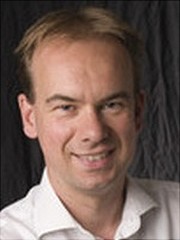
Prof. Gabriele Schrag holds the Professorship of Microsensors and Actuators at the Technical University of Munich (TUM), within the TUM School of Computation, Information and Technology. Her research focuses on MEMS (Micro-Electro-Mechanical Systems), including microsensors, actuators, and their applications in acoustics, microfluidics, and bioengineering. She has pioneered work in virtual prototyping for system-level modeling to enhance device robustness and performance. Education: PhD (summa cum laude) from TUM on 'Modeling coupled effects in microsystems' Habilitation in sensor systems technology (2018) Acting head of the Chair of Technical Electrophysics (2018-2023) Research emphasizes acoustic MEMS transducers , electrohydrodynamic printing , and physics-based modeling . Notable projects include developing piezoelectric MEMS microphones with corrugated membranes and integrated micropump systems. Awards include the Bavarian Prize for Good Teaching (2021) and Eurosensors Fellow Award (2019). Her work bridges virtual prototyping with real-world applications , addressing challenges in miniaturization, energy efficiency, and sensor integration for medical and industrial systems.
Prof. Dr. Matthias Rarey is a computer scientist and Professor at the University of Hamburg's Center for Bioinformatics. He holds a Ph.D. in Computer Science from the University of Bonn (1996) and has been leading the Algorithmic Molecular Design working group since 2002. His research focuses on molecular design algorithms, cheminformatics tools, and 3D bioinformatics. Co-founder of BioSolveIT GmbH Former cheminformatics group leader at Fraunhofer SCAI Former researcher at SmithKline Beecham and Roche Bioscience Head of Helmholtz Data Science Graduate School DASHH Director of Center for Data and Computing in Natural Science (CDCS) Research interests span algorithmic molecular design, cheminformatics, structure-based drug discovery, and machine learning applications in bioactivity prediction. His group developed widely used tools like FlexX, PoseView, and SpaceLight for molecular modeling and fragment space analysis. Recent publications focus on geometric pattern matching in protein-ligand interfaces, combinatorial fragment space encoding, adverse drug reaction network analysis, and efficient shape-based virtual screening. The work emphasizes scalable algorithms for billion-sized compound libraries and integration of machine learning with traditional cheminformatics approaches. Scientific awards include: GMD Award 1996 (Best Dissertation) GMD Award 2000 (Best Project) NRW Wissenschaftspreis 2002 Corwin Hansch Award 2005 Emerging Technologies Award 2011 Norddeutscher Wissenschaftspreis 2020 Academic leadership roles: Founding director of Center for Bioinformatics Co-founder of M.Sc. Bioinformatics and B.Sc. Computing in Science programs Chair of doctoral committee at Faculty of Computer Science Member of EMBL-EBI's Molecular and Cellular Structure advisory board Former Associate Editor of Journal of Chemical Information and Modeling
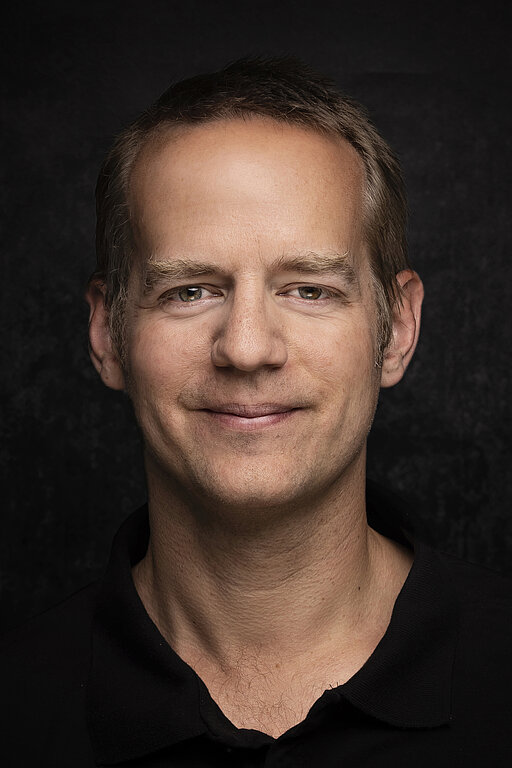
Paul R. Genssler is a Dr.-Ing. researcher at the Chair of AI Processor Design (AI-Pro) within the Technical University of Munich (TUM), actively advancing hardware solutions for artificial intelligence under Prof. Hussam Amrouch. His work bridges computer engineering and emerging technologies, focusing on overcoming fundamental limitations in conventional computing architectures through brain-inspired paradigms. His research spans critical domains in next-generation computing: Hyperdimensional Computing for robust pattern recognition and bioinformatics applications Neuromorphic and In-Memory Computing architectures for energy efficiency Reliability engineering for emerging memory technologies (FeFET, etc.) Quantum computing support systems including cryogenic embedded electronics Machine learning-driven transistor aging prediction and mitigation Analysis of his 15 most recent publications (2023-2024) reveals a dominant trend toward hyperdimensional computing as a unifying framework for addressing reliability challenges in emerging technologies. His work consistently integrates in-memory computing techniques to bypass von Neumann bottlenecks while targeting real-world applications like genome matching and unsupervised learning. A significant portion focuses on error-resilient implementations for unreliable nanoscale devices, demonstrating exceptional cross-stack expertise from transistor physics to algorithm design. As a core member of TUM's AI Processor Design group affiliated with the Munich Institute of Robotics and Machine Intelligence (MIRMI), Genssler collaborates extensively on projects spanning cryogenic quantum control systems, FPGA-based AI resilience, and monolithic 3D integration. The team operates at the intersection of semiconductor physics, computer architecture, and machine learning, with strong industry connections evident through publications at DATE, ASP-DAC, and ICCAD.
Prof. Dr. Antje Wilton is a W2 Professor for English Linguistics with a Focus on Sociolinguistics at the Institute of English Philology (WE6) within the Department of Philosophy and Humanities at Freie Universität Berlin. She is a leading scholar in sociolinguistics, English as a Lingua Franca (ELF), and discourse analysis, with a focus on media, sports, and forensic linguistics. Education: Magistra Artium in English, German, and Sociology (1990-1997) PhD: English and Applied Linguistics, University of Erfurt (2006) Her research spans sociolinguistics , multimodal interaction , discourse analysis , and cross-cultural communication . Recent work examines language use in sports interviews, media discourse, and forensic settings. She has co-edited volumes on organizational language and European linguistic dynamics. Key article trends include analyzing interactional strategies in sports interviews, ELF usage in media, and discourse patterns in public security debates. She teaches courses on sociolinguistics, language and space, and global English.
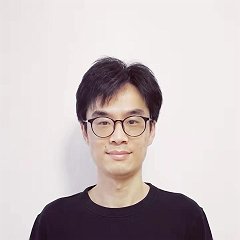
Bihuan Chen is an Associate Professor at the College of Computer Science and Artificial Intelligence, Fudan University, specializing in software engineering with focus on software supply chain security and trustworthy AI systems. His research spans multiple programming languages including JavaScript, Python, Java, and C/C++ across application and AI domains. Dr. Chen earned his B.Sc. and Ph.D. in Computer Science from Fudan University in 2009 and 2014 respectively, followed by postdoctoral research at Nanyang Technological University (2014-2017). His research interests include software supply chain risk assessment, trustworthy AI systems, and program analysis. His recent publications demonstrate strong focus on malicious package detection in NPM/PyPI ecosystems, vulnerability patch porting using LLMs, and safety verification for autonomous driving systems. The work shows increasing integration of machine learning techniques with traditional program analysis approaches, particularly evident in the 2024-2025 publications that leverage LLMs for vulnerability detection and code refinement. ACM SIGSOFT Distinguished Paper Award (FSE 2016, ASE 2018, ASE 2022, FSE 2025) IEEE TCSE Distinguished Paper Award (ICSME 2020, SANER 2023) CCF Prototype Competition Awards (2nd and 3rd Prizes) Dr. Chen has advised over 50 students including current PhD candidates and notable alumni now at Huawei, ByteDance, and other leading tech firms. His fuxi platform assesses security, legal, and maintenance risks across the software engineering lifecycle. He serves on program committees for major conferences including ICSE, FSE, ASE, and ISSTA, and as Associate Editor for the Journal of Software: Evolution and Process.
Marina L. Gavrilova is a Professor at the University of Calgary, Canada. Her research focuses on biometric systems, computer vision, and machine learning with an emphasis on multimodal recognition and security applications. She has authored numerous publications in top journals and conferences, contributing to advancements in fields like emotion-aware de-identification, generative adversarial networks, and ethical AI frameworks in healthcare. Her work spans social behavioral biometrics, gait recognition, masked face recognition, and aesthetic-based person identification. Key contributions include frameworks for ethical AI in care systems, fusion algorithms for multi-biometric systems, and innovations in visual and audio signal processing. Collaborations with experts like Osvaldo Gervasi, Jon G. Rokne, and Padma Polash Paul highlight her interdisciplinary approach. Publications emphasize practical applications such as privacy-preserved biometrics, emotion detection from social media, and adaptive systems for template aging. Despite no explicit mention of grants or labs, her extensive co-author network and frequent citations indicate significant academic influence.
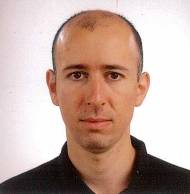
László Kozma is an Assistant Professor at the Theoretical Computer Science group of the Institute of Computer Science (Freie Universität Berlin). He obtained his PhD from Saarland University under Raimund Seidel, followed by postdoctoral positions at Tel Aviv University and TU Eindhoven. His research focuses on self-adjusting data structures , adaptive algorithms , and combinatorial optimization with applications to problems like the Traveling Salesman Problem, binary search trees, and geometric data structures. Academic Affiliation: Freie Universität Berlin (since 2018) Education: PhD in Computer Science (Saarland University, 2016); postdoc at Tel Aviv University and TU Eindhoven. His work explores the intersection of data structures, combinatorial algorithms, and geometric methods. He has made significant contributions to problems involving pattern-avoidance in inputs, saddlepoint detection , and self-adjusting heaps . Key areas include: Adaptive algorithms for pattern-avoiding inputs Optimal tree and heap structures Geometric and stochastic approaches to optimization Complexity analysis of classical algorithms Recent publications highlight efficient solutions for exponential cut problems (ESA 2025), balanced TSP partitioning (EuroCG 2025), and randomized saddlepoint algorithms (ESA 2024). His research often bridges theory and practice, exemplified by the smooth heap implementation and fun projects like Recursi and Cuckoo Hashing visualization.
Prof. Dr. Julia Rieck is a Full Professor of Business Administration at the University of Hildesheim , leading the Department of Business Administration and Operations Research within the Faculty of Mathematics, Natural Sciences, Economics and Computer Science. As Dean of the Faculty , she oversees academic programs, quality management, and research initiatives. Her roles include academic advising for the Business Information Systems (B.Sc./M.Sc.) programs and active participation in examination boards and quality committees. Education: PhD in Political Science (Dr. rer. pol.) with summa cum laude (2008), Habilitation at Clausthal University of Technology (2014), and studies in Business Mathematics (Diploma, University of Hamburg, 2003) and Mathematics (Georg-August-University Göttingen, 2000). Research: Focuses on Operations Research , Supply Chain Management , Project Planning , and Logistics . Her work integrates mathematical modeling , machine learning , and real-world applications , particularly in disaster response , dynamic transportation , and sustainable e-commerce . Projects: Leads third-party funded initiatives like "IT für die sorgende Gesellschaft" (AI in healthcare/social sectors) and contributes to the HULLS real-lab (AI in aging societies). Collaborates with regional companies (e.g., Youco, ADITUS) and institutions (HAWK, University of Hannover). Teaching: Emphasizes practical application through case studies, industry partnerships, and the IT-Speed Dating event for student-company connections. Her courses cover project resource planning , logistics , and digital transformation . Labs & Teams: Active in the Institute of Business Administration & Business Information Systems , contributing to the KET Kompetenzwerkstatt (entrepreneurship support) and interdisciplinary teams in AI and sustainability research.
Prof. Dr. Sebastian von Mammen is a tenured professor at the University of Würzburg's Institute for Computer Science, where he heads the Games Engineering research group and contributes to the Chair for Human-Computer Interaction. His group leads the Games Engineering academic program. Previously, he completed his habilitation (2012-2016) at the University of Augsburg's Chair of Organic Computing and was a postdoctoral fellow at the University of Calgary. His research spans: Real-Time Interactive Systems : Visual programming, immersion techniques, software engineering Interactive Simulations : Serious games for healthcare/logistics/construction Artificial Life : Self-organisation, adaptive systems, evolutionary computation Artificial Intelligence : Agent-based modeling, procedural content generation Recent publications (2023-2025) demonstrate strong focus on: Virtual reality applications in education (femtoPro optics simulator, BrainBuilder neuroanatomy) Healthcare technology platforms (VIA-VR for medical serious games) Game mechanics analysis (Match-3, Jump'n'Run flow) AI-driven emotion recognition and interactive systems Computational modeling of biological systems He leads the Games Engineering research group and previously participated in the Evolutionary and Swarm Design group (Calgary) and LINDSAY project. His lab develops VR simulations for scientific training and serious games applications.
Felix Naumann is a Professor at the Hasso Plattner Institute in Potsdam, Germany, specializing in data management and database systems. His research focuses on data quality, data profiling, entity resolution, functional dependencies, and database optimization. He has authored over 300 publications in top-tier conferences and journals, including VLDB, SIGMOD, and ICDE. His work bridges theoretical foundations with practical systems, such as TASHEEH for data cleaning and PRISMA for privacy-preserving schema matching. He serves as an editor for the ACM Journal of Data and Information Quality and has led initiatives on hybrid conference formats and inclusive computing. Key contributions include: Data Quality: Pioneered studies on data quality's impact on machine learning and developed tools like AutoTSAD for anomaly detection. Data Dependency Discovery: Advanced functional and inclusion dependency mining algorithms, including Hitting Set Enumeration methods. Schema Matching & Integration: Created systems like BrewER and Frost for entity resolution and schema alignment. Educational Impact: Led massive open courses in data engineering with over 10,000 participants. His work emphasizes practical applications in cultural heritage data (ReCLAIM), Wikipedia table analysis, and cross-platform data systems (RHEEMix). He collaborates extensively with industry and academia, addressing challenges in dynamic datasets and data governance.
Mohamed Sarwat is an Associate Professor at Arizona State University specializing in databases , spatial data management , and recommender systems . His research focuses on GeoSpark —a cluster computing framework for spatial data—and its extensions like GeoSparkViz for visualization and GeoSparkSim for traffic simulation. Key Contributions: LARS* (Location-Aware Recommender System), Horton* (Graph Reachability), Sindbad (GeoSocial Platform), and Riso-Tree (Graph Database Indexing) Research Themes: Integration of spatial/temporal data with machine learning, efficient indexing for big geospatial datasets, and scalable frameworks for mobility data science His work spans collaborations with 23+ co-authors across institutions like University of Minnesota, University of Melbourne, and University of Salzburg. Current projects emphasize GeoTorchAI —a spatiotemporal deep learning system—and mobility data science infrastructure.
Prof. Dr. Bernd Möller is a faculty member at Europa-Universität Flensburg, specializing in sustainable energy systems management for developing countries. His research focuses on renewable energy integration, spatial analysis, and environmental planning, leveraging GIS tools for energy system transformation. Current position: Professor at Department Energy and Environmental Management Alumni of Flensburg University of Applied Sciences and Aalborg University (PhD in Energy Planning) Research interests encompass wind/solar/biomass systems, energy atlas development, and climate-resilient infrastructure. His work bridges technology, economics, and spatial planning in renewable transitions. Publications highlight trends in offshore wind modeling, biomass logistics, district heating expansion, and GIS-driven energy solutions. Key themes include decarbonization, resource constraints, and regional energy equity. Teaching involves applied GIS science, energy planning frameworks, and development cooperation. He leads the PhD program in Energy and Environmental Management for Developing Countries.
Surajit Chaudhuri is a Researcher at Microsoft , with a career spanning decades in database systems and data management . He has received the prestigious SIGMOD Edgar F. Codd Innovations Award (2011) for his contributions to query optimization , index tuning , and data lakes . Research Interests : His work focuses on database tuning , approximate query processing , fuzzy similarity joins , automated data transformations , and machine learning integration for scalable data systems. Recent Publications : In 2025, his research includes Auto-Test for unsupervised error detection in tables, Esc for budget-aware index tuning, and MMTU for multi-task table understanding benchmarks. Earlier works in 2024–2023 address spreadsheet formula recommendation , low-overhead index filtering , and time-series pattern recognition . Scientific Impact : He has co-authored influential papers in SIGMOD , VLDB , and IEEE Transactions , shaping practices in cloud databases , query optimization , and self-service BI . His collaborations span institutions like Microsoft, MIT, and ETH Zurich.
Dr. Pascal Reuss is a Researcher at the Intelligent Information Systems (IIS) Division within the Institute of Computer Science , University of Hildesheim . His work focuses on Case-Based Reasoning (CBR) systems, Multi-Agent Systems , and Knowledge Management applications. Active in CBR framework development and game-based AI research Teaching Computer Science III (Databases) for winter 2025/26 Participating in university sustainability initiatives like Stadtradeln 2024/25 Reuss contributes to AI education through practical implementations in gaming environments and has developed visualization tools for CBR agent behavior. His research spans multi-agent collaboration , dynamic case bases , and domain-specific language implementations for knowledge maintenance. Notable contributions include: Co-developing the FEATURE-TAK framework for knowledge extraction Designing case factories for distributed CBR systems Implementing finite state machines for tactical game agents Creating CBR-based fitness planning systems His work appears in various CBR and Game Development publications from 2011-2024. The research demonstrates practical applications of CBR in aircraft maintenance diagnostics , training plan generation , and educational technology contexts.
Michael Bronstein is a Professor at Università della Svizzera italiana (USI Lugano) in Switzerland and Imperial College London in the UK, where he holds the Chair in Machine Learning and Pattern Recognition. He serves as Head of Graph Learning Research at Twitter following the acquisition of his startup Fabula AI, and maintains a principal engineer position at Intel Perceptual Computing. His research focuses on the interplay between geometry, machine learning, and computer vision, with particular emphasis on non-Euclidean structured data. Professor Bronstein received his Ph.D. with distinction in Computer Science from the Technion in 2007. He has held visiting appointments at Stanford University, MIT, Harvard University (as a Radcliffe Fellow), and Tel Aviv University, and has been affiliated with multiple Institutes for Advanced Study including TUM-IAS where he was a Rudolf Diesel Industry Fellow (2017). He is a Fellow of IAPR, Senior Member of the IEEE, and a member of the Young Academy of Europe. His research program centers on theoretical and computational methods in spectral and metric geometry applied to computer vision, pattern recognition, and machine learning. He pioneered the field of geometric deep learning, developing novel neural network architectures that process non-Euclidean data structures like graphs and manifolds. His work spans from theoretical foundations to practical applications, with over 100 publications in top scientific journals and conferences, and has been featured in international media including CNN. Analysis of his recent publications reveals a strong trajectory in geometric deep learning with applications spanning computer vision, 3D shape analysis, social network analysis, and bioinformatics. His research consistently bridges theoretical innovation with real-world applications, developing novel neural architectures for processing complex data structures. The work demonstrates increasing interdisciplinary reach, connecting machine learning with fields from particle physics to molecular biology. Dalle Molle Prize (2018) Royal Society Wolfson Research Merit Award (2018) ERC Proof of Concept Grant (2018) Amazon AWS Machine Learning Research Award (2018) Fellow, International Association for Pattern Recognition (IAPR) Google Faculty Research Award (2017) Radcliffe fellowship, Harvard University (2017) Rudolf Diesel industrial fellowship, TU Munich (2017) ERC Consolidator Grant (2016) World Economic Forum Young Scientist (2014) Professor Bronstein has secured multiple ERC grants (Starting Grant 2012, Proof of Concept Grants 2016 and 2018, Consolidator Grant 2016) and has mentored numerous students who have contributed to over 30 granted patents. He has chaired more than a dozen conferences and workshops in his field and served as area chair at major computer vision conferences including ECCV 2016 and ICCV 2017. His research group at USI Lugano collaborates extensively with industry partners including Intel and Twitter. As a serial entrepreneur, Professor Bronstein co-founded Novafora (2005-2009) developing large-scale video analysis, Invision (2009-2012) which created low-cost 3D sensors and was acquired by Intel, and Fabula AI (2018-2019) focused on fake news detection which was acquired by Twitter. His work bridges theoretical research with commercial applications, with his technology contributing to Intel RealSense and Twitter's graph learning infrastructure.