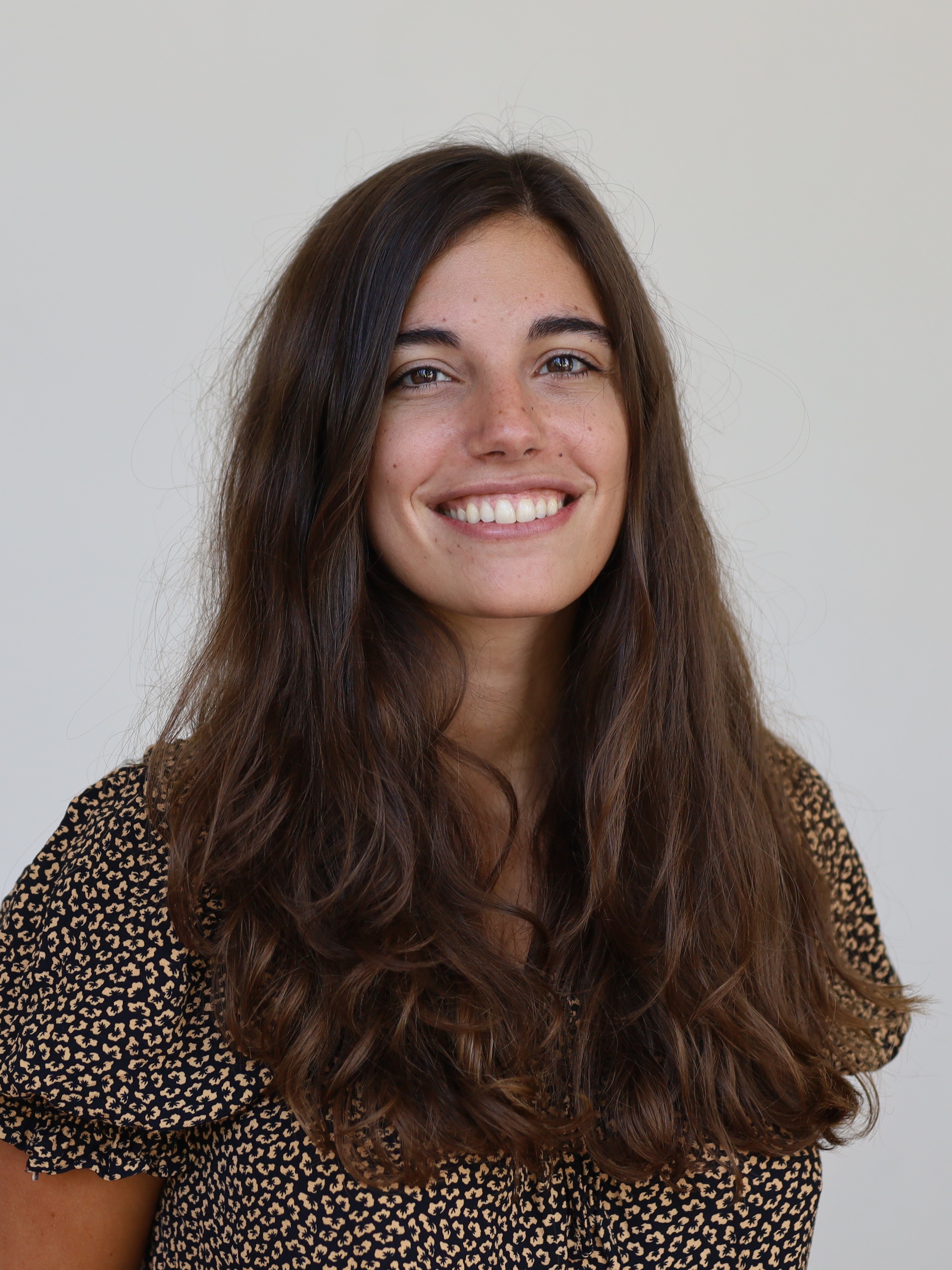
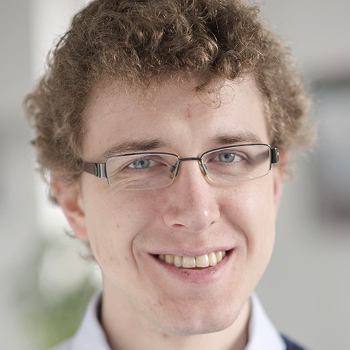
Witold Andrzejewski is an active researcher in computer science, focusing on data deduplication pipelines, co-location pattern mining, and GPU-accelerated algorithms. His work bridges academia and industry, with publications analyzing customer record deduplication in the financial sector, performance optimization of spatial data processing, and comparative studies of statistical modeling versus machine learning approaches. 2025: Co-location pattern mining with Euclidean metrics 2024: Customer data deduplication parameter tuning 2023: Text similarity measures in financial applications
Prof. Dr. Roland Langrock holds the Chair of Statistics and Data Analysis at the Faculty of Economics, University of Bielefeld . He is a spokesperson for the Center for Statistics and a subproject manager in the Transregio 212 NC³ collaboration. His research spans ecological statistics, sports analytics, and time series modeling. 2026–present: Principal investigator for "Data-based indication of fraud in live betting" (DFG) 2025–present: Subproject manager D06 in TRR 212 NC³ 2021–present: ERASMUS representative for Master of Statistical Sciences Research Interests: His work focuses on hidden Markov models for analyzing animal movement, sports performance, and commercial data. Key applications include marine predator behavior , football match dynamics , and fraud detection in betting . He develops flexible statistical frameworks for state-switching processes across domains. Scientific Awards: Multiple German Research Foundation grants (2017–2026) and participation in EU-funded projects. Notable publications in Journal of the Royal Statistical Society , Ecology Letters , and Science . Additional Roles: Member of the Bielefeld Graduate School in Theoretical Sciences, organizer of advanced statistical methods courses, and contributor to software packages like moveHMM . His collaborations extend to marine biology (blue whales), subterranean rodent studies, and retail demand forecasting.
Georg Stadtmann is a Professor of Macroeconomics at the Faculty of Economics and Business Administration (Wiwi) at Europa-Universität Viadrina Frankfurt (Oder). He serves as Vice Dean of the Chair of Economics and is part of the Dean's team. His research spans macroeconomics, monetary policy, and behavioral economics, with a unique focus on digital markets and eSports economics. Position: Vice Dean of the Chair of Economics (Macroeconomics) Department: Department of Economics Location: University Complex August-Bebel-Straße (AB 220), Frankfurt (Oder), Germany Research Interests: Macroeconomic modeling and policy analysis Monetary policy dynamics and central banking Behavioral economics applied to digital markets Structural comparisons of traditional sports and eSports Labor market responses to global crises (e.g., COVID-19) Cross-cultural economic behavior and creativity assessment Recent Article Trends: His 2025–2021 publications explore intersections between macroeconomics and digital culture, including the B/Orders in Motion framework applied to sports and gaming, cognitive biases in free-to-play games, and impacts of pandemics on labor markets. He also investigates ethical challenges in eSports and pricing mechanisms in virtual economies like Fortnite. Contact: Email: stadtmann@europa-uni.de Phone: +49 335 5534 2700
Gunther Friedl is Full Professor of Management Accounting and Chair of Controlling at the Technical University of Munich (TUM) , where he also serves as Dean of the TUM School of Management . Born in 1971, he is currently on research leave ( beurlaubt ) while continuing to supervise doctoral researchers and strategic projects. Education : Diploma in Physics, Technical University of Munich Doctorate (Dr. rer. pol.) in Business Administration, Ludwig-Maximilians-Universität München, 2000 Habilitation in Business Administration, Ludwig-Maximilians-Universität München, 2004 Visiting scholar appointments at Stanford University and Warsaw School of Economics Research Interests Professor Friedl’s work bridges controlling , corporate governance and energy economics . His early research focused on cost accounting and value-based management, leading to the widely adopted textbook Cost Accounting: A Decision-Oriented Introduction . More recently, his agenda has expanded to executive compensation, performance measurement, and the valuation of innovative technologies—especially in energy and mobility. Across more than 60 peer-reviewed articles, his publications reveal three dominant strands: Cost & Management Accounting – development of decision-oriented cost systems, hospital controlling and managerial performance metrics; Corporate Governance & Executive Pay – empirical studies on board compensation, transparency of compensation reports and stakeholder influence; Energy & Mobility Economics – application of real-options and levelized-cost methodologies to battery manufacturing, electric-vehicle adoption and grid-integration strategies. Scientific Awards Best Teaching Award, TUM School of Management (2017) Excellence in Teaching Award, Technical University of Munich (2013) Professor of the Year 2012 – UNICUM & KPMG Best Teaching Award, Executive MBA Class 2012 Best Textbook Award, German Academic Association for Business Research (VHB) 2011 Fellow of the Hanns Seidel Foundation (1993–1998) Doctoral Advising & Research Grants Professor Friedl currently leads a vibrant research group of 4 post-docs, 8 doctoral researchers and 3 research assistants funded by the German Federal Ministry of Education and Research (BMBF), the Bavarian State Ministry and industry partners such as BMW, Siemens and Allianz. Recent grants include: €1.1 million BMBF project “Controlling the Energy Transition” (2022-2026) €0.5 million Bavarian High-Tech Agenda project on “Data-Driven Controlling for Sustainable Mobility” (2021-2025) Deutsche Forschungsgemeinschaft (DFG) individual research grant on “Executive Compensation and Corporate Governance” (2019-2023) Labs & Teams He heads the Chair of Controlling at Arcisstraße 21, 80333 Munich, where the TUM Center for Energy Markets and the TUM School of Management provide interdisciplinary infrastructure. The chair’s Energy & Innovation Controlling Lab offers access to proprietary micro-data on energy consumption, mobility patterns and corporate governance structures, enabling large-scale empirical studies in collaboration with MIT, Stanford and the European Energy Exchange.
Christian Ackermann serves as Academic Staff at the Institute of Business Administration and Information Systems within the Faculty of Mathematics, Natural Sciences, Economics and Computer Science at the University of Hildesheim. His work focuses on operations research with particular emphasis on transportation logistics and optimization problems in dynamic environments. Dr. Ackermann's research spans dynamic transportation systems, with specialization in Dial-a-Ride Problems and ride-hailing optimization. His work combines theoretical operations research with practical applications in urban mobility and resource allocation. He has developed novel approaches for dynamic routing, vehicle repositioning, and real-time decision making in transportation systems. His research demonstrates strong methodological rigor while addressing real-world challenges in transportation logistics. His publication record shows a consistent trajectory of innovation in solving complex dynamic optimization problems. Ackermann's work reveals a pattern of developing multiple plan approaches and repositioning strategies that significantly improve efficiency in demand-responsive transport systems. His research bridges theoretical operations research with practical urban mobility challenges, making substantial contributions to both academic knowledge and practical applications. Dr. Ackermann has also contributed to educational initiatives, particularly through the development of optimization methods for university IT-Speed Dating events, which facilitate student-company matching and career development opportunities. His work with Professor Julia Rieck demonstrates strong collaborative research within the University of Hildesheim's operations research community.
Björn Leese serves as Professor of Scenic Bodywork in the Department of Drama at the State University of Music and Performing Arts Stuttgart (HMDK Stuttgart) since October 1, 2023. With 27 years of international performance experience across 43 countries on five continents, he specializes in physical theatre through collaborations with Familie Flöz at major festivals including Edinburgh Fringe, London International Mime Festival, and Schleswig-Holstein Music Festival. His educational foundation was established through Pantomime/Physical Theatre studies at Folkwang University of the Arts (1991-1996), where he developed core methodologies for theatrical body expression. Leese's research centers on transforming the actor's body into a precise instrument for non-verbal communication, exploring how inner attitudes manifest through posture, breathing, and rhythm. His pedagogy systematically deconstructs habitual movement patterns using tempo, energy levels, tension states, and stage balance to cultivate characters that become 'visible and tangible' to audiences. The Neutral Mask and Character Mask serve as critical tools for unlocking physical imagination and creating vivid, unique personas through breath-driven improvisation. His acclaimed theatre productions form the practical basis of his academic work: Ristorante Immortale (1997) - Cavalcade Edinburgh Fringe Festival winner Teatro Delusio (2004) - Schwerte Cabaret Prize recipient Haydi! (2014) - Monica Bleibtreu Prize winner Dr. Nest (2018) - Festival Almada Portugal Audience Award Leese's teaching methodology develops actors through structured progression: match training establishes physical fundamentals, scenic body work analyzes movement patterns to transcend personal physicality, and mask work transforms performers into new beings. His FLÜNK recording studio extends this practice into sound design for film and stage, demonstrating integrated artistic application. Current workshops globally focus on gravity, tension levels, body centers, and the dynamic interplay of character, space, and time.
Prof. Dr. Karsten Borgwardt is Director of the Research Department of Machine Learning and Systems Biology at the Max Planck Institute of Biochemistry in Martinsried, Germany. A leading figure in the intersection of machine learning, bioinformatics, and systems biology, he heads a multidisciplinary team that develops novel computational methods to extract knowledge from large biomedical data sets. Research Mission: The Borgwardt lab converges big data analytics and biomedical research . Two overarching goals drive their work: (1) Automatically generating new biological and medical knowledge from massive data via state-of-the-art machine-learning algorithms. (2) Understanding the molecular underpinnings of biological system function, with emphasis on personalized medicine and biomarker discovery. Their methodological toolbox spans graph neural networks, kernel methods, conformal prediction, deep learning on sequences and structures, and topological data analysis . Application domains include antimicrobial resistance prediction, protease engineering, acute-kidney-injury forecasting, coronary-artery-disease diagnostics, single-cell spatial proteomics, and Long-COVID immune profiling. Recent Publication Landscape (2023-2025): The group’s latest articles demonstrate a clear trend toward translationally relevant machine learning . High-impact venues such as Nature Communications , Science , ICLR , and RECOMB feature their work on: Data-driven protein engineering using DNA-recorded deep mutational scanning. Guaranteed antimicrobial resistance detection from MALDI-TOF spectra via conformal prediction. Graph-based biomarker discovery with theoretical guarantees. Deep phenotyping of human iPSC-derived neuronal networks to study disease mutations. Multi-modal learning that fuses genomics, proteomics, and clinical data for patient stratification. These contributions collectively advance both the theoretical foundations and real-world deployment of machine learning in medicine. Scientific Awards & Honors: While no explicit award list is provided, the breadth and impact of publications, invited book chapters, and keynote-level conference presentations (ICLR, RECOMB, ISMB/ECCB) testify to sustained international recognition. Laboratory & Collaboration Ecosystem: The Borgwardt lab operates at the Max Planck Institute of Biochemistry —a world-leading biomedical research campus. Collaborations span multiple Max Planck centers, university hospitals across Europe, and international consortia such as the EyeConic study on optogenetics therapy. The lab’s open-source footprint includes the Multi-SConES R package for multi-task network-regularized feature selection, fostering reproducible science across the community.
Sam Behjati is a Clinical Professor of Paediatric Oncology at the University of Cambridge and a Group Leader & Wellcome Senior Research Fellow at the Wellcome Sanger Institute. He serves as an Honorary Consultant Paediatric Oncologist at Addenbrooke's Hospital and leads research at the intersection of Cellular Genetics and Cancer programs. His work focuses on understanding the developmental origins of childhood cancers through innovative genomic approaches. Dr. Behjati's research interests center on unraveling the identity and origin of cancer cells, with particular emphasis on childhood cancers. His team combines cutting-edge single cell transcriptomics with cancer genomics to understand normal human development and how developmental processes relate to disease. They investigate the precise cellular origins of tumors, matching transcriptomic profiles of diseased cells with normal tissues, and identifying clinically relevant features of disease transcriptomes. This work has significant implications for understanding the developmental nature of childhood cancers and improving diagnostic and therapeutic approaches. Analysis of Dr. Behjati's recent publications reveals a strong focus on childhood cancers, particularly Wilms tumor, with extensive work on single-cell transcriptomics, somatic mutation analysis, and developmental origins of cancer. His research spans multiple disciplines including cancer genomics, developmental biology, and pediatric oncology, with consistent contributions to understanding the molecular basis of childhood tumors. Royal Society Crick Medal and Lecture Foulkes Foundation Academy of Medical Sciences Medal Pezcoller Foundation-EACR Rising Star Award EMBO Young Investigator Liddy Shriver Early Research Award | Connective Tissue Oncology Society Dr Simon Newell Early Career Investigator of the Year (Sparks) award Science & SciLifeLab Prize for Young Scientists Wellcome Intermediate Clinical Fellowship Robert J. Arceci Innovation Award | St. Baldrick's Foundation Donald Paterson Prize | Royal College of Paediatrics and Child Health Dr. Behjati leads the Behjati Group at the Wellcome Sanger Institute, which is part of both the Cellular Genomics and Cancer, Ageing and Somatic Mutation programmes. His team applies single-cell techniques to understand normal human development and its relationship to disease, with a particular focus on childhood cancers. The group collaborates extensively with external partners including Wellcome, St Baldrick's Foundation, and the Little Princess Trust, and contributes to major initiatives like the Human Cell Atlas.
Dr. Kassian Kobert is a researcher at the University of Bielefeld, affiliated with the Faculty of Engineering, the Institute for Bioinformatics Infrastructure (BIBI), and the Center for Biotechnology (CeBiTec). His primary research base is within the Genome Informatics Group, where he focuses on computational approaches to genomic analysis and biological data processing. He maintains an active research presence with recent publications extending to 2022. Dr. Kobert's research interests center on bioinformatics and computational biology, with particular expertise in algorithm development for genomic data analysis. His work bridges computer science and biological applications, focusing on creating efficient computational methods for handling large-scale genomic datasets. His research spans phylogenetic inference, sequence alignment, viral evolution, and the development of specialized software tools for next-generation sequencing data processing. The interdisciplinary nature of his work connects computer science theory with practical biological applications, particularly in evolutionary biology and genomics. Analysis of Dr. Kobert's publication record reveals a consistent focus on developing computational methods for biological data analysis. His work demonstrates a trajectory from fundamental algorithm development to practical software implementation, with notable contributions including the PEAR read merger and ExaBayes phylogenetic analysis tool. His research shows strong emphasis on computational efficiency, particularly for handling the massive datasets generated by modern genomic technologies. The publications indicate expertise in both theoretical computer science aspects (algorithm design, computational complexity) and practical biological applications (viral evolution, phylogenetic analysis). Dr. Kobert appears to have significant involvement in software development for bioinformatics applications, with several publications describing tools that have become standard in genomic analysis workflows. His work on parallel computing approaches suggests engagement with high-performance computing environments necessary for modern genomic research.
Maike Buchin is a Professor of Theoretical Computer Science / Algorithmics at the Faculty of Computer Science, Ruhr-University Bochum, where she has been serving since 2019. She also holds the position of Studiendekanin Informatik (Dean of Studies for Computer Science). Prior to her current position, she was a Visiting Professor at Technical University Dortmund (2017-2019) and a Juniorprofessor at Ruhr University Bochum (2013-2017). Dr. Buchin's research focuses on computational geometry, algorithms, and trajectory analysis. Her work particularly emphasizes Frechet distance computations, curve matching, and geometric algorithms. She has made significant contributions to understanding the computational complexity of geometric problems and developing efficient algorithms for trajectory data analysis. Her research has applications in geographic information systems, movement pattern analysis, and shape comparison. Analysis of her recent publications reveals a strong focus on clustering algorithms for polygonal curves, Frechet distance computations, and trajectory analysis. Her work bridges theoretical computer science with practical applications in GIS and movement data analysis. She has developed approximation algorithms, coreset constructions, and efficient query processing techniques for geometric problems. Her research has been published in top-tier venues including ACM Transactions on Algorithms, Computational Geometry: Theory and Applications, and proceedings of major conferences like Symposium on Computational Geometry (SoCG) and European Symposium on Algorithms (ESA). Dr. Buchin has supervised numerous students and taught courses including Algorithm Paradigms, Computer Science 2 - Algorithms and Data Structures, Computer Science 3 - Theoretical Computer Science, Geometric Algorithms, Data Structures, and seminars on Cryptology and Theoretical Computer Science. She leads research in the Theoretical Computer Science / Algorithmics group at Ruhr-University Bochum, collaborating with researchers worldwide on computational geometry problems and their applications.
Olatz Roman is a Postdoctoral Researcher in Economics at the University of Mannheim, specializing in family, labor, and gender economics. She earned her Ph.D. in Economics from the European University Institute in 2025 and focuses on how gendered behaviors and geographic factors shape labor market and family decisions. Ph.D. in Economics (2025) - European University Institute Her research examines: Relationship Quality (non-material gains in partnerships), Household Specialization (gender roles post-childbirth), and Migration Dynamics (geographic constraints on couples). She employs advanced econometric methods including dynamic difference-in-differences and shift-share decomposition. Recent work presented at institutions like Universitat Pompeu i Fabra, SOLE 2024, and European Winter Meeting of the Econometric Society. Her research has direct implications for family policy, labor mobility, and gender equity frameworks. Contact: olatz.roman@eui.eu
Anton Dignös is a professor at the Free University of Bozen-Bolzano , specializing in temporal databases , time series analysis , and database systems . His research focuses on efficient query processing for interval data, temporal joins, and schema design, with significant contributions to in-memory and time series databases. Key research areas include: Temporal Data Management : Advanced techniques for interval and duration queries. Time Series Analytics : Machine learning integration and pattern detection. Schema Optimization : Automated design and tuning of database schemas. Visual Analytics : Tools for period data comparison and correlation analysis. His work spans collaborations with researchers like Johann Gamper and Michael H. Böhlen , addressing challenges in healthcare systems, industrial applications, and financial data analytics. Notable contributions include algorithms for temporal anti-joins , range-duration queries , and machine learning-based anomaly detection .
Paolo G. Giarrusso is a researcher at the Institute for Programming Languages and Software Engineering within the Faculty of Informatics at the University of Tübingen . Previously, he was a Ph.D. student at the University of Marburg , where he defended his thesis Optimizing and Incrementalizing Collection Queries by AST Transformation in January 2018.
Daron Acemoglu is a Professor at the Massachusetts Institute of Technology (MIT) , where he conducts research on political economy, economic development, technological change, and inequality . As a leading scholar in institutional economics, he explores how inclusive vs extractive institutions shape national prosperity and stability. His 2023 book Power and Progress examines AI's societal implications, while Why Nations Fail (2012) revolutionized development theory through historical institutional analysis. Research Focus : Macroeconomics, Labor Economics, Technological Displacement Key Theories : Institutional persistence, Directed technical change, Creative destruction dynamics Awarded with the Sveriges Riksbank Prize in Economic Sciences (2024) A.SK Social Science Award (2023) John Bates Clark Medal (2005) His empirical work spans historical and contemporary analyses , connecting medieval institutional development to modern economic outcomes. Recent publications examine AI regulation, automation's labor market impacts , and creative destruction forces . He serves as Faculty Co-Director at MIT's Stone Center on Inequality and contributes to Blueprint Labs .
Prof. Dr. Gerd Nufer is a distinguished Professor of Business Administration specializing in Marketing, Trade and Sports Management at the ESB Business School of Reutlingen University. He serves as Dean of the MBA International Management Part-Time program and holds leadership positions as Director of the German Institute for Sports Marketing and Head of the Institute for Marketing, Market Research & Communication. With habilitation rights through the Promotion Association Baden-Württemberg, Prof. Nufer has established himself as a leading authority in sports marketing research and education. Prof. Nufer's research focuses on innovative marketing approaches in sports contexts, with particular expertise in Ambush Marketing, Event Marketing, and Guerrilla Marketing. His work bridges academic theory with practical industry applications, addressing contemporary challenges such as sustainability in major sports events, the evolving landscape of sports sponsorship, and the integration of digital technologies in marketing strategies. He has published extensively on how brands can effectively leverage sports properties for marketing purposes while navigating the complex ethical and legal considerations inherent in sports marketing. His recent research output demonstrates a strategic expansion into emerging areas including eSports marketing, AI applications in marketing analytics, and gender-based consumer behavior differences. The publications reveal a consistent pattern of addressing timely industry challenges through rigorous empirical research, often providing frameworks that help practitioners understand and implement effective marketing strategies in dynamic sports business environments. His work on the halo effect in sports, ambush marketing effectiveness, and sustainability in mega-events has particular relevance for contemporary sports marketing practice. 2013 First Prize for innovative teaching at ESB Business School 2011 Nomination for Baden-Württemberg State Teaching Award 2010 Teaching Award from ESB Business School faculty and Hochschule Reutlingen 2002 Dissertation Prize from RWT Reutlinger Wirtschaftstreuhand GmbH and Friedrich-List-Stiftung 1997 Study Abroad Scholarship in San Diego from Dr. Eberhard Kornbeck-Stiftung 1995 Winner of international computer-based business simulation game 'INTOPIA' at Lund University Prof. Nufer maintains strong industry connections through his consulting work and media contributions, regularly providing expert analysis on current sports marketing developments to major publications and broadcast outlets. His teaching approach integrates this practical experience with academic rigor, offering students valuable insights into the real-world application of marketing principles in sports business contexts. He supervises Master's theses and advises member companies through the Association for the Promotion of International Management Education, creating pathways for students to engage with industry challenges. As Director of the German Institute for Sports Marketing, Prof. Nufer leads a research environment focused on addressing contemporary challenges in sports business. His work with the Reutlingen Research Institute facilitates collaboration between academia and industry, ensuring that research remains relevant to current market needs while maintaining academic rigor. This practical orientation extends to his editorial roles, where he shapes discourse in the field through publication series that bridge theory and practice in sports marketing.