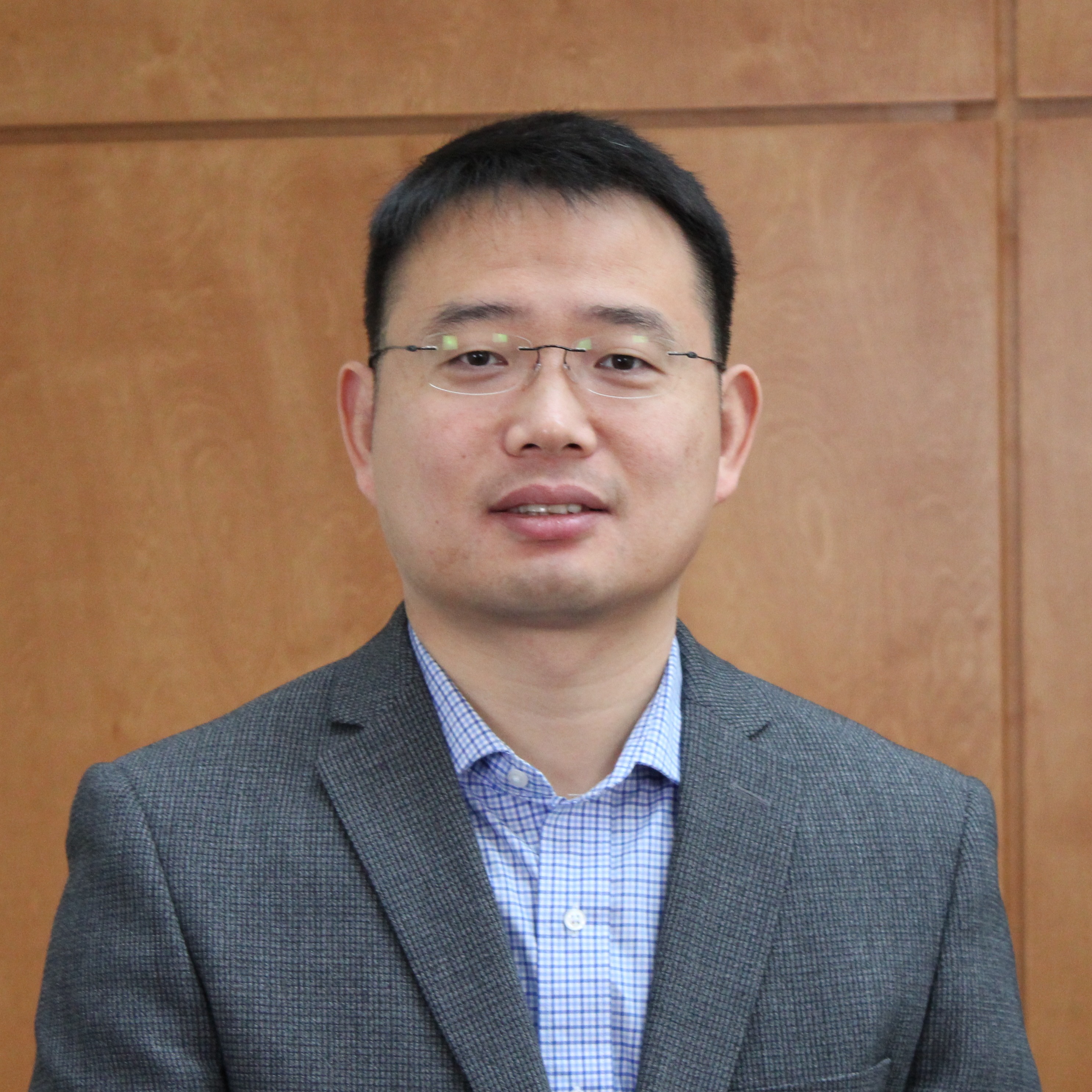
Xiaolei Guo is a Professor of Management Science at the Odette School of Business, University of Windsor. His expertise spans transportation systems, supply chain optimization, and infrastructure pricing strategies. He holds a Ph.D. in Transportation from the Hong Kong University of Science and Technology (2008) and a B.A. in Hydraulic Engineering from Tsinghua University (2004). His research focuses on congestion pricing mechanisms, transportation network modeling, and toll road economics. Notable areas include optimizing toll designs under uncertainty, analyzing autonomous vehicle impacts on ridesharing, and evaluating strategic distribution channel decisions under environmental regulations. Dr. Guo has contributed to over 30 peer-reviewed articles since 2005, exploring topics such as Braess paradox under bounded rationality, Pareto-improving congestion schemes, and profit maximization for private toll roads. His work bridges theoretical optimization with practical policy applications. He is an active member of the Canadian Transportation Research Forum (CTRF) since 2011 and the Institute for Operations Research and the Management Sciences (INFORMS) since 2009.
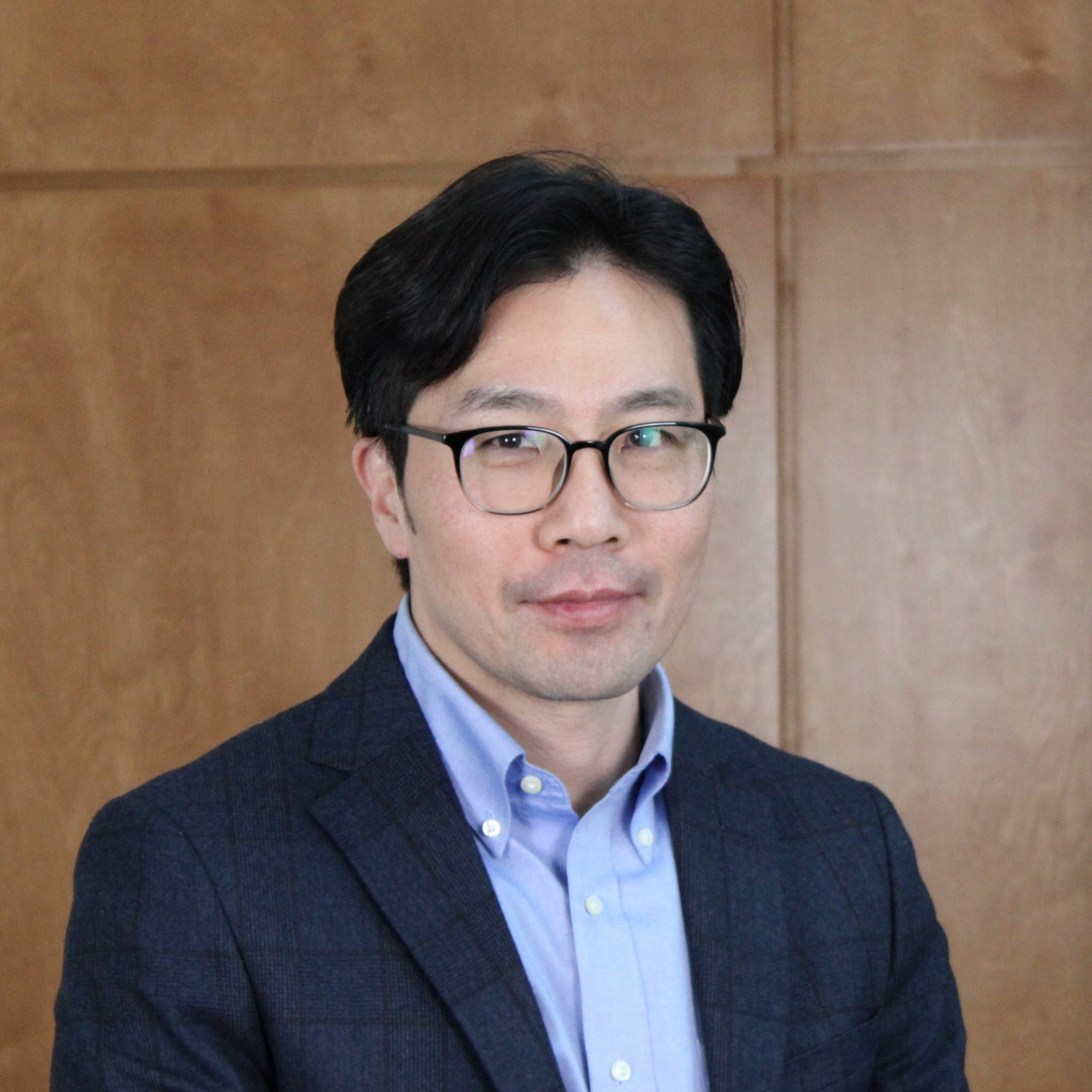
Young Ho Song is an Associate Professor in the Department of Management at the Odette School of Business, University of Windsor. He holds a Ph.D. in Human Resources and Organizational Behaviour from McGill University (2018), an M.I.L.R. from Cornell University (2011), an M.B.A. from the University of British Columbia (2010), and a B.S. in Mechanical Engineering from Yonsei University (1999). His research focuses on organizational behavior, human resources management, and the psychological and behavioral responses of employees to workplace challenges such as customer mistreatment and AI integration. He has received notable awards including the 2024 Professor of the Year and the Odette New Researcher Award (2021). Education: Ph.D., McGill University (2018) M.I.L.R., Cornell University (2011) M.B.A., University of British Columbia (2010) B.S., Yonsei University (1999) Research Interests: Employee behavior under customer mistreatment, AI adoption in workplaces, negotiation strategies in cross-cultural contexts, and the psychological mechanisms behind workplace deviance and conformity. Grants: SSHRC Insight Development Grant ($67,332) Odette Research Innovation Fund grants totaling $22,000 His recent articles explore themes such as AI tool impacts on employee learning, customer satisfaction in mobile app usage, and ethical negotiation strategies in South Asia. He has presented widely at conferences like the Academy of Management and Society for Industrial and Organizational Psychology.
Prof. Dr. Tobias Brandt serves as a Full Professor and Chair of Digital Innovation and the Public Sector at the University of Münster's School of Business and Economics. His academic journey includes roles as Assistant Professor at Rotterdam School of Management (2016-2021) and Research Assistant at the University of Freiburg (2011-2015). He co-founded Geospin GmbH in 2016 and holds memberships in VHB, INFORMS, and AIS. Research Interests: Brandt focuses on digital innovation in public sectors, sustainable urban systems, e-government, and platform ecosystems. His work bridges information systems and operational research to address challenges in mobility, energy, and public service delivery. Recent projects include developing tools for sustainable urban planning, digital platforms for elderly care, and leveraging AI for crisis management. Notable Projects: Current initiatives include the PIONEER II Master's program on public innovation, SMARD-Gov (LLMs for government decision-making), and comuneo (digital sustainability management platform). Completed projects include INNO4S (integrating sustainability in business education) and studies on pandemic-driven digitalization in public administration. Awards: RSM Teaching Award (2020), Daniel H. Wagner Prize (2020), IBM Faculty Award (2016). Grants: €5M+ secured from EU Erasmus+, DFG, and German Federal Ministry of Research. Labs/Teams: Leads the Chair of Digital Innovation & Public Sector, collaborating with ERCIS (European Research Center for Information Systems). Active in GovTech and digital sustainability initiatives.
Maryam Dilmaghani is a Professor of Economics at the Sobey School of Business, Saint Mary's University. Her research focuses on gender economics, labor markets, health economics, and behavioral economics. She examines topics such as decision-making under competition, socio-cultural influences on economic behavior, and disparities in well-being across demographic groups. Her work frequently employs empirical approaches to analyze data from elite competitions, labor markets, and Canadian demographic trends. Key research themes include: Gender gaps in earnings, risk-taking, and corrupt behavior Impact of religiosity, education, and body image on economic outcomes Demographic patterns in fertility, homeownership, and citizenship Discrimination studies related to race, sexual orientation, and gender identity Her recent publications explore weather effects on chess player performance, LGBTQ+ economic experiences, and the causal links between education and health behaviors. This work highlights intersections between economic systems and sociocultural factors shaping individual choices and societal structures. Dr. Dilmaghani holds no currently listed awards but has produced a prolific body of peer-reviewed research. Her work contributes to policy debates on workplace diversity, urban planning equity, and labor market inclusion. She can be reached at maryam.dilmaghani@smu.ca for academic collaboration inquiries.
Spencer Banzhaf is a Professor in the Department of Agricultural and Resource Economics at North Carolina State University (NC State), and Director of the Center for Environmental and Resource Economics Policy (CEnREP). He holds a PhD in Economics from Duke University. His research focuses on environmental policy, particularly land use, urban equity, and the interplay between environmental quality, real estate markets, and urban demographics. Key areas include environmental justice, fiscal federalism, and the historical evolution of environmental economic thought. He has contributed to journals such as the American Economic Review and Journal of Political Economy , and serves as editor of the Review of Environmental Economics and Policy . Recent work explores topics like racial segregation’s environmental impacts, the economic history of pollution pricing, and the valuation of ecosystem services. His scholarship bridges theoretical frameworks with applied policy analysis, emphasizing equity and interdisciplinary approaches. He is associated with NC State’s Economics Graduate Program and actively engages in policy debates through contributions to regulatory analyses and public discourse on environmental governance.
Marcelo Vinhal Nepomuceno is a Professor of Marketing at HEC Montréal and holds the Canada Research Chair in Consumer Decision-Making. He specializes in understanding how biological factors, social media, and cultural contexts influence consumer behavior. His research focuses on anti-consumption lifestyles, materialism, and the interplay between hormones and consumer choices. He teaches courses such as Consumer Behavior and Textual Analysis, and has supervised numerous PhD and MSc theses. Education: Ph.D. (Marketing), John Molson School of Business, Concordia University M.Sc. (Psychology), University of Brasilia Research Interests: Consumer resistance, hormones' role in purchasing decisions, cross-cultural marketing strategies, and the ethical implications of consumption patterns. Recent work explores testosterone effects on materialism and the financial impacts of social media advocacy. Supervision Highlights: PhD: Chau Minh Nguyen (2024) MSc: 4 theses including studies on social media privacy, influencer marketing, and consumer engagement 6 supervised projects addressing brand perception, eco-responsibility, and digital marketing strategies Labs & Teams: Involved in interdisciplinary research teams at HEC Montréal analyzing consumer decision-making processes through integrative frameworks combining neuroscience and market dynamics.
Professor Panikos Panayi is Professor of European History at De Montfort University's School of Humanities, where he has worked since 1990 and held a personal Chair since 1999. His extensive academic career has focused on migration history, ethnic relations, and European history, making significant contributions to our understanding of how immigrants have shaped societies, particularly in Britain and London. Professor Panayi's research interests encompass the history of immigration and interethnic relations, the history of food, the First World War, German history, the history of London, and the history of the Cypriot people. His work consistently examines how migration has been fundamental to the economic, social, political, and cultural development of societies, with a particular focus on Britain and London as case studies. He approaches his research through detailed historical analysis combined with contemporary relevance, often highlighting how historical patterns of migration and integration inform current debates. His publications reveal a consistent focus on migration history, particularly examining how immigrants have shaped British society. A central theme across his work is the argument that London's development as a global city has been inextricably linked to immigration patterns spanning two millennia. His research demonstrates how migrants have contributed to London's economy, culture, and social fabric, from Roman invaders to contemporary European Union citizens, acting as cheap labor, contributing to the financial sector, establishing curry houses, and influencing football clubs. Fellow of the Royal Historical Society Senior Fellow of the Higher Education Academy Research funding from prestigious organizations including the Alexander von Humboldt Foundation, Arts and Humanities Research Council, British Academy, Gerda Henkel Foundation, Leventis Foundation, and Leverhulme Trust Professor Panayi actively supervises PhD students, currently guiding research on topics including 'Sedition and State Overwatch: Radicalism, Racial Politics and Britain's Black Communities' and 'The Burger in Britain: A Symbol of Americana.' His externally funded research projects have examined subjects such as 'The Cypriot Peasant,' 'Real Londoners: Immigration and the Making of London,' and 'Knockaloe in Local, National and Global Context.' He serves as reviews editor of 'Immigrants and Minorities' and is a member of the international editorial board of the 'Journal of Imperial and Commonwealth History.'
Caterina Cruciani is an Associate Professor at the Department of Management , Venice School of Management , Ca' Foscari University of Venice. She serves as a member of the University Scientific Instrumentation Service Center (CSA) Management Committee and is affiliated with the Research Institute for Social Innovation . Research Interests Trust dynamics in financial advisory Behavioral finance and investor decision-making Sustainability disclosure and ESG integration Digital transformation in financial services Regional economic development and SME financing Agent-based modeling of cooperative behavior Key Article Trends (2009-2024): Span 15 years of research on financial trust (12 publications), behavioral economics (10), sustainability (6), and digital finance (5). Methodologically combines experimental economics , structural equation modeling , and Supervised Topic Modeling for ESG discourse analysis.
Associate Professor at the University of Klagenfurt , affiliated with the Department of Management Control and Strategic Management under the Faculty of Economics and Law . Research focuses on agent-based modeling applied to organizational dynamics , complex systems , and managerial economics . Holds a doctoral degree in Social Sciences and Economics (2012) and venia docendi in Business Economics (2018) . Core faculty member in the Self-Organizing Systems research cluster Academic editor for PLoS ONE and editorial board member for multiple journals Recipient of the 2021 Advancement Award (Humanities/Social Sciences) from Carinthian government Research integrates computational simulation with organizational theory , examining phenomena like decentralized task allocation , incentive mechanisms , and reproducibility in social sciences . Teaching portfolio includes business analytics , management control , and scientific modeling at undergraduate and graduate levels. Recent publications explore organizational resilience , team coordination dynamics , and financial modeling using agent-based simulation techniques. Active participant in international conferences like Social Simulation Conference and European Conference on Operational Research .
Dr. Kathryn Thier is a Postdoctoral Research Fellow in the Center for Climate Change Communication at George Mason University. She holds a Ph.D. in Communication Science and Social Cognition from the University of Maryland and previously taught journalism at the University of Oregon, where she co-founded The Catalyst Journalism Project. Her research examines Solutions Journalism and its capacity to drive pro-social outcomes in Climate Change Communication and Health Communication . She investigates how solution-oriented reporting influences public engagement, policy support, and health behaviors. Recent publications (2019-2025) demonstrate methodological diversity including meta-analyses, content analyses, and experimental designs. Dominant themes include: Health/climate misinformation mitigation Solution-oriented framing effects Equity-focused communication strategies Policy engagement mechanisms She maintains a strong emphasis on quantitative rigor and interdisciplinary applications.
Robert Thompson is a Trustee Professor of Television and Popular Culture at Syracuse University's S.I. Newhouse School of Public Communications, where he also serves as founding director of the Bleier Center for Television and Popular Culture. He has held visiting professorships at Cornell University and previously directed the N.H.S.I. Television and Film Institute at Northwestern University. His expertise spans media analysis, cultural studies, and communication theory. Thompson's research focuses on television's role in shaping popular culture, media industry trends, and cultural reception. He has contributed to over 500 radio/TV programs and publications, including frequent appearances on networks like CBS, NBC, ABC, PBS, and NPR. His award-winning work includes the Stephen H. Coltrin Award (1991-1992) and authorship of influential books such as Television's Second Golden Age and Prime Time, Prime Movers . As a thought leader, Thompson lectures nationally on media's societal impact and has led initiatives through the Bleier Center to advance television's academic and cultural discourse. His career bridges academic scholarship with public engagement, making complex media concepts accessible to broader audiences.
Bon Koo is an Associate Professor in the Department of Management Sciences at the University of Waterloo. He is affiliated with the International Science & Technology Practice & Policy (InSTePP) at the University of Minnesota. His research focuses on technology management, intellectual property rights economics, biotechnology, and innovation policies. Education: PhD, Agricultural and Resource Economics, University of California, Berkeley (1998) MA, Agricultural and Resource Economics, University of California, Berkeley (1996) MA, Economics, Yonsei University (1991) BA, Economics, Yonsei University (1989) Research interests include licensing and contracts in technology, open-source innovation, and the economics of R&D. His work bridges policy analysis with economic theory, particularly in biotechnology and green technology sectors. Publications span topics like intellectual property rights policies, plant genetic resources, and financial regulation. Notable work includes analyses of U.S. plant varietal rights and financial crisis dynamics. Awards: 2001 Outstanding Paper Award from the Crop Science Society of America Teaching includes courses like Engineering Economics (MSCI/MSE 261) and Science & Technology Policy (MSCI/MSE 744). He supervises graduate students with sole-supervisory privilege status at Waterloo.
Prof. Dr. Vita Akstinaitė is a Professor and Vice-Rector for Research and Faculty at ISM University of Management and Economics (Lithuania). She leads the Master's program 'Global Leadership and Strategy' and the Executive Master's module on rhetoric/communication. As a Visiting Researcher at IDIAP (Switzerland) and Visiting Fellow at the University of Lausanne, she bridges academic and applied research. Her work focuses on leadership dynamics, hubris, linguistic markers, and AI applications in leadership assessment. Education: MSc Organizational Psychology (King's College London) and PhD in Business (University of Surrey), with research on linguistic markers of hubris. She co-founded The Hubris Hub and Knowledge4Hubris initiatives, fostering interdisciplinary collaboration. Notable projects include EU-funded AI leadership research (2021) and NordForsk's remote work study (2023-2026, €99k+). Research emphasizes innovative methods like AI-driven text analysis to evaluate leadership behaviors. Key areas include: executive hubris measurement, AI's role in leadership skill assessment, and ethical leadership frameworks. Her work spans international collaborations with institutions like Umeå University (Sweden), Murdoch University (Australia), and the London School of Economics. Awards include ISM Research Communicator of the Year (2023), Murdoch Teaching Excellence (2021), and EU research grants. Her publications explore topics like linguistic predictors of hubris, AI in leadership diagnostics, and pandemic leadership failures. Recent articles address data-driven executive role transformations and ethical leadership in AI contexts. Grants include €59k for AI leadership research (2021-2023) and €99k NordForsk funding. Active in conferences such as British Academy of Management and interdisciplinary leadership symposia. She advises on leadership development and serves as a module leader for global leadership courses. Labs/Teams: Co-leads The Hubris Hub research collective and directs ISM's executive communication initiatives. Current work explores AI ethics in leadership assessment and cross-industry sustainability leadership preferences.
Maryam Kazemitabar is an Associate Research Scientist in the Department of Internal Medicine at Yale University's School of Medicine. She holds a Ph.D. in Psychometrics from the University of Tehran (2020). Her work bridges research and clinical practice to improve patient outcomes in pain management, opioid therapy, and substance abuse. She collaborates with multidisciplinary teams to develop evidence-based interventions, leveraging her expertise in psychometric evaluation. Education: Ph.D. in Psychometrics (Measurement and Evaluation), University of Tehran, 2020 Research Interests: Pain management strategies and opioid-related risks Substance use disorders and comorbid mental health conditions Psychometric validation of health assessment tools Health equity in marginalized populations Research Trends: Recent work focuses on opioid overdose epidemiology, disparities in healthcare for migrant populations, and psychometric rigor in cross-cultural mental health measurement. Key methodologies include latent class analysis, scale validation, and mixed-methods approaches. Advising & Grants: While specific grants are not listed, her collaborative projects imply institutional and federal funding support. No formal advisees are documented here.
Prof. Julia van Weert is a Professor of Health Communication at the Faculty of Social and Behavioural Sciences of the University of Amsterdam. Her research focuses on improving patient-provider communication through digital health interventions, shared decision-making processes, and health equity. Specializing in areas such as AI applications in healthcare, cancer care communication, and falls prevention in older adults, her work bridges communication science with practical healthcare challenges. She leads projects like the SNOWDROP initiative, which uses big data to empower seniors in managing medication-related fall risks. Her studies frequently address barriers to effective communication in multicultural healthcare settings and the impact of online health information on patient outcomes. Key collaborations include work with Amsterdam UMC and ASCoR, emphasizing user-centered design for clinical decision support systems. Her expertise spans health literacy, pandemic communication during crises, and the role of mental wellbeing in health messaging. Notable projects include systematic reviews on decision aids for older adults and longitudinal studies on media consumption patterns during the COVID-19 pandemic. Prof van Weert’s research integrates qualitative and quantitative methods, often involving cross-disciplinary teams to address complex healthcare communication challenges. She has contributed to the development of clinical tools like the ADFICE_IT system for deprescribing fall-risk drugs and the Online Value Clarification Tool for early-phase clinical trials. Her work emphasizes translating academic findings into actionable strategies for improving healthcare delivery and patient empowerment across diverse populations.