Carl Vondrick is a Professor in the Department of Computer Science at Columbia University. His research focuses on creating robust and versatile perception systems that leverage video and interaction with the natural world, with applications in 3D reconstruction, visual question answering, and robot manipulation. Former research scientist at Google Visiting researcher at Cruise Education: PhD (2017) from MIT, advised by Antonio Torralba BS (2011) from UC Irvine, advised by Deva Ramanan His research explores multimodal approaches for cross-task and cross-modal transfer, scene dynamics, audiovisual perception, interpretable models, and spatial awareness systems. The lab emphasizes zero-shot generalization and neuro-symbolic methods while addressing safety and robustness in AI systems. Key publication trends include: 2025: Video generation for robotics 2024: Differentiable rendering and cross-modal reasoning 2023: Robust perception and 3D modeling Scientific Awards: 2024 PAMI Young Researcher Award 2021 NSF CAREER Award Teaching Roles: Teaching Computer Vision II (2021-2025), Computer Vision I (2018-2019), and Representation Learning (2020-2022). Advising: Advises 8 current PhD students and has mentored 5 graduated students now at institutions like MBZUAI and UMD. The lab recruits 1-2 PhD students annually through Columbia’s PhD program. Grants and Collaborations: Funded by NSF, DARPA, Toyota Research Institute, Amazon Research, and Google.
Prof. Stefan Müller is a Professor at the Institute for German Language and Linguistics , part of the Faculty of Languages and Literature at Humboldt University. His research focuses on syntax, formal grammar theories (especially Head-Driven Phrase Structure Grammar), and computational linguistics. He leads the CoreGram Project , developing cross-linguistic grammars using HPSG formalisms. His work includes analyses of German syntax, constituent order, anaphoric binding, and register phenomena. He is also involved in open-access publishing initiatives through Language Science Press . Contact: St.Mueller@hu-berlin.de . Education and academic background details are not explicitly stated in the provided text, but his professional trajectory indicates deep expertise in theoretical linguistics. His research spans multiple languages including German, Mandarin, and Persian, with a focus on grammar implementation and syntax-semantics interfaces. Key contributions include the Head-Driven Phrase Structure Grammar Handbook (2024), analyses of headless nominal structures in German (2022), and exploration of large language models' theoretical implications (2024). He actively engages in interdisciplinary projects bridging formal grammar and computational methods.
Jonas Fischer is the head of the Explainable Machine Learning group at the Max Planck Institute for Informatics, Department of Computer Vision and Machine Learning. His research focuses on interpreting complex machine learning models, particularly in genomics and healthcare, aiming to enhance robustness and alignment with human decision-making. Prior to his role at MPI, he was a postdoctoral fellow at Harvard University's Department of Biostatistics, where he worked on interpretable models for gene regulatory systems in cancer. Education: PhD in Computer Science from Saarland University (2022), with a thesis titled More than the sum of its parts , exploring the intersection of pattern mining and deep learning. He has contributed to advancing methods in neural network pruning, federated learning, and low-dimensional embeddings (e.g., dtSNE, Mercat). His work bridges computational biology, data mining, and machine learning, with applications in DNA methylation analysis, graph-based differential networks, and biomedical informatics. Key research areas include: (1) Explainable AI and neural network interpretability, (2) Biomedical applications of machine learning (e.g., gene regulatory networks, cancer genomics), (3) Low-dimensional embeddings and visualization techniques, (4) Federated learning for privacy-preserving collaborative models, and (5) Pattern mining for error analysis in NLP and classification tasks. Publications span top venues like NeurIPS, ICLR, Bioinformatics, and Genome Biology. His group develops tools such as BONOBO for omics data integration and node2vec2rank for scalable graph analysis. He actively collaborates with biomedical researchers to address challenges in data-driven healthcare and precision medicine.
Ekaterina Shutova is an Associate Professor at the Institute for Logic, Language and Computation (ILLC) within the Faculty of Science at the University of Amsterdam. She concurrently holds a Visiting Associate Professor position in the Computer Science Department at Stanford University. She leads the Amsterdam Natural Language Understanding Lab and heads the NLP & Digital Humanities research unit at ILLC. An ELLIS Scholar, she earned her PhD from the University of Cambridge Computer Laboratory and Pembroke College. Her research has been funded by ERC, Innovate UK, British Academy, Leverhulme Trust, Google, Meta, and Deloitte. Her research spans natural language processing and machine learning, with core interests in: Few-shot learning for NLP Multilingual and cross-lingual systems Joint modeling of language and vision Cognitive processing and semantic representation Figurative language interpretation Computational social science applications Her recent publications (2024-2025) predominantly focus on multimodal learning, cultural alignment in AI, metaphor processing, and evaluation methodologies for language models. These works reflect a trend toward integrating cognitive science with multilingual systems and ethical considerations. Awards & Fellowships: ERC Consolidator Grant (2025) ELLIS Scholar Outstanding Paper Award at ACL 2023 Finalist for Outstanding Certification by TMLR Runner-up Best Paper Award at NAACL-HLT 2016 Research Leadership: She directs the Amsterdam Natural Language Understanding Lab, supervising 8 PhD students, 1 MSc student, and 34 alumni. Her projects include an ERC-funded initiative on globally accessible language technology and an AI Democratization grant for hate speech detection.
Stephan Conermann serves as Professor of Islamic Studies and Dean of the Faculty of Arts and Humanities at the University of Bonn, where he has held continuous academic appointments since 2003. His institutional leadership includes directorship of the Annemarie Schimmel Kolleg (2010-2022), Bonn Center for Transcultural Narratology, and significant administrative roles culminating in his current deanship since 2023. Academic Background: Doctorate in Oriental Philology/Islamic Studies (Kiel University, 1996, magna cum laude) Magisterstudium in Asian History, Oriental and Slavic Philology (Kiel University, 1992) Conermann's research examines pre-modern Islamic societies through narrative strategies in historiography, with specialized focus on Mamluk Sultanate governance (1250-1517), Delhi Sultanate/Mughal transitions, and Transottomanica mobility dynamics. His work uniquely connects asymmetrical dependencies (particularly slavery systems), power structures, and global entanglements across South Asia, Middle East, and Eastern Europe. His extensive publication portfolio shows consistent thematic evolution toward comparative frameworks analyzing slavery beyond Eurocentric models, narrative construction of power across cultures, and mobility as historical catalyst. Recent scholarship increasingly integrates transcultural methodology with digital humanities approaches. Academic Leadership: Supervised 290+ theses (59 PhD, 96 Magister, 47 Master, 88 Bachelor) Acquired ~9 million euros in third-party funding (DFG, BMBF, DAAD) Editor of 15+ publication series including Mamluk Studies and Dependency and Slavery Studies Conermann directs the Bonn Center for Transcultural Narratology and co-leads the EXC 2036 'Beyond Slavery and Freedom' cluster, fostering interdisciplinary research on pre-modern dependency systems through international collaborations across Europe, Asia, and the Americas.
Susanne Weis is a Research Professor and Group Leader of the 'Variability of the Brain' group at the Department of Brain and Behavior (INM-7), part of the Institute of Neuroscience and Medicine (INM) at Research Center Jülich GmbH. Her work focuses on understanding brain variability through advanced neuroimaging techniques and machine learning, with particular emphasis on sex differences, hormonal influences, and clinical applications in mental health. Her research interests include neuroimaging methodologies, machine learning applications in cognitive neuroscience, and the structural-functional relationships underlying brain variability. She investigates how factors like sex hormones and naturalistic stimuli (e.g., movies) affect brain connectivity and cognitive performance, aiming to improve diagnostic and predictive tools for disorders such as schizophrenia and Alzheimer’s disease. Publications highlight her contributions to developing datasets (e.g., SpEx), analyzing confound leakage in ML models, and exploring meta-analytic networks during naturalistic viewing. Her work bridges basic science and clinical impact, addressing challenges in interpreting neuroimaging data and advancing personalized medicine approaches. In her role as a group leader, Weis oversees research projects and collaborates with interdisciplinary teams. She is affiliated with the Helmholtz Association and contributes to the broader scientific community through her research in neuroimaging and computational neuroscience.
Zeynep Akata is the Liesel Beckmann Distinguished Professor of Computer Science at the Technical University of Munich (TUM) and Director of the Institute for Explainable Machine Learning at Helmholtz Munich. Previously she was a W3 Professor at the University of Tübingen (2019-2023) and held faculty and post-doctoral positions at the University of Amsterdam, UC Berkeley and the Max Planck Institute for Informatics. Her research focuses on multimodal learning and explainable artificial intelligence . Education: PhD, University of Grenoble / INRIA Rhône-Alpes, 2014 MSc, RWTH Aachen University, 2010 BSc, Trakya University, Turkey, 2008 Research Interests: Professor Akata’s group develops algorithms that learn from vision, language and other modalities simultaneously, with a strong emphasis on zero-shot, few-shot and continual learning . A central theme is making decisions interpretable, leading to work on explainable AI, concept bottleneck models, multimodal reasoning and human-aligned representation learning . Recent projects investigate large-scale multimodal language models, dataset distillation, model merging and continual knowledge editing. Publication Trends: Her 2024-2025 publications reveal a shift toward foundational large-scale models (diffusion, LLMs, vision-language transformers) while retaining the core themes of interpretability and generalization under limited supervision . Topics span dataset distillation, model merging, continual learning, fairness auditing of generative models and novel evaluation protocols for zero-shot learning systems. Scientific Awards: Lise-Meitner Award for Excellent Women in Computer Science (2014) Young Scientist Honour, Werner-von-Siemens-Ring Foundation (2019) ERC Starting Grant, European Commission (2019) DAGM German Pattern Recognition Award (2021) ECVA Young Researcher Award (2022) Alfried Krupp Award (2023) Advising & Funding: Prof. Akata currently supervises or co-supervises 25+ PhD students across TUM and the University of Tübingen via ELLIS and IMPRS-IS doctoral programs. She holds major grants including an ERC Starting Grant and DARPA Explainable AI funding, and is a frequent program chair and area chair for premier conferences (CVPR 2024, ECCV 2026, NeurIPS, ICML, etc.). Labs & Teams: She leads the Institute for Explainable Machine Learning at Helmholtz Munich and heads the Multimodal Learning and Explainable AI group at TUM. The institute collaborates closely with the ELLIS Institute Tübingen and Cyber Valley ecosystem, and maintains close ties with the Max Planck Institute for Intelligent Systems and Informatics.
Larissa Schlegel-Pape serves as a Scientific Associate at the Department for Ornamental and Pedigree Poultry within the Farm Animal Clinic of Freie Universität Berlin's Faculty of Veterinary Medicine. Her work focuses on developing innovative methods for assessing chicken welfare through the creation of the "Stressed Chicken Scale," which aims to systematically identify stress indicators in poultry. Her research interests center on animal welfare science, specifically stress assessment in chickens using both behavioral observation and computer vision technology. She investigates how body posture, movement patterns, and other visual indicators can reliably signal discomfort or stress in poultry, with the goal of creating practical assessment tools for veterinarians and poultry farmers. Her work bridges veterinary medicine, ethology, and technological innovation, contributing to refinement research (one of the 3Rs principles) in animal husbandry. Analysis of her publications reveals a strong focus on developing and validating the Stressed Chicken Scale across multiple contexts. Her work spans methodological development, practical implementation studies, and technological integration with computer vision systems. The research demonstrates progression from conceptual framework to validation studies and practical application, with increasing sophistication in assessment techniques and broader implications for animal welfare standards in poultry farming. Schlegel-Pape actively collaborates with the Federal Institute for Risk Assessment (BfR) and participates in interdisciplinary projects involving artificial intelligence applications in agriculture. She presents her findings regularly at major German veterinary conferences including the DVG (Deutsche Veterinärmedizinische Gesellschaft) events, DACh Epidemiology conferences, and specialized poultry medicine gatherings. Her work contributes significantly to advancing animal welfare assessment methodologies and promoting refinement in poultry husbandry practices.
Bistra Andreeva is a full Professor of Phonetics and Phonology at Saarland University, Department of Language Science and Technology. She is also a principal investigator of the DFG-funded project “Judeo-Spanish in Bulgaria: a contact language between archaism and innovation” (2022-2025) and leads or co-leads several other externally funded projects on prosody, information structure, and language contact. She teaches and has taught at Saarland University, Sofia University “St. Kliment Ohridski”, and other European universities. Education & Academic Background Habilitation (kumulative Habilitationsschrift): “Contrastive Prosody: Bulgarian vs. German”, Saarland University, 2016. PhD (Dr. phil.): “Zur Phonetik und Phonologie der Intonation der Sofioter-Varietät des Bulgarischen”, Saarland University, 2007. Research Interests Andreeva’s research focuses on the phonetics and phonology of intonation and rhythm, cross-language and individual differences in the production and perception of syllabic prominence, the relation between intonation and information structure, minority languages (especially Judeo-Spanish in Bulgaria), and the interaction between information density and prosodic structure. Her methodological expertise includes experimental phonetics, corpus-based studies, and acoustic analysis. Major Projects SFB 1102 C1: “Information Density and the Predictability of Phonetic Structure” (DFG, 2014-2026) JuSpa: “Judeo-Spanish in Bulgaria: a contact language between archaism and innovation” (DFG, 2022-2025) Prosodic aspects of Bulgarian compared to other languages with lexical stress (Bulgarian National Science Fund, 2019-2024) Prosodic manifestations of focus in French and English from a Bulgarian point of view (DAAD & Sofia University, 2021-2023) Scientific Awards & Recognition While no major named prizes are listed, Andreeva’s work has been continuously supported by competitive grants from the German Research Foundation (DFG), DAAD, and Bulgarian National Science Fund. Her publications appear in top-tier journals and conference proceedings (Journal of the Acoustical Society of America, Interspeech, Speech Prosody, International Congress of Phonetic Sciences). Teaching & Supervision She offers a broad spectrum of courses including Experimental Phonetics, Prosody, Phonetics & Phonology of Slavic Languages, Introduction to Instrumental Phonetics, and seminars on language contact. She has supervised numerous BA, MA, and PhD theses and regularly teaches at the PhD School of Sofia University. Labs & Teams She is affiliated with the Phonetics Laboratory at Saarland University and collaborates closely with the Institute for Bulgarian Language (Bulgarian Academy of Sciences), working in interdisciplinary teams involving phoneticians, computational linguists, and field linguists.
Jan Oliver Borchers is a full professor of computer science and head of the Media Computing Group at RWTH Aachen University, where he holds the endowed Chair in Media Informatics and Human-Computer Interaction (Computer Science 10). He established his research group in 2003 and pioneered modern HCI academic research and teaching in Germany, becoming a leading lab in terms of archival publications at CHI, the top international conference in HCI. Before joining RWTH, he held faculty positions at Stanford University and ETH Zurich. His research focuses on Human-Computer Interaction with particular interest in new user interfaces for soft robotics, textile user interfaces, 3D printing and personal fabrication, augmented reality, wearable and tangible computing, interfaces for software development, deceptive patterns, and interactive guides and exhibits. He opened Germany's first Fab Lab in 2009 and has been instrumental in advancing digital fabrication and maker culture in academia. His work bridges theoretical HCI research with practical applications, as evidenced by his consulting for major companies including AirBus, Apple, ARD, Bayer, Children's Museum Boston, Daimler, Handelsblatt, OTIS, Scout24, TEDx, and Deutsche Telekom. His recent publications show a strong focus on deceptive patterns in UI design, textile interfaces, and the intersection of AI with human interaction. The research demonstrates consistent innovation in tactile interaction techniques, with numerous honorable mentions at top conferences like CHI. His lab has produced significant contributions to eyes-free interaction, textile computing, and the ethical implications of dark patterns, particularly regarding children's experiences with deceptive designs. IDC 2025 Best Work in Progress for research on children's assessment of deceptive designs CHI'25 Student Games Competition Winner for The Deceptive Dungeon RWTH-Wissenschaftsnacht 2024 Best Science Slam for Usability: 4 Prinzipien guter User Interfaces Multiple CHI Honorable Mentions spanning from 2008-2021 Best Note and Best Demo awards at ITS and UIST conferences Borchers has served in numerous leadership roles including heading the Computer Science Department's Examination Board (2015-2025), coordinating the department's public relations since 2010, and organizing the weekly Faculty Lunch since 2003. He is an active member of the ACM, SIGCHI, SIGCHI Germany, and GI, and introduced the Interactivity format to the CHI conference in 2005. His PhD thesis, A Pattern Approach to Interaction Design, became the first book to bring design patterns to HCI. The Media Computing Group under his leadership has developed significant expertise in physical computing, textile interfaces, and fabrication technologies, with a strong emphasis on both theoretical contributions and practical applications. His lab continues to push boundaries in interactive technologies while maintaining a strong ethical stance on user experience, particularly regarding deceptive design patterns.
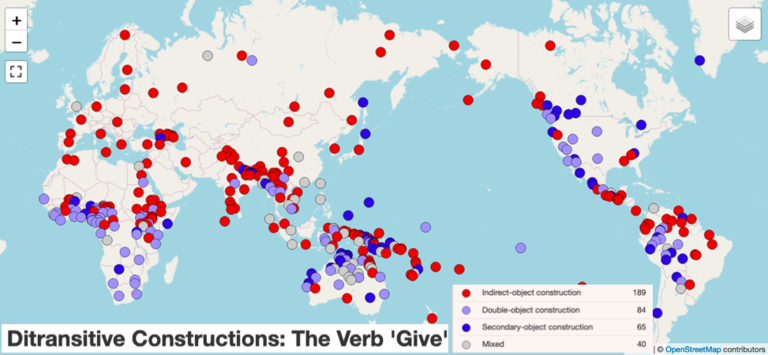
Martin Haspelmath is a Senior Research Scientist at the Department of Linguistic and Cultural Evolution at the Max Planck Institute for Evolutionary Anthropology (MPI-EVA), Leipzig, and an honorary (adjunct) professor at Leipzig University. His research focuses on comparative linguistics, language universals, and typology, particularly in syntactic and morphological systems. He co-edited the World Atlas of Language Structures (2005/2013) and co-founded Language Science Press . Education: PhD in Linguistics, Freie Universität Berlin (1990–1993) MA in Linguistics, University of Cologne and University at Buffalo (1985–1989) Undergraduate studies in Linguistics, University of Vienna (1983–1985) Research Interests: Haspelmath investigates global grammatical diversity, form-function correspondences, and universals in syntax, morphology, and lexical systems. His work emphasizes comparative concepts for cross-linguistic analysis and critiques traditional grammatical categories. Grants & Projects: ERC project leader at Leipzig University (2015–2020) Co-creator of Grambank , an open-access database of grammatical structures Leading initiatives for open-access publication and linguistic data sharing Labs/Teams: Active in the MPI's Department of Linguistic and Cultural Evolution, collaborating on projects like APICS (Atlas of Pidgin and Creole Language Structures) and ValPal (Valency Patterns Leipzig).
Inho Hong is an Assistant Professor at the Graduate School of Data Science, Chonnam National University (Gwangju, Korea), leading the Computational Social Science and Complex Systems Lab (CSL). His research explores socio-spatial systems through data science and complex systems methods, focusing on urban dynamics, human mobility, and AI's societal impact. Education: Ph.D. in Physics (2019), Pohang University of Science and Technology (POSTECH) M.S. in Physics (2012), POSTECH B.S. in Physics (2010), POSTECH Research Interests: Urban Data Science : Analyzing urban scaling laws and innovation pathways Human Mobility : Modeling intra-city movement patterns Social Impact of AI : Ethical and societal challenges Natural Language Processing : Text embedding for policy analysis Complex Systems : Network approaches to protests and epidemics Recent Work Trends: Over 2020–2022, his articles centered on pandemic control, protest networks, and urban green spaces' psychological impact. Recent 2023–2025 work extends to vocational education analysis and mobility laws within cities. His methods combine network science with large-scale data analytics. Awards: Young Statistical Physicist Award (Korean Physical Society, 2021) Best Paper Award (Korea Computer Congress 2021) Global Ph.D. Fellowship (NRF, 2014–2017) Grants & Labs: Current lab focuses on socio-spatial systems. Past roles include Associate Research Scientist at Max Planck Institute for Human Development (2020–2023) and Postdoctoral Fellowships at POSTECH and APCTP.
Elena Simperl is a Professor of Computer Science and Deputy Head of Department for Enterprise and Engagement at King's College London's Department of Informatics. She co-directs the King's Institute for Artificial Intelligence and serves as Director of Research for the Open Data Institute. As a Hans Fischer Senior Fellow at the Technical University of Munich's Institute for Advanced Study, she leads the Trustworthy Knowledge Graphs focus group and contributes to advancing human-centric AI research across European institutions. Professor Simperl obtained her doctoral degree in Computer Science from the Free University of Berlin and her diploma from the Technical University of Munich. Prior to joining King's, she held academic positions in Germany, Austria, and at the University of Southampton, and was a Turing Fellow. Her career trajectory demonstrates consistent leadership in bridging academic research with practical applications in data ecosystems. Her research sits at the critical intersection of AI and social computing, focusing on human-centric approaches to building sociotechnical systems that integrate data, algorithms, and human capabilities. She investigates how to make knowledge engineering more accessible, how to leverage collective intelligence for data quality improvement, and how to design participatory AI systems that address societal challenges like misinformation. Her work spans knowledge graphs, semantic technologies, crowdsourcing, and open data, with particular emphasis on the social dimensions of data-intensive systems and the governance frameworks needed for trustworthy AI deployment. Analysis of her recent publications reveals a strong evolution toward integrating large language models with traditional knowledge engineering practices while maintaining human oversight. There's a clear trajectory from foundational work on knowledge representation toward increasingly applied research addressing real-world challenges in media ecosystems, citizen science, and data governance, with growing attention to policy implications of AI technologies. Fellow of the British Computer Society Fellow of the Royal Society of Arts Hans Fischer Senior Fellow at TUM-IAS (2023) Ranked among top 100 most influential scholars in knowledge engineering of the last decade Included in Women in AI 2000 ranking Professor Simperl has led 14 major European and national research projects totaling millions in funding, including MediaFutures (a Horizon 2020 program tackling online misinformation), QROWD, ODINE, Data Pitch, and ACTION. She currently co-chairs the Croissant working group in ML Commons developing data standards for AI, and serves as president of the Semantic Web Science Association. Her research has directly influenced the development of data ecosystems supporting startups and citizen science initiatives across Europe, demonstrating exceptional ability to translate theoretical advances into practical impact. As Director of Research at the Open Data Institute, she oversees initiatives connecting data entrepreneurs with artists and civic organizations. Her leadership in the MediaFutures project established a data-driven innovation hub that supported 51 startups/SMEs and 43 artists through three open calls, creating a sustainable model for arts-technology collaborations addressing media challenges. Her work with the ODINE project helped create a European ecosystem for data-driven startups, demonstrating her commitment to building practical applications of open data principles.
Atreyi Kankanhalli is a Professor at the National University of Singapore, specializing in Information Systems with a focus on knowledge management, healthcare IT, and digital innovation. Their research spans over three decades, with prolific contributions in top journals like MIS Quarterly, Journal of AIS, and Information & Management. They have co-authored over 150 papers addressing topics such as crowdsourcing, online communities, and the impact of AI on scholarly practices. Notable work includes studies on user adherence to health apps, innovation in public sector data utilization, and the ethical challenges of generative AI in peer review. Kankanhalli has also led research on global virtual teams and digital technologies' role in social justice, reflecting a commitment to both technical and societal dimensions of information systems. Education & Background: While specific degree details are not provided, their extensive publication history and academic roles imply advanced qualifications in Information Systems or related fields. They have collaborated with global researchers across institutions like NUS, University of Illinois, and Singapore Management University. Research Themes: Core areas include digital health interventions (e.g., fitness app adherence), organizational innovation via open data and crowdsourcing, and the socio-technical challenges of AI in academia. Their work often bridges theoretical frameworks with practical applications, such as healthcare decision support systems and policy-driven technology adoption. Impact & Influence: As an editorial board member and frequent conference contributor (e.g., ICIS, PACIS), Kankanhalli shapes the field's research agenda. Their recent focus on generative AI's implications highlights proactive engagement with emerging technologies' ethical and methodological challenges.
Prof. Alexander Pretschner is a Professor of Software & Systems Engineering at the Technical University of Munich (TUM) and Founding Director of the Bavarian Research Institute for Digital Transformation (bidt). He also serves as Scientific Director of fortiss, a Bavarian research institute for software-intensive systems. His research focuses on software engineering, testing, information security, and ethical software development. Pretschner holds a PhD from TUM and has held academic positions at Karlsruhe Institute of Technology (KIT) and TU Kaiserslautern. He is a co-editor of several prestigious journals, including IEEE Transactions on Reliability and the Journal of Software Testing, Verification and Reliability. Education: PhD in Computer Science, Technical University of Munich MSc in Computer Science, University of Kansas (on Fulbright Scholarship) Diplom in Computer Science, RWTH Aachen University Research Interests: His work spans testing methodologies, secure software design, and ethical considerations in agile development. Notable contributions include frameworks for metamorphic testing, distributed data usage control, and accountability mechanisms for cyber-physical systems. Awards: IBM Faculty Award (2012, 2013) Google Focused Research Award (2011, 2012) EARTO Innovation Prize (2014) 2nd Platz Supervisory Award (2020) Advising & Grants: Pretschner has supervised numerous PhD and Master’s students, contributing to over 200 publications. He leads projects like EDAP (Ethical Deliberation in Agile Processes) and collaborates with industry partners on cybersecurity and AI ethics initiatives. Labs & Teams: His work is anchored in bidt, fortiss, and TUM’s Chair of Software & Systems Engineering, focusing on societal impacts of digitalization and trustworthy AI systems.