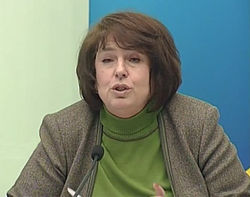
Dr. Monika Dacka is an Assistant Professor at the Department of Developmental Psychology, Faculty of Social Sciences, John Paul II Catholic University of Lublin. Her research focuses on personality development, procrastination behaviors, moral intelligence, and psychosocial challenges across life stages. Academic Rank: Assistant Professor Institution: John Paul II Catholic University of Lublin Key Research Areas: Developmental Psychology, Personality Psychology, Adolescent Risk Behaviors Her recent work examines time perception in digital contexts, the quarter-life crisis, and moral development in young adults. She actively reviews for journals like Annales Universitatis Mariae Curie-Skłodowska and Seminare. Poszukiwania naukowe . Dr. Dacka supervises master's theses on topics spanning adolescent procrastination, helicopter parenting, and social media challenges. She contributes to educational workshops on judicial mediation, forensic psychology, and pandemic-era coping strategies. Notable projects include the adaptation of the Developmental Crisis Questionnaire (DCQ-12) and participation in international conferences on Kazimierz Dąbrowski's psychological theories. Her publications address chronic fatigue in adolescents, sexual abuse prevention, and health behavior transformations.
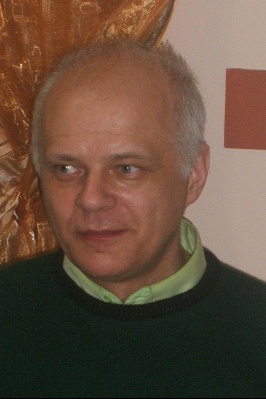
Konrad Czernichowski is an Assistant Professor at the Department of World Economy and European Integration, Faculty of Economics, Maria Curie-Skłodowska University in Lublin, Poland. He also serves as a Visiting Professor at the Department of Economics, Mathematics and Statistics, Faculty of Commerce, Jordan University College in Morogoro, Tanzania. His academic career includes positions at the University of Wrocław and extensive research on African economic development. Dr. Czernichowski's research focuses on African economic development , particularly in East Africa and Tanzania. His expertise spans economic integration, banking systems, labor markets, and development challenges in Sub-Saharan Africa. He has conducted extensive research on the East African Community's integration processes, the impact of global crises on African economies, and regional monetary cooperation. His 18 publications demonstrate consistent research output with a focus on practical economic challenges facing African nations. The research shows a clear trajectory from theoretical integration models toward applied policy analysis, particularly regarding the East African Community's development. His work bridges academic research with practical policy implications for developing economies. Member of editorial board, Journal of Economic Integration (2024-2025) Member of board, Polish African Studies Society (since 2021) Member of editorial board, Afryka journal (since 2021) Member of editorial board, Business Education Journal (since 2022) Dr. Czernichowski actively engages with international academic communities through his editorial roles and maintains research connections with African institutions. His work with the 'Maitri' movement center in Lublin (2014-2021) demonstrates practical engagement with development issues. His multilingual abilities (Polish, English, French, German, and Swahili) facilitate direct research engagement across multiple African contexts.
Ella Marlenivna Libanova is a Ukrainian socio-economist and demographer, serving as Professor at the Department of Statistics and Demography of the Economic Faculty of Taras Shevchenko National University of Kyiv. She is also Director of the M. V. Ptukha Institute of Demography and Social Research of the National Academy of Sciences of Ukraine and Academician-Secretary of the Department of Economics of the National Academy of Sciences of Ukraine. As the first woman in the history of the NASU to be a member of its Presidium, she has made significant contributions to Ukrainian demography and labor economics. Her educational background includes: Graduated from the D. S. Korotchenko Kyiv Institute of National Economy (1971) PhD in Statistics (1977) Doctor of Economics (1992) Doctor of Economics (2021, on Poverty of the Population of Ukraine) Professor Libanova is a leading expert in labor economics and demography, with research focusing on population poverty, human development, demographic crisis in Ukraine, labor market transformations, and socio-economic assessment of life expectancy. Her work has been instrumental in developing methodologies for measuring human development at the regional level, which has been adopted as official methodology by the State Statistics Service of Ukraine for annual calculations. Her research output shows a consistent focus on demographic challenges facing Ukraine, with particular attention to mortality rates, birth rates, and the impact of socio-economic transformations on population dynamics. She has also made significant contributions to understanding poverty, social stratification, and the formation of the middle class in Ukraine. Her scientific awards include: Honored Economist of Ukraine (2002) Order of Princess Olga I, II, and III degrees Honorary Certificate of the Cabinet of Ministers of Ukraine (2003) Award of the National Academy of Sciences of Ukraine named after M.I. Tugan-Baranovsky (2011) All-Ukrainian Award Woman of the III Millennium (2012) Professor Libanova has supervised 2 doctoral students and 14 PhD students in economics. She has been involved in numerous research grants, particularly those related to demographic studies, human development, and socio-economic transformations in Ukraine. She has served as scientific consultant to President Leonid Kuchma (2000-2005) and is currently a member of the Council on Economic Development of Ukraine, a temporary consultative-advisory body of the Cabinet of Ministers of Ukraine since April 2020. She leads the M. V. Ptukha Institute of Demography and Social Research, which conducts comprehensive demographic research on Ukraine's population. She is also actively involved in international collaborations, serving as an expert for the European Commission and World Economic Forum since 2012, and is a member of several international organizations including the International Union for the Scientific Study of Population (IUSSP).
Prof. Marian Surdacki serves as Head of the Department of the History of Education and Social Welfare at the Catholic University of Lublin 's Faculty of Social Sciences. A historian specializing in early modern social history, his work bridges Polish and Italian archival studies, with 200+ publications including 7 monographs. PhD: History (KUL, 1987) Habilitation: Modern Social History (1998) Full Professor: 2008 His research spans child welfare systems , charitable institutions , and urban development , exemplified by works on Rome's Hospital of the Holy Spirit and Urzędów's 400-year history. He has directed 18 Ministry of Science publishing grants and mentored 8 PhD graduates. Key article themes include: Foundling homes in Enlightenment Europe Polish-Lithuanian hospital networks Religious charity in Catholic/Protestant contexts Regional governance in pre-partition Poland Scientific Recognition : Recipient of Silver Cross of Merit (2006) Multiple Rectoral Awards for monographs International publications in Italian/French journals Active in regional revitalization, he co-founded cross-border collaborations with Hungarian/Ukrainian towns and led Urzędów's 600th anniversary celebrations that restored its city status (2015).
Dr hab. Wojciech Janicki is a full Professor at the Institute of Social and Economic Geography and Spatial Management within the Faculty of Earth Sciences and Spatial Management at Maria Curie-Skłodowska University (UMCS) in Lublin, Poland. He serves as Director of the Institute and Head of the Department of Social and Economic Geography. Current affiliations: Governmental Council on Population (since 2024), Polish Academy of Sciences Committee on Demographic Sciences (since 2019), Polish Geopolitical Society Scientific Council (since 2024) Editorial role: Global Population Perspectives (since 2025) Research interests focus on political geography, demography, and regional development , with particular emphasis on migration studies, national/ethnic minorities, international border conflicts, and global population challenges. His work addresses demographic policy formation, migration management, and the socioeconomic impacts of population shifts in Eastern and Central-Eastern Europe. Recent publications demonstrate interdisciplinary engagement with migration policy implementation (2025), adaptive geofencing technology for transport security (2024), and demographic anxiety analysis through edited volumes (2024). Article trends show consistent focus on EU integration challenges, borderland development, and population policy contradictions. Scientific recognition includes: Governmental Council on Population membership Polish Academy of Sciences demography committee Editorial board of international journal Strategic advisory roles Advising involves directing research on migration legality frameworks, coal region transitions, and spatial management projects. Grants likely relate to EU cohesion policy and cross-border development initiatives given his publication patterns.
Professor Tomasz Kapitaniak is a distinguished academic in the field of nonlinear dynamics and theoretical mechanics. He serves as a Professor of Theoretical and Applied Mechanics and Head of the Division of Dynamics at the Faculty of Mechanical Engineering, Technical University of Lodz, Poland. His career spans over three decades at the university, where he has made significant contributions to the understanding of nonlinear systems, chaos theory, and mechanical oscillations. Professor Kapitaniak holds advanced degrees in both mechanics and applied mathematics from the Technical University of Lodz and the University of Lodz. His educational background includes: M.Sc. in mechanics, Faculty of Mechanical Engineering, Technical University of Lodz (1982) M.Sc. in applied mathematics, Faculty of Mathematics, Physics and Chemistry, University of Lodz (1985) Ph.D. in mechanics, Faculty of Mechanical Engineering, Technical University of Lodz (1985) D.Sc. in mechanics, Faculty of Mechanical Engineering, Technical University of Lodz (1988) Professor of technical science, title given by the President of Poland (1995) His research focuses on nonlinear dynamics, with particular emphasis on mechanical oscillations, stability, bifurcations and chaos, stochastic dynamics, and applications of nonlinear dynamics in mechanical engineering. Professor Kapitaniak is renowned for his work on the development of methods for controlling chaos without feedback, identification of new types of bifurcations, synchronization mechanisms in coupled mechanical oscillators, and explaining the origin of randomness in mechanical systems. His research has evolved from fundamental theoretical work to increasingly applied studies involving complex networks, biological systems, and engineering applications. Professor Kapitaniak has published over 300 scientific papers in renowned journals, cited over 8,000 times. His work exhibits a consistent focus on understanding complex nonlinear phenomena across various physical systems. The trend in his recent publications shows continued exploration of synchronization phenomena, extreme events in dynamical systems, and applications of nonlinear dynamics to biological, mechanical, and physical systems. His most recent work demonstrates a growing interest in multistability, chimera states, and the prediction of tipping phenomena in complex systems. Among his notable scientific achievements and distinctions are: Election as a member of the Polish Academy of Sciences (corresponding member in 2013, ordinary member in 2019) Election to Academia Europaea in 2021 Honorary doctorates from Saratov State University (Russia, 2001) and Lublin University of Technology (Poland, 2014) Multiple prestigious fellowships including the British Council Fellowship (1989), King Abdul Aziz Award Fellowship (1990), and Fulbright Fellowship (1997) Editorial roles including Associate editor of Chaos, Solitons and Fractals since 1990 and member of editorial boards of several other prestigious journals Throughout his career, Professor Kapitaniak has been actively involved in mentoring the next generation of researchers, having supervised numerous PhD students including Jerzy Wojewoda, Anton van Wyk, Barbara Błażejczyk-Okolewska, Andrzej Stefański, Andrzej Kozłowski, and Przemysław Szumiński. He has secured significant research funding from various national and international sources including the Ministry of Science and Higher Education (Poland), Deutscher Akademischer Austauschdienst, The Royal Society of London, and others. His research team has maintained strong international collaborations with institutions worldwide, including universities in the United States, United Kingdom, Germany, Brazil, Russia, and Ukraine. He leads the Division of Dynamics at the Technical University of Lodz, which serves as a hub for research in nonlinear dynamics, mechanical oscillations, and related fields. The division maintains strong international collaborations with institutions worldwide and continues to produce cutting-edge research in the field of nonlinear dynamics and its applications.
Ewa Nowak-Teter serves as a University Professor in the Department of Mediatization within the Faculty of Political Science and Journalism at Maria Curie-Skłodowska University (UMCS) in Lublin, Poland. Her academic profile demonstrates extensive engagement with media theory and political communication, where she maintains active teaching responsibilities including courses on quantitative research methods in media studies, mediatization of public sphere, and political marketing. She conducts regular office hours both in-person at room A.5.59 and online via Microsoft Teams, indicating her current active status within the institution. Professor Nowak-Teter's research centers on the mediatization of public and private spheres, media logics, online public opinion, political communication, and media effects including agenda-setting, framing, and priming. Her scholarly work examines how social media platforms reshape journalistic independence and news consumption patterns, with particular attention to platform-specific dynamics like Facebook sharing behaviors. She investigates the temporal dimensions of mediatization and its impact on how society perceives and organizes time through media frameworks. Her publication record reveals a consistent scholarly output with significant contributions in 2023-2024, particularly in examining the tension between social media logic and journalistic independence. Her work spans theoretical developments in mediatization studies, empirical analyses of news sharing on social platforms, and comparative studies of media discourse across different national contexts including Polish and British examples. She has published in both international journals like Journalism & Mass Communication Quarterly and Digital Journalism, as well as in Polish academic publications. Professor Nowak-Teter serves as Editor-in-chief of "Mediatization Studies" and leads the Mediatization section of the Polish Society of Social Communication. She has coordinated significant research projects including "Platform Europe - European Election Monitoring Center" funded by the European Parliament and received grants from the Polish Ministry of Science and Higher Education for international comparative research on mediatization. Her international experience includes visiting professorships at Sciences Po Bordeaux and Sciences Po Grenoble, as well as research stays at San Diego State University.
Dr. Agnieszka Gruszczyńska is a researcher specializing in paleoenvironmental studies at an academic institution in Poland, working within the Department of Dynamics of Past Landscapes. She completed her PhD in 2023 after conducting extensive research on the paleogeographic development of the Great Sertei Lake Basin in the Vitebsk Lake District, using paleoecological analyses as her primary methodology. Education: 2016-2023: PhD studies on Paleogeographic development of the Great Sertei Lake Basin in the Vitebsk Lake District in the light of paleoecological studies 2014-2016: Master's degree in Environmental Protection, Faculty of Biology and Environmental Protection, University of Lodz, specialization in ecology and water protection 2012-2014: Master's degree in Pedagogy with physical and health education, Faculty of Geographical Sciences, University of Lodz Dr. Gruszczyńska's research centers on ecosystem responses to violent and extreme events throughout geological history, with particular expertise in Chironomidae ecology where she investigates non-temperature factors influencing population dynamics and community quality. Her work spans paleoecological analysis of aquatic invertebrate remains and examines climate change patterns throughout the Pleistocene and Holocene epochs. She frequently employs multi-proxy approaches to reconstruct past environmental conditions, with fieldwork concentrated in Eastern Europe, particularly Western Russia's Serteya region and various Polish lake districts. Her extensive publication record demonstrates a methodological focus on paleolimnology and paleoenvironmental reconstruction using lake sediments, peat bogs, and other natural archives. Recent work shows increasing emphasis on human-environment interactions throughout history, particularly regarding historical land use practices like charcoal production and their long-term ecological impacts. Her collaborative research bridges Quaternary science, archaeology, and modern environmental concerns, often examining how past environmental changes can inform contemporary ecological challenges. Dr. Gruszczyńska actively participates in international research collaborations, particularly with institutions in Russia and other European countries, contributing to our understanding of long-term environmental changes and human adaptation to these changes across the East European Plain.
Agnieszka Bojanowska, Ph.D. (dr hab.), serves as an Associate Professor at SWPS University of Social Sciences and Humanities within the Faculty of Psychology and Institute of Psychology. Her academic profile centers on the therapeutic applications of psychedelic substances and comprehensive well-being research. Her primary research investigates psychological mechanisms linking psychedelic use to emotional regulation, learning processes, relationship quality, and spiritual dimensions. She leads significant projects including the National Science Centre-funded study 'Can some values facilitate happiness? Values, engagement and self-efficacy and their significance for hedonistic and eudaimonic well-being,' examining how value systems influence different well-being constructs. Bojanowska's publication record reveals consistent focus on value systems, temperament patterns, and their intersections with well-being across diverse populations. Her work spans adolescent development, pandemic impacts, perfectionism pathology, and cross-cultural value comparisons, demonstrating methodological versatility in longitudinal studies, psychometric validation, and experimental interventions. Principal Investigator for National Science Centre grant project on values and well-being Creator of wellbeing-focused platform pathsstowellbeing.nl As an educator, she teaches research methodology and statistics while conducting specialized workshops on well-being psychology. Her collaborative network includes researchers from University of Warsaw, University of Zurich, and Northwestern University, reflecting international engagement in happiness studies.
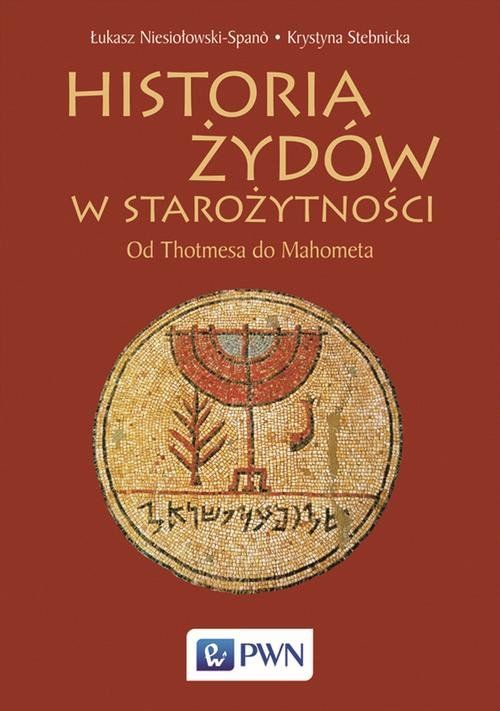
Professor Łukasz Niesiołowski-Spano is a distinguished academic at the University of Warsaw within the Faculty of History , specializing in the Ancient History department. His scholarly career spans over two decades with significant contributions to biblical historiography and ancient Near Eastern studies. PhD in History (University of Warsaw, 2002) Habilitation in History (University of Warsaw, 2013) Research focuses on: Historical and religious dynamics of Ancient Palestine Intercultural interactions between Palestine and Greece Biblical historiography and textual criticism Sea Peoples' impact on Near Eastern societies Recent publications examine: Lexical connections between Levites and Greek λᾶός Evolution of Passover rituals Mesopotamian legal tradition influences Formation of Israelite ethnic identity Scientific recognitions include: Rothschild Foundation Europe (2014-2019) Foundation for Polish Science (2003; 2013-2014) Andrew Mellon Foundation (2005) Grants secured through: National Science Centre, Poland (2017-2021; 2022-2025) National Program for Development in Humanities (2013-2017) Active in international academic networks through: Society of Biblical Literature European Association of Biblical Studies Catholic Biblical Association of America
Prof. Dorota Praszałowicz is a Full Professor at Jagiellonian University's Faculty of International and Political Studies, leading the Chair of Migration and Ethnic Studies. She is affiliated with the Institute of American Studies and Polish Diaspora and serves on committees such as the Migration Studies Committee of the Polish Academy of Sciences and the Board of the Polish American Historical Association. Her research focuses on historical and contemporary migration patterns, ethnic communities, and theoretical migration frameworks, with a particular emphasis on Polish diaspora dynamics in North America and Europe. Education and Visiting Positions: She has held visiting scholar roles at New York University (2003/04), Ruhr Universität Bochum (1991-1993, 1997/98), University of Washington Seattle (2022), and Freie Universität Berlin (1998). Collaborations include projects with the Immigration History Research Center at the University of Minnesota and the University of Wisconsin-Milwaukee. Research Interests: Her work examines cultural transformations in immigrant communities, institutionalization of migration processes, gender perspectives in migration studies, and the humanitarian crisis on the Polish-Belarusian border. She has published extensively on Polish communities in Berlin, Seattle, and Milwaukee, analyzing historical and modern integration challenges. Awards and Grants: A Fulbright Scholar (2003/04), she has led major research projects including the National Science Centre-funded study on Poles in Seattle (2021–2026) and the Kosciuszko Foundation-supported project on Polish communities in the Pacific Northwest. Her editorial roles include serving as Editor-in-Chief of Studia Migracyjne – Przegląd Polonijny (2009–2022) and co-editor of the Peter Lang Verlag series Migration – Ethnicity – Nation . Grants and Teams: Collaborates with the Jagiellonian Centre of Migration Studies and the Researchers on the Border group. Recent works include studies on transnational Polish families and the role of religious institutions in immigrant integration.
Mateusz Zawadzki is an Assistant Professor at the Department of Geomatics and Cartography, Faculty of Earth Sciences and Spatial Management, Maria Curie-Skłodowska University (UMCS). He holds a Ph.D. in Geography (2019, UMCS) and an MA in History (2011, KUL). His career spans roles at UMCS (2017–present), GIS-Expert Sp. z.o.o. (2012–2017), and leadership in the "GIS across the border" research team (2013–2014). Education: Ph.D. in Geography (UMCS, 2019), MA in History (KUL, 2011) Employment: Assistant Professor (UMCS, 2021–present), Research Associate (UMCS, 2017–2021) His research focuses on Historical GIS (HGIS), Spatial Humanities, and reconstruction of Old-Polish communication networks using Web-GIS tools. He has contributed to digital repositories like Polegli1939.pl , analyzed 19th-century Polish military cartography, and explored WWII impacts on Białowieża Forest through interdisciplinary lenses. Recent publications address methodological challenges in multi-sheet historical map georeferencing and metadata frameworks for post-Paris Peace Conference boundary studies. He teaches GIS procedures, Web-GIS applications, and coordinates geoinformatics studies at UMCS. As a consultant for the "GIS in history" Dialog project (2018–2020) and coordinator of the DARIAH-PL digital infrastructure initiative (2021–2024), he bridges geospatial technology with humanities research. Collaborative works include Roman artifact mapping in Krajna region and 3D archaeological site modeling.
Dr. Anna Głowa serves as Assistant Professor in the Department of Art History at the Institute of Art Sciences, Faculty of Humanities, John Paul II Catholic University of Lublin (KUL), with active research continuing through 2025. Her institutional profile lists her office at Al. Racławickie 14, Lublin, and she maintains scholarly visibility through ORCID (0000-0002-0478-7563) and peer-reviewed publications. Primary research interests focus on Late Antique textiles from Egypt , avian iconography (eagles, parrots), and provenance studies of Polish museum collections. She examines cultural syncretism through motifs in mosaics and fabrics, connecting Byzantine, Roman, and early Christian contexts. Specific expertise includes Władysław Czartoryski's collection , Robert Forrer's textile trade , and spolia practices in Constantine-era architecture. Analysis of her 15 most recent articles reveals obsessive attention to Egyptian textile fragments in Central European collections, particularly Polish institutions like the Jagiellonian University Museum. She consistently identifies iconographic motifs (eagles, parrots) across mosaics and textiles to demonstrate cultural fluidity, while her architectural work challenges decadence narratives about Late Antique spolia through empirical provenance research. No scientific awards, prizes, or medals were documented in the provided texts. Głowa leads major NCN-funded projects including SONATA BIS (2021) for 'Common Threads: Late Antique Egyptian Textiles at Jagiellonian University Museum and Their European Links', OPUS (2019) on 'Scattered Heritage: Provenance of 19th-Century Late Antique Textile Collections', and MINIATURA (2018) for Egyptian textile provenance research. She secured a 2021 Research Grant from Staatliche Museen zu Berlin. Supervision of diploma theses is noted without specific student names. She actively participates in the international Textiles from the Nile Valley Study Group and serves as thematic editor for early Christian art history in the journal 'Vox Patrum'. Głowa co-organizes the Kazimierz Symposia on Late Antiquity and Early Christianity, and delivered lectures at the University of Silesia and Lublin Art Secondary School on textile symbolism and weaving techniques.
Przemysław Różański is an Associate Professor at the University of Gdańsk, affiliated with the Faculty of History where he serves in the Institute of History, specifically within the Division of Contemporary Polish History. His academic journey includes doctoral studies at the Academy of Bydgoszcz and habilitation completed in 2014. Education History studies at WSP Bydgoszcz (1994–1999) Postgraduate Public Administration studies at Nicolaus Copernicus University in Toruń (1999–2000) Doctoral studies in History at Academy of Bydgoszcz (2000–2004) Habilitation in History (2014) Research Focus Professor Różański specializes in U.S.-Polish relations with emphasis on Jewish historical contexts during 1918-1939. His work critically examines American press coverage of pivotal Polish historical events including the 1926 May Coup, the 1935 death of Piłsudski, and the 1939 Nazi-Soviet invasion. Additional research explores Jewish settlement patterns in the United States. Awards & Fellowships Garstka Polish-American Research Fellowship (2008–2009) at University of Notre Dame, enabling archival research at Hoover Institution, American Jewish Archives, and National Archives Professional Activities He maintains institutional collaborations including liaison duties with the Pomeranian Association of Warsaw Insurgents and membership in the Polish Historical Society. His archival research spans collections in the U.S., UK, and Poland.
Magdalena Baborska-Narożny serves as an Associate Professor in the Department of Architecture and Visual Arts at the Faculty of Architecture, Wrocław University of Science and Technology. Her work bridges architectural design, building physics, and social science to address critical challenges in residential performance and sustainability. Her research focuses on: Building performance evaluation through in-situ measurements Thermal comfort and ventilation in low-energy and historical housing Social dimensions of balcony use and heritage conservation Energy efficiency transitions in Polish residential contexts Occupant behavior impacts on building performance Analysis of her 2021-2025 publications reveals consistent emphasis on real-world building performance gaps, particularly examining ventilation strategies, overheating risks, and heritage adaptation challenges. Her methodology combines field measurements in Polish housing with occupant surveys and computational modeling, often comparing international approaches to heritage conservation and energy transitions. Key contributions include quantifying bedroom ventilation effectiveness, analyzing balcony integration in historical tenements, and evaluating solid fuel heating transitions. No scientific awards were documented in the provided sources. Information regarding academic advising relationships and research grant acquisitions was not present in the available materials. No specific laboratory affiliations or research team structures were identified in the source documentation.