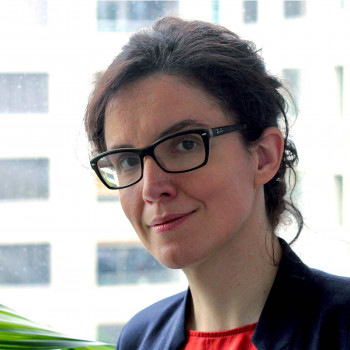
Dr. Natasha Blitvic is a Reader in Mathematical Sciences and Lead for Research Innovation and External Stakeholders Engagement at Queen Mary University of London's School of Mathematical Sciences. She is affiliated with the Centre for Probability, Statistics and Data Science. Her research focuses on probability, statistics, data science, combinatorics, noncommutative statistical mechanics, and microbial ecosystems. She has secured grants from institutions like the Simons Foundation and ETH-Zurich, totaling over £450,000. Notable grants include studies on marine microbial processes and principles of microbial ecosystems. Her recent publication explores positivity in permutation patterns. She actively engages in interdisciplinary research and external collaborations. **Grants**: £264,960 from Simons Foundation (2024–2025) for high-dimensional scaling limits of marine microbial processes. £92,855 from ETH-Zurich (2022–2027) for Principles of microbial ecosystems. £100,950 from EPSRC (2022–2024) for noncommutative statistical mechanics research. No formal advisees or scientific awards are listed.
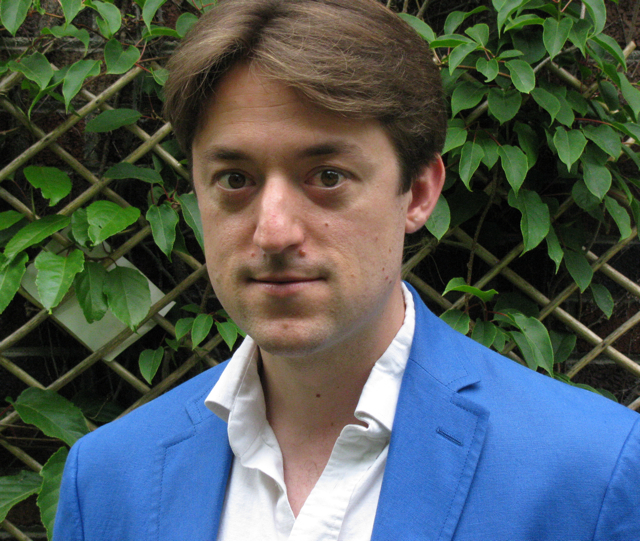
Seth Pettie is a faculty member in the Department of Electrical Engineering and Computer Science (EECS) at the University of Michigan. His research focuses on algorithms, graph theory, distributed computing, and data structures, with significant contributions to problems like minimum spanning trees, Davenport-Schinzel sequences, and energy complexity in radio networks. Research Interests : Algorithms, graph theory, distributed systems, combinatorics, and computational complexity. Students : Mentored numerous PhD students and postdocs, including Dingyu Wang, Shang-En Huang, and Yi-Jun Chang, some of whom have won prestigious awards like the Principles of Distributed Computing Doctoral Dissertation Award. Scientific Contributions : Authored over 15 recent articles (2021–2025) on topics spanning connectivity labeling, fraud detection, extremal combinatorics, and energy-efficient distributed algorithms. His work often bridges theoretical insights with practical applications in databases and network optimization. Awards : Recipient of the Outstanding Dissertation Award (2004) and Best Student Paper Award at ICALP 2002. His students have also received recognition for their work. Professional Service : Organized workshops (e.g., Dagstuhl, Bertinoro) and served on steering/editorial/program committees for major conferences like SODA, STOC, and PODC.
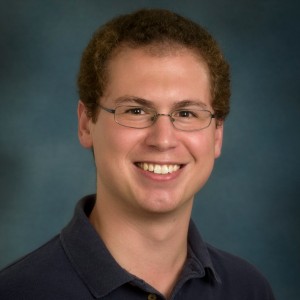
Robert Krauthgamer is the Harry Weinrebe Professor of Computer Science and currently serves as Department Head in the Department of Computer Science & Applied Mathematics at the Weizmann Institute of Science , within the Faculty of Mathematics and Computer Science . He is a leading researcher in theoretical computer science, particularly in the analysis of algorithms. Research Interests: His research focuses on Analysis of Algorithms , with deep expertise in Data Analysis and Massive Data Sets , Combinatorial Optimization , Approximation Algorithms , Hardness of Approximation , Embeddings of Finite Metrics , and Routing and Peer to Peer Networks . He also maintains a broad interest in Discrete Mathematics and High-Dimensional Geometry . His recent publications highlight work in graph algorithms, parameterized complexity, streaming algorithms, and metric embeddings. Publication Trends: His most recent work, including papers from SODA 2016, demonstrates a strong trend in the design and analysis of efficient algorithms for fundamental problems in graph theory, optimization, and data streams. Key themes include kernelization and sampling techniques for dynamic graph streams, subexponential parameterized algorithms, deterministic derandomization of the polynomial method, and structural results for graph modification problems. His research often bridges theoretical insights with applications in computational biology and network science. Service and Recognition: Journal Editorial: Editor-in-Chief of SIAM Journal on Computing (2019–2025), Associate Editor (2012–2017); Managing Editor of Theory of Computing (2007–2018), and current Editorial Board Member. Conference Leadership: Program Committee Chair for SODA 2016 and HALG 2018; Steering Committee member for SODA, ESA, and HALG; and committee member for the Gödel Prize (2019–2021). Workshops: Organizer of numerous workshops on sublinear algorithms, fine-grained complexity, and high-dimensional data. Teaching and Mentorship: He regularly teaches advanced courses such as Randomized Algorithms and Sublinear Time and Space Algorithms . He advises a large group of MSc and PhD students and hosts postdoctoral researchers, demonstrating a strong commitment to training the next generation of computer scientists. His former students have gone on to successful academic and research careers. Laboratories and Research Groups: He is a key member of the Foundations of Computer Science (theory) seminar at Weizmann and has organized the TheoryLunch and Reading Group in Algorithms, fostering a vibrant research community within the department.
Dr. Naiomi Cameron serves as Chair and Professor of Mathematics at Spelman College, where she teaches undergraduate courses including calculus, discrete mathematics, linear algebra, combinatorics, and number theory. A proud HBCU alumna, she earned both her Ph.D. and B.S. in Mathematics from Howard University and previously held faculty positions at Harvey Mudd College, Occidental College, and Lewis & Clark College, including a two-year term as associate dean. Her educational background is rooted in Howard University's mathematics program, reflecting her commitment to HBCU excellence. Dr. Cameron's research centers on enumerative and algebraic combinatorics and number theory, with significant contributions to the study of combinatorial structures such as trees, tableaux, polynomials, and lattice paths. She investigates inversion statistics, pattern avoidance, and sequences like Fibonacci and Motzkin numbers, often revealing deep connections between algebraic and combinatorial phenomena. Her publication record from 2000-2019 demonstrates consistent output in top combinatorics journals, with recurring themes in Dyck path analysis, Fibonacci tableaux variations, and polynomial combinatorics. This body of work shows evolving sophistication from foundational tree combinatorics to complex monodromy group investigations, maintaining focus on structural enumeration while expanding into algebraic applications. Dr. Cameron actively promotes diversity, equity, and inclusion in mathematics through undergraduate research mentorship and community service. Her dedication to cultivating the next generation of mathematicians is evident in her teaching philosophy and advocacy for underrepresented groups within the mathematical sciences.
Assoc. Prof. Petr Gregor is a faculty member at the Department of Theoretical Computer Science and Mathematical Logic , Faculty of Mathematics and Physics , Charles University in Prague . His research focuses on algorithmic and structural problems in interconnection networks, leveraging tools from extremal combinatorics, graph theory, and coding theory. Research Interests : Interconnection networks, Gray codes, hypercube structures, symmetric graph decomposition, fault-tolerant combinatorial algorithms. Teaching : Offers courses in propositional/predicate logic, computational complexity, hypercube structures, automata theory, and data structures. Awards : Best paper award at MFCS 2022 . Contact : Petr.Gregor@mff.cuni.cz | gregor@ktiml.mff.cuni.cz | Personal Website
Martin Klazar is an Associate Professor at the Department of Applied Mathematics, Faculty of Mathematics and Physics, Charles University. He has been affiliated with the university since 1995, initially as an assistant professor before becoming an associate professor in 2004. Since 2000, he has also worked at the Institute for Theoretical Computer Science (ITI). His education includes a Ph.D. (1995) under Jiří Nesetril at Charles University, following undergraduate studies at the same institution (1984–1989). Klazar's research spans multiple areas of discrete mathematics, with primary interests in enumerative and extremal combinatorics, number theory, power series, generating functions, and elementary mathematical analysis. His work frequently bridges combinatorial methods with analytic techniques, particularly in asymptotic enumeration and extremal problems. His publications demonstrate a strong focus on combinatorial structures (permutations, set partitions, matchings), graph theory algorithms, and combinatorial number theory. Recent trends include applications of combinatorial duality, growth rate classification of discrete structures, and interdisciplinary topics linking physics-inspired models (e.g., Potts model) with graph invariants. Honors include the Alexander von Humboldt Stiftung fellowship (1997/98) and a prize from the Rector of Charles University for co-editing the book Topics in Discrete Mathematics . He has supervised Ph.D. students including Vít Jelínek and Jaroslav Hančl. Klazar contributes to the ITI research group, focusing on theoretical computer science and combinatorial mathematics. His current teaching includes courses in mathematical analysis, combinatorial counting, and number theory.
Douglas Rizzolo is an Associate Professor in the Department of Mathematical Sciences at the University of Delaware, part of the College of Arts & Sciences. His research focuses on the large-scale structure of random combinatorial objects, including diffusions on combinatorially structured spaces and the behavior of pattern-avoiding permutations. He has contributed to interdisciplinary areas such as probability theory, stochastic processes, and mathematics education. Research Interests: Rizzolo’s work explores random combinatorial structures , diffusions on discrete spaces , and pattern-avoiding permutations . He investigates how these structures behave at macroscopic scales, often employing techniques from probability theory and combinatorics. His recent projects include studies on Aldous diffusions, Galton-Watson trees, and interval partition evolutions. Publications: His articles span topics like measure-valued diffusions, stochastic sandpile models, and educational practices in calculus instruction. Key themes include scaling limits , stationary distributions , and combinatorial dynamics . A common thread is the interplay between discrete structures and continuous stochastic processes. Awards: No scientific awards are explicitly listed in the provided texts. Grants/Advising: No specific grants or advisee names are mentioned, though his research likely involves collaborative projects given the interdisciplinary nature of his work. Labs/Teams: While no lab affiliations are specified, his involvement with the Department of Mathematical Sciences suggests participation in university research groups focused on probability and combinatorics.
Christy Graves is a Professor of Mathematics at the University of Texas at Tyler since 2009. She holds a Ph.D. (2009) and M.S. (2005) in Mathematics from Syracuse University, and a B.S. in Mathematics and Computer Science from Eastern Illinois University (2002). Her research focuses on reliability polynomials, pattern avoidance in permutations, graph automorphisms, fullerenes, and general combinatorics and graph theory. She has over 20 publications in journals like the Electronic Journal of Combinatorics , Networks , and Discrete Mathematics , and serves as an Associate Editor for Networks . Academically, she is a Distinguished Teaching Professor and has received numerous teaching awards, including the UT Regents’ Outstanding Teaching Award. She mentored over 30 undergraduates in research and served as UT Tyler’s Faculty Fellow for Undergraduate Research (2013–2017). Awards : President’s Scholarly Achievement Award (2023), Academy of Distinguished Teachers Fellow Service : Editorial role at Networks , teaching excellence certifications
Mark Skandera is an Associate Professor in the Department of Mathematics at Lehigh University. He holds a Sc.B. from Brown University (1991), an M.S. from UC-Berkeley (1992), and a Ph.D. from MIT (2000). His research focuses on algebraic combinatorics, particularly Hecke algebra and symmetric group characters, with applications to total nonnegativity and generating functions. He has held postdoctoral positions at the University of Michigan, Dartmouth College, and Haverford College, and visiting roles at the University of Pennsylvania and Universidad de los Andes. His teaching spans calculus, linear algebra, abstract algebra, and combinatorics. Research interests include algebraic combinatorics, nonnegative matrices, and representation theory. Notable topics involve character evaluations, symmetric functions, and Bruhat order analysis. Teaching emphasizes foundational mathematics courses and advanced topics in combinatorics. His work has been published in numerous journals and conferences, with a focus on theoretical developments in algebraic structures and combinatorial methods. No scientific awards are explicitly mentioned, though his contributions to algebraic combinatorics are well-regarded in academic circles.
Brant Jones is a Professor of Pure Mathematics at James Madison University (JMU), where he has been since 2010. He earned his PhD in Mathematics from the University of Washington in 2007 and held a VIGRE Fellowship at the University of California, Davis. His research focuses on combinatorics, particularly games, algorithms, algebraic structures, and enumerative combinatorics, often involving computational tools. He has mentored 28 undergraduate students in research projects and contributed to software libraries like liberiksson for Coxeter group computations. Jones has been awarded NSF grants for JMU's Research Experiences for Undergraduates (REU) program and led workshops at ICERM and AIM. His work has been cited by Don Knuth in The Art of Computer Programming . Education: PhD in Mathematics, University of Washington (2007); Postdoctoral Fellowship at UC Davis (2007–2010). Research Interests: Combinatorial game theory, algebraic structures, enumerative combinatorics, and reflection group representation theory. He frequently uses programming to aid his research and has experience in software engineering. Publications: Over 20 peer-reviewed articles, including works on games of best choice, Kazhdan-Lusztig polynomials, and combinatorial enumeration. Recent work includes collaborations on core partitions and affine permutation patterns. Awards/Grants: NSF REU funding (2017–2023), REUF workshop leadership (2019), citations in The Art of Computer Programming (2021). Teaching: Courses in discrete mathematics, abstract algebra, calculus, and combinatorics. Coordinates JMU's Putnam Competition team. Software Contributions: Developed liberiksson for Coxeter group calculations and contributed to Sage's combinatorics modules.
John Machacek is an Assistant Professor of Mathematics and Computer Science at Hampden-Sydney College. His academic journey includes a PhD in Mathematics from Michigan State University (advised by Michael Shapiro), postdoctoral positions at the University of Oregon and York University, and prior visiting roles at Hampden-Sydney. He specializes in combinatorics with applications to algebra, geometry, topology, and theoretical computer science. His research explores topics such as cluster algebras, matroid theory, graph theory, and scheduling problems. Key educational milestones include a B.S. from the University of Minnesota-Twin Cities (Honors Thesis advised by Victor Reiner) and postdoctoral collaborations with Patricia Hersh and Nantel Bergeron. His Erdős number is 3, reflecting collaborative work in combinatorial mathematics. Research trends in his articles focus on algebraic and geometric combinatorics, including studies on Grassmannians, matroid structures, scheduling algorithms, and discrete dynamical systems. His work bridges pure combinatorics with interdisciplinary applications in physics and computer science. No scientific awards are explicitly listed, though his extensive contributions to MathOverflow and collaborative projects highlight his scholarly engagement. He advises no listed students but actively participates in academic communities across platforms like MathOverflow and Google Scholar. His research outputs span diverse subfields, emphasizing both foundational theory and applied problem-solving.
Christian Bean is a Lecturer in Mathematics at Keele University, joining in 2023. Previously, he held postdoctoral positions at Reykjavik University (Iceland) from 2020 and LIPN, Université Paris Nord (France) in 2019. He earned his PhD in Computer Science from Reykjavik University in 2018 under Henning Ulfarsson. His research focuses on enumerative combinatorics and algorithmic methods for proving mathematical statements, particularly in permutation patterns and combinatorial structures. Key areas include permutation enumeration, pattern avoidance, and algorithmic frameworks for combinatorial exploration. Bean has authored/co-authored influential papers in journals like The Electronic Journal of Combinatorics , Information and Computation , and Journal of Symbolic Computation , with recent work emphasizing insertion encodings, mesh patterns, and generating functions for Motzkin paths. His Combinatorial Exploration framework has become a cornerstone in algorithmic enumeration. Supervision includes current PhD student Abigail Ollson and past MSc/BSc advisees. Active in academic collaboration, his work bridges theoretical computer science and discrete mathematics, with applications to structural analysis and automated discovery in combinatorial domains.
Erik Slivken is an Associate Professor of Mathematics at the University of North Carolina Wilmington . Previously, he held positions as a Krener Assistant Professor at UC Davis, a CNRS Postdoctoral Researcher at Laboratoire de Probabilités in Paris VII, and a Visiting Instructor at Dartmouth College. He earned his Ph.D. in Mathematics from the University of Washington in 2014 under Christopher Hoffman. His research focuses on the intersection of probability and combinatorics , with applications to theoretical computer science and statistical mechanics. Key areas include scaling limits of discrete random objects, discrete stochastic processes, bootstrap percolation, and random permutation patterns. He investigates the limiting behaviors of combinatorial systems, such as the statistical properties of large permutations and long-term dynamics of stochastic processes. Slivken has published extensively in top-tier journals like Random Structures and Algorithms , Probability Theory and Related Fields , and Electronic Journal of Probability . His work often explores fixed points in permutation structures, growth models on Hamming planes, and algorithmic complexity. He has presented invited talks at institutions including the University of Warwick, Dartmouth, and international conferences like the Vilnius Probability Conference. His research has been supported by collaborations with leading mathematicians such as Christopher Hoffman, Janko Gravner, and Jacopo Borga. He actively participates in organizing seminars and workshops, including the Davis-Warwick Probability Workshop and Bay Area Discrete Math Day.
Yan Zhuang is an Associate Professor in the Department of Mathematics and Computer Science at Davidson College , North Carolina. He holds a PhD in Mathematics from Brandeis University and a BA from Goucher College . Research Focus: Enumerative Combinatorics, Algebraic Combinatorics, Permutation Statistics Grants: NSF DMS-2316181 (2023-2025) His work explores connections between permutation enumeration and (quasi)symmetric function theory, with applications to combinatorial Hopf algebras. He supervises undergraduate research projects and founded the DREAM summer program for mathematics outreach. Recent publications examine Narayana number refinements, Eulerian polynomials, and pattern-avoiding permutations. He received tenure in 2024 and actively participates in professional development through conference attendance and invited talks.
Natan Rubin is a faculty member in the Computer Science Department at Ben-Gurion University of the Negev, Beer-Sheba, Israel, where he has been conducting research in combinatorial and computational geometry since 2014. He is the principal investigator of a 5-year ERC Starting Grant project titled 'Combinatorial Aspects of Computational Geometry' (CombiCompGeom), which supports graduate students and postdocs in geometric algorithms and structures. Ph.D., Tel Aviv University, 2012 Advisor: Prof. Haim Kaplan and Prof. Micha Sharir His research focuses on fundamental problems in computational geometry, including geometric transversals , epsilon-nets , Voronoi diagrams , Delaunay triangulations , and intersection patterns of geometric objects . He has made significant contributions to the understanding of combinatorial bounds in geometric settings, such as resolving the Richter-Thomassen conjecture for pairwise intersecting Jordan curves and improving long-standing bounds on weak epsilon-nets. The recent publications reveal a consistent trend toward improving asymptotic bounds in high-dimensional and planar geometric configurations, with a strong emphasis on combinatorial methods and topological reasoning. His work often intersects with extremal combinatorics and discrete geometry, particularly in analyzing crossing and touching structures in planar graphs and families of convex sets. His scientific recognition includes: Best Paper Award at FOCS 2013 Best Paper Award at SoCG 2012 Rubin actively contributes to the academic community through service, having organized major workshops such as SODA 2018 and SoCG 2022, and hosting international researchers. He collaborates widely with leading figures in the field, including Pankaj Agarwal, János Pach, Micha Sharir, and Haim Kaplan. Though no formal list of students is provided, his ERC-funded project explicitly advertises multiple graduate and postdoctoral positions, indicating active mentorship. He is also involved in organizing international workshops and fostering collaboration within Israel’s strong computational geometry community, including researchers at BGU, Tel Aviv, and Jerusalem. His research is supported by competitive grants and involves the development of robust kinetic data structures and stable geometric graphs, with applications in dynamic environments and algorithmic stability.