Olusegun Ilegbusi is a Professor of Mechanical Engineering at the University of Central Florida (UCF), previously holding roles at Northeastern University, MIT, and the University of Ibadan. He specializes in biomedical and process modeling, particularly in lung biomechanics and advanced materials. Education: B.S. (First Class) in Mechanical Engineering from the University of Ibadan (Nigeria), Ph.D. in Mechanical Engineering from Imperial College London. Research focuses on tissue-equivalent materials, additive manufacturing, nanocomposites, and computational modeling of physiological systems. Key projects include patient-specific lung elasticity modeling and development of lung-mimicking hydrogels. His work integrates computational fluid dynamics (CFD) with medical imaging data for applications in cardiology and oncology. Scientific contributions include 200+ publications, 7 authored/co-authored books, 3 patents, and consultancy for global corporations. Awards include ASME Fellow (2020). Teaching responsibilities include courses on fluid mechanics, transport phenomena in biomedical engineering, and heat transfer.
Zaiga Nora-Krūkle is a Research Professor and Director at the Institute of Microbiology and Virology, Riga Stradins University. She leads research in virology, infectious diseases, and immunology with a focus on chronic conditions like Chronic Fatigue Syndrome and Fibromyalgia. Research Interests: Her work explores human herpesviruses, viral reactivation in post-COVID conditions, and the interplay between microbiome, infections, and autoimmune disorders. Key areas include SARS-CoV-2 pathogenesis, herpervirus reactivation, and fibromyalgia mechanisms. Projects & Activities: She leads projects on SARS-CoV-2 spike protein metabolism, EATRIS-CONNECT EU infrastructure, and autoimmune dimensions of fibromyalgia. Active in organizing conferences (e.g., RSU Research Week 2025) and serves on scientific committees. Labs & Infrastructure: Utilizes advanced equipment such as Confocal Laser Scanning Microscopes and Flow Cytometers at the Institute. Datasets include studies on herpesviruses in fibromyalgia and SARS-CoV-2 co-infections.
Mohammad Firouz is an Assistant Professor in the Department of Management, Information Systems and Quantitative Methods at the University of Alabama at Birmingham (UAB), within the Collat School of Business. He joined UAB in August 2019 after serving as a Research Scientist at General Motors' Research and Development division from 2016 to 2019. Dr. Firouz holds a PhD and MS in Operations Management and Supervision from the University of Alabama, awarded in 2016 and 2015, respectively. His research focuses on optimization, logistics and supply chain management, and operations research. He explores complex systems such as facility layout design under uncertainty, healthcare operations, and sustainable resource allocation. His work emphasizes practical applications in industries like healthcare, manufacturing, and emergency management. Firouz has received several honors and awards, including recognition from General Motors Corporation (2018), the Culverhouse College of Commerce and Business Administration (2016 and 2015), and the DOW Chemical Company and INFORMS (2015). These awards highlight his contributions to operational excellence and innovative methodologies. In teaching, he instructs courses such as Operations Management, Supply Chain Management, and Quantitative Analysis for Managers at both undergraduate and graduate levels. His courses emphasize analytical tools and real-world problem-solving. Professionally, he has contributed to peer-reviewed journals including the Annals of Operations Research, European Journal of Operational Research, and others. His service includes roles in the Collat School of Business and institutional committees.
Maureen Lynch is an Assistant Professor in Biomedical Engineering at the University of Colorado, directing the Biomedical Engineering Graduate Certificate program. Her research focuses on the mechanobiological regulation of bone metastasis, investigating how mechanical forces influence cancer progression and bone degradation. Her lab develops 3D tissue engineering models and in vivo systems to study tumor-bone interactions, aiming to identify novel therapies targeting bone metastases. Education details are not explicitly listed, but her work spans mechanobiology, cancer biology, and biomedical engineering. Key research interests include osteocyte mechanoresponse, tumor-induced bone degradation, and the role of mechanical loading in cancer pathogenesis. She holds a lab in ECES 1B13 and office in ECES 162. Recent publications highlight breakthroughs in understanding osteocyte dysfunction in tumor microenvironments and optimizing bioreactor systems for metastatic research. Her NSF CAREER Award (2021) supports projects on dysfunctional osteocyte mechanoresponse in tumor-induced bone disease. Lab members include PhD students Blayne, Emma, Shreya, and Chet, with notable achievements like Blayne passing his comprehensive exam and Boyuan’s publication on bioreactor simulations. The lab emphasizes interdisciplinary approaches, combining engineering and biology to tackle cancer-associated bone diseases. Key collaborations include work with Virginia Ferguson on osteocyte morphology analysis. Her research bridges mechanobiology and clinical applications, with potential implications for anti-tumor therapies and bone strength preservation in cancer patients.
Issam NOUAOURI is an Associate Professor with HDR (Habilitation à Diriger des Recherches) specializing in healthcare logistics, operations research, and disaster management. His research focuses on optimizing patient flows, material resources, and supply chain networks in dynamic and uncertain environments. Key areas include emergency medical services, sustainable supply chains, and AI-driven healthcare solutions. Education: Ph.D. Thesis: 'Gestion hospitalière en situation d’exception: optimisation des ressources critiques' (2006-2010) HDR: 'Contribution à l’optimisation des flux de patients et matières dans un environnement incertain et dynamique' (2023) Research interests span healthcare logistics, optimization algorithms (metaheuristics, genetic algorithms), disaster response planning, and sustainable supply chain design. Notable work includes modeling ambulance routing, emergency department resource allocation, and collaborative hospital networks. Publications emphasize practical applications in healthcare systems, such as reducing patient waiting times, optimizing vehicle routing for hazardous waste, and integrating AI in disease diagnosis. His work bridges theoretical optimization and real-world healthcare challenges. Grants and collaborations include projects on hospital logistics within Groupements Hospitaliers de Territoire (GHT), disaster management systems, and rail safety co-simulation. He has supervised seven Ph.D. students focusing on healthcare scheduling, supply chain optimization, and hyperheuristics. Labs/Teams: Active contributor to the LGI2A laboratory, focusing on interdisciplinary research in intelligent systems and healthcare operations.
Dr. William R. Drobyski is a Professor of Medicine (Hematology/Oncology), Pediatrics, and Microbiology & Immunology at the Medical College of Wisconsin (MCW), where he has been a faculty member since 1990. He serves as Scientific Director of the Bone Marrow Transplantation Program and Co-Leader of the Discovery and Developmental Therapeutics Program at the MCW Cancer Center. His research focuses on transplantation immunology, particularly the immunobiology of allogeneic hematopoietic stem cell transplantation and the pathophysiology of graft versus host disease (GVHD). Medical Degree: University of Rochester School of Medicine and Dentistry (1983) Research in the Drobyski Laboratory employs pre-clinical murine models and advanced techniques like flow cytometry, RNA-seq, and molecular cloning to investigate inflammatory pathways in GVHD, with special emphasis on gastrointestinal tract involvement and immune-mediated neuroinflammation. The lab also prioritizes translational studies, including clinical trials with Tocilizumab, which demonstrated reduced GVHD severity in patients. The 10 most recent publications span topics in cytokine biology (IL-23, GM-CSF, IL-6), endocannabinoid signaling, neuroinflammation, and microbiome interactions in GVHD. These works highlight his lab's focus on molecular mechanisms and clinical translation across transplantation immunology. Scientific Awards: Mariette C. and Philip W. Orth/Tom Anderson Endowed Chair in Oncology NIH R01 Grant Funding (4 active grants) As Scientific Director of the Bone Marrow Transplant Program and leader of key cancer research initiatives, Dr. Drobyski oversees clinical and research operations. His lab team includes multiple research scientists and technologists working on projects related to inflammatory cytokines, immune regulation, and neuroimmune pathways in GVHD.
Anna H. Huppler, MD, is an Assistant Professor in the Departments of Pediatrics (Infectious Diseases) and Microbiology & Immunology at the Medical College of Wisconsin. She specializes in pediatric infectious diseases, with a focus on fungal infections, immunocompromised patients, and antifungal therapy optimization. Her work integrates clinical research and translational medicine, addressing challenges in infection management for transplant recipients, oncology patients, and immunosuppressed children. Dr. Huppler earned her MD from Dartmouth Medical School (2006). Her research explores Candida pathogenesis, neutrophil immunology, and diagnostic approaches for invasive fungal infections. She collaborates with the Pediatric Fungal Network and other institutions on multicenter studies, including antifungal drug efficacy, vaccine safety in transplant recipients, and infection biomarker validation. Key clinical interests include managing invasive mycoses, osteoarticular infections, and infectious complications post-hematopoietic stem cell transplantation. Her methodological expertise spans cell culture techniques, flow cytometry, PCR-based diagnostics, and animal models. Publications highlight innovations in antifungal dosing, SARS-CoV-2 treatment safety, and pediatric vaccine strategies. Dr. Huppler contributes to clinical practice guidelines for osteoarticular infections and serves as an academic leader in pediatric infectious disease education, bridging bench science and clinical care.
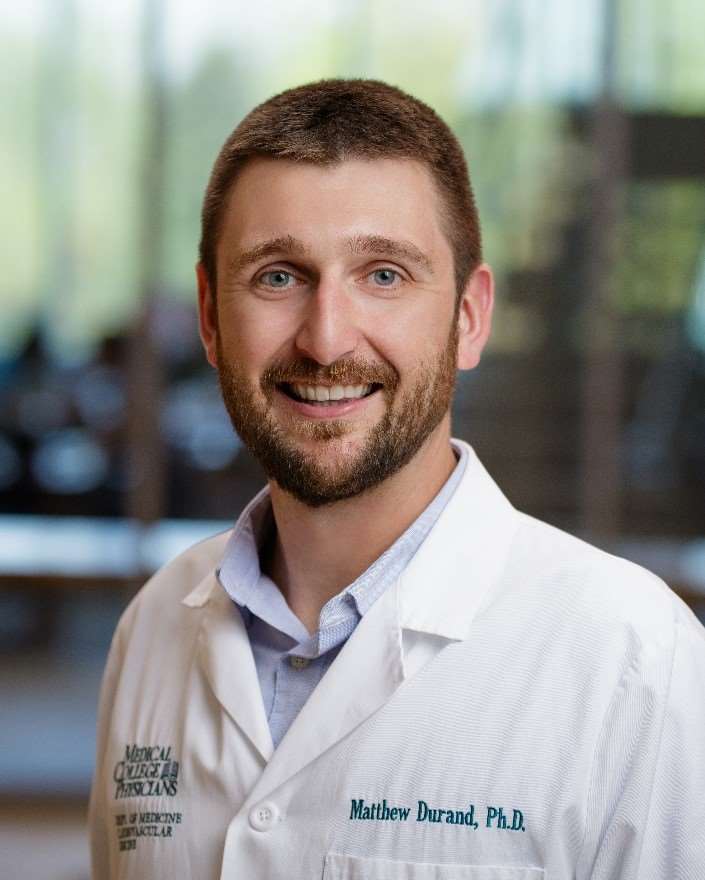
Matt Durand serves as Associate Professor and Vice Chair of Research in the Department of Anesthesiology at the Medical College of Wisconsin, with a secondary faculty appointment in Physiology. His work bridges vascular biology, exercise physiology, and rehabilitation science, focusing on improving outcomes for stroke survivors and elderly surgical patients. Education: PhD in Physiology, Medical College of Wisconsin (2010) Postdoctoral Training, Medical College of Wisconsin (2015) BA in Biology, Lawrence University (2005) Research centers on microvascular dysfunction in stroke and aging populations. Key areas include: Ischemic conditioning to enhance blood flow and muscle performance in stroke survivors Mechanisms of functional sympatholysis during exercise Microvascular resiliency in elderly surgical candidates Role of PGC-1α in vascular protection His laboratory collaborates with Marquette University's Physical Therapy Department and MCW's Cardiovascular Research Center. Recent publications demonstrate how ischemic conditioning interventions improve walking speed, reduce neuromuscular fatigability, and enhance microvascular reactivity in chronic stroke survivors. Emerging work applies machine learning to rehabilitation outcomes and explores sex-specific vascular responses in transgender healthcare. No scientific awards are documented in the provided materials. Durand leads the Cardiovascular Center Research program and mentors collaborative projects examining high-intensity interval exercise stress in elderly individuals. His NIH-funded work investigates whether ischemic conditioning serves as effective prehabilitation for frail surgical patients, with active grants focusing on microvascular responses to external stressors. The Durand Lab operates within MCW's Cardiovascular Research Center (MEB, M4845), utilizing advanced techniques including isolated resistance artery video microscopy and near-infrared spectroscopy to study endothelial function in stroke and aging populations.
Terrence Mulligan is an Adjunct Professor in the Department of Emergency Medicine. His work focuses on global emergency medicine systems development, medical education curriculum design, and emergency care policy analysis. He has contributed extensively to international frameworks for emergency medicine training and specialization. Affiliation: Department of Emergency Medicine Academic Rank: Adjunct Professor Research Interests: Global emergency medicine systems expansion Competency-based medical education frameworks Emergency care policy implementation Injury epidemiology and prevention International medical collaboration Emergency department workflow optimization Article Trends: His publications demonstrate sustained leadership in defining emergency medicine as a global specialty, focusing on curriculum standardization, cross-national healthcare analysis, and policy development to improve emergency care access worldwide.
Alex Logan, MD is an Assistant Professor of Medicine at UCSF and an internist at San Francisco General Hospital (SFGH), specializing in hospital and addiction medicine. He holds roles as Associate Director of the Addiction Care Team, Associate Program Director for the UCSF Primary Care Addiction Medicine Fellowship, and Co-Director of the Model-SFGH longitudinal clerkship. His clinical and educational work focuses on inpatient medicine services, addiction care, and medical education innovation. Education & Training: Brown University (2010): ScB/AB in Biology and History University of Pennsylvania (2016): MD University of Washington (2019): Internal Medicine Residency (Primary Care) VA Puget Sound (2020): Outpatient Chief Resident/Clinician-Teacher Fellow UCSF (2022): Diversity, Equity, and Inclusion Champion Training Research Interests: Dr. Logan’s work centers on addiction medicine , particularly buprenorphine therapy and opioid withdrawal management, alongside clinical education innovations such as case-based learning and longitudinal mentorship models. He emphasizes trauma-informed care and diagnostic reasoning in medical practice and training. Awards & Recognition: 2024: ZSFG Distinction in Medical Education Award 2022: UCSF Excellence in Teaching Award 2022: Maxine Papadakis Award for Professionalism 2021–2017: Multiple teaching/excellence awards during residency Roles & Initiatives: Co-leads the Addiction Care Team and Model-SFGH clerkship Develops educational programs like VICE (Virtual Interactive Case-Based Education) Advances DEI initiatives in medical training and patient care
Ephias Ruhode is a Lecturer at the University of the West of Scotland's School of Business and Creative Industries, with over 27 years of professional experience in Information Technology and Business Model Innovation. He holds adjunct roles as an Adjunct Professor at Cape Peninsula University of Technology and previously served as Associate Professor of Digital Business at the Wits Business School (University of the Witwatersrand) and Associate Professor of Transdisciplinary Studies in the Informatics and Design Faculty at Cape Peninsula University of Technology. His research focuses on Digital Transformation, Disruptive Technologies, Social & Digital Society, and Technology for Sustainable Development. Notable contributions include studies on e-government, healthcare information systems, and innovation in SMEs. He has published extensively, with works addressing disaster response collaboration, data governance in healthcare, and digital transformation for sustainable development. Ruhode received the 2021 Research Excellence Award for Postgraduate Supervision from Cape Peninsula University of Technology. He actively mentors PhD students, particularly in enhancing health and social care services through management information systems. His interdisciplinary approach bridges technology, policy, and societal impact, contributing to UN Sustainable Development Goals. Recent research trends highlight collaborations on global digital transformation challenges, e-government service gaps, and healthcare system interoperability. His edited book Business Models and Innovative Technologies for SMEs (2023) underscores his focus on small enterprise innovation. He collaborates widely, addressing issues in South Africa, Zimbabwe, and beyond.
Dr. Michael Leitner holds the Carl O. Sauer Professorship in the Department of Geography & Anthropology at Louisiana State University (LSU). He also serves as Director of the LSU Graduate Certificate in Crime Mapping & Geospatial Intelligence Analytics. Additionally, he is an Adjunct Professor in the Department of Experimental Statistics at LSU, Adjunct Faculty in the Department of Geoinformatics at the University of Salzburg (Austria), and an Affiliated Scholar at the Max Planck Institute for the Study of Crime, Security and Law (Freiburg, Germany). His roles span academic leadership and interdisciplinary collaboration across multiple institutions and fields. Dr. Leitner's educational background includes a Ph.D. from the State University of New York at Buffalo (1997), and M.A. degrees from both SUNY Buffalo (1993) and the University of Vienna, Austria (1990). He earned his B.A. from the University of Vienna in 1987. His academic journey reflects a strong foundation in geography and interdisciplinary studies. His research focuses on geospatial technology applications, including Geographic Information Systems (GIS), small Unoccupied Aerial Systems (sUAS), and spatial analysis/modeling/mapping of crime and health. Ongoing projects explore spatiotemporal forecasting of crime events, geospatial privacy issues, and combining spatial video geonarratives with physiological data to evaluate perceived safety. He also investigates the interplay between urban environments, social factors, and crime patterns in cities like Vienna and Baton Rouge. Recent publications highlight interdisciplinary efforts in crime modeling, public health geographies, and geospatial privacy. He collaborates internationally, particularly in Poland and Austria, and integrates emerging technologies like sUAS for low-altitude remote sensing and social media data for crime prediction. Dr. Michael Leitner has not listed any scientific awards or honors in the provided information. In advising and grants, he directs the Crime Mapping & Geospatial Intelligence Analytics program and advises the Crime and Policy Evaluation Research group (CAPER) in the Sociology Department. No specific grants or advisee students are detailed. His teaching includes courses like Geospatial Technology , Crime GIS , and Methods of Spatial Analysis , emphasizing practical skills in spatial data science. He is affiliated with LSU's Lambda Alpha Research, African & African American Studies, Cartographic Information Center, and Climate Extremes and Modeling Group. He leads or contributes to the Critical Ecologies Research Group, DIVA, FACES, Geomorphology Lab, Louisiana Office of State Climatology, Miles Richardson Research Lab, PAST, PLES Lab, SCIPP, and the TIGeRS Lab. These collaborations reflect his commitment to advancing geospatial research across disciplines.
Usame Yakutcan is a Lecturer in Operational Research at the Hertfordshire Business School, University of Hertfordshire. He holds a PhD in Operational Research, alongside a BSc in Industrial Engineering and an MSc in Engineering Management. As a Fellow of the Higher Education Academy (FHEA), he specializes in healthcare modeling, discrete event simulation, and decision support systems. His work focuses on improving patient flow and disease pathways for conditions like COPD, HIV, and CVD. Education: BSc Industrial Engineering MSc Engineering Management PhD in Operational Research Research Interests: Usame’s research integrates operational research techniques with healthcare challenges. He develops simulation models to optimize healthcare systems, evaluate mobile health interventions, and address health inequalities. Key areas include decision support systems, health economics, and public health policy. Projects: A Web-Based Decision Tool for Integrated Care (2024–2026): Focuses on enhancing integrated care systems through simulation-based tools. A Web-Based Tool to Enhance Social Value Measurement (2024–2026): Aims to improve social care and voluntary sector evaluations. Awards: Fellow of the Higher Education Academy (FHEA) Teaching & Engagement: Teaches Data Analytics, Computer Simulation, and Operational Research. Collaborates with organizations like the Operational Research Society and the Production and Operations Management Society. Labs/Teams: Member of the Business and Digital Research Group, contributing to interdisciplinary healthcare modeling projects.
Prof. Dr. Dominique Brodbeck is a Lecturer at the Institute for Medical Engineering and Medical Informatics within the School of Life Sciences at FHNW University of Applied Sciences and Arts Northwestern Switzerland. His work focuses on bridging clinical needs with technological solutions through innovative applications of artificial intelligence, data visualization, and healthcare informatics. Key projects include the RWD-Cockpit for real-world data quality assessment, the ICU Cockpit for real-time decision support in critical care, and energy efficiency studies in radiology. His research spans over three decades, with early contributions in nanotechnology visualization and later transitions into healthcare-specific applications such as patient tracking systems, medical imaging analysis, and strategic hospital planning tools. Brodbeck emphasizes interdisciplinary collaboration between clinicians, developers, and researchers to create practical solutions for healthcare challenges. Brodbeck has pioneered interactive visualization systems for large-scale telemedicine and disease management, contributing to advancements in medical education, patient data analysis, and clinical workflow optimization. His work often integrates emerging technologies like cloud computing, IoT, and AI to enhance diagnostic accuracy, operational efficiency, and sustainability in healthcare environments.
Milan Gillissen is a Researcher in the Biomedical Engineering department at Eindhoven University of Technology, affiliated with the Photoacoustics and Ultrasound Laboratory. His work focuses on patient-specific modeling of hemodynamic flows in abdominal aortic aneurysms, leveraging ultrasound Doppler and computational methods. Education: Completed a Master's thesis titled 'Patient-specific, three-dimensional modeling of the impact of the bifurcation on flow in abdominal aortic aneurysms' in 2021 under supervision of Prof. R.G.P. Lopata and others. Research interests include fluid dynamics in vascular systems, hemodynamic modeling, and medical imaging applications. His 2024 article advances personalized approaches for abdominal aorta analysis using Doppler ultrasound data. Collaborations: Active in the MEDUSA project (2020–2026), a third-tier initiative investigating hemodynamic systems. Labs/Teams: Member of the Photoacoustics and Ultrasound Laboratory and contributes to multi-disciplinary teams in biomedical engineering research.