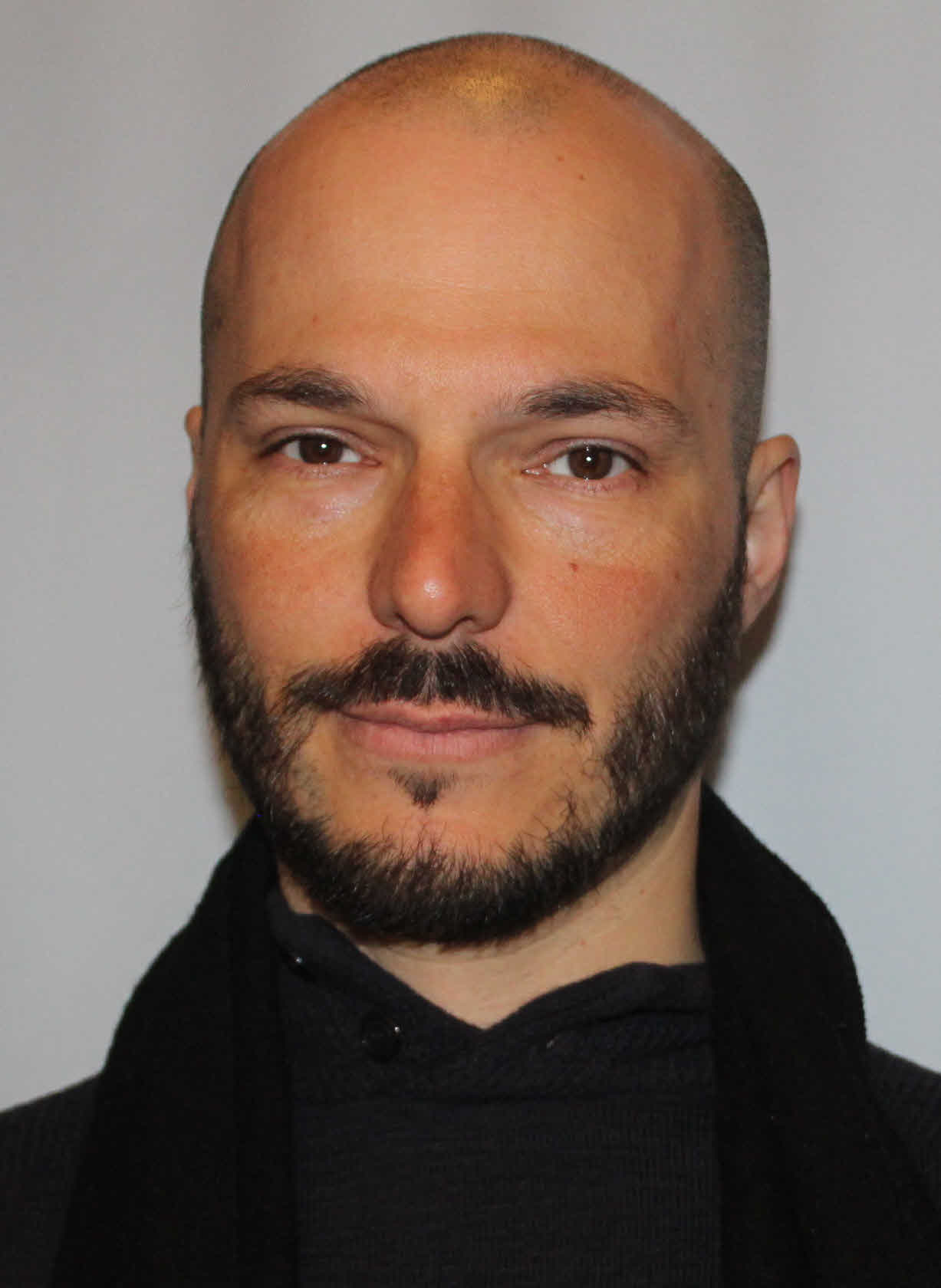
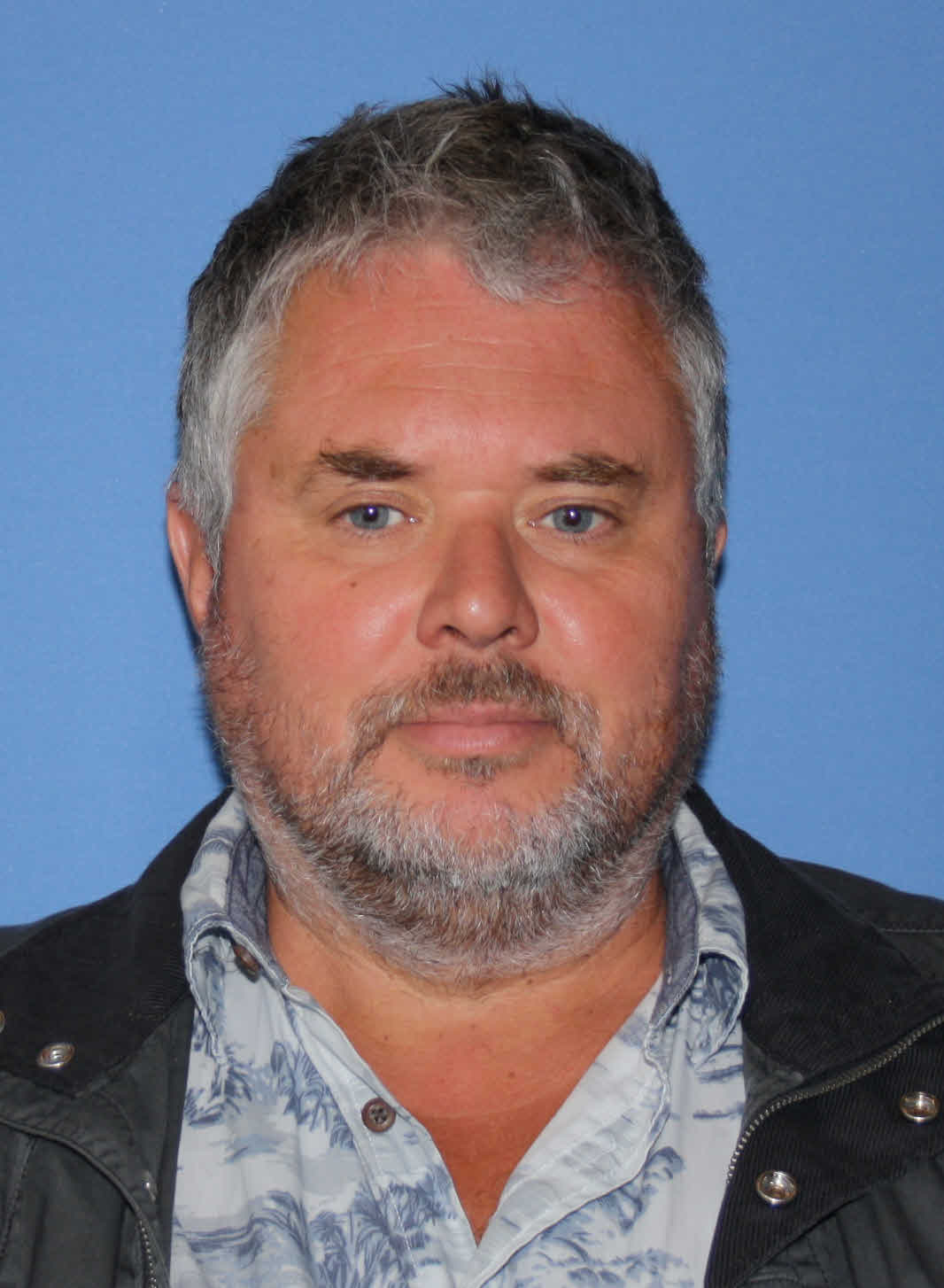
Magnus Nord is an Associate Professor in the Department of Physics, Faculty of Natural Sciences at Norwegian University of Science and Technology (NTNU). His research focuses on advanced electron microscopy techniques and computational tools for materials characterization. Research Interests : Scanning Transmission Electron Microscopy (4D-STEM), Open Source Scientific Software Development (Python), Big Data Processing, Magnetic/Electric Field Imaging, Structural Characterization using Higher Order Laue Zones. Publications span cutting-edge applications in functional materials, nanomagnets, and perovskite thin films, with emphasis on machine learning and precession-enhanced imaging. Key keywords include Materials Science , Electron Microscopy , and Computational Imaging . Software Development : Lead developer of Atomap and pyxem , contributing to HyperSpy and merlin_interface for electron microscopy data analysis. Current Research Funding : InCoMa (Research Council of Norway) IMPRESS (Horizon EU Program)
Professor Titus Sebastiaan van Erp is affiliated with the Department of Chemistry at the Norwegian University of Science and Technology (NTNU), where he has worked since 2016. His research focuses on advancing molecular simulation techniques to study complex biological and industrial processes without approximations, particularly through path sampling methods for rare events. 2016 – Present: Professor, NTNU 2012 – 2016: Associate Professor, NTNU 2006: Centre-of-Excellence Fellow, Leuven 2004: Marie Curie Fellow His research develops innovative methodologies like RETIS and REPPTIS to enhance simulation accuracy and expand accessible time/system scales. He has supervised students in DNA denaturation, electron transfer reactions, and protein folding studies. Recent publications analyze NaCl dissociation, ABL-imatinib kinetics, and permeation mechanisms. His work involves Python-based PyRETIS software development and collaborations across computational chemistry, biophysics, and materials science. 2025: NaCl Dissociation via Predictive Power Path Sampling 2025: RETIS/REPPTIS for Biomolecular Kinetics 2024: PyRETIS 3 for Boundary-Free Rare Events Scientific recognitions include: Centre-of-Excellence Fellowship (2006) Marie Curie Fellowship (2004) He has advised multiple students in masters theses on molecular simulation, including projects on DNA unwinding, electron transfer, and protein folding. His lab integrates algorithm development with applications in chemical reactions, biomolecular systems, and nanoscale materials.
Jo Eidsvik is a Professor at the Department of Mathematical Sciences, Norwegian University of Science and Technology (NTNU). He holds a MSc in applied mathematics from the University of Oslo (1997) and a PhD from NTNU (2003). His research focuses on spatio-temporal statistics, computational statistics, and their applications in Earth sciences, including geophysics and oceanography. He leads projects like the Center for Geophysical Forecasting (SFI-CGF) and Maritime Autonomous Sampling and Control (MASCOT). Eidsvik has supervised over 60 graduate students and is an associate editor for *Mathematical Geosciences* and *Statistics and Computing*. His work bridges theory and practice, addressing challenges in data assimilation, value of information analysis, and autonomous systems for environmental monitoring. **Education & Background**: MSc (University of Oslo), PhD (NTNU). Industry experience includes roles at Statoil and the Norwegian Defense Research Establishment. Visiting scholar at Stanford University, Duke University, and SAMSI. **Research Themes**: Spatio-temporal modeling, machine learning for irregular time series, and decision analysis in geological contexts. Key projects include geophysical forecasting, CO₂ storage monitoring, and autonomous underwater vehicle (AUV) sampling strategies. His book *Value of Information in the Earth Sciences* (Cambridge Press) synthesizes methodologies for optimizing data-driven decisions. **Awards & Recognition**: While no specific awards are listed, his editorial roles and project leadership reflect scholarly impact. His work emphasizes interdisciplinary collaboration, with applications in climate science, energy systems, and robotics. **Advising & Grants**: Supervised 60+ MSc students and 12 PhD students. Active in NTNU’s Physics and Mathematics program and Industrial Mathematics initiatives. Projects funded by SFI, EU, and industry partners. **Teams & Labs**: Involved with NTNU’s GEOPARD (data assimilation in geological models), Havvarsel (oceanographic data assimilation), and ML4ITS (machine learning for irregular time series). Collaborates with international institutions like Stanford and Duke.
Lars Magne Lundheim is a Professor at the Department of Electronics and Telecommunications, Norwegian University of Science and Technology (NTNU). Holding a doctorate in Electrical Engineering, he contributes to signal processing research and pedagogical innovation in engineering education. His work spans telecommunications, microgrid technology, and educational reform through project-based learning frameworks. Academic Affiliation: NTNU Research Focus: Signal Processing, Sustainable Engineering Education His publications analyze curriculum integration, mathematical foundations in engineering, and sustainable practices. Recent studies explore EEG source reconstruction and harmonics modeling in microgrids. Lundheim actively engages in disseminating findings through conferences and journals, emphasizing student socialization and creative confidence in STEM. Key trends in his research include: Development of competency-based sustainability education Optimization of wireless communication systems Mathematics-engineering interdependencies Low-density EEG channel selection
Jo Eidsvik is a Professor at the Department of Mathematical Sciences, NTNU. His research focuses on spatio-temporal statistics, computational statistics, and their applications in Earth sciences, geophysics, and data assimilation. He leads projects like the Center for Geophysical Forecasting (SFI-CGF), GEOPARD, and MASCOT. He has authored a seminal book on 'Value of Information in the Earth Sciences' (2017), recognized with a runner-up award by INFORMS. Eidsvik has supervised numerous PhD and MSc students, including current advisees André Olaisen and Oscar Ovanger. He holds editorial roles in 'Mathematical Geosciences' and 'Statistics and Computing'. Education: MSc in Applied Mathematics (University of Oslo, 1997), PhD (NTNU, 2003). Industry experience includes roles at the Norwegian Defense Research Establishment and Statoil. He has been a visiting scholar at Stanford University and Duke University. Research highlights include Bayesian inversion methods, adaptive sampling with autonomous vehicles, and value of information analysis in decision-making. Recent work explores machine learning for irregular time series (ML4ITS) and oceanographic data assimilation. Over 60 MSc theses supervised, emphasizing interdisciplinary approaches. Labs/Teams: Center for Geophysical Forecasting (SFI-CGF), GEOPARD, MASCOT, Games. Grants/Awards: INFORMS Decision Analysis Society award (2017), extensive project funding through SFI and industry. Key Projects: Havvarsel (ocean data), CO₂ storage monitoring, and robotic sampling systems.
Professor Alexander Rashkovskii is a faculty member in the Department of Mathematics and Physics at the University of Stavanger, affiliated with the Faculty of Science and Technology. His research focuses on pluripotential theory, complex analysis, and convex geometry, with particular emphasis on plurisubharmonic functions, Monge-Ampère operators, and Lelong numbers. He has contributed to advancements in interpolation of extremal functions, geodesics in complex geometry, and applications of pluripotential theory to algebraic geometry and signal processing. Key research interests include the study of singularities of plurisubharmonic functions, asymptotic multiplicities in algebraic geometry, and the interplay between convex geometry and complex analysis. His work often bridges theoretical results with applications in areas like mobile sampling and harmonic analysis. Publications span over three decades, with notable contributions in Mathematische Annalen , Journal of Geometric Analysis , and Applied and Computational Harmonic Analysis . Active in international conferences and workshops, including NORDAN meetings and the International Congress of Mathematicians. His research trends reflect a deep engagement with the structure of plurisubharmonic singularities, regularization techniques, and the geometry of complex Monge-Ampère equations. Recent work explores geodesic connectivity and rooftop envelopes in Cegrell classes, advancing the theoretical foundations of pluripotential theory.
Martin Ludvigsen is a Professor and manager of the Applied Underwater Laboratory (AUR-Lab) at NTNU's Department of Marine Technology. He also holds an adjunct professorship at Svalbard University Centre (UNIS) and is affiliated with NTNU AMOS. His research focuses on underwater robotics, unmanned vehicles, Arctic technology, and autonomous systems. He teaches courses like TMR4120 Underwater Engineering and leads the AUR-Lab, which develops robotic platforms for marine research. Research interests include vehicle control, autonomy, acoustic navigation, and Arctic observation systems. Collaborations involve deploying robotic vehicles in the Arctic and deep-sea environments. He has advised multiple PhD students and contributed to projects on ocean mapping, environmental monitoring, and robotic sampling. Key contributions include advancing underwater hyperspectral imaging, developing adaptive sampling strategies, and improving AUV navigation. His work bridges engineering and environmental science, addressing challenges in marine exploration and resource management.
Azeem Ahmad is a Researcher at the Department of Physics and Technology , UiT The Arctic University of Norway. His work focuses on advanced imaging techniques in ultrasound, microwaves, and optics , particularly in the areas of quantitative phase microscopy , acoustic microscopy , and photonic chip engineering . Key research areas: Quantitative phase imaging, acoustic wave modeling, biomedical diagnostics, interferometry, machine learning integration, and photonic device optimization Collaborative projects: Developments in label-free histology, super-resolution microscopy, and noise reduction algorithms Recent publications: 2025 studies on subsurface damage detection in ceramics and acoustic transducer modeling His work bridges optical engineering , biomedical applications , and computational imaging , with affiliations to the Ultrasound, Microwaves and Optics and Optical Nanoscopy research groups.
Alireza David Anisi is an Associate Professor at the Department of Engineering Sciences , University of Agder. With a PhD in Optimization and Systems Theory and an M.Sc. in Engineering Physics, he specializes in autonomous systems and robotics , particularly in agri-tech and harsh environments . His industrial experience spans 15+ years in defense and oil & gas sectors. Academic Background: PhD: Optimization and Systems Theory M.Sc.: Engineering Physics Research Interests include formal verification and learning for autonomous systems, combinatorial optimization for multi-robot task/path planning, computational optimal control for trajectory optimization, and nonlinear observer design. His work bridges academic research with industrial R&D. Selected Publications highlight trends in robotics safety assurance, formal verification methods, and industry-specific applications (defense, oil & gas, agriculture). Recent works focus on runtime verification in ROS 2 and RoboStar technology integration. Patents: Power system optimization (EP18162642.5, 2018) Mechanical grip system (SE1300179, 2013) Sensor arrangement for machine vision (WO2014026711, 2012) Tool changer for explosive environments (WO2012007188, 2011) Industrial robot control method (EP2466404, 2010) Harsh environment mobile robot (WO2011107137, 2010) Anisi contributes to the Robotics and Automation research group, focusing on real-world applications in agriculture, energy, and industrial sectors. He teaches MAS221 Industrial IT and Robotics and emphasizes collaboration between academia and industry.
Enrico Riccardi is an Associate Professor in Computational Engineering at the Department of Energy Resources, Faculty of Science and Technology, University of Stavanger (UIS), Norway. His work bridges computational chemistry, machine learning, and multi-scale modeling, with applications in energy, environmental science, and biophysics. Research Interests: His core expertise lies in molecular dynamics , rare event simulation methods (e.g., reaction kinetics and adsorption), and multi-scale modeling from molecular to continuum levels. He is a key developer of path sampling methodologies and software such as PyRETIS and PyVisA , enabling the study of slow and rare processes in complex systems. His research spans interfacial phenomena in emulsions, membrane permeation, atmospheric chemistry, and data-driven discovery of reaction pathways using machine learning. Recent Publication Trends: Over the past decade, Riccardi has consistently published in high-impact journals such as Journal of Chemical Physics , Physical Chemistry Chemical Physics , and Nature Machine Intelligence . His recent work (2023–2025) shows an expanded scope into educational technology , environmental science , and open-source tool development (e.g., GeoSight), reflecting a growing interdisciplinary impact. The publications reveal a strong focus on algorithmic innovation in simulation methods and their application across chemistry, biology, and engineering. Scientific Contributions: Lead and co-developer of PyRETIS, a widely used open-source library for rare event simulations. Contributor to immuneML, a machine learning ecosystem for immune repertoire analysis published in Nature Machine Intelligence . Active in promoting open science, data sharing, and academic integrity through public commentary and educational initiatives. Advising and Grants: While no formal students are listed in the provided text, Riccardi has mentored or collaborated with numerous early-career researchers and PhD candidates, particularly within the van Erp group. He has contributed to multiple collaborative research projects, likely funded by Norwegian and European research councils, though specific grants are not mentioned. His outreach on postdoctoral challenges suggests engagement with academic policy and mentorship. Labs and Teams: Riccardi is part of a vibrant computational research group at UIS, closely collaborating with Prof. Titus Sebastiaan van Erp and colleagues in the Department of Energy Resources. His work is embedded in a team focused on advanced simulation techniques, with strong ties to international networks in computational chemistry and soft matter physics.
Jan Aage Aasen is an Associate Professor in Drilling at the University of Stavanger, affiliated with the Faculty of Science and Technology and the Department of Energy and Petroleum Technology. His research focuses on drilling engineering, wellbore integrity, and sustainable materials for oil and gas applications. Research Interests: His work spans drilling mechanics , wellbore integrity , zonal isolation , and geopolymer-based cementing . He investigates advanced materials for plugging and abandonment, long-term cement performance, and 3D tubular design for critical wells. His research combines experimental validation with computational modeling, especially in annular flows and pressure control systems. Publication Trends: Recent publications emphasize sustainable alternatives like geopolymers for well sealing, reflecting a growing focus on environmental performance in drilling operations. Earlier works focus on mechanistic modeling of tubulars, buckling behavior, and multistring well analysis, showing a long-standing expertise in structural well design. Scientific Awards: No awards are listed in the provided text. Advising and Grants: While no formal list of students is provided, Dr. Aasen collaborates extensively with researchers such as Mahmoud Khalifeh, Arild Saasen, and Hans Joakim Skadsem, suggesting active supervision and mentorship. His work appears to be supported by institutional and industry-aligned grants, particularly in areas of well integrity and sustainable drilling technologies. Labs and Teams: He is part of a research group focused on drilling and well technology at the University of Stavanger, contributing to experimental and computational studies on wellbore flows, casing design, and cement performance.