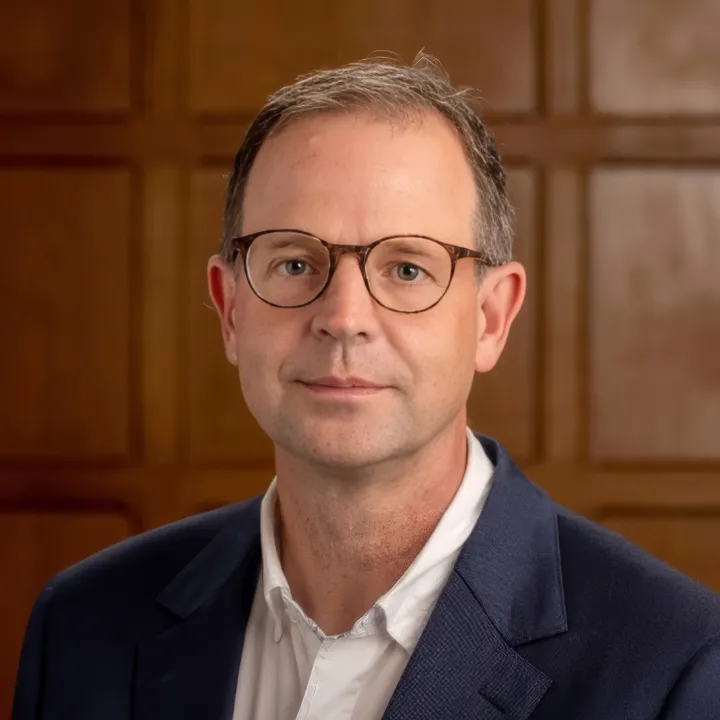
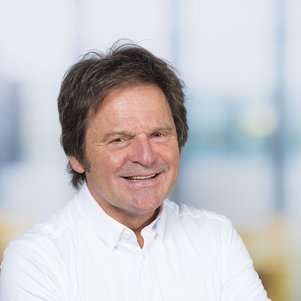
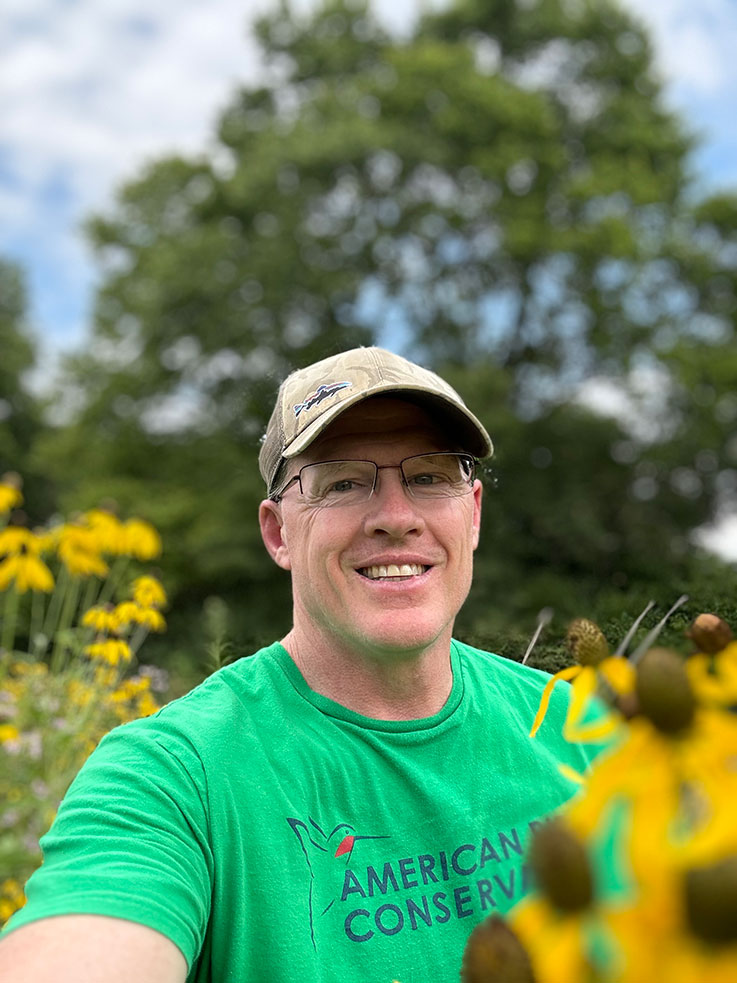
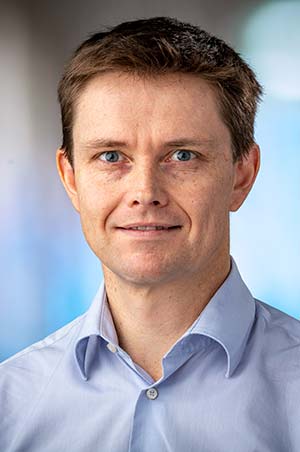
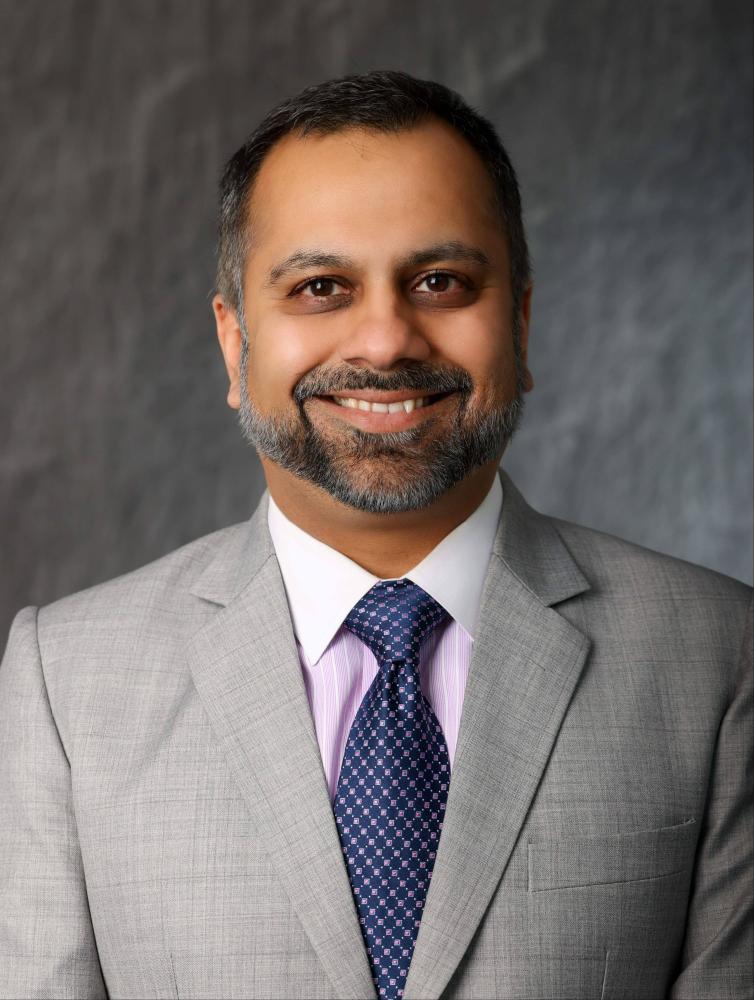
Jordan Peccia is the Thomas E. Golden, Jr. Professor of Chemical & Environmental Engineering at Yale University, specializing in applying molecular biology to environmental challenges. His lab focuses on microbial interactions in built environments, wastewater epidemiology, and methane emission regulation. Peccia holds a Ph.D. from the University of Colorado. Research interests include: Microbial health impacts in indoor spaces Tracking pathogens via wastewater surveillance systems Bioaerosol control technologies Microbial contributions to climate change Health effects of sewage sludge application Recent work includes long-term SARS-CoV-2 wastewater monitoring in New Haven and groundbreaking studies on tree microbiomes influencing methane emissions. Collaborations span epidemiology, data science, and environmental policy. Lab advancements include PDMS-based passive air samplers and UVGI disinfection methodologies. Ongoing studies investigate microbial diversity in living wood and methane flux mechanisms in wetlands. His team's work has informed public health policies on indoor air quality and contributed to global understanding of airborne pathogen transmission dynamics.
Prof. Chris Zevenbergen (part-time, 0.2 FTE) serves as Chair of Delta Urbanism at Delft University of Technology (TU Delft) since February 2021. He also leads the Flood Resilience group at IHE Delft's Coastal and Urban Risk and Resilience Department and holds visiting professor positions at two Chinese universities. With a background in ecology and earth sciences, he brings 25+ years of international expertise in water-sensitive urban design and flood risk management. Urban flood risk management Sustainable urbanization pathways Resilience components in urban planning Water safety policy integration Coastal-metropolitan risk analysis His recent work focuses on climate adaptation strategies through the Dutch government-funded DeltaCAP program supporting Bangladesh's Delta Plan 2100. He actively explores cross-disciplinary approaches bridging science, education, and policy. As a part-time academic leader, Zevenbergen contributes to urban design research at TU Delft's Urbanism department and collaborates globally through knowledge exchange programs.
Dr. Jeff Larkin is a Professor in the Biology Department at Indiana University of Pennsylvania (IUP), part of the John J. and Char Kopchick College of Natural Sciences and Mathematics. He holds a PhD in Animal Sciences from the University of Kentucky, an MS in Forestry, and a BA in Biology from Ithaca College. His research focuses on wildlife ecology and conservation, particularly songbird conservation, habitat restoration, and human impacts on biodiversity. He serves as editor for Large Mammal Restoration (2002 Wildlife Society Book Award winner) and advises USDA-NRCS's Working Lands for Wildlife program. His work bridges science and action, influencing conservation policies through applied research. Education: PhD in Animal Sciences, University of Kentucky MS in Forestry, University of Kentucky BA in Biology, Ithaca College Research Interests: Dr. Larkin's work emphasizes applied conservation science, including songbird ecology, Golden-winged Warbler and Cerulean Warbler habitat dynamics, pollinator ecology, and forest management. He collaborates globally, particularly in Central/South America, and integrates technologies like LiDAR and acoustic monitoring for biodiversity assessment. Recent Trends in Publications: His 2024 work highlights climate adaptation for migratory birds, LiDAR-driven habitat assessments, and acoustic monitoring innovations. Themes include forest management impacts on avian populations, pollinator conservation, and multi-scale habitat modeling. Scientific Awards: 2002 Wildlife Society Book Award Advising & Grants: He mentors over 30 graduate and undergraduate students, many proceeding to prestigious programs or conservation careers. His grants support projects on elk resource selection, monarch butterfly habitats, and Appalachian forest restoration. Labs/Teams: Collaborates with ABC's Eastern Forest Bird Habitat Program, USDA-NRCS, and PA-DCNR's Ecosystem Management Committee. Active in fieldwork across North and Central America.
Professor Peter Mascher is a distinguished academic at McMaster University, serving in the Department of Engineering Physics within the Faculty of Engineering. He held leadership roles including Department Chair (1994-2000) and Associate Dean (2003-2014). Currently Vice-Provost, International Affairs, he maintains an active research program while engaging in global academic partnerships. His work focuses on optoelectronic materials and defect characterization in semiconductors. Research interests center on Thin film fabrication for optoelectronic applications Silicon-based nanostructures and photonic devices Defect analysis using positron annihilation spectroscopy Advanced materials characterization techniques Nanotechnology for energy-efficient photonics Recent publications demonstrate expertise in silicon nitride waveguides, rare-earth doped materials, and hybrid photonic platforms. His work spans from fundamental defect studies to applied photonic device development, showing consistent innovation in semiconductor technology and materials science. Scientific honors include Fellow, Canadian Academy of Engineering Fellow, Electrochemical Society Dielectric Science and Technology Thomas Callinan Award (2024) As a supervising academic, he has guided over 70 graduate students and postdoctoral fellows. His laboratory group investigates thin film technology, positron annihilation spectroscopy, and silicon-based photonic devices through multimillion-dollar research programs funded by NSERC, CFI, and industrial partners.
Alexandra Richardson is a Research Associate at Imperial College London's School of Public Health (Faculty of Medicine), affiliated with the Epidemiology and Biostatistics and Emerging Chemical Contaminants research groups. Her work focuses on environmental health research, particularly chemical contaminants in aquatic systems and innovative monitoring methodologies. Her academic background includes: PhD in Analytical Science, King's College London (2018-2023) MRes in Forensic Science, King's College London BSc (Hons) Biological Sciences, University of Sydney Richardson's research integrates environmental science and analytical chemistry to address chemical pollution challenges. She specializes in developing passive sampling technologies for emerging contaminants, with current emphasis on PFAS in drinking water through participatory science approaches. Her interdisciplinary work bridges laboratory analysis, field monitoring, and community engagement to tackle environmental health risks. Recent publications reveal a consistent trajectory in advancing water quality monitoring techniques, evolving from miniaturized sampler development to machine learning-assisted contaminant analysis. This progression demonstrates increasing sophistication in handling complex environmental datasets while maintaining focus on real-world applications for pollution assessment. Her scientific contributions have been recognized through: BBSRC iCASE studentship funding during doctoral studies Japan Society for the Promotion of Science (JSPS) research fellowship Richardson's research is supported by major grants from the NIHR Health Protection Research Units and MRC Centre for Environment and Health, enabling citizen science initiatives for river contaminant assessment. Her current PFAS investigation in London's water supply represents the forefront of her analytical challenges and methodological innovation. As an active member of Imperial's Epidemiology and Biostatistics and Emerging Chemical Contaminants groups, she collaborates across disciplines to advance environmental health research through cutting-edge analytical approaches and community-based monitoring frameworks.
Ollivier Hyrien is a Professor in the Biostatistics, Bioinformatics and Epidemiology Program within the Vaccine and Infectious Disease Division, and also a Professor in the Herbold Computational Biology Program within the Public Health Sciences Division at the Fred Hutchinson Cancer Center. He is additionally a Member of the Translational Data Science Integrated Research Center (TDS IRC) at Fred Hutch. Dr. Hyrien is a biostatistician who applies advanced technologies such as machine learning and dynamic modeling to address problems in laboratory experiments and clinical studies. His research focuses on statistical methods for flow cytometry, single-cell sequencing and other bioassays. He holds a PhD in Statistics from the University of Rennes 1, Rennes, France (2001). His research interests include: Statistical methods for bioassays (e.g., flow cytometry, sequencing) Machine learning (e.g., nonparametric clustering and classification) Dynamic modeling (e.g., B-cell repertoire) Dr. Hyrien leads the Hyrien Lab, which specializes in developing and applying statistical methods, computational tools, and mathematical models to study the immune system and other complex biological systems, such as the microbiome, the hematopoietic system, and the central nervous system, using high-dimensional, high-throughput data. A core focus of his current research is supporting the development of vaccines and passive immunization strategies against diseases caused by pathogens such as HIV, malaria, SARS-CoV-2, herpes simplex virus, as well as treatments against cancer. One exciting area of his research is the study of the evolution of the B-cell repertoire, involving the use of machine learning and statistical tools as well as stochastic processes to quantify and predict how somatic hypermutation accumulates over time in immunoglobulin genes. His recent publications demonstrate a strong focus on HIV vaccine development, statistical methods in immunology, and mathematical modeling of immune responses. His work spans across multiple disciplines including biostatistics, immunology, virology, and computational biology, with significant contributions to understanding antibody development and vaccine efficacy. Dr. Hyrien is highly collaborative, working closely with numerous research groups across various institutions to advance the understanding of complex biological systems and their interactions with human health and treatments.
Dr. Phong Vo is a Research Fellow at the Climate Change Cluster (Faculty of Science), University of Technology Sydney. His research focuses on water/wastewater treatment, resource recovery via sustainable biomining, and climate change mitigation. He holds a PhD from UTS (2017–2021) and has secured over $600k in funding from bodies like the Australian Research Council and the Bill & Melinda Gates Foundation. His work emphasizes green technologies for pollutants remediation and rare earth element recovery. Key achievements include the 'Most Downloaded Paper' award (2021–22) and the Chongrak Polprasert Prize. His research has real-world applications, such as aiding Queensland’s wastewater-based COVID-19 surveillance. He actively publishes in top journals (e.g., Water Research, Environmental Science & Technology) and collaborates internationally at conferences like the Asia-Pacific Conference on Algal Biotechnology. Current projects include biomining for REEs and PFAS remediation. Research interests span bioprocess innovation, microalgae-bacteria consortia, and environmental modeling. He supervises students and offers the UTS Research Scholarship, focusing on publication training and career development.
Dr. Lance Yonkos is an Associate Professor in the Department of Environmental Science & Technology at the University of Maryland, College Park. He is affiliated with the College of Agriculture and Natural Resources and conducts research focused on contaminant abundance, transport, and toxicological effects in aquatic environments. His work integrates laboratory and field studies to investigate microplastic pollution, endocrine disruptors, and contaminant sources in the Chesapeake Bay watershed. Yonkos' research emphasizes: Microplastic dynamics in surface waters and sediments, particularly linked to land use patterns Development of non-lethal sampling methods for fish populations Environmental mitigation strategies for coal ash and poultry manure management Identification of PCB sources in the Anacostia River using passive samplers and mussel monitoring His studies often combine advanced analytical techniques like mass spectrometry with ecological field observations to assess pollutant impacts on aquatic organisms. Key themes include: Endocrine disruption effects in fish (e.g., testicular oocytes in bass) Fate and toxicity of pharmaceuticals and personal care products Contaminant sorption to microplastics Ecological risk assessment of Chesapeake Bay ecosystems Recent publication trends focus on: PCB contamination in urban watersheds Microplastic-soil interactions in wetlands Effects of emerging contaminants on fish reproduction Development of biomarkers for estrogenic exposure No scientific awards or grants are explicitly mentioned in the provided materials. His research group collaborates on field deployments of freshwater mussels and maintains an active presence in environmental monitoring initiatives across Maryland's waterways.
James Moberly is an Associate Professor in the Chemical & Biological Engineering Department at the University of Idaho's College of Engineering. His research focuses on environmental geochemistry, water quality remediation, and metal transport dynamics in contaminated ecosystems through laboratory and field investigations. Education: PhD - Montana State University MS - Washington State University BS - University of Idaho Research interests encompass acid rock drainage mitigation, heavy metal speciation, passive treatment systems, and biogeochemical processes in mining-impacted environments. Work integrates field sampling with experimental geochemistry to develop remediation strategies. Recent publications demonstrate expertise in contaminant mobility studies, coordination chemistry applications for environmental engineering, and groundwater monitoring techniques. Research consistently bridges fundamental chemistry with practical environmental solutions. Moberly contributes to National Academies initiatives on water quality management, including service on 'The Future of Water Quality in Coeur d'Alene Lake' committee. His laboratory develops novel approaches for metal recovery and water treatment. No major scientific awards are documented. Research is supported by grants including studies on sediment geochemistry funded by the National Science Foundation.
Qian Liao is a Professor in the Department of Civil and Environmental Engineering at the University of Wisconsin-Milwaukee's College of Engineering & Applied Science. Currently on sabbatical for the Fall 2024 semester, Dr. Liao specializes in environmental fluid mechanics and aquatic system dynamics. Dr. Liao holds a PhD in Civil and Environmental Engineering from Cornell University (2004), an MS in Urban and Environmental Science from Peking University (1999), and a BS in Hydraulic and Hydropower Engineering from Tsinghua University (1996). His research focuses on: Hydrodynamic-biogeochemical interactions in aquatic systems Turbulence modeling and mixing processes Advanced flow measurement techniques including imaging-based analysis Hydraulic systems and watershed management His recent publications demonstrate strong focus on signal processing applications in sensing systems, radar technologies, and wireless communications, with particular emphasis on multi-target localization, signal authentication, and efficient computational methods.
Glenn Walker is an Associate Dean for Research and Graduate Programs and a Professor of Biomedical Engineering and Electrical Engineering at The University of Mississippi. He holds a Ph.D. in Biomedical Engineering from the University of Wisconsin-Madison (2002). His research focuses on microfluidic systems, biomedical device development, and cellular engineering, with applications in diagnostics, drug delivery, and tissue modeling. Key areas include hypoxia studies, organ-on-a-chip platforms, and automated cell culture systems. Walker’s work bridges engineering and medicine, emphasizing innovative microfluidic technologies for biomedical challenges. His recent publications highlight advancements in passive pumping systems, oxygen-controlled bioreactors, and multiplexed diagnostic tools. He has contributed to over 50 peer-reviewed articles spanning microfluidic design, cell biology, and biomedical instrumentation. His academic leadership roles include overseeing graduate programs and research initiatives. While no specific grants or awards are listed in the provided materials, his extensive publication record underscores his technical contributions to the field.
Dr. Oliver Lewis is a Principal Lecturer at Sheffield Hallam University, leading the Future Transportation Subject Group. He specializes in corrosion prevention, materials engineering, and engineering education. He holds roles as Course Leader for BSc Aeronautical Engineering and Subject Group Leader, contributing to curriculum development and student experience enhancement. Education: BEng(Hons) in Materials Engineering from Loughborough University, followed by a PhD in nanoparticulate additives for waterborne coatings. His teaching focuses on materials and manufacturing, with a strong emphasis on integrating practical laboratory work and innovative assessment methods. Research interests include corrosion protection of metals, environmentally benign coatings, and engineering pedagogy. He has supervised four successful PhD students and collaborates with industries on projects like developing eco-friendly steel pretreatments. Active in professional societies like the Royal Aeronautical Society and the Institute of Materials Finishing, he contributes to editorial and educational committees. Publications span corrosion mechanisms, coating technologies, and employability in engineering education. His work bridges academic research with industrial applications, emphasizing sustainability and real-world impact.
Associate Professor Andrew Seen holds dual affiliations at the University of Tasmania's School of Natural Sciences (Chemistry Department) across both Launceston and Hobart campuses. His career spans industry roles at Nyrstar and Ecka Granules Australia alongside academia. He earned his PhD and BSc (1st Class Honours) in Chemistry from the University of Tasmania. Research focuses on applied chemistry solutions for industrial and environmental challenges, including passive sampling devices for contaminants and contaminant mobility studies. He concurrently investigates STEM education, examining student resource usage patterns, alignment of practical skill development with assessments, and pedagogical methods. Publications highlight dual expertise in environmental chemistry (e.g., estuary pollution studies, DGT samplers) and education innovation (e.g., drawing-based perception analysis, assessment frameworks). Awards include Royal Australian Chemical Institute Fellowship. Active in curriculum development initiatives like cross-faculty teacher education programs and WIL science units.
Sarah Cadieux is a Senior Lecturer and Associate Director of Environmental Science at Rensselaer Polytechnic Institute (RPI). She holds a Ph.D. in Geology from Indiana University (2015), an M.S. from the University of Tennessee (2011), and a B.A. from Mount Holyoke College (2008). Her research focuses on freshwater ecosystems as climate change sentinels, particularly biogeochemical cycling in Arctic and urban environments. Key projects include microplastic contamination in drinking water, greenhouse gas emissions from Arctic lakes, and methane dynamics in Greenland. Cadieux emphasizes interdisciplinary approaches combining limnology, isotope geochemistry, and community science. She collaborates with the NATURE Lab and Hudson River Watershed Alliance on water quality initiatives. Teaching responsibilities include courses like Earth's Climate: Past, Present and Future and GIS for Sciences. Her work bridges scientific research with public engagement through projects like the Water Justice Lab collaboration. Education: Ph.D., Indiana University (2015); M.S., University of Tennessee (2011); B.A., Mount Holyoke College (2008) Research Themes: Microplastics pollution, Arctic biogeochemistry, methane cycling, geoscience education Community Engagement: Board member, Hudson River Watershed Alliance; steering committee, Riverkeeper Teaching: Courses include Geology 1-2 series, Introduction to Geobiology, and GIS applications Her recent studies reveal microplastic concentrations in Troy, NY tap water (156 particles/L), highlighting human exposure risks. This work merges scientific rigor with artistic visualization to make invisible pollutants tangible. Cadieux's Arctic research explores methane emissions linked to climate feedbacks, using stable isotopes and microbial community analysis. She has pioneered passive sampling techniques for methane in Arctic lakes and contributed to Mars analog studies through sedimentological comparisons.
Professor Sandipan Mishra is a faculty member at Rensselaer Polytechnic Institute (RPI), holding the position of Professor in the Department of Mechanical, Aerospace, and Nuclear Engineering within the School of Engineering. He joined RPI in 2010 and has been affiliated with the Electrical, Computer, and Systems Engineering department. His research focuses on systems and control, learning, autonomy, and precision mechatronics, addressing challenges in advanced manufacturing, UAVs, and smart buildings. His work is supported by grants from NSF, ONR, ARL, DoE, and industry partners like General Electric and Sikorsky. Education: PhD in Mechanical Engineering from the University of California, Berkeley (2008). Awards include the NSF Early CAREER Award (2013), ASME Outstanding Young Investigator Award (2019), and multiple RPI teaching and research awards. He also serves as a Program Expert at the National Science Foundation for the CMMI division. Research emphasizes control systems integration into manufacturing processes, UAV autonomy, and smart building thermal management. His publications span over 50 journals and 150 conference papers, with recent work focusing on additive manufacturing control, autonomous systems, and human-in-the-loop optimization. Grants include collaborations with NSF, DoE, and industry on topics like laser powder bed fusion, aerial refueling, and building energy efficiency. His teaching includes courses on systems analysis, mechatronics, and advanced manufacturing systems.