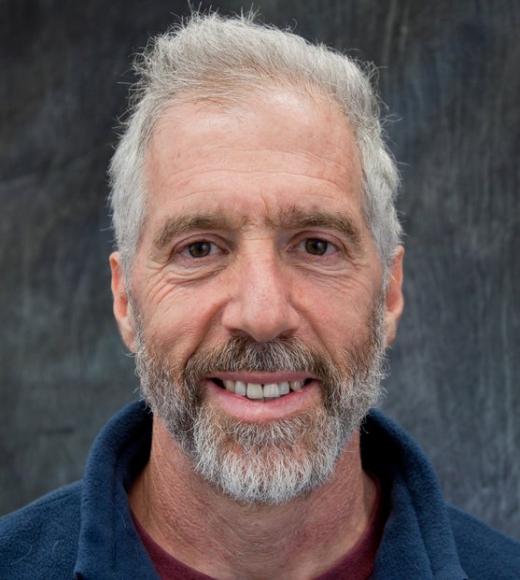
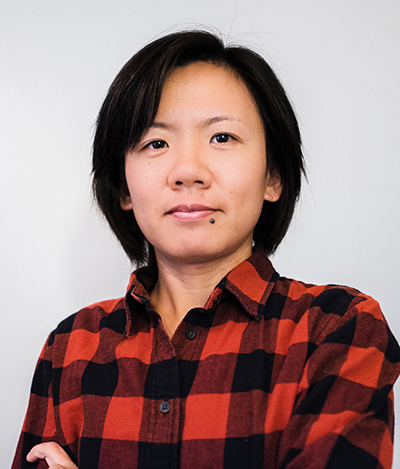
Keqing Huang is a Postdoctoral Fellow at the Australian National University's College of Engineering, specializing in perovskite solar cell research. He investigates high-performance solar cells, flexible perovskite devices, and effects of external stimuli like radiation on device physics. Huang earned his B.S. and M.S. from Central South University and PhD from ANU. His research focuses on enhancing efficiency and stability of perovskite photovoltaics through interface engineering, novel material compositions, and scalable fabrication techniques. Recent work addresses challenges in commercialization, including humidity tolerance during manufacturing and radiation resistance for space applications. Huang's publications demonstrate consistent innovation in device architecture, particularly through interface modification strategies and additive engineering. His work spans fundamental material studies to large-scale module development. Awards include: Excellent Master's Thesis of Hunan Province Excellent Poster Award at The 7th Conference on New Generation Solar Cells He collaborates with research teams at ANU's Engineering Building and contributes to advancing renewable energy technologies through materials innovation.
Vincenzo Maria Gentile is a Fixed-term Assistant Professor at the Department of Energy (DENERG) , Politecnico di Torino . He holds scientific appointments in both Energy Transition and Low-Carbon Architecture and Energy and Nuclear Engineering programs. His research spans heat and mass transfer , energy systems optimization , and indoor air quality monitoring . Key research areas include: Hydrogels for water-air separation Natural ventilation in emergency shelters Low-cost particle sensors in HVAC Solar thermal technology Recent publications focus on atmospheric water generation , bio-polymer coated heat exchangers , and personalized environmental control systems . Scientific awards include three international/national patents for Bio-Stopper , hydrogel-based heat exchangers , and water harvesting technologies . Teaching roles: PhD Course : Aerosol and Particle Measurement Master's Course : Energy Transition and Low-Carbon Architecture (Building Physics Module) Bachelor's Course : Environmental Technical Physics Supervised PhD students: Lakhdar Hamidatou (Energetics, 40th cycle) Alberto Saija (Energetics, 40th cycle) Matteo Calo' (Energetics, 38th cycle) Hamed Rasam (Energetics, 36th cycle) Current research projects include automotive cabin air quality monitoring (2025-2026) and collaborations with SOLAR Research Group within DENERG.
Mark Waldron is an Associate Professor in Sport and Exercise Sciences at Swansea University's Faculty of Science and Engineering, where he also serves as the Performance Physiology leader of the Welsh Institute of Performance Science. Additionally, he holds a position as a Senior Research Fellow at the University of New England, Australia. His career includes previous roles as a Senior Physiologist at the Defense Technology and Science Laboratory (DSTL) and as a Sports Scientist with professional Rugby League. Dr. Waldron's research primarily focuses on Sport and Exercise Physiology, Environmental physiology, Dietary supplements for health and performance, and Coaching and monitoring team sports. His work examines physiological adaptations to extreme environments, particularly heat, and investigates how nutritional interventions can enhance athletic performance and recovery. He has made significant contributions to understanding the effects of menthol, taurine, and other supplements on thermoregulation and exercise capacity. His extensive publication record demonstrates a strong emphasis on methodologically rigorous approaches, including meta-analyses and controlled experimental designs. Recent work shows particular interest in applying advanced data analytics to sports performance, with specific applications in rugby, soccer, and cycling. His research bridges laboratory findings with practical applications for elite athletes and sports organizations worldwide. As an active supervisor, Dr. Waldron oversees numerous PhD and MSc students working on projects related to nutritional strategies for rugby recovery, youth athlete development, power-time relationships in exercise, and advanced data analytics applications in professional sports. He frequently collaborates with elite sports clubs and organizations globally, translating research findings into practical performance enhancements.
Tom Sizmur is a Professor at the University of Reading, specializing in soil science, environmental toxicology, and biogeochemical processes. His research focuses on soil microbial dynamics, biochar applications for contaminant remediation, mercury cycling, and the ecological impacts of earthworms on heavy metal mobility. Key Research Areas: Biochar for soil recovery, nitrogen and carbon cycling, earthworm-plant-soil interactions, and floodplain/marine ecosystem health. Recent Publications (2022–2025): Sizmur's work examines how biochar and organic amendments immobilize heavy metals in contaminated soils, the role of soil microbial biomass in nitrogen retention from anaerobic digestate, and the influence of climate factors like temperature oscillations on soil respiration and microbial activity. He investigates microplastic fibers as mercury vectors and evaluates sustainable farming practices such as Zero Budget Natural Farming in India. Collaborative Efforts: Sizmur collaborates with international researchers on topics spanning cocoa agroecosystems, heathland restoration, and pollutant source diagnostics in marine sediments. His studies often integrate multidisciplinary approaches to address soil fertility, contaminant management, and ecosystem sustainability.
Achim Menges is a contemporary architect and Professor of Digital Design at The European Graduate School (EGS) and the founding director of the Institute for Computational Design at the University of Stuttgart. He also holds a visiting professorship at Harvard University's Graduate School of Design. His research integrates biomimetic engineering, parametric design, evolutionary computation, and computer-aided manufacturing through interdisciplinary collaboration with engineers, computer scientists, and biologists. Education: Began at Technical University of Darmstadt (Germany), graduated with honors from the Architectural Association School of Architecture in London (2002). Taught at AA School (2002-2012), Rice University (visiting professor), and Offenbach University of Art and Design (2005-2008). Currently at University of Stuttgart since 2012. Research focuses on biomimetic principles applied to architecture, such as humidity-responsive wood structures (e.g., FAZ Pavilion, 2010). Key themes include material computation, adaptive systems, and the synergy between biological processes and digital fabrication. His work emphasizes translating natural phenomena into functional architectural solutions without mechanical control systems. Scientific contributions include the FEIDAD Awards (2002, 2003), RIBA Tutor Prize (2004), Bentley Educator of the Year (2005), and ACADIA Award (2007). Over 10 major publications since 2004, including Material Computation: Higher Integration in Morphogenetic Design (2012). Labs/Teams: Leads the Institute for Computational Design (ICD), affiliated with Germany's Biomimetics Competence Network and Computer Science in Architecture Network. Active in international research evaluations and conference committees.
Anthony Wexler is a Distinguished Professor at the University of California, Davis, holding joint appointments in Mechanical and Aerospace Engineering, Civil and Environmental Engineering, and Land, Air and Water Resources. He serves as Director of the Air Quality Research Center (AQRC), leading research on air pollution dynamics, health impacts, and advanced instrumentation. His work bridges atmospheric science, engineering, and public health, with a focus on developing new measurement tools and models to understand pollution dispersion and exposure risks. Positions: Distinguished Professor across three departments Affiliations: AQRC, UC Davis College of Engineering Research interests include aerosol physics, particulate matter behavior, climate impacts of pollutants, and health effects of exposure. Notable projects involve the IMPROVE network for national parks air quality monitoring and EPA contract work on chemical speciation analysis. He pioneered studies on traffic-related air pollution effects on neurodegenerative diseases and developed low-cost air sensors for community use. Recent work explores machine learning applications in atmospheric modeling, including photochemical processes and aerosol transport. His lab has innovated spark-induced breakdown spectroscopy for real-time metal detection and designed highly efficient facemask geometries to reduce aerosol transmission during pandemics. Collaborations span government agencies (EPA, National Park Service), industry, and international research networks. Ongoing efforts focus on carbon capture technologies using biomimetic absorbents and AI-driven conservation laws for computational efficiency in environmental models.
Mohammad M. Sajadi, MD, is Professor of Medicine and Associate Professor of Medicine in the Division of Clinical Care and Research at the Institute of Human Virology, University of Maryland School of Medicine. Based in Baltimore, he directs a translational research program focused on HIV-1 humoral immunity and SARS-CoV-2 immunology. Education & Training: While the provided text does not list explicit degrees, his MD title indicates medical training followed by specialty and research training in infectious diseases and virology. Research Interests: Dr. Sajadi’s laboratory studies the molecular basis of broadly neutralizing antibody responses against HIV-1, with particular attention to elite controllers who suppress virus without therapy. The group engineers next-generation monoclonal antibodies for improved potency, manufacturability, and CNS delivery. Parallel efforts dissect SARS-CoV-2 immunity, exploring antibody durability, mucosal protection, and environmental influences on COVID-19 mortality. Publication Trends: Across >50 recent papers, a clear trajectory emerges: early work defined signatures of broad HIV neutralization in plasma, followed by mechanistic studies on λ-light-chain bias and memory B-cell responses. Recent outputs pivot toward translational development—liposomal antibody delivery, glial progenitor-based gene therapy for HIV brain reservoirs, and multiplex serology platforms. COVID-19 studies mirror this translational depth, covering vaccine immunogenicity, maternal antibody transfer, and climate-linked epidemiology. Scientific Recognition: While no specific awards are listed, sustained NIH and institutional funding, high-impact publications in J Infect Dis , J Virol , PNAS , and invited reviews in 2020-2025 collectively underscore international recognition in HIV and COVID-19 antibody research. Grants & Collaborations: Dr. Sajadi leads multi-disciplinary teams spanning virology, structural biology, and pharmacology. Active collaborations include the NIAID-funded Consortia for HIV/AIDS Vaccine Development, the Global COVID-19 Convalescent Plasma Project, and industry partnerships for antibody manufacturing scale-up. Laboratory & Teams: The Sajadi Laboratory is housed within the Institute of Human Virology, occupying state-of-the-art BSL-2/3 space. Core teams include post-doctoral fellows, graduate students, research technicians, and computational biologists working on antibody engineering, single-cell B-cell repertoire analysis, and in vivo challenge models.
Lars Junghans is an Associate Professor of Architecture at the University of Michigan's Taubman College of Architecture and Urban Planning , specializing in sustainable design, solar energy technology, and building technical systems. His research focuses on high-performance buildings, integrating passive and active strategies with renewable energy systems to address climate-specific challenges. PhD in Building Science from ETH Zurich Postdoctoral work at UC Berkeley on dynamic simulation tools Junghans combines interdisciplinary expertise in building automation, economics, and design optimization. His collaborations with firms like Baumschlager & Eberle and architect Dietmar Eberle led to groundbreaking projects such as the '22/26' office building , which redefined HVAC systems in cold climates. Recent research trends include net-zero emission buildings , emission-based campus standards , and low-carbon humidity control prototypes exhibited at the 2025 Venice Architecture Biennale. His work emphasizes economic feasibility and holistic design solutions. Scientific awards include: 2022 Pressing Matters Grant for emission reduction research 2021 Arts Engine Grant for interdisciplinary projects Key role in award-winning '22/26' office building Junghans teaches courses like High Performance Building Design and Integrative Systems , bridging theory and practice. His lab teams focus on predictive feedback tools and climate-adaptive building systems.
Yanyan Zhang is a Lecturer in the Department of Mechanical Engineering at Texas Tech University, Whitacre College of Engineering. She specializes in nanostructured materials and their applications in energy systems and sensing, alongside studying materials under high-pressure environments. Education: Ph.D. in Condensed Matter Physics (2012), Jilin University, China M.S. in Condensed Matter Physics (2009), Jilin University, China B.S. in Physics (2006), Jilin Normal University, China Her research spans two primary domains: (1) Nano Materials and Device Applications , including TiO2, ZnO, Cu2O, and SnO2 nanotubes, nanorods, and nanoparticles used in solar cells and sensors; and (2) Materials Properties under High Pressure , focusing on phase transitions and structural changes in carbon and semiconductor nanostructures via Diamond Anvil Cells (DAC). She also teaches courses in material science and finite element analysis. The 15 most recent publications highlight her work in high-pressure synthesis (e.g., nano-diamonds, CdS:Eu 3+ nanoparticles), photovoltaic optimization (e.g., ZnO/CdS quantum dots, TiO2 nanotube composites), and sensor development (e.g., SnO2 hierarchical nanostructures). Her expertise in supercritical drying systems , CVD systems , and synchrotron X-ray diffraction underpins these studies.
Dr. Luo Zhiwen is a Professor in the Department of Construction Management and Engineering within the School of the Built Environment at the University of Reading. With an extensive publication record spanning two decades, his research focuses on the critical intersection of urban climate science, building physics, and environmental engineering. His work has significantly advanced our understanding of urban heat island effects, building energy performance under climate change, and ventilation systems for improved indoor air quality. Dr. Luo's research interests encompass urban climate science, building energy efficiency, indoor air quality, computational fluid dynamics modeling, urban heat island mitigation, ventilation systems design, sustainable building practices, and atmospheric boundary layer dynamics. His work frequently addresses pressing global challenges including climate change adaptation in urban environments, pandemic-related airborne disease transmission, and sustainable energy solutions for the built environment. Analysis of Dr. Luo's recent publications reveals a strong focus on urban climate dynamics and building performance under changing environmental conditions. His work spans multiple disciplines including building engineering, environmental health, atmospheric science, and sustainable energy. Key research themes include urban heat island mitigation strategies, ventilation systems for infection control (particularly during the pandemic), and the impacts of climate change on urban energy systems. His research employs sophisticated computational modeling techniques alongside empirical field studies to address complex urban environmental challenges. Dr. Luo has secured significant research funding for projects related to urban climate, building energy performance, and air quality. His work has influenced building design standards and urban planning practices, particularly regarding ventilation requirements and urban heat mitigation strategies. He has collaborated extensively with international research teams on major projects examining urban climate dynamics across different geographical contexts. Dr. Luo leads a research group focused on urban environmental modeling and building performance analysis. His team utilizes advanced computational fluid dynamics (CFD) techniques, field measurement campaigns, and building energy modeling to investigate complex interactions between the built environment and atmospheric processes. Current research directions include climate-adaptive building design, urban metabolism analysis, and the development of next-generation urban climate models that incorporate detailed building energy dynamics.
Phuoc Huynh is an Adjunct Fellow at the School of Mechanical and Mechatronic Engineering, University of Technology Sydney (UTS). He obtained his BE (Hons, 1976), MESc (1979), and PhD (1982) in Mechanical Engineering from the University of Sydney. With industry experience at CSIRO, he joined UTS in 1985 as a lecturer and has authored over 100 research publications. His work bridges academia and industry through consulting projects like the 2008 fluid mechanics course for Tyco Flow Control Pacific. Research Focus Dr. Huynh specializes in fluid mechanics and thermal engineering with applications in sustainable technologies. His research encompasses: Advanced desalination methods using low-pressure/temperature systems Computational modeling of ventilation systems (windcatchers, solar chimneys) Biofiltration through green wall technologies for air quality improvement Phase change materials for thermal energy management in buildings Publication Trends Recent works (2018-2024) demonstrate strong focus on sustainable engineering solutions. Primary themes include computational fluid dynamics simulations of building ventilation systems, experimental optimization of passive cooling technologies, and development of energy-efficient desalination methods. His research consistently integrates environmental sustainability with mechanical engineering principles. Professional Activities Dr. Huynh actively contributes to the academic community through: Supervision of Masters and PhD candidates Industry-academia knowledge transfer initiatives Regular publications in ASME conferences and building engineering journals
Joseph Berry is a Senior Research Fellow at the National Renewable Energy Laboratory (NREL), with a focus on semiconductor physics and photovoltaic technologies. He also serves as a Lecturer at the University of Colorado Boulder's Department of Physics. PhD in Physics from Pennsylvania State University (2001) Former Postdoctoral Researcher at National Institute of Standards and Technology (2001–2007) His research spans semiconductor interfaces, spintronics, and next-generation photovoltaics. Key themes include oxide semiconductor systems, perovskite solar cells, and high-throughput material development. Recent publications highlight advancements in inverted perovskite modules, degradation mechanisms, and solvent-based thin film formation. His work integrates fundamental materials science with practical device applications in renewable energy. Professional affiliations include NREL, University of Colorado Boulder, and the Renewable and Sustainable Energy Institute. Collaborations span internal NREL teams and external institutions, focusing on solution-processed materials.
Assoc. Prof. Dr. Şule Filiz Aksit is an active faculty member at Istanbul Technical University's Faculty of Architecture, Department of Architecture. She has been affiliated with the university since 1991, progressing from Research Assistant to Lecturer in 2005 and finally to Associate Professor in 2022. She earned her PhD in Building Science from Istanbul Technical University, following a Master's degree with thesis in the same field (1991-1993) and a Bachelor's degree in Architecture from the same institution (1985-1989). Dr. Aksit specializes in Physical Environmental Control, with research interests spanning Energy Efficient Building Design, Green Building Rating Systems, Mobile Building Design, Traditional Architecture, and Sustainable Architecture. Her work focuses on practical applications of energy conservation principles in building design across various climatic regions, particularly Turkey. Her publication record shows a consistent focus on energy efficiency in buildings, with particular emphasis on LEED certification systems, mobile building design, and traditional architecture evaluation. Over the past decade, her research has expanded to include Cittaslow (Slow City) approaches to sustainable urban development and energy-efficient mass housing morphology. She has received the prestigious ORD.PROF.EMİN ONAT DR.ENG.EH AWARD from Istanbul Technical University three consecutive years (1987-1989). ORD.PROF.EMİN ONAT DR.ENG.EH AWARD (1987) ORD.PROF.EMİN ONAT DR.ENG.EH AWARD (1988) ORD.PROF.EMİN ONAT DR.ENG.EH AWARD (1989) Dr. Aksit has supervised numerous graduate students, with at least 14 documented theses in areas related to energy efficiency, green building certification, and sustainable architecture. She currently leads two significant research projects: 'Evaluation of Traditional Houses in Terms of Natural Ventilation' (2025-2026) and 'Development of a Genetic Algorithm-Supported Applicable Methodology for Energy-Efficient Mass Housing Morphology' (2024-2025), along with a completed TUBITAK project on Energy and Water Efficient Building and Settlement Design (2021-2023). As a Board Member of the Building Physics Association from 2010-2022, she has contributed to the professional community in her field. Her ORCID profile (0000-0001-7691-1511) documents her scholarly contributions, and she maintains an active research profile with Scopus.
Prof. Dr. Wolfgang Heuwieser is a faculty member at the Free University of Berlin , specializing in Veterinary Medicine with a focus on Milk production, Fertility in cows, and Reproduction . He works at the Veterinary Clinic for Reproduction , where his research and clinical practice address critical aspects of dairy cattle health and reproductive efficiency. His research interests include Bovine Reproductive Health , Dairy Cow Fertility , and Animal Health Management . Heuwieser's work integrates advanced technologies such as automated activity monitoring , point-of-care diagnostics , and computer vision systems to optimize reproductive outcomes and general wellness in dairy cattle. Recent publications highlight his expertise in Hormonal Treatments , Heat Stress Impact , and Calving Management . His studies span 2017 to 2025 , reflecting ongoing contributions to veterinary science and dairy farming practices. Heuwieser can be contacted via email at w.heuwieser@fu-berlin.de for collaborations, expert consultations, or further information about his research projects.
Simo Kilpeläinen is a Researcher at the Department of Energy and Mechanical Engineering, Aalto University. He holds a Doctoral degree in Engineering and Technology (Aalto University, 2011) and a Master's degree in Engineering and Technology (Helsinki University of Technology, 2006). His research focuses on ventilation systems, indoor air quality, thermal comfort, and HVAC technology. Key areas include airborne pathogen transmission, contaminant removal efficiency, and sustainable building design. His work contributes to UN Sustainable Development Goals related to climate action and responsible consumption. Recent publications highlight studies on protective flow concepts in office environments, classroom ventilation dynamics, and mitigation strategies for exhaled contaminants. He collaborates internationally, presenting at conferences like AIVC and REHVA. Media engagements include discussions on microbial growth risks in ventilation systems and elderly thermal comfort in Nordic climates. No scientific awards are listed, but his extensive publication record (124+ outputs) and active conference participation (22+ activities) demonstrate scholarly impact. Advising and grants details are not explicitly provided.