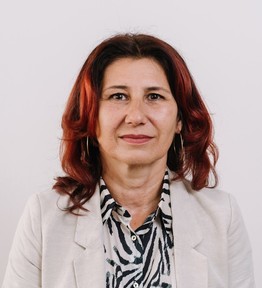
Eva GutheilView profile
Professor
Professor Eva Gutheil is a distinguished academic at the Interdisciplinary Center for Scientific Computing (IWR) at the University of Heidelberg, where she leads a prominent research group focused on multiphase flows and combustion processes. Her work spans technical combustion systems, atmospheric processes, and biofluid mechanical applications, making significant contributions to both fundamental understanding and practical engineering solutions. Her research interests encompass multiphase flows , combustion processes , droplet vaporization , laminar spray flames , PDF methods , and flamelet modeling . Professor Gutheil's work addresses critical challenges in energy production efficiency, stability, safety, and pollutant emissions across various technical combustion systems including internal engine combustion, industrial furnaces, and gas turbine combustion. Her research extends to atmospheric processes like ozone depletion and biofluid mechanical applications such as particle dispersion in human airways and blood flow in cerebral aneurysms. Analysis of her recent publications reveals a strong focus on computational modeling of complex flow phenomena, with increasing attention to bioreactor hydrodynamics, atmospheric chemistry applications, and advanced nanoparticle synthesis techniques. Her work demonstrates a consistent trajectory toward more sophisticated modeling approaches that integrate multiple physical phenomena across different scales. Professor Gutheil has mentored numerous PhD students and research assistants, as evidenced by the extensive list of current and former group members. Her research group includes specialists in computational fluid dynamics, combustion modeling, and atmospheric chemistry applications. The research group operates within the Interdisciplinary Center for Scientific Computing at the University of Heidelberg, utilizing advanced computational resources for modeling and simulation of complex flow phenomena. Their work bridges fundamental fluid dynamics with practical applications across energy systems, environmental science, and biomedical engineering.