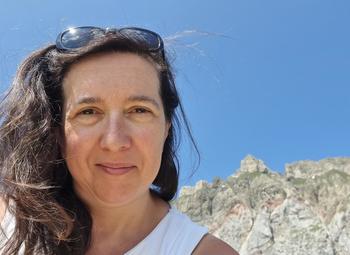
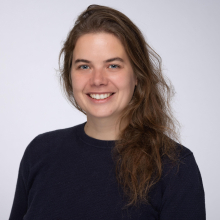
Natalie Johnson is an Associate Professor in Environmental and Occupational Health at the College of Veterinary Medicine, Texas A&M University. She chairs the Interdisciplinary Program in Toxicology and leads critical research on air pollution impacts on vulnerable populations. Education PhD in Toxicology, Texas A&M University College of Veterinary Medicine Postdoctoral Fellowship in Environmental Health Sciences, Johns Hopkins Bloomberg School of Public Health BS in Biology, Texas A&M University College of Science Her research focuses on inhalation toxicology , maternal exposure to pollutants , and gene-environment interactions . She directs the mobile responding to air pollution in disasters (mRAPiD van), a real-time chemical pollutant detection platform, and investigates emerging environmental chemicals in breast milk. Current projects include: Respiratory toxicology of inhaled pollutants Prenatal/pediatric air pollution exposure and immune development Development of green-engineered clays for toxin mitigation
Prof. Saket Asthana is a Professor in the Department of Physics at the Indian Institute of Technology Hyderabad (IIT Hyderabad), where he leads the Advanced Functional Materials Laboratory (AFML). His academic qualifications include a Ph.D. from IIT Bombay, an M.Tech. from IIT BHU, and an M.Sc. from Banaras Hindu University. He has held postdoctoral positions at Osaka University (Japan), ICMCB-CNRS (France), and Kyungpook National University (South Korea). His research focuses on functional materials with emphasis on: Ferroelectrics and piezoelectric systems for energy storage Multiferroics and magnetoelectric composites Photocatalytic materials for energy conversion Lead-free relaxor ceramics and nanostructured oxides Cation engineering for property optimization Analysis of his 50+ publications reveals dominant themes in lead-free piezoelectric ceramics, rare-earth substituted bismuth ferrites, magnetocaloric effects, and photoelectrochemical materials. His work consistently bridges fundamental property characterization with applications in energy storage, sensors, and catalysis. Honors include being elected as a Fellow of the Royal Society of Chemistry . He has supervised 10+ PhD students and 15+ Master's students, with current advisees working on piezoelectric ceramics, multiferroic composites, and energy storage materials. His laboratory conducts research funded by DST-SERB, CSIR, DRDO, and international collaborations, including active projects on relaxor ferroelectrics (2020-2023) and organic solar cells (2019-2022). The Advanced Functional Materials Laboratory specializes in materials synthesis (hydrothermal/solid-state), structural characterization (XRD/SEM), and property measurements (ferroelectric/magnetic hysteresis, impedance spectroscopy, piezoelectric coefficient analysis).
Alison Elder, Ph.D., is an Associate Professor in the Department of Environmental Medicine at the University of Rochester School of Medicine and Dentistry. She is affiliated with several research programs including the Environmental Health Sciences Center, the Inhalation Exposure Facility, the Toxicology Training Program (as Co-Director), the Lung Biology and Disease Program, and the Multidisciplinary Training in Pulmonary Research Program. Her research focuses on the toxicology of inhaled ultrafine particles (UFPs) and engineered nanomaterials, with implications for pulmonary, cardiovascular, and central nervous system health. Ph.D. in Environmental Toxicology, University of California, Irvine (1997) B.S. in Chemistry, Chatham College (1992) Post-doctoral Fellow, Department of Environmental Medicine, University of Rochester (1997–2000) Dr. Elder’s research centers on the health impacts of airborne particulate matter, particularly how age, co-pollutants, and health status influence responses to inhaled particles. Her work explores the translocation of particles to extrapulmonary tissues, including the brain, and their role in neurodegenerative diseases like Alzheimer’s. She investigates mechanisms such as oxidative stress, inflammation, and glymphatic dysfunction. Her lab also studies airborne micro- and nanoplastics, focusing on exposure characterization and health implications. Her recent publications span topics including Alzheimer’s disease models, glymphatic impairment, nanoparticle dissolution, and diesel exhaust effects on lung barriers. These works emphasize particle-induced inflammation, neurotoxicity, and the intersection of environmental exposure with neurological outcomes. Young Investigator Award, Society of Toxicology (2009) Cornerstone Alumna Award, Chatham University (2007) Graduate Student Fellowship, U.S. EPA (1995–1996) College Chemistry Award, Society for Analytical Chemists of Pittsburgh (1992) Dr. Elder mentors graduate students in toxicology and has trained numerous postdoctoral fellows and technicians. She leads an active research laboratory funded by NIH and DOD, investigating air pollution’s role in brain health and military burn pit exposures. Her collaborative research includes work with experts in neuroscience, materials science, and environmental engineering. She is also involved in national workshops on nanomaterial risk assessment and children’s environmental health. She leads the Elder Lab, which conducts studies on air pollution and Alzheimer’s disease, characterizes airborne micro- and nanoplastics, and develops models for nanoparticle toxicity. The lab uses advanced techniques in particle characterization, animal modeling, and cellular assays to assess health risks.
Anubhav Pratap-Singh is an Associate Professor in the Food, Nutrition and Health department within the Faculty of Land and Food Systems at the University of British Columbia, where he holds the Food and Beverage Innovation Professorship. He leads the UBC Food Process Engineering Laboratory and his research spans environmental and natural resources economics, food chemistry (including fermentation), and natural resource management. His primary research interests focus on agri-food transformation, cold plasma food engineering, food processing, functional foods, heat transfer, high pressure mass transfer, novel non-thermal processing, nutraceuticals, pasteurization, and pulsed light sterilization. Dr. Pratap-Singh's work addresses fundamental questions about the impact of food processing on food quality, how technology can maximize desirable effects while minimizing deleterious ones to feed the growing global population, and how to ensure food safety and nutrition for all socioeconomic groups. His research program is organized around three main pillars: developing novel processing technologies for food preservation, developing technologies for food fortification, and modeling the human GI tract to understand the interaction between food processing and human health. He has made significant contributions to sonic mixing technology for thermal processing and pulsed UV light processing for food surface decontamination, with particular expertise in processing of liquid particulate matter. Dr. Pratap-Singh has received numerous prestigious awards throughout his career, including the Banting Fellowship (2016) and Green College Leading Scholar award (2017). His work has been recognized with the Young Entrepreneur Award (2009), IFTPS Graduate Scholar designation (2014), and Gold Medal from the Institute for Thermal Processing Specialists (2014), among other fellowships and honors. He is affiliated with the BioProducts Institute and Materials and Manufacturing Research Institute at UBC, and supervises graduate students in Food Science (MSc and PhD programs). His laboratory focuses on interdisciplinary research that addresses critical challenges in food science, with implications for feeding the projected 10 billion people by 2050 while countering negative public perceptions around processed foods.
Prof. Dr. Nadine Göppert is a University Professor (W3) of Hydrogeology at the Institute of Geological Sciences , Freie Universität Berlin , Germany. She previously served as an Akademische Rätin and Senior Scientist at the Karlsruhe Institute of Technology (KIT) from 2011–2024, and held research positions at the Weizmann Institute of Science (2009–2011) and University of Karlsruhe (2008–2009). Her academic background includes a Dr. rer. nat. (2008) and Diploma in Geology (2002) from the University of Karlsruhe. Education Doctorate in Hydrogeology (2008), University of Karlsruhe Diploma in Geology (2002), University of Karlsruhe Her research focuses on karst hydrology , groundwater tracing , particle transport dynamics , and water quality monitoring in alpine and subtropical karst systems. Recent publications analyze tracer experiments , microplastic transport , and hydrochemical variability across diverse karst environments. Her teaching portfolio includes Applied Hydrogeology , Field Methods , and Laboratory Techniques for students in Geosciences and Water Engineering. She has supervised numerous theses on topics like karst groundwater dynamics and fluorescence-based water quality analysis .
Matthew Fraser is a Professor and Associate Director at Arizona State University's School of Sustainable Engineering and the Built Environment. He is affiliated with the Urban Climate Research Center and serves as a Senior Global Futures Scientist. Education : Ph.D. in Environmental Engineering Science from Caltech (1998), M.S. in Environmental Engineering Science from Caltech (1993), B.S. in Chemical Engineering from Carnegie Mellon University (1991) His research focuses on urban air quality , alternative energy systems , and atmospheric monitoring . Recent work examines wildfire smoke impact, microplastics in desert soils, and ozone behavior in urban regions. Publications span Environmental Science and Technology , Atmospheric Environment , and Science of the Total Environment . Notable scientific awards include Arizona State University's 'Top 5%' Faculty Teaching Award (2018, 2021). Research grants include projects funded by the National Institutes of Health , US Department of Energy , and Semiconductor Research Corporation . Service Roles : Member of University Consortium for Atmospheric Research (2010–Present), Committee Member for ASU Sustainability Minor (2009–Present), and Chair of Science Advisory Board for Mid-Infrared Technologies for Health and the Environment Engineering Research Center (2007–Present)
Dr. Diego Fernandez is a Research Professor in the Department of Geology & Geophysics at the University of Utah, specializing in isotope geochemistry, mineral resource characterization, and environmental dust dynamics. His work spans four decades of academic appointments (2006–present) with expertise in strontium isotope applications for migration tracking, critical mineral assessments, and dust pollution health impacts. PhD in Thermodynamics, University of Buenos Aires (1992) Research Professor (2021–present) Research Associate Professor (2014–2021) Research Assistant Professor (2006–2014) Research focuses include: strontium isotope geochemistry for reconstructing animal migration and geological processes; critical mineral characterization of coal-bearing strata for rare earth element extraction; environmental health impacts of dust from the Great Salt Lake playa; dust source apportionment in urban settings; and magmatic system petrochronology of the Alta Stock region. Recent publications (2024–2025) demonstrate methodological innovations in LA-ICP-MS analysis, Bayesian isotope turnover modeling, and dust-metal contamination frameworks. His studies document elevated health risks from thallium, arsenic, and lead in urban dust, while proposing solutions through dust suppression and international emission reductions. 2024 Distinguished Educator Award, University of Utah College of Science Current grants include USGS-funded terminal lake geochemistry, NSF projects on critical zone dust dynamics, and Bering Sea fisheries baseline studies Teaching activities include directing SRI Research courses (2024) and mentoring interdisciplinary projects on environmental isotopes. Collaborators include institutions across North America and Europe, with fieldwork in Utah, Alaska, Wyoming, and Kenya.
Guruswami (Ravi) Ravichandran is the John E. Goode, Jr., Professor of Aerospace and Mechanical Engineering at the California Institute of Technology (Caltech). He has held roles including Director of the Graduate Aerospace Laboratories (2009–2015), Division Chair of Engineering and Applied Science (2015–2021), and currently serves as the Booth Leadership Chair (2015–2021). His academic journey includes a B.E. from the University of Madras (1981), followed by advanced degrees from Brown University (Sc.M. in Solid Mechanics, Applied Mathematics, and Ph.D. in 1987). He joined Caltech as an Assistant Professor in 1990, advancing through ranks to his current endowed chair. Ravichandran’s research focuses on deformation mechanisms, dynamic material behavior, wave propagation, and biomaterials. His work bridges micro/nano-scale mechanics with macroscopic material responses, including studies on composites, active materials, and cellular systems. Recent breakthroughs include insights into cell mechanics through mechanical topology and shock compression dynamics in advanced materials. Key achievements include the 2023 ASME Timoshenko Medal, 2024 Brown Engineering Alumni Medal, and election to India’s National Academy of Engineering and Academia Europaea. His experimental methodologies, such as 3D velocity measurements via stereo imaging, advance diagnostics in high-strain-rate mechanics. Ravichandran has pioneered shock compression studies in metallic alloys and polymeric lattices, contributing to energy absorption and failure prediction in aerospace systems. Leadership roles include steering interdivisional research at Caltech’s Graduate Aerospace Laboratories and fostering interdisciplinary collaborations. His work has implications for next-gen materials in aerospace, biomedical engineering, and geomechanics.
Dr. Greg Huey is a Professor in the School of Earth & Atmospheric Sciences at the Georgia Institute of Technology, where he leads research in atmospheric chemistry with expertise in trace gas measurement and aerosol processes. His work bridges laboratory studies, aircraft campaigns, and global modeling to address air quality and climate challenges. His educational background includes a Ph.D. in Physical Chemistry from the University of Wisconsin-Madison (1992) and a B.S. in Chemistry from the University of Virginia (1986). Dr. Huey's research centers on chemical kinetics of ionic and neutral species, heterogeneous chemistry , and aircraft-based sampling of condensable gases. He specializes in chemical ionization mass spectrometry for trace gas analysis, with applications to wildfire smoke, urban pollution, and stratospheric-tropospheric exchange. Key themes include aerosol formation mechanisms, ozone production pathways, and halogen chemistry impacts on oxidation capacity. Analysis of his 2021-2025 publications reveals dominant research threads in Asian pollution transport , wildfire smoke chemistry , and urban ozone formation . His work frequently integrates NASA field campaigns (KORUS-AQ, FIREX-AQ, ATom) with satellite validation and modeling to quantify pollution impacts across scales. His scientific recognition includes: Outstanding Teaching Award, Georgia Tech (2007) Dr. Huey directs major field campaigns and instrumentation development for atmospheric trace gas measurements. His research is supported by NASA and NSF grants focused on aircraft-based studies of wildfire emissions, monsoon-driven transport, and urban air quality. He actively mentors students through Georgia Tech's atmospheric science programs and a multi-institution REU site. He contributes to international efforts like the Asian Monsoon Chemical and Climate Impact Project (ACCLIP), developing advanced chemical ionization mass spectrometers for deployment on NASA aircraft to study global atmospheric composition.
Greg J. Evans is a full Professor in the Faculty of Applied Science and Engineering at the University of Toronto , where he also serves as Director of the Southern Ontario Centre for Atmospheric Aerosol Research (SOCAAR) and the Institute for Studies in Transdisciplinary Engineering Education and Practice (ISTEP) . In addition, he is Principal Investigator of the Evans Research Group . Education: B.A.Sc. – Bachelor of Applied Science M.A.Sc. – Master of Applied Science Ph.D. – Doctor of Philosophy P.Eng. – Professional Engineer FCAE – Fellow of the Canadian Academy of Engineering FAAAS – Fellow of the American Association for the Advancement of Science Research Interests: Professor Evans leads interdisciplinary research that bridges atmospheric aerosol science, environmental health, and engineering education. His work in urban air pollution focuses on understanding traffic-related emissions, developing low-cost sensor networks, and elucidating the oxidative toxicity of particulate matter under climate change scenarios. Within engineering education, he investigates transdisciplinary competencies, metacognitive development, and evidence-based pedagogies that prepare students for lifelong learning and societal impact. Research Trends in Recent Publications: Across his 2021-2023 publications, a dominant theme is the health impact of fine particulate matter (PM2.5) and its oxidative potential. Studies integrate large-scale epidemiological datasets with detailed chemical analyses to reveal how specific PM constituents—such as transition metals and sulfur—mediate cardiovascular and respiratory outcomes. Methodological innovations include mobile “lab-on-wheels” platforms and harmonized acellular assays for oxidative potential, enabling high-resolution spatiotemporal exposure assessment and cross-study comparability. Scientific Awards & Honors: CIC Environment Division Research and Development Dima Award (2022) NSERC Brockhouse Canada Prize for Interdisciplinary Research (2021) Fellow of the Canadian Engineering Education Association (2020) 3M National Teaching Fellowship (2017) Faculty of Applied Science & Engineering Research Leadership Award (2017) President’s Teaching Academy, University of Toronto (2015) Fellow of the Canadian Academy of Engineering (2015) Ontario Colleges and Universities Faculty Association Teaching Award (2015) Fellow of the American Association for the Advancement of Science (2015) Allan Blizzard Award (STLHE) (2014) Northrop Frye Award (2013) ASEE St. Lawrence Section Outstanding Teaching Award (2010) Engineers Canada Medal for Distinction in Engineering Education (2010) Ontario Professional Engineers Award – R&D Medal (2009) Joan E. Foley Student Quality of Student Experience Award (2008) Graduate Advising & Funding: Professor Evans is currently potentially accepting both PhD and MASc students. His research grants support interdisciplinary projects ranging from mobile air-quality monitoring campaigns to large-scale educational data-mining initiatives. Labs & Teams: He directs the Evans Research Group , housed within SOCAAR, which operates the MAPLE “lab-on-wheels” for real-time aerosol characterization. Through ISTEP, he oversees a cohort of 11 faculty members advancing engineering education scholarship.
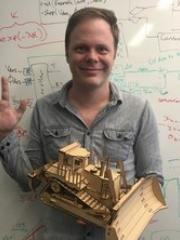
Dr. Tyson Phillips serves as Senior Lecturer and Director of Teaching and Learning at The University of Queensland's School of Mechanical and Mining Engineering within the Faculty of Engineering, Architecture and Information Technology. He is an active Affiliate of the Future Autonomous Systems and Technologies research group, focusing on translating robotics innovations into practical mining applications. His academic leadership includes curriculum development for engineering programs and direct industry engagement with major mining equipment manufacturers. He earned his Doctor of Philosophy (PhD) from The University of Queensland in 2016, with thesis research centered on LiDAR-based perception systems for autonomous excavators. His doctoral work established foundational methods for object pose verification in mining contexts. Phillips' research specializes in robotics perception for extreme mining environments, developing LiDAR-centric solutions for autonomous equipment operation amid dust, fog, and unstructured terrain. Key contributions include evidential reasoning frameworks for uncertainty management, real-time pose estimation algorithms, and sensor fusion techniques for excavators and bulldozers. His work bridges theoretical computer vision with industrial deployment, targeting operational safety and efficiency in mineral extraction. Publication analysis reveals consistent focus on mining robotics since 2012, with recent works (2021-2024) emphasizing minimal-sensor configurations, probabilistic terrain mapping, and vibration-assisted gripper technology. His 14 scholarly outputs demonstrate evolution from sensor evaluation (2012-2015) toward integrated autonomy systems (2018-2024), predominantly in Journal of Field Robotics and Sensors . He actively supervises graduate researchers as Principal Advisor for a PhD on multimodal perception mapping and Associate Advisor for two PhD projects involving spreader systems and physics-informed neural networks. Completed supervision includes a 2024 PhD on bulldozer terrain mapping and a 2021 Master's on shovel/hopper interaction strategies. Research funding spans 14 projects from 2012-2026, including current Australian Coal Association Research Program support (2025-2026) and major Caterpillar Inc. collaborations for ERS self-protection and articulated truck automation. Phillips operates within The University of Queensland's Future Autonomous Systems and Technologies group, which develops field-deployable autonomy solutions for mining partners. This team conducts real-world testing of perception systems using Caterpillar and FMG operational sites as validation environments.
Bernhard Rappenglueck is a Professor of Atmospheric Chemistry at the University of Houston within the Earth and Atmospheric Science Department, part of the College of Natural Sciences and Mathematics. He maintains an active research group with students from diverse international backgrounds originating from over 15 countries, with expertise spanning Chemistry, Environmental Sciences, Mathematics, Engineering disciplines, Meteorology, and Physics. His educational background includes a Habilitation in Bioclimatology & Atmospheric Environmental Chemistry from Munich University of Technology (TU Munich) in 2003, a PhD in Physics from University of Munich (LMU Munich) in 1996, an M.S. in Meteorology from University of Munich (LMU Munich) in 1991, and a B.S. in Technical Physics from Munich University of Technology (TU Munich) in 1985. Rappenglueck's research integrates meteorology and atmospheric chemistry through both experimental field work and numerical modeling. His primary research interests encompass meteorological processes and their impacts on atmospheric chemical composition across spatial and temporal scales, micrometeorological and boundary layer studies, regional and large-scale transport processes within the troposphere, air quality studies in polluted and unpolluted areas including photochemical processes, and the application and development of atmospheric modeling. His work spans from biosphere-atmosphere exchange processes to regional urban air quality studies and long-range transport studies, utilizing various meteorological measurement tools including micrometeorological towers, tethered sondes, SODAR, RASS, and radio- and ozonesondes. His publication record shows consistent research output focused on urban air quality assessment across multiple global megacities including Munich, Berlin, Athens, Santiago de Chile, Mexico City, Houston, Los Angeles, Dallas/Ft Worth, and Doha, Qatar. Recent work emphasizes machine learning applications for ozone forecasting, boundary layer height determination, VOC source apportionment, and the impacts of emission changes on atmospheric composition. His research demonstrates strong methodological diversity, combining field measurements with advanced modeling approaches to address complex air quality challenges. Rappenglueck actively mentors numerous graduate and undergraduate students, with a track record of successful student placements in academic, government, and industry positions. His group has participated in major field campaigns including TexAQS-II/TRAMP, SHARP, and TCEQ O3 formation campaigns in Houston. His teaching portfolio includes advanced courses in Atmospheric Chemistry, Boundary Layers and Turbulence, Remote Sensing for Atmospheric Science, Aerosols and Climate, and Air Pollution Meteorology, contributing to both undergraduate and graduate degree programs in Atmospheric Science at the University of Houston.
Maria Grazia Alaimo is a Researcher in the Department of Earth and Marine Sciences at the University of Palermo . Her work focuses on environmental geochemistry, atmospheric pollution analysis, and biomonitoring using plants, lichens, and human biological matrices. She has conducted extensive studies on trace element distribution in urban and industrial areas of Sicily. Current affiliation: University of Palermo Academic rank: Researcher Research Interests: Her research spans trace element geochemistry , urban air quality , and human exposure to heavy metals . Key areas include: Atmospheric pollution dynamics Soil and plant interactions Biomonitoring techniques Industrial contamination effects Health risk assessment Recent publications demonstrate expertise in PM10/PM2.5 analysis , lichen biomonitoring , and heavy metal accumulation in mushrooms and human hair . While no explicit awards or students are listed in available data, her work contributes to environmental health and pollution mitigation strategies.
Dr. Leonie Baumann is an Assistant Professor in the Department of Economics at McGill University, specializing in Economic Theory, Networks, Mechanism Design, and Game Theory. She holds a Ph.D. (summa cum laude) and M.Sc. in Economics from the University of Hamburg, and dual B.A. degrees from the University of Siegen. Currently on maternity leave, Dr. Baumann previously served as a Postdoctoral Research Associate at the University of Cambridge. Her research explores social interactions in microeconomic theory, with a focus on network formation dynamics, strategic evidence disclosure, and robust implementation mechanisms. Recent work examines how network structures influence economic decision-making and resource allocation. Dr. Baumann's publications demonstrate consistent focus on network economics and game-theoretic modeling, with emerging applications in discrimination mechanisms and evidence disclosure. Her methodological approaches combine theoretical rigor with computational innovations. Awards & Recognition: Vice-Chancellor's Innovation Award (2020) Econometric Society Travel Grant (2015) Multiple research grants including SSHRC and FQRSC funding Supervision & Service: Currently advising 4 doctoral students on topics ranging from biosolvent characterization to indoor air quality Active editorial board member for Journal of Mathematical Economics Organizes international conferences on economic theory
Sergey Nizkorodov is a Professor and Co-Director of AirUCI at the University of California, Irvine. He leads the Aerosol Photochemistry Group, focusing on the chemical composition, photochemistry, and physical properties of atmospheric organic aerosols. His research employs advanced techniques such as aerosol chamber experiments, cavity ring-down spectroscopy, and ultrahigh-resolution mass spectrometry. Key areas include understanding aerosol phase transitions, light absorption properties, and environmental impacts of wildfire and urban emissions. His work addresses critical questions about aerosol aging, reactive oxygen species formation, and the role of aerosols in climate and human health. Notable projects include investigating plastic burning emissions, wildfire-generated aerosols, and household stove pollution in India. Nizkorodov collaborates with interdisciplinary teams to advance atmospheric chemistry research and policy-relevant science through initiatives like the Chem-SURF program. Research findings highlight the transformation of aerosols into glassy states under sunlight, the formation of persistent free radicals, and the influence of acidity on aerosol fluorescence. His contributions have advanced methodologies for molecular-level aerosol analysis and underscored the urgency of mitigating anthropogenic and biogenic aerosol impacts.