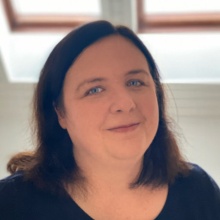
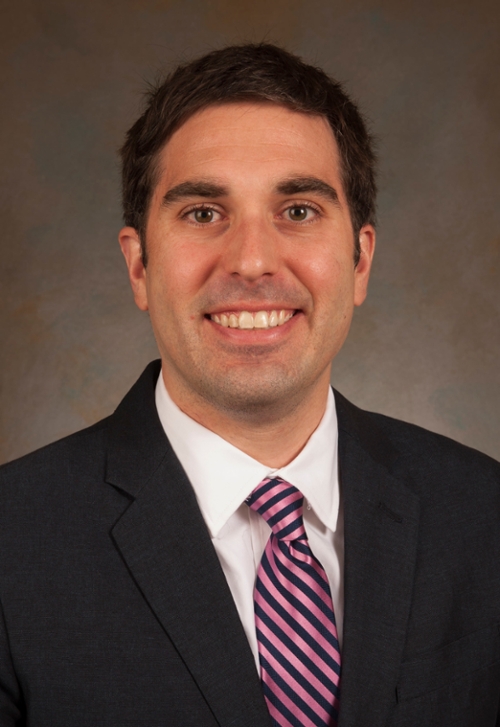
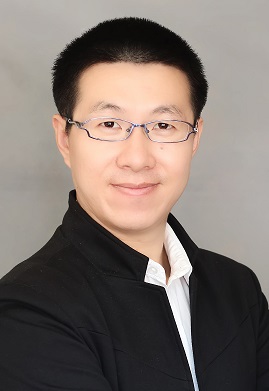
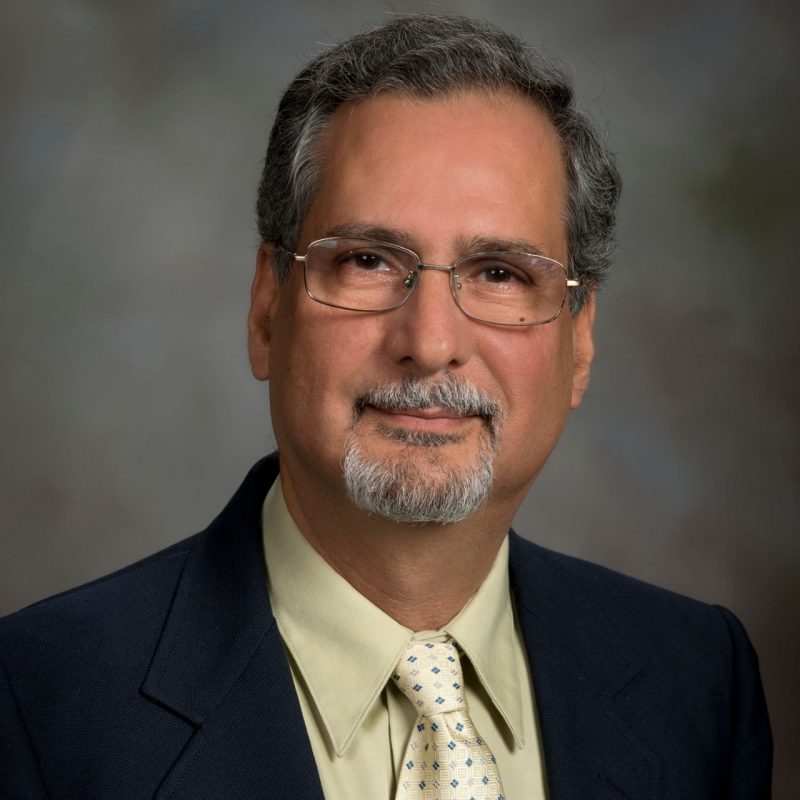
Prof. Dr.-Ing. Andrea Beck is a faculty member and Managing Director of the Institute of Aerodynamics and Gas Dynamics (IAG) at the University of Stuttgart. She leads the Numerical Methods in Fluid Mechanics working group, focusing on high-precision numerical methods for supercomputers, particularly discontinuous Galerkin (DG) methods. Her research spans fluid mechanics, aeroacoustics, plasma physics, and multiphase flows, with applications in wind energy, helicopter systems, and environmental aerodynamics. Role: Professor and Managing Director, IAG Committees: Member of the DFG Review Board, Strategy Committee for National HPC, and steering committee of High Performance Center Stuttgart. Her research emphasizes high-order methods, turbulence modeling, and data-driven approaches. She teaches courses such as 'Numerical Methods in Fluid Mechanics' and 'CFD Programming Projects', and has developed open-source software like FLEXI and HOPR for high-performance computing. Recent articles highlight advancements in entropy-stable DG methods, turbulence simulation using graph neural networks, and multiphase flow modeling. Her work integrates machine learning with CFD to enhance simulation accuracy and efficiency.
Julio Soria is a Professor in the Department of Mechanical & Aerospace Engineering at Monash University, where he also holds a leadership role at the Victorian Heart Institute (VHI). He has been a core academic staff member since 1993 and was promoted to full Professor in 2000. He founded and directs the Laboratory for Turbulence Research in Aerospace & Combustion (LTRAC), a key research hub in fluid dynamics. PhD in Mechanical Engineering, University of Western Australia (1989) B.E. (1st Class Honours), University of Western Australia (1983) Postdoctoral Fellowships: CSIRO (1989–1990), Stanford University & NASA Ames Research Center (1990–1991) His research spans Fluid Mechanics , with emphasis on turbulent flows , boundary layers , supersonic jets , and optical measurement techniques like PIV and tomographic methods. Recently, he has integrated scientific machine learning and physics-informed neural networks into fluid dynamics research. His work bridges engineering and biomedical applications, including drug delivery and cardiovascular flows. The most recent publications highlight his work in biomedical fluid dynamics (e.g., sperm motility), inhaler design using CFD and PIV, and advanced 4D imaging techniques. These reflect broad expertise in both experimental and computational methods. His scientific honors include: Fellow, Australasian Fluid Mechanics Society Associate Fellow, American Institute of Aeronautics and Astronautics (AIAA) Member, American Physical Society Member, EUROMECH He serves as Associate Editor of Theoretical and Computational Fluid Mechanics and on editorial boards of Experiments in Fluids and Experimental and Thermal Fluid Science . He leads multiple active research projects in turbulence, flow control, and biomedical applications, and is actively mentoring PhD students. He is also a key investigator in interdisciplinary collaborations involving medical devices and industrial fluid systems. Julio Soria leads the Laboratory for Turbulence Research in Aerospace & Combustion (LTRAC), established in 1994, which conducts cutting-edge research in experimental and computational fluid dynamics, with applications in aerospace, energy, and health.
Dr. Joshua Bostwick is an Associate Professor in the Department of Mechanical Engineering at Clemson University's College of Engineering, Computing and Applied Sciences. He joined Clemson in January 2016 after appointments as Golovin Assistant Professor at Northwestern University and postdoc researcher at NC State University, focusing on interfacial fluid mechanics with industrial and biological applications. Education: Ph.D., Theoretical and Applied Mechanics, Cornell University, 2011 B.S., Civil Engineering and Mechanics, University of Wisconsin-Milwaukee, 2005 B.S., Physics, University of Wisconsin-Milwaukee, 2005 His research centers on wetting phenomena and elastocapillarity—examining liquid interactions with soft substrates through mathematical modeling and experimentation. Key interests include surface tension-driven dynamics, pattern formation, soft matter physics, and interfacial instabilities. Current projects span droplet durotaxis, ultrasonic soldering, splashing on soft substrates, and granular raft mechanics, emphasizing fundamental physics with practical applications in microfluidics and manufacturing. Recent publications (2024-2025) reveal expanding work on granular-fluid systems, electrokinetic instabilities, and elastocapillary transitions, demonstrating cross-disciplinary impact in environmental remediation (oil spill cleanup), bioprinting, and semiconductor manufacturing. His group integrates theoretical frameworks with experimental validation across scales. Scientific Awards: NSF CAREER Award (2018) for elastocapillary fluid mechanics research Dr. Bostwick actively mentors graduate students and recruits researchers for his group, supported by federal grants including the NSF CAREER award. His ultrasonic soldering platform enables precise study of flux-free joining for dissimilar materials, with industry collaborations enhancing manufacturing applications. The research group collaborates with Clemson colleagues like X. Xuan on complex fluid microfluidics and develops experimental systems for studying droplet dynamics, soft fracture, and granular matter. Current initiatives include automated soldering platforms and investigations into mitochondrial membrane mechanics.
Dr. Zhen Li is an Assistant Professor in the Department of Mechanical Engineering at Clemson University's College of Engineering, Computing and Applied Sciences. He joined Clemson in August 2019 after serving as a research associate professor at Brown University and a postdoctoral research associate at University of California, Merced. Education: Ph.D. in Fluid Mechanics, Shanghai University, 2012 MS in Fluid Mechanics, Shanghai University, 2008 BS in Engineering Mechanics, Wuhan University, 2005 Dr. Li's research focuses on multiscale modeling of soft matter, complex fluids, biophysics, and collective dynamics using both bottom-up (coarse-grained molecular modeling) and top-down (from continuum descriptions to fluctuating hydrodynamics) approaches, along with high-performance computing. His work spans mathematical theory for coarse-graining and model reduction, statistical methods and machine-learning approaches applied to multiscale modeling, memory effects in complex fluids, and concurrent coupling of heterogeneous solvers for scale-bridging. Analysis of Dr. Li's recent publications reveals a strong trend toward integrating machine learning with traditional computational methods, particularly neural operators for multiscale problems. His work spans diverse applications from bubble dynamics and blood flow to materials science and bioprinting, demonstrating the versatility of his computational approaches across multiple disciplines in engineering and physics. Awards and Recognition: CECAS Dean's Professor Award (2024) Award of Excellence - Junior Faculty (2021-2022) Best Research Poster Award at SC19 (2019) 2nd Place Award of Best Poster Presentation at DOE/EFRC AIM for Composites meeting (2024) Dr. Li actively mentors PhD students including Miles Lu, Ryan Wan, Haizhou Wen, and Ali Mohammadi, who have published significant research in computational mechanics. His research is supported by multiple grants including an NSF Elements grant as PI for 'SciMem: Enabling High Performance Multi-Scale Simulation on Big Memory Platforms', an NSF CDS&E grant as co-PI for 'HAM3R: Heterogeneous Automated Management of Multiscale Methods and Resources', a DOE/EFRC grant as Thrust lead co-PI for 'AIM for Composites', and a NASA EPSCoR grant as Science-PI. Dr. Li leads the MuthComp (Multiscale theory and Computation) research group, which focuses on developing interfaces between Engineering, Applied Mathematics, Physics-based Machine Learning, and High Performance Scientific Computing. The group has active collaborations with institutions including Idaho National Laboratory, University of Tokyo, and Brown University, and has developed open-source software including USERMESO for GPU-accelerated DPD simulations.
Dr. Lintong Hou is a Researcher at Hamburg University of Technology (TUHH) in the Department of Geo-Hydroinformatics since July 2024. He holds a BSc in Civil Engineering from China University of Mining and Technology-Beijing (2018) and a PhD in Mechanical Engineering from the Institute of Mechanics, Chinese Academy of Sciences (2024), followed by postdoctoral research there. His expertise lies in multiphase flow dynamics, focusing on gas-liquid-solid phase interactions, phase separation under extreme conditions, and experimental methodologies for mass/energy transfer challenges. His current research at TUHH addresses river evaporation losses, aiming to quantify global fluvial network evaporation through multi-factor analysis. Prior work includes studies on oil-water emulsification, polymer rheology, and electrical resistance tomography applications. Key research interests include multiphase flow behavior, rheological modeling, and flow regime transitions in complex systems. Publications span Chemical Engineering Science, Industrial & Engineering Chemistry Research, and Ocean Engineering, emphasizing experimental and computational analyses of flow phenomena. His work bridges fundamental fluid mechanics with practical applications in environmental and energy sectors.
Yinuo "Noah" Yao is an Assistant Professor in the Department of Civil & Environmental Engineering at Texas A&M University, within the College of Arts and Sciences. His research focuses on computational fluid dynamics, porous media systems, and environmental engineering applications. He holds a position at the WMHS Program and is affiliated with Texas A&M's Department of Civil & Environmental Engineering. Research interests include multiscale heat transfer modeling, reactive transport in complex geometries, fluidized bed dynamics, and wastewater treatment optimization. His work employs advanced numerical methods like the level-set immersed boundary method (LS-IBM) and particle-resolved simulations to study flow dynamics, chemical reactions, and particle interactions. Recent studies address thermal runaway in battery systems, subsurface energy storage, and bioreactor optimization. Publications highlight contributions to thermal management, porous media transport, and sustainable energy storage solutions. Yao collaborates on interdisciplinary projects bridging computational modeling and real-world engineering challenges, such as membrane distillation and fluidized bed reactor design. His lab focuses on translating simulation insights into practical applications for energy systems, environmental remediation, and industrial process optimization. Current work emphasizes adaptive hybrid methods for multiscale problems and novel approaches to particle-laden flow analysis.
Dr. Tim Lau is a Program Director and Research Degree Supervisor at the University of South Australia's STEM College (UniSA STEM). He is available for media commentary and specializes in fluid dynamics, mechanical engineering, and renewable energy systems. Research Interests : Dr. Lau's work focuses on particle-laden flows, turbulence modeling, vortex dynamics, and solar thermal technologies. His studies explore particle behavior under radiation, flow dispersion in confined environments, and energy efficiency in residential and industrial systems. Publication Trends : His recent articles emphasize experimental and computational analyses of fluid-particle interactions, with applications in hydrogen combustion, solar receivers, and heat exchangers. Key methodologies include laser diagnostics and numerical simulations.
Danesh Tafti is the William S. Cross Professor and Associate Department Head for Graduate Studies in the Department of Mechanical Engineering at Virginia Tech. He holds a PhD from Pennsylvania State University (1989) and has held roles at institutions including the University of Illinois at Urbana-Champaign and West Virginia Institute of Technology. His research focuses on computational fluid dynamics (CFD) and heat transfer, with applications in gas turbines, biomedical systems, and renewable energy. Key research areas include turbulence modeling, fluid-structure interaction, and biofluid mechanics, leveraging high-performance computing. His work spans aerodynamics of flapping flight, cardiovascular flows, and particle-laden flows. Tafti leads the High Performance Computational Fluid-Thermal Science and Engineering Lab, developing tools like GenIDLEST software for complex fluid-thermal systems analysis. Education: PhD (Penn State, 1989), MS (Texas Tech, 1983), BE (Bombay University, 1980) Awards: ASME Fellow (2014), Virginia Tech Dean’s Research Award (2012) Labs: High Performance Computational Fluid-Thermal Science and Engineering Lab Publications emphasize CFD advancements, machine learning integration, and multiphase flow modeling. Tafti’s work bridges computational methods with real-world applications in energy systems, aerospace, and biomedicine.
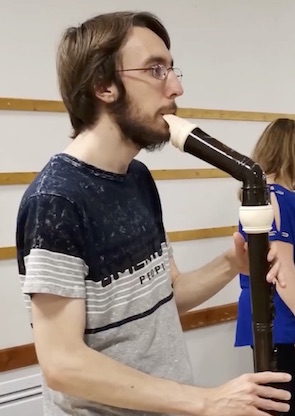
Dimitri COBB is a Research Fellow in Mathematics at the Hausdorff Center for Mathematics, University of Bonn, working under Prof. Dr. Herbert Koch. He is an active member of the French-German (ANR/DFG) research project Derivation and analysis of effective suspension models , which investigates particle-laden flows at the intersection of fluid dynamics, homogenization, and kinetic theory. His academic background includes: 2012-2015: CPGE at Lycée Paul Cézanne (Math/Physics) and Lycée du Parc (MP*) 2015-2018: Studies at Ecole Normale Supérieure de Rennes and Université de Rennes 1 2018-2019: Master's in Advanced Mathematics (PDE and applications) at ENS de Lyon 2019-2022: PhD in Mathematics at Institut Camille Jordan COBB's research focuses on partial differential equations in fluid mechanics, particularly magnetohydrodynamics, incompressible fluids, and singular perturbation problems. His methodology emphasizes harmonic analysis techniques to study solution behavior, existence, uniqueness, and stability. His publication record shows consistent output in top mathematics journals with multiple 2023-2025 publications. His scientific contributions reveal a strong thematic focus on: Magnetic relaxation models and blow-up phenomena Euler equation solutions with unbounded vorticity Non-Newtonian fluid systems and transport equations MHD symmetry properties and rotation effects As an educator, COBB teaches Transport Equations and Fluid Dynamics , Graduate Seminar: Topics in Incompressible Fluid Dynamics , and Introduction to Mathematical Hydrodynamics . He is organizing a June 2025 summer school on particle suspensions in fluids (paint, blood, mud, cement). Additional professional details: Languages: Native French, fluent English (dual US-Switzerland citizen) Technical Skills: Python, CamL, C, SciLab, Maple Interdisciplinary Interests: Music (recorders, flutes), theology
Chris Hogan is a Professor and Head of the Department of Mechanical Engineering at the University of Minnesota, College of Science and Engineering. He leads the Advanced Technologies for Preservation of Biological Systems (ATP-BIO) research group and is actively involved in multiple high-impact research projects related to aerosol science, particle technology, and environmental health. He is accepting PhD students and maintains a robust research portfolio. Education: PhD, Washington University in St. Louis (2008) BS, Cornell University (2004) Postdoctoral Associate, Yale University (2008–2009) His research focuses on aerosol science , particle dynamics , and nanomaterial synthesis , with applications in bioaerosol detection , cryopreservation , and airborne virus mitigation . His work integrates experimental techniques with mathematical modeling to solve complex engineering challenges in health and sustainability. He has made significant contributions to ion mobility spectrometry, electrostatic precipitation, and sustainable carbon nanotube synthesis. His recent publications reflect a strong trend toward interdisciplinary research, particularly at the intersection of mechanical engineering, environmental science, and biomedical applications. Key themes include particle transport modeling, nanoparticle diagnostics, cryoprotectant delivery, and the development of eco-friendly bioproducts. His articles span high-impact journals and conferences in engineering, environmental health, and materials science. Scientific Awards: Japan Society for the Promotion of Science Short Term Faculty Fellow (2011) McKnight Land-Grant Professorship (2011) Sheldon K. Friedlander Award (2011) Smoluchowski Award (2013) Kenneth T. Whitby Award (2018) Dr. Hogan has secured substantial research funding from NSF, NIH, 3M, and industry partners. He serves as Principal Investigator (PI) or Co-Investigator (CoI) on numerous active grants, including projects on identifying infectious aerosols, biodegradable sunscreen development, and sustainable nanomaterial synthesis. He advises graduate students and collaborates widely across disciplines. His lab, ATP-BIO, focuses on advancing technologies for preserving biological systems through innovative particle and aerosol engineering.
Sheldon Green is a Professor in the Department of Mechanical Engineering at the University of British Columbia's Faculty of Applied Science. A licensed Professional Engineer (P.Eng.) and Fellow of both the American Society of Mechanical Engineers (FASME) and Canadian Academy of Engineering (FCAE), he maintains an active research program focused on industrial fluid mechanics applications. His work bridges academic rigor with real-world industrial challenges through extensive collaborations with major companies. Education: Bachelor of Applied Science (University of Toronto) Master of Applied Science (California Institute of Technology) Doctor of Philosophy (California Institute of Technology) Professor Green's research centers on fluid-structure interactions in industrial processes, with particular emphasis on railroad friction control systems, paper manufacturing mechanics, and energy recovery technologies. His laboratory develops experimental and analytical solutions for liquid friction modifier application on railroads, electrospraying techniques for moving surfaces, paper creping and pressing optimization, and advanced energy recovery ventilators. These investigations address critical industry challenges in fuel efficiency, product quality, and energy conservation through precise fluid mechanics understanding. Analysis of his recent publications reveals consistent focus on multiphase flows, fiber network mechanics, and heat/mass transfer phenomena. Key themes include cellulose fiber network modeling for tissue paper, moisture measurement in paper pressing, membrane behavior in energy exchangers, and liquid-solid interactions in railroad systems. His work demonstrates strong industry-academic synergy with nearly all studies involving partnerships with major industrial players. Accolades include: Dean’s Excellence in Service Award (UBC, 2017) Fellow of the American Society of Mechanical Engineers Fellow of the Canadian Academy of Engineering Member of The Technical Association of the Pulp and Paper Industry Professor Green secures substantial research funding through industry partnerships with LB Foster (rail friction systems), FP Innovations/Kruger Products/Solenis/Albany (paper creping), AstenJohnson (paper pressing), and Core Energy Recovery Solutions (ventilators). His academic collaborations span Professors Boris Stoeber, Neil Balmforth, Srikantha Phani, and Steven Rogak across mechanical engineering subdisciplines. While student names aren't published, his prolific output indicates active mentorship of graduate researchers. He directs the Applied Fluid Mechanics Laboratory (CEME 2058) where experimental facilities enable high-precision studies of industrial fluid phenomena, particularly in railroad and paper manufacturing contexts where fluid mechanics directly impacts operational efficiency and product quality.
Antonino Ferrante is a Professor at the University of Washington's William E. Boeing Department of Aeronautics & Astronautics, with adjunct roles in Applied Mathematics and an affiliate position at the eScience Institute. He holds a Ph.D. in Mechanical and Aerospace Engineering from the University of California, Irvine, and prior postdoctoral experience at Caltech and UC Irvine. His research focuses on computational fluid mechanics, including turbulent flows, multiphase systems, and high-performance computing. Notable contributions include DNS/LES methodologies, droplet-laden turbulence analysis, and the discovery of incipient separation laws for turbulent flows. He has received the NSF CAREER Award (2011) and AIAA Associate Fellow distinction (2022). His work addresses challenges in aerodynamics, propulsion, and environmental engineering, emphasizing CO₂ reduction. Ferrante advises Ph.D. students Mira Tipirneni and Pablo Trefftz-Posada and teaches courses such as AA311 and AA543. His research group develops innovative numerical methods, including neural network-enhanced LES and fast pressure-correction algorithms for complex flows. Key awards include the Belgian Government Prize (1997) for his work at the von Karman Institute. His research extends to rain erosion modeling and CFD validation for turbulent separated flows, leveraging high-performance computing resources. Ferrante's interdisciplinary approach bridges fluid dynamics with computational science, impacting both academic and industrial applications.
Dr. Gholamhossein (Mohsen) Bagheri is a Researcher and Group Leader at the Max Planck Institute for Dynamics and Self-Organization , leading the Turbulence and Particles in Fluids group within the Laboratory for Fluid Physics, Pattern Formation and Biocomplexity . His work bridges fluid dynamics , atmospheric physics , and environmental health , focusing on turbulent, particle-laden flows in natural and indoor systems. His research explores how turbulence governs the dispersion of respiratory particles , volcanic ash , microplastics , and cloud microphysics . Key projects include the Max Planck CloudKite (airborne measurements of clouds), HoloTrack (3D droplet tracking), and WinDarts (planetary boundary layer turbulence). His group also investigates indoor aerosol dynamics , contributing critical insights into Covid-19 transmission and ventilation strategies. Publications highlight a broad scope: 2025 papers on Palabos Turret simulations, AeroVolc volcanic ash sampling, and curved fiber torques in turbulence; 2024 studies on microplastic fibers and inertial particle orientation ; 2023 work on respiratory aerosols and wind instrument emissions ; and earlier research on ash aggregation , cloud droplets , and infection risk in indoor spaces . Collaborations span Michael Wilczek , Eberhard Bodenschatz , and interdisciplinary teams. His studies on human exhaled particles (2022) revealed age-dependent emission patterns, while honeybee flight dynamics (2022) demonstrated turbulence adaptation. The CloudKite platform has advanced climate modeling by reducing uncertainties in aerosol-cloud interactions . Despite no listed awards, his work has influenced policy during the pandemic and environmental pollution research .
Professor Stephen Langdon is a faculty member at Brunel University London , holding the position of Professor of Mathematics and serving as Associate PVC for Academic Planning & Strategic Projects . His academic career includes over 15 years at the University of Reading , where he was Head of the Department of Mathematics and Statistics for five years. He also served as Interim Executive Dean of the College of Engineering, Design and Physical Sciences at Brunel from 2022 to 2024. Education: PhD in Numerical Analysis, University of Bath (1999) BA in Mathematics, Oxford University (1994) Postgraduate Certificate of Academic Practice, University of Reading (2009) Research Interests: Professor Langdon's research is centered in Numerical Analysis , with a strong focus on the development, analysis, and implementation of numerical methods for partial differential equations . His work encompasses: Boundary integral and finite element methods High-frequency scattering problems in acoustics and electromagnetics Fluid flow in porous media Computational modeling of tumor growth Machine learning applications in numerical methods Publications Overview: His recent work includes modeling helicopter rotor-induced particle-fluid interactions , developing frequency-independent numerical methods for far-field scattering , and advancing high-frequency boundary element methods . These publications span journals such as AIAA Journal , Journal of Fluid Mechanics , SIAM Journal on Scientific Computing , and IMA Journal of Numerical Analysis . Teaching and Supervision: He teaches MA2690 - Professional Development and Project Work and actively supervises PhD students in areas aligned with his research interests. He welcomes prospective PhD applicants in numerical analysis, PDEs, and related computational fields. Contact: Email: stephen.langdon@brunel.ac.uk Phone: +44 (0)1895 266554 Office: Tower A 030, Brunel University London
Mohamed Houssem Kasbaoui is an Assistant Professor in the Department of Mechanical and Aerospace Engineering at Arizona State University's School for Engineering of Matter, Transport and Energy. His research focuses on Computational Fluid Dynamics and Multiphase Flow simulations, with expertise in particle-laden flows, immersed boundary methods, and high-fidelity numerical tools. PhD, Aerospace Engineering (Cornell University, 2017) MSc, Aerospace Engineering (Cornell University, 2015) MSc, Theoretical Physics (Université Paris-Sud, 2014) Diplôme d'Ingénieur (Ecole Centrale Paris, 2013) BSc, Theoretical Physics (Université Paris-Sud, 2011) His work spans particle-resolved DNS , turbulent flow modulation , and environmental applications like microplastic transport in riverbeds. He leads the Kasbaoui Research Group , developing open-source tools like LEAP for CFD simulations. Recent publications highlight expertise in: Vortex dynamics in dusty flows Drag reduction mechanisms Immersed boundary modeling Microplastic trapping in sediment Swirling flow simulations Scale-separated combustion modeling Awarded the 2021 ACS Petroleum Research Fund Doctoral Investigator Award , his group actively seeks students with skills in Applied Mathematics and Parallel Programming . Research spans NSF-funded projects on Environmental Microplastics and Planetary Dust Clouds .