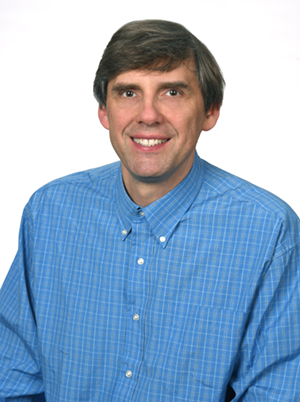
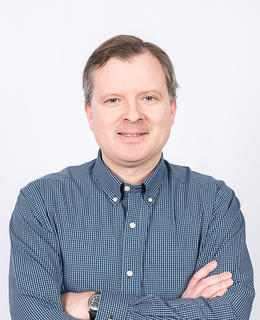
Cristiano Porciani is Professor of Astrophysics at the University of Bonn's Argelander Institute for Astronomy, specializing in cosmological structure formation and galaxy evolution. He leads a research group working on numerical simulations of large-scale structure and theoretical cosmology. His research focuses on dark matter distribution, galaxy bias, and cosmological parameter estimation using perturbation theory and high-performance computing. Recent work examines relativistic effects in large-scale structure and intensity mapping techniques. Publications show strong emphasis on Euclid mission science, including instrument characterization, survey simulations, and cosmological tests. Article trends reveal consistent development of statistical methods for analyzing next-generation sky surveys. Supervises 9 graduate students working on cosmological simulations, galaxy clustering statistics, and radiative transfer modeling. Leads research projects within the Euclid Consortium and Transregional Collaborative Research Centre.
Sergey Nizkorodov is a Professor and Co-Director of AirUCI at the University of California, Irvine. He leads the Aerosol Photochemistry Group, focusing on the chemical composition, photochemistry, and physical properties of atmospheric organic aerosols. His research employs advanced techniques such as aerosol chamber experiments, cavity ring-down spectroscopy, and ultrahigh-resolution mass spectrometry. Key areas include understanding aerosol phase transitions, light absorption properties, and environmental impacts of wildfire and urban emissions. His work addresses critical questions about aerosol aging, reactive oxygen species formation, and the role of aerosols in climate and human health. Notable projects include investigating plastic burning emissions, wildfire-generated aerosols, and household stove pollution in India. Nizkorodov collaborates with interdisciplinary teams to advance atmospheric chemistry research and policy-relevant science through initiatives like the Chem-SURF program. Research findings highlight the transformation of aerosols into glassy states under sunlight, the formation of persistent free radicals, and the influence of acidity on aerosol fluorescence. His contributions have advanced methodologies for molecular-level aerosol analysis and underscored the urgency of mitigating anthropogenic and biogenic aerosol impacts.
Anirban Mondal is an Associate Professor and Director of Graduate Studies at Case Western Reserve University's Department of Mathematics, Applied Mathematics and Statistics, specializing in Bayesian Inference, Markov Chain Monte Carlo Methods, and Uncertainty Quantification. Holding a Ph.D. in Statistics from Texas A&M University, his research spans spatial statistics, inverse problems, and data mining applications across biomedical, materials science, and public health domains. Education: Ph.D. in Statistics, Texas A&M University His recent publications (2022-2024) demonstrate interdisciplinary applications including heart disease prediction via optimized machine learning, additive manufacturing defect analysis, and pandemic transmission modeling. While primarily focused on Bayesian frameworks and computational statistics, his work extends to geomechanics, remote sensing, and environmental risk assessment. Current research explores advanced sampling algorithms, functional data emulation, and multiscale hierarchical modeling for complex systems. Key trends include uncertainty quantification in machine learning systems (2024), Bayesian calibration methods (2023), and pandemic modeling (2022). His work balances methodological innovation with real-world applications in medical diagnostics, materials science, and climate science. Contact: anirban.mondal@case.edu
Professor Kiyonori Suzuki is a faculty member in the Department of Materials Science and Engineering at Monash University. He holds the rank of Professor and is affiliated with the Faculty of Engineering. His research focuses on magnetic materials, particularly nanostructured soft magnetic materials and nanocomposite magnets, with applications in sustainable energy technologies such as hydrogen storage and electromagnetic devices. He has contributed to patents for nanocrystalline Fe-M-B alloys and developed the two-phase random anisotropy model. His work integrates advanced techniques like melt-spinning, neutron scattering, and atomic probe microscopy. Education: PhD, MEng, BEng, GCHE (details not specified). Research interests include magnetic properties of non-equilibrium materials, nanostructural formation mechanisms, and functional materials for energy applications. Key projects involve core loss mechanisms in soft magnetic nanostructures and hydrogen permeation alloys. He collaborates internationally and leads facilities like the National Hydrogen Materials Reference Facility. Notable contributions include patents on nanocrystalline alloys and foundational models in magnetic materials science. His publications span over 200 articles, emphasizing energy-efficient materials and advanced characterization techniques.
Dr Steve Maddock is a Senior Lecturer in Computer Graphics and Acting Head of the Visual Computing research group at the University of Sheffield's School of Computer Science. He holds a Class I Degree in Computer Science (University of Sheffield), a PGCE in Mathematics (11-18), and a PhD in computer graphics modeling and animation, all from the University of Sheffield. With over 30 years of experience in computer graphics software development, he has contributed to the computer games industry through a six-month secondment at Gremlin/Infogrames. His research focuses on facial modeling and animation, augmented/virtual/mixed reality applications, and sketch-based interfaces. Key areas include 3D computer graphics, real-time rendering, and human-robot collaboration systems. Maddock has led and co-led several grants, including projects on game software engineering, rail network surveillance, and heritage visualization using immersive technologies. He is a member of INSIGNEO, Sheffield Robotics, and the Cultural Industries Research Network. Publications highlight contributions to facial analysis for medical diagnostics, style transfer techniques for games, and safety zone visualization in robotics. His work integrates interdisciplinary approaches, combining computer science with fields like biology and robotics. Maddock's Visual Computing research group explores cutting-edge solutions in graphics, virtual environments, and computational tools for real-world applications.
Prof. Adam Deller is a Professor at Swinburne University of Technology, affiliated with the School of Science, Computing and Emerging Technologies. His academic journey includes a BSc, BE (1st class honours), and PhD in Astrophysics from Swinburne. He specializes in radio interferometry, neutron star physics, fast radio bursts (FRBs), and space domain awareness. His research focuses on compact objects like pulsars and black holes, using radio telescopes for high-resolution imaging. He co-founded Fourier Space Pty Ltd, developing signal processing solutions for radio astronomy and space industries. **Research Interests**: Radio interferometry instrumentation, neutron star magnetospheres, FRB localization and cosmological applications, and space domain awareness through radio observations. **Awards**: Includes the Pawsey Medal (2020), Newcombe Cleveland Prize (2022), and multiple grants from ARC and industry partners. His grants focus on SKA pulsar timing, FRB studies, and gravitational wave astronomy collaborations. **Teaching**: Teaches Computational Astrophysics, emphasizing numerical simulations for astrophysical problems. **Grants & Collaborations**: Key roles in ARC Centre of Excellence for Gravitational Wave Discovery, SKA pulsar timing projects, and international telescope collaborations like ASKAP and VLBI networks.
Kyle O'Keefe is a Professor in the Department of Geomatics Engineering at the University of Calgary's Schulich School of Engineering. He holds dual B.Sc. degrees in Geomatics Engineering (University of Calgary, 2000) and Honours Physics (University of British Columbia, 1997), and a Ph.D. in Geomatics Engineering (University of Calgary, 2004). He is a Professional Engineer (P.Eng.) registered with the Association of Professional Engineers and Geoscientists of Alberta since 2005. His research focuses on positioning and navigation technologies, including Global Navigation Satellite Systems (GNSS) advancements Ultra-wideband (UWB) ranging for vehicle/pedestrian navigation Indoor positioning using wireless signals Wearable sensor integration for biomechanics and navigation GNSS spoofing detection and cybersecurity Notable projects include: Development of UWB-augmented GNSS for RTK surveying (2007–present) Wearable sensor systems for rowing/kayaking motion analysis (2017–present) CanX-2 nanosatellite GPS receiver operations (2008) Igliniit project with Inuit hunters for Arctic environmental monitoring (2006–2009) Multi-constellation GNSS evaluation across 20+ years He has received prestigious awards including the Michael Richey Medal (2011) and multiple Best Paper Awards at IPIN and ION conferences. His teaching includes courses like Advanced GNSS Theory and Wireless Location. Active in professional organizations, he co-edits special journal issues and advises industry on emerging navigation technologies.
Dr. John J. Fitzpatrick is a Senior Lecturer in Process & Chemical Engineering at University College Cork (UCC) since 2008. He holds a PhD in Agricultural Engineering (Bioprocess Engineering) from Texas A&M University and has extensive industry experience, including roles at the National Dairy Products Research Centre and University College Dublin. His research focuses on Particle and Powder Technology, Sustainability, and Bioprocess Engineering, with notable contributions to dairy powder breakage mechanisms, sustainable process design, and engineering education reform. Education: PhD, Agricultural Engineering (Texas A&M, 1992) MSc, Food Engineering (University of Massachusetts, 1988) MSc, Teaching & Learning in Higher Education (UCC, 2008) Additional qualifications in Environmental Management and Sustainability. Research Interests: His work spans particle technology (food/dairy powders), sustainable energy systems, bioreactor optimization, and integrating ecological economics into engineering curricula. Recent projects include modeling oxygen transfer in bioreactors and analyzing carbon footprints of energy systems. Dr. Fitzpatrick has secured over €300k in research grants, including EU-funded projects on powder technology and Teagasc-supported studies on infant milk formula. He received the President’s Award for Excellence in Teaching (2006/7) and pioneered sustainability-focused educational initiatives at UCC. His 150+ peer-reviewed publications highlight interdisciplinary approaches to engineering challenges, emphasizing real-world applications and environmental stewardship. Grants & Awards: Walsh Fellowship (2018–2022) EU Research Training Network BIOPOWDERS (2004–2008) Teagasc-funded project on dairy powder breakage (2018–2022) Labs/Teams: Leads the Particle and Powder Science group at UCC, collaborating with industry partners like Teagasc and international universities. Active in curriculum development for sustainable engineering education programs.
Dr. Mohamed Gharib is an Instructional Associate Professor in the Department of Engineering Technology and Industrial Distribution at Texas A&M University's College of Engineering. He also serves as Program Coordinator for Multidisciplinary Engineering Technology and holds affiliated faculty status in Multidisciplinary Engineering. His roles include teaching, research leadership, and academic program development. Educational Background: Ph.D., Mechanical Engineering, Southern Methodist University (2011) M.S., Aerospace Engineering, Cairo University (2007) B.S., Aerospace Engineering, Cairo University (2002) Research Interests: Dr. Gharib focuses on advanced engineering systems and education innovation. His technical work spans vibration control , robotics systems design , and impact mechanics , with notable contributions to drill string vibration suppression and novel damping technologies. In education, he pioneers STEM outreach programs and curriculum development, including initiatives like the Awesome STEM Lab and e-STEM programs . His COBOTICS Lab integrates robotics research, undergraduate training, and community engagement. Research Impact: Recent work addresses dexterous robotics (via NSF's HAND ERC), adaptive control algorithms for drilling systems, and advanced composite coatings for tribological applications. His publications emphasize real-world applications in oil well operations, structural acoustics, and educational technology. Awards: Francisco José de Caldas Award for Sustainable Excellence (2021) Excellence in STEM Implementation Award (ASME, 2020) Outstanding Graduate Student Awards (2010) Labs & Programs: Director of the COBOTICS Lab , which develops robotic systems, control technologies, and STEM education tools. Active in multidisciplinary projects like the NSF-funded Human Augmentation via Dexterity (HAND ERC) collaboration.
Professor Richard Blackburn is a Professor of Sustainable Materials at the University of Leeds, School of Design. His research focuses on applying sustainability principles to materials science, textile coloration, and cosmetics. He leads the Sustainable Materials Research Group and co-founded Keracol Limited, a spin-out company developing natural cosmetic ingredients from plant extracts. His work includes innovations in dyeing technologies, reducing microfibre pollution, and sustainable textile processing. Education: BSc (Hons) and PhD in Colour Chemistry from the University of Leeds Professional Memberships: Fellow of the Royal Society of Arts, Royal Society of Chemistry, and Society of Dyers and Colourists. Key research interests span sustainable textile practices, natural dye extraction, polymer chemistry, and green chemistry applications. He has pioneered methods for extracting actives from food waste for cosmetics and developed fluorine-free repellent coatings for textiles. Awards: Silver Medal (Society of Dyers and Colourists, 2016) Fellowship (Society of Dyers and Colourists, 2017) Centenary Medal (2018 & 2019) Freedom of The City of London (2013) Advising & Grants: Leads multidisciplinary projects on textile sustainability, including FoodWasteNet and the Business of Fashion, Textiles and Technology partnership. His work bridges academia and industry through spin-offs like Keracol and RITE Group, focused on minimizing environmental impact. Labs & Teams: Head of the Sustainable Materials Research Group and collaborator with global industry partners to advance sustainable materials innovation.
Simon Spencer is a Professor of Statistics at the University of Warwick, affiliated with the Zeeman Institute for Systems Biology and Infectious Disease Epidemiology Research (SBIDER) and the Warwick Analytical Sciences Centre (WASC). His research focuses on Bayesian inference applied to epidemiology, stochastic epidemic models, and statistical methods for analytical science. He has held previous positions at the University of Nottingham and Massey University in New Zealand. His teaching includes advanced courses such as CH923: Statistics for Data Analysis , ST925: Graduate Topics in Statistics , and MA4M1/MA6M1: Epidemiology by Example . His research group currently includes PhD students Matthew Adeoye and Richard Haughey, and MSc students Olli Smith and Sangavi Pirabakaran. He collaborates extensively with global health institutions on projects addressing infectious disease modeling and public health policy. Spencer’s work bridges statistical methodology and real-world applications, with a focus on outbreak detection, model comparison, and the integration of geostatistical data with transmission models. His recent contributions include frameworks for lymphatic filariasis elimination projections and analyses of HIV transmission dynamics in Uganda. He actively contributes to interdisciplinary research in systems biology and analytical chemistry, leveraging advanced statistical techniques to address complex health challenges.
Christos Gagatsos is an Assistant Professor in the Department of Electrical and Computer Engineering and a member of the Wyant College of Optical Sciences at the University of Arizona. He joined the university in 2018 as a postdoctoral research associate, was promoted to Assistant Research Professor in 2020, and became an Assistant Professor in ECE in 2023. Prior to this, he was a postdoctoral research fellow at the University of Warwick, UK. His educational background includes: PhD in Engineering Sciences and Technology, Université Libre de Bruxelles and École Polytechnique, Belgium (2014) MSc in Physics of Elementary Particles, University of Athens, Greece (2010) BSc in Physics, University of Athens, Greece (2007) Christos Gagatsos's research lies at the intersection of quantum information, quantum sensing, and quantum communications, with a strong theoretical focus on bosonic systems. His work explores fundamental concepts such as entanglement, non-Gaussianity, and Bayesian estimation in quantum systems. He is particularly interested in pushing the limits of quantum-enhanced sensing, including optical phase and transmissivity estimation, and in developing theoretical frameworks for quantum detection and discrimination. His teaching interests include quantum information, quantum optics, probability theory, and applied mathematics. The recent trend in his publications reflects a deep engagement with Bayesian methods in quantum parameter estimation, quantum change point detection, and the characterization of quantum states through measures like Wigner entropy. His work spans both fundamental quantum theory and practical applications in sensing and communication, often bridging classical and quantum approaches. He advises several graduate students across departments, including Boyu Zhou (Physics), Ali Cox (Physics), Qipeng Qian (Mathematics), and Leo Bia (Optical Sciences). While no formal scientific awards are listed in the provided text, editorial recognition such as an Editor’s Pick in APL Quantum highlights the impact of his research. Christos Gagatsos leads a research group focused on theoretical quantum information, actively collaborating with quantum research groups across the University of Arizona, Arizona State University, and international institutions in the USA and Europe. His lab investigates quantum sensing, communications, and foundational aspects of quantum mechanics using bosonic platforms, fostering a collaborative and interdisciplinary research environment.
Deniz Yavuz is a Professor and Director of the Molecular and Quantum Photonics Cluster (MSPQC) at the Department of Physics, University of Wisconsin–Madison, where he leads the Yavuz Lab. His research group conducts experimental, computational, and theoretical studies in quantum optics and ultrafast physics, with a focus on quantum interference effects such as slow and stopped light. His research interests span a wide range of topics in atomic, molecular, and optical (AMO) physics. Key areas include nanoscale atomic localization using electromagnetically induced transparency (EIT), molecular modulation for generating broadband coherent light sources (including the concept of a 'white laser'), superradiance as a source of decoherence in quantum computing, and axion detection through laser-based four-wave mixing in waveguides. He also investigates negative refraction and refractive index engineering in atomic and solid-state systems. The recent publications of Deniz Yavuz reflect a consistent focus on quantum optical phenomena, nonlinear interactions, and ultrafast processes. His articles explore topics such as nanoscale manipulation of atoms, axion generation, Raman lasing in microresonators, and superradiance. The keywords and sub-fields reveal a strong emphasis on quantum interference, coherence, and the engineering of light-matter interactions at fundamental limits. Among his notable scientific contributions are pioneering work on EIT-based sub-diffraction localization, high-power Raman lasing in solid-state resonators, and theoretical frameworks for axion detection and negative refraction. Though no specific awards are listed in the provided text, his sustained publication record in high-impact journals and leadership of a major research lab indicate significant recognition in the field. Deniz Yavuz has mentored numerous graduate students and postdoctoral researchers, many of whom have pursued successful careers in academia and industry. His advising spans projects in atomic localization, molecular modulation, quantum computing, and axion physics. He has also received research funding enabling long-term investigations into quantum optics and ultrafast phenomena, though specific grants are not detailed in the text. The Yavuz Lab operates two optics laboratories in Chamberlain Hall and conducts research through experimental setups, computational modeling, and theoretical analysis. The lab is actively working on projects codenamed 'E.I.T.', 'Project Rainbow', 'Shepherd', and previously 'Project Green Lantern', reflecting a structured and innovative research environment focused on pushing the boundaries of quantum and optical science.
Zhenglun Alan Wei is an Assistant Professor in the Department of Biomedical Engineering at Worcester Polytechnic Institute (WPI), with an affiliation to the Mechanical & Materials Engineering department. His laboratory, AIMCardio Lab, focuses on cardiovascular fluid mechanics through computational and experimental models, addressing fetal circulation, congenital heart diseases, and medical device optimization. Key research areas include fluid-structure interaction, machine learning-enabled flow models, and clinical translation of personalized therapies. Develops medical image processing techniques for anatomical reconstruction and flow segmentation Collaborates globally with clinicians to optimize surgical strategies Advances pediatric and adult heart disease interventions through experimental setups like physiological flow mock loops Teaching emphasizes applying biofluids/biosolids fundamentals to real-world clinical and industrial challenges through capstone projects. Recently secured a $516,556 NIH R21 grant for fetal heart disease diagnosis research (2025).
Nicolas Zufferey is a Full Professor of Operations Management at the University of Geneva, Switzerland, where he has served since 2008. He leads research in optimization methods for complex systems, focusing on applications in supply chain management, production planning, inventory control, and transportation logistics. His affiliations include the Research Institute of Management and collaborations with CIRRELT (Transportation & Logistics) and GERAD (Decision Analysis). Education: PhD in Operations Research (EPFL, 2002), MSc/BSc in Mathematics (EPFL) Prior Experience: Postdoc at University of Calgary (2003–2004), Assistant Professor at Université Laval (2004–2007) Research Interests: His work emphasizes developing advanced metaheuristics (e.g., VNS, Tabu Search, PSO) for challenging optimization problems. Key domains include: Multi-objective scheduling with resource constraints Inventory deployment under uncertainty Network design for supply chains and transportation systems Publications: Over 150 peer-reviewed articles across journals like European Journal of Operational Research , Transportation Research , and INFORMS Journal on Computing . Recent work addresses electric vehicle routing, drone integration in delivery systems, and robust decision-making under uncertainty. Collaborations: Engaged with 35+ universities and 27 private companies globally. Active in applying operations research to industrial problems (e.g., Swiss railways, luxury watch production, pharmaceutical networks).