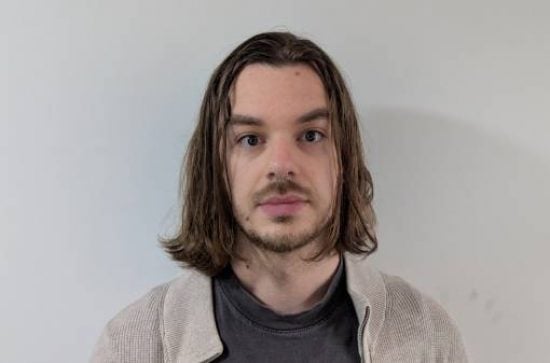
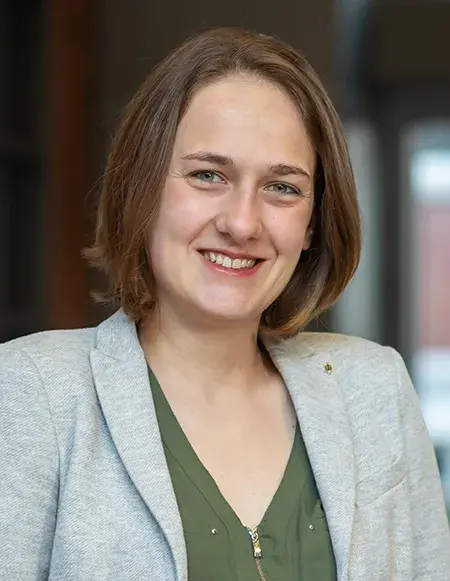
Szymon Urbas is a Lecturer in Statistics at the Department of Mathematics and Statistics, Faculty of Science & Engineering, Maynooth University (2024–present). He previously worked as a Postdoctoral Researcher at University College Dublin (2022–2024). His academic background includes a PhD (2018–2022) and MRes (2017–2018) in Statistics from Lancaster University, and a BSc in Mathematical Science from the University of Galway (2013–2017). Research Interests Bayesian modeling with latent variables Computationally intensive methods (Hamiltonian Monte Carlo, particle filters) Applications in agri-food sector and clinical trial operations Variational inference in machine learning High-dimensional data with hierarchical correlations Recent publications focus on Bayesian regression for agricultural spectral data, path sampling algorithms, clinical trial recruitment prediction, and neuro-mimetic learning strategies. His work integrates probabilistic methods with real-world challenges in agriculture and healthcare. Contact: Szymon.Urbas@mu.ie
Massimo Zucchetti is a Full Professor at Politecnico di Torino, Department of Energy (DENERG), where he has been teaching Radiation Protection and Nuclear Power Plants. He maintains a significant international presence as a Research Affiliate at the Plasma Science and Fusion Center at MIT, a position he has held since 2005. His academic journey began at Politecnico di Torino, where he graduated in Nuclear Engineering in 1986 and completed his PhD in Energetica between 1986-1990. He progressed through the academic ranks at Politecnico di Torino from Associate Professor (1998-2002) to Full Professor (2002-present), with prior research experience at the European Commission Joint Research Centre. Zucchetti's research spans nuclear fusion engineering, radioactive waste management, and energy policy. His work focuses particularly on controlled thermonuclear fusion, nuclear safety, and radioactive waste management, with emphasis on tritium transport in fusion reactors, safety analysis of fusion power plants, and environmental impact assessment. He has led multiple significant research projects including TITANS (Tritium Impact and Transfer in Advanced Nuclear reactorS, 2022-2025), components for ITER (2008-2010), and innovative materials for fusion reactors (2004-2006). As coordinator of the IEA Program on Environmental, Safety and Economic Aspects of Fusion Power, he plays a key role in international fusion research collaboration. His recent publications show a clear trend toward practical applications of fusion technology, particularly in the ARC (Affordable Robust Compact) reactor design. These works emphasize neutronics, thermal-hydraulics, tritium management, and safety analysis for compact fusion systems. His research demonstrates increasing focus on making fusion energy more commercially viable through innovative engineering solutions while maintaining rigorous safety standards. The interdisciplinary nature of his work connects nuclear engineering with environmental science and energy policy. Fellow of Plasma Science and Fusion Center, MIT (2015-present) Research Affiliate Fellow at Laboratory for Nuclear Science, MIT (2005-2015) Nomination for 2015 Nobel Prize in Physics for research on advanced fuel nuclear fusion Editor-in-Chief of multiple journals including International Journal of Ecosystems and Ecology Science and Journal of International Environmental Application & Science Zucchetti actively mentors PhD students in the Energetica program at Politecnico di Torino, with current advisees working on topics ranging from multiphysics modeling in ARC-class reactors to innovative materials for next-generation nuclear reactors. He coordinates significant research grants from competitive funding programs including EURATOM and PRIN. His laboratory work focuses on fusion reactor components, particularly breeding blankets and tritium management systems. The TESIN research group within DENERG serves as his primary research team, working on thermal-hydraulic analysis, neutronics, and safety assessments for advanced nuclear systems.
Fu Zongmei is a Professor at the School of Environmental Science and Engineering of Southern University of Science and Technology (SUSTech) since 2019. She previously held academic positions at Peking University (2010-2019) and Hong Kong Polytechnic University (2008). Her research focuses on atmospheric chemistry , air pollution , and chemistry-climate interactions , with expertise in inverse modeling of emissions, secondary organic aerosol formation, and air-sea exchange processes. Education: Ph.D. in Earth & Planetary Sciences (Harvard University, 2007), S.M. in Engineering & Applied Sciences (Harvard University, 2005), M.S. and B.S. in Atmospheric Sciences (National Taiwan University) Her research combines ground-based , aircraft , and satellite observations to study pollutant transport, cloud-aerosol interactions, and climate impacts on air quality. Recent work includes assessing haze mitigation strategies in Northern China and analyzing PM2.5 health risks through spatiotemporal modeling. Key honors include the National Natural Science Foundation of China Outstanding Young Scientist Fellowship (2012), the Tu Chang Wang Meteorological Science and Technology Award (2013), and the Ministry of Education Natural Science Award (Second Prize) (2019). She serves as an associate editor for Atmospheric Environment and contributes to major international conferences as session co-chair and organizer. Notable grants: NSFC General Project on Organic Nitrogen Aerosols (2020-2023, PI), National Key R&D Program on Air Quality Modeling (Co-I), and 973 Program on Chemistry-Climate Interactions (Co-PI)
Alba Marcellan is a Professor at Sorbonne Université, affiliated with the Faculty of Chemistry and the Soft Matter and Materials Engineering Laboratory (SIMM), a joint research unit of ESPCI Paris, Sorbonne Université, and CNRS. She leads research on soft matter, polymer science, and sustainable materials, with a focus on designing mechanically robust and self-healing hydrogels and fiber-based materials. Her educational background includes: Doctorate in Materials Science and Engineering, Mines ParisTech (2003) DEA in Mechanics and Materials, Mines ParisTech (2000) Habilitation à Diriger des Recherches (HDR) in Chemistry, Sorbonne Université (2015) Marcellan's research centers on understanding and designing soft materials, particularly hydrogels and polymer fibers, by introducing reversible sacrificial bonds at the molecular or mesoscopic scale. Her work aims to create materials that combine rigidity, fracture resistance, and self-repair capabilities, contributing to sustainable resource use. She has developed experimental platforms for testing soft materials under controlled environmental conditions (pH, ionic strength, humidity) for non-standard samples. Analysis of her recent publications (2013-2023) reveals a consistent focus on the mechanical reinforcement of soft materials, especially hydrogels and fibers. Key themes include the role of weak bonds in self-assembly, biomimetic design, nanoparticle-based adhesion, and thermoresponsive toughening. Her work bridges polymer chemistry, mechanics, and sustainability, often targeting applications in biomedicine and eco-friendly materials. Her scientific awards include: Junior Member of the Institut Universitaire de France (IUF) in Chemistry (2017) PEDR (Doctoral and Research Supervision Grant) level 2 (5 years, 2017) Associate Professor position at Hokkaido University, Japan (2016, renewed 2021) Biennial Prize of the French Polymer Group / French Physical Society and Chemical Society (2014) Marcellan is actively involved in teaching and mentoring. She co-leads the Materials Master's track at Sorbonne Université (100 students) and has developed courses on polymer mechanics, eco-design, and industrial applications of polymers. Her leadership in research supervision is recognized by the PEDR grant. She also serves on national committees, including the CNRS National Committee for Soft Matter. She is a key member of the SIMM laboratory, where she established an experimental platform for environmental-conditioned mechanical testing. Additionally, she holds roles in professional societies, such as Treasurer of the Polymer Networks Group and co-leader of the Polymers Working Group under MÉCAMAT.
Rainer J. Hebert is a Professor in the Department of Materials Science and Engineering at the University of Connecticut, serving as Director of the Pratt and Whitney Additive Manufacturing Center and Associate Director of the Institute of Materials Science. His research focuses on advancing additive manufacturing technologies with particular emphasis on materials development and process optimization for industrial applications. Education Ph.D., University of Wisconsin-Madison, 2003 Postdoctoral Fellow, University of Wisconsin-Madison, 2003-2005 Post Doctoral Fellow, Research Center Karlsruhe, Germany (now Karlsruhe Institute of Technology), 2003-2005 Research Interests Professor Hebert's research spans multiple areas within materials science and additive manufacturing. His primary focus is on developing new alloys specifically designed for additive manufacturing processes, with particular attention to how microstructures form during rapid solidification and laser processing. He investigates powder characteristics and their effects on the final manufactured products, aiming to improve quality and performance. His work on quasicrystal-reinforced aluminum alloys has shown promising results for high-performance applications, and he has made significant contributions to understanding the fundamental mechanisms of laser powder bed fusion. Hebert's research bridges fundamental materials science with practical industrial applications, particularly in aerospace and high-temperature environments. Publication Trends Analysis of Professor Hebert's recent publications reveals a strong focus on advancing additive manufacturing technologies, particularly laser powder bed fusion. His work spans from fundamental materials science (microstructure formation, phase transformations) to practical applications (alloy design, process optimization). A notable trend is the increasing integration of computational methods with experimental work to predict and optimize material behavior. His research shows a progression from basic microstructure characterization to more complex systems involving multi-material interactions, intelligent manufacturing systems, and the development of specialized alloys resistant to cracking and other defects. The consistent theme across his publications is improving the reliability and performance of additively manufactured components for demanding applications. Awards Materials Science and Engineering Program Teaching Award, 2010-2011 Advising and Grants As Director of the Pratt and Whitney Additive Manufacturing Center, Professor Hebert oversees significant research initiatives funded by both government agencies and industry partners, particularly in aerospace applications. His leadership in the Institute of Materials Science provides opportunities for student research and collaboration across multiple disciplines. His extensive publication record suggests active mentorship of graduate students in materials science and engineering. His research program likely involves multiple PhD and Master's students working on various aspects of additive manufacturing, from fundamental materials science to process development. Laboratories and Teams Professor Hebert directs the Pratt and Whitney Additive Manufacturing Center at UConn, which serves as a hub for collaborative research between academia and industry. The center focuses on advancing metal additive manufacturing technologies, particularly for aerospace applications. He also plays a key leadership role in the Institute of Materials Science, one of UConn's premier research centers. His research teams likely include graduate students, postdoctoral researchers, and industry collaborators working on projects related to powder characterization, laser processing, microstructure analysis, and alloy development. The collaborative nature of his work is evident from the multi-institutional authorship on many of his publications.
Professor David Armstrong serves as Professor of Materials Science and Engineering at the University of Oxford and Fellow and Tutor at St Edmund Hall. His work focuses on developing materials for extreme environments including nuclear fusion reactors, aerospace systems, and energy storage applications through microstructural control and advanced mechanical characterization. His educational background includes a first degree in Materials Science from St Anne’s College, Oxford and a DPhil from Corpus Christi, Oxford investigating micromechanical properties in copper and nickel alloys. This foundational work evolved into radiation damage studies during his Culham Centre for Fusion Energy Junior Research Fellowship. Armstrong's research centers on mechanical behavior of materials under extreme conditions—high temperatures (jet engines, reactors), radiation exposure (nuclear facilities, space), and high stresses (batteries, geological systems). He develops novel testing methodologies for nanoscale mechanical properties up to 1300 K, collaborating with Rolls Royce, UKAEA, ESA, and Berkeley on fusion materials, aerospace components, and battery technologies. His work bridges fundamental micromechanics with industrial applications in energy systems. Analysis of his 2023-2025 publications reveals dominant themes in nuclear fusion materials (tungsten, ODS steels), lithium battery interfaces, and ceramic composites for extreme environments. Methodologically, his group pioneers correlative microscopy combining nanoindentation, TEM, and atom probe tomography to study irradiation effects, high-temperature deformation, and interfacial degradation across length scales. His scientific recognition includes: Culham Centre for Fusion Energy Junior Research fellowship (2009) Royal Academy of Engineering Research Fellowship (2013) Institute of Materials Minerals and Mining Grunfeld Memorial Award & Medal (2015) As an educator, Armstrong teaches core mechanical properties courses across undergraduate years and leads Fusion CDT modules on nuclear materials. He supervises numerous doctoral students while serving on the EPSRC Fusion Advisory Board and CDT management board. Current grants support micro-engineering of alloys for nuclear environments and lithium-metal battery development through industry partnerships with Rolls Royce and MicroMaterials. His research group operates advanced micromechanical testing facilities for high-temperature and irradiated materials, collaborating with UKAEA’s Culham Centre and European fusion laboratories on plasma-facing component development. Future work targets solid-state battery interfaces and radiation-resistant high-entropy alloys for next-generation fusion reactors.
Scott L. Anderson is a Professor in the Department of Chemistry at the University of Utah, with a distinguished career in nanoparticle chemistry and catalysis. He received his B.A. from Rice University (1977), Ph.D. from UC Berkeley (1981), and trained at Stanford (1981-1983). His research focuses on size-dependent catalytic behavior, high-temperature reaction kinetics, and advanced analytical techniques like single nanoparticle mass spectrometry. Chair, Division of Chemical Physics, American Physical Society (2018-2019) ACS Physical Division Award in Experimental Physical Chemistry (2016) Robert W. Parry Teaching Award (2015) Fellow of the American Association for the Advancement of Science (2011) Distinguished Scholarly and Creative Research Award (2007) His work spans cluster model catalysts, oxidation mechanisms, and functional nanoparticle synthesis, with significant contributions to understanding coking resistance, sintering suppression, and surface interactions. He has held visiting positions at institutions in Japan, Germany, and France, and currently serves as Associate Director for Surface Analysis and Nano-imaging at the Utah Nanofab. Selected publications reveal a focus on nanoscale catalysis, thermal stability of nanoparticles, and innovative applications of mass spectrometry. His research bridges fundamental studies of cluster reactivity and practical applications in energy and materials science.
Prof. Wojciech Sobieski is a faculty member at the Department of Mechanics and Fundamentals of Machine Design within the Faculty of Technical Sciences at the University of Warmia and Mazury in Olsztyn . His research focuses on fluid mechanics, numerical modeling, and porous media analysis, with applications in environmental engineering, hydraulic systems, and 3D printing. Academic Rank: Professor Scientific Discipline: Mechanical Engineering Key Research Areas: Tortuosity Analysis, Multiphase Flow, DEM Simulations His recent publications highlight advancements in computational methods for granular porous media, fluid flow modeling, and thermodynamic applications. Notable trends include the use of the Waterfall Algorithm for geometric analysis and sensitivity studies of numerical models like the Eulerian multiphase approach. He has contributed to understanding Forchheimer's laws and cavitation phenomena in hydraulic systems. Prof. Sobieski oversees the PathFinder Project , a research initiative focused on numerical modeling of porous media. His laboratory maintains infrastructure for multiphase flow simulations and particle-scale modeling. He has supervised 2 doctoral students to completion but currently has no active advisees.
Malgorzata (Gosia) Chwatko is an Assistant Professor in the Department of Chemical and Materials Engineering at the University of Kentucky, affiliated with the Stanley and Karen Pigman College of Engineering. Her research focuses on sustainable separation processes, including membrane-enhanced peptide synthesis, green polymer development, and environmentally friendly particle synthesis. Education: Postdoctoral Fellow in Biomedical Engineering (2019-2020), Ph.D. (2019), M.S. (2019) in Chemical Engineering from the University of Texas at Austin, and B.S. in Chemical Engineering from the University of Connecticut (2015). The Chwatko research group investigates technologies to reduce solvent waste and improve sustainability in chemical processes. Key projects include membrane-enhanced liquid phase peptide synthesis , thermodynamic analysis of green solvent-polymer systems , and sustainable polymer synthesis with recyclability in mind . Recent publications highlight her work on PEG-based hydrogels for wound dressings , bioactive hydrogel coatings , and epoxide copolymerization mechanisms . Her team has produced award-winning researchers, including students honored at the 2024 REU and Super Collider events.
Fredrik Sandin is a Professor in the Department of Computer Science, Electrical and Space Engineering at Luleå University of Technology, where he leads the Machine Learning research group with approximately thirty members. His work focuses on neuromorphic technologies and the intersection of machine learning with computational physics to solve challenging real-world interaction problems. He coordinates the 'Teknisk fysik och elektroteknik' program at LTU and has been instrumental in establishing neuromorphic research activities at the university. Luleå University of Technology, Department of Computer Science, Electrical and Space Engineering Member of WASP (Wallenberg AI, Autonomous Systems and Software Program) and ELLIS (European Laboratory for Learning and Intelligent Systems) Coordinator of Neuromorphic Innovation Platform Sweden with KTH, Lund University, Uppsala University, FOI, ABB, Ericsson, and SAAB Fredrik earned his PhD in Physics from Luleå University of Technology in 2007, with thesis work focusing on dense states of matter in neutron stars. His academic journey began with an MSc diploma work in ATLAS at CERN in 2001, followed by postdoctoral research in computational physics at IFPA in Belgium (2008-2009) and brain-like computing at EISLAB with Prof. Jerker Delsing (2010-2011). Professor Sandin's research interests center around neuromorphic technologies, particularly neuromorphic computing and spiking neural networks. He investigates sensor/detector and intelligent systems co-design where constraints like energy, power, latency, and dynamic range challenge conventional digital approaches. His work spans mixed-signal neuromorphic circuits, algorithms, and systems, as well as machine learning projects involving industrial data and collaboration. He has been a key figure in establishing neuromorphic research at LTU, supported by The Kempe Foundations, particularly through the 2014 Gunnar Öquist Fellowship. His recent publications demonstrate a strong interdisciplinary focus spanning quantum phase transitions, particle physics detector optimization, renewable energy materials, and the integration of large language models into control systems. This diverse portfolio reflects his approach connecting machine learning with fundamental physics and practical engineering applications, particularly in neuromorphic computing and intelligent systems design, with emphasis on solving real-world problems through co-design of hardware and algorithms. Gunnar Öquist Fellowship Award and 3 MSEK grant from The Kempe Foundations ISSP award for an Original Work in Theoretical Physics (signed by Prof. 't Hooft and Prof. Zichichi) New-Talents award for original work in theoretical physics at the International School of Subnuclear Physics in Erice Professor Sandin has supervised numerous PhD students working on topics ranging from neuromorphic TinyML to materials for neuromorphic computing, privacy-preserving machine learning at the edge, and intelligent fault diagnosis. He has secured substantial research funding from various sources including Vinnova, ÅForsk, Kempe Foundations, WASP-WISE, and EU programs like ECSEL JU Arrowhead Tools and ITEA3 AutoDC. His current major projects include the Neuromorphic Innovation Platform Sweden and several initiatives focused on neuromorphic condition monitoring and computing, with total funding exceeding 30 MSEK in the past five years. He leads the Machine Learning group at LTU, which collaborates extensively with industry partners including ABB, Ericsson, SAAB, SKF, and RISE. The group is active in developing neuromorphic technologies for wireless sensor networks, condition monitoring systems, and next-generation intelligent systems that address energy, power, and latency constraints that challenge conventional digital approaches.
Dario De Marinis is an Assistant Professor at the Department of Mechanics, Mathematics & Management, Politecnico di Bari, Italy. His research focuses on fluid dynamics with applications in biomedical engineering, aerospace, and computational physics. Research Interests Fluid-structure interaction modeling Microfluidics and particle transport Biomedical applications (blood flow, valve mechanics) Aerospace engineering (hypersonic flows, turbulence) Numerical methods (Lattice Boltzmann, immersed boundary) Publications Trend Dario's recent work (2015–2025) spans computational fluid dynamics, with emphasis on multiphase flows, viscoelastic material behavior, and biomedical microfluidic devices. He has contributed to aerospace applications and turbulent thermal flows.
Dr. Thangavel Thevar is a Senior Lecturer in the School of Engineering at the University of Aberdeen, where he has been teaching since 2005. He completed both his undergraduate degree (First Class Honours in Electrical Engineering) and PhD (in Laser Engineering) at the University of Aberdeen in 1989 and 1993 respectively. Prior to his academic career, he accumulated approximately 10 years of industrial R&D experience in the USA, working on solid-state laser development and holographic applications. Dr. Thevar's research focuses on several key areas: Digital holography for imaging of marine plankton and micro-particles Laser Induced Breakdown Spectroscopy (LIBS) for subsea applications Laser-based instrumentation development Development of solid-state lasers for scientific, industrial, and medical applications Engineering applications of holography His most notable recent achievement is leading a team that developed the weeHoloCam, a state-of-the-art ultracompact underwater holographic camera for imaging microorganisms. Weighing just 3.5 kg, this system is the lightest and most compact of its kind, capable of imaging 240 ml/s and continuously recording up to 200,000 holograms. The system incorporates a rapid hologram processor and an AI-based image classifier. This technology has significant applications in marine studies including spatial and temporal monitoring of plankton species, monitoring harmful plankton & micro-jellyfish, study of vertical transport of floc, and monitoring microplastic pollution in the ocean. Dr. Thevar has secured numerous research grants as Principal Investigator, including projects funded by Sustainable Aquaculture Innovation Centre (SAIC), BBSRC, DEFRA, and Defence & Security Accelerator (DSTL). His current research portfolio demonstrates strong interdisciplinary connections between optical engineering, marine science, and environmental monitoring. His scientific contributions include: Royal Academy of Engineering Visiting Teaching Fellow Award (2010-2013) US patent 8,494,012 B2 for Raman converters Development of alexandrite lasers and ruby holographic lasers during his industrial R&D period Work on US government contracts for non-destructive inspection methods for military aircraft and the space shuttle Sabbatical work at NASA Langley Research Centre developing diode pumped Thulium YALO lasers As an educator, Dr. Thevar has served as Coordinator of MSc Oil & Gas Engineering (2007-2020), Undergraduate Level 1 Coordinator, and has contributed to various committees including Quality Assurance and Students' Progression. He currently teaches courses including Principles of Electronics, Electrical & Mechanical Systems, Control Systems, and supervises individual projects at both undergraduate and postgraduate levels. He is accepting PhD students interested in Engineering research. Dr. Thevar is actively involved in professional organizations, serving as Technical Programme Chair for IEEE/OES Oceans Conference 2007, on organizing committees for various conferences, as a committee member of the Instrument Science and Technology Group (Institute of Physics), and as a member of both IET and IEEE. He also serves as a reviewer for optics-based journals.
Alexandra Teleki is a Senior Lecturer at the Department of Pharmacy, Uppsala University, specializing in Pharmaceutical Nanotechnology within the Molecular Galenic Pharmacy division. Her research focuses on developing advanced drug delivery systems using nanotechnology approaches, with particular expertise in flame aerosol synthesis of pharmaceutical nanoparticles and magnetic nanoparticle applications. Her research interests span: Pharmaceutical Nanotechnology and Flame Aerosol Synthesis Magnetic Nanoparticles for Theranostic Applications Lipid-based Formulations for Drug and Nutraceutical Delivery Biomimetic Barrier Models for Drug Transport Studies 3D Printing of Advanced Drug Delivery Systems Teleki's work demonstrates a clear trajectory from fundamental nanomaterial synthesis toward clinically relevant applications, with recent publications showing increasing focus on cancer theranostics, antimicrobial treatments, and precision drug delivery systems that respond to specific physiological conditions. Her research bridges materials science, pharmaceutical technology, and clinical medicine to address critical challenges in drug delivery. Notable contributions include: Development of flame-made doped iron oxide nanoparticles for medical imaging Innovative approaches to magnetic hyperthermia for cancer treatment Advanced biomimetic barrier models for drug transport studies Optimized colonic mucus models for drug diffusion studies 3D printing techniques for lipid-rich solid oral dosage forms Teleki actively collaborates through the Nordic POP (Patient-oriented Products) initiative and maintains strong interdisciplinary connections across pharmaceutical sciences, materials engineering, and clinical medicine. Her research group focuses on translating nanomaterial synthesis techniques into practical pharmaceutical applications that address real-world challenges in drug delivery and therapeutic efficacy.
Dr. Yina Liu is an Assistant Professor in the Department of Oceanography at Texas A&M University, leading the Halo-Carbon Biogeochemistry Lab and serving as R&D Team Lead in the Geochemical and Environmental Research Group (GERG). Her research focuses on organic biogeochemistry, particularly halogenated compounds' roles in environmental processes. She employs advanced mass spectrometry and data science to study contaminant cycling, microbial transformations of oil components, and PFAS distributions. Education includes a Ph.D. in Chemical Oceanography (Texas A&M, 2013), B.S. in Environmental Sciences (UC Irvine, 2006), and postdoctoral work at Woods Hole Oceanographic Institution (2013-2015) and Pacific Northwest National Lab (2015-2017). Research interests span untargeted environmental analysis, halocarbon biogeochemistry, and eco-metabolomics, with emphasis on linking organic matter dynamics to ecological processes. Her lab investigates topics such as microbial degradation of crude oil components, PFAS environmental fate, and halogenated compound identification using novel computational algorithms. Current projects include developing cheminformatics pipelines for tarball fingerprinting and atmospheric particle characterization. She actively mentors students across undergraduate, graduate, and postdoctoral levels through Texas A&M's Oceanography program. Research highlights include groundbreaking work on oil spill bioremediation mechanisms and PFAS contamination in urban watersheds. Her methodologies combine field studies, laboratory experiments, and computational modeling to advance understanding of global carbon and contaminant cycles.
Po-Shen Hsin is a Lecturer in the Department of Mathematics at King’s College London. He holds a BSc in Physics from National Taiwan University (2012), an MA in Physics from Princeton University (2016), and a PhD in Physics from Princeton University (2018). His research focuses on theoretical physics, particularly quantum field theory, strongly interacting systems, topological phases of matter, and the interplay of symmetries and anomalies. He explores topics such as non-invertible symmetries, higher-form anomalies, and their implications for topological phases and condensed matter systems. His work spans theoretical frameworks like gauge theories, topological defects, and quantum error correction codes, with applications to understanding exotic phenomena in materials and high-energy physics. Notable themes include symmetry-enriched topological phases, anomaly detection, and the classification of logical gates in quantum codes via cohomology operations. His research group at King’s College is part of the broader efforts in supersymmetry, string theory, and related areas within the Faculty of Natural, Mathematical & Engineering Sciences. His contributions bridge fundamental theoretical insights with potential applications in quantum technologies and condensed matter systems.