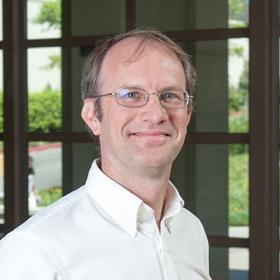
Mirko SalewskiView profile
Professor
Mirko Salewski is a Professor in the Department of Physics at the Technical University of Denmark (DTU), specializing in Plasma Physics and Fusion Energy. He is actively involved in international fusion research, working with major tokamaks and stellarators such as JET, ASDEX Upgrade, DIII-D, EAST, MAST, TCV, Wendelstein 7-X, and LHD. He serves as an ITER Scientist Fellow and chairs the ITPA Topical Group on Energetic Particle Physics, coordinating global research efforts to support ITER. Education: Dr. techn. in Plasma Physics, Technical University of Denmark (2020) PhD in Fluid Mechanics, Lund University (2007) MSc in Aerospace Engineering, Technical University of Berlin (2002) BSc in Mechanical Engineering, RWTH Aachen University (1998) Additional studies at University of Washington (2000–2001) and Moscow Aviation Institute (2000) His research focuses on developing advanced diagnostics for energetic particles in fusion plasmas using tomography in velocity- and phase-space. He integrates physics-informed models and neural networks to improve reconstruction accuracy. His work spans experimental diagnostics including fast-ion D-alpha spectroscopy, collective Thomson scattering, neutron and gamma-ray spectroscopy, neutral particle analyzers, fast-ion loss detectors, and ion cyclotron emission. Recent publications emphasize synthetic diagnostics, phase-space tomography, and AI-enhanced modeling, reflecting a strong trend toward data-driven and physics-integrated approaches in fusion research. His work is central to understanding fast-ion behavior in burning plasmas. Scientific Awards: ITER Scientist Fellow Professor Salewski supervises multiple PhD students and leads significant research projects funded by EU and national programs. His projects include fast-ion phase-space tomography in D-T plasmas at JET, AI applications in fusion tomography, and orbit-space sensitivity studies. He teaches courses in Electromagnetism, Plasma Physics, and the Physics of Sports at BSc, MSc, and PhD levels. He is affiliated with key fusion research networks and collaborates extensively with institutions across Europe, the US, and Asia, contributing to the global effort to realize fusion energy.