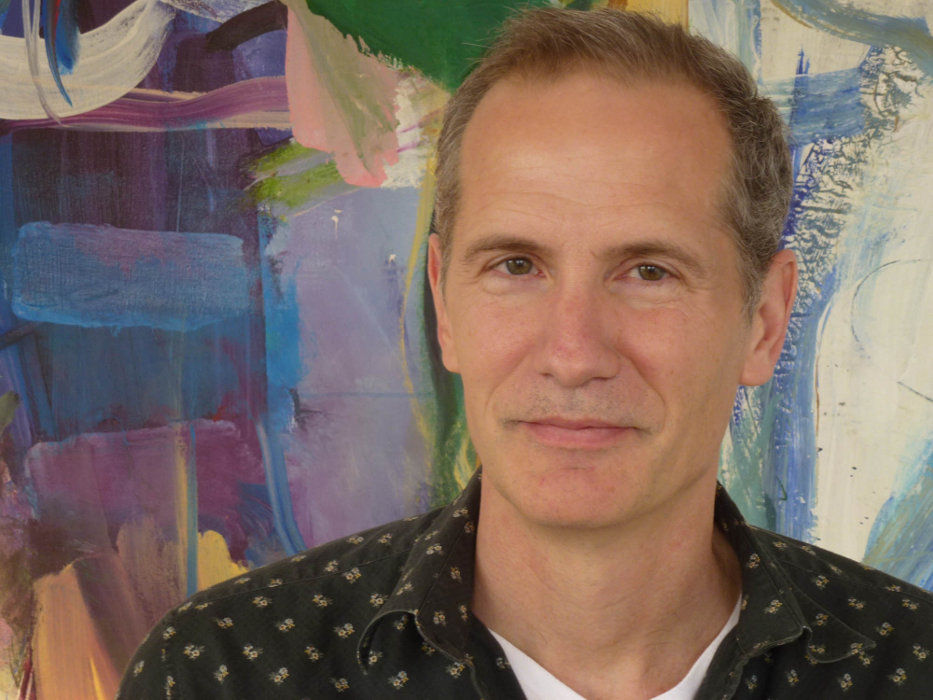
Michael J. Shelley is the Lilian and George Lyttle Professor of Applied Mathematics and holds joint appointments in Mathematics, Neural Science, and Mechanical Engineering at New York University's Courant Institute of Mathematical Sciences. He also serves as Co-Director of the Applied Mathematics Laboratory and Director of the Center for Computational Biology at the Flatiron Institute. Education: PhD (Applied Mathematics) from the University of Arizona (1985), MS (Applied Mathematics) from the University of Arizona (1984), BA (Mathematics) from the University of Colorado (1981). Research: Focuses on complex phenomena in active matter, biophysics, and complex fluids. Key areas include fluid-structure interactions (e.g., swimming/flying mechanics), cytoskeletal dynamics, and collective behavior in biological systems. Collaborates closely with experimentalists through the Applied Math Lab and Flatiron Institute. Labs & Affiliations: Co-Director, Applied Mathematics Laboratory; Director, Center for Computational Biology (Simons Foundation); affiliated with NYU’s Courant Institute and Department of Mathematics. Notable Work: Models for microtubule-motor assemblies, active suspensions, and fluid-structure interactions. Pioneered computational frameworks for Stokes suspensions and fiber dynamics in viscous fluids.
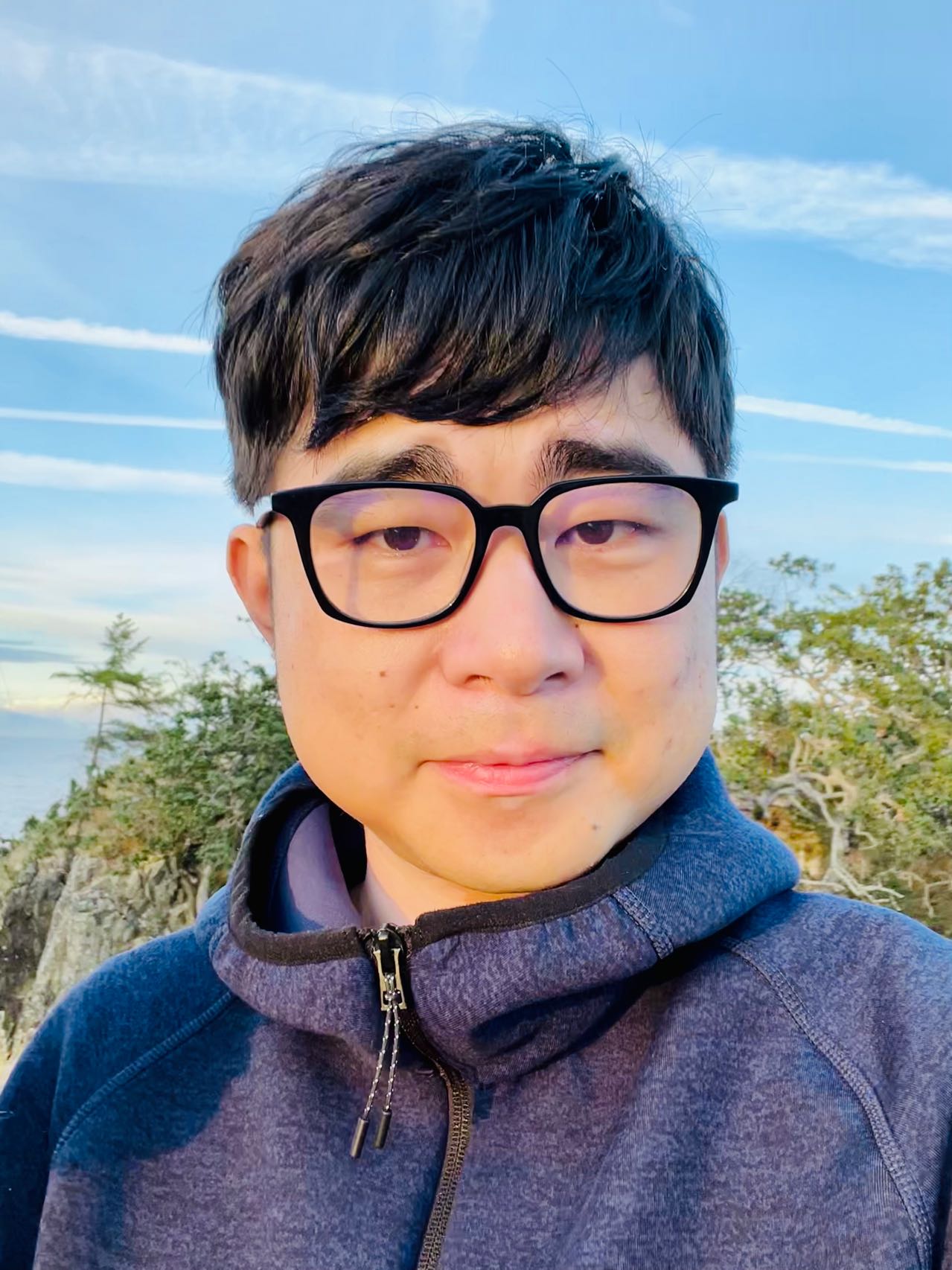
Bo Zhu is an Assistant Professor in the School of Interactive Computing at Georgia Institute of Technology. His research focuses on computational approaches for complex physical systems, including fluid dynamics, topology optimization, and robotics control. He holds a Ph.D. from Stanford University and completed postdoctoral research at MIT CSAIL. He has been recognized with the NSF Career Award (2022) and multiple best paper awards at SIGGRAPH conferences. Education: B.E.-M.S., Software Engineering, Shanghai Jiao Tong University Ph.D., Computer Science, Stanford University Postdoc, EECS, MIT Research Interests: Develops numerical algorithms and machine learning techniques to simulate fluidic systems, soft materials, and multi-scale phenomena. His work emphasizes vorticity preservation, real-time simulation, and physics-based AI integration. Key Contributions: Pioneered Particle Flow Map (PFM) methods for fluid simulation, developed open-source libraries like SimpleX and PFM Hub, and contributed to projects like Genesis physics engine. Over 50 peer-reviewed publications in top venues (SIGGRAPH, NeurIPS, IEEE TVCG). Awards: NSF Career Award (2022) Best Paper Honorable Mention (SIGGRAPH 2025) Best Paper Award (SIGGRAPH Asia 2024) Grants & Projects: Leads NSF-funded research on Physical AI Design, collaborating with Sandia National Labs on real-time CFD solvers. Active in open-source software development for computational physics and graphics.
Antonio Vairo is a full Professor at the Department of Physics, TUM School of Natural Sciences, Technical University of Munich, where he holds the Chair of Theoretical Physics - Applied Quantum Field Theory (T39) at the James-Franck-Str. 1/I campus in Garching bei München. His research focuses on the theoretical foundations of quantum chromodynamics with emphasis on heavy quark systems and non-perturbative phenomena. Professor Vairo's primary research interests include Quantum Chromodynamics (QCD), Heavy Quark Physics, Lattice Gauge Theory, Effective Field Theories, and Exotic Hadron Spectroscopy. His work bridges computational approaches with analytical frameworks to investigate quarkonium dynamics in extreme environments like the quark-gluon plasma, while developing novel applications of Born-Oppenheimer effective theory to multi-quark systems. Recent investigations extend into dark matter bound state formation in the early universe, demonstrating interdisciplinary reach across particle physics and cosmology. Analysis of his 2024-2025 publications reveals three dominant research thrusts: (1) quarkonium suppression mechanisms in heavy-ion collisions using open quantum systems approaches, (2) high-precision lattice QCD computations of static forces and chromoelectric correlators, and (3) systematic development of effective field theories for exotic hadrons and dark matter pairs. His work on pNRQCD (potential non-relativistic QCD) provides critical connections between lattice results and experimental observables in heavy-ion physics. Professor Vairo maintains active research leadership through collaborations with international groups including the Belle II experiment, as evidenced by his contributions to 'The Belle II Physics Book'. His methodological innovations in applying quantum trajectory methods to quarkonium evolution and developing FeynOnium computational tools for effective field theories demonstrate significant technical contributions to the field. Current research directions emphasize next-to-leading order corrections in heavy quark dynamics and Debye mass effects in dark matter bound state formation.
Yang Kaidi is an Assistant Professor in the Department of Civil and Environmental Engineering at the National University of Singapore (NUS), affiliated with the Institute of Operations Research and Analytics (IORA) within NUS’s Smart Nation Research Cluster. Their research focuses on intelligent transportation systems, traffic control, shared mobility, and machine learning applications in mobility. Key interests include connected and automated vehicles, privacy-preserving data sharing, and reinforcement learning for traffic optimization. Research highlights include developing parameter privacy-preserving strategies for mixed-autonomy platoons, enhancing safety in autonomous driving via transformer-based trajectory prediction, and optimizing traffic signal timing using connected vehicle data. Their work bridges theoretical control systems with practical urban mobility challenges, addressing issues like ridesourcing-public transit integration, modular transit service operations, and weaving section management in mixed traffic environments. Recent publications emphasize real-time control frameworks, cooperative safety mechanisms, and data-driven solutions for urban and highway systems. Yang’s interdisciplinary approach integrates robotics, optimization, and cybersecurity to advance smart transportation infrastructure. Their contributions are particularly notable in privacy-preserving techniques for traffic state estimation and federated learning applications. While no specific awards or grants are listed, their research aligns with Singapore’s Smart Nation initiatives through IORA’s strategic focus areas. Yang’s work has implications for future traffic management systems, autonomous vehicle coordination, and sustainable urban mobility solutions.
Prof. Jorge Piekarewicz is a Professor of Physics at Florida State University (FSU), affiliated with the College of Arts and Sciences. He earned his Ph.D. in theoretical nuclear physics from the University of Pennsylvania in 1985, followed by postdoctoral research at Caltech and Indiana University. Since 1990, he has been a faculty member at FSU. Education: Ph.D. in Theoretical Nuclear Physics, University of Pennsylvania (1985) Postdoctoral Fellowships: California Institute of Technology and Indiana University Research Interests: His work focuses on extreme-density nuclear matter in neutron stars, bridging terrestrial experiments and astrophysical observations. Key areas include: Neutron star structure and equation of state Weak interaction probes (e.g., parity-violating electron scattering) Multi-messenger astronomy insights from neutron star mergers Covariant energy density functionals and symmetry energy constraints Articles Trends: Recent work emphasizes refining the nuclear equation of state using PREX-CREX experiments, gravitational wave data (e.g., GW170817), and Bayesian methods. Key themes include neutron skin thickness, crust-core interactions, and symmetry energy sensitivity. Service & Outreach: Nuclear Science Advisory Committee (2012–2015) FRIB Theory Alliance Director (2017–2021) INT National Advisory Committee Chair (2018–2020) OLLI Lecturer on stellar evolution and neutron stars Collaborations: Active involvement with CERN, FRIB, JLab, and the Facility for Rare Isotope Beams (FRIB). Research leverages facilities like the Relativistic Heavy Ion Collider and the National Superconducting Cyclotron Laboratory.
Alberto Belloni is an Associate Professor at the University of Maryland's Department of Physics. He is a key member of the CMS Collaboration at CERN, contributing to the Hadronic Calorimeter (HCAL) upgrade. His research focuses on high-energy particle physics experiments at the Large Hadron Collider (LHC), particularly Higgs boson studies and detector technology advancements. Education: B.S. from University of Pisa and Scuola Normale Superiore (2002), Ph.D. in Physics from MIT (2007). Teaching responsibilities include courses such as Physics 273 (Waves), Physics 275/276 (Experimental Physics), and advanced quantum/Modern Physics modules. Notable contributions include co-authoring landmark publications on Higgs boson discovery (ATLAS Collaboration, 2012) and precision W/Z boson measurements (2010). His work supports ongoing LHC experiments exploring fundamental particles and interactions.
Greg Kestin is Lecturer on Physics and Associate Director of Science Education at Harvard University's Department of Physics. He earned his Ph.D. in Physics from Harvard, specializing in theoretical particle physics and quantum field theory as a member of The Center for the Fundamental Laws of Nature. His research spans multiple physics domains including: Theoretical particle physics and quantum field theory Nuclear physics and heavy-ion collisions Fusion energy research Gravitational wave physics Science education methodology and technology His recent publications (2019-2022) focus on physics education research, exploring active learning strategies, educational video effectiveness, online learning comparisons, and multimedia tools. Earlier publications (2006-2016) concentrate on theoretical particle physics, including light-shell gauge theory, color fields, and hydrodynamic modeling of quark-gluon plasma. As Associate Director of Science Education, he leads educational initiatives and curriculum development at Harvard. His parallel career includes award-winning science communication work at NOVA | PBS, where he served as digital producer, director, and creator of the 'What the Physics?!' series.
Toshiharu Sugawara is a Professor in the Department of Computer Science and Engineering at Waseda University's Faculty of Science and Engineering, School of Fundamental Science and Engineering, a position he has held since April 2007. With a Ph.D. in Engineering from Waseda University, his research spans multiple domains in artificial intelligence and multi-agent systems, maintaining active collaborations across international institutions and contributing significantly to the field through numerous publications and awards. Dr. Sugawara received his BS and MS degrees in Mathematics from Waseda University in 1980 and 1982, respectively, followed by his Ph.D. in 1992. Before joining Waseda University as faculty, he worked as a Research Scientist at NTT Laboratories from 1982 to 2007, with a visiting researcher position at the University of Massachusetts at Amherst in 1992-1993. He also held part-time lecturer positions at University of Electro-Communications (2003-2007), Waseda University (2004-2006), and Tokyo University of Agriculture and Technology (1990-1991). His research interests focus on artificial intelligence with particular expertise in multi-agent systems, machine learning, cooperation and coordination mechanisms, soft computing, computational social science, and social informatics. His work bridges theoretical foundations with practical applications in network management and information systems. Recent publications demonstrate a strong trajectory toward interpretable multi-agent reinforcement learning, efficient path planning algorithms, and modeling social behaviors in complex networks. His research group has made significant contributions to multi-agent path finding, cooperative task execution, and understanding virtual economies in social media platforms. Dr. Sugawara has received numerous prestigious awards including multiple Best Paper Awards at JAWS conferences (2014, 2015, 2018), ACM SAC 2015, and various research paper awards from Japanese academic societies. His work on multi-agent systems has been consistently recognized for its theoretical rigor and practical impact. As an advisor, Dr. Sugawara has mentored numerous students who have become prominent researchers in their own right, with many co-authoring papers that have received awards. His laboratory maintains strong collaborations with industry partners, particularly in the areas of network management and intelligent systems. Current research directions include developing interpretable multi-agent reinforcement learning frameworks, optimizing multi-agent coordination in constrained environments, and analyzing social dynamics in virtual economies.
Wolfgang Lorenzon is a Professor of Physics at the University of Michigan, specializing in experimental particle physics, nuclear physics, and astrophysics. His research spans three major experimental programs: the LUX-ZEPLIN (LZ) dark matter experiment at SURF, the MUSE experiment at PSI for proton radius measurements, and the SpinQuest collaboration at Fermilab studying hadronic physics. He has held significant roles in major collaborations including SeaQuest and HERMES, where he served as Deputy Spokesman from 1997-1998. His educational background includes a Ph.D. (1988) and Diploma (1984), both from the University of Basel. Lorenzon has built a distinguished research career focusing on precision measurements in particle and nuclear physics, with particular expertise in detector development and experimental techniques. Lorenzon's research interests center on fundamental questions in particle physics. His work on the LZ experiment involves developing the in-line radon removal system for the central time-projection chamber, crucial for enhancing the detector's sensitivity to WIMPs. At PSI, he leads the development of liquid hydrogen targets for the MUSE experiment, which aims to resolve discrepancies in proton charge radius measurements. His hadronic physics work with SeaQuest and SpinQuest focuses on understanding nucleon structure through antiquark distributions and polarized Drell-Yan processes. His research bridges theoretical questions with cutting-edge experimental techniques, often requiring innovative detector solutions. Analysis of his recent publications (2023-2025) reveals a strong focus on dark matter detection using liquid xenon technology, precision measurements of nucleon structure, and development of next-generation detectors. His work spans theoretical interpretation of experimental results, detector development, and analysis of fundamental particle interactions. The research shows increasing collaboration across international boundaries, with significant contributions to multiple major experiments simultaneously. Scientific Awards: Fellow of the American Physical Society Lorenzon has mentored numerous graduate students through completion of their Ph.D. degrees, with recent graduates including Haley Reid (2024), Noah Wuerfel and Chami Amarasinghe (2023), Maris Arthurs (2022), Marshall Scott (2020), and Daniel Morton (2019). His current research group includes postdocs, graduate students, and undergraduate researchers. His research is supported by multiple grants from the National Science Foundation (Grant 2110229) and the Department of Energy (Grant SC0019193 and Subcontract 734299), as well as University of Michigan funding. Lorenzon leads a research group with active laboratories at both the Homer A. Neal Laboratory (3265 HANL) and West Hall (357 WH) at the University of Michigan. His team collaborates with international groups at Fermilab, SURF in South Dakota, and the Paul Scherrer Institute in Switzerland. The group maintains strong connections with the LZ collaboration, MUSE experiment, and SpinQuest collaboration, contributing both technical expertise and physics analysis capabilities to these major international efforts.
Eddie C. Red is an Associate Professor of Mathematics and Computational Sciences at Morehouse College , where he currently serves as the Interim Dean of the Science, Technology, Engineering, and Mathematics (STEM) Division. He earned his B.S. from Morehouse College (class of 2000) , followed by his M.S. and Ph.D. from Florida Agricultural and Mechanical University . Dr. Red also completed post-doctoral education at Lawrence Berkeley National Laboratory . Interim Dean, STEM Division Former Chair, Mathematics and Computational Science Division Former Chair, Physics & Dual-Degree Engineering Department Dr. Red’s research interests bridge atomic physics, quantum mechanics, and computational modeling , with a focus on: Photoionization cross-sections Bound states in the continuum Velocity map imaging techniques Mathematical formulations for quantum operators His work has resulted in publications in Physical Review A, Communications Physics, and the Journal of Physics B , alongside numerous conference presentations. Dr. Red has led the NuMaSS (Nuclear, Materials, and Space Science) Summer Enrichment Program for K-12 students and directed the Research Experience with Diversification Laboratory , emphasizing student training and research. Scientific awards include: Principal Investigator for Department of Energy National Nuclear Security Administration awards Dr. Red has served on multiple faculty governance committees, including the Admissions Committee , Faculty Grievance Committee , and Faculty Research Committee .
Olaf Kaczmarek is a researcher at the Faculty of Physics , Bielefeld University , specializing in Lattice Quantum Chromodynamics (QCD) and Strongly Interacting Matter . He leads projects related to QCD thermodynamics , quark-gluon plasma , and heavy quark transport . Principal Investigator in TRR 211/2 Subproject A06: Hadronic Excitations and Spectral Functions in the Medium (2025) Co-PI in TRR 211/2 Subproject Z02: Software Development Center (2025) Contributor to GPUHEP2014 and LATTICE2024 symposia Research Focus: Thermal QCD phase transitions, heavy quark diffusion , transport coefficients , lattice simulations , and quarkonium spectroscopy . His work bridges theoretical physics and high-performance computing , particularly in Multigpu Systems for QCD calculations. Recent Publications explore topics like the chiral crossover , spatial string tension , and thermal photon production , with keywords spanning Quantum Chromodynamics , Lattice Gauge Theory , and High Temperature Physics . Teaching: Offers courses in Lattice Field Theory , GPU Computing , and Gradient Flow for graduate students. Contributes to collaborative seminars in the CRC-TR211: Strong-interaction matter under extreme conditions .
Adriaan Buijs is a Professor in the Engineering Physics Department at McMaster University in Hamilton, Canada. He previously held roles at Atomic Energy of Canada Limited (AECL) from 2001 to 2008, including Senior Scientist and Section Head for neutronic overpower protection in CANDU reactors. Education: Master’s and PhD in Experimental Physics from Utrecht University , with research at Stanford Linear Accelerator Center . Academic History: Fellow and Staff Member at CERN (1986–1994), then Full Professor at Utrecht University (1994–2001). Research Interests : Nuclear Engineering : Specializing in Small Modular Reactors (SMRs) and Canadian Supercritical Water-Cooled Reactors (SCWR) . Reactor Physics : Focused on neutron transport calculations , gamma heating estimation , and safety analysis for reactor systems. Particle Physics : Past contributions include studies on photon-photon collisions , charmonium states , and supersymmetric particles at CERN and LEP. Publications include work on nuclear reactor simulations , fuel cycle assessments , and Monte Carlo methods for reactor kinetics. He has served as Associate Chair and Acting Chair in his department.
Michael Kordell is a Lecturer at Texas A&M University, specializing in high-energy physics and particle physics. His research focuses on jet quenching, quark-gluon plasma dynamics, and Bayesian analysis of jet-medium interactions. He collaborates extensively with the JETSCAPE framework to simulate jet evolution in heavy-ion collisions. Key contributions include studies on photon-triggered jets, hybrid hadronization models, and multistage energy-loss mechanisms. His work spans 2013–2025, with over 30 publications. Major topics include jet substructure analysis, heavy flavor propagation in nuclear media, and parameter estimation techniques for QGP transport coefficients. His studies utilize both theoretical models and experimental data from small and large collision systems. Notable collaborations involve the JETSCAPE project, focusing on computational frameworks for jet shower simulation and in-medium effects. His research bridges particle physics with nuclear physics, particularly in understanding medium-induced effects on jet dynamics.
Gaetano Sardina is a Professor in Fluid Dynamics at Chalmers University of Technology, Sweden. His research spans mechanical engineering and environmental sciences, focusing on turbulence in urban heat islands, microplastic transport in marine environments, and cloud microphysics. In 2023, he secured an ERC Consolidator Grant for studying turbulence effects in mixed-phase clouds. Key Research Areas: Fluid dynamics, environmental engineering, multiphase flow, atmospheric science Recent Projects: 2024–2029: MixClouds - Turbulence in mixed-phase clouds (European Commission) 2021–2025: MicroPlastiX - Microplastic fate in marine ecosystems (Formas) 2020–2022: PICTURE - Urban particle transport modeling (VINNOVA) Scientific Awards: ERC Consolidator Grant (2023) Collaborations: Partners with European Commission, Swedish Research Council, Formas, VINNOVA
Herman Bruyninckx is a Part-Time Full Professor at Eindhoven University of Technology (TU/e) in the Mechanical Engineering department, specifically within the Control Systems Technology group and EAISI High Tech Systems initiative. He also serves as a professor (Hoogleraar) at KU Leuven in Belgium. Academic focus on robotics, control systems, and multi-agent coordination Active research in model predictive control , semantic mapping , and dynamic constraint algorithms Recent publications address industrial automation , agro-food robotics , and haptic technology Research Highlights : Developed hybrid decision-making frameworks for multi-agent navigation Innovated swing-free control methods for robotic pick-and-place operations Formulated constrained dynamics algorithms with LQR-Gauss principle integration Created ExoTen-Glove for haptic feedback in virtual environments Collaborative Projects : Coordinated with researchers like René van de Molengraft , Elena Torta , and Koen de Vos Contributed to NWO/TTW FlexCRAFT project for cognitive robotics in agro-food technology