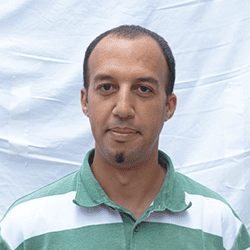
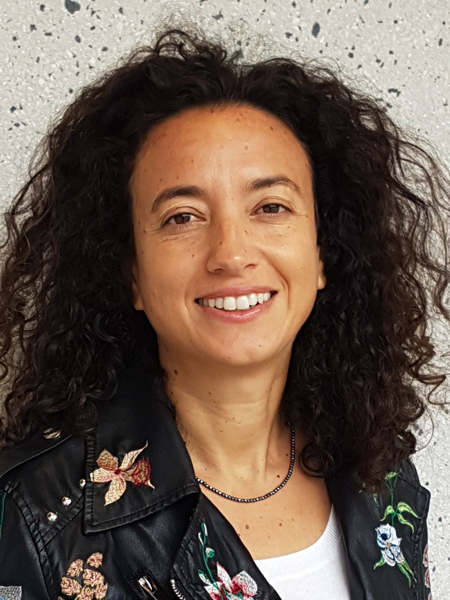
Amine MEHEL is a Research Professor at ESTACA's Mechanics and Environment Center (MSCE) since 2010, specializing in air quality and pollution control in transport systems. His work bridges experimental and numerical studies of turbulent flow interactions with pollutants and nanoparticles. Research Axes : CQA (Characterization of Air Quality) and EDP (Spatiotemporal Dynamics of Pollutants) Key Projects : CEPARER (2022-2025), AmCoAir (2020-2023), CAPNAV (2019-2022), CAPTIHV (2015-2018) His expertise includes experimental facilities like wind tunnels, PIV/LDV measurements, and CFD simulations using Eulerian-Lagrangian approaches. He supervises PhD students and coordinates teaching projects like PIRATE and PRI. Recent publications focus on ultrafine particle dispersion in vehicle wakes, brake emissions in underground stations, and cabin air quality characterization.
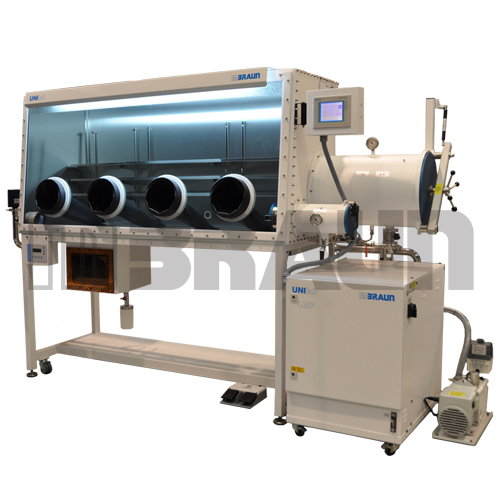
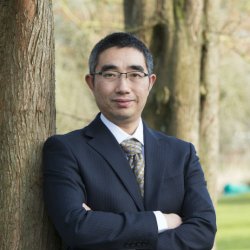
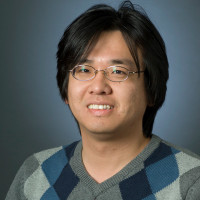
Dr. Likun Zhu is a Professor of Mechanical Engineering at Purdue University's School of Mechanical Engineering in Indianapolis. His research focuses on advanced battery technologies, including lithium-ion and solid-state batteries, with an emphasis on in situ and operando characterization, modeling, and micro/nano fabrication. Dr. Zhu's work addresses critical challenges in battery energy density, safety, and longevity through innovative materials and manufacturing processes. Education: Ph.D. Mechanical Engineering, University of Maryland (2006); M.S./B.S., Tsinghua University (2001/1998). His lab is affiliated with the Birck Nanotechnology Center and equipped with advanced facilities such as gloveboxes, electrochemical analyzers, and microscopy systems. Recent milestones include securing an NSF grant for solid-state battery research (2023) and advising over 30 graduate students. Research Interests: Solid-state batteries, micro/nano fabrication, operando characterization, and sustainable energy materials. His group develops novel electrode materials and designs for high-performance batteries, leveraging cutting-edge in situ techniques to study dynamic processes during cycling. Grants & Awards: NSF grant (2023) for solid-state battery research. Advising: Notable students include Hua Wang (Ph.D. 2024), Xintong Li, and Tianyi Li. Collaborations include work with Professors Hazim El-Mounayri and Andres Tovar on Bayesian optimization of battery materials. Labs & Facilities: The lab, located at ET 118, houses equipment like Arbin battery cyclers, FIB-SEM systems, and Comsol Multiphysics software. Dr. Zhu teaches courses including ME 330 (Dynamic Systems), ME 509 (Fluid Mechanics), and ME 597 (Renewable Energy).
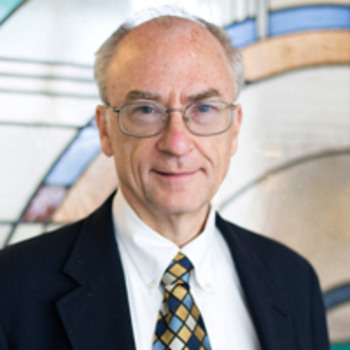
Steven F. Son is the Alfred J. McAllister Professor of Mechanical Engineering at Purdue University, affiliated with the College of Engineering. He holds joint appointments in Aeronautics and Astronautics, Materials Engineering, and Mechanical Engineering. His research focuses on energetic materials, combustion science, and propulsion systems, with emphasis on detonation physics, additive manufacturing of explosives, and novel propellant designs. Key projects include developing throttleable solid propellants, studying material-filled void effects on detonation waves, and optimizing nanomaterials for enhanced reactivity. Dr. Son’s work integrates experimental and computational methods, such as laser absorption spectroscopy and machine learning, to advance understanding of high-energy materials. His contributions span from fundamental material characterization to applied systems like Martian perchlorate-based propellants. He leads research at the Maurice J. Zucrow Laboratories, Purdue’s premier facility for propulsion and energetic materials research. His recent studies explore flexoelectricity in fluoropolymer/aluminum composites, laser ignition systems for solid propellants, and thermal decomposition mechanisms of novel energetic formulations. While no awards are explicitly listed, his prolific publication record and interdisciplinary approach highlight his influence in the field.
Dr. Lucy Gloag is a Lecturer at the Research School of Chemistry at the Australian National University (ANU), where she joined in 2024 after previously serving as a Lecturer at the University of Technology Sydney in 2023. Her research focuses on the development of advanced nanomaterials for energy applications, particularly in electrocatalysis and energy storage. Education: BSc/BCA and BSc(Hons) from Victoria University of Wellington, New Zealand PhD from the University of New South Wales (2018) on synthesis and characterization of Ru-based nanocatalysts Dr. Gloag is a nanomaterials chemist and electron microscopist specializing in the synthesis and characterization of nanomaterials for electrocatalytic applications. Her research addresses the fundamental question of how nanostructure can be used to enhance the performance of electrocatalysts . She employs solution-phase synthesis techniques to create nanoparticles with precise control over crystal structure, dimensions, and surface faceting, then correlates these structural features with electrocatalytic properties using transmission electron microscopy and electrochemistry. Her work spans energy conversion technologies, biomedical applications of nanoparticles, and advanced materials characterization. Analysis of her recent publications reveals a strong focus on single-atom catalysts, hierarchical nanostructures, and the relationship between nanomaterial structure and function. Her research spans both fundamental materials science and practical applications in energy conversion, with significant work on oxygen evolution reaction, hydrogen evolution reaction, and methanol oxidation electrocatalysts. She has also made notable contributions to biomedical applications of nanoparticles, particularly in magnetic particle imaging and Alzheimer's disease diagnostics. Scientific Awards: ARC Discovery Project Grant (2023) ARC Linkage Project Grant (2023) UNSW Science COVID19 Strategic Support Grant (October 2021) Dementia Australia Research Foundation – Yulgilbar Innovation Grant (2019-2022) Australian Postgraduate Research Scholarship (2015) AMN-7 Image Competition Finalist (2015) Dr. Gloag currently leads the ANU Futures Scheme 2.0 project (2024-2028) and has secured multiple competitive research grants, demonstrating strong research leadership. Her work involves extensive collaboration with researchers at UNSW and other institutions, particularly with Professors Richard Tilley and Justin Gooding. She has published 28 research outputs since 2015, with significant citation impact (h-index of 17). Her laboratory at ANU (Building 137, room 2.49) focuses on developing single atom and nanomaterials for energy storage and conversion technologies, continuing her trajectory as an emerging leader in advanced materials synthesis and electron microscopy characterization.
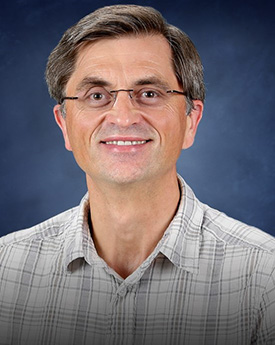
Michael Vershinin is an Assistant Professor of Physics and Astronomy at the University of Utah, specializing in molecular motors and biophysics. He is also affiliated with the Biological Chemistry Program and leads a lab focused on understanding how molecular motors like kinesin and dynein drive intracellular transport and viral assembly. He earned his B.S. from Cooper Union College and Ph.D. from the University of Illinois, Urbana-Champaign. His research interests include: Molecular motor function and regulation Single-molecule biophysics Microtubule-based transport Viral particle assembly (especially SARS-CoV-2 and HIV) Optical trapping and fluorescence microscopy His lab uses in vitro reconstitution and optical trapping to dissect the biophysical properties of motor proteins and their regulation. He collaborates across disciplines, integrating biochemistry, molecular biology, physics, and computational modeling to explore how complex biological behaviors emerge from simpler components. His publications span a wide range of topics, from the structural stability of SARS-CoV-2 virus-like particles to the mechanical behavior of kinesin and dynein motors. A recurring theme is the use of quantitative biophysical tools to understand how motor proteins navigate complex cytoskeletal environments and how viruses hijack these systems for transport. He currently advises no listed students in the provided text and has not received any explicitly listed awards. His lab is located at the University of Utah and can be reached at vershinin@physics.utah.edu .
Dr. Guohong Tian is a Senior Lecturer in Automotive Engineering at the University of Surrey's School of Mechanical Engineering Sciences. He holds roles including Departmental representative for the Faculty International Relations Committee and coordinator for Headstart and Summer School programs. His research focuses on advanced engine technologies, alternative fuels, and thermal management systems. Prior to Surrey, he was at Newcastle University (2010–2015) and Birmingham University as a Research Fellow (2008–2010). Education: PhD in Mechanical Engineering (Birmingham University). Collaborations: Jaguar Land Rover, Cummins, BP, Shell, JCB, and Avid. Research areas include: Internal combustion engines: novel designs (free piston, scroll engines), waste heat recovery via ORC, and desalination integration. Battery thermal management using capillary-driven cooling and heat pipes. Soot oxidation mechanisms and catalytic diesel particulate filters. Key projects: KTP project with William Medcalf Limited improving vintage engine performance. ADVICE-ADvancing thermal energy management in hybrid vehicles. Publications emphasize combustion diagnostics, emission reduction, and scroll expander optimization. He supervises students on pyrolysis oils and scroll expander development. His lab includes a state-of-the-art engine test bench with FTIR emission analysis and high-speed imaging systems.
Ronald G. Larson serves as the George Granger Brown Professor of Chemical Engineering and A. H. White Distinguished University Professor at the University of Michigan's College of Engineering, with additional appointments in Mechanical Engineering and Macromolecular Science & Engineering. His research leadership spans multiple departments within the Chemical Engineering Division, where he directs the Larson Lab focused on fundamental and applied soft matter physics. His research program investigates complex fluids through computational and theoretical frameworks, emphasizing polymer physics, rheology, and molecular simulations. Key thrusts include polymer melt processing, biomembrane dynamics, colloidal systems, and polyelectrolyte coacervation. The group employs advanced techniques like Brownian dynamics, coarse-grained modeling, and multiscale simulation to address challenges ranging from industrial polymer processing to biomedical applications. Recent publications (2023-2025) reveal strong momentum in rheological modeling of complex fluids, with particular emphasis on self-healing materials, wax deposition in pipelines, and crystallization mechanisms. The work bridges fundamental molecular insights with industrial applications, demonstrating consistent high-impact output across polymer science, soft matter physics, and chemical engineering domains. The Larson Lab operates as a collaborative hub within the Chemical Engineering Department, leveraging computational resources to advance understanding of fluid mechanics and material properties. Current projects integrate machine learning with traditional modeling approaches, reflecting the group's commitment to methodological innovation while maintaining strong connections to experimental validation and real-world engineering problems.
Pedro Vilaça is a **Professor and Head of the Department of Energy and Mechanical Engineering** at **Aalto University's School of Engineering**, Finland. Previously, he worked at the Instituto Superior Técnico (Técnico), University of Lisbon, Portugal (1995–2013). His research focuses on **welding technology**, **solid-state manufacturing**, **non-destructive testing (NDT)**, **hydrogen-related materials science**, and **materials safety**, with applications in energy and aeronautics sectors. He leads R&D teams and has collaborated globally, contributing to 142+ publications (h-index 32 via Scopus). **Research Interests**: Advanced welding techniques (e.g., friction stir welding), hydrogen embrittlement in steels, supercapacitor materials, and smart composites. He has pioneered methods for **zero-material-loss welding** and **self-sensing metallic materials**. **Key Projects**: Led initiatives like **THEWFuelCells** (fuel cell welding innovations) and **EARLY/Vilaca** (hydrogen damage assessment). His work aligns with **UN Sustainable Development Goals**, emphasizing renewable energy storage and industrial sustainability. **Awards**: 2011 Eng. Cruz Azevedo Award for outstanding research in Mecânica Experimental. **Collaborations**: Active in international networks, including the International Institute of Welding and European research consortia. He has organized conferences, reviewed patents, and advised doctoral students globally. **Recent Articles**: Focus on corrosion-resistant materials, piezoelectric composites, and hydrogen-induced failure in steels. His 2023–2025 work emphasizes energy storage innovations and advanced joining technologies. **Grants**: Principal investigator for projects funded by Business Finland, EU EIT, and Academy of Finland. **Labs/Teams**: Oversees Aalto’s mechanical engineering research teams and collaborates with institutions like Helmholtz-Zentrum Geesthacht.
Costanza Bonadonna is a Full Professor at the University of Geneva (since 2019), specializing in volcanic hazards and Earth sciences. She holds a PhD supported by the European Commission (1998–2000) and has held academic positions across institutions including the University of South Florida and University of Hawaii. Her research focuses on volcanic ash dispersal modeling, risk assessment, and physical volcanology, with notable contributions to understanding tephra deposits and eruption dynamics. Bonadonna has received prestigious awards such as the 2020 AGU Volcanology presidency and the International Galileo Galilei Award. She leads the CERG-C (Centre for Environmental Risk Studies) and has organized major international workshops on volcanic risk and ash dispersal. Her work integrates numerical modeling, field investigations, and geophysical observations to enhance volcanic hazard forecasting and community resilience strategies. Research Grants: 2019–2023: SNSF Probabilistic volcanic risk framework 2018–2021: H2020 NEWTON-g and EUROVOLC networks 2017–2020: SNSF Gravitational instabilities in volcanic clouds Awards: 2020 President elect of AGU Volcanology Division Galileo Galilei Award (2020) Outstanding Woman in Science (2004, GSA) She has advised numerous international projects and collaborates with global institutions through initiatives like MeMoVolc and NEMOH. Her research bridges geophysical observations with computational models to address multi-hazard scenarios and improve disaster preparedness.
YING-TSONG LIN is an Acting Professor at the Scripps Institution of Oceanography (SIO), UC San Diego. His research focuses on applied ocean sciences, autonomous ocean platforms, internal waves, ocean acoustics, and instrumentation. He leads projects like the New England Shelf Break Acoustics (NESBA) experiment, emphasizing real-time acoustic modeling and environmental interactions. Research interests include 3D acoustic propagation modeling, ocean mixing dynamics, and seabed characterization. His work integrates high-performance computing and distributed sensor networks for oceanographic studies. Recent studies address underwater explosions, renewable energy impacts, and vessel localization using acoustic coherence. Publications emphasize advancements in hydroacoustic modeling, seabed inversion techniques, and environmental asymmetry effects. His contributions span interdisciplinary areas like bioacoustics and seismic-to-acoustic wave conversions. Labs/Teams: Involved with SIO's Acoustics and Oceanography research groups, focusing on autonomous platforms and global observing systems.
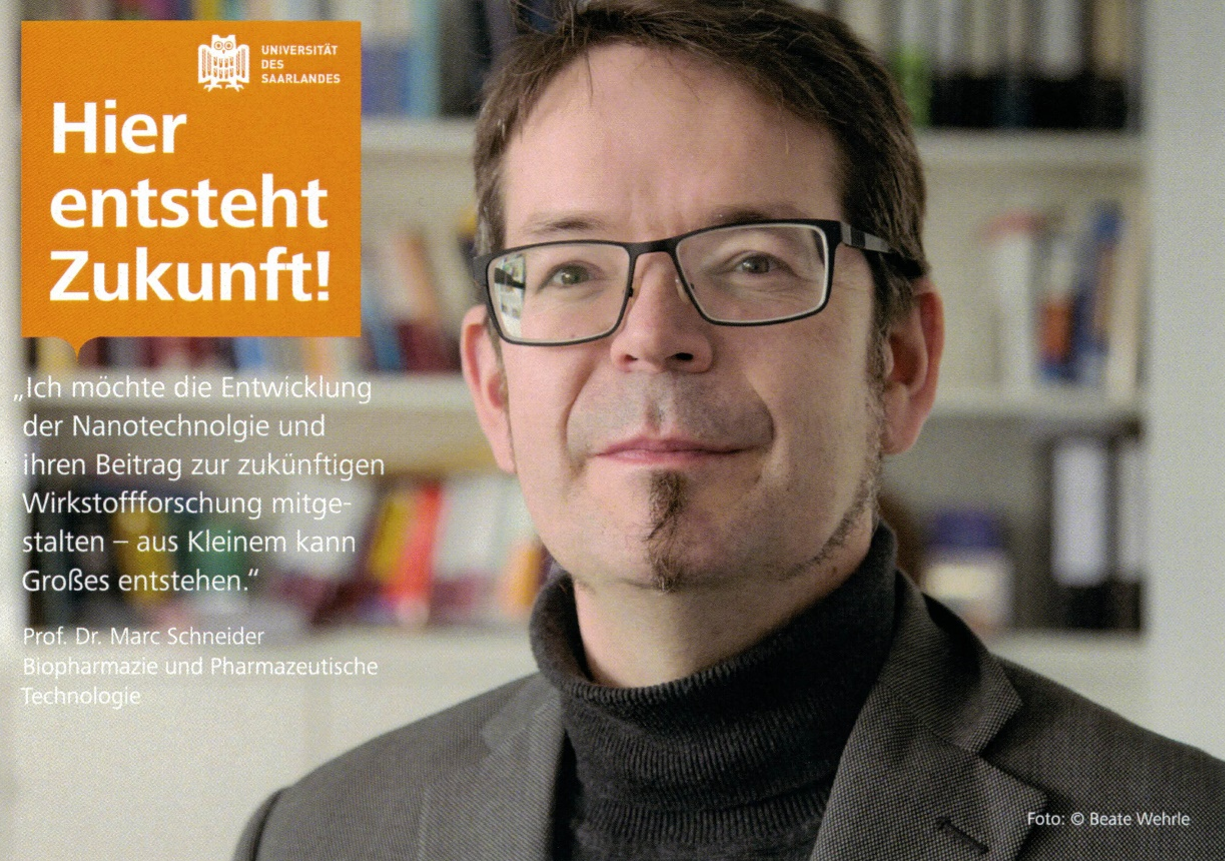
Prof. Dr. Marc Schneider holds a professorship in Biopharmaceutics and Pharmaceutical Technology at Saarland University's College of Pharmacy . His research focuses on colloidal drug delivery systems, particularly nanostructured and non-spherical particle engineering for overcoming biological barriers in pulmonary and transdermal applications. He leads an internationally recognized lab in Saarbrücken, collaborating with Helmholtz Institute for Pharmaceutical Research Saarland (HIPS) and trinational institutions. Research Highlights: Development of inhalable nano/microparticle systems Surface modification of gelatin nanoparticles Characterization of mucus-penetrating particles 3D printing for microneedle fabrication Atomic Force Microscopy (AFM) for nanoparticle analysis Selected Scientific Awards: European Journal of Pharmaceutics and Biopharmaceutics Best Paper Award (2018) for mucus-penetrating nanoparticles Recognized in 'Ausgezeichnete Orte im Land der Ideen' competition (2018) for 'Nano-Mais' drug delivery system Collaborative Networks: Co-editor for Advanced Drug Delivery Reviews special issue on biological barriers Key participant in trinational Master's program in Biomedicine with Strasbourg, Mainz, and Luxembourg Active in Controlled Release Society (CRS) conferences and local chapters
Dr. Beata Gorczyca is a Professor in the Department of Civil Engineering at the University of Manitoba, affiliated with the Price Faculty of Engineering. Her research focuses on potable water treatment, with expertise in solid/liquid separation, chlorine disinfection by-products control, and fractal analysis of materials. She leads a research group collaborating with Canadian water utilities like Portage la Prairie and Pembina Valley Water Co-op. Education: PhD in Chemical Engineering (2000, University of Toronto), M.Sc. in Civil Engineering (1992, University of Toronto), B.Sc. in Geological Engineering (1986, AGH University, Poland). Active roles: Member of the Particle Specialist Group at the International Water Association, keynote speaker at conferences. Research interests include water purification processes, membrane filtration, and bioremediation. Her work addresses challenges in high-DOC and high-hardness water treatment, with contributions to nanofiltration fouling mechanisms and microbial remediation solutions. She has supervised numerous graduate students and is involved in advancing water treatment technologies through interdisciplinary collaborations.
Professor Stephen Croft is a faculty member at Lancaster University , affiliated with the School of Engineering . His research focuses on Nuclear Materials Measurement Science , with expertise in radiation detection, neutron interrogation, and X-ray/gamma-ray spectroscopy. Current projects include cosmic ray neutron monitoring , active neutron interrogation of nuclear materials , and radiation damage assessment . His recent publications emphasize semi-empirical modeling of atomic interactions and advanced detection techniques for nuclear applications. He has contributed to understanding vacancy transfer probabilities , X-ray fluorescence cross-sections , and water detection in nuclear environments . His work supports nuclear security, power plant safety, and space weather monitoring. Scientific awards : None explicitly mentioned in the text. Research groups : Involved in Nuclear Space Weather initiatives.
R. Kenneth Marcus serves as the Robert Adger Bowen Professor of Chemistry in Clemson University's College of Science Department of Chemistry, where he has maintained an active research program for 38 years. His work bridges analytical instrumentation development and advanced separation science with applications spanning nuclear safeguards to biomedical diagnostics. His academic foundation includes dual Bachelor of Science degrees in Chemistry (with honors) and Physics from Longwood College (1982), followed by a Ph.D. in Chemistry from the University of Virginia (1986). This multidisciplinary training underpins his innovative research approach. Dr. Marcus's research focuses on two synergistic thrusts: (1) plasma-based atomic spectrochemical techniques using glow discharge sources, particularly the liquid sampling-atmospheric pressure glow discharge (LS-APGD) microplasma for optical emission and mass spectrometry; and (2) capillary-channeled polymer (C-CP) fiber stationary phases for high-speed protein and extracellular vesicle separations. Current efforts target field-deployable nuclear safeguards instrumentation and exosome isolation platforms for clinical applications, leveraging commodity polymers like polypropylene and nylon. His 2024-2025 publications reveal a strategic convergence where LS-APGD mass spectrometry enables ultra-high-resolution isotopic analysis for nuclear applications, while C-CP fiber chromatography advances exosome purification across diverse biological matrices. This dual focus positions his work at the intersection of national security needs and emerging biomedical diagnostics. His distinguished recognition includes: Fellow of the Royal Society of Chemistry (2010) Fellow of the American Association for the Advancement of Science (2012) Fellow of the Society for Applied Spectroscopy (2016) Fellow of the National Academy of Inventors (2018) Clemson University Researcher of the Year (2019) South Carolina Governor’s Award for Excellence in Science Research (2001) Dr. Marcus has mentored 44 Ph.D. and 17 M.S. students to completion. His research receives sustained support from the National Nuclear Security Administration (NNSA) through Oak Ridge National Laboratory for nuclear safeguards instrumentation, the National Science Foundation (NSF) for chromatography development, and the Advanced Mammalian Biomanufacturing Innovation Center (AMBIC) for metal speciation studies in bioreactors. His laboratory occupies dedicated spaces (BRC 102, 102A, and 106) within Clemson's AG Biotech/Biosystems Research Complex, housing specialized instrumentation for plasma source development, mass spectrometry coupling, and high-throughput fiber chromatography systems that support collaborative work with nuclear security agencies and biomedical researchers.
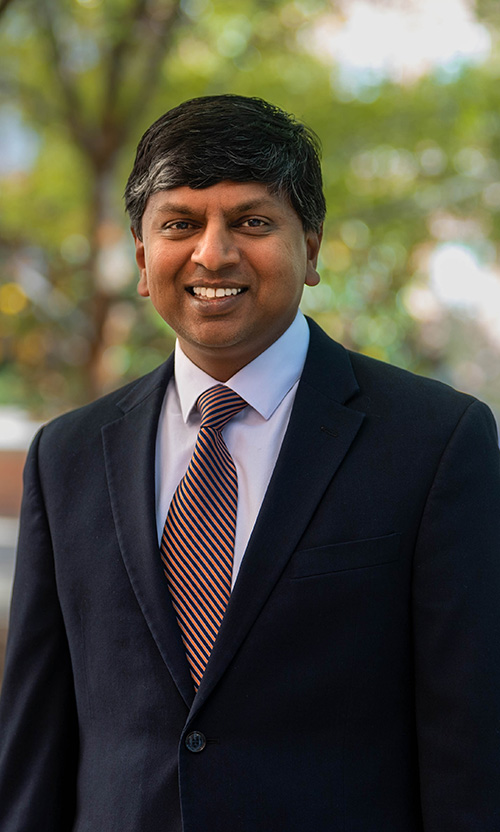
Allan David serves as the John W. Brown Professor of Chemical Engineering and Associate Dean for Research at Auburn University's Samuel Ginn College of Engineering. His leadership extends across academic administration and cutting-edge nanomedicine research, with a focus on translating laboratory discoveries into clinical applications. His educational foundation includes: Ph.D. in Chemical Engineering, University of Maryland B.S. in Chemical Engineering, University of Maryland Dr. David's research program pioneers nanomedicine applications through the development of smart materials for cancer diagnostics and therapy. His work spans nanoparticle-based MRI contrast agents , ocular drug delivery systems , and vaccine delivery platforms , with particular emphasis on optimizing physicochemical properties for targeted biological interactions. Current projects address critical healthcare challenges including safer contrast agents for patients with kidney impairment and precision cancer targeting mechanisms. Analysis of his 15 most recent publications reveals a cohesive research trajectory centered on magnetic nanoparticles and biomimetic delivery systems . The work demonstrates increasing translational focus, evolving from fundamental nanoparticle characterization (2020-2021) to clinically relevant applications like ocular delivery and cancer theranostics (2022-2024), culminating in commercialization efforts through NanoXort, LLC. Dr. David has secured significant research funding including an $184,773 grant from the Alabama Department of Economic and Community Affairs (ADECA) for developing cardiovascular MRI agents. He leads collaborative efforts that bridge chemical engineering with biomedical innovation, notably co-founding NanoXort, LLC to commercialize safer MRI contrast agents addressing gadolinium toxicity concerns for renal-impaired patients. His laboratory operates at the intersection of chemical engineering and medicine, focusing on nanoparticle-cell interactions and targeted delivery systems. The research group maintains strong industry partnerships through the NanoXort startup, which has secured $1 million NSF funding to advance MRI contrast agent technology toward clinical implementation.