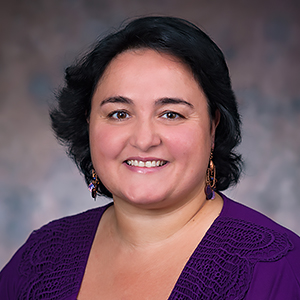
Prof. Domenico Giovanni is an Associate Professor in the Department of Physics and Earth Sciences at the University of Ferrara. His research spans medical imaging, nuclear medicine, radiopharmaceutical production, and geological studies. He leads projects like the METRICS initiative for manganese-52 production and collaborates on paleontological studies such as refining chronology at Obłazowa Cave. His work bridges geology and archaeology through studies on carbonate sedimentology and human osteology. Teaching includes medical imaging, physics for pharmacy, and radiology technology. Recent publications focus on CBCT optimization, PET/MRI multimodality, and paleoanthropological analyses. He actively participates in international conferences and co-authors interdisciplinary studies across radiology, geology, and archaeology.
Antoni Rucinski is a Professor at the Institute of Nuclear Physics Polish Academy of Sciences (IFJ PAN) in Kraków, Poland. His primary affiliation includes a visiting professorship at IFJ PAN since 2017. He holds a Ph.D. in Medical Physics from Heidelberg University (2013) and a Master's in Automatics and Robotics/Medical Physics from the Technical University of Warsaw (2009). His research focuses on interdisciplinary advancements in medical physics, particularly charged particle therapy, including proton and carbon ion therapy. Key contributions include development of the INFN Dose Profiler, GPU-accelerated Monte Carlo treatment planning systems (FRED), and J-PET-based proton range monitoring technologies. Education: Ph.D., Heidelberg University (2010–2013) Master’s, Technical University of Warsaw (2004–2009) Postdoctoral Fellowship, INFN Rome (2015–2016) Research Interests: Proton/carbon ion therapy treatment planning Radiobiological effectiveness modeling Monte Carlo simulations for dose calculation Development of real-time dose monitoring systems Translation of research innovations into clinical practice Scientific Achievements: Marie Sklodowska-Curie Actions Seal of Excellence (2017) Co-developed the FRED Monte Carlo code Pioneered J-PET-based proton range monitoring Grants/Leadership: Principal Investigator of two Polish National Science Centre grants Leads a 5-researcher team at IFJ PAN Labs/Teams: Active collaboration with Prof. Pawel Moskal’s group at Jagiellonian University on J-PET technology. Core member of the CCB Kraków proton therapy center research team.
Professor Silvina Guidoni is a theoretical and computational heliophysicist at American University in Washington, DC, specializing in solar flares and coronal mass ejections. Her research focuses on magnetic reconnection processes, plasma dynamics, and particle acceleration mechanisms that drive space weather phenomena affecting Earth's technological systems. Her educational background includes a Ph.D. and Master's in Physics from Montana State University, postdoctoral studies at NASA Goddard Space Flight Center, and a BS in Physics from Mar del Plata National University in Argentina. Ph.D. in Physics, Montana State University Master of Science in Physics, Montana State University Postdoctoral studies, NASA Goddard Space Flight Center BS in Physics, Mar del Plata National University Professor Guidoni's research integrates advanced computational modeling with analysis of data from NASA missions including SDO, STEREO, and Hinode. She runs complex simulations on supercomputers to study the physical processes behind solar eruptions and their space weather impacts. Her recent publications focus on power-law formation through sequential particle acceleration in solar magnetic structures, revealing fundamental mechanisms in solar flare physics. She serves on NASA and NSF proposal review panels and as a peer reviewer for prestigious journals including Nature Astronomy and Astrophysical Journal. Professor Guidoni is an active member of the Steering Committee for the SHINE Workshop and the Solar Physics Division of the American Astronomical Society. Steering Committee, Solar Heliospheric and INterplanetary Environment Workshop Committee Member, Solar Physics Division of American Astronomical Society Peer Reviewer for Nature Astronomy, Astrophysical Journal, and other leading publications Professor Guidoni mentors undergraduate researchers, with one co-mentored project winning a STEM prize. She teaches advanced physics courses including Electricity and Magnetism and Physics Capstone Seminar. Her laboratory work involves parallel computing on supercomputers and analysis of solar mission data, with collaborations spanning NASA centers and international heliophysics research groups.
Joanna Weng is a Senior Lecturer in Mathematics, Physics, and Sensor Technology at the ZHAW School of Engineering, affiliated with the Institute of Applied Mathematics and Physics (IAMP) and the Centre for Artificial Intelligence (CAI). She holds roles as Project Leader at the Safety-Critical Systems Research Lab and serves as an Associate Diversity Officer. Her expertise spans AI in safety-critical systems, functional safety (IEC 61508), nuclear power plant safety analysis, and particle physics. Education: CAS in Project Management, Functional Safety Engineer (TÜV Rheinland), and IEEE CertifAIEd Assessor. Research focuses on AI certification frameworks, deterministic/probabilistic safety analysis, and autonomous system safety. She leads projects like the Personnel Safety System (PSS) at the European Spallation Source (ESS) and co-leads the certAInty certification scheme for AI systems. Notable contributions include work on trustworthy AI assessment and MLOps-enabled safety. Key Projects: Personnel Safety System (PSS) at ESS IEEE CertifAIEd Assessor Training Machine Protection and Autonomous Predictive Interlock Systems certAInty AI Certification Scheme Awards/Certifications: CAS in Safe and Secure AI, TÜV Functional Safety Engineer, IEEE CertifAIEd Assessor. Grants/Advising: Innovationsuisse-funded certAInty project leader, overseeing interdisciplinary teams for AI safety research and implementation. Labs/Teams: Safety-Critical Systems Research Lab (IAMP), Centre for Artificial Intelligence (CAI), and collaborations with CERN Alumni and Women in Tech networks.
Orlando Oliveira is a Full Professor of Physics at the University of Coimbra, Portugal, affiliated with the Center for Physics (Centro de Física) within the Faculty of Sciences and Technology. His academic career spans over three decades, starting as an Assistant Professor in 1990 and advancing to his current rank of Professor Catedrático since 2024. He holds a PhD in Particle Physics from the University of Edinburgh (1996) and an Agregação in Physics (2016) from the University of Coimbra. His research focuses on theoretical and computational particle physics, particularly lattice Quantum Chromodynamics (QCD) and condensed matter systems like graphene. Key areas include the study of gluon propagators, quark-gluon vertices, and phase transitions in QCD using lattice simulations. He has led multiple research projects funded by the Portuguese Foundation for Science and Technology (FCT), including initiatives on deconfinement dynamics, exotic hadrons, and quantum field theory applications to condensed matter. Oliveira has authored over 100 peer-reviewed articles in high-impact journals such as *Physical Review D*, *European Physical Journal C*, and *Solar Physics*. His work bridges lattice QCD with mathematical morphology for solar feature detection, showcasing interdisciplinary innovation. He maintains collaborations across Europe, including with institutions in Lisbon, Porto, and the UK. His contributions to GPU-accelerated lattice simulations and spectral analysis methods have advanced computational physics methodologies. Academically, he has supervised numerous graduate students and postdocs, contributing to the training of the next generation of theoretical physicists. His research group actively participates in international conferences, presenting findings on gluon vertices, confinement mechanisms, and QED dynamics. Despite no explicit awards listed, his sustained leadership in QCD lattice studies underscores his impactful contributions to the field.
Menno W.J. Prins is a Full Professor at Eindhoven University of Technology, holding joint appointments in the Departments of Applied Physics and BioMedical Engineering. He is a core member of the Institute for Complex Molecular Systems (ICMS) and contributes to the Strategic Area Health. His research focuses on developing molecular biosensors for continuous patient monitoring, particularly using single-molecule detection techniques involving magnetic particles and microfluidics. He founded the SensUs competition to foster innovation and education in biosensing. Academically, he earned his MSc from Delft University of Technology and PhD from Radboud University (1995). Before becoming a full-time professor in 2014, he worked at Philips Research on point-of-care diagnostics. His current projects include 'Real-time Biomolecular Sensing for Smart Food Industry' (2021–2026), emphasizing practical applications of biosensing technologies. Research interests span biophysical manipulation of molecules, particle-based detection methods, and translating single-molecule insights into robust clinical tools. His work addresses challenges like long-term sensor stability and precision in dynamic environments. Over 50 supervised students reflect his commitment to mentoring. Publications highlight advancements in particle motion-based biosensors, antibody fragment applications, and systemic inflammation monitoring. He has delivered invited talks globally and contributed to conferences on point-of-care diagnostics and regulatory frameworks.
Professor Sonya Coleman is a Professor of Vision Systems at Ulster University's School of Computing, Engineering and Intelligent Systems. She leads the Cognitive Robotics team within the Intelligent Systems Research Centre and has held roles including Head of the Research Graduate School since 2012. Her expertise spans image processing, robotics, computational intelligence, and financial engineering. She holds a BSc (First Class) and PhD in Mathematics from Ulster University (1999 and 2003, respectively). Research interests include advanced computer vision techniques, robotic systems, and industrial automation. Notable contributions include work on defect detection in additive manufacturing, neuromorphic computing frameworks, and energy consumption forecasting in smart manufacturing. Her research has been funded by EPSRC, the Nuffield Foundation, and the European Commission. Awards include the 2009 Distinguished Research Fellowship from Ulster University. She serves as Secretary of the Irish Pattern Recognition and Classification Society. Her work often integrates innovative solutions for industrial challenges, such as real-time monitoring systems and AI-driven quality control. Professor Coleman has authored numerous peer-reviewed articles, focusing on topics like spiking neural networks, PCB defect analysis, and glacier area change quantification using satellite remote sensing.
Silvia Zorzetti is an Adjunct Associate Professor at Northwestern University and leads the Quantum Computing Co-Design and Communication Department at Fermilab. She also heads the Quantum Information Science (QIS) Ecosystem Thrust within the Superconducting Quantum Materials and Systems (SQMS) Research Center. Her roles include leadership in workforce development and software/middleware for quantum computing. Dr. Zorzetti holds a PhD from the University of Pisa and completed a Marie Curie Fellowship at CERN. She joined Fermilab as a Bardeen Fellow in 2017 and received the DOE Early Career Award in 2023 for quantum transduction research. Research interests focus on quantum information science, including superconducting cavities, quantum computing/sensing devices, and software-hardware interfaces. She actively mentors students and interns at SQMS. Notable contributions include advancements in cryogenic material characterization, quantum transduction systems, and instrumentation control kits for qubit applications. Awards: DOE Early Career Award (2023), Marie Curie Fellowship (CERN) Leadership Roles: QIS Ecosystem Thrust Lead, 3D Software/Middleware Lead, QPU Connectivity Co-Lead Key Projects: SQMS Center, Fermilab Quantum Computing Department
Dr Fiona Panther is a Research Fellow at the University of Western Australia's School of Physics, Maths and Computing. Her work focuses on gravitational waves, astrophysical transients, and compact objects. She received her PhD from the Australian National University (2019) and a BSc(Hons) from the University of Auckland (2015). Panther is part of OzGrav-UWA and collaborates with global networks like LIGO-Virgo-KAGRA. Her research explores neutron star mergers, black hole interactions, and antimatter origins in the Milky Way. She leads projects such as the Forrest Fellowship and Zadko Observatory upgrades, advancing multi-messenger astrophysics. Key contributions include gravitational wave detection, gamma-ray burst analysis, and cosmic ray studies. Panther's work bridges theoretical models with observational data, addressing extreme astrophysical phenomena. Education: PhD in Astronomy and Astrophysics, Australian National University (2015–2019) BSc(Hons) in Physics and Mathematics, University of Auckland (2011–2014) Research Interests: Fiona's work spans gravitational wave astrophysics, neutron star dynamics, and cosmic ray propagation. She investigates how merging compact objects (e.g., black holes, neutron stars) emit gravitational waves and electromagnetic signals, advancing our understanding of nuclear physics and extreme matter conditions. Her analysis of astrophysical transients like gamma-ray bursts and fast radio bursts bridges observational data with theoretical predictions. Grants/Projects: Forrest Fellowship (2023–2025): Investigating gravitational waves from neutron stars Zadko Observatory Space Surveillance Hub (2023–2024): Enhancing optical transient detection Gravitational Wave Discovery (2022–2022): Analyzing neutron star merger signals Labs/Teams: Panther leads the Zadko Observatory team and collaborates with international initiatives like OzGrav (Australian Research Council Centre of Excellence for Gravitational Wave Discovery). Her work integrates data from LIGO, Virgo, and KAGRA detectors with optical follow-up observations.
Jan Diepens is a Researcher at Eindhoven University of Technology specializing in Computational Fluid Dynamics (CFD) applications for indoor air quality and pandemic response. He actively contributes to UN Sustainable Development Goals through projects like Programma Pandemische Paraatheid en Ventilatie (2022-2025) and CLAIRE LSHM22032 - Clean Air For Everyone (2022-2026), focusing on aerosol dispersion control in buildings. His research centers on Computational Fluid Dynamics , Air Quality Engineering , and Indoor Environmental Systems , with emphasis on ventilation optimization, air cleaner efficacy, and aerosol particle behavior in sports facilities, gyms, and experimental chambers. Recent work demonstrates practical solutions for pandemic-safe indoor spaces through CFD modeling and laboratory validation. Analysis of 2021-2024 publications reveals strong thematic focus on pandemic-responsive building design , particularly CFD-aided ventilation strategies and portable air cleaner testing. Key trends include quantification of aerosol removal efficiency in gyms, experimental validation of airflow dynamics, and development of performance metrics for infection-risk mitigation technologies. Diepens has supervised 12 research projects and secured funding through major initiatives including Reliable Accelerated Powergeneration for Industrial Deployment (MOOI20FO87U, 2020-2024) and Towards safe indoor sports events during pandemics (LSHM20077, 2020-2022). His collaborative network spans engineering, public health, and building physics disciplines across multiple European institutions.
Mark E Dieckmann is an Associate Professor and Docent at Linköping University's Department of Science and Technology (ITN) within the Media and Information Technology (MIT) school. His research focuses on plasma physics, computational physics, and scientific visualization, with a particular emphasis on particle-in-cell (PIC) simulations of plasma dynamics, shock waves, and collisionless plasma phenomena. His work includes studies on ion-acoustic waves, magnetosonic shocks, Weibel instability, and relativistic plasma jets. Dieckmann is affiliated with the Scientific Visualization group (VV) and contributes to interdisciplinary research at MIT, leveraging advanced computational methods to explore complex plasma behaviors. His recent publications (2023–2025) highlight contributions to understanding plasma instabilities, shock dynamics, and particle acceleration mechanisms in both laboratory and astrophysical contexts. While no awards or students are explicitly listed, his research is centered at the intersection of plasma physics and advanced simulation techniques.
Guillaume P.R. Lajoinie serves as Associate Professor across multiple institutes at the University of Twente: Digital Society Institute, MESA+ Institute, Physics of Fluids research group, and TechMed Centre. His interdisciplinary work bridges physics, engineering, and medical applications with emphasis on ultrasound technologies and microbubble dynamics for therapeutic and diagnostic purposes. His research profile is dominated by Ultrasound Physics (100% fingerprint match) and Bubbles Physics (85%), with significant contributions to Contrast Physics (42%), Acoustics Physics (37%), and Droplet Physics (32%). Current investigations focus on microbubble stability for drug delivery systems, immunogenic cell death mechanisms in cancer therapy, and computational simulation of ultrasound phenomena through projects like the PROTEUS simulator. His work consistently integrates fluid dynamics with medical imaging applications. 2025 publications reveal accelerating output in ultrasound simulation, microbubble engineering, and cardiovascular imaging techniques. Key trends include computational modeling of contrast agents, attenuation correction algorithms for plaque imaging, and physical cancer therapy-immunotherapy synergies. His research maintains strong clinical translation focus through TechMed Centre collaborations. Lajoinie has supervised 5 graduate students and maintains active research leadership through the Physics of Fluids group. His work demonstrates consistent growth in publication output since 2012, with 2025 showing peak productivity (9 outputs). He leverages cross-institute resources at University of Twente for experimental and computational approaches to biomedical ultrasound problems. Laboratory work centers on the Physics of Fluids experimental facilities with extensions to TechMed Centre's medical technology platforms. Current team efforts focus on microbubble production systems, ultrasound simulation frameworks, and tumor-on-a-chip models for therapy testing, reflecting his fingerprint's emphasis on Combination Therapy Medicine and In Vitro systems.
Yang Bai is a Professor in the Department of Physics at the University of Wisconsin-Madison, affiliated with the College of Letters & Science. His research focuses on theoretical particle physics, including dark matter, cosmic rays, black holes, gravitational waves, and early universe physics. He holds a Ph.D. from Yale University (2007) and a B.S. from the University of Science and Technology of China (2002). Before joining UW-Madison in 2012, he was a Research Associate at SLAC and Fermilab. His work emphasizes muon collider technology and its applications in exploring high-energy physics phenomena. Key projects include designing superconducting magnets for muon storage rings and studying Higgs boson properties at future colliders. Bai’s contributions bridge theoretical models with experimental feasibility, addressing challenges like vacuum stability and flavor physics. Publications highlight advancements in muon collider design, Higgs physics, and BSM scenarios. Collaborations include international efforts like the Muon Collider Collaboration and ECFA studies. No specific awards are listed, though his research aligns with major particle physics initiatives.
Ke Han is an Associate Professor at Shanghai Jiao Tong University, specializing in both Particle Physics (Experimentalist) and Behavioral Health interventions. His research spans experimental physics studies on strange quark matter and clinical investigations into eating disorders, weight management, and physical activity interventions. He holds a Ph.D. from Yale University (2009), where his dissertation explored 'Search for Stable Strange Quark Matter in Lunar Soil,' conducted using a tandem Van-de-Graaff accelerator. Education: Ph.D. in Physics, Yale University, 2009 Research interests include: Particle Physics experiments Behavioral health interventions for eating disorders Technology-driven weight loss programs Physical activity promotion strategies Cultural factors in food addiction Recent work emphasizes the role of digital tools in behavioral modification, such as mobile messaging and incentive programs for physical activity. His studies also address psychosocial factors influencing obesity treatment outcomes and bariatric surgery recovery. Advising/Grants: No specific advising or grant details are provided in the text. Labs/Teams: No lab affiliations or collaborative teams are explicitly mentioned.
Dr. Phu Nguyen is a Lecturer in Structural Engineering at Monash University's Department of Civil and Environmental Engineering. He holds a PhD in Computational Mechanics from Delft University of Technology (2011) and has held academic positions at Johns Hopkins University, Cardiff University, and the University of Adelaide before joining Monash in 2016. His expertise spans computational mechanics, phase-field fracture modeling, and multiscale material analysis. Education: Bachelor of Science in Civil Engineering, Hochiminh University of Technology (1998) Master of Science in Computational Mechanics, University of Liège (2005) PhD in Computational Mechanics, Delft University of Technology (2011) Research Interests: Focuses on computational modeling of failure in quasi-brittle materials (concrete, composites) using advanced numerical methods such as phase-field fracture, material point method (MPM), isogeometric analysis, and multiscale homogenization. Active in developing open-source computational tools like MPMat and Karamelo . Publications: Over 78 peer-reviewed articles, including highly cited works on meshless methods, phase-field fracture, and computational homogenization. Notable contributions to journals like Computer Methods in Applied Mechanics and Engineering and Engineering Fracture Mechanics . Awards: ARC DECRA Fellowship (2016–2019) Best PhD Presentation Award (2010) CIFRE Scholarship Most Cited Article in Advances in Applied Mechanics (2025) Grants & Supervision: Leads research projects on hydraulic fracturing and composite failure. Supervised PhD student Tushar K Mandal. Active in teaching courses like CIV4235 (Advanced Structural Design) and CIV3284 (Concrete and Masonry Structures). Professional Roles: Editorial board member of Engineering Fracture Mechanics , Computers, Materials and Continua , and Computer Modeling in Engineering & Sciences . Reviews for top journals including Computer Methods in Applied Mechanics and Engineering and International Journal of Numerical Methods in Engineering .