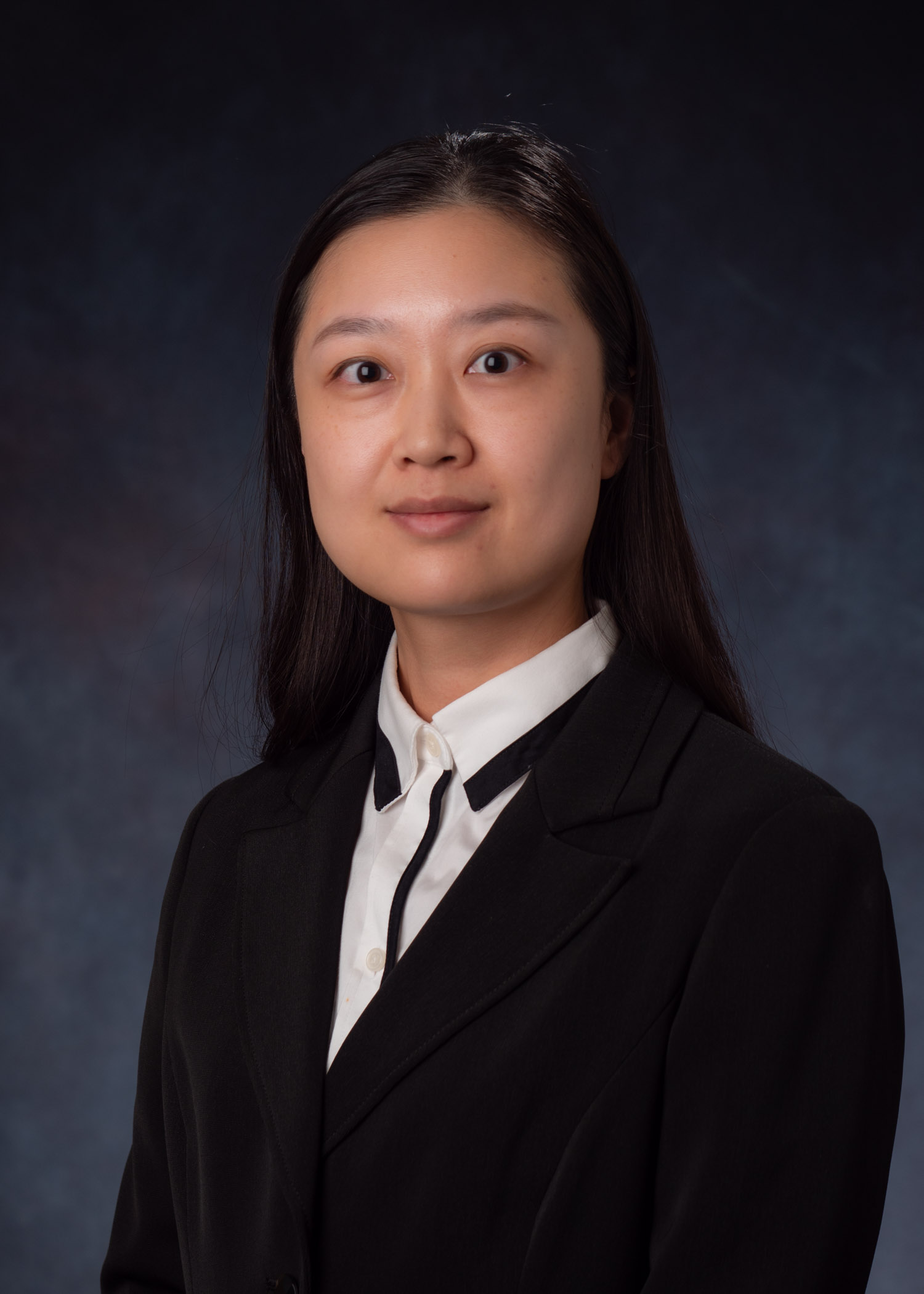
Antonia Statt is an Assistant Professor at the University of Illinois Urbana-Champaign, affiliated with the Grainger College of Engineering's Department of Materials Science and Engineering. She holds joint appointments in Chemical & Biomolecular Engineering, the Beckman Institute, and the Materials Research Lab. Her research focuses on designing functional polymer materials, with a strong emphasis on computational modeling, soft matter systems, and non-equilibrium phenomena like crystallization and aggregation. Statt earned her Diploma (2012) and PhD (2015) in Physics from the University of Mainz. Prior to her faculty role, she was a Postdoctoral Fellow at Princeton University's Chemical and Biological Engineering department. Her work integrates empirical modeling, statistical mechanics, and GPU-accelerated simulations to study polymer and colloidal systems. Recent research highlights include simulating curved lipid membranes, predicting copolymer self-assembly, and applying large language models for macromolecular design. She teaches courses such as Polymer Physics, Surfaces and Colloids, and Atomic Scale Simulations. Statt actively mentors graduate and undergraduate students, emphasizing motivated learners in materials discovery and computational methods. Her lab prioritizes data-driven approaches and collaborates across disciplines to address challenges in energy, environment, and technology. Recent publications span lipid membrane dynamics, polymer self-assembly, and machine learning applications in materials science.
Aydin Buluç is a Senior Scientist at Lawrence Berkeley National Laboratory (LBNL) and an Adjunct Associate Professor of EECS at UC Berkeley. His work focuses on parallel computing, high-performance graph analysis, machine learning, sparse computations, and computational biology. He leads the Sparsitute DOE center and directs the PASSION Lab, emphasizing scalable algorithms and their applications in genomics and data science. Education: PhD in Computer Science from UC Santa Barbara (2010); BS in Computer Science and Engineering from Sabanci University, Turkey (2005). Research: Develops parallel algorithms for graph analysis, sparse linear algebra, and communication-avoiding techniques. Key projects include HipMCL for metagenome analysis and GraphBLAS for combinatorial computing. Awards: DOE Early Career Award (2013), IEEE TCSC Early Career Award (2015), ACM Gordon Bell Prize Finalist (2022). Teaching: Co-teaches CS267 (Applications of Parallel Computers) at UC Berkeley, emphasizing practical high-performance computing. Professional Roles: Editor of ACM Transactions on Parallel Computing, PC member for major conferences (SPAA, IPDPS), and leader in ExaGraph and DOE initiatives.
Dr. Philip MacInnes serves as a Research Fellow in the Department of Physics within the Faculty of Science at the University of Strathclyde. His work focuses on advanced microwave and terahertz technologies, with particular expertise in electron beam physics and plasma interactions. He maintains active collaborations across multiple international research groups and contributes to major projects funded by EPSRC and the Office of Naval Research. His research interests center on microwave physics and electron beam dynamics , with specific applications in terahertz radiation generation , corrugated waveguide systems , and plasma-microwave interactions . His work bridges fundamental physics with practical engineering applications in high-power microwave sources and particle acceleration. Analysis of his recent publications reveals a strong trend toward developing efficient terahertz sources using structured surfaces and energy recovery systems, with significant contributions to gyrotron technology and plasma-based microwave amplification. His work consistently addresses challenges in high-frequency wave generation and beam-wave interactions. Dr. MacInnes actively supervises research projects including EPSRC-funded internships and international collaborations. His current projects focus on compact microwave oscillators, folded waveguide traveling wave amplifiers, and novel particle accelerators for portable x-ray sources. He contributes to the Strathclyde research ecosystem through the SUPA (Scottish Universities Physics Alliance) network and participates in major international conferences including IEEE IVEC and EPS Plasma Physics conferences. His laboratory work involves advanced characterization of helicon plasma devices and development of specialized microwave components.
Dr. Oliver Allanson is an Assistant Professor in Space Environment at the University of Birmingham's School of Engineering, Department of Electronic, Electrical and Systems Engineering, where he leads the Space Environment and Radio Engineering (SERENE) Group. He concurrently holds an Honorary Senior Lecturer position in Mathematics at the University of Exeter. His academic credentials include a PhD in Applied Mathematics from the University of St Andrews (2017), MASt in Applied Mathematics/Theoretical Physics from the University of Cambridge (2013), and MPhys in Mathematics-Theoretical Physics from the University of St Andrews (2012). His research focuses on fundamental space plasma physics and space weather phenomena, particularly nonlinear wave-particle interactions, radiation belt dynamics, and kinetic theory of Earth's magnetosphere. He leads a UKRI NERC Independent Research Fellowship (2021-2026) titled 'The Importance of Nonlinear Physics in Radiation Belt Modelling' which aims to advance predictive space weather capabilities through improved physical models of high-energy particle dynamics. Dr. Allanson has received significant recognition including: Royal Astronomical Society Fowler Award for Geophysics (2023) Springer Theses Prize (2018) IMA Lighthill-Thwaites Prize Runner-Up (2017) He leads an active research group comprising Senior Research Software Engineers (Dr. James Tyrrell, Dr. Thomas Kappas), PhD students (Samuel Boardman, Rachel Black), and supervises multiple MSc projects. His collaboration network spans institutions across the UK, US, and Europe including British Antarctic Survey, UCLA, and GFZ Potsdam.
Benjamin Chandran, a Professor in the Department of Physics and Astronomy at the University of New Hampshire's College of Engineering and Physical Sciences, is a Fellow of the American Physical Society and a 2024 recipient of the Excellence in Teaching Award. His research focuses on theoretical plasma physics and heliophysics, particularly the dynamics of the solar wind and Alfvénic turbulence. Chandran bridges fundamental physics with astro-heliospheric applications while maintaining a strong commitment to education. University of New Hampshire Institute for Earth Oceans and Space His work investigates collisionless plasma processes, magnetic switchbacks, and turbulent dissipation mechanisms in solar wind, supported by observations from missions like the Parker Solar Probe. Chandran's teaching emphasizes interactive methods, including clickers and collaborative problem-solving, fostering student engagement in complex physics concepts. Excellence in Teaching Award (2024) Fellow, American Physical Society Chandran's recent publications analyze cyclotron resonance, microtearing modes, and Alfvén wave interactions, reflecting his expertise in multiscale plasma turbulence and solar wind acceleration. His contributions span both groundbreaking research and pedagogical innovation, positioning UNH as a leader in heliophysics.
Prof. Dr. Nicolas R. Gauger is a Full Professor and Chairholder for Scientific Computing at the University of Kaiserslautern-Landau (RPTU), holding dual appointments in the Department of Mathematics and Department of Computer Science. Since February 2015, he has also served as Director of the Computing Center (RHRZ) at RPTU. His academic career includes positions as Assistant Professor at Humboldt University Berlin (2005-2010), Associate Professor at RWTH Aachen University (2010-2014), and a Visiting Professorship at MIT (March-August 2014). Prof. Gauger earned his Master in Mathematics from Leibniz University of Hanover in 1998 and his Ph.D. in Applied Mathematics from Braunschweig University of Technology in 2003. Prior to his professorial positions, he worked as a Research Scientist in Numerical Methods for Aerodynamics at the German Aerospace Center (DLR) in Braunschweig from 1998 to 2010, while also being a Member of the DFG Research Center MATHEON in Berlin from 2006 to 2010. His research spans multiple disciplines within computational science and engineering, with primary interests in Nonlinear Optimization, Numerical Optimization, Optimization and Control with PDEs, Aerodynamic Shape Optimization, Computational Fluid Dynamics (CFD), Computational Aeroacoustics (CAA), Algorithmic Differentiation (AD), Machine Learning (ML), and High-Performance Computing (HPC). His work bridges theoretical mathematics with practical engineering applications, particularly in aerospace and medical physics. Recent publications show a strong trend toward integrating differentiable programming techniques with traditional computational methods, especially in optimizing experimental setups in fundamental physics and medical applications like proton therapy. Among his notable recognitions are being named an Associate Fellow of the American Institute of Aeronautics and Astronautics (AIAA) in August 2018, receiving a Teaching Award (June 26, 2025), and a Best Student Paper Award at AIAA Aviation 2020. He serves on the Managing Board of ERCOFTAC (European Research Community on Flow, Turbulence and Combustion) and the Steering Committee of the ERCOFTAC Special Interest Group on Design Optimization. Prof. Gauger has been actively involved in multiple research initiatives including the Research and Development Lab 'Data Analysis and Artificial Intelligence' of the Fraunhofer Performance Center (vice spokesperson since March 2016), AICES (2010-2019), (CM)^2 (2014-2019), MathApp (2019-2024), and currently MSO (Modelling, Simulation and Optimisation) since 2024. He leads a research team of approximately 15 members working on projects related to algorithmic differentiation, computational fluid dynamics, and optimization methods. His laboratory, the Scientific Computing research group at RPTU, is involved in multiple interdisciplinary projects including SIVERT (pCT) for fighting cancer with AI and the 'AI Care' project. The team has developed several important software tools including CoDiPack, OpDiLib, and SU2, which are widely used in the computational science community for algorithmic differentiation and aerodynamic optimization.
Hakan Erkol is an Associate Professor and Deputy Head of the Department of Physics at Boğaziçi University. He holds a PhD (2009) and MS (2003) in Physics from Boğaziçi University, and a BS (2000) in Physics from Yıldız Technical University. His research focuses on theoretical physics applied to biomedical engineering, particularly in medical physics, photoacoustic imaging, and laser therapy. He has contributed to advancements in acoustic force modeling, photoacoustic wave analysis, and photothermal therapy planning. His work bridges fundamental physics with practical medical applications, including imaging technologies and therapeutic systems. Education: PhD: Boğaziçi University, Department of Physics (2009) MS: Boğaziçi University, Department of Physics (2003) BS: Yıldız Technical University, Department of Physics (2000) Research Interests: Medical Physics, Acoustic Forces, Photoacoustic Imaging, Laser Therapy, Biomedical Optics, and Analytical Modeling. Current Roles: Deputy Head of Department at Boğaziçi University's Physics Department (2018–present). His publications emphasize analytical models for biomedical applications, including studies on microbubble dynamics under pulsed lasers, chromophore concentration quantification in tissues, and real-time imaging techniques. He has led projects like the BAP 15362 (completed in 2022) on acoustic microscopy-guided laser therapy. His teaching spans foundational physics courses and research methodology.
Dr. Orlando Ayala is an Associate Professor in the Mechanical Engineering Technology Department at Old Dominion University's Frank Batten College of Engineering and Technology. He holds a Ph.D. (2005) and M.Sc. (2001) in Mechanical Engineering from the University of Delaware, and a B.S. in Mechanical Engineering (Cum Laude, 1995) from Universidad de Oriente, Venezuela. His research focuses on multiphase flows , turbulent particle transport , and high-performance computational methods . Key areas include: fluid-particle interactions in pipeline erosion, lattice Boltzmann modeling for turbulence modulation, cloud droplet collision dynamics, and porous media flow. His work integrates advanced numerical simulations with applications in energy systems and environmental fluid mechanics. Publications emphasize turbulent collision statistics, particle-laden flows, and parallel computing algorithms, with recent studies leveraging DNS and lattice Boltzmann methods to resolve microscale interactions in multiphase systems. Scientific Awards & Honors: Certificate of Excellence in Undergraduate Research (2017) Highly Cited Research in Parallel Computing (2016) Outstanding Contribution in Reviewing, Journal of Natural Gas Science (2015) Research Fellowships: Venezuelan Foundation for Promotion of Researchers (2003, 2006, 2008) Teaching Excellence Nominee, University of Delaware (2005) Grants & Projects: Secured $800,000+ in funding, including NSF-supported studies on turbulent particle collisions ($359,861), naval additive manufacturing ($150,000), and solar energy systems ($158,162). Research collaborations span turbulence modulation, photovoltaic tech, and pipeline erosion.
Lars Erik Bräuner is an Associate Professor at the Department of Mechanical and Production Engineering Design and Manufacturing , part of AU Engineering at Aarhus University . His academic work spans mechanical engineering, physics, and biomedical applications, with a focus on structural analysis and accelerator technology. Research interests include: Mechanical behavior of vacuum chambers in synchrotrons Biomedical device stress modeling (e.g., TAVI valves) High-temperature superconducting magnet systems Computational and experimental structural mechanics Advanced manufacturing techniques Accelerator component design Key publications (2009-2023) demonstrate interdisciplinary expertise bridging mechanical engineering with high-energy physics applications. Notable collaborations include projects like InnoVacc: Pressure Testing of Vacuum Chambers for Particle Accelerators and conduction-cooled superconducting dipole magnets. Contact: lb@mpe.au.dk | Telephone: +45 41 89 31 83
Prof. Harald Klingbeil is a Professor at the Technische Universität Darmstadt's Department of Electrical Engineering and Information Technology, leading the Accelerator Technology Group. He concurrently heads the 'Ring RF Systems' department at GSI Helmholtzzentrum für Schwerionenforschung since 2012 and previously led the 'HF-Systeme' department there (2005–2012). His research focuses on accelerator RF systems, electromagnetic field theory, digital systems architecture, and physical-mathematical modeling. Education: PhD (Dr.-Ing.) from TU Darmstadt (1997), diploma in electrical engineering (1992). Prior to academia, he worked in automotive telematics at Siemens VDO AG (1997–2001). His roles include leadership in FAIR (Facility for Antiproton and Ion Research) projects, particularly the SIS100 synchrotron and Barrier-Bucket systems. Research emphasizes advanced RF control systems, beam stabilization in synchrotrons, and high-frequency component modeling. Key contributions include SIS18 upgrades, broadband cavity design, and digital filter implementation for feedback loops. Ongoing work targets FAIR's next-generation accelerator infrastructure and relativistic electromagnetism applications. Publications span 20+ years, covering experimental findings, theoretical frameworks, and engineering innovations in accelerator physics. His work bridges fundamental electromagnetism with applied technologies for large-scale scientific facilities.
Prof. Sebastian Schöps is an Associate Professor in the Department of Electrical Engineering and Information Technology at Technische Universität Darmstadt. He leads the Computational Engineering Group, focusing on coupled multiphysical simulations and high-performance computing. His work bridges computational electromagnetics with advanced numerical methods like isogeometric analysis and reduced-order modeling. Education: Joint PhD in Physics (KU Leuven, Belgium) and Mathematics (University of Wuppertal) MSc and BSc in Business Mathematics (University of Wuppertal) Research Interests: Coupled systems involving electromagnetism, thermodynamics, and structural mechanics High-performance parallel algorithms for industrial-scale simulations Uncertainty quantification in engineered systems Optimization of electric machines using isogeometric analysis His work frequently involves developing novel finite element formulations and collaborating with CERN on accelerator magnet simulations. Publications Trends: Recent work emphasizes machine learning integration with physics-based models, optimization under uncertainty, and scalable simulation techniques for superconducting devices. Key applications include electric machine design, particle accelerator magnets, and medical device modeling. Labs & Projects: Leads the PASIROM project (Parallel Simulation and Robust Optimization of Electro-Mechanical Energy Converters), and contributes to CERN's quench protection system research. Active in open-source tool development for multiphysics simulation.
Hong Zhao is an Assistant Professor in the Department of Physics at Auburn University. His research focuses on energetic particle dynamics and wave-particle interactions in Earth’s magnetosphere, with a particular emphasis on radiation belt electrons and ring current dynamics. He has contributed to instrumentation development for CubeSat platforms, including the HERT telescope, and has been involved in mission design for space-based measurements. Education: Ph.D., Aerospace Engineering Sciences, University of Colorado, Boulder (2015) B.S., Space Physics, Peking University (2011) Research interests include analysis of Van Allen Probes, MMS, and CubeSat data; energy- and pitch angle-dependent dynamics of radiation belt electrons; and effects of solar wind and geomagnetic conditions on particle dynamics. Key projects involve modeling equatorial pitch angle distributions and simulating deep penetration of energetic particles into low L regions. Selected awards include the Fred L. Scarf Award (2017) and Vela Fellowship (2014). His work has advanced understanding of ULF wave-driven flux oscillations and the role of plasmaspheric hiss in shaping radiation belt spectra. Ongoing efforts focus on neural network-based models for radiation belt electron flux predictions and validation of electric field models using Van Allen Probes data.
Gianluca Martino is a Research Assistant at the Technische Universität Hamburg , affiliated with the Institute of Embedded Systems and the Computer Engineering group. His work focuses on hardware acceleration, formal verification, and machine learning applications in digital systems. Role: Research Assistant Institution: Technische Universität Hamburg Department: Computer Engineering Research Interests: Gianluca's research spans hardware acceleration for machine learning, FPGA-based implementations, anomaly detection in critical systems, and formal verification of reactive systems. He explores the intersection of digital design and artificial intelligence. Publications Trends: Recent work emphasizes real-time machine learning on FPGAs, anomaly detection for particle accelerators, and formal verification of hardware using temporal logic. Key areas include embedded systems, neural network deployment, and high-integrity digital design. Contact: Email: gianluca.martino@tuhh.de
Prof. Dr. Ir. Marcel Ottens is a Full Professor in the Department of Biotechnology at the Faculty of Applied Sciences, Delft University of Technology (TU Delft). He leads the Ottens Lab, which is focused on advancing bioprocess engineering through innovations in miniaturization, continuous processing, and high-throughput development. His research interests span Micro Bio Systems Technology , Microfluidics , Protein Separation and Purification , Continuous Bioprocessing (including Simulated Moving Bed technology), Process Chromatography , and Fast Conceptual Bio(pharma) Process Design . His work integrates engineering principles with biotechnological applications to improve efficiency and sustainability in downstream processing. The recent publications and ongoing projects reflect a strong trend toward model-based and high-throughput methodologies for biopharmaceutical and food-related processes, particularly in cultivated meat, vaccine development, and nutraceutical purification. The lab emphasizes integration of sensing , in-silico process development , and miniaturized screening platforms to accelerate innovation. Prof. Ottens actively supervises a large cohort of PhD researchers working on diverse but interconnected topics in bioprocessing. Notable projects include cultivated meat process design, machine perfusion analytics, molecular modeling for chromatography, and sustainable protein isolation. The lab offers state-of-the-art services in high-throughput screening and purification process development. He has contributed to key reference works in biotechnology and holds patents related to protein aggregation and bioparticle separation. His lab's work has been featured in interviews on national programs such as the Cellular Agriculture Growth Fund and at international conferences like BioProcess International.
Aaron Courville is a Full Professor in the Department of Computer Science and Operations Research at the University of Montreal, and a Canada Research Chair in Learning Representations. He holds a PhD in Robotics from Carnegie Mellon University and degrees from the University of Toronto. His research focuses on deep learning models, probabilistic methods, and applications in vision and natural language processing. He co-leads the LISA lab and is Scientific Director at Mila, Quebec's AI institute. Education: PhD in Robotics, Carnegie Mellon University (2006) MSc in Electrical Engineering, University of Toronto BSc in Applied Sciences, University of Toronto Research Interests: Developing deep learning architectures, probabilistic models, and reinforcement learning techniques. Applications include computer vision, NLP, and generative models. His work emphasizes systematic generalization and scalable methods. Grants & Awards: Canada Research Chair (2022–2029) CIFAR Fellowship (Learning in Machines & Brains) NSERC Discovery Grants Mitacs Acceleration Funds Students & Collaborations: Supervised over 40 graduate students, many contributing to foundational AI work (e.g., Ian Goodfellow, inventor of GANs). Leads projects on generative models and reinforcement learning efficiency. Affiliations: Mila, IVADO, and member of CIFAR's AI program. Active in organizing conferences like ICLR and teaching at MIT/online.