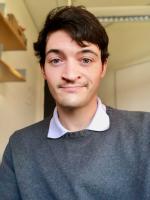
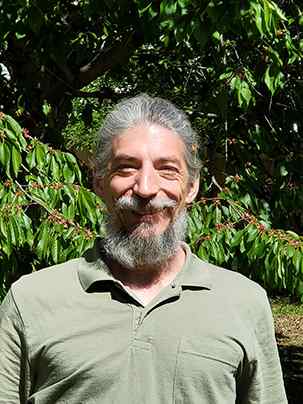
Michael Kordosky is a Full-time Faculty member in the Department of Physics at William & Mary, within the College of Arts & Sciences. His research focuses on fundamental aspects of weak interactions, neutrino oscillations, and detector technologies for high-energy physics experiments. Ph.D. in Physics from University of Texas at Austin (2004) B.A. in Physics and Mathematics from St. John’s University (1998) His expertise spans neutrino scattering, electromagnetic and hadronic calorimetry, detector construction and calibration, and photomultiplier tube applications. Recent work involves experimental studies using the MINOS and MINERvA collaborations to analyze neutrino interactions across various target materials and energy ranges. Kordosky has contributed to studies on coherent pion production, muon intensity variations, and cross-section measurements. His publications reflect interdisciplinary techniques combining particle physics with advanced detector simulation and test beam methodologies.
Dr. Marco Pinto is a Researcher at the Chair of Experimental Physics and Medical Physics, Ludwig-Maximilians-Universität München under Prof. Dr. Katia Parodi. His work focuses on advancing radiation therapy techniques, particularly in proton and carbon ion therapy, with emphasis on range verification using prompt gamma detection and positron emission tomography (PET). He contributes to space missions such as JUICE and BepiColombo, analyzing radiation environments in planetary systems and developing instrumentation for in-situ measurements. Research interests include medical physics applications in proton beam monitoring, small animal irradiation platforms (SIRMIO project), and radiation effects in space exploration. His expertise spans detector design, computational modeling, and experimental validation of therapeutic and space radiation systems. Collaborations extend to missions exploring Mercury and Jupiter's icy moons, addressing challenges in radiation dosimetry and particle physics. Key projects include developing spherical in-beam PET systems for real-time range monitoring and optimizing treatment plans using prompt gamma imaging. His work bridges clinical oncology with space science, advancing technologies for both medical and planetary research domains. Advising focuses on interdisciplinary projects combining medical imaging and radiation physics. He collaborates with international teams on missions like BepiColombo and JUICE, contributing to radiation monitoring systems and environmental analyses. His lab, part of the SIRMIO initiative, pioneers preclinical proton therapy tools for small animal studies.
Donald B. Boyd, Ph.D., serves as Research Professor of Chemistry at Indiana University - Purdue University Indianapolis (IUPUI) within the School of Science. His academic journey began in 1982 when he joined as Adjunct Professor while concurrently working as a Senior Research Scientist at Eli Lilly and Company, where he spent 25 years in computer-aided drug design. He was promoted to Research Professor in 1994, establishing himself as a leading figure in computational chemistry with over 100 refereed publications and significant editorial contributions. Dr. Boyd earned his B.S. from The Pennsylvania State University (1963), followed by an A.M. (1965) and Ph.D. (1968) from Harvard University, with NIH Postdoctoral training at Cornell University (1967-68). His research focuses on computational chemistry and medicinal chemistry, particularly the relationship between molecular structure and properties, with applications in pharmaceutical development. He pioneered computer-aided drug design methodologies that address the economic challenges of modern drug discovery, leveraging genomic insights for targeted therapeutic development. His publication record reveals consistent contributions to computational drug design, molecular modeling, and the historical evolution of computational chemistry. Early work centered on molecular simulations of drug-receptor interactions (1990s), evolving toward Alzheimer's disease therapeutics, HIV inhibitors, and pharmaceutical stress testing in recent years. The research demonstrates increasing integration of cheminformatics, machine learning, and industrial applications throughout his career. Spirit of Philanthropy Award from IUPUI (1996) Woodward Lecturer, Pennsylvania State University College of Medicine (2013) Sloan-C Award for Online Education (2012) Stanley C. Israel Regional Award (2011) James Flack Norris Award for Teaching Chemistry (2008) Multiple Prestigious External Award Recognition (PEAR) honors Dr. Boyd has advised numerous graduate students who now hold positions at major pharmaceutical companies and research institutions worldwide. His editorial leadership includes founding the Reviews in Computational Chemistry book series (18 volumes, 1990-2002) and serving as Editor of the Journal of Molecular Graphics and Modelling (1998-2001), where he increased submissions from 5 to 90 annually. He conceived the biennial Gordon Research Conferences on Computational Chemistry (1986-present) and the ACS Symposium on Emerging Technologies in Computational Chemistry. Through his Central Indiana Computational Chemistry Christmas Luncheons and leadership in professional organizations including the American Chemical Society's Division of Computers in Chemistry, Dr. Boyd has fostered collaborative research communities while maintaining active industry consultation roles with pharmaceutical and chemical companies.
Dr. Gregory Anderson is Professor of Physics and Astronomy at Northeastern Illinois University's College of Arts and Sciences. His research bridges fundamental physics with environmental applications, spanning cosmology, particle physics, and urban climate science through initiatives like the Community Research on Climate and Urban Science (CROCUS). Education includes a Ph.D. in Physics from UC Berkeley (1991), M.A. in Physics from UC Berkeley, and B.S. in Physics from the University of Iowa. Research interests focus on environmental physics, paddle sports dynamics, urban climate systems, cosmology, and particle physics. Current investigations examine atmospheric dynamics in urban environments using instrumentation deployed across Chicago. Publications reflect dual research streams: recent works emphasize urban climate measurement strategies, while earlier contributions address theoretical particle physics and cosmology. Publication themes reveal consistent application of mathematical modeling to complex physical systems. Dr. Anderson directs atmospheric monitoring instrumentation at NEIU and coordinates research efforts for the CROCUS Urban Integrated Field Laboratory. No specific awards or student advisements are detailed in available documentation.
Prof. Andrea Denker holds the position of Professor of Accelerator Physics in Medicine at Berlin University of Technology and serves as Head of the Proton Therapy Department at the Helmholtz-Zentrum Berlin (HZB). Her research focuses on accelerator physics applications in medicine, including beam diagnostics, dosimetry, and theoretical calculations for accelerator facilities. She has been affiliated with HZB since 2007 and previously worked at the Hahn-Meitner-Institute's Ion Beam Laboratory since 1995. She completed her doctorate in Physics at the University of Stuttgart in 1994. Research interests span advanced proton therapy techniques, cyclotron operations, and beam guidance systems. She supervises student theses on topics like neutron dose analysis and modernization of high-energy target sites. Her academic career includes a postdoctoral fellowship at CSNSM, Orsay, France (1994). Presently, she contributes to both education and cutting-edge research at the intersection of physics and medical technology.
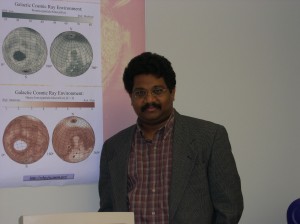
Dr. Premkumar Saganti is a Regent’s Professor of Physics and Director of multiple research initiatives at Prairie View A&M University. He holds academic leadership roles including Director of the CRI-RaISE (Chancellor’s Research Initiative-Radiation Institute for Science and Engineering) and Director of the Prairie View Solar Observatory. His research focuses on space radiation modeling, particularly for NASA missions, and he serves as Principal Investigator (PI) on several NASA-funded projects including the MARIE Project and the Radiation Quantum Multiple Scattering Fragmentation (QMSFRG) Project. Education: B.Sc. (Physics, Mathematics, Chemistry) from Andhra Christian College (1982), M.Sc. (Nuclear Physics) from Andhra University (1986), M.S. (Electro Optics) from University of Houston-Clear Lake (1991), and Ph.D. (Nuclear Structure Theory) from Andhra University (1994). Research interests include radiation shielding for astronauts, radiation effects on biological systems, and advanced detector technology for space missions. He has contributed to projects like the Columbia Accident Investigation and Hubble Space Telescope Servicing Missions. His work spans collaborations with NASA Johnson Space Center, Brookhaven National Laboratory, and international partners. Awards include the NASA Space Flight Special Team Award (2003), Top Flight Award from Lockheed Martin (2003), and the Outstanding Teacher Award (2007). His research has led to over 50 peer-reviewed articles and technical reports, including studies on lunar radiation environments and radiation risk assessments for deep-space missions. Current roles include chairing the Research Advisory Committee in the Department of Physics and teaching courses in nuclear physics and physical sciences. He actively mentors students through the NASA-CARR program and leads initiatives like NuSTEAM to advance STEM education for underrepresented minorities.
Dr. David O'Donnell is a Senior Lecturer in the Nuclear Physics Group at the University of Strathclyde, affiliated with the School of Computing, Engineering and Physical Sciences. His research focuses on probing the structure of exotic nuclei using gamma-ray and charged particle spectroscopy, with a particular emphasis on octupole correlations in actinide nuclei and pear-shaped nuclei studies. He contributed to the design of the STFC-funded Light Ion Spectrometer Array and is actively involved in the Scottish Centre for the Application of Plasma-based Accelerators (SCAPA), providing nuclear physics expertise in interdisciplinary projects. Research interests include developing scintillation-based radiation detectors for medical tumor margin detection and space gamma-ray burst monitoring. He also conducts Monte Carlo simulations for radiation interaction modeling. Recent work involves collaborations on the West of Scotland PET Centre for fluorine-18 radioactivity studies and the HIE-ISOLDE superconducting recoil separator. Key projects include CP violation searches via Mössbauer spectroscopy of Ac-227 and Coulomb excitation studies of radium isotopes. His work spans experimental nuclear physics, detector technology, and applications in medicine and space science.
Donna Strickland is a Nobel Prize-winning physicist and Professor at the University of Waterloo, renowned for her groundbreaking work in laser physics. She was awarded the Nobel Prize in Physics in 2018 for her contributions to the development of chirped pulse amplification, a technique that revolutionized high-intensity laser physics. Strickland's research focuses on advancing the field of intense and ultrafast lasers, with particular emphasis on laser-matter interactions, nonlinear optics, and the development of novel ultrafast laser systems. Her work has enabled numerous applications across scientific research, industrial manufacturing, and medical technologies. She continues to push the boundaries of laser science, exploring new frontiers in attosecond physics and quantum technologies. Her pioneering 1985 paper on chirped pulse amplification with Gérard Mourou laid the foundation for modern high-intensity laser systems. Since then, her research has evolved to address increasingly sophisticated challenges in ultrafast optics, including next-generation laser technologies for scientific, industrial, and medical applications. Her work demonstrates a consistent trajectory from fundamental physics to practical implementations. Nobel Prize in Physics (2018) Honorary Doctorate from Menéndez Pelayo International University (2019) As one of only three women to receive the Nobel Prize in Physics, Strickland serves as an important role model for aspiring scientists worldwide. She actively participates in academic events and continues to mentor the next generation of physicists through her teaching and research at the University of Waterloo. Her current work explores advanced applications of ultrafast lasers in quantum technologies and precision material processing.
Dr. Yousef Faraj is a Senior Lecturer at the University of Chester, affiliated with the Faculty of Science, Business and Enterprise. His research spans interdisciplinary fields including materials science, environmental engineering, and nanotechnology, with a focus on advanced materials for energy-efficient systems, water decontamination, and biomedical applications. His work integrates experimental and computational approaches to develop innovative solutions for challenges in multiphase flow measurement, smart hydrogel systems, and photocatalytic remediation. Notable contributions include studies on memristor-based neural networks, ferroelectric photomemristors for artificial vision systems, and light-responsive nanochannel membranes for pesticide control. Dr. Faraj also specializes in multiphase flow characterization using techniques like Electrical Resistance Tomography (ERT) and Particle Image Velocimetry (PIV), contributing to industrial applications in oil/gas/water flow measurement and sewage sludge management. His research emphasizes sustainability, energy efficiency, and scalable microfluidics for material synthesis.
Gabriel Gaitan is a Researcher in the Department of Physics at Cornell University, affiliated with the Matthias Liepe Liepe Group. His work focuses on advancing superconducting materials and technologies, particularly in the development of high-performance superconducting radiofrequency (SRF) cavities and niobium-based thin films. His research bridges materials science, applied physics, and plasma physics with applications in particle accelerators, fusion energy systems, and space propulsion. Key research interests include optimizing superconducting materials like niobium-3 tin (Nb 3 Sn) through chemical treatments and plasma-enhanced chemical vapor deposition (PECVD). He explores methods to enhance surface properties of superconductors, reduce microphonics in SRF cavities, and improve the efficiency of fusion-related technologies. His contributions span both experimental and theoretical domains, including studies on Hagedorn temperatures in quantum systems and electrochemical deposition techniques for thin films. His research group collaborates on projects such as the LCLS-II superconducting linac and advanced CVD systems for next-generation SRF cavities. While specific grants or awards are not listed, his work aligns with Cornell’s multidisciplinary approach to physics and engineering challenges. Gaitan’s lab is part of the broader physics research infrastructure at Cornell, emphasizing translational applications of superconductivity and plasma physics in cutting-edge technologies like direct fusion drives for space propulsion and high-efficiency power amplifiers for fusion engines.
Professor Dantong Yu is the Director of the Center for Big Data and a Professor at the Martin Tuchman School of Management at New Jersey Institute of Technology (NJIT). His research focuses on interdisciplinary applications of machine learning, financial econometrics, and high-performance computing. He leads the Terapaths project, a DOE-funded initiative developing QoS data sharing infrastructure for petascale computing. His work bridges computational methods with domains like finance, healthcare, and particle physics. Key research areas include graph neural networks for asset pricing, tensor completion algorithms for financial data integration, and FPGA-based real-time triggering systems for experiments such as sPHENIX. His studies on equity pricing leverage signed graph Laplacians, while his work on ESG disclosure impacts IPO survival analysis. Collaborations span institutions like ATLAS and sPHENIX, emphasizing data-driven solutions for complex scientific challenges. Recent publications highlight innovations in embedding imputation via self-supervised GNNs, neural network pruning for efficiency, and solar irradiance forecasting using cloud tracking. His federally funded projects address petascale data transfer and QoS optimization. Media highlights include contributions to cosmic physics research and financial market modeling. Advising and grants include DOE sponsorship for petascale infrastructure. He participates in interdisciplinary teams at NJIT’s Center for Big Data and contributes to courses like FIN 410, integrating machine learning into finance education.
Daniel Kreuter is a Research Fellow in the Department of Applied Mathematics and Theoretical Physics at the University of Cambridge. He is a member of the Cambridge Image Analysis Group and a PhD fellow in the BloodCounts! consortium . His research focuses on federated learning for healthcare, deep learning applications in physics and biomedical data, and computational modeling of plasma experiments. He holds a Master's degree in Physics from the Technical University of Darmstadt, Germany. His work spans interdisciplinary areas such as healthcare data analysis, medical imaging, and physics simulations. Recent publications highlight advancements in federated learning frameworks for clinical data privacy, deep learning integration in plasma experiments, and gait analysis using neural networks. Key research interests include multi-domain generalization in healthcare AI, privacy-preserving machine learning, and computational plasma physics. Collaborations include projects like BloodCounts! and the Cambridge Image Analysis Group. No scientific awards are explicitly mentioned, though his contributions to federated learning and plasma modeling are notable. His academic background includes a Master's in Physics, and he is actively engaged in advancing AI-driven solutions for healthcare and physics challenges. He is affiliated with the Department of Applied Mathematics and Theoretical Physics, contributing to both theoretical and applied research.
Joel Hochstetter is a Research Fellow in the Department of Applied Mathematics and Theoretical Physics (DAMTP) at the University of Cambridge. He is affiliated with the Biological Physics and Mechanics research group. His work bridges quantum computing, neuromorphic engineering, and biophysics, focusing on neuromorphic nanowire networks, spin systems, and complex adaptive systems. His research explores topics such as criticality in neural networks, quantum spin dynamics, and biomaterials for particle detection. Recent publications highlight advancements in neuromorphic computing frameworks, including GPU-optimized quantum simulation tools (Spinsim), neuromorphic networks for MNIST classification, and the role of tissue fluidity in wound healing. His portfolio reflects interdisciplinary collaboration between physics, biology, and computer science. No scientific awards are explicitly listed in the provided texts. His research is supported by studies in DAMTP, with potential links to computational biology and quantum device engineering. While specific grants or labs are not detailed, his affiliation with DAMTP implies involvement in advanced theoretical and experimental projects.
Dr. Qingzhi Liu is an Assistant Professor in the Information Technology Group at Wageningen University & Research, Netherlands. He holds a Ph.D. from Delft University of Technology (2016) and completed postdoctoral research at Eindhoven University of Technology (2016-2019). His expertise spans artificial intelligence, reinforcement learning, IoT, precision agriculture, and smart greenhouse systems. He previously worked at NEC China in 2009. Research Interests: Liu’s work focuses on applying machine learning techniques to agricultural challenges, IoT infrastructure optimization, and energy-efficient computing. His projects include crop classification using drone imagery, smart greenhouse climate modeling, and blockchain-based IoT security. He also explores edge computing and containerized cloud resource management for real-time applications. Publications: Over 30 peer-reviewed articles in top venues like IEEE TPDS, TITS, and TVT. Recent work covers reinforcement learning applications in microgrids, privacy-aware cloud scheduling, and hyperspectral disease monitoring in crops. Teaching: Involved in courses such as Big Data (INF33806), Artificial Intelligence (INF36306), and Advanced Machine Learning (FTE40306). Labs/Teams: Active contributor to the Information Technology Group, focusing on AI-driven solutions for agriculture and IoT ecosystems.
Dr. Holger Meyer is a Professor of Physics at Wichita State University's Fairmount College of Liberal Arts and Sciences, within the Department of Mathematics, Statistics, and Physics. He holds a Ph.D. from Virginia Tech (2002) and specializes in experimental high-energy particle physics, with a focus on neutrino physics. His research involves collaborations with major institutions like Fermi National Accelerator Laboratory (Fermilab) and Brookhaven National Laboratory, contributing to the NOvA and DUNE long-baseline neutrino experiments. Dr. Meyer also explores space-based neutrino detection in collaboration with NASA's Marshall Space Flight Center and other universities, aiming to detect neutrinos in near-solar environments. His research interests span neutrino oscillation studies, CP violation, and astrophysical applications such as supernova neutrino detection. He actively participates in detector development for DUNE, including liquid argon time projection chambers (LArTPCs) and software computing frameworks. Dr. Meyer has contributed to cross-section measurements in neutrino interactions and pioneered methods for neutrino interaction vertex reconstruction using machine learning. Publications highlight his work on DUNE's supernova pointing capabilities, Fermilab accelerator upgrades, and NOvA's oscillation parameter analyses. He is a key figure in international physics collaborations, advancing neutrino physics through both terrestrial and space-based experimental initiatives.