Nathaly Carolina Pinto Torres is a Doctoral Researcher at Aalto University's Department of Design, working on critical design interventions for marginalized communities. Since 2020, she has led the "Emergencia de Educación en la Amazonía Ecuatoriana" project, collaborating with indigenous students and Confeniae to develop pictographic communication systems challenging social exclusion. Her research spans: Participatory design with indigenous communities Gender justice in education during crises Epistemic justice in plurinational contexts Visual resistance strategies in Amazonian regions Postcolonial educational frameworks Design for socio-environmental transformation Publication trends show focus on: Visual communication systems for marginalized groups Crisis-driven educational design Decolonial methodologies Intersectional analysis of exclusion Epistemic justice in academia Collective resilience building Scientific recognition includes: Best Demo Award (2021) SENESCYT International Graduate Scholarship (2019) Netherlands Fellowship Programmes (NFP) (2010)
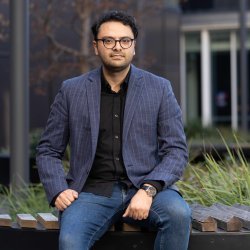
Dr Ehsan Nabavi is a Senior Lecturer in Technology and Society at the College of Asia and the Pacific (CPAS), Australian National University (ANU). He leads ANU’s Responsible Innovation Lab, focusing on responsible computing, modeling, and AI ethics. His interdisciplinary work bridges technical and social sciences, particularly addressing wicked problems in sustainability and water governance. Current Affiliation: ANU (CPAS), since 2020 Former Roles: Research Fellow at ANU School of Cybernetics (2018–2020), Harvard Kennedy School (2016–2017) Visiting Positions: SOAS University of London, University of Bonn (ZEF) His research spans responsible AI , transdisciplinary modeling , and socio-technical systems , as reflected in his publications across journals like Nature Humanities and Social Sciences Communications , IEEE Transactions on Technology and Society , and Water Alternatives . His recent articles emphasize ethical AI deployment, human-water systems, and integrating social aspects into modeling. Labs: Responsible Innovation Lab (ANU) Future Work: Developing frameworks for responsible AI in sustainability and policy contexts
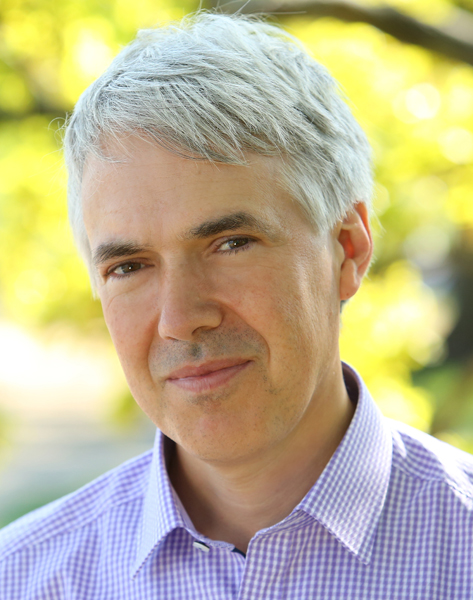
Seth Frey is an Associate Professor in the Department of Communication at the University of California, Davis, with affiliate status at Indiana University's Ostrom Workshop and as Research Director at Metagov. His research focuses on computational social science approaches to understanding self-governance in complex social systems, particularly through the lens of online communities as model institutions. Education: Ph.D. in Cognitive Science and Informatics (complex systems), Indiana University, 2013 B.A. in Cognitive Science, UC Berkeley, 2004 Research Interests: Frey specializes in computational approaches to institutional analysis and the cognitive science of strategic behavior . His work examines how communities design governance systems to overcome collective action problems, with emphasis on: Emergent institutional structures in digital commons Policy-as-data through NLP and institutional grammar frameworks Cognitive mechanisms underlying cooperative behavior Design principles for participatory change in online platforms His methodology integrates large-scale data analysis, web-based experiments, and computational modeling across diverse contexts including Minecraft, Reddit, and professional sports ecosystems. Publication Trends: Recent publications (2023-2025) demonstrate a cohesive trajectory toward computational institutional analysis, with increasing focus on NLP-driven policy analysis (e.g., NLP4Gov), decentralized governance architectures (DAOs, multi-level platform governance), and the cognitive foundations of collective action. His work consistently bridges theoretical institutional analysis with practical applications in digital community design, showing particular growth in translating Ostrom's design principles into computational frameworks. Awards: Honorable Mention Award for Best Paper at ACM CSCW 2019 Advising and Grants: Frey mentors students interested in data science applications at the intersection of communication, cognition, and complex systems, emphasizing resourcefulness and intellectual curiosity. His research has secured substantial funding from: National Science Foundation (NSF) NASA Ford Foundation Google Open Source Foundation He actively encourages aspiring graduate students with strong self-directed research skills to explore computational approaches to social phenomena. Labs and Teams: He leads the Computational Communication Lab at UC Davis and co-directs the Institutional Grammar Research Initiative. Through Metagov, he develops the 'Governance API' framework for modular community governance. His past affiliations include Disney Research (Walt Disney Imagineering) where he applied complexity science to theme park systems, and the New England Complex Systems Institute (NECSI). Current collaborations span Ethereum governance, Minecraft server ecosystems, and Colorado's cannabis monitoring infrastructure.
Devansh Saxena is an Assistant Professor at the University of Wisconsin-Madison, holding dual affiliations in the Information School and the School of Computer, Data & Information Sciences. His research focuses on sociotechnical practices of decision-making in high-stakes domains, particularly examining the social impacts of AI in government agencies, community-based organizations, and public health. Saxena employs mixed-methods approaches, blending computational and design methods to develop human-centered AI systems that prioritize equity and collective decision-making. He holds a Ph.D. in Computer Science from Marquette University, advised by Dr. Shion Guha and Dr. Michael Zimmer. His work intersects Human-Computer Interaction (HCI), Machine Learning, and FAccT (Fairness, Accountability, and Transparency in Sociotechnical Systems). Key areas of research include responsible AI, participatory algorithm design, and rethinking risk assessment in public sector systems such as child welfare. Saxena has received prestigious recognition, including the Best Paper Award at CHI 2023 and the Presidential Postdoctoral Fellowship at Carnegie Mellon University. Recent projects include analyzing algorithmic harms in child welfare through casenote computational analysis, advocating for participatory AI frameworks in government, and exploring ethical AI innovation in early-stage concept selection. His work emphasizes bridging technical and sociocultural dimensions to ensure technologies serve public interest.
Introduction Jonathon Hutchinson is an Associate Professor and Chair of the Media and Communications Discipline at the University of Sydney. He holds roles as Editor-in-Chief of the Policy & Internet journal and Chief Investigator on major projects like the International Digital Policy Observatory (ARC LIEF) and the eSafety Commission's Emerging Online Safety Issues initiative. His work bridges digital media studies, policy analysis, and cultural theory. Education BComm (Hons), RMIT University PhD, ARC Center of Excellence for Creative Industries and Innovation, QUT Research Interests Hutchinson focuses on digital intermediation processes in cultural production, algorithmic governance, and public service media adaptation. Key areas include: Algorithmic influence on news diversity Social media policy and youth safety Platform politics and regulatory frameworks Recent Article Trends His 2020–2025 work emphasizes global digital policy challenges, generative AI ethics, and Vietnamese media dynamics. Recent projects highlight cross-national comparisons (e.g., China/South Korea news ecosystems) and participatory co-design approaches to online safety education. Awards & Grants 2023 ARC LIEF Grant 2021 eSafety Online Safety Grant Multiple industry partnerships (e.g., eSafety Commissioner, Hans-Bredow-Institut) Advising & Grants Supervised over 15+ graduate students (PhD/Master's/Honours) in media studies and digital culture. Active in interdisciplinary grants addressing cybersecurity, AI governance, and platform regulation. Labs & Networks Member of the Sydney Centre for Healthy Societies, Sydney Southeast Asia Centre, and Charles Perkins Centre. Leads the International Digital Policy Observatory project tracking global regulatory trends.
Begüm Demir is a Professor and Head of the Remote Sensing Image Analysis (RSiM) Group at the Faculty of Electrical Engineering and Computer Science, Technische Universität Berlin. Her research focuses on scalable machine learning methods for remote sensing and Earth observation data analysis. Previously, she held positions at the University of Trento, where she was promoted to Associate Professor in 2017 and received an ERC Starting Grant for her BigEarth project. Key research interests include: Deep learning for satellite image analysis Big data processing in geosciences Earth observation data democratization Noise-robust machine learning models Recent projects highlight collaboration with Huawei in wireless communication-EO integration and leadership in initiatives like Agora-EO and TreeSatAI . Awards include the 2018 IEEE GRSS Early Career Award. Grants include funding from the German Research Foundation (DFG) and Federal Ministry of Education and Research (BMBF). Active in editorial roles for IEEE Geoscience and Remote Sensing Letters, and guest editorships in leading journals. Publicly accessible datasets like BigEarthNet and code repositories enhance her contributions to open science.
Sara Nabil is an Assistant Professor at Queen's University's School of Computing within the Faculty of Arts and Science. She leads the HCI Design Studio and previously held a postdoctoral position at Carleton University's Creative Interactions Lab. Her research focuses on integrating interior design, fashion, and product design with interactive technologies, emphasizing e-textiles, smart materials, and shape-changing interfaces. She holds a PhD from Newcastle University and prior experience as an HCI Lecturer, interior designer, and senior software developer. Education: PhD in Computing, Newcastle University (2019) MSc in Computing BSc in Computing Research interests include designing computational spaces, wearable technology, and e-textile interactions. Her work explores sustainable fabrication methods, user-centered design for smart environments, and bridging traditional crafts with digital technologies. Notable projects include exhibitions like 'Living with Adaptive Architecture' and 'Persuasive Pharmacy Space,' showcasing interactive wearables and spaces. Her recent articles (2023–2025) emphasize e-textile innovations, sustainable design, and human-building interactions. Key themes include smart materials in fashion, modular wearables, and community-driven interaction systems. Awards: None explicitly mentioned. Advising/Grants: No details provided. Labs/Teams: Head of HCI Design Studio and part of iStudio Lab, focusing on interioraction design.
Prof. Tobias Plieninger holds dual appointments as Professor of Social-Ecological Interactions at the Universities of Kassel and Göttingen, Germany, and currently serves as Dean of Research at Kassel’s Faculty of Organic Agricultural Sciences. He specializes in sustainability science focusing on rural landscape dynamics, ecosystem services, and transformative change processes. His work examines intersections between agriculture, forestry, nature conservation, and natural resource management. Education: PhD in Forest and Environmental Sciences (2004, University of Freiburg), Habilitation in Landscape Ecology (Humboldt-Universität zu Berlin). Prior roles include Associate Professorships at the University of Copenhagen and leadership at the Berlin-Brandenburg Academy of Sciences. Research focuses on biocultural landscapes, agroforestry systems, and participatory methods. Notable projects include coordination of the EU’s HERCULES initiative and leadership in IPBES’ Transformative Change Assessment. Recognitions include Clarivate’s Highly Cited Researcher (2019–2022) and the Henriette Herz Fellowship (2022). Editorial roles: Lead Author for IPBES, Associate Editor at Landscape and Urban Planning and People and Nature . Over 200 publications span topics like ecosystem service synergies, high nature value farming, and rewilding strategies. Active in policy engagement through Germany’s Leopoldina Academy and the Joint Programming Initiative on Cultural Heritage. Research Themes: Landscape sustainability, participatory governance, biodiversity in agricultural systems Key Projects: SINCERE (forest ecosystem services), AGFORWARD (agroforestry innovation) Awards: Clarivate’s Highly Cited Researcher, Alexander von Humboldt Foundation fellowship Current initiatives emphasize transdisciplinary approaches, integrating local knowledge with scientific frameworks to address global sustainability challenges.
Suzi Hall is Professor of Sociology and Head of Department at the London School of Economics and Political Science (LSE). Her research explores the intersections of global migration, urban marginalisation, and racialisation, with a focus on everyday life in multicultural cities. She is a leading figure in urban ethnography and contributes significantly to debates on citizenship, public space, and migrant livelihoods. University: London School of Economics and Political Science School: Department of Sociology Academic Rank: Professor Her research interests include urbanisation, migration, racialisation, livelihoods, and ethnography, with a strong emphasis on the lived realities of marginalised communities in cities. She combines sociological theory with architectural insight, drawing from her background as a practicing architect in South Africa. The recent publications of Professor Hall reveal a consistent trajectory in urban ethnography, focusing on migrant infrastructures, gendered precarity, and the politics of urban space. Her work spans high-impact journals in sociology, urban studies, and geography, demonstrating interdisciplinary reach and methodological rigor. Themes such as super-diversity, street economies, and urban belonging recur across her scholarship, often grounded in fieldwork in London, Cape Town, and other global cities. Scientific awards and recognitions include: Philip Leverhulme Prize in Sociology (2017) ESRC Future Research Leaders award (2015–2017) LSE Student Union 'Outstanding Teacher of the Year' (2025) Rome Scholarship in Architecture (1998–1999) LSE Robert McKenzie Prize for outstanding PhD research (2010) She teaches on the MSc City Design & Social Science programme and convenes an undergraduate module on Racial Borderscapes. She is part of the Urban Sociology research cluster at LSE and welcomes PhD enquiries in her research areas, though not for the 2026–27 session. She has supervised and mentored numerous students and contributes to academic leadership as Head of Department. Her major works include the books The Migrant’s Paradox (2021) and City, Street and Citizen (2012), as well as edited volumes like The Sage Handbook of the 21st Century City . She has also contributed to public scholarship through films like Ordinary Streets and the open-access website Race, Space and Architecture .
Lucio Baccaro is Director at the Max Planck Institute for the Study of Societies (MPIfG) and was Full Professor of Macrosociology at the University of Geneva, where he also served as Deputy Dean for Research (2016–2020). He has held academic positions at MIT, Case Western Reserve University, and visiting roles at the University of Turin and the University of Vienna. His primary affiliations are with MPIfG and the University of Geneva, both central to his research in political economy and sociology. Education: PhD in Management and Political Science, Massachusetts Institute of Technology (MIT), 1999 Doctorate in Labor Law and Industrial Relations, University of Pavia, 1997 Master of Business Administration, Stoa' (IRI-MIT joint venture), 1991 Laurea in Philosophy, summa cum laude, University "La Sapienza", Rome, 1989 Lucio Baccaro’s research focuses on comparative political economy, labor relations, global worker rights, and deliberative governance . His work integrates economic sociology and political sociology to analyze institutional change, social dialogue, and the impact of globalization on labor and welfare systems. He has led major comparative studies on employment models, pension reforms, and international labor standards. His scholarship emphasizes the interplay between institutions, ideas, and power in shaping economic governance. His recent publications reveal a consistent focus on institutional change, deliberative processes, labor market reforms, and global justice . Themes include path dependence in international organizations, the transformation of collective bargaining, and the role of expertise in democratic governance. His interdisciplinary approach bridges sociology, political science, and economics, with strong methodological rigor in comparative and qualitative analysis. Scientific Awards and Honors: Honorary Professor, University of Duisburg-Essen (2023) Professeur honoraire, University of Geneva (2020) International Geneva Award (2011) Outstanding Young Scholar Award, IRRA (2003) Founder's Prize, SASE (2001) Maurice F. Strong Career Development Chair, MIT (2006–2009) Multiple fellowships from SSRC, Harvard, MIT, and CUNY Alfiere del Lavoro, awarded by the President of Italy (1984) Advising and Grants: While specific student advisees are not listed, Baccaro has supervised research and mentored scholars through his roles at MPIfG and the University of Geneva. He has secured substantial research funding, including grants from the Swiss National Science Foundation (SNF) and the Swiss Network for International Studies (SNIS), supporting projects on post-Fordist growth models, employment policy, and deliberative governance. His leadership in co-principal investigator roles highlights his collaborative research approach and institutional influence. Labs and Research Teams: As Director at MPIfG, Baccaro leads a major research institute focused on the study of societal and economic institutions. He has been instrumental in shaping research agendas on political economy and governance, fostering interdisciplinary collaboration and international scholarly exchange.
Beth C. Rubin serves as Professor of Education and Professor of Social Studies Education in the Department of Arts and Humanities at Teachers College, Columbia University. Her work centers on youth civic identity formation within contexts marked by historical and contemporary inequalities, with particular focus on post-conflict societies like Guatemala. As Principal Investigator of the Civically Engaged Districts Project, she bridges research and practice through curriculum design and pedagogical innovation. Her educational background includes a Ph.D. in Social and Cultural Studies in Education from the University of California, Berkeley (2001), an M.A.T. in Social Studies Education from Brown University (1992), and a B.A. in Government and Third World Studies from Oberlin College (1989). Rubin's research explores critical intersections of civic learning, historical memory, and citizenship formation, emphasizing ethnographic approaches to understanding how young people navigate belonging in unequal societies. Her scholarship advocates for 'critically relevant civics' that centers youth voice and addresses structural inequities through social design research methodologies. Analysis of her 15 most recent publications reveals consistent focus on post-conflict civic education (particularly Guatemala), youth participatory action research, and decolonizing social studies curricula. Her work increasingly examines how historical memory shapes contemporary citizenship education while addressing urban civic opportunity gaps through teacher education reform. Selected Honors: Fulbright Scholar Award National Academy of Education/Spencer Postdoctoral Fellowship Big Ten Academic Alliance Department Executive Officers Program Fellow Mary Hepburn Lectureship in Social Studies Education Rubin leads multiple funded initiatives including the Civically Engaged Districts Project (Maher Charitable Foundation), Spencer Foundation grants on socially transformative design, and international collaborations with Universidad del Valle, Guatemala. Her service includes co-directing Rutgers GSE's Urban Teaching Fellows Program and advising on the Excellence and Equity in Remote Learning Series. Through the Civically Engaged Districts Project and partnerships with New Brunswick and Edison school districts, Rubin develops practical frameworks for integrating youth civic voice into district-level decision making, creating models for sustainable democratic engagement in education systems.
Erin Manning is a Professor in the Department of Studio Arts within Concordia University's Faculty of Fine Arts, holding a research chair in Speculative Pragmatism, Art and Pedagogy. Her work bridges philosophy, aesthetics, and politics through alter-pedagogical and alter-economic practices, with deep engagement in participatory art and theoretical inquiry. Manning's research centers on process philosophy, neurodiversity, research-creation, and the ProTactile movement for DeafBlind culture. She explores material complexity through textile-based relational art, emphasizing sideways perception and textural engagement with life. Her practice investigates Black Studies, ecology, radical pedagogy, and choreographic experimentation, often manifesting in tactile propositions using tufting, hooking, and weaving techniques that challenge conventional sensory hierarchies. Her recent publications and exhibitions reveal a trajectory toward the transversality of three ecologies—social, environmental, and conceptual—through the 3Ecologies Project. This work trends toward interdisciplinary collaborations that dissolve boundaries between art, philosophy, and activism, with increasing focus on more-than-human encounters and collective fabulation in social dreaming. Manning leads the 3Ecologies Project (3e), which includes a land-based initiative north of Montreal for experimenting with living and learning. Legacies of SenseLab inform her approach to crafting collectivity through experimental pedagogy. She co-edits the Inflexions journal and the 3E Books imprint, fostering platforms for research-creation that integrate theoretical and artistic practices.
Andrea Wollensak is Professor of Art at Connecticut College, where she has taught since 1993. She is an interdisciplinary artist and designer whose work explores the convergence of place, identity, and history through site-based artworks that combine new media technology with traditional design and fabrication. Her educational background includes a B.F.A. from the University of Michigan and an M.F.A. from Yale University. She has held visiting faculty positions at numerous institutions including the University of Gothenburg, Nova Scotia College of Art and Design, Concordia University, Rhode Island School of Design, and the Estonian Academy of Arts. Wollensak's research focuses on social design and place-based storytelling, employing collaboration with community partners, computer scientists, musicians, poets, and scientists. Her work addresses themes of place-based narratives, environment, and memory through forms including audio/video, interactive installations, data visualization, artist books, and digitally fabricated works. She examines how design can be used as a tool for social impact and civic participation. Her most recent projects include Mapping Your Journey to School (2023), which engages Estonian and Ukrainian refugee students in creative writing workshops; Water Stories: Visual Poetics and Collective Voices (2022), a year-long artist residency at the Anchorage Museum; and Open Waters (2019-2020), an interactive installation examining Arctic environmental change. U.S. Fulbright Scholar in Estonia (2023) Artistic Excellence Award in Digital Art from Connecticut Office of the Arts Artist residency at Hafnarborg Contemporary Art Museum in Iceland (2011) Connecticut Commission on Culture and Tourism Grants in New Media (2010, 2006) IASPIS International Artist Studio Program in Sweden (2007) Rockefeller Study and Conference Center residency (2000) Wollensak has advised numerous students in design and new media projects, often collaborating with community partners. She served as Director of the Ammerman Center for Arts and Technology at Connecticut College from 2014-2020 and currently serves on the Advisory Council of the Winterhouse Institute and the Advisory Board for Digital Media Connecticut. Her teaching emphasizes design as an interdisciplinary practice that prepares students to be creative problem solvers who can use design to create positive social impact. Her work has been exhibited internationally at venues including the Göteborg International Contemporary Art Biennial, Nova Scotia Art Gallery, Brno Design Biennial Moravian Gallery, Center for Visual Art in Denver, Brown University's Granoff Center Gallery, and the Burchfield Penney Arts Center in Buffalo.
Dr. Payam Sheikhattari is a tenured Professor of Public Health in the School of Community Health & Policy at Morgan State University with nearly two decades of experience in community-based participatory research. He is the founder of the Morgan CARES network and former director of the Prevention Sciences Research Center, fostering sustainable collaborations between academia and community organizations to address health disparities in underserved communities. His educational background includes a Post-Doctoral Fellowship from Johns Hopkins Bloomberg School of Public Health, an MD from Uromia University of Medical Sciences in Iran, and an MPH from Tehran University of Medical Sciences. This diverse training informs his approach to public health research and practice. Dr. Sheikhattari's research focuses on advancing health equity through community engagement, with particular emphasis on tobacco cessation programs, health disparities in marginalized populations, and innovative community-academic partnerships. His work consistently centers on community-based participatory research methods that empower communities to be active partners in the research process. His publication portfolio demonstrates expertise across tobacco control, health disparities, and community engagement, with recent work examining gender differences in quit rates, electronic cigarette use among youth, and intersectional approaches to tobacco advertising exposure. His 2022 book "Practitioner Research for Social Work, Nursing, and the Health Professions" represents a significant contribution to methodological approaches in community health. $41 million (over 10 years) NIH U54 award for ASCEND Training Model $18 million (over 5 years) NIH U54 award for RCMI@Morgan $749k (over 4 years) AHA funding for IMPACT project $226k (over 2 years) Morgan State University funding for Community & Stakeholder Engagement Certificate Program As a dedicated mentor, Dr. Sheikhattari has supervised numerous undergraduate research students through programs like ASCEND and has been instrumental in developing training models to enhance biomedical research opportunities for underrepresented minorities. His leadership extends to establishing physical infrastructure for community engagement through the Morgan CARES initiative, which has become a model for academic-community partnerships in public health research.
Professor Catherine Easton serves as Professor in Information Technology and Intellectual Property Law at Lancaster University's School of Law, with additional affiliations at Security Lancaster and the Centre for Law and Society. Her work bridges legal scholarship with practical technology implementation, focusing on digital inclusion and governance frameworks. Her research centers on internet governance, domain name regulation, intellectual property law, and accessibility for disabled users. She examines how legal frameworks interact with human-computer interaction systems, particularly in crisis response scenarios and educational technology. Her scholarship consistently addresses the tension between regulatory compliance and genuine digital inclusion, with special attention to the UN Convention on the Rights of Persons with Disabilities. Her recent publications reveal growing emphasis on autonomous systems regulation, particularly regarding disability access in driverless vehicles, and ethical frameworks for cloud-based disaster response. The scholarly trajectory shows evolution from foundational website accessibility analysis toward complex systems governance in emerging technologies. Higher Education Academy International Scholarship recipient MMU Promising Researcher Fellow (2011) Co-chair of UN Internet Governance Forum's Internet Rights and Principles Dynamic Coalition Treasurer of British and Irish Law, Education and Technology Association Guest editor for Web Journal of Current Legal Issues Disability Special Edition Professor Easton actively develops legal education technologies, having created interactive teaching resources for major textbooks and pioneered clicker technology applications in law classrooms. She leads initiatives like the National Law Student Forum and has presented extensively on MOOCs and legal pedagogy. Her Security Lancaster affiliation connects her work to broader research on information transparency and crisis response ethics, where she examines big data's implications for inclusion and human rights.