Dr. Yujie Zhu is a researcher at the Centre for Heritage and Museum Studies , part of the Australian National University (ANU) College of Arts & Social Sciences . His work focuses on critical heritage studies, cultural memory, and tourism anthropology, bridging theoretical frameworks with empirical analysis in Chinese and Asia-Pacific contexts. Research Interests: Memory politics, urban heritage regeneration, authenticity in tourism, and the intersection of heritage with sociopolitical dynamics. Key Projects: Examining colonial heritage in Asia-Pacific, co-creation in intangible heritage, and the role of museums in peacebuilding. Recent Publications highlight trends in memory-driven heritage practices, post-conflict reconciliation, and the commodification of cultural authenticity in urban and tourism settings. Affiliations: Centre for Heritage and Museum Studies, Research School of Humanities and the Arts (ANU), and the Association of Critical Heritage Studies.
Dr Lindsey K. Horner is a Lecturer in Education in International Development at the University of Edinburgh's Moray House School of Education and Sport, affiliated with the Institute for Education, Community and Society (IECS) and the Comparative Education and International Development (CEID) department. Her research focuses on critical peace education, peacebuilding, and participatory methodologies in conflict-affected regions such as Mindanao and Kurdistan. Education: PhD in Education, University of Bristol MEd in Research Methods, University of Bristol MEd in Education and Development, University of Bristol Research Interests: Her work prioritizes social justice, ethical representation, and community-driven research. Current projects explore postdevelopment theory, arts-based methods, and teachers' roles in peacebuilding. She emphasizes co-designed research processes and ethnographic approaches. Teaching & Supervision: She teaches on the Comparative Education and International Development MSc program and supervises PhD students in areas like climate change education, refugee integration, and critical peace education. Current advisees include researchers focusing on India, Syria, and Colombia. Grants & Collaborations: Her projects engage with global contexts, including tribal communities in India and Kurdish regions. Past students have explored Colombia’s peacebuilding processes and pedagogical internationalization in global schools. Labs/Teams: Affiliated with the CEID and IECS research groups, she contributes to interdisciplinary initiatives addressing education’s role in conflict and development.
Simon Lemaire is a Researcher affiliated with the Transitions School of Social Sciences, Politics and Communication. His primary role involves leading research projects and contributing to peer-reviewed publications in interdisciplinary healthcare studies. Lemaire focuses on sociological analyses of participation dynamics among patients and caregivers, particularly in contexts of Alzheimer's disease and related neurological conditions. He actively engages in academic activities such as symposiums, workshops, and conferences across Europe, including serving as a member of the Scientific Committee for the 13ème Université d’Eté on ethics and neurological diseases. His recent activities include teaching at external institutions like the Université Catholique de Louvain and presenting at the 16th ESA Conference in Porto on themes of tension, trust, and transformation in healthcare systems. Key research areas include medical sociology, healthcare participation mechanisms, and the pragmatist sociological approach to understanding patient group dynamics. He explores how marginalized voices (e.g., Alzheimer's patients and their families) navigate civic engagement and democratic processes within healthcare frameworks. His work bridges theoretical sociology with practical applications in patient advocacy and policy-making. Lemaire has secured a major grant as Principal Investigator (PI) for the project 'Maladie d’Alzheimer et participation : sociologie pragmatiste des citoyennetés au sein de groupes de patient-e-s et de proches' (2016–2023). He has also supervised a doctoral thesis on similar themes, though no formal advisees are listed here. His media engagements include expert commentary on aging policies and dementia-friendly practices, highlighting his commitment to public discourse on healthcare ethics. He collaborates closely with institutions like the Espace national de réflexion éthique sur les maladies neurologiques in Marseille and the Centre Max Weber through seminars. His work emphasizes the intersection of healthcare, citizenship, and epistemic justice, contributing to both academic debates and real-world participatory healthcare initiatives.
Carlos Lage Gómez is a Lecturer at the Departamento de Didáctica de las Lenguas, Artes y Educación Física of the Universidad Complutense de Madrid. Holding a PhD in Education with a Doctor Europeus distinction and an Extraordinary Award, he focuses on musical creativities, transdisciplinary education, and urban popular music applications in secondary and primary curricula. His work bridges qualitative research methods with actionable pedagogical strategies. Education: PhD in Education (Universidad Complutense de Madrid) Research Lines: Musical Creativities, Curricular Integration, Urban Popular Music in Education, Qualitative/Action Research Projects: IMTEA (2019–2021), Transdisciplinarity in Secondary Education (2018–2019), Gender Stereotypes in Adolescent Music (2017–2017) Innovation Projects: 5+ funded initiatives (2017–2024) in teacher assessment, creativity, and sustainable development through music Honors: Premio Extraordinario (Doctoral Thesis) His recent publications analyze participatory creativity, STEAM integration, and music's role in combating gender stereotypes. Lage-Gómez has collaborated internationally with institutions in Finland, Switzerland, and the UK, emphasizing action research and community engagement in education.
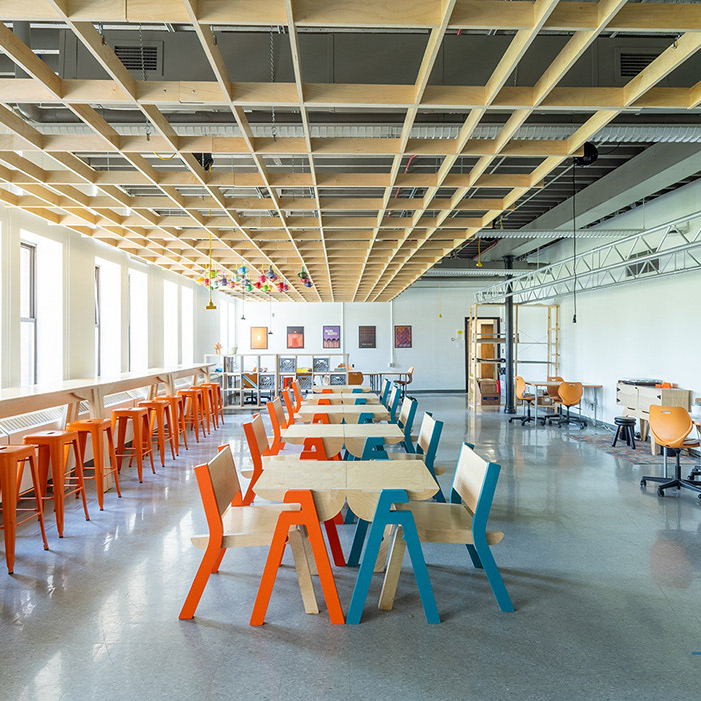
William Nickley is an Assistant Professor in the Department of Design at The Ohio State University, holding an MFA and BSD in Design from the same institution. His research bridges industrial design with social impact, focusing on co-design methodologies, youth development through design-based making (DBM), and person-centered design (PCD). He leads the Ohio State DESIS Lab, emphasizing practice, pedagogy, and research to create equitable futures. Nickley has pioneered frameworks for youth empowerment through design, including grant-funded projects with Columbus City Schools and the Boys & Girls Clubs of Central Ohio. His education includes a MFA (2020) and BSD (2010) in Industrial Design from OSU. He previously worked in consultancy, freelance design, and non-profit leadership. Current courses include Design 4650/5650 (Collaborative Design Studio) and Design 4151 (Intermediate Industrial Design II). Research interests include design for social justice, LGBTQIA+ youth healthcare engagement, and the intersection of design with Positive Youth Development. Notable projects include the ISPARK Mobile Maker Cart (2024), CoDe Rainbow training platform (2023), and the Hayes 210 Student Space Redesign (2024-25), a grant-funded interdisciplinary initiative enhancing campus spaces through student input. He has received the 2024 IDSA Young Educator Award and serves on multiple committees including the IDSA Education Council. His service includes leadership in Local Tech Heroes, a nonprofit promoting tech access for underserved communities.
Maria Carrera Arce is a Lecturer in Maritime Safety & Environmental Administration at World Maritime University, specializing in maritime psychology and human factors. With a PhD from the University of Cantabria and postgraduate certifications in ergonomics, her research examines seafarer mental health, safety culture, work-rest compliance, and crisis impacts like COVID-19. Her extensive publication record addresses psychological wellbeing in maritime contexts, including shore leave access, fatigue management systems, regulatory compliance disparities, and just culture implementation. Carrera Arce developed participatory research methodologies during her tenure at Lloyd's Register and the Social Psychiatry Research Unit of Cantabria (WHO Collaborating Centre).
Thomas Binder is a Full Professor at the IT University of Copenhagen (ITU), affiliated with the Department of Human-Computer Interaction and Design and the Center for Climate IT. His research focuses on design experiments, participatory design, and knowledge production in collaborative settings. Key areas include co-design methodologies, social innovation, and the application of design thinking to address societal challenges. He is particularly known for his work on design laboratories as platforms for experimentation and dialogue. Research Interests: Design experiments and heterogeneous engineering Participatory design and co-creation processes Design anthropology and futures studies Social innovation and sustainability Design education and pedagogical frameworks Recent work highlights include studies on nurturing design practices, rethinking co-design as social drama, and exploring the role of design in public sectors. His research often intersects with interdisciplinary collaborations, emphasizing the interplay between theory and practice. Labs/Teams: Binder’s work is closely tied to design laboratories, such as the Design: Lab at ITU, which serves as a space for experimental design research and participatory innovation. These labs focus on creating dialogic spaces for stakeholders to engage with future scenarios and societal challenges.
Dr. Dion Curry is an Associate Professor in Public Policy at Swansea University's Department of Political and Cultural Studies, within the Faculty of Humanities and Social Sciences. He holds a PhD in Politics from the University of Sheffield (2011) and prior degrees from the University of Saskatchewan, Simon Fraser University (Canada), and Central European University (Hungary). Before joining Swansea, he worked as a EU policy consultant in Lithuania and as a research fellow at Erasmus University Rotterdam, focusing on public sector reform under the EU's COCOPS project. His research expertise spans multi-level governance, political legitimacy, blockchain governance, and public sector modernization, with notable works including his 2015 book on network approaches to governance and a 2025 analysis of blockchain's trust challenges. Dr. Curry’s career highlights include securing funding from the EU Marie Skłodowska Curie Fellowship, SSHRC Canada, and the UK Overseas Research Scholarship. He directs the IMPACKT initiative, fostering collaboration between policymakers and academics. His teaching includes coordinating the MA Public Policy program and modules like Comparative Governance in Complex Systems. His research outputs emphasize governance structures, legitimacy in decentralized systems (e.g., blockchain), and EU policy coordination. Key themes include the gap between academic theory and practitioner needs in public administration reform, as well as the impact of technological advancements like AI on regional policy frameworks. Dr. Curry’s awards reflect his contributions to public policy scholarship, including fellowships from major international bodies. He actively advises PhD students on topics ranging from affective polarization to pandemic-driven democratization, reflecting his commitment to bridging theoretical and applied governance challenges.
Marc A. Grimmett serves as Professor and Associate Department Head in the Department of Educational Leadership, Policy, and Human Development within the College of Education at North Carolina State University. He coordinates the clinical mental health counseling program and founded the Community Counseling, Education, and Research Center (CCERC). His professional identity centers on the RADICAL scholarship framework (Research Action to Deconstruct Institutionalized Cultures and Advocate for Liberation), with research concentrated in four interconnected areas. Dr. Grimmett's educational background includes a doctorate in counseling psychology from the University of Georgia and a postdoctoral fellowship at the University of South Carolina Counseling and Human Development Center, with specialized training in multicultural counseling, marriage and family therapy, substance abuse counseling, and sexual trauma. His research interests focus on preventing gender-based violence through education, activism, and male engagement; facilitating access to community mental health services; transforming systemic factors affecting African American development (particularly males); and developing social justice approaches in counselor education. This work manifests through community partnerships, transformative masculinity initiatives, and the development of innovative teaching methods grounded in liberation psychology. Analysis of his recent publications reveals consistent thematic threads across counseling psychology, social justice education, and African American male experiences. His scholarly output demonstrates growing emphasis on documentary filmmaking as an intervention tool, with particular focus on the #MeToo movement's implications for Black male students and communities. The research trajectory shows increasing interdisciplinary collaboration and community-based participatory approaches. Dr. Grimmett serves as executive producer, co-director, and co-writer of MY MASCULINITY HELPS, an educational documentary exploring African American men's roles in sexual violence prevention. His leadership extends to directing the CCERC, which functions as both a training ground for counseling students and a community mental health resource. The center embodies his commitment to bridging academic scholarship with practical community impact through its integrated service, education, and research mission.
Robin McTaggart is a Professor affiliated with James Cook University, contributing significantly to the fields of Action Research and Social Justice Education. Their work emphasizes participatory methodologies, Indigenous education, and curriculum development. Key research themes include the intersection of education with social justice, Indigenous language preservation strategies, and critiques of commercialization in higher education. Research interests focus on participatory action research frameworks, institutional power dynamics, and cross-cultural educational practices. Publications consistently address methodological innovation and ethical engagement in research-practice partnerships. Publications span edited volumes and journal articles, with notable contributions to The Sage Handbook of Qualitative Research and Systemic Practice and Action Research . Collaborations with scholars like Stephen Kemmis and Gina Curro highlight interdisciplinary approaches to educational challenges.
Amy Mueller is an Associate Professor in Civil and Environmental Engineering and Marine and Environmental Sciences at Northeastern University, with affiliations in Electrical and Computer Engineering and membership in The Plastics Center. She holds dual academic appointments and leads research in biogeochemistry, sensor technology, and environmental sustainability. Education: PhD in Environmental Chemistry (MIT, 2012), MEng in Electrical Engineering and Computer Science (MIT, 2003). Awards include the NSF Ocean Sciences Postdoctoral Fellowship (2015–2016), NSF Graduate Research Fellowship (2004–2007), and Northeastern’s CEE Excellence in Teaching Award (2021). Research focuses on in-situ sensors for environmental monitoring, remediation strategies in coastal environments, and machine learning applications. Projects include the Common SENSES initiative for climate resilience, DOE-funded methane sensing, and sensor-driven resource optimization in engineered systems. Collaborations span disciplines such as robotics (e.g., robotic aquaculture systems) and community engagement in Boston’s air quality initiatives. Key grants include NSF, DOE, Schmidt Marine Technology Partners, and the Woodard & Curren consortium. She directs the Environmental Sensors Lab and contributes to institutes like iSUPER Impact Engine and the Global Resilience Institute. Recent work emphasizes equitable, community-led environmental solutions and hyperlocal pollution monitoring in urban areas.
Prof. Dr. Çiğdem Kaya is a distinguished academic at Istanbul Technical University's Faculty of Architecture, Department of Industrial Product Design. She has held significant roles such as Department Chair (2024–present) and Dean of the Department of Industrial Design. Her research focuses on the historical, cultural, and social contexts of design, theory and methodology in industrial design, and product design innovation. Kaya has led numerous research projects, including studies on sustainable design practices, maker cultures, and design education. She has been awarded the ODTÜ Prof.Dr. Mustafa Parlar Foundation Research Incentive Award (2020) and is a member of Marie Curie Alumni Association and the Design Research Society. Education: She earned her PhD in Industrial Product Design from Istanbul Technical University (2011) and holds master's and bachelor's degrees in Industrial Design from the same institution. Her academic journey includes international research experiences, such as a visiting scholar at Sheffield Hallam University (2009–2010). Research Interests: Kaya explores intersections between design and culture, sustainability, and collaborative practices. Notable projects include investigations into craft knowledge transfer, maker ecologies, and the impact of remote collaboration during the pandemic. Her work bridges theoretical frameworks with practical applications, emphasizing socially responsible design. Grants & Projects: She has secured funding for projects like 'Afet Sonrası İyileşme Sürecinde Sürdürülebilir Sosyal Girişimcilik' (2023) and 'Trans-making' (EU Horizon 2020), focusing on placemaking and cultural democratization. Over 20+ research outputs span journals like Futures , Design Issues , and Journal of Consumer Behaviour . Labs/Teams: Kaya leads design studios and collaborative research teams, fostering innovation in product design and educational methodologies. Her supervision of over 15 graduate theses highlights her commitment to mentoring next-generation designers.
Hatice Kübra Yıldız is a Researcher at the Department of Industrial Design, Faculty of Architecture, Istanbul Technical University. Her work bridges design theory with interdisciplinary applications in healthcare, sustainability, and plant biology. Education : PhD in Industrial Design (ITU, 2016–2024), MSc in Industrial Product Design (Mimar Sinan Fine Arts University, 2014–2016), BSc in Industrial Design (Anadolu University, 2008–2013) Her research focuses on Healthcare Design , Universal Design , and Inclusive Design , exemplified by work on cesarean section patient journeys. She explores sustainable practices through Service Design and Photo-Based Research Methods , including analyses of the Braun Prize competitions. Recent studies include Wind Power Site Selection and the biological impact of Hypericum perforatum tea. The scientific trends in her publications span healthcare service innovation, sustainable design frameworks, computational decision-making in energy planning, and microbiota-related health research. Her work emphasizes interdisciplinary collaboration, user-centered methodologies, and ecological responsibility.
Johan Kolsteeg is a researcher at the University of Groningen’s Faculty of Arts, affiliated with the Research Centre for the Study of Democratic Cultures and Politics (DemCP) and the Research Centre Arts in Society (AiS). He holds the academic rank of Researcher and focuses on cultural policy, cultural democracy, and entrepreneurship in Africa. His work explores organizational theory in the arts, participatory democracy, and sustainability in cultural practices. Key research interests include cultural leadership, strategies for attracting new audiences (e.g., the Proeftuin Nieuw Publiek project in the Netherlands), and the intersection of cultural participation with local democracy. He has led projects in Sub-Saharan Africa on cultural entrepreneurship and co-authored Arts in Health in the Netherlands: A national agenda (2024), emphasizing interdisciplinary collaboration in health and well-being. His recent work analyzes participatory projects’ long-term impacts on democratic structures, as seen in Luisteren: Een experiment met culturele democratie (2023). He has also explored economic frameworks in cultural strategy, such as Transfer of economic concepts to cultural strategy (2017), bridging creative industries and business models. Recipient of the Starting Grant Winter School Cultural Leadership (2019), Kolsteeg actively supervises PhD students and collaborates internationally, including visits to the University of Cape Coast, Ghana. His research spans cultural sustainability, policy innovation, and global-local leadership dynamics. Notable projects include Leeuwarden Oost: Een participatieproject (2023–2026) and Mijn Thuis Mijn Verhaal (2023–2025), focusing on community engagement. He also contributes to public discourse through media appearances and academic conferences on cultural democracy and populism.
Krzysztof Pietroszek is an Associate Professor in the Film and Media Arts Division of the School of Communication at American University. On sabbatical since May 2024, he explores intersections of filmmaking, game design, and computer science . His creative work includes pioneering volumetric (holographic) fiction films like "Vera" and award-winning VR games such as "Cube VR" and "Chessnaught VR". Education: Ph.D. in Computer Science, University of Waterloo, Canada M.F.A. in Film, York University, Canada His academic contributions span 60+ peer-reviewed papers (1100+ citations), focusing on immersive media, storytelling, and technology applications . He founded the Institute for IDEAS (Immersive Designs, Experiences, Applications, and Stories) at American University, leading initiatives that merge creativity with technological innovation. Recent publications address mixed reality communication , volumetric storytelling , and medical training systems , reflecting his expertise in VR/AR applications and 3D interaction design . Funded by institutions like the National Science Foundation and Canada Media Fund , his work bridges academic research and creative practice to redefine digital engagement. He teaches graduate courses in Film/Video Production & Direction (COMM-631) and Game Development II (GAME-625) , emphasizing hands-on immersive media creation.